The Investigation at the Gelsenkirchen Justice Center: Theater as Compelling Memory
Date and Time
Artist
Location
Price
About this Event
Mood
Venue Type
When the Word Becomes a Witness: Peter Weiss’ The Investigation in Gelsenkirchen
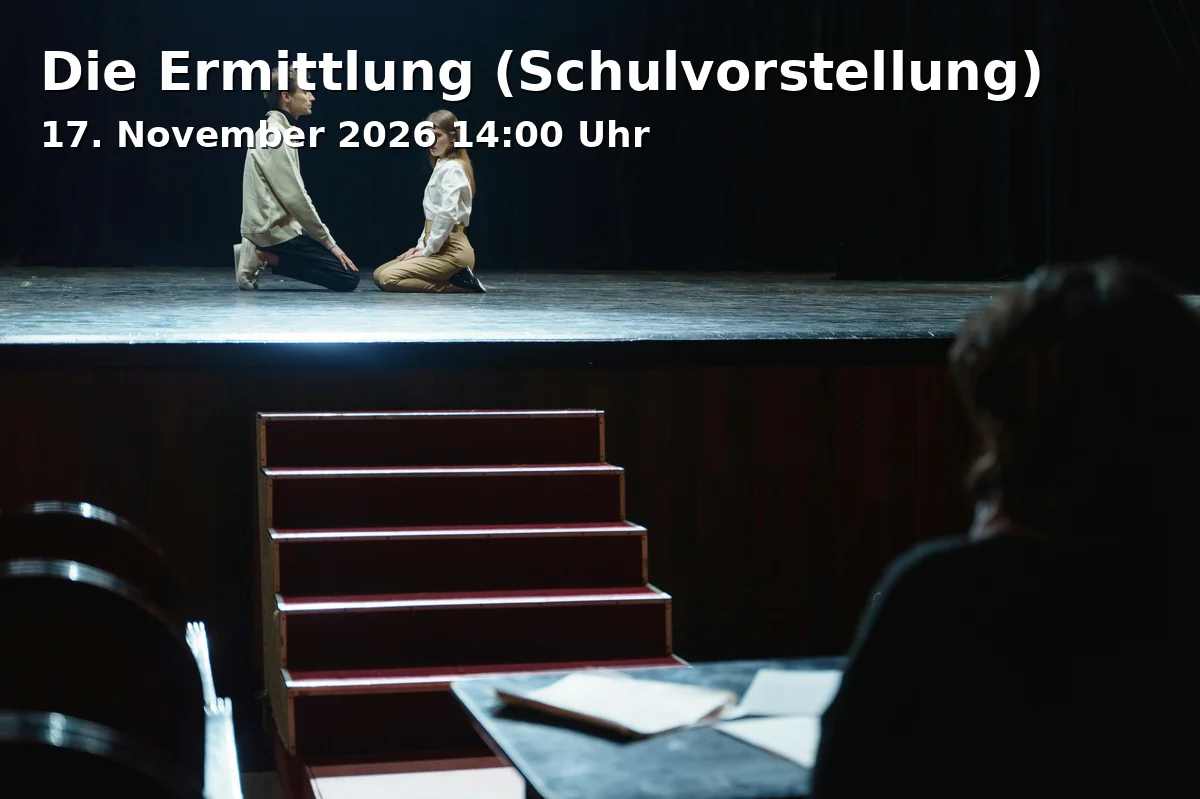
On November 17, 2026, the Gelsenkirchen Justice Center will be transformed into an extraordinary theater space. The school performance of Peter Weiss’ documentary play The Investigation takes us into the courtroom situation of the first Frankfurt Auschwitz trial. Admission is free, but registration is required.
Documentary Theater as Ruthless Memory
Peter Weiss published The Investigation in 1965 as an Oratorio in eleven songs. The dramaturgy follows the statements of the defendants and witnesses, defenders, prosecutors, and judges. It is not an invented plot that is central, but the language itself: sober, precise, and of shocking consequence.
The eleven songs lead from the arrival of the victims at the ramp through the organization of camp life to gas chambers and crematoria. The renunciation of psychological embellishment sharpens the view of the contradictions between perpetrator claims and witness statements. The audience is not relieved by grand stage gestures but forced to make their own assessments.
A Courtroom Becomes a Stage
The performance in the Justice Center connects location and material in a compelling way. Where justice is usually served, a concentrated theater atmosphere is created, in which every word carries weight. The set design by Gesa Gröning meets the architecture of the Justice Center with restraint; the staging relies on the tension between space, bodies, and voice.
An ensemble of 22 professional actors and player-experienced amateurs shapes this special form of theatrical art. The direction by Jens Dornheim focuses on the documentary power of the text. Compositions by Danny Tristan Bombosch and the costumes by Angela Heid-Schilling complement the objective, concentrated aesthetic.
Theater as a Place of Responsibility
The Investigation has held a central significance for German memory culture since its premiere. The play made the statements of the Frankfurt Auschwitz trial accessible for the stage and raised the question of individual responsibility within a dehumanizing system. In Gelsenkirchen, this historical dimension is combined with a theater experience that particularly provides a strong impetus for schools to engage with the subject.
The audience's reaction arises from the immediate encounter with the spoken word. Lighting ambiance, acoustics, and the strict form of staging draw focus to the essentials: to statements, decisions, and the consequences of obedience. The stage experience demands attention and simultaneously opens space for reflection and conversation.
Conclusion: A Necessary Stage Experience
The school performance of The Investigation in the Gelsenkirchen Justice Center promises documentary theater of high historical and artistic relevance. Those who experience the performance live encounter a production that does not display memory but makes present responsibility tangible. Participation is free, but prior registration is necessary.
Official Channels of Trias Theater:
- Instagram: no official profile found
- Facebook: no official profile found
- YouTube: no official profile found
- Website: no official profile found