Tea Garden Gathering at Manifesta 16 Ruhr: Art and Garden Culture in Gelsenkirchen
Date and Time
Location
Price
About this Event
Mood
Venue Type
A Tea Garden as an Artistic Experience in the Ruhr Area
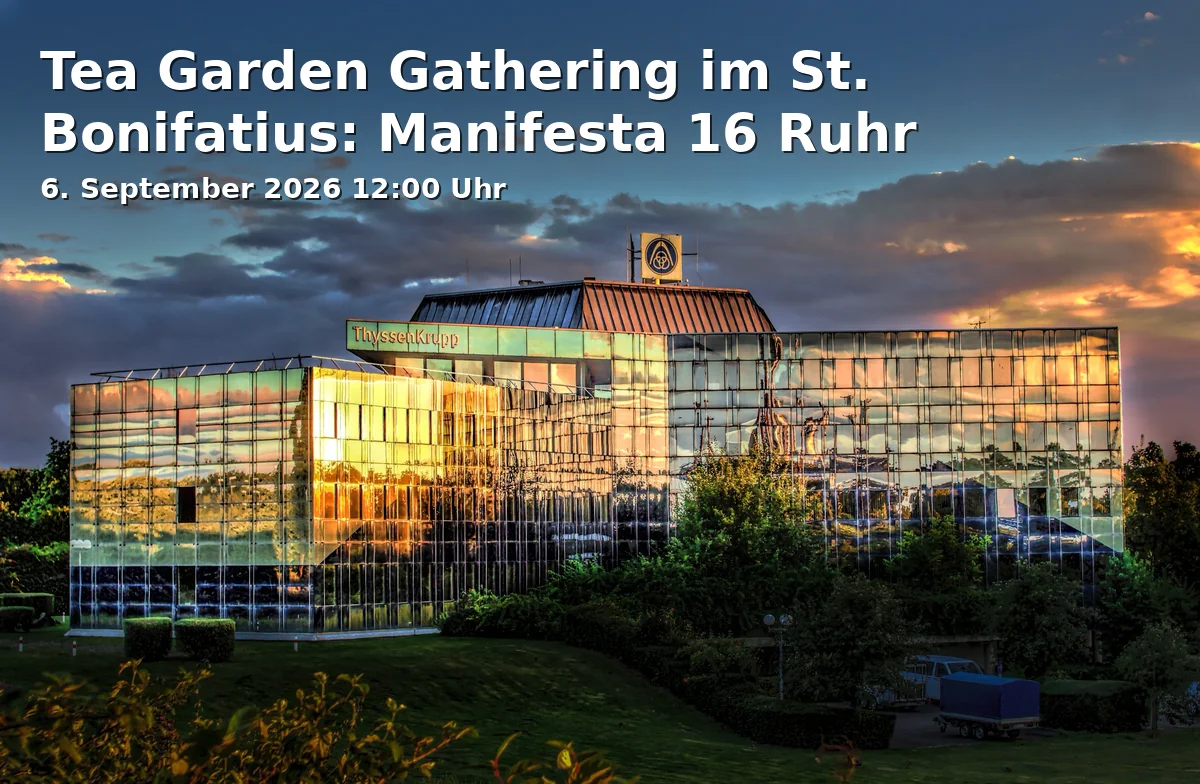
With Tea Garden Gathering, Manifesta 16 Ruhr opens a place in Gelsenkirchen where art, gardening knowledge, and community practice intertwine. The workshop on September 6, 2026, takes place in the Ferdane Satır Tea Garden at St. Bonifatius and invites participants to sensually experience plants not just by observing but through the shared creation and exchange. The event is free of charge and is part of the well-regarded Manifesta route, which transforms vacant churches into sites of cultural education. ([manifesta16.org](https://www.manifesta16.org/news/manifesta-presents-official-biennial-venues-and-host-cities))
A Garden as a Social Sculpture
The tea garden at St. Bonifatius is understood as an open installation in the urban space: raised beds, herbs, scents, hands in the soil, and collaborative work shape an exhibition atmosphere that goes far beyond traditional contemplation of works. Begzada Alatović, as the leader of the intercultural garden Rosenduft, brings her knowledge about plants, community, and cultural mediation. Her practice combines horticulture, community work, and memory work into an aesthetic experience aimed at encounter. ([manifesta16.org](https://manifesta16.org/de/participants/begzada-alatovi?utm_source=openai))
Art Historical Context Between Church, City, and Migration
St. Bonifatius, built in 1963 by Ernst von Rudloff, is one of the prominent post-war churches in the Ruhr area and is being reinterpreted as part of Manifesta 16 Ruhr. The curatorial idea connects architectural history with social issues: migration, collective knowledge, and new forms of coexistence are central. The fact that the place is designated as wheelchair-accessible but does not offer wheelchair-accessible restrooms is also part of the practical reality of this route. ([manifesta16.org](https://www.manifesta16.org/news/manifesta-presents-official-biennial-venues-and-host-cities))
Participate, Learn, Share
The workshop connects with the Tea Garden activation and makes plant materials the starting point for exchange. Begzada Alatović works with herbs such as mint, sage, St. John's wort, and marigold; the education ranges from origin-based plant knowledge to everyday applications like herbal salt, herbal oil, and medicinal herbs. This gives the exhibition a strong museum educational dimension: learning by doing, understanding by participating, remembering through shared action. ([manifesta16.org](https://manifesta16.org/participants/begzada-alatovi?utm_source=openai))
Why a Visit is Worth It
Tea Garden Gathering is not a classic exhibition format, but a lively space for cultural education, participatory art, and social resonance. Those who come here experience art as a social practice, the church space as a transformed experiential space, and the garden as a poetic installation. A visit is especially worthwhile for anyone who wants to experience contemporary art in dialogue with urban history, neighborhood, and sustainable materials. ([manifesta16.org](https://www.manifesta16.org/news/manifesta-presents-official-biennial-venues-and-host-cities))
Official Channels of Manifesta 16 Ruhr:
- Instagram: no official profile found
- Facebook: no official profile found
- YouTube: no official profile found
- Website: https://www.manifesta16.org/