
Gelsenkirchen
Brößweg 34, 45897 Gelsenkirchen, Deutschland
Zeche Hugo Schacht 2 | Photos & Events
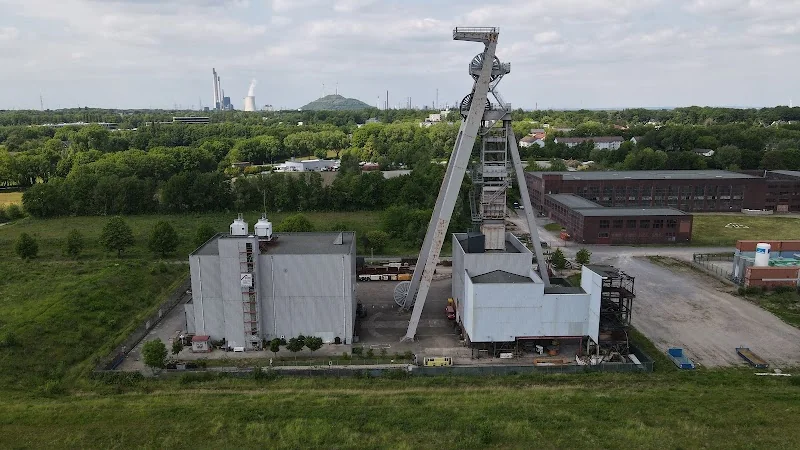
Zeche Hugo Schacht 2 is one of those places in the Ruhr area where history is not only told but made visible and tangible. In Gelsenkirchen-Buer, at Brößweg 34 and in direct proximity to the restored mining settlement Schüngelberg as well as to the Rungenberghalde, this location combines industrial culture, memory culture, and vibrant event usage. The official website describes Zeche Hugo as a place where guests from Gelsenkirchen, from the Ruhr area, and from all over the world can experience the history of the region. At the same time, the small museum a few streets away at Eschweilerstraße 47 preserves the mining tradition of the district. This very mix is what makes it appealing: Here, authenticity, local identity, and a strong piece of the Ruhr area come together. Those looking for photos, history, events, or special impressions will find at Zeche Hugo Schacht 2 not a smooth backdrop, but a place with character, strong memories, and a very own, honest charm. ([zeche-hugo.de](https://zeche-hugo.de/))
History of Zeche Hugo and Schacht 2
The history of Zeche Hugo goes deep into the 19th century and begins with a name that still resonates today: Hugo Honigmann. The city of Gelsenkirchen describes him as the chairman of the pit board of Zeche Hugo in Buer and explains that the mining field Neu-Ahrensberg was already granted in 1870. In 1873, a union was founded as a form of company; in May of the same year, work began on the first shaft. Because the work was hampered by flowing sand and strong water inflows, the tubbing technology was used for sealing. Only in 1877/78 did production begin. After Honigmann's death and a reorganization, the mining company was newly founded in 1881 as a mining AG, and from then on the shaft facility was called Zeche Hugo. Later, between 1893 and 1896, Harpener Bergbau-AG took over the operation. This development exemplifies how closely entrepreneurial risk, technical innovation, and industrial expansion were interconnected in Ruhr mining. The historical depth is therefore not just a decorative background but the actual core of this place. ([gelsenkirchen.de](https://www.gelsenkirchen.de/de/stadtprofil/stadtgeschichten/gelsenkirchener_persoenlichkeiten/_honigmann_hugo.aspx))
The more recent history is also crucial for today's perception. The official website reminds us that in 2000, with the closure of Zeche Hugo, a piece of Gelsenkirchen's history came to an end, which had grown for more than 150 years. Generations of men and women lived on the site, for whom the mine was not just a workplace but a livelihood. In the colony around the mine, people worked, lived, and celebrated; the entire social environment was closely connected to mining. Today, this past is not museum-like frozen but consciously kept alive. The open monument day entry describes Zeche Hugo – Schacht 2 as a former hard coal mine from 1873 to 2000, which is now owned by the volunteer support association Hugo Schacht 2 e. V. This voluntary structure explains why the place feels so authentic: it is not just preserved but is actively maintained, conveyed, and used. ([zeche-hugo.de](https://zeche-hugo.de/))
The small museum: Mining and football in Gelsenkirchen
The small museum is one of the most important reasons why Zeche Hugo Schacht 2 attracts attention far beyond Gelsenkirchen. The city of Gelsenkirchen describes it as a memorial site in a restored mining settlement at the foot of the Rungenberghalde. At first glance, the building looks like a normal residential house, but at second glance, it houses a very special museum that preserves the memory of the mining tradition of the district after the closure of the neighboring Zeche Hugo in 2000. On two floors, exhibits are shown that have tradition for Gelsenkirchen: mining and football. According to the city website, the exhibition covers 81 square meters, and there is no free spot left today. This is precisely the strength of the museum: the objects do not stand distanced behind glass but feel like tangible memories of everyday life underground and in the colony. This makes the place exciting for people who want to not only observe industrial culture but understand it. ([gelsenkirchen.de](https://www.gelsenkirchen.de/de/kultur/museen_und_dauerausstellungen/das_kleine_museum___zeche_hugo/index.aspx))
Especially striking is the connection to the city's football history. The official website states that mining and football have a common history in Gelsenkirchen and that the Schalke are therefore called Knappen. The history of Zeche Hugo is directly linked to the history of Schalke, and an example is given of the footballer Willi Koslowski, who worked at Zeche Hugo. This connection of work, everyday life, and club tradition explains why the small museum is interesting not only for technology or mining fans. The place tells of people who worked underground and yet were part of a large regional culture after work. The website also emphasizes that former miners tell about real life, creating a very personal access to the past. This is not abstract museum didactics but a lively narrative form that conveys history from within the region. Therefore, those who visit Zeche Hugo Schacht 2 experience not only industrial architecture but also a piece of identity from Schalke, Buer, and the entire northern Ruhr area. ([zeche-hugo.de](https://zeche-hugo.de/))
Events, concerts, and open monument day
Zeche Hugo Schacht 2 is today not only a place of remembrance but also explicitly a special event venue. The official website mentions concerts, corporate events, film shoots, and much more. In the ambiance of mining romance and industrial culture, meetings, celebrations, drumming, rocking, filming, and photographing take place. This description is important because it shows how flexibly the place is used: Not every location with old substance can be culturally utilized so diversely. At Zeche Hugo Schacht 2, usability itself is part of the history of the site. The commitment of many volunteers as well as private and corporate sponsors keeps the place alive and enables events that would hardly be conceivable without this structure. For visitors, this means that they not only see a monument but repeatedly experience an actively used piece of the Ruhr area. The brand Pütt stands here not for nostalgia but for a lively continuation of storytelling. ([zeche-hugo.de](https://zeche-hugo.de/))
A particularly good example of this lively use is the open monument day. For September 14, 2025, the city of Gelsenkirchen lists Zeche Hugo/Schacht 2 as an event location and describes the program with mining-related offers, guided tours, supporting program, exhibitions, sales stands, as well as food and drinks. The monument page also lists the date with opening hours from 10:00 to 18:00, the address Brößweg 34, and notes on parking, public transport connections, and snack offerings. Additionally, external event calendars show that special formats such as a Christmas market can take place on the site during the Advent season. This is not a static museum complex but a place with recurring occasions, changing formats, and visible local anchoring. Therefore, those searching for Zeche Hugo Schacht 2 along with terms like program, events, or Christmas market will land exactly in the right place: Here, monument, event, and neighborhood blend into a credible overall picture. ([tag-des-offenen-denkmals.de](https://www.tag-des-offenen-denkmals.de/denkmal/c6c064cc-dda6-11ec-956a-960000a15311))
Directions, address, parking, and public transport
Practically speaking, Zeche Hugo Schacht 2 is clearly located in northern Gelsenkirchen, in Buer, and thus in an area strongly shaped by mining history. The official website names Brößweg 34 as the address of the Schacht 2 site. The city page adds that the small museum is located in the restored mining settlement Schüngelberg at the foot of the Rungenberghalde and is accessible at Eschweilerstraße 47. For orientation, this distinction is important: Schacht 2 and the small museum belong together but are spatially differently located. This gives visitors a very concrete impression of the historical mining ensemble and its urban surroundings. Those interested in the route will experience not just a single building but a small ensemble of places that makes the history of the mine and the workers' settlement comprehensible. Especially for photo and architecture enthusiasts, this location is a real advantage because the surroundings shape the character of the site. ([zeche-hugo.de](https://zeche-hugo.de/))
There are also reliable indications for getting there without needing to read between the lines. The monument page for the open monument day explicitly mentions a parking lot as well as a connection to public transport. However, specific numbers of parking spaces are not mentioned there. Therefore, the simple and honest recommendation is: check the current event situation in advance, especially if a special date is coming up or if a larger group is traveling. The website itself also refers to visits during public events and appointments by arrangement; this makes it clear that the site does not operate like a classic large museum with rigid opening hours but rather is project- and event-related. Those who plan flexibly have an advantage here. Especially for people looking for directions, parking, or public transport, the combination of a clear address and event information is usually sufficient to prepare for the visit well. ([tag-des-offenen-denkmals.de](https://www.tag-des-offenen-denkmals.de/denkmal/c6c064cc-dda6-11ec-956a-960000a15311))
Photos, atmosphere, and why a visit is worthwhile
Those looking for photos of Zeche Hugo Schacht 2 quickly encounter a motif that recurs in many representations: industrial culture with real atmosphere. The official website works with images, refers to Facebook, Instagram, YouTube, and WhatsApp, making it clear that the place is kept visually and communicatively present. The city of Gelsenkirchen also shows pictures of the small museum and the facility on its museum page. This imagery is more than decoration, as it conveys what makes the place special: hoisting facilities, memories of mining work, proximity to the workers' settlement, and an environment that has not been artificially smoothed out. This is precisely why the location is so exciting for photos. It does not provide an interchangeable event backdrop but an authentic motif with corners, history, and an unmistakable Ruhr area character. Those who click through impressions online quickly understand that the fascination of this place is not based on effects but on substance. ([zeche-hugo.de](https://zeche-hugo.de/))
Reviews also clearly indicate why Zeche Hugo is often perceived positively: the mix of history, volunteer work, personal communication, and an extraordinary atmosphere creates closeness. The website speaks of former miners telling about real life and of a place where one can feel the history of the Ruhr area directly. The city page emphasizes that over 100 years of Ruhr area culture are authentically and vividly conveyed in the small museum. This results in a clear impression: those who come here are not just looking for a destination but a credible, regionally rooted experience. Therefore, a visit is especially worthwhile for people who appreciate industrial culture, football history, and local narratives. And that is why the search terms photos, reviews, and events work so well together: they describe the same expectation of a place that is not polished to a shine but convinces with real history. For visitors, this is the actual added value of Zeche Hugo Schacht 2. ([zeche-hugo.de](https://zeche-hugo.de/))
Sources:
Show moreShow less
Zeche Hugo Schacht 2 | Photos & Events
Zeche Hugo Schacht 2 is one of those places in the Ruhr area where history is not only told but made visible and tangible. In Gelsenkirchen-Buer, at Brößweg 34 and in direct proximity to the restored mining settlement Schüngelberg as well as to the Rungenberghalde, this location combines industrial culture, memory culture, and vibrant event usage. The official website describes Zeche Hugo as a place where guests from Gelsenkirchen, from the Ruhr area, and from all over the world can experience the history of the region. At the same time, the small museum a few streets away at Eschweilerstraße 47 preserves the mining tradition of the district. This very mix is what makes it appealing: Here, authenticity, local identity, and a strong piece of the Ruhr area come together. Those looking for photos, history, events, or special impressions will find at Zeche Hugo Schacht 2 not a smooth backdrop, but a place with character, strong memories, and a very own, honest charm. ([zeche-hugo.de](https://zeche-hugo.de/))
History of Zeche Hugo and Schacht 2
The history of Zeche Hugo goes deep into the 19th century and begins with a name that still resonates today: Hugo Honigmann. The city of Gelsenkirchen describes him as the chairman of the pit board of Zeche Hugo in Buer and explains that the mining field Neu-Ahrensberg was already granted in 1870. In 1873, a union was founded as a form of company; in May of the same year, work began on the first shaft. Because the work was hampered by flowing sand and strong water inflows, the tubbing technology was used for sealing. Only in 1877/78 did production begin. After Honigmann's death and a reorganization, the mining company was newly founded in 1881 as a mining AG, and from then on the shaft facility was called Zeche Hugo. Later, between 1893 and 1896, Harpener Bergbau-AG took over the operation. This development exemplifies how closely entrepreneurial risk, technical innovation, and industrial expansion were interconnected in Ruhr mining. The historical depth is therefore not just a decorative background but the actual core of this place. ([gelsenkirchen.de](https://www.gelsenkirchen.de/de/stadtprofil/stadtgeschichten/gelsenkirchener_persoenlichkeiten/_honigmann_hugo.aspx))
The more recent history is also crucial for today's perception. The official website reminds us that in 2000, with the closure of Zeche Hugo, a piece of Gelsenkirchen's history came to an end, which had grown for more than 150 years. Generations of men and women lived on the site, for whom the mine was not just a workplace but a livelihood. In the colony around the mine, people worked, lived, and celebrated; the entire social environment was closely connected to mining. Today, this past is not museum-like frozen but consciously kept alive. The open monument day entry describes Zeche Hugo – Schacht 2 as a former hard coal mine from 1873 to 2000, which is now owned by the volunteer support association Hugo Schacht 2 e. V. This voluntary structure explains why the place feels so authentic: it is not just preserved but is actively maintained, conveyed, and used. ([zeche-hugo.de](https://zeche-hugo.de/))
The small museum: Mining and football in Gelsenkirchen
The small museum is one of the most important reasons why Zeche Hugo Schacht 2 attracts attention far beyond Gelsenkirchen. The city of Gelsenkirchen describes it as a memorial site in a restored mining settlement at the foot of the Rungenberghalde. At first glance, the building looks like a normal residential house, but at second glance, it houses a very special museum that preserves the memory of the mining tradition of the district after the closure of the neighboring Zeche Hugo in 2000. On two floors, exhibits are shown that have tradition for Gelsenkirchen: mining and football. According to the city website, the exhibition covers 81 square meters, and there is no free spot left today. This is precisely the strength of the museum: the objects do not stand distanced behind glass but feel like tangible memories of everyday life underground and in the colony. This makes the place exciting for people who want to not only observe industrial culture but understand it. ([gelsenkirchen.de](https://www.gelsenkirchen.de/de/kultur/museen_und_dauerausstellungen/das_kleine_museum___zeche_hugo/index.aspx))
Especially striking is the connection to the city's football history. The official website states that mining and football have a common history in Gelsenkirchen and that the Schalke are therefore called Knappen. The history of Zeche Hugo is directly linked to the history of Schalke, and an example is given of the footballer Willi Koslowski, who worked at Zeche Hugo. This connection of work, everyday life, and club tradition explains why the small museum is interesting not only for technology or mining fans. The place tells of people who worked underground and yet were part of a large regional culture after work. The website also emphasizes that former miners tell about real life, creating a very personal access to the past. This is not abstract museum didactics but a lively narrative form that conveys history from within the region. Therefore, those who visit Zeche Hugo Schacht 2 experience not only industrial architecture but also a piece of identity from Schalke, Buer, and the entire northern Ruhr area. ([zeche-hugo.de](https://zeche-hugo.de/))
Events, concerts, and open monument day
Zeche Hugo Schacht 2 is today not only a place of remembrance but also explicitly a special event venue. The official website mentions concerts, corporate events, film shoots, and much more. In the ambiance of mining romance and industrial culture, meetings, celebrations, drumming, rocking, filming, and photographing take place. This description is important because it shows how flexibly the place is used: Not every location with old substance can be culturally utilized so diversely. At Zeche Hugo Schacht 2, usability itself is part of the history of the site. The commitment of many volunteers as well as private and corporate sponsors keeps the place alive and enables events that would hardly be conceivable without this structure. For visitors, this means that they not only see a monument but repeatedly experience an actively used piece of the Ruhr area. The brand Pütt stands here not for nostalgia but for a lively continuation of storytelling. ([zeche-hugo.de](https://zeche-hugo.de/))
A particularly good example of this lively use is the open monument day. For September 14, 2025, the city of Gelsenkirchen lists Zeche Hugo/Schacht 2 as an event location and describes the program with mining-related offers, guided tours, supporting program, exhibitions, sales stands, as well as food and drinks. The monument page also lists the date with opening hours from 10:00 to 18:00, the address Brößweg 34, and notes on parking, public transport connections, and snack offerings. Additionally, external event calendars show that special formats such as a Christmas market can take place on the site during the Advent season. This is not a static museum complex but a place with recurring occasions, changing formats, and visible local anchoring. Therefore, those searching for Zeche Hugo Schacht 2 along with terms like program, events, or Christmas market will land exactly in the right place: Here, monument, event, and neighborhood blend into a credible overall picture. ([tag-des-offenen-denkmals.de](https://www.tag-des-offenen-denkmals.de/denkmal/c6c064cc-dda6-11ec-956a-960000a15311))
Directions, address, parking, and public transport
Practically speaking, Zeche Hugo Schacht 2 is clearly located in northern Gelsenkirchen, in Buer, and thus in an area strongly shaped by mining history. The official website names Brößweg 34 as the address of the Schacht 2 site. The city page adds that the small museum is located in the restored mining settlement Schüngelberg at the foot of the Rungenberghalde and is accessible at Eschweilerstraße 47. For orientation, this distinction is important: Schacht 2 and the small museum belong together but are spatially differently located. This gives visitors a very concrete impression of the historical mining ensemble and its urban surroundings. Those interested in the route will experience not just a single building but a small ensemble of places that makes the history of the mine and the workers' settlement comprehensible. Especially for photo and architecture enthusiasts, this location is a real advantage because the surroundings shape the character of the site. ([zeche-hugo.de](https://zeche-hugo.de/))
There are also reliable indications for getting there without needing to read between the lines. The monument page for the open monument day explicitly mentions a parking lot as well as a connection to public transport. However, specific numbers of parking spaces are not mentioned there. Therefore, the simple and honest recommendation is: check the current event situation in advance, especially if a special date is coming up or if a larger group is traveling. The website itself also refers to visits during public events and appointments by arrangement; this makes it clear that the site does not operate like a classic large museum with rigid opening hours but rather is project- and event-related. Those who plan flexibly have an advantage here. Especially for people looking for directions, parking, or public transport, the combination of a clear address and event information is usually sufficient to prepare for the visit well. ([tag-des-offenen-denkmals.de](https://www.tag-des-offenen-denkmals.de/denkmal/c6c064cc-dda6-11ec-956a-960000a15311))
Photos, atmosphere, and why a visit is worthwhile
Those looking for photos of Zeche Hugo Schacht 2 quickly encounter a motif that recurs in many representations: industrial culture with real atmosphere. The official website works with images, refers to Facebook, Instagram, YouTube, and WhatsApp, making it clear that the place is kept visually and communicatively present. The city of Gelsenkirchen also shows pictures of the small museum and the facility on its museum page. This imagery is more than decoration, as it conveys what makes the place special: hoisting facilities, memories of mining work, proximity to the workers' settlement, and an environment that has not been artificially smoothed out. This is precisely why the location is so exciting for photos. It does not provide an interchangeable event backdrop but an authentic motif with corners, history, and an unmistakable Ruhr area character. Those who click through impressions online quickly understand that the fascination of this place is not based on effects but on substance. ([zeche-hugo.de](https://zeche-hugo.de/))
Reviews also clearly indicate why Zeche Hugo is often perceived positively: the mix of history, volunteer work, personal communication, and an extraordinary atmosphere creates closeness. The website speaks of former miners telling about real life and of a place where one can feel the history of the Ruhr area directly. The city page emphasizes that over 100 years of Ruhr area culture are authentically and vividly conveyed in the small museum. This results in a clear impression: those who come here are not just looking for a destination but a credible, regionally rooted experience. Therefore, a visit is especially worthwhile for people who appreciate industrial culture, football history, and local narratives. And that is why the search terms photos, reviews, and events work so well together: they describe the same expectation of a place that is not polished to a shine but convinces with real history. For visitors, this is the actual added value of Zeche Hugo Schacht 2. ([zeche-hugo.de](https://zeche-hugo.de/))
Sources:
Zeche Hugo Schacht 2 | Photos & Events
Zeche Hugo Schacht 2 is one of those places in the Ruhr area where history is not only told but made visible and tangible. In Gelsenkirchen-Buer, at Brößweg 34 and in direct proximity to the restored mining settlement Schüngelberg as well as to the Rungenberghalde, this location combines industrial culture, memory culture, and vibrant event usage. The official website describes Zeche Hugo as a place where guests from Gelsenkirchen, from the Ruhr area, and from all over the world can experience the history of the region. At the same time, the small museum a few streets away at Eschweilerstraße 47 preserves the mining tradition of the district. This very mix is what makes it appealing: Here, authenticity, local identity, and a strong piece of the Ruhr area come together. Those looking for photos, history, events, or special impressions will find at Zeche Hugo Schacht 2 not a smooth backdrop, but a place with character, strong memories, and a very own, honest charm. ([zeche-hugo.de](https://zeche-hugo.de/))
History of Zeche Hugo and Schacht 2
The history of Zeche Hugo goes deep into the 19th century and begins with a name that still resonates today: Hugo Honigmann. The city of Gelsenkirchen describes him as the chairman of the pit board of Zeche Hugo in Buer and explains that the mining field Neu-Ahrensberg was already granted in 1870. In 1873, a union was founded as a form of company; in May of the same year, work began on the first shaft. Because the work was hampered by flowing sand and strong water inflows, the tubbing technology was used for sealing. Only in 1877/78 did production begin. After Honigmann's death and a reorganization, the mining company was newly founded in 1881 as a mining AG, and from then on the shaft facility was called Zeche Hugo. Later, between 1893 and 1896, Harpener Bergbau-AG took over the operation. This development exemplifies how closely entrepreneurial risk, technical innovation, and industrial expansion were interconnected in Ruhr mining. The historical depth is therefore not just a decorative background but the actual core of this place. ([gelsenkirchen.de](https://www.gelsenkirchen.de/de/stadtprofil/stadtgeschichten/gelsenkirchener_persoenlichkeiten/_honigmann_hugo.aspx))
The more recent history is also crucial for today's perception. The official website reminds us that in 2000, with the closure of Zeche Hugo, a piece of Gelsenkirchen's history came to an end, which had grown for more than 150 years. Generations of men and women lived on the site, for whom the mine was not just a workplace but a livelihood. In the colony around the mine, people worked, lived, and celebrated; the entire social environment was closely connected to mining. Today, this past is not museum-like frozen but consciously kept alive. The open monument day entry describes Zeche Hugo – Schacht 2 as a former hard coal mine from 1873 to 2000, which is now owned by the volunteer support association Hugo Schacht 2 e. V. This voluntary structure explains why the place feels so authentic: it is not just preserved but is actively maintained, conveyed, and used. ([zeche-hugo.de](https://zeche-hugo.de/))
The small museum: Mining and football in Gelsenkirchen
The small museum is one of the most important reasons why Zeche Hugo Schacht 2 attracts attention far beyond Gelsenkirchen. The city of Gelsenkirchen describes it as a memorial site in a restored mining settlement at the foot of the Rungenberghalde. At first glance, the building looks like a normal residential house, but at second glance, it houses a very special museum that preserves the memory of the mining tradition of the district after the closure of the neighboring Zeche Hugo in 2000. On two floors, exhibits are shown that have tradition for Gelsenkirchen: mining and football. According to the city website, the exhibition covers 81 square meters, and there is no free spot left today. This is precisely the strength of the museum: the objects do not stand distanced behind glass but feel like tangible memories of everyday life underground and in the colony. This makes the place exciting for people who want to not only observe industrial culture but understand it. ([gelsenkirchen.de](https://www.gelsenkirchen.de/de/kultur/museen_und_dauerausstellungen/das_kleine_museum___zeche_hugo/index.aspx))
Especially striking is the connection to the city's football history. The official website states that mining and football have a common history in Gelsenkirchen and that the Schalke are therefore called Knappen. The history of Zeche Hugo is directly linked to the history of Schalke, and an example is given of the footballer Willi Koslowski, who worked at Zeche Hugo. This connection of work, everyday life, and club tradition explains why the small museum is interesting not only for technology or mining fans. The place tells of people who worked underground and yet were part of a large regional culture after work. The website also emphasizes that former miners tell about real life, creating a very personal access to the past. This is not abstract museum didactics but a lively narrative form that conveys history from within the region. Therefore, those who visit Zeche Hugo Schacht 2 experience not only industrial architecture but also a piece of identity from Schalke, Buer, and the entire northern Ruhr area. ([zeche-hugo.de](https://zeche-hugo.de/))
Events, concerts, and open monument day
Zeche Hugo Schacht 2 is today not only a place of remembrance but also explicitly a special event venue. The official website mentions concerts, corporate events, film shoots, and much more. In the ambiance of mining romance and industrial culture, meetings, celebrations, drumming, rocking, filming, and photographing take place. This description is important because it shows how flexibly the place is used: Not every location with old substance can be culturally utilized so diversely. At Zeche Hugo Schacht 2, usability itself is part of the history of the site. The commitment of many volunteers as well as private and corporate sponsors keeps the place alive and enables events that would hardly be conceivable without this structure. For visitors, this means that they not only see a monument but repeatedly experience an actively used piece of the Ruhr area. The brand Pütt stands here not for nostalgia but for a lively continuation of storytelling. ([zeche-hugo.de](https://zeche-hugo.de/))
A particularly good example of this lively use is the open monument day. For September 14, 2025, the city of Gelsenkirchen lists Zeche Hugo/Schacht 2 as an event location and describes the program with mining-related offers, guided tours, supporting program, exhibitions, sales stands, as well as food and drinks. The monument page also lists the date with opening hours from 10:00 to 18:00, the address Brößweg 34, and notes on parking, public transport connections, and snack offerings. Additionally, external event calendars show that special formats such as a Christmas market can take place on the site during the Advent season. This is not a static museum complex but a place with recurring occasions, changing formats, and visible local anchoring. Therefore, those searching for Zeche Hugo Schacht 2 along with terms like program, events, or Christmas market will land exactly in the right place: Here, monument, event, and neighborhood blend into a credible overall picture. ([tag-des-offenen-denkmals.de](https://www.tag-des-offenen-denkmals.de/denkmal/c6c064cc-dda6-11ec-956a-960000a15311))
Directions, address, parking, and public transport
Practically speaking, Zeche Hugo Schacht 2 is clearly located in northern Gelsenkirchen, in Buer, and thus in an area strongly shaped by mining history. The official website names Brößweg 34 as the address of the Schacht 2 site. The city page adds that the small museum is located in the restored mining settlement Schüngelberg at the foot of the Rungenberghalde and is accessible at Eschweilerstraße 47. For orientation, this distinction is important: Schacht 2 and the small museum belong together but are spatially differently located. This gives visitors a very concrete impression of the historical mining ensemble and its urban surroundings. Those interested in the route will experience not just a single building but a small ensemble of places that makes the history of the mine and the workers' settlement comprehensible. Especially for photo and architecture enthusiasts, this location is a real advantage because the surroundings shape the character of the site. ([zeche-hugo.de](https://zeche-hugo.de/))
There are also reliable indications for getting there without needing to read between the lines. The monument page for the open monument day explicitly mentions a parking lot as well as a connection to public transport. However, specific numbers of parking spaces are not mentioned there. Therefore, the simple and honest recommendation is: check the current event situation in advance, especially if a special date is coming up or if a larger group is traveling. The website itself also refers to visits during public events and appointments by arrangement; this makes it clear that the site does not operate like a classic large museum with rigid opening hours but rather is project- and event-related. Those who plan flexibly have an advantage here. Especially for people looking for directions, parking, or public transport, the combination of a clear address and event information is usually sufficient to prepare for the visit well. ([tag-des-offenen-denkmals.de](https://www.tag-des-offenen-denkmals.de/denkmal/c6c064cc-dda6-11ec-956a-960000a15311))
Photos, atmosphere, and why a visit is worthwhile
Those looking for photos of Zeche Hugo Schacht 2 quickly encounter a motif that recurs in many representations: industrial culture with real atmosphere. The official website works with images, refers to Facebook, Instagram, YouTube, and WhatsApp, making it clear that the place is kept visually and communicatively present. The city of Gelsenkirchen also shows pictures of the small museum and the facility on its museum page. This imagery is more than decoration, as it conveys what makes the place special: hoisting facilities, memories of mining work, proximity to the workers' settlement, and an environment that has not been artificially smoothed out. This is precisely why the location is so exciting for photos. It does not provide an interchangeable event backdrop but an authentic motif with corners, history, and an unmistakable Ruhr area character. Those who click through impressions online quickly understand that the fascination of this place is not based on effects but on substance. ([zeche-hugo.de](https://zeche-hugo.de/))
Reviews also clearly indicate why Zeche Hugo is often perceived positively: the mix of history, volunteer work, personal communication, and an extraordinary atmosphere creates closeness. The website speaks of former miners telling about real life and of a place where one can feel the history of the Ruhr area directly. The city page emphasizes that over 100 years of Ruhr area culture are authentically and vividly conveyed in the small museum. This results in a clear impression: those who come here are not just looking for a destination but a credible, regionally rooted experience. Therefore, a visit is especially worthwhile for people who appreciate industrial culture, football history, and local narratives. And that is why the search terms photos, reviews, and events work so well together: they describe the same expectation of a place that is not polished to a shine but convinces with real history. For visitors, this is the actual added value of Zeche Hugo Schacht 2. ([zeche-hugo.de](https://zeche-hugo.de/))
Sources:
Upcoming Events
No events found
Frequently Asked Questions
Reviews
Maciej Dworakowski
19. July 2025
Monumental shaft tower
Sinan Kafali
21. March 2019
Ok
Julien Speka
23. August 2021
Top
Mark Fischer
7. October 2018
Top Location
Gordon Seek
15. June 2021
Top