
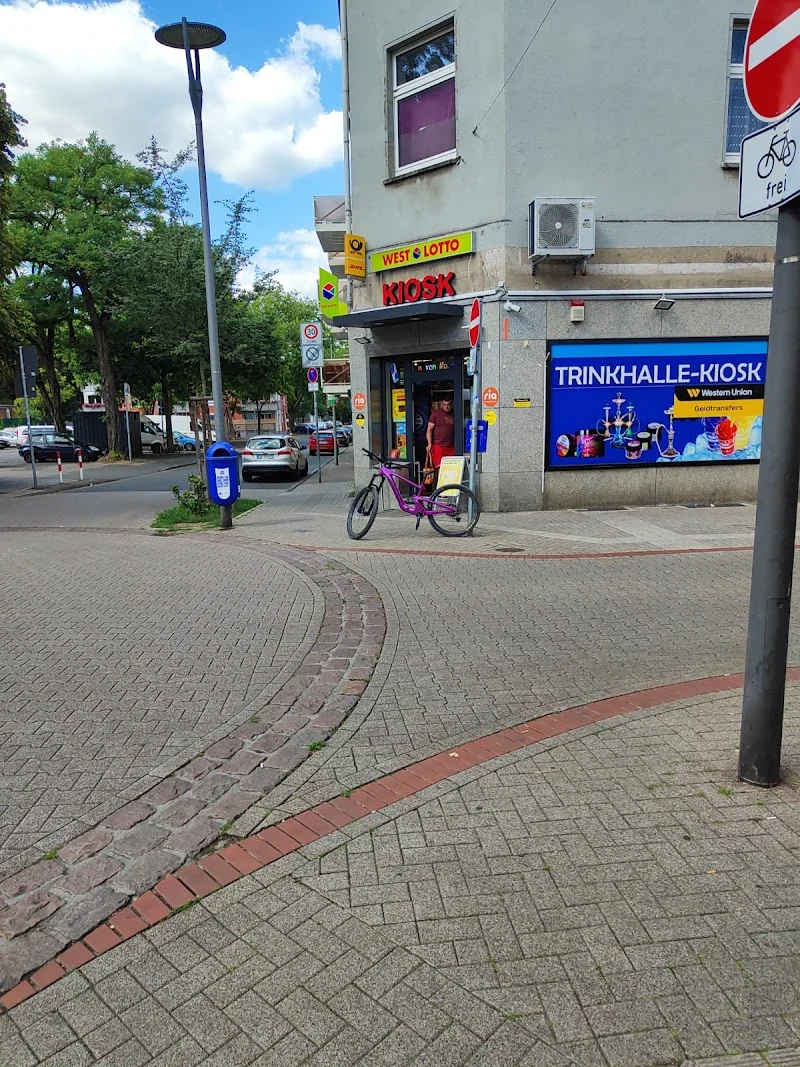
Marktplatz, Harthorststraße 1, Gelsenkirchen-West
Harthorststraße 1, 45899 Gelsenkirchen, Germany
Weekly Market Horst-Süd | Opening Hours & Parking
The Weekly Market Horst-Süd is the compact, down-to-earth shopping address in the west of Gelsenkirchen. At Harthorststraße, residents primarily buy fresh groceries for everyday life, and this proximity is what makes the market special: not a big event, but a market with a real sense of community, much routine, and a clear local supply function. The official market profile describes Horst-Süd as a smaller market compared to Horst-Nord, with an older regular clientele, a family atmosphere, a good selection of potatoes, and the distinctive fountain with the stone market woman, known as Grandma Kinski. In Gelsenkirchen, Horst-Süd is part of an urban market network that takes place from Tuesday to Saturday in various locations, providing the city with freshness, regionality, and short distances. ([gelsendienste.de](https://www.gelsendienste.de/wp-content/uploads/downloads/maerkte/wochenmaerkte-profil-horst-sued.pdf))
Opening Hours, Market Schedule, and Current Market Regulations
Those looking for the Weekly Market Horst-Süd should first refer to the current market regulations. The market is listed as a Friday market at Harthorststraße with sales hours from 7:00 AM to 1:30 PM. This is important because older market documents still mention 8:00 AM to 1:00 PM; therefore, it is best to use the current regulations as a reference for a visit. The regulations apply to all weekly markets organized by GELSENDIENSTE, and they also make it clear that time, space, and opening hours may change on special occasions. Horst-Süd is also designated as a waste- and cleaning-free market, which emphasizes its compact and neighborly character. For visitors, this means: Friday morning is the reliable market date, and those who want to shop for fresh products in peace should not come too late. In Gelsenkirchen itself, weekly markets generally take place from Tuesday to Saturday, usually between 7:00 AM and 1:30 PM, so Horst-Süd is well integrated into a city-wide network of local supply points. ([gelsendienste.de](https://www.gelsendienste.de/wp-content/uploads/downloads/maerkte/wochenmaerkte-gelsenkirchen-marktordnung.pdf))
For planning, it is also relevant that the market regulations govern the setup and dismantling as well as the allocation of stalls. This indicates that the market does not function as an arbitrary space, but as a clearly organized weekly market with fixed rules for vendors, goods, and operations. The most important consequence for the practical side is simply this: Friday is market day, the current market time is in the morning, and the assortment is aimed at people who prefer fresh basic supplies and short distances. Those specifically looking for certain products should come earlier rather than later, as the best items at small markets can traditionally sell out quickly. This recommendation is not a marketing slogan but follows directly from the profile of a manageable market with around 20 contracted and daily vendors and only limited space. ([gelsendienste.de](https://www.gelsendienste.de/wp-content/uploads/downloads/maerkte/wochenmaerkte-gelsenkirchen-marktordnung.pdf))
Access, Parking, and Public Transport
Access to the Weekly Market Horst-Süd is easy if you know the local conditions. The market profile mentions parking spaces directly next to the market, although in limited numbers. Those who do not want to search for a parking space can rely on the bus: suitable lines are 383 and CE 56. This is typical for a neighborhood market, as quick, everyday accessibility is what counts here. Because the market is small, the distances from the bus stop or parking lot to the market are short, and this makes for a relaxed shopping experience. Those planning to carry heavier bags benefit from this as well. ([gelsendienste.de](https://www.gelsendienste.de/wp-content/uploads/downloads/maerkte/wochenmaerkte-profil-horst-sued.pdf))
The facilities on site are also pragmatically arranged. The market profile mentions toilets directly at the market, and the municipal directory of public toilets lists opening days for GE-Horst-Süd at Harthorststraße on Fridays from 6:00 AM to 3:00 PM. For visitors, this means: The market is not only suitable for quick shopping but also for a longer stay with a break in between. Additionally, Horst-Süd is only about 800 meters from Josef-Büscher-Platz, which is where the Horst-Nord market is located, making orientation in the neighborhood easier. Those moving around Horst quickly realize that both markets are part of a manageable local supply network. ([gelsenkirchen.de](https://www.gelsenkirchen.de/de/stadtprofil/stadtthemen/unsere_stadt/praeventionsrat_gelsenkirchen/_doc/Faltblatt__ffentliche_Toiletten.pdf))
Fresh Goods, Vendors, and the Assortment at the Market
The range of goods is the actual core of the Weekly Market Horst-Süd. The official profile lists fruits and vegetables, baked goods, potatoes, eggs, sausage and meat, game and poultry, fish, flowers and plants, as well as textiles and haberdashery. The selection of potatoes is particularly highlighted in the profile, and visitor comments also mention fresh fruits, vegetables, potatoes, and eggs as typical strengths of the market. Thus, Horst-Süd is a classic local supply market: nothing overloaded, but an assortment that covers everyday needs while also maintaining local shopping rituals. Those who shop here are usually not looking for spectacle but reliability, fresh goods, and personal interaction at the stalls. ([gelsendienste.de](https://www.gelsendienste.de/wp-content/uploads/downloads/maerkte/wochenmaerkte-profil-horst-sued.pdf))
The Gelsenkirchen weekly markets, in general, also stand for freshness and regionality. The municipal market overview describes the offerings more broadly and additionally mentions, for example, flowers, textiles, and household goods, as well as other small items that make a market lively. In summary, it shows: Horst-Süd is smaller than some other places in Gelsenkirchen, but it fits perfectly into this market understanding. The location is not designed for mass goods but for everyday life, quality, and direct contact with the vendors. So, those looking for a market with an honest selection and a clear focus on fresh food are in the right place. ([gelsendienste.de](https://www.gelsendienste.de/privathaushalte/maerkte/))
Market Area, Atmosphere, and the Unique Horst-Süd Profile
The profile of Horst-Süd says a lot about the atmosphere: The clientele is primarily shaped by older people, the market feels cozy and family-like, and the location on Harthorststraße even offers space reserves for further development. This is important for SEO but also for real visitors, as it describes the character of the place. Horst-Süd is not a hectic traffic hub but a manageable market with identity. The fountain with the stone figure of the market woman, known as Grandma Kinski, serves as a recognizable feature and gives the place a face. Such details are crucial for the perception of a neighborhood market: One does not only orient oneself by streets but by an image, a memory, and a place that recurs in everyday life. ([gelsendienste.de](https://www.gelsendienste.de/wp-content/uploads/downloads/maerkte/wochenmaerkte-profil-horst-sued.pdf))
With about 2,800 square meters of utilized market area and around 20 contracted and daily vendors, the size of Horst-Süd is clearly defined. These numbers also explain why the market is described as smaller than Horst-Nord: It is less about a large selection in abundance but about the concentrated supply of a neighborhood. At the same time, the municipal market organization ensures that this compact structure functions reliably. For visitors, this is an advantage because the distances are short, the processes are manageable, and the stalls are easily accessible. Those who enjoy shopping at markets know the charm of such places: One quickly engages in conversation, finds regular stalls again, and experiences shopping as part of the neighborhood. Horst-Süd fits perfectly into this picture. ([gelsendienste.de](https://www.gelsendienste.de/wp-content/uploads/downloads/maerkte/wochenmaerkte-profil-horst-sued.pdf))
Horst-Süd in the Neighborhood Context: Local Supply, Orientation, and Surroundings
Horst-Süd is also interesting because the market is deeply rooted in its neighborhood. Horst is located in the west of the Gelsenkirchen urban area and is described in the market profile as a residential area with various forms of housing, from late 19th-century block-edge developments to new residential areas with single-family homes. This mix is reflected in the function of the market: It serves a developed neighborhood with different households, needs, and shopping rhythms. The local supply function west of Markenstraße is therefore not just an administrative statement but the actual everyday life of the place. ([gelsendienste.de](https://www.gelsendienste.de/wp-content/uploads/downloads/maerkte/wochenmaerkte-profil-horst-sued.pdf))
In the wider environment, Horst also shows that the neighborhood is more than just a location for a weekly market. The official city description refers to Schloss Horst with its central registry office, historic halls, and cultural events in the glass hall, knight's hall, and fireplace room. Additionally, there is the Nordsternpark, which emerged from the old industrial site after the closure of the Nordstern mine and the Federal Garden Show in 1997, connecting Horst with Heßler. These places are not directly at the weekly market, but they shape the neighborhood and help with orientation. Therefore, those who come to Horst for the market experience a place where local supply, city history, and identity-forming architecture lie close together. ([gelsenkirchen.de](https://www.gelsenkirchen.de/de/Familie/Auf_dem_Standesamt/Heiraten/Trauorte/Schloss_Horst.aspx?utm_source=openai))
Practical Tips for Your Visit to the Weekly Market Horst-Süd
For a visit to the Weekly Market Horst-Süd, a simple plan is worthwhile: come early, shop purposefully, and take advantage of the short distances. When the market closes at noon, popular goods are no longer available in full quantity, and especially at a market that heavily relies on fresh food, this is a real advantage for all who love variety. Those looking for potatoes, eggs, fruits, or vegetables will find exactly the kind of assortment for which neighborhood markets are appreciated: fresh, direct, and without detours. At the same time, Horst-Süd is a market where one can take their time, as the family atmosphere invites a leisurely stroll rather than a quick walk-through. The weekly market is thus both a shopping point and a meeting place in the neighborhood. ([gelsendienste.de](https://www.gelsendienste.de/wp-content/uploads/downloads/maerkte/wochenmaerkte-profil-horst-sued.pdf))
It is also practical that Gelsenkirchen organizes its weekly markets as part of a larger system. The city mentions around 1,000 market events per year in twelve locations, and this reliability is what Horst-Süd benefits from. For visitors, this means: Once you know how the market works, you can easily find your way around. However, on holidays, special events, or altered processes, one should always keep an eye on the current market regulations. They are the binding basis for time, space, and operations. Therefore, it is advisable to check the Friday date and sales time again before your visit. This way, a spontaneous shopping trip becomes a planable, stress-free appointment with clear expectations. ([gelsendienste.de](https://www.gelsendienste.de/privathaushalte/maerkte/?utm_source=openai))
Sources:
- GELSENDIENSTE – Markets in Gelsenkirchen ([gelsendienste.de](https://www.gelsendienste.de/privathaushalte/maerkte/?utm_source=openai))
- GELSENDIENSTE – Market Regulations for the Weekly Markets in Gelsenkirchen ([gelsendienste.de](https://www.gelsendienste.de/wp-content/uploads/downloads/maerkte/wochenmaerkte-gelsenkirchen-marktordnung.pdf))
- GELSENDIENSTE – Weekly and Evening Markets in Gelsenkirchen Horst-Süd ([gelsendienste.de](https://www.gelsendienste.de/wp-content/uploads/downloads/maerkte/wochenmaerkte-profil-horst-sued.pdf))
- City of Gelsenkirchen – Public Toilets ([gelsenkirchen.de](https://www.gelsenkirchen.de/de/stadtprofil/stadtthemen/unsere_stadt/praeventionsrat_gelsenkirchen/_doc/Faltblatt__ffentliche_Toiletten.pdf))
- City of Gelsenkirchen – Schloss Horst ([gelsendienste.de](https://www.gelsendienste.de/de/Familie/Auf_dem_Standesamt/Heiraten/Trauorte/Schloss_Horst.aspx?utm_source=openai))
- City of Gelsenkirchen – Nordsternpark ([gelsendienste.de](https://www.gelsendienste.de/de/freizeit/Ausfluege_und_Sehenswuerdigkeiten/Parks_und_Halden/Nordsternpark.aspx?utm_source=openai))
Show moreShow less
Weekly Market Horst-Süd | Opening Hours & Parking
The Weekly Market Horst-Süd is the compact, down-to-earth shopping address in the west of Gelsenkirchen. At Harthorststraße, residents primarily buy fresh groceries for everyday life, and this proximity is what makes the market special: not a big event, but a market with a real sense of community, much routine, and a clear local supply function. The official market profile describes Horst-Süd as a smaller market compared to Horst-Nord, with an older regular clientele, a family atmosphere, a good selection of potatoes, and the distinctive fountain with the stone market woman, known as Grandma Kinski. In Gelsenkirchen, Horst-Süd is part of an urban market network that takes place from Tuesday to Saturday in various locations, providing the city with freshness, regionality, and short distances. ([gelsendienste.de](https://www.gelsendienste.de/wp-content/uploads/downloads/maerkte/wochenmaerkte-profil-horst-sued.pdf))
Opening Hours, Market Schedule, and Current Market Regulations
Those looking for the Weekly Market Horst-Süd should first refer to the current market regulations. The market is listed as a Friday market at Harthorststraße with sales hours from 7:00 AM to 1:30 PM. This is important because older market documents still mention 8:00 AM to 1:00 PM; therefore, it is best to use the current regulations as a reference for a visit. The regulations apply to all weekly markets organized by GELSENDIENSTE, and they also make it clear that time, space, and opening hours may change on special occasions. Horst-Süd is also designated as a waste- and cleaning-free market, which emphasizes its compact and neighborly character. For visitors, this means: Friday morning is the reliable market date, and those who want to shop for fresh products in peace should not come too late. In Gelsenkirchen itself, weekly markets generally take place from Tuesday to Saturday, usually between 7:00 AM and 1:30 PM, so Horst-Süd is well integrated into a city-wide network of local supply points. ([gelsendienste.de](https://www.gelsendienste.de/wp-content/uploads/downloads/maerkte/wochenmaerkte-gelsenkirchen-marktordnung.pdf))
For planning, it is also relevant that the market regulations govern the setup and dismantling as well as the allocation of stalls. This indicates that the market does not function as an arbitrary space, but as a clearly organized weekly market with fixed rules for vendors, goods, and operations. The most important consequence for the practical side is simply this: Friday is market day, the current market time is in the morning, and the assortment is aimed at people who prefer fresh basic supplies and short distances. Those specifically looking for certain products should come earlier rather than later, as the best items at small markets can traditionally sell out quickly. This recommendation is not a marketing slogan but follows directly from the profile of a manageable market with around 20 contracted and daily vendors and only limited space. ([gelsendienste.de](https://www.gelsendienste.de/wp-content/uploads/downloads/maerkte/wochenmaerkte-gelsenkirchen-marktordnung.pdf))
Access, Parking, and Public Transport
Access to the Weekly Market Horst-Süd is easy if you know the local conditions. The market profile mentions parking spaces directly next to the market, although in limited numbers. Those who do not want to search for a parking space can rely on the bus: suitable lines are 383 and CE 56. This is typical for a neighborhood market, as quick, everyday accessibility is what counts here. Because the market is small, the distances from the bus stop or parking lot to the market are short, and this makes for a relaxed shopping experience. Those planning to carry heavier bags benefit from this as well. ([gelsendienste.de](https://www.gelsendienste.de/wp-content/uploads/downloads/maerkte/wochenmaerkte-profil-horst-sued.pdf))
The facilities on site are also pragmatically arranged. The market profile mentions toilets directly at the market, and the municipal directory of public toilets lists opening days for GE-Horst-Süd at Harthorststraße on Fridays from 6:00 AM to 3:00 PM. For visitors, this means: The market is not only suitable for quick shopping but also for a longer stay with a break in between. Additionally, Horst-Süd is only about 800 meters from Josef-Büscher-Platz, which is where the Horst-Nord market is located, making orientation in the neighborhood easier. Those moving around Horst quickly realize that both markets are part of a manageable local supply network. ([gelsenkirchen.de](https://www.gelsenkirchen.de/de/stadtprofil/stadtthemen/unsere_stadt/praeventionsrat_gelsenkirchen/_doc/Faltblatt__ffentliche_Toiletten.pdf))
Fresh Goods, Vendors, and the Assortment at the Market
The range of goods is the actual core of the Weekly Market Horst-Süd. The official profile lists fruits and vegetables, baked goods, potatoes, eggs, sausage and meat, game and poultry, fish, flowers and plants, as well as textiles and haberdashery. The selection of potatoes is particularly highlighted in the profile, and visitor comments also mention fresh fruits, vegetables, potatoes, and eggs as typical strengths of the market. Thus, Horst-Süd is a classic local supply market: nothing overloaded, but an assortment that covers everyday needs while also maintaining local shopping rituals. Those who shop here are usually not looking for spectacle but reliability, fresh goods, and personal interaction at the stalls. ([gelsendienste.de](https://www.gelsendienste.de/wp-content/uploads/downloads/maerkte/wochenmaerkte-profil-horst-sued.pdf))
The Gelsenkirchen weekly markets, in general, also stand for freshness and regionality. The municipal market overview describes the offerings more broadly and additionally mentions, for example, flowers, textiles, and household goods, as well as other small items that make a market lively. In summary, it shows: Horst-Süd is smaller than some other places in Gelsenkirchen, but it fits perfectly into this market understanding. The location is not designed for mass goods but for everyday life, quality, and direct contact with the vendors. So, those looking for a market with an honest selection and a clear focus on fresh food are in the right place. ([gelsendienste.de](https://www.gelsendienste.de/privathaushalte/maerkte/))
Market Area, Atmosphere, and the Unique Horst-Süd Profile
The profile of Horst-Süd says a lot about the atmosphere: The clientele is primarily shaped by older people, the market feels cozy and family-like, and the location on Harthorststraße even offers space reserves for further development. This is important for SEO but also for real visitors, as it describes the character of the place. Horst-Süd is not a hectic traffic hub but a manageable market with identity. The fountain with the stone figure of the market woman, known as Grandma Kinski, serves as a recognizable feature and gives the place a face. Such details are crucial for the perception of a neighborhood market: One does not only orient oneself by streets but by an image, a memory, and a place that recurs in everyday life. ([gelsendienste.de](https://www.gelsendienste.de/wp-content/uploads/downloads/maerkte/wochenmaerkte-profil-horst-sued.pdf))
With about 2,800 square meters of utilized market area and around 20 contracted and daily vendors, the size of Horst-Süd is clearly defined. These numbers also explain why the market is described as smaller than Horst-Nord: It is less about a large selection in abundance but about the concentrated supply of a neighborhood. At the same time, the municipal market organization ensures that this compact structure functions reliably. For visitors, this is an advantage because the distances are short, the processes are manageable, and the stalls are easily accessible. Those who enjoy shopping at markets know the charm of such places: One quickly engages in conversation, finds regular stalls again, and experiences shopping as part of the neighborhood. Horst-Süd fits perfectly into this picture. ([gelsendienste.de](https://www.gelsendienste.de/wp-content/uploads/downloads/maerkte/wochenmaerkte-profil-horst-sued.pdf))
Horst-Süd in the Neighborhood Context: Local Supply, Orientation, and Surroundings
Horst-Süd is also interesting because the market is deeply rooted in its neighborhood. Horst is located in the west of the Gelsenkirchen urban area and is described in the market profile as a residential area with various forms of housing, from late 19th-century block-edge developments to new residential areas with single-family homes. This mix is reflected in the function of the market: It serves a developed neighborhood with different households, needs, and shopping rhythms. The local supply function west of Markenstraße is therefore not just an administrative statement but the actual everyday life of the place. ([gelsendienste.de](https://www.gelsendienste.de/wp-content/uploads/downloads/maerkte/wochenmaerkte-profil-horst-sued.pdf))
In the wider environment, Horst also shows that the neighborhood is more than just a location for a weekly market. The official city description refers to Schloss Horst with its central registry office, historic halls, and cultural events in the glass hall, knight's hall, and fireplace room. Additionally, there is the Nordsternpark, which emerged from the old industrial site after the closure of the Nordstern mine and the Federal Garden Show in 1997, connecting Horst with Heßler. These places are not directly at the weekly market, but they shape the neighborhood and help with orientation. Therefore, those who come to Horst for the market experience a place where local supply, city history, and identity-forming architecture lie close together. ([gelsenkirchen.de](https://www.gelsenkirchen.de/de/Familie/Auf_dem_Standesamt/Heiraten/Trauorte/Schloss_Horst.aspx?utm_source=openai))
Practical Tips for Your Visit to the Weekly Market Horst-Süd
For a visit to the Weekly Market Horst-Süd, a simple plan is worthwhile: come early, shop purposefully, and take advantage of the short distances. When the market closes at noon, popular goods are no longer available in full quantity, and especially at a market that heavily relies on fresh food, this is a real advantage for all who love variety. Those looking for potatoes, eggs, fruits, or vegetables will find exactly the kind of assortment for which neighborhood markets are appreciated: fresh, direct, and without detours. At the same time, Horst-Süd is a market where one can take their time, as the family atmosphere invites a leisurely stroll rather than a quick walk-through. The weekly market is thus both a shopping point and a meeting place in the neighborhood. ([gelsendienste.de](https://www.gelsendienste.de/wp-content/uploads/downloads/maerkte/wochenmaerkte-profil-horst-sued.pdf))
It is also practical that Gelsenkirchen organizes its weekly markets as part of a larger system. The city mentions around 1,000 market events per year in twelve locations, and this reliability is what Horst-Süd benefits from. For visitors, this means: Once you know how the market works, you can easily find your way around. However, on holidays, special events, or altered processes, one should always keep an eye on the current market regulations. They are the binding basis for time, space, and operations. Therefore, it is advisable to check the Friday date and sales time again before your visit. This way, a spontaneous shopping trip becomes a planable, stress-free appointment with clear expectations. ([gelsendienste.de](https://www.gelsendienste.de/privathaushalte/maerkte/?utm_source=openai))
Sources:
- GELSENDIENSTE – Markets in Gelsenkirchen ([gelsendienste.de](https://www.gelsendienste.de/privathaushalte/maerkte/?utm_source=openai))
- GELSENDIENSTE – Market Regulations for the Weekly Markets in Gelsenkirchen ([gelsendienste.de](https://www.gelsendienste.de/wp-content/uploads/downloads/maerkte/wochenmaerkte-gelsenkirchen-marktordnung.pdf))
- GELSENDIENSTE – Weekly and Evening Markets in Gelsenkirchen Horst-Süd ([gelsendienste.de](https://www.gelsendienste.de/wp-content/uploads/downloads/maerkte/wochenmaerkte-profil-horst-sued.pdf))
- City of Gelsenkirchen – Public Toilets ([gelsenkirchen.de](https://www.gelsenkirchen.de/de/stadtprofil/stadtthemen/unsere_stadt/praeventionsrat_gelsenkirchen/_doc/Faltblatt__ffentliche_Toiletten.pdf))
- City of Gelsenkirchen – Schloss Horst ([gelsendienste.de](https://www.gelsendienste.de/de/Familie/Auf_dem_Standesamt/Heiraten/Trauorte/Schloss_Horst.aspx?utm_source=openai))
- City of Gelsenkirchen – Nordsternpark ([gelsendienste.de](https://www.gelsendienste.de/de/freizeit/Ausfluege_und_Sehenswuerdigkeiten/Parks_und_Halden/Nordsternpark.aspx?utm_source=openai))
Weekly Market Horst-Süd | Opening Hours & Parking
The Weekly Market Horst-Süd is the compact, down-to-earth shopping address in the west of Gelsenkirchen. At Harthorststraße, residents primarily buy fresh groceries for everyday life, and this proximity is what makes the market special: not a big event, but a market with a real sense of community, much routine, and a clear local supply function. The official market profile describes Horst-Süd as a smaller market compared to Horst-Nord, with an older regular clientele, a family atmosphere, a good selection of potatoes, and the distinctive fountain with the stone market woman, known as Grandma Kinski. In Gelsenkirchen, Horst-Süd is part of an urban market network that takes place from Tuesday to Saturday in various locations, providing the city with freshness, regionality, and short distances. ([gelsendienste.de](https://www.gelsendienste.de/wp-content/uploads/downloads/maerkte/wochenmaerkte-profil-horst-sued.pdf))
Opening Hours, Market Schedule, and Current Market Regulations
Those looking for the Weekly Market Horst-Süd should first refer to the current market regulations. The market is listed as a Friday market at Harthorststraße with sales hours from 7:00 AM to 1:30 PM. This is important because older market documents still mention 8:00 AM to 1:00 PM; therefore, it is best to use the current regulations as a reference for a visit. The regulations apply to all weekly markets organized by GELSENDIENSTE, and they also make it clear that time, space, and opening hours may change on special occasions. Horst-Süd is also designated as a waste- and cleaning-free market, which emphasizes its compact and neighborly character. For visitors, this means: Friday morning is the reliable market date, and those who want to shop for fresh products in peace should not come too late. In Gelsenkirchen itself, weekly markets generally take place from Tuesday to Saturday, usually between 7:00 AM and 1:30 PM, so Horst-Süd is well integrated into a city-wide network of local supply points. ([gelsendienste.de](https://www.gelsendienste.de/wp-content/uploads/downloads/maerkte/wochenmaerkte-gelsenkirchen-marktordnung.pdf))
For planning, it is also relevant that the market regulations govern the setup and dismantling as well as the allocation of stalls. This indicates that the market does not function as an arbitrary space, but as a clearly organized weekly market with fixed rules for vendors, goods, and operations. The most important consequence for the practical side is simply this: Friday is market day, the current market time is in the morning, and the assortment is aimed at people who prefer fresh basic supplies and short distances. Those specifically looking for certain products should come earlier rather than later, as the best items at small markets can traditionally sell out quickly. This recommendation is not a marketing slogan but follows directly from the profile of a manageable market with around 20 contracted and daily vendors and only limited space. ([gelsendienste.de](https://www.gelsendienste.de/wp-content/uploads/downloads/maerkte/wochenmaerkte-gelsenkirchen-marktordnung.pdf))
Access, Parking, and Public Transport
Access to the Weekly Market Horst-Süd is easy if you know the local conditions. The market profile mentions parking spaces directly next to the market, although in limited numbers. Those who do not want to search for a parking space can rely on the bus: suitable lines are 383 and CE 56. This is typical for a neighborhood market, as quick, everyday accessibility is what counts here. Because the market is small, the distances from the bus stop or parking lot to the market are short, and this makes for a relaxed shopping experience. Those planning to carry heavier bags benefit from this as well. ([gelsendienste.de](https://www.gelsendienste.de/wp-content/uploads/downloads/maerkte/wochenmaerkte-profil-horst-sued.pdf))
The facilities on site are also pragmatically arranged. The market profile mentions toilets directly at the market, and the municipal directory of public toilets lists opening days for GE-Horst-Süd at Harthorststraße on Fridays from 6:00 AM to 3:00 PM. For visitors, this means: The market is not only suitable for quick shopping but also for a longer stay with a break in between. Additionally, Horst-Süd is only about 800 meters from Josef-Büscher-Platz, which is where the Horst-Nord market is located, making orientation in the neighborhood easier. Those moving around Horst quickly realize that both markets are part of a manageable local supply network. ([gelsenkirchen.de](https://www.gelsenkirchen.de/de/stadtprofil/stadtthemen/unsere_stadt/praeventionsrat_gelsenkirchen/_doc/Faltblatt__ffentliche_Toiletten.pdf))
Fresh Goods, Vendors, and the Assortment at the Market
The range of goods is the actual core of the Weekly Market Horst-Süd. The official profile lists fruits and vegetables, baked goods, potatoes, eggs, sausage and meat, game and poultry, fish, flowers and plants, as well as textiles and haberdashery. The selection of potatoes is particularly highlighted in the profile, and visitor comments also mention fresh fruits, vegetables, potatoes, and eggs as typical strengths of the market. Thus, Horst-Süd is a classic local supply market: nothing overloaded, but an assortment that covers everyday needs while also maintaining local shopping rituals. Those who shop here are usually not looking for spectacle but reliability, fresh goods, and personal interaction at the stalls. ([gelsendienste.de](https://www.gelsendienste.de/wp-content/uploads/downloads/maerkte/wochenmaerkte-profil-horst-sued.pdf))
The Gelsenkirchen weekly markets, in general, also stand for freshness and regionality. The municipal market overview describes the offerings more broadly and additionally mentions, for example, flowers, textiles, and household goods, as well as other small items that make a market lively. In summary, it shows: Horst-Süd is smaller than some other places in Gelsenkirchen, but it fits perfectly into this market understanding. The location is not designed for mass goods but for everyday life, quality, and direct contact with the vendors. So, those looking for a market with an honest selection and a clear focus on fresh food are in the right place. ([gelsendienste.de](https://www.gelsendienste.de/privathaushalte/maerkte/))
Market Area, Atmosphere, and the Unique Horst-Süd Profile
The profile of Horst-Süd says a lot about the atmosphere: The clientele is primarily shaped by older people, the market feels cozy and family-like, and the location on Harthorststraße even offers space reserves for further development. This is important for SEO but also for real visitors, as it describes the character of the place. Horst-Süd is not a hectic traffic hub but a manageable market with identity. The fountain with the stone figure of the market woman, known as Grandma Kinski, serves as a recognizable feature and gives the place a face. Such details are crucial for the perception of a neighborhood market: One does not only orient oneself by streets but by an image, a memory, and a place that recurs in everyday life. ([gelsendienste.de](https://www.gelsendienste.de/wp-content/uploads/downloads/maerkte/wochenmaerkte-profil-horst-sued.pdf))
With about 2,800 square meters of utilized market area and around 20 contracted and daily vendors, the size of Horst-Süd is clearly defined. These numbers also explain why the market is described as smaller than Horst-Nord: It is less about a large selection in abundance but about the concentrated supply of a neighborhood. At the same time, the municipal market organization ensures that this compact structure functions reliably. For visitors, this is an advantage because the distances are short, the processes are manageable, and the stalls are easily accessible. Those who enjoy shopping at markets know the charm of such places: One quickly engages in conversation, finds regular stalls again, and experiences shopping as part of the neighborhood. Horst-Süd fits perfectly into this picture. ([gelsendienste.de](https://www.gelsendienste.de/wp-content/uploads/downloads/maerkte/wochenmaerkte-profil-horst-sued.pdf))
Horst-Süd in the Neighborhood Context: Local Supply, Orientation, and Surroundings
Horst-Süd is also interesting because the market is deeply rooted in its neighborhood. Horst is located in the west of the Gelsenkirchen urban area and is described in the market profile as a residential area with various forms of housing, from late 19th-century block-edge developments to new residential areas with single-family homes. This mix is reflected in the function of the market: It serves a developed neighborhood with different households, needs, and shopping rhythms. The local supply function west of Markenstraße is therefore not just an administrative statement but the actual everyday life of the place. ([gelsendienste.de](https://www.gelsendienste.de/wp-content/uploads/downloads/maerkte/wochenmaerkte-profil-horst-sued.pdf))
In the wider environment, Horst also shows that the neighborhood is more than just a location for a weekly market. The official city description refers to Schloss Horst with its central registry office, historic halls, and cultural events in the glass hall, knight's hall, and fireplace room. Additionally, there is the Nordsternpark, which emerged from the old industrial site after the closure of the Nordstern mine and the Federal Garden Show in 1997, connecting Horst with Heßler. These places are not directly at the weekly market, but they shape the neighborhood and help with orientation. Therefore, those who come to Horst for the market experience a place where local supply, city history, and identity-forming architecture lie close together. ([gelsenkirchen.de](https://www.gelsenkirchen.de/de/Familie/Auf_dem_Standesamt/Heiraten/Trauorte/Schloss_Horst.aspx?utm_source=openai))
Practical Tips for Your Visit to the Weekly Market Horst-Süd
For a visit to the Weekly Market Horst-Süd, a simple plan is worthwhile: come early, shop purposefully, and take advantage of the short distances. When the market closes at noon, popular goods are no longer available in full quantity, and especially at a market that heavily relies on fresh food, this is a real advantage for all who love variety. Those looking for potatoes, eggs, fruits, or vegetables will find exactly the kind of assortment for which neighborhood markets are appreciated: fresh, direct, and without detours. At the same time, Horst-Süd is a market where one can take their time, as the family atmosphere invites a leisurely stroll rather than a quick walk-through. The weekly market is thus both a shopping point and a meeting place in the neighborhood. ([gelsendienste.de](https://www.gelsendienste.de/wp-content/uploads/downloads/maerkte/wochenmaerkte-profil-horst-sued.pdf))
It is also practical that Gelsenkirchen organizes its weekly markets as part of a larger system. The city mentions around 1,000 market events per year in twelve locations, and this reliability is what Horst-Süd benefits from. For visitors, this means: Once you know how the market works, you can easily find your way around. However, on holidays, special events, or altered processes, one should always keep an eye on the current market regulations. They are the binding basis for time, space, and operations. Therefore, it is advisable to check the Friday date and sales time again before your visit. This way, a spontaneous shopping trip becomes a planable, stress-free appointment with clear expectations. ([gelsendienste.de](https://www.gelsendienste.de/privathaushalte/maerkte/?utm_source=openai))
Sources:
- GELSENDIENSTE – Markets in Gelsenkirchen ([gelsendienste.de](https://www.gelsendienste.de/privathaushalte/maerkte/?utm_source=openai))
- GELSENDIENSTE – Market Regulations for the Weekly Markets in Gelsenkirchen ([gelsendienste.de](https://www.gelsendienste.de/wp-content/uploads/downloads/maerkte/wochenmaerkte-gelsenkirchen-marktordnung.pdf))
- GELSENDIENSTE – Weekly and Evening Markets in Gelsenkirchen Horst-Süd ([gelsendienste.de](https://www.gelsendienste.de/wp-content/uploads/downloads/maerkte/wochenmaerkte-profil-horst-sued.pdf))
- City of Gelsenkirchen – Public Toilets ([gelsenkirchen.de](https://www.gelsenkirchen.de/de/stadtprofil/stadtthemen/unsere_stadt/praeventionsrat_gelsenkirchen/_doc/Faltblatt__ffentliche_Toiletten.pdf))
- City of Gelsenkirchen – Schloss Horst ([gelsendienste.de](https://www.gelsendienste.de/de/Familie/Auf_dem_Standesamt/Heiraten/Trauorte/Schloss_Horst.aspx?utm_source=openai))
- City of Gelsenkirchen – Nordsternpark ([gelsendienste.de](https://www.gelsendienste.de/de/freizeit/Ausfluege_und_Sehenswuerdigkeiten/Parks_und_Halden/Nordsternpark.aspx?utm_source=openai))
Upcoming Events
No events found
Frequently Asked Questions
Reviews
Gitte
6. April 2021
It works well as a parking lot. As a marketplace, it's a disaster. Something urgently needs to be done. The paper recycling bins are constantly overflowing, too. It's an eyesore. It would be nice if the city would give this some thought.
Jürgen Dalka
13. April 2025
Only one dealer, but he's top-notch. 8 varieties of potatoes, onions, and eggs.
Heidi Gerhards
17. March 2023
Fresh fruit, vegetables, potatoes and eggs, everyone nice and friendly, there just needs to be more stalls.👍👍
Stefanie Prellberg
10. November 2020
Great vegetables and fruit are available, and there's a potato stand offering exceptional potatoes with free recipes included 😋
Thorsten Port-le-Roi
20. August 2020
Absolutely not! I know the market and the market street from my childhood; it was undoubtedly nicer back then. And I'm not one of those people who live in the past. Sorry, Horst-Süd, I won't be coming back anytime soon!