Gelsenkirchen
Bergmannstraße 23, 45886 Gelsenkirchen, Deutschland
UmBauLabor | Flea Market & Summer School
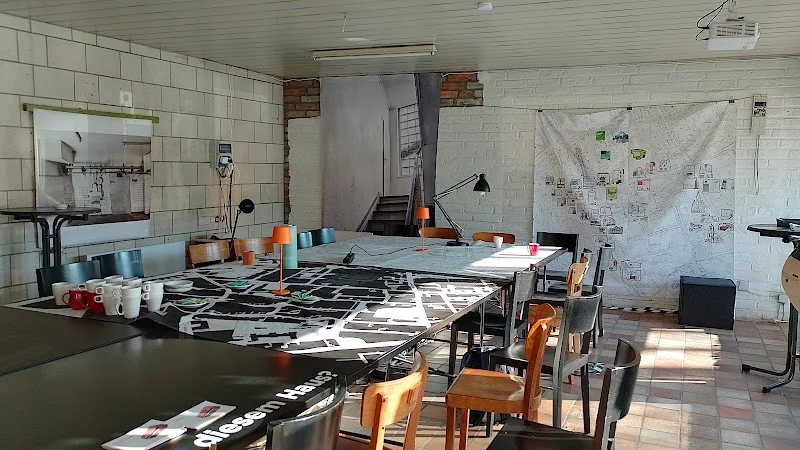
The UmBauLabor in Gelsenkirchen is not a classic exhibition space and not an ordinary event location, but a vibrant project of Baukultur NRW that rethinks the handling of existing buildings. At Bergmannstraße 23 in Gelsenkirchen-Ückendorf, a residential and commercial building constructed in 1902 is examined, experimented with, and discussed on a 1:1 scale to explore how sustainable and circular renovation can work. The house itself is part of the inquiry: it is the subject of analysis, a place of learning, a meeting point, and an experiment at the same time. With an information point, material storage, a small workshop, and a laboratory, the project concretely demonstrates how a building in need of renovation can become a public space for exchange, research, and community. The initiative runs until the end of 2026 and is aimed at the public, professionals, academia, and the neighborhood alike. This is precisely what makes it special: the UmBauLabor not only makes renovation culture visible but also tangible on-site. ([baukultur.nrw](https://baukultur.nrw/projekte/umbaulabor/))
UmBauLabor Gelsenkirchen and Baukultur NRW
Those searching for UmBauLabor Gelsenkirchen will find a project that is much more than a single event location. Baukultur NRW uses the building as an open real laboratory to practically address questions of preservation, renovation, and reuse. The project page describes the initiative as a 1:1 experiment in which new methods for investigating, assessing, processing, and utilizing materials are developed. This not only brings the architecture of the house to the forefront but also raises the question of how the value of existing structures can be redefined. The four format lines In the Neighborhood, In the Experiment, In the Discourse, and As Guests structure this work. In the Neighborhood, the project opens the door to the community and turns the house into a meeting point for discussions about resources and cycles. In the Experiment, students and trainees work on real renovation questions. In the Discourse, the UmBauLabor targets professionals from architecture, engineering, crafts, construction, urban planning, and city development. As Guests, it provides space for external formats from the neighborhood and beyond. This creates a very clear SEO relevance for search queries related to UmBauLabor NRW, Baukultur NRW, and labor renovation. The project thus connects content, place, and attitude: preferring to reuse or upgrade rather than build new, preferring to understand existing structures rather than reflexively replace them. ([baukultur.nrw](https://baukultur.nrw/fokus/umbaulabor/?utm_source=openai))
Flea Market, Neighborhood Meetings, and Events at UmBauLabor
A central search interest surrounding the UmBauLabor concerns events, and for good reason. Baukultur NRW explicitly describes the building as a place of information, discussion, and public engagement. The project page already mentions neighborhood meetings as well as formats such as lectures, readings, and exhibitions. The As Guests line further expands this offer, allowing external groups to bring their own topics into the house, provided they fit thematically with the project. This creates a flexible mix of professional debate, neighborhood reference, and open encounter. Particularly attractive for many users is also the flea market at UmBauLabor: an event in Gelsenkirchen-Ückendorf where furniture, lamps, books, and office supplies were given away for donations, simultaneously showcasing how reuse works in everyday life. The flea market is therefore not a side issue but fits thematically exactly with the fundamental idea of the house: not to hastily consider materials as waste but to think of their second use. For visitors, this creates an unusual combination of browsing, discovering, and learning. Those searching for UmBauLabor flea market, UmBauLabor events, or UmBauLabor Gelsenkirchen are actually looking for a place where renovation culture is not explained abstractly but translated into concrete formats. This is precisely what makes the project appealing and explains why public events work so well here. ([baukultur.nrw](https://baukultur.nrw/projekte/umbaulabor/))
Summer School at UmBauLabor: Learning Renovation Practically
Another focus of the search is the Summer School at UmBauLabor, as the experimental character of the project becomes particularly evident here. According to project communication, the In the Experiment line is designed to give students and trainees from various universities and disciplines the opportunity to learn renovation topics directly at the building. This happens not only in the form of discussions but also in workshops and an annual Summer School. The Summer School 2025 shows how concrete this becomes: students, craftsmen, and professionals worked together at UmBauLabor on ideas for a resource-saving renovation culture. This involved material cycles, the value of existing building materials, new uses, and the question of how something future-proof can emerge from the existing. This was complemented by a public evening program that involved people from the neighborhood and interested parties. This is precisely what is relevant for SEO research around UmBauLabor Summer School: the combination of learning, practice, community, and public exchange makes the format unique. The project shows that renovation is not just a technical process but a social and cultural one. Those participating in the Summer School view a building not just as a shell but as a material repository, a bearer of memories, and a starting point for new spatial ideas. This connection of theory and practice is one of the strongest reasons why UmBauLabor attracts attention beyond Gelsenkirchen. ([baukultur.nrw](https://baukultur.nrw/artikel/ressourcen-neu-denken-kreislaeufe-gestalten-ein-rueckblick-auf-die-summer-school-2025/?utm_source=openai))
Bergmannstraße 23 in Ückendorf: Building, History, and Neighborhood
The UmBauLabor is closely linked to its address and its history. The building at Bergmannstraße 23 was constructed in 1902 as a butcher shop and residence for the Nocke family. For several generations, a butcher shop operated on the ground floor before the house lost its original usage context in the early 2000s. Today, the building is in need of renovation, has significant structural defects, and was therefore vacated. This very condition makes it so interesting for Baukultur NRW because the house not only talks about renovation culture but also negotiates it. The upper floors are designed for six residential units, the courtyard situation is accessible from the street, and the building offers enough spatial flexibility for various uses such as analyses, expansions, events, workshops, and storage. The neighborhood is also relevant: the UmBauLabor is located in the redevelopment area Bochumer Straße in Gelsenkirchen-Ückendorf, an area of about 29 hectares south of the city center and main train station. According to official descriptions, around 21,033 people from 95 nations live there. The area is characterized by buildings from the Gründerzeit, many long vacancies, and a desire for revitalization. At the same time, numerous creative, social, and cultural initiatives already exist in the vicinity, giving the district its profile. The UmBauLabor connects precisely here and seeks to engage with existing dynamics rather than working in isolation. For search queries like UmBauLabor Ückendorf, Bergmannstraße 23, or UmBauLabor Gelsenkirchen, this anchoring in the neighborhood is an important argument. ([baukultur.nrw](https://baukultur.nrw/artikel/umbaulabor-gebaeude-und-quartier/))
Opening Hours, Tours, and Visits at UmBauLabor
Those wishing to visit the UmBauLabor will find clear practical information on the project page. According to official information, the house is open on Thursdays from 3 PM to 6:30 PM, and also by appointment. Tours of the building are available upon request. For a project location that is simultaneously a construction site, research space, and meeting point, this flexible visiting logic is particularly sensible. It allows for encounters with the neighborhood as well as focused work with groups, universities, or professionals. Additionally, events from recent years show that the house can be utilized in very different ways: from a kickoff event in March 2024 to workshop and discussion formats to open days and exhibitions. The architectural character of the house plays a role in this. The ground floor can be used as a meeting point, information center, and event venue, the courtyard is accessible from the street, and the structure of the building allows for changing uses. Practically, this means for visitors: the UmBauLabor is not a static museum space but a place with changing opening hours, opportunities for conversation, and uses. Those specifically searching for UmBauLabor opening hours, tours, or UmBauLabor events will not find a classic ticket logic here but an open project format that relies on contact and coordination. This makes the visit more personal than formal and supports the idea that renovation culture emerges in dialogue. ([baukultur.nrw](https://baukultur.nrw/projekte/umbaulabor/?utm_source=openai))
Why UmBauLabor is Important for Renovation Culture and Circular Thinking
The UmBauLabor is relevant because it concretely illustrates one of the central building policy questions of our time: What do we do with existing structures? Baukultur NRW clearly positions itself against the hasty logic of demolition and new construction and emphasizes that preservation, renovation, spatial reprogramming, and the reuse of existing structures should take precedence. In the UmBauLabor, this attitude is not only discussed but spatially and materially tested. This is precisely where the value for the topic of circular justice lies: materials are not viewed as disposable products but as resources with history and future. The house thus becomes a tangible proof that climate and resource protection is also a matter of planning, maintenance, and repurposing. The four format lines ensure that the project does not get stuck in professional debate. In the Neighborhood, it opens up to the community, In the Experiment to the next generation, In the Discourse to professionals, and As Guests to external initiatives. This creates a model that can be read far beyond Gelsenkirchen. Those searching for UmBauLabor NRW, UmBauLabor Baukultur NRW, or labor renovation are actually looking for a place for new thinking in existing structures. The UmBauLabor does not provide abstract theory but experiential knowledge: What does a renovation-capable building feel like? Which materials remain valuable? How can community be considered in such an experimental environment? And how does a difficult house become a place with a future? These questions make the project a strong symbol for the building transition and a magnet for all who want to not only understand but experience renovation culture. ([baukultur.nrw](https://baukultur.nrw/artikel/drei-fragen-an-prof-achim-pfeiffer-zum-thema-umbauen/?utm_source=openai))
Sources:
- Baukultur NRW - UmBauLabor - Official Project Page
- Baukultur NRW - UmBauLabor - The Building and Neighborhood
- Baukultur NRW - UmBauLabor - Focus Topic
- Baukultur NRW - Kickoff Event UmBauLabor
- Baukultur NRW - Summer School 2025 at UmBauLabor
- Baukultur NRW - Renovation Impossible!? In Discourse
- Rausgegangen - Flea Market at UmBauLabor
Mehr anzeigenWeniger anzeigen
UmBauLabor | Flea Market & Summer School
The UmBauLabor in Gelsenkirchen is not a classic exhibition space and not an ordinary event location, but a vibrant project of Baukultur NRW that rethinks the handling of existing buildings. At Bergmannstraße 23 in Gelsenkirchen-Ückendorf, a residential and commercial building constructed in 1902 is examined, experimented with, and discussed on a 1:1 scale to explore how sustainable and circular renovation can work. The house itself is part of the inquiry: it is the subject of analysis, a place of learning, a meeting point, and an experiment at the same time. With an information point, material storage, a small workshop, and a laboratory, the project concretely demonstrates how a building in need of renovation can become a public space for exchange, research, and community. The initiative runs until the end of 2026 and is aimed at the public, professionals, academia, and the neighborhood alike. This is precisely what makes it special: the UmBauLabor not only makes renovation culture visible but also tangible on-site. ([baukultur.nrw](https://baukultur.nrw/projekte/umbaulabor/))
UmBauLabor Gelsenkirchen and Baukultur NRW
Those searching for UmBauLabor Gelsenkirchen will find a project that is much more than a single event location. Baukultur NRW uses the building as an open real laboratory to practically address questions of preservation, renovation, and reuse. The project page describes the initiative as a 1:1 experiment in which new methods for investigating, assessing, processing, and utilizing materials are developed. This not only brings the architecture of the house to the forefront but also raises the question of how the value of existing structures can be redefined. The four format lines In the Neighborhood, In the Experiment, In the Discourse, and As Guests structure this work. In the Neighborhood, the project opens the door to the community and turns the house into a meeting point for discussions about resources and cycles. In the Experiment, students and trainees work on real renovation questions. In the Discourse, the UmBauLabor targets professionals from architecture, engineering, crafts, construction, urban planning, and city development. As Guests, it provides space for external formats from the neighborhood and beyond. This creates a very clear SEO relevance for search queries related to UmBauLabor NRW, Baukultur NRW, and labor renovation. The project thus connects content, place, and attitude: preferring to reuse or upgrade rather than build new, preferring to understand existing structures rather than reflexively replace them. ([baukultur.nrw](https://baukultur.nrw/fokus/umbaulabor/?utm_source=openai))
Flea Market, Neighborhood Meetings, and Events at UmBauLabor
A central search interest surrounding the UmBauLabor concerns events, and for good reason. Baukultur NRW explicitly describes the building as a place of information, discussion, and public engagement. The project page already mentions neighborhood meetings as well as formats such as lectures, readings, and exhibitions. The As Guests line further expands this offer, allowing external groups to bring their own topics into the house, provided they fit thematically with the project. This creates a flexible mix of professional debate, neighborhood reference, and open encounter. Particularly attractive for many users is also the flea market at UmBauLabor: an event in Gelsenkirchen-Ückendorf where furniture, lamps, books, and office supplies were given away for donations, simultaneously showcasing how reuse works in everyday life. The flea market is therefore not a side issue but fits thematically exactly with the fundamental idea of the house: not to hastily consider materials as waste but to think of their second use. For visitors, this creates an unusual combination of browsing, discovering, and learning. Those searching for UmBauLabor flea market, UmBauLabor events, or UmBauLabor Gelsenkirchen are actually looking for a place where renovation culture is not explained abstractly but translated into concrete formats. This is precisely what makes the project appealing and explains why public events work so well here. ([baukultur.nrw](https://baukultur.nrw/projekte/umbaulabor/))
Summer School at UmBauLabor: Learning Renovation Practically
Another focus of the search is the Summer School at UmBauLabor, as the experimental character of the project becomes particularly evident here. According to project communication, the In the Experiment line is designed to give students and trainees from various universities and disciplines the opportunity to learn renovation topics directly at the building. This happens not only in the form of discussions but also in workshops and an annual Summer School. The Summer School 2025 shows how concrete this becomes: students, craftsmen, and professionals worked together at UmBauLabor on ideas for a resource-saving renovation culture. This involved material cycles, the value of existing building materials, new uses, and the question of how something future-proof can emerge from the existing. This was complemented by a public evening program that involved people from the neighborhood and interested parties. This is precisely what is relevant for SEO research around UmBauLabor Summer School: the combination of learning, practice, community, and public exchange makes the format unique. The project shows that renovation is not just a technical process but a social and cultural one. Those participating in the Summer School view a building not just as a shell but as a material repository, a bearer of memories, and a starting point for new spatial ideas. This connection of theory and practice is one of the strongest reasons why UmBauLabor attracts attention beyond Gelsenkirchen. ([baukultur.nrw](https://baukultur.nrw/artikel/ressourcen-neu-denken-kreislaeufe-gestalten-ein-rueckblick-auf-die-summer-school-2025/?utm_source=openai))
Bergmannstraße 23 in Ückendorf: Building, History, and Neighborhood
The UmBauLabor is closely linked to its address and its history. The building at Bergmannstraße 23 was constructed in 1902 as a butcher shop and residence for the Nocke family. For several generations, a butcher shop operated on the ground floor before the house lost its original usage context in the early 2000s. Today, the building is in need of renovation, has significant structural defects, and was therefore vacated. This very condition makes it so interesting for Baukultur NRW because the house not only talks about renovation culture but also negotiates it. The upper floors are designed for six residential units, the courtyard situation is accessible from the street, and the building offers enough spatial flexibility for various uses such as analyses, expansions, events, workshops, and storage. The neighborhood is also relevant: the UmBauLabor is located in the redevelopment area Bochumer Straße in Gelsenkirchen-Ückendorf, an area of about 29 hectares south of the city center and main train station. According to official descriptions, around 21,033 people from 95 nations live there. The area is characterized by buildings from the Gründerzeit, many long vacancies, and a desire for revitalization. At the same time, numerous creative, social, and cultural initiatives already exist in the vicinity, giving the district its profile. The UmBauLabor connects precisely here and seeks to engage with existing dynamics rather than working in isolation. For search queries like UmBauLabor Ückendorf, Bergmannstraße 23, or UmBauLabor Gelsenkirchen, this anchoring in the neighborhood is an important argument. ([baukultur.nrw](https://baukultur.nrw/artikel/umbaulabor-gebaeude-und-quartier/))
Opening Hours, Tours, and Visits at UmBauLabor
Those wishing to visit the UmBauLabor will find clear practical information on the project page. According to official information, the house is open on Thursdays from 3 PM to 6:30 PM, and also by appointment. Tours of the building are available upon request. For a project location that is simultaneously a construction site, research space, and meeting point, this flexible visiting logic is particularly sensible. It allows for encounters with the neighborhood as well as focused work with groups, universities, or professionals. Additionally, events from recent years show that the house can be utilized in very different ways: from a kickoff event in March 2024 to workshop and discussion formats to open days and exhibitions. The architectural character of the house plays a role in this. The ground floor can be used as a meeting point, information center, and event venue, the courtyard is accessible from the street, and the structure of the building allows for changing uses. Practically, this means for visitors: the UmBauLabor is not a static museum space but a place with changing opening hours, opportunities for conversation, and uses. Those specifically searching for UmBauLabor opening hours, tours, or UmBauLabor events will not find a classic ticket logic here but an open project format that relies on contact and coordination. This makes the visit more personal than formal and supports the idea that renovation culture emerges in dialogue. ([baukultur.nrw](https://baukultur.nrw/projekte/umbaulabor/?utm_source=openai))
Why UmBauLabor is Important for Renovation Culture and Circular Thinking
The UmBauLabor is relevant because it concretely illustrates one of the central building policy questions of our time: What do we do with existing structures? Baukultur NRW clearly positions itself against the hasty logic of demolition and new construction and emphasizes that preservation, renovation, spatial reprogramming, and the reuse of existing structures should take precedence. In the UmBauLabor, this attitude is not only discussed but spatially and materially tested. This is precisely where the value for the topic of circular justice lies: materials are not viewed as disposable products but as resources with history and future. The house thus becomes a tangible proof that climate and resource protection is also a matter of planning, maintenance, and repurposing. The four format lines ensure that the project does not get stuck in professional debate. In the Neighborhood, it opens up to the community, In the Experiment to the next generation, In the Discourse to professionals, and As Guests to external initiatives. This creates a model that can be read far beyond Gelsenkirchen. Those searching for UmBauLabor NRW, UmBauLabor Baukultur NRW, or labor renovation are actually looking for a place for new thinking in existing structures. The UmBauLabor does not provide abstract theory but experiential knowledge: What does a renovation-capable building feel like? Which materials remain valuable? How can community be considered in such an experimental environment? And how does a difficult house become a place with a future? These questions make the project a strong symbol for the building transition and a magnet for all who want to not only understand but experience renovation culture. ([baukultur.nrw](https://baukultur.nrw/artikel/drei-fragen-an-prof-achim-pfeiffer-zum-thema-umbauen/?utm_source=openai))
Sources:
- Baukultur NRW - UmBauLabor - Official Project Page
- Baukultur NRW - UmBauLabor - The Building and Neighborhood
- Baukultur NRW - UmBauLabor - Focus Topic
- Baukultur NRW - Kickoff Event UmBauLabor
- Baukultur NRW - Summer School 2025 at UmBauLabor
- Baukultur NRW - Renovation Impossible!? In Discourse
- Rausgegangen - Flea Market at UmBauLabor
UmBauLabor | Flea Market & Summer School
The UmBauLabor in Gelsenkirchen is not a classic exhibition space and not an ordinary event location, but a vibrant project of Baukultur NRW that rethinks the handling of existing buildings. At Bergmannstraße 23 in Gelsenkirchen-Ückendorf, a residential and commercial building constructed in 1902 is examined, experimented with, and discussed on a 1:1 scale to explore how sustainable and circular renovation can work. The house itself is part of the inquiry: it is the subject of analysis, a place of learning, a meeting point, and an experiment at the same time. With an information point, material storage, a small workshop, and a laboratory, the project concretely demonstrates how a building in need of renovation can become a public space for exchange, research, and community. The initiative runs until the end of 2026 and is aimed at the public, professionals, academia, and the neighborhood alike. This is precisely what makes it special: the UmBauLabor not only makes renovation culture visible but also tangible on-site. ([baukultur.nrw](https://baukultur.nrw/projekte/umbaulabor/))
UmBauLabor Gelsenkirchen and Baukultur NRW
Those searching for UmBauLabor Gelsenkirchen will find a project that is much more than a single event location. Baukultur NRW uses the building as an open real laboratory to practically address questions of preservation, renovation, and reuse. The project page describes the initiative as a 1:1 experiment in which new methods for investigating, assessing, processing, and utilizing materials are developed. This not only brings the architecture of the house to the forefront but also raises the question of how the value of existing structures can be redefined. The four format lines In the Neighborhood, In the Experiment, In the Discourse, and As Guests structure this work. In the Neighborhood, the project opens the door to the community and turns the house into a meeting point for discussions about resources and cycles. In the Experiment, students and trainees work on real renovation questions. In the Discourse, the UmBauLabor targets professionals from architecture, engineering, crafts, construction, urban planning, and city development. As Guests, it provides space for external formats from the neighborhood and beyond. This creates a very clear SEO relevance for search queries related to UmBauLabor NRW, Baukultur NRW, and labor renovation. The project thus connects content, place, and attitude: preferring to reuse or upgrade rather than build new, preferring to understand existing structures rather than reflexively replace them. ([baukultur.nrw](https://baukultur.nrw/fokus/umbaulabor/?utm_source=openai))
Flea Market, Neighborhood Meetings, and Events at UmBauLabor
A central search interest surrounding the UmBauLabor concerns events, and for good reason. Baukultur NRW explicitly describes the building as a place of information, discussion, and public engagement. The project page already mentions neighborhood meetings as well as formats such as lectures, readings, and exhibitions. The As Guests line further expands this offer, allowing external groups to bring their own topics into the house, provided they fit thematically with the project. This creates a flexible mix of professional debate, neighborhood reference, and open encounter. Particularly attractive for many users is also the flea market at UmBauLabor: an event in Gelsenkirchen-Ückendorf where furniture, lamps, books, and office supplies were given away for donations, simultaneously showcasing how reuse works in everyday life. The flea market is therefore not a side issue but fits thematically exactly with the fundamental idea of the house: not to hastily consider materials as waste but to think of their second use. For visitors, this creates an unusual combination of browsing, discovering, and learning. Those searching for UmBauLabor flea market, UmBauLabor events, or UmBauLabor Gelsenkirchen are actually looking for a place where renovation culture is not explained abstractly but translated into concrete formats. This is precisely what makes the project appealing and explains why public events work so well here. ([baukultur.nrw](https://baukultur.nrw/projekte/umbaulabor/))
Summer School at UmBauLabor: Learning Renovation Practically
Another focus of the search is the Summer School at UmBauLabor, as the experimental character of the project becomes particularly evident here. According to project communication, the In the Experiment line is designed to give students and trainees from various universities and disciplines the opportunity to learn renovation topics directly at the building. This happens not only in the form of discussions but also in workshops and an annual Summer School. The Summer School 2025 shows how concrete this becomes: students, craftsmen, and professionals worked together at UmBauLabor on ideas for a resource-saving renovation culture. This involved material cycles, the value of existing building materials, new uses, and the question of how something future-proof can emerge from the existing. This was complemented by a public evening program that involved people from the neighborhood and interested parties. This is precisely what is relevant for SEO research around UmBauLabor Summer School: the combination of learning, practice, community, and public exchange makes the format unique. The project shows that renovation is not just a technical process but a social and cultural one. Those participating in the Summer School view a building not just as a shell but as a material repository, a bearer of memories, and a starting point for new spatial ideas. This connection of theory and practice is one of the strongest reasons why UmBauLabor attracts attention beyond Gelsenkirchen. ([baukultur.nrw](https://baukultur.nrw/artikel/ressourcen-neu-denken-kreislaeufe-gestalten-ein-rueckblick-auf-die-summer-school-2025/?utm_source=openai))
Bergmannstraße 23 in Ückendorf: Building, History, and Neighborhood
The UmBauLabor is closely linked to its address and its history. The building at Bergmannstraße 23 was constructed in 1902 as a butcher shop and residence for the Nocke family. For several generations, a butcher shop operated on the ground floor before the house lost its original usage context in the early 2000s. Today, the building is in need of renovation, has significant structural defects, and was therefore vacated. This very condition makes it so interesting for Baukultur NRW because the house not only talks about renovation culture but also negotiates it. The upper floors are designed for six residential units, the courtyard situation is accessible from the street, and the building offers enough spatial flexibility for various uses such as analyses, expansions, events, workshops, and storage. The neighborhood is also relevant: the UmBauLabor is located in the redevelopment area Bochumer Straße in Gelsenkirchen-Ückendorf, an area of about 29 hectares south of the city center and main train station. According to official descriptions, around 21,033 people from 95 nations live there. The area is characterized by buildings from the Gründerzeit, many long vacancies, and a desire for revitalization. At the same time, numerous creative, social, and cultural initiatives already exist in the vicinity, giving the district its profile. The UmBauLabor connects precisely here and seeks to engage with existing dynamics rather than working in isolation. For search queries like UmBauLabor Ückendorf, Bergmannstraße 23, or UmBauLabor Gelsenkirchen, this anchoring in the neighborhood is an important argument. ([baukultur.nrw](https://baukultur.nrw/artikel/umbaulabor-gebaeude-und-quartier/))
Opening Hours, Tours, and Visits at UmBauLabor
Those wishing to visit the UmBauLabor will find clear practical information on the project page. According to official information, the house is open on Thursdays from 3 PM to 6:30 PM, and also by appointment. Tours of the building are available upon request. For a project location that is simultaneously a construction site, research space, and meeting point, this flexible visiting logic is particularly sensible. It allows for encounters with the neighborhood as well as focused work with groups, universities, or professionals. Additionally, events from recent years show that the house can be utilized in very different ways: from a kickoff event in March 2024 to workshop and discussion formats to open days and exhibitions. The architectural character of the house plays a role in this. The ground floor can be used as a meeting point, information center, and event venue, the courtyard is accessible from the street, and the structure of the building allows for changing uses. Practically, this means for visitors: the UmBauLabor is not a static museum space but a place with changing opening hours, opportunities for conversation, and uses. Those specifically searching for UmBauLabor opening hours, tours, or UmBauLabor events will not find a classic ticket logic here but an open project format that relies on contact and coordination. This makes the visit more personal than formal and supports the idea that renovation culture emerges in dialogue. ([baukultur.nrw](https://baukultur.nrw/projekte/umbaulabor/?utm_source=openai))
Why UmBauLabor is Important for Renovation Culture and Circular Thinking
The UmBauLabor is relevant because it concretely illustrates one of the central building policy questions of our time: What do we do with existing structures? Baukultur NRW clearly positions itself against the hasty logic of demolition and new construction and emphasizes that preservation, renovation, spatial reprogramming, and the reuse of existing structures should take precedence. In the UmBauLabor, this attitude is not only discussed but spatially and materially tested. This is precisely where the value for the topic of circular justice lies: materials are not viewed as disposable products but as resources with history and future. The house thus becomes a tangible proof that climate and resource protection is also a matter of planning, maintenance, and repurposing. The four format lines ensure that the project does not get stuck in professional debate. In the Neighborhood, it opens up to the community, In the Experiment to the next generation, In the Discourse to professionals, and As Guests to external initiatives. This creates a model that can be read far beyond Gelsenkirchen. Those searching for UmBauLabor NRW, UmBauLabor Baukultur NRW, or labor renovation are actually looking for a place for new thinking in existing structures. The UmBauLabor does not provide abstract theory but experiential knowledge: What does a renovation-capable building feel like? Which materials remain valuable? How can community be considered in such an experimental environment? And how does a difficult house become a place with a future? These questions make the project a strong symbol for the building transition and a magnet for all who want to not only understand but experience renovation culture. ([baukultur.nrw](https://baukultur.nrw/artikel/drei-fragen-an-prof-achim-pfeiffer-zum-thema-umbauen/?utm_source=openai))
Sources:
- Baukultur NRW - UmBauLabor - Official Project Page
- Baukultur NRW - UmBauLabor - The Building and Neighborhood
- Baukultur NRW - UmBauLabor - Focus Topic
- Baukultur NRW - Kickoff Event UmBauLabor
- Baukultur NRW - Summer School 2025 at UmBauLabor
- Baukultur NRW - Renovation Impossible!? In Discourse
- Rausgegangen - Flea Market at UmBauLabor
Upcoming Events
No events found
Frequently Asked Questions
Reviews
No reviews found