
Gelsenkirchen
Sankt-Urbanus-Kirchpl. 9, 45894 Gelsenkirchen, Deutschland
Propsteikirche St. Urbanus | Photos & Directions
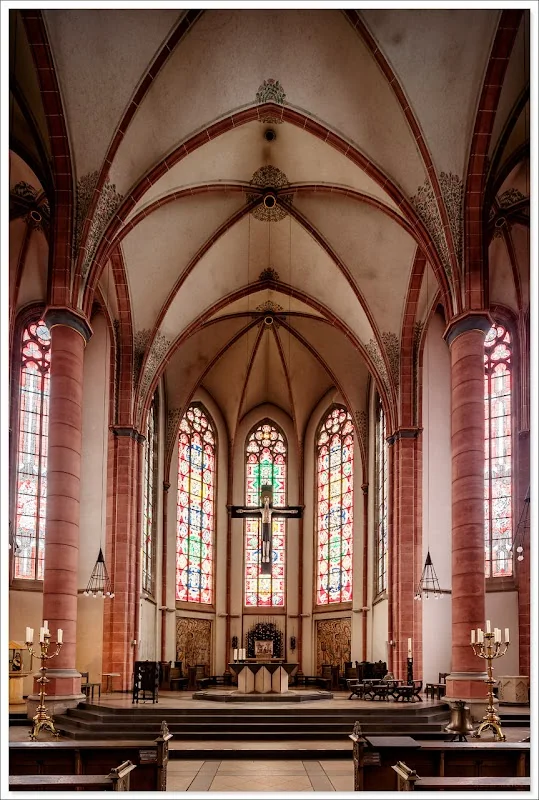
The Propsteikirche St. Urbanus is one of those buildings where the interest in it becomes immediately understandable: Those searching for photos, images, or even reviews usually want to gain a quick impression of why this church so distinctly shapes the center of Gelsenkirchen-Buer. This impression is delivered by the Propsteikirche at first glance. It is the main Catholic church of Gelsenkirchen-Buer, belongs to the parish of St. Urbanus, and is situated in a developed city center characterized by church, square, and community life. The official presentation of the parish describes it as a distinctive church, confidently even referred to as a “cathedral,” and this effect explains why so many people are interested in the building, its history, and its photographic perspectives. The church is not only a religious place but also an identity-forming anchor in the district. At the same time, it is a place where history, architecture, liturgy, and contemporary parish practice intertwine. This makes it equally exciting for visitors as for people specifically looking for directions, parking, services, or event offerings. ([urbanus-buer.de](https://www.urbanus-buer.de/vor-ort/st-urbanus/))
Photos and Images of the Propsteikirche St. Urbanus: Why the First Impression is So Strong
The great interest in photos and images of the Propsteikirche St. Urbanus is easily understandable because the building combines several features that immediately stand out in pictures: the neo-Gothic basic form, the distinctive tower, the location at the central church square, and the historical presence right in the middle of Buer. Additionally, the church is described in official sources as the main Catholic church of Gelsenkirchen-Buer and stands in a location that has been ecclesiastically shaped for centuries. Therefore, anyone photographing or viewing the Propsteikirche sees not just an individual church but a piece of city history. The community describes the surroundings as the center of Buer, and the church is even perceived there as a “cathedral,” despite the missing spire. This contrast between historical dignity and a somewhat unusual silhouette makes the place visually interesting. The building appears both monumental and close to the city, making it particularly appealing for exterior shots. The interior perspective is also interesting, as the church has been repeatedly redesigned and today shows a developed, historically layered spatial effect. Those searching for images are therefore often looking not just for a beautiful motif but for an atmosphere: quiet devotion, historical substance, and urban presence in a single building. The frequent search queries around images, photos, and reviews are therefore more a sign of the special impact of the place than mere curiosity. The official website and the city portal primarily provide reliable facts about history, structure, and community life; however, the actual visual impact arises from the interplay of building form, square situation, and urban surroundings. ([urbanus-buer.de](https://www.urbanus-buer.de/vor-ort/st-urbanus/))
History and Architecture of the Propsteikirche St. Urbanus
The current Propsteikirche St. Urbanus was built starting in 1890 according to plans by architect Bernhard Hertel and was consecrated on October 10, 1893, by the Bishop of Münster, Hermann Dingelstad. These dates already show that this is a church building from the late 19th century, deliberately designed to be monumental and representative. The church was constructed as a neo-Gothic building and was intended to accommodate about 1,800 people at the time of completion. Its current form is also the result of a long history of construction and renovation. There were already significantly older church buildings on the site, and sources point to very early roots that date back to the Middle Ages and partly to around 1200. Both the interior and exterior of the church have been repeatedly adapted, renewed, and adjusted to liturgical changes. In 1900, it received its first painting, a new organ was installed in 1914, further renovations and mosaic work followed in the 1920s, and in 1936, the choir area was redesigned to give the community more participation in the liturgy. World War II brought severe damage, but from 1946 to 1949, the church was rebuilt in a simplified form. In 1963/64, a further redesign took place in line with the reforms of the Second Vatican Council. From 1981 to 1983, there was an interior renovation, and since 1989/90, the roofs have been covered in copper. The building is a three-nave, three-bay hall church with a single-nave, five-bay transept and a three-apsidal choir. The tower measures about 48 meters to the flat roof and shapes the silhouette of the building despite the missing spire. The materials used are also typical and high-quality: bricks, Ibbenbüren sandstone blocks, and profiled tuff stone define the exterior. The church is oriented northeast along Hochstraße, and this architectural precision makes it one of the most important sacred buildings in northern Gelsenkirchen. ([urbanus-buer.de](https://www.urbanus-buer.de/vor-ort/st-urbanus/orte-der-begegnung/st-urbanus-kirche/))
Address and Directions: How the Church is Located in the Center of Buer
For directions, it is especially important that the Propsteikirche St. Urbanus is located right in the center of Gelsenkirchen-Buer and is thus very well integrated into the urban structure. The worship locations of the parish list the St. Urbanus church under the address St.-Urbanus-Kirchplatz 1, while the parish and community office can be found at St.-Urbanus-Kirchplatz 9. This spatial proximity shows how closely church, administration, and community life are interconnected. Anyone traveling with the aim of visiting the church or experiencing a service moves in a clearly developed urban space with short distances. The official parish describes the area around the center of Buer as the place where the Propsteikirche confidently shapes the cityscape. The fact that the church is oriented northeast along Hochstraße is also interesting for orientation, as it helps in placing it within the city layout. Practically, this means: The church is not a hidden sacred building on the edge but a clearly visible focal point of a lively district. This facilitates the search on-site, especially if one is coming on foot from the city center or wants to connect several stations in Buer. For planning visits, photo tours, or short stops, this is very pleasant because the location in the middle of the district makes the transition between a city tour and a church visit almost seamless. Especially for those looking for directions, addresses, or the best orientation in the neighborhood, this combination of central location and clearly named contact points is a real advantage. The church's everyday life also benefits from this, as services, concerts, and community offerings remain easily accessible. ([urbanus-buer.de](https://www.urbanus-buer.de/termine-gottesdienste/gottesdienstorte/?utm_source=openai))
Parking in Gelsenkirchen-Buer: What Options the City Offers
When it comes to parking, the official parking guidance system of the city of Gelsenkirchen is particularly helpful. For Gelsenkirchen-Buer Mitte, the city explicitly points out that there are numerous parking garages and spaces available and that a static parking guidance system supports orientation. Additionally, the city refers to the City App Gelsenkirchen, which displays free parking spaces in real-time and can be directly accessed. This is especially important for visitors to the Propsteikirche because while the church square is centrally located, the most sensible parking solution is often found in the broader surroundings of Buer Mitte. The areas mentioned in the parking guidance system include among others Domplatte, Rathausplatz, Marktplatz, Marientor, Rathaus, Turmstraße, and Am Goldberg; furthermore, additional parking areas such as Postamt, Marienhospital, Michaelshaus, Beckeradstraße, Breddestraße, and Rottmannsiepe are listed. Therefore, anyone searching for the term “parking St. Urbanus Buer” is usually looking for a reliable strategy for the entire surrounding area of the city center. Exactly that is provided by the city information. This is useful for church visits but also for photos, city walks, or attending a concert, as the routes in Buer remain manageable and parking and walking can be well combined. The combination of the city’s parking guidance system and app is particularly practical, as it allows for flexible adjustments to the arrival on-site if certain areas are heavily occupied. For a church located in a vibrant city center, this infrastructure is an important advantage. It supports both everyday community visits and special occasions with many guests. ([gelsenkirchen.de](https://www.gelsenkirchen.de/de/infrastruktur/verkehr/rund_ums_auto/parken/Parkleitsystem_Gelsenkirchen.aspx))
Services, Church Music, and Special Events
The Propsteikirche St. Urbanus is not only a historical building but an active place of faith and culture. The official website of the parish publishes current service dates and shows that church life in St. Urbanus takes place regularly and in a diverse manner. The parish has about 31,000 members and is thus a large pastoral community that extends over several locations in northern Gelsenkirchen. For the Propsteikirche itself, church music is a particularly important focus. The website explicitly highlights that a diverse range of offerings in the field of church music has been one of the community's focal points for many years. This also includes references to concerts, such as with the Gelsenkirchen Bach Choir, as well as special musical services. Additionally, there are formats like the service-to-go: a circular route starts at the Urbanuskirche, leads through the Buer green belt, and connects spiritual impulses with movement and urban experience. This shows that the Propsteikirche stands not only for classical mass celebrations but also for creative, modern forms of faith communication. Projects such as the light installation “Lux Ovalis” in the church in 2020 and the urban-church environment of city pastoral care and encounters also add to this. Such offerings make the Propsteikirche particularly interesting for people looking for programs, events, or special experiences. The church is thus both a liturgical center, a cultural venue, and a place of encounter. For this reason, it appears in search queries not only under “services” but also under “program,” “photos,” “directions,” and “reviews.” Those planning a visit will find here not a static sight but a lively church with recurring dates, musical accents, and a community that translates its history into the present. ([urbanus-buer.de](https://www.urbanus-buer.de/vor-ort/st-urbanus/?utm_source=openai))
Planning a Visit, Contact, and Practical Information
For good planning, it is worthwhile to look at the official contact and administrative data of the parish. The parish and community office St. Urbanus is located at St.-Urbanus-Kirchplatz 9 in 45894 Gelsenkirchen. The opening hours are indicated as Monday to Friday mornings and additionally Tuesday afternoons, and the website refers to a central phone number and email address for all organizational questions. This is practical if one needs information in advance about services, events, group offerings, or special occasions. At the same time, the website shows that the parish is very broadly positioned: It is aimed at children and families, young people, seniors, the sick, and the grieving, thus combining classic parish work with diaconal and social presence. For visitors, this means that the Propsteikirche should not be viewed in isolation but in the context of a lively parish. Therefore, those searching for “Propstei St. Urbanus Gelsenkirchen Buer” are usually looking not only for the building itself but also for the underlying network of services, offices, music, groups, and social responsibility. For the pure visit to the church, the official pages primarily provide current dates and clear contact paths; fixed general visitor opening hours are not listed as standard there. This is not unusual in church contexts, as access is often linked to services, events, or parish life. Those wanting to take photos, participate in a service, or learn about the history will be well advised with the official pages. The combination of central location, urban parking infrastructure, and a well-organized parish makes the Propsteikirche St. Urbanus a place that can be experienced without detours. It is historically significant, architecturally striking, and at the same time an active part of today’s northern Gelsenkirchen. ([urbanus-buer.de](https://www.urbanus-buer.de/vor-ort/st-urbanus/kontakte/?utm_source=openai))
Sources:
Show moreShow less
Propsteikirche St. Urbanus | Photos & Directions
The Propsteikirche St. Urbanus is one of those buildings where the interest in it becomes immediately understandable: Those searching for photos, images, or even reviews usually want to gain a quick impression of why this church so distinctly shapes the center of Gelsenkirchen-Buer. This impression is delivered by the Propsteikirche at first glance. It is the main Catholic church of Gelsenkirchen-Buer, belongs to the parish of St. Urbanus, and is situated in a developed city center characterized by church, square, and community life. The official presentation of the parish describes it as a distinctive church, confidently even referred to as a “cathedral,” and this effect explains why so many people are interested in the building, its history, and its photographic perspectives. The church is not only a religious place but also an identity-forming anchor in the district. At the same time, it is a place where history, architecture, liturgy, and contemporary parish practice intertwine. This makes it equally exciting for visitors as for people specifically looking for directions, parking, services, or event offerings. ([urbanus-buer.de](https://www.urbanus-buer.de/vor-ort/st-urbanus/))
Photos and Images of the Propsteikirche St. Urbanus: Why the First Impression is So Strong
The great interest in photos and images of the Propsteikirche St. Urbanus is easily understandable because the building combines several features that immediately stand out in pictures: the neo-Gothic basic form, the distinctive tower, the location at the central church square, and the historical presence right in the middle of Buer. Additionally, the church is described in official sources as the main Catholic church of Gelsenkirchen-Buer and stands in a location that has been ecclesiastically shaped for centuries. Therefore, anyone photographing or viewing the Propsteikirche sees not just an individual church but a piece of city history. The community describes the surroundings as the center of Buer, and the church is even perceived there as a “cathedral,” despite the missing spire. This contrast between historical dignity and a somewhat unusual silhouette makes the place visually interesting. The building appears both monumental and close to the city, making it particularly appealing for exterior shots. The interior perspective is also interesting, as the church has been repeatedly redesigned and today shows a developed, historically layered spatial effect. Those searching for images are therefore often looking not just for a beautiful motif but for an atmosphere: quiet devotion, historical substance, and urban presence in a single building. The frequent search queries around images, photos, and reviews are therefore more a sign of the special impact of the place than mere curiosity. The official website and the city portal primarily provide reliable facts about history, structure, and community life; however, the actual visual impact arises from the interplay of building form, square situation, and urban surroundings. ([urbanus-buer.de](https://www.urbanus-buer.de/vor-ort/st-urbanus/))
History and Architecture of the Propsteikirche St. Urbanus
The current Propsteikirche St. Urbanus was built starting in 1890 according to plans by architect Bernhard Hertel and was consecrated on October 10, 1893, by the Bishop of Münster, Hermann Dingelstad. These dates already show that this is a church building from the late 19th century, deliberately designed to be monumental and representative. The church was constructed as a neo-Gothic building and was intended to accommodate about 1,800 people at the time of completion. Its current form is also the result of a long history of construction and renovation. There were already significantly older church buildings on the site, and sources point to very early roots that date back to the Middle Ages and partly to around 1200. Both the interior and exterior of the church have been repeatedly adapted, renewed, and adjusted to liturgical changes. In 1900, it received its first painting, a new organ was installed in 1914, further renovations and mosaic work followed in the 1920s, and in 1936, the choir area was redesigned to give the community more participation in the liturgy. World War II brought severe damage, but from 1946 to 1949, the church was rebuilt in a simplified form. In 1963/64, a further redesign took place in line with the reforms of the Second Vatican Council. From 1981 to 1983, there was an interior renovation, and since 1989/90, the roofs have been covered in copper. The building is a three-nave, three-bay hall church with a single-nave, five-bay transept and a three-apsidal choir. The tower measures about 48 meters to the flat roof and shapes the silhouette of the building despite the missing spire. The materials used are also typical and high-quality: bricks, Ibbenbüren sandstone blocks, and profiled tuff stone define the exterior. The church is oriented northeast along Hochstraße, and this architectural precision makes it one of the most important sacred buildings in northern Gelsenkirchen. ([urbanus-buer.de](https://www.urbanus-buer.de/vor-ort/st-urbanus/orte-der-begegnung/st-urbanus-kirche/))
Address and Directions: How the Church is Located in the Center of Buer
For directions, it is especially important that the Propsteikirche St. Urbanus is located right in the center of Gelsenkirchen-Buer and is thus very well integrated into the urban structure. The worship locations of the parish list the St. Urbanus church under the address St.-Urbanus-Kirchplatz 1, while the parish and community office can be found at St.-Urbanus-Kirchplatz 9. This spatial proximity shows how closely church, administration, and community life are interconnected. Anyone traveling with the aim of visiting the church or experiencing a service moves in a clearly developed urban space with short distances. The official parish describes the area around the center of Buer as the place where the Propsteikirche confidently shapes the cityscape. The fact that the church is oriented northeast along Hochstraße is also interesting for orientation, as it helps in placing it within the city layout. Practically, this means: The church is not a hidden sacred building on the edge but a clearly visible focal point of a lively district. This facilitates the search on-site, especially if one is coming on foot from the city center or wants to connect several stations in Buer. For planning visits, photo tours, or short stops, this is very pleasant because the location in the middle of the district makes the transition between a city tour and a church visit almost seamless. Especially for those looking for directions, addresses, or the best orientation in the neighborhood, this combination of central location and clearly named contact points is a real advantage. The church's everyday life also benefits from this, as services, concerts, and community offerings remain easily accessible. ([urbanus-buer.de](https://www.urbanus-buer.de/termine-gottesdienste/gottesdienstorte/?utm_source=openai))
Parking in Gelsenkirchen-Buer: What Options the City Offers
When it comes to parking, the official parking guidance system of the city of Gelsenkirchen is particularly helpful. For Gelsenkirchen-Buer Mitte, the city explicitly points out that there are numerous parking garages and spaces available and that a static parking guidance system supports orientation. Additionally, the city refers to the City App Gelsenkirchen, which displays free parking spaces in real-time and can be directly accessed. This is especially important for visitors to the Propsteikirche because while the church square is centrally located, the most sensible parking solution is often found in the broader surroundings of Buer Mitte. The areas mentioned in the parking guidance system include among others Domplatte, Rathausplatz, Marktplatz, Marientor, Rathaus, Turmstraße, and Am Goldberg; furthermore, additional parking areas such as Postamt, Marienhospital, Michaelshaus, Beckeradstraße, Breddestraße, and Rottmannsiepe are listed. Therefore, anyone searching for the term “parking St. Urbanus Buer” is usually looking for a reliable strategy for the entire surrounding area of the city center. Exactly that is provided by the city information. This is useful for church visits but also for photos, city walks, or attending a concert, as the routes in Buer remain manageable and parking and walking can be well combined. The combination of the city’s parking guidance system and app is particularly practical, as it allows for flexible adjustments to the arrival on-site if certain areas are heavily occupied. For a church located in a vibrant city center, this infrastructure is an important advantage. It supports both everyday community visits and special occasions with many guests. ([gelsenkirchen.de](https://www.gelsenkirchen.de/de/infrastruktur/verkehr/rund_ums_auto/parken/Parkleitsystem_Gelsenkirchen.aspx))
Services, Church Music, and Special Events
The Propsteikirche St. Urbanus is not only a historical building but an active place of faith and culture. The official website of the parish publishes current service dates and shows that church life in St. Urbanus takes place regularly and in a diverse manner. The parish has about 31,000 members and is thus a large pastoral community that extends over several locations in northern Gelsenkirchen. For the Propsteikirche itself, church music is a particularly important focus. The website explicitly highlights that a diverse range of offerings in the field of church music has been one of the community's focal points for many years. This also includes references to concerts, such as with the Gelsenkirchen Bach Choir, as well as special musical services. Additionally, there are formats like the service-to-go: a circular route starts at the Urbanuskirche, leads through the Buer green belt, and connects spiritual impulses with movement and urban experience. This shows that the Propsteikirche stands not only for classical mass celebrations but also for creative, modern forms of faith communication. Projects such as the light installation “Lux Ovalis” in the church in 2020 and the urban-church environment of city pastoral care and encounters also add to this. Such offerings make the Propsteikirche particularly interesting for people looking for programs, events, or special experiences. The church is thus both a liturgical center, a cultural venue, and a place of encounter. For this reason, it appears in search queries not only under “services” but also under “program,” “photos,” “directions,” and “reviews.” Those planning a visit will find here not a static sight but a lively church with recurring dates, musical accents, and a community that translates its history into the present. ([urbanus-buer.de](https://www.urbanus-buer.de/vor-ort/st-urbanus/?utm_source=openai))
Planning a Visit, Contact, and Practical Information
For good planning, it is worthwhile to look at the official contact and administrative data of the parish. The parish and community office St. Urbanus is located at St.-Urbanus-Kirchplatz 9 in 45894 Gelsenkirchen. The opening hours are indicated as Monday to Friday mornings and additionally Tuesday afternoons, and the website refers to a central phone number and email address for all organizational questions. This is practical if one needs information in advance about services, events, group offerings, or special occasions. At the same time, the website shows that the parish is very broadly positioned: It is aimed at children and families, young people, seniors, the sick, and the grieving, thus combining classic parish work with diaconal and social presence. For visitors, this means that the Propsteikirche should not be viewed in isolation but in the context of a lively parish. Therefore, those searching for “Propstei St. Urbanus Gelsenkirchen Buer” are usually looking not only for the building itself but also for the underlying network of services, offices, music, groups, and social responsibility. For the pure visit to the church, the official pages primarily provide current dates and clear contact paths; fixed general visitor opening hours are not listed as standard there. This is not unusual in church contexts, as access is often linked to services, events, or parish life. Those wanting to take photos, participate in a service, or learn about the history will be well advised with the official pages. The combination of central location, urban parking infrastructure, and a well-organized parish makes the Propsteikirche St. Urbanus a place that can be experienced without detours. It is historically significant, architecturally striking, and at the same time an active part of today’s northern Gelsenkirchen. ([urbanus-buer.de](https://www.urbanus-buer.de/vor-ort/st-urbanus/kontakte/?utm_source=openai))
Sources:
Propsteikirche St. Urbanus | Photos & Directions
The Propsteikirche St. Urbanus is one of those buildings where the interest in it becomes immediately understandable: Those searching for photos, images, or even reviews usually want to gain a quick impression of why this church so distinctly shapes the center of Gelsenkirchen-Buer. This impression is delivered by the Propsteikirche at first glance. It is the main Catholic church of Gelsenkirchen-Buer, belongs to the parish of St. Urbanus, and is situated in a developed city center characterized by church, square, and community life. The official presentation of the parish describes it as a distinctive church, confidently even referred to as a “cathedral,” and this effect explains why so many people are interested in the building, its history, and its photographic perspectives. The church is not only a religious place but also an identity-forming anchor in the district. At the same time, it is a place where history, architecture, liturgy, and contemporary parish practice intertwine. This makes it equally exciting for visitors as for people specifically looking for directions, parking, services, or event offerings. ([urbanus-buer.de](https://www.urbanus-buer.de/vor-ort/st-urbanus/))
Photos and Images of the Propsteikirche St. Urbanus: Why the First Impression is So Strong
The great interest in photos and images of the Propsteikirche St. Urbanus is easily understandable because the building combines several features that immediately stand out in pictures: the neo-Gothic basic form, the distinctive tower, the location at the central church square, and the historical presence right in the middle of Buer. Additionally, the church is described in official sources as the main Catholic church of Gelsenkirchen-Buer and stands in a location that has been ecclesiastically shaped for centuries. Therefore, anyone photographing or viewing the Propsteikirche sees not just an individual church but a piece of city history. The community describes the surroundings as the center of Buer, and the church is even perceived there as a “cathedral,” despite the missing spire. This contrast between historical dignity and a somewhat unusual silhouette makes the place visually interesting. The building appears both monumental and close to the city, making it particularly appealing for exterior shots. The interior perspective is also interesting, as the church has been repeatedly redesigned and today shows a developed, historically layered spatial effect. Those searching for images are therefore often looking not just for a beautiful motif but for an atmosphere: quiet devotion, historical substance, and urban presence in a single building. The frequent search queries around images, photos, and reviews are therefore more a sign of the special impact of the place than mere curiosity. The official website and the city portal primarily provide reliable facts about history, structure, and community life; however, the actual visual impact arises from the interplay of building form, square situation, and urban surroundings. ([urbanus-buer.de](https://www.urbanus-buer.de/vor-ort/st-urbanus/))
History and Architecture of the Propsteikirche St. Urbanus
The current Propsteikirche St. Urbanus was built starting in 1890 according to plans by architect Bernhard Hertel and was consecrated on October 10, 1893, by the Bishop of Münster, Hermann Dingelstad. These dates already show that this is a church building from the late 19th century, deliberately designed to be monumental and representative. The church was constructed as a neo-Gothic building and was intended to accommodate about 1,800 people at the time of completion. Its current form is also the result of a long history of construction and renovation. There were already significantly older church buildings on the site, and sources point to very early roots that date back to the Middle Ages and partly to around 1200. Both the interior and exterior of the church have been repeatedly adapted, renewed, and adjusted to liturgical changes. In 1900, it received its first painting, a new organ was installed in 1914, further renovations and mosaic work followed in the 1920s, and in 1936, the choir area was redesigned to give the community more participation in the liturgy. World War II brought severe damage, but from 1946 to 1949, the church was rebuilt in a simplified form. In 1963/64, a further redesign took place in line with the reforms of the Second Vatican Council. From 1981 to 1983, there was an interior renovation, and since 1989/90, the roofs have been covered in copper. The building is a three-nave, three-bay hall church with a single-nave, five-bay transept and a three-apsidal choir. The tower measures about 48 meters to the flat roof and shapes the silhouette of the building despite the missing spire. The materials used are also typical and high-quality: bricks, Ibbenbüren sandstone blocks, and profiled tuff stone define the exterior. The church is oriented northeast along Hochstraße, and this architectural precision makes it one of the most important sacred buildings in northern Gelsenkirchen. ([urbanus-buer.de](https://www.urbanus-buer.de/vor-ort/st-urbanus/orte-der-begegnung/st-urbanus-kirche/))
Address and Directions: How the Church is Located in the Center of Buer
For directions, it is especially important that the Propsteikirche St. Urbanus is located right in the center of Gelsenkirchen-Buer and is thus very well integrated into the urban structure. The worship locations of the parish list the St. Urbanus church under the address St.-Urbanus-Kirchplatz 1, while the parish and community office can be found at St.-Urbanus-Kirchplatz 9. This spatial proximity shows how closely church, administration, and community life are interconnected. Anyone traveling with the aim of visiting the church or experiencing a service moves in a clearly developed urban space with short distances. The official parish describes the area around the center of Buer as the place where the Propsteikirche confidently shapes the cityscape. The fact that the church is oriented northeast along Hochstraße is also interesting for orientation, as it helps in placing it within the city layout. Practically, this means: The church is not a hidden sacred building on the edge but a clearly visible focal point of a lively district. This facilitates the search on-site, especially if one is coming on foot from the city center or wants to connect several stations in Buer. For planning visits, photo tours, or short stops, this is very pleasant because the location in the middle of the district makes the transition between a city tour and a church visit almost seamless. Especially for those looking for directions, addresses, or the best orientation in the neighborhood, this combination of central location and clearly named contact points is a real advantage. The church's everyday life also benefits from this, as services, concerts, and community offerings remain easily accessible. ([urbanus-buer.de](https://www.urbanus-buer.de/termine-gottesdienste/gottesdienstorte/?utm_source=openai))
Parking in Gelsenkirchen-Buer: What Options the City Offers
When it comes to parking, the official parking guidance system of the city of Gelsenkirchen is particularly helpful. For Gelsenkirchen-Buer Mitte, the city explicitly points out that there are numerous parking garages and spaces available and that a static parking guidance system supports orientation. Additionally, the city refers to the City App Gelsenkirchen, which displays free parking spaces in real-time and can be directly accessed. This is especially important for visitors to the Propsteikirche because while the church square is centrally located, the most sensible parking solution is often found in the broader surroundings of Buer Mitte. The areas mentioned in the parking guidance system include among others Domplatte, Rathausplatz, Marktplatz, Marientor, Rathaus, Turmstraße, and Am Goldberg; furthermore, additional parking areas such as Postamt, Marienhospital, Michaelshaus, Beckeradstraße, Breddestraße, and Rottmannsiepe are listed. Therefore, anyone searching for the term “parking St. Urbanus Buer” is usually looking for a reliable strategy for the entire surrounding area of the city center. Exactly that is provided by the city information. This is useful for church visits but also for photos, city walks, or attending a concert, as the routes in Buer remain manageable and parking and walking can be well combined. The combination of the city’s parking guidance system and app is particularly practical, as it allows for flexible adjustments to the arrival on-site if certain areas are heavily occupied. For a church located in a vibrant city center, this infrastructure is an important advantage. It supports both everyday community visits and special occasions with many guests. ([gelsenkirchen.de](https://www.gelsenkirchen.de/de/infrastruktur/verkehr/rund_ums_auto/parken/Parkleitsystem_Gelsenkirchen.aspx))
Services, Church Music, and Special Events
The Propsteikirche St. Urbanus is not only a historical building but an active place of faith and culture. The official website of the parish publishes current service dates and shows that church life in St. Urbanus takes place regularly and in a diverse manner. The parish has about 31,000 members and is thus a large pastoral community that extends over several locations in northern Gelsenkirchen. For the Propsteikirche itself, church music is a particularly important focus. The website explicitly highlights that a diverse range of offerings in the field of church music has been one of the community's focal points for many years. This also includes references to concerts, such as with the Gelsenkirchen Bach Choir, as well as special musical services. Additionally, there are formats like the service-to-go: a circular route starts at the Urbanuskirche, leads through the Buer green belt, and connects spiritual impulses with movement and urban experience. This shows that the Propsteikirche stands not only for classical mass celebrations but also for creative, modern forms of faith communication. Projects such as the light installation “Lux Ovalis” in the church in 2020 and the urban-church environment of city pastoral care and encounters also add to this. Such offerings make the Propsteikirche particularly interesting for people looking for programs, events, or special experiences. The church is thus both a liturgical center, a cultural venue, and a place of encounter. For this reason, it appears in search queries not only under “services” but also under “program,” “photos,” “directions,” and “reviews.” Those planning a visit will find here not a static sight but a lively church with recurring dates, musical accents, and a community that translates its history into the present. ([urbanus-buer.de](https://www.urbanus-buer.de/vor-ort/st-urbanus/?utm_source=openai))
Planning a Visit, Contact, and Practical Information
For good planning, it is worthwhile to look at the official contact and administrative data of the parish. The parish and community office St. Urbanus is located at St.-Urbanus-Kirchplatz 9 in 45894 Gelsenkirchen. The opening hours are indicated as Monday to Friday mornings and additionally Tuesday afternoons, and the website refers to a central phone number and email address for all organizational questions. This is practical if one needs information in advance about services, events, group offerings, or special occasions. At the same time, the website shows that the parish is very broadly positioned: It is aimed at children and families, young people, seniors, the sick, and the grieving, thus combining classic parish work with diaconal and social presence. For visitors, this means that the Propsteikirche should not be viewed in isolation but in the context of a lively parish. Therefore, those searching for “Propstei St. Urbanus Gelsenkirchen Buer” are usually looking not only for the building itself but also for the underlying network of services, offices, music, groups, and social responsibility. For the pure visit to the church, the official pages primarily provide current dates and clear contact paths; fixed general visitor opening hours are not listed as standard there. This is not unusual in church contexts, as access is often linked to services, events, or parish life. Those wanting to take photos, participate in a service, or learn about the history will be well advised with the official pages. The combination of central location, urban parking infrastructure, and a well-organized parish makes the Propsteikirche St. Urbanus a place that can be experienced without detours. It is historically significant, architecturally striking, and at the same time an active part of today’s northern Gelsenkirchen. ([urbanus-buer.de](https://www.urbanus-buer.de/vor-ort/st-urbanus/kontakte/?utm_source=openai))
Sources:
Frequently Asked Questions
Reviews
Peter Arant
18. August 2022
Nice Churchill, but..
Marie Si-Wi
2. November 2025
Wonderfully designed family service with the upcoming communion children. Unfortunately, the choice of songs from the hymnal doesn't really encourage the kids to sing along. And when a song comes in a bit "livelier," the organist drowns out the congregation's singing with the power of the organ. It could definitely be better.
Herr Totenkopf
30. September 2025
One of the most beautiful buildings in Buer, but on Sundays at 6-7 AM, it's just noise pollution. Even during the week, what's with this endless annoying bell ringing? Residents are mostly annoyed, including me.
Wilfried Heidl
19. November 2023
A thanksgiving service for the carnival-goers, held by Provost Markus Pottbäcker. This way, the service is a good path to God.
Darko BD
20. August 2017
With impressive architecture, the church dedicated to St. Urban still bears the scars from World War II—the church tower's height was halved...the church has a rich history! The place is worth a visit!