
Gelsenkirchen
Egonstraße 12, 45896 Gelsenkirchen, Deutschland
New Zeche Westerholt | ExtraSchicht & Zechenlauf
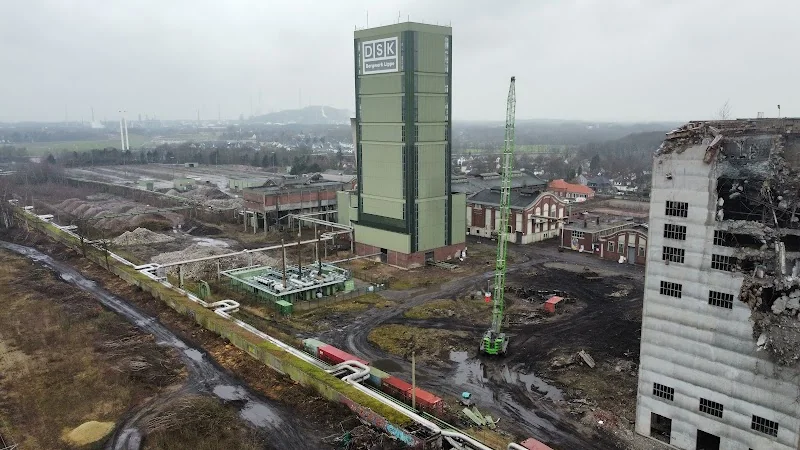
The New Zeche Westerholt is today much more than a former mining site: Between Gelsenkirchen and Herten, a new district for climate-friendly work and living is developing on around 39 hectares, where historical industrial architecture, ongoing redesign, and public events are closely interconnected. The site is located at Egonstraße 12 in Gelsenkirchen and is being promoted by the development company Neue Zeche Westerholt mbH in collaboration with the two cities. Visitors currently experience the place mainly through guided tours, events, and large formats such as the ExtraSchicht or the Zechenlauf. This contrast makes the location particularly interesting: Here, preserved brick buildings, ongoing demolition, new plans, and a strong industrial heritage come together. The change is not abstract but visible, audible, and already palpable in many places. This makes the New Zeche Westerholt a particularly exciting destination for people interested in industrial culture, urban development, leisure offerings, and regional identity. ([neue-zeche-westerholt.de](https://www.neue-zeche-westerholt.de/))
Extraschicht, Zechenlauf, and Christmas Market: What events shape the New Zeche Westerholt?
The event season clearly shows how vibrant the site already is today. On June 27, 2026, the New Zeche Westerholt will open again for the ExtraSchicht, the night of industrial culture in the Ruhr area; according to the official presentation, the site is already participating for the fourth time. A look back at 2025 highlights the resonance: Around 9,000 people visited the third ExtraSchicht on the site and experienced a program with art, music, shows, and a lot of Ruhrpott character. The special feature of this format is the combination of industrial backdrop and staging: The historical area is not just a backdrop but part of the experience itself. This creates an atmosphere that does not let the industrial heritage stagnate in a museum-like manner but translates it into a contemporary cultural context. The website describes the site in this context as a stage between history and future, and that is exactly what the event conveys very directly on-site. ([neue-zeche-westerholt.de](https://www.neue-zeche-westerholt.de/))
The Zechenlauf and the Christmas Market have also become firmly established in the profile of the place. The 4th Zechenlauf will take place on June 13, 2026, and is part of the Summer Festival of 1,000 possibilities. The program includes a 5-kilometer circular route through the site and the Glückaufpark Hassel, as well as a 750-meter children's run around the mining buildings. The format combines sports, family programs, and mining atmosphere in a way that fits well with the character of the area. Additionally, the Christmas Market is another example of the site's use for events with local ties: In December 2025, a Christmas market was organized there for the first time, bringing together mining tradition and festive coziness. Clubs, schools, daycare centers, and families were involved, and St. Nicholas was part of it, along with a joint program for young and old. This mix of culture, sports, and festivals makes it clear that the New Zeche Westerholt is already perceived as a public experience location and not just as a planning area. ([herten.de](https://www.herten.de/stadtleben/veranstaltungskalender/veranstaltung-details?cHash=c03aa6946d8907cffc89306007627e49&tx_citkoevents3_list%5Baction%5D=detail&tx_citkoevents3_list%5Bcontroller%5D=Events&tx_citkoevents3_list%5Bdate_from%5D=&tx_citkoevents3_list%5Bdate_to%5D=&tx_citkoevents3_list%5Bevent_id%5D=367766&tx_citkoevents3_list%5Borderby%5D=asc&tx_citkoevents3_list%5Borderfield%5D=term.term_day&tx_citkoevents3_list%5Bpage%5D=0&tx_citkoevents3_list%5Bstring%5D=&utm_source=openai))
Address, Directions, and Accessibility: How to get to the New Zeche Westerholt?
The most important orientation for the visit is the official address Egonstraße 12, 45896 Gelsenkirchen. The area is located directly at the city border to Herten, making it relevant for both cities. The site documents also emphasize regional accessibility via the A52, A43, and A2 highways. Additionally, the site is already served by two bus lines from Vestische, and a new S-Bahn stop Herten-Westerholt is planned in the area near Bahnhofstraße. Thus, it is clear: The New Zeche Westerholt is not only considered in terms of road traffic but also as a place that is to be increasingly integrated into public transport in the future. Furthermore, there is the bicycle perspective. In the exposés and site texts, the Avenue of Change is mentioned as a new axis that runs along a former mining railway track and connects the site with other industrial locations in the northern Ruhr area. The approach is therefore already more than just an address; it is part of the overarching site development. ([neue-zeche-westerholt.de](https://www.neue-zeche-westerholt.de/ueber-uns/anfahrt?utm_source=openai))
For visitors, it is also important to know that the site is currently not fully accessible. The FAQs of the development company make it clear that the vast majority of the areas and existing buildings cannot be entered at the moment because construction sites are set up and buildings are secured. Therefore, anyone wanting to get to know the site must adhere to the published guided tours. These tours start at the gatehouse at Egonstraße 12, last about two hours, and require sturdy footwear. The entrance fee is 5 euros per person and is paid in cash on-site; prior registration is also required. Practically speaking, this is very helpful because the site does not function as a random thoroughfare but as a guided experience space with clear rules. This fits with an industrial backdrop that is undergoing renovation: Safety, access, and mediation are organized to keep history and transformation understandable. Therefore, anyone traveling with the aim of consciously experiencing the New Zeche Westerholt should keep an eye on the guided tours and event dates. ([neue-zeche-westerholt.de](https://www.neue-zeche-westerholt.de/quartier-menschen/faqs?utm_source=openai))
Master Plan, Housing, and Commerce: How is the new district being created on 39 hectares?
A look at the master plan shows how comprehensive the change is envisioned. The former mining site covers around 39 hectares and is approximately half located in the municipal areas of Gelsenkirchen and Herten. According to the FAQs, two large commercial districts will be created on 16 hectares, one in the west on the former wood storage site and one in the south along the S9 railway line. On the former employee parking lot, the EG NZW is developing a residential area on about three hectares. South of Grünstraße, a special area for retail and inner-city housing is planned. Additionally, 26 existing buildings along Egonstraße and in the center of the area are intended to accommodate uses for services, research and education, or leisure economy on a total of seven hectares. Thus, a former purely industrial landscape is gradually becoming a mixed urban district with various components. The site is described in its own understanding as a 15-minute location, meaning a district with short distances between living, working, supply, and leisure. This spatial mix is the core of the transformation and explains why the site remains interesting for investors, residents, and visitors alike. ([neue-zeche-westerholt.de](https://www.neue-zeche-westerholt.de/quartier-menschen/faqs?utm_source=openai))
The development follows clear timelines and funding structures. In February 2026, the development company received a funding notice of 56.2 million euros as part of the 5-Location Program; according to the official contribution, the first construction phase for the revitalization of the site will start by September 2026. The FAQs also mention two construction phases: From 2026 to 2031, 12.3 hectares in the west and east will be developed, and from 2031 to 2036, 10 hectares in the south will follow. This planning shows that the New Zeche Westerholt is not a short-term individual project but a multi-year renovation process with clearly staggered stages. The site texts describe this with terms like climate-resilient, sustainable, and blue-green infrastructures. This also fits with the goal of thinking about energy, mobility, and urban water management together. The area is to be not only built but also newly organized: with paths, open spaces, access, and uses that are geared towards a long-term functioning district. For this reason, the master plan is not just a plan but the actual narrative of the place. ([neue-zeche-westerholt.de](https://www.neue-zeche-westerholt.de/aktuelles/artikel/56-millionen-euro-fuer-die-zukunft-der-neuen-zeche-westerholt?utm_source=openai))
West Gatehouse, East Gatehouse, and Administrative Building: What historical buildings shape the site?
To understand the New Zeche Westerholt, one must look at the preserved buildings. The two gatehouses form the main entrance and are explicitly described by the development company as a hinge between the mine and the garden city. The western gatehouse was built in 1911 as a gatehouse and brand control, remodeled in 2019, and serves today and in the coming years as a location for administration and business activities. The monument characteristics, compact size, and closed brick architecture make it clear how much the historical stock shapes the character of the site. Similarly important is the eastern gatehouse, which was built between 1915 and 1919 and was expanded in 1921 with a side auto and wagon shed. Its first uses ranged from social facilities for the workforce to the fire station and the works council. Today, after repurposing, offices of the district office Hassel.Westerholt.Bertlich are housed there. Both buildings show that the site not only has large structures but also distinctive small components that keep its social and architectural history visible. ([neue-zeche-westerholt.de](https://www.neue-zeche-westerholt.de/flaechen-immobilien/bestandsgebaeude-nachnutzung/torhaus-west?utm_source=openai))
The administrative building and other existing buildings also tell a lot about the former operation. The administrative building, built in 1957, has around 3,400 square meters of gross floor area and was the main administration of the mine until its closure in 2008; the western annex housed the pit control as the electronic and digital control center of the underground operation. The historical description of the overall facility complements this picture: In 1907, the sinking work began at the Westerholt I and II shafts, and from 1910, the mine extracted coal, with the early architecture of the site characterized by representative brick buildings with white cornices, reveals, and curved gables. Many buildings and the clear structure of the founding facility have been preserved to this day and reflect almost a century of mining architecture together with later buildings. This is crucial for today's perception because the New Zeche Westerholt does not appear as a completely new construction area but as a place where the existing stock is consciously reused, renovated, and linked with new functions. This creates the special mix of monument protection, change, and urban development potential. ([neue-zeche-westerholt.de](https://www.neue-zeche-westerholt.de/quartier-menschen/rundgang/verwaltungsgebaeude?utm_source=openai))
Development Company Neue Zeche Westerholt mbH: Who is steering the revitalization?
The Development Company Neue Zeche Westerholt mbH is the central actor behind the transformation. According to its own representation, it manages the development, revitalization, and marketing of the areas of the former shaft facility Westerholt as well as adjacent areas and also takes care of the renovation and marketing of existing buildings. The company is supported by the cities of Gelsenkirchen and Herten, which underscores the inter-municipal significance of the project. The RVR already reported in December 2020 the signing of the founding contract by representatives of both cities and RAG Montan Immobilien; the site has since been developed jointly as a large potential area. The official website also emphasizes that the company supports the establishment and founding of businesses and promotes modern residential areas. This distribution of roles is important: The EGNZW is not only the operator of individual buildings but the organizational framework for a complex development project with various types of use, funding streams, and stakeholders. ([neue-zeche-westerholt.de](https://www.neue-zeche-westerholt.de/ueber-uns?utm_source=openai))
The current phase is clearly characterized by implementation. In addition to the funding commitment of 56.2 million euros, the company refers to information events for residents, the ongoing demolition of industrially used facility parts, and the start of the first construction phase in 2026. In the contributions and site texts, a dynamic process is described in which existing buildings are preserved, renovated, and gradually integrated into the new district. At the same time, the event program shows that the site is already experienceable today: Tours, ExtraSchicht, photo tours, Mining Day, and Zechenlauf open the place to the public, even if large parts remain construction sites. This mix of ongoing planning and public insights is typical for large conversion sites but is communicated particularly transparently here. This creates trust: Those interested in the New Zeche Westerholt quickly recognize that it is a project in the making that connects economic development, cultural mediation, and regional identity. ([neue-zeche-westerholt.de](https://www.neue-zeche-westerholt.de/aktuelles/artikel/56-millionen-euro-fuer-die-zukunft-der-neuen-zeche-westerholt?utm_source=openai))
The New Zeche Westerholt is thus both a place of remembrance, a transformation area, and a promise of the future. The historical buildings remind of more than a century of mining history, the ongoing development shapes a new urban district from this, and the events make the place experienceable today. Especially for people looking for ExtraSchicht, Zechenlauf, tours, or the address, the site already offers concrete points of connection. For those looking for housing, commerce, master plans, or development companies, the project presents itself as a long-term change with a clear structure. And for everyone who loves industrial culture in the Ruhr area, the New Zeche Westerholt remains a place where past and future do not exclude each other but become visible together. ([neue-zeche-westerholt.de](https://www.neue-zeche-westerholt.de/))
Sources:
Mehr anzeigenWeniger anzeigen
New Zeche Westerholt | ExtraSchicht & Zechenlauf
The New Zeche Westerholt is today much more than a former mining site: Between Gelsenkirchen and Herten, a new district for climate-friendly work and living is developing on around 39 hectares, where historical industrial architecture, ongoing redesign, and public events are closely interconnected. The site is located at Egonstraße 12 in Gelsenkirchen and is being promoted by the development company Neue Zeche Westerholt mbH in collaboration with the two cities. Visitors currently experience the place mainly through guided tours, events, and large formats such as the ExtraSchicht or the Zechenlauf. This contrast makes the location particularly interesting: Here, preserved brick buildings, ongoing demolition, new plans, and a strong industrial heritage come together. The change is not abstract but visible, audible, and already palpable in many places. This makes the New Zeche Westerholt a particularly exciting destination for people interested in industrial culture, urban development, leisure offerings, and regional identity. ([neue-zeche-westerholt.de](https://www.neue-zeche-westerholt.de/))
Extraschicht, Zechenlauf, and Christmas Market: What events shape the New Zeche Westerholt?
The event season clearly shows how vibrant the site already is today. On June 27, 2026, the New Zeche Westerholt will open again for the ExtraSchicht, the night of industrial culture in the Ruhr area; according to the official presentation, the site is already participating for the fourth time. A look back at 2025 highlights the resonance: Around 9,000 people visited the third ExtraSchicht on the site and experienced a program with art, music, shows, and a lot of Ruhrpott character. The special feature of this format is the combination of industrial backdrop and staging: The historical area is not just a backdrop but part of the experience itself. This creates an atmosphere that does not let the industrial heritage stagnate in a museum-like manner but translates it into a contemporary cultural context. The website describes the site in this context as a stage between history and future, and that is exactly what the event conveys very directly on-site. ([neue-zeche-westerholt.de](https://www.neue-zeche-westerholt.de/))
The Zechenlauf and the Christmas Market have also become firmly established in the profile of the place. The 4th Zechenlauf will take place on June 13, 2026, and is part of the Summer Festival of 1,000 possibilities. The program includes a 5-kilometer circular route through the site and the Glückaufpark Hassel, as well as a 750-meter children's run around the mining buildings. The format combines sports, family programs, and mining atmosphere in a way that fits well with the character of the area. Additionally, the Christmas Market is another example of the site's use for events with local ties: In December 2025, a Christmas market was organized there for the first time, bringing together mining tradition and festive coziness. Clubs, schools, daycare centers, and families were involved, and St. Nicholas was part of it, along with a joint program for young and old. This mix of culture, sports, and festivals makes it clear that the New Zeche Westerholt is already perceived as a public experience location and not just as a planning area. ([herten.de](https://www.herten.de/stadtleben/veranstaltungskalender/veranstaltung-details?cHash=c03aa6946d8907cffc89306007627e49&tx_citkoevents3_list%5Baction%5D=detail&tx_citkoevents3_list%5Bcontroller%5D=Events&tx_citkoevents3_list%5Bdate_from%5D=&tx_citkoevents3_list%5Bdate_to%5D=&tx_citkoevents3_list%5Bevent_id%5D=367766&tx_citkoevents3_list%5Borderby%5D=asc&tx_citkoevents3_list%5Borderfield%5D=term.term_day&tx_citkoevents3_list%5Bpage%5D=0&tx_citkoevents3_list%5Bstring%5D=&utm_source=openai))
Address, Directions, and Accessibility: How to get to the New Zeche Westerholt?
The most important orientation for the visit is the official address Egonstraße 12, 45896 Gelsenkirchen. The area is located directly at the city border to Herten, making it relevant for both cities. The site documents also emphasize regional accessibility via the A52, A43, and A2 highways. Additionally, the site is already served by two bus lines from Vestische, and a new S-Bahn stop Herten-Westerholt is planned in the area near Bahnhofstraße. Thus, it is clear: The New Zeche Westerholt is not only considered in terms of road traffic but also as a place that is to be increasingly integrated into public transport in the future. Furthermore, there is the bicycle perspective. In the exposés and site texts, the Avenue of Change is mentioned as a new axis that runs along a former mining railway track and connects the site with other industrial locations in the northern Ruhr area. The approach is therefore already more than just an address; it is part of the overarching site development. ([neue-zeche-westerholt.de](https://www.neue-zeche-westerholt.de/ueber-uns/anfahrt?utm_source=openai))
For visitors, it is also important to know that the site is currently not fully accessible. The FAQs of the development company make it clear that the vast majority of the areas and existing buildings cannot be entered at the moment because construction sites are set up and buildings are secured. Therefore, anyone wanting to get to know the site must adhere to the published guided tours. These tours start at the gatehouse at Egonstraße 12, last about two hours, and require sturdy footwear. The entrance fee is 5 euros per person and is paid in cash on-site; prior registration is also required. Practically speaking, this is very helpful because the site does not function as a random thoroughfare but as a guided experience space with clear rules. This fits with an industrial backdrop that is undergoing renovation: Safety, access, and mediation are organized to keep history and transformation understandable. Therefore, anyone traveling with the aim of consciously experiencing the New Zeche Westerholt should keep an eye on the guided tours and event dates. ([neue-zeche-westerholt.de](https://www.neue-zeche-westerholt.de/quartier-menschen/faqs?utm_source=openai))
Master Plan, Housing, and Commerce: How is the new district being created on 39 hectares?
A look at the master plan shows how comprehensive the change is envisioned. The former mining site covers around 39 hectares and is approximately half located in the municipal areas of Gelsenkirchen and Herten. According to the FAQs, two large commercial districts will be created on 16 hectares, one in the west on the former wood storage site and one in the south along the S9 railway line. On the former employee parking lot, the EG NZW is developing a residential area on about three hectares. South of Grünstraße, a special area for retail and inner-city housing is planned. Additionally, 26 existing buildings along Egonstraße and in the center of the area are intended to accommodate uses for services, research and education, or leisure economy on a total of seven hectares. Thus, a former purely industrial landscape is gradually becoming a mixed urban district with various components. The site is described in its own understanding as a 15-minute location, meaning a district with short distances between living, working, supply, and leisure. This spatial mix is the core of the transformation and explains why the site remains interesting for investors, residents, and visitors alike. ([neue-zeche-westerholt.de](https://www.neue-zeche-westerholt.de/quartier-menschen/faqs?utm_source=openai))
The development follows clear timelines and funding structures. In February 2026, the development company received a funding notice of 56.2 million euros as part of the 5-Location Program; according to the official contribution, the first construction phase for the revitalization of the site will start by September 2026. The FAQs also mention two construction phases: From 2026 to 2031, 12.3 hectares in the west and east will be developed, and from 2031 to 2036, 10 hectares in the south will follow. This planning shows that the New Zeche Westerholt is not a short-term individual project but a multi-year renovation process with clearly staggered stages. The site texts describe this with terms like climate-resilient, sustainable, and blue-green infrastructures. This also fits with the goal of thinking about energy, mobility, and urban water management together. The area is to be not only built but also newly organized: with paths, open spaces, access, and uses that are geared towards a long-term functioning district. For this reason, the master plan is not just a plan but the actual narrative of the place. ([neue-zeche-westerholt.de](https://www.neue-zeche-westerholt.de/aktuelles/artikel/56-millionen-euro-fuer-die-zukunft-der-neuen-zeche-westerholt?utm_source=openai))
West Gatehouse, East Gatehouse, and Administrative Building: What historical buildings shape the site?
To understand the New Zeche Westerholt, one must look at the preserved buildings. The two gatehouses form the main entrance and are explicitly described by the development company as a hinge between the mine and the garden city. The western gatehouse was built in 1911 as a gatehouse and brand control, remodeled in 2019, and serves today and in the coming years as a location for administration and business activities. The monument characteristics, compact size, and closed brick architecture make it clear how much the historical stock shapes the character of the site. Similarly important is the eastern gatehouse, which was built between 1915 and 1919 and was expanded in 1921 with a side auto and wagon shed. Its first uses ranged from social facilities for the workforce to the fire station and the works council. Today, after repurposing, offices of the district office Hassel.Westerholt.Bertlich are housed there. Both buildings show that the site not only has large structures but also distinctive small components that keep its social and architectural history visible. ([neue-zeche-westerholt.de](https://www.neue-zeche-westerholt.de/flaechen-immobilien/bestandsgebaeude-nachnutzung/torhaus-west?utm_source=openai))
The administrative building and other existing buildings also tell a lot about the former operation. The administrative building, built in 1957, has around 3,400 square meters of gross floor area and was the main administration of the mine until its closure in 2008; the western annex housed the pit control as the electronic and digital control center of the underground operation. The historical description of the overall facility complements this picture: In 1907, the sinking work began at the Westerholt I and II shafts, and from 1910, the mine extracted coal, with the early architecture of the site characterized by representative brick buildings with white cornices, reveals, and curved gables. Many buildings and the clear structure of the founding facility have been preserved to this day and reflect almost a century of mining architecture together with later buildings. This is crucial for today's perception because the New Zeche Westerholt does not appear as a completely new construction area but as a place where the existing stock is consciously reused, renovated, and linked with new functions. This creates the special mix of monument protection, change, and urban development potential. ([neue-zeche-westerholt.de](https://www.neue-zeche-westerholt.de/quartier-menschen/rundgang/verwaltungsgebaeude?utm_source=openai))
Development Company Neue Zeche Westerholt mbH: Who is steering the revitalization?
The Development Company Neue Zeche Westerholt mbH is the central actor behind the transformation. According to its own representation, it manages the development, revitalization, and marketing of the areas of the former shaft facility Westerholt as well as adjacent areas and also takes care of the renovation and marketing of existing buildings. The company is supported by the cities of Gelsenkirchen and Herten, which underscores the inter-municipal significance of the project. The RVR already reported in December 2020 the signing of the founding contract by representatives of both cities and RAG Montan Immobilien; the site has since been developed jointly as a large potential area. The official website also emphasizes that the company supports the establishment and founding of businesses and promotes modern residential areas. This distribution of roles is important: The EGNZW is not only the operator of individual buildings but the organizational framework for a complex development project with various types of use, funding streams, and stakeholders. ([neue-zeche-westerholt.de](https://www.neue-zeche-westerholt.de/ueber-uns?utm_source=openai))
The current phase is clearly characterized by implementation. In addition to the funding commitment of 56.2 million euros, the company refers to information events for residents, the ongoing demolition of industrially used facility parts, and the start of the first construction phase in 2026. In the contributions and site texts, a dynamic process is described in which existing buildings are preserved, renovated, and gradually integrated into the new district. At the same time, the event program shows that the site is already experienceable today: Tours, ExtraSchicht, photo tours, Mining Day, and Zechenlauf open the place to the public, even if large parts remain construction sites. This mix of ongoing planning and public insights is typical for large conversion sites but is communicated particularly transparently here. This creates trust: Those interested in the New Zeche Westerholt quickly recognize that it is a project in the making that connects economic development, cultural mediation, and regional identity. ([neue-zeche-westerholt.de](https://www.neue-zeche-westerholt.de/aktuelles/artikel/56-millionen-euro-fuer-die-zukunft-der-neuen-zeche-westerholt?utm_source=openai))
The New Zeche Westerholt is thus both a place of remembrance, a transformation area, and a promise of the future. The historical buildings remind of more than a century of mining history, the ongoing development shapes a new urban district from this, and the events make the place experienceable today. Especially for people looking for ExtraSchicht, Zechenlauf, tours, or the address, the site already offers concrete points of connection. For those looking for housing, commerce, master plans, or development companies, the project presents itself as a long-term change with a clear structure. And for everyone who loves industrial culture in the Ruhr area, the New Zeche Westerholt remains a place where past and future do not exclude each other but become visible together. ([neue-zeche-westerholt.de](https://www.neue-zeche-westerholt.de/))
Sources:
New Zeche Westerholt | ExtraSchicht & Zechenlauf
The New Zeche Westerholt is today much more than a former mining site: Between Gelsenkirchen and Herten, a new district for climate-friendly work and living is developing on around 39 hectares, where historical industrial architecture, ongoing redesign, and public events are closely interconnected. The site is located at Egonstraße 12 in Gelsenkirchen and is being promoted by the development company Neue Zeche Westerholt mbH in collaboration with the two cities. Visitors currently experience the place mainly through guided tours, events, and large formats such as the ExtraSchicht or the Zechenlauf. This contrast makes the location particularly interesting: Here, preserved brick buildings, ongoing demolition, new plans, and a strong industrial heritage come together. The change is not abstract but visible, audible, and already palpable in many places. This makes the New Zeche Westerholt a particularly exciting destination for people interested in industrial culture, urban development, leisure offerings, and regional identity. ([neue-zeche-westerholt.de](https://www.neue-zeche-westerholt.de/))
Extraschicht, Zechenlauf, and Christmas Market: What events shape the New Zeche Westerholt?
The event season clearly shows how vibrant the site already is today. On June 27, 2026, the New Zeche Westerholt will open again for the ExtraSchicht, the night of industrial culture in the Ruhr area; according to the official presentation, the site is already participating for the fourth time. A look back at 2025 highlights the resonance: Around 9,000 people visited the third ExtraSchicht on the site and experienced a program with art, music, shows, and a lot of Ruhrpott character. The special feature of this format is the combination of industrial backdrop and staging: The historical area is not just a backdrop but part of the experience itself. This creates an atmosphere that does not let the industrial heritage stagnate in a museum-like manner but translates it into a contemporary cultural context. The website describes the site in this context as a stage between history and future, and that is exactly what the event conveys very directly on-site. ([neue-zeche-westerholt.de](https://www.neue-zeche-westerholt.de/))
The Zechenlauf and the Christmas Market have also become firmly established in the profile of the place. The 4th Zechenlauf will take place on June 13, 2026, and is part of the Summer Festival of 1,000 possibilities. The program includes a 5-kilometer circular route through the site and the Glückaufpark Hassel, as well as a 750-meter children's run around the mining buildings. The format combines sports, family programs, and mining atmosphere in a way that fits well with the character of the area. Additionally, the Christmas Market is another example of the site's use for events with local ties: In December 2025, a Christmas market was organized there for the first time, bringing together mining tradition and festive coziness. Clubs, schools, daycare centers, and families were involved, and St. Nicholas was part of it, along with a joint program for young and old. This mix of culture, sports, and festivals makes it clear that the New Zeche Westerholt is already perceived as a public experience location and not just as a planning area. ([herten.de](https://www.herten.de/stadtleben/veranstaltungskalender/veranstaltung-details?cHash=c03aa6946d8907cffc89306007627e49&tx_citkoevents3_list%5Baction%5D=detail&tx_citkoevents3_list%5Bcontroller%5D=Events&tx_citkoevents3_list%5Bdate_from%5D=&tx_citkoevents3_list%5Bdate_to%5D=&tx_citkoevents3_list%5Bevent_id%5D=367766&tx_citkoevents3_list%5Borderby%5D=asc&tx_citkoevents3_list%5Borderfield%5D=term.term_day&tx_citkoevents3_list%5Bpage%5D=0&tx_citkoevents3_list%5Bstring%5D=&utm_source=openai))
Address, Directions, and Accessibility: How to get to the New Zeche Westerholt?
The most important orientation for the visit is the official address Egonstraße 12, 45896 Gelsenkirchen. The area is located directly at the city border to Herten, making it relevant for both cities. The site documents also emphasize regional accessibility via the A52, A43, and A2 highways. Additionally, the site is already served by two bus lines from Vestische, and a new S-Bahn stop Herten-Westerholt is planned in the area near Bahnhofstraße. Thus, it is clear: The New Zeche Westerholt is not only considered in terms of road traffic but also as a place that is to be increasingly integrated into public transport in the future. Furthermore, there is the bicycle perspective. In the exposés and site texts, the Avenue of Change is mentioned as a new axis that runs along a former mining railway track and connects the site with other industrial locations in the northern Ruhr area. The approach is therefore already more than just an address; it is part of the overarching site development. ([neue-zeche-westerholt.de](https://www.neue-zeche-westerholt.de/ueber-uns/anfahrt?utm_source=openai))
For visitors, it is also important to know that the site is currently not fully accessible. The FAQs of the development company make it clear that the vast majority of the areas and existing buildings cannot be entered at the moment because construction sites are set up and buildings are secured. Therefore, anyone wanting to get to know the site must adhere to the published guided tours. These tours start at the gatehouse at Egonstraße 12, last about two hours, and require sturdy footwear. The entrance fee is 5 euros per person and is paid in cash on-site; prior registration is also required. Practically speaking, this is very helpful because the site does not function as a random thoroughfare but as a guided experience space with clear rules. This fits with an industrial backdrop that is undergoing renovation: Safety, access, and mediation are organized to keep history and transformation understandable. Therefore, anyone traveling with the aim of consciously experiencing the New Zeche Westerholt should keep an eye on the guided tours and event dates. ([neue-zeche-westerholt.de](https://www.neue-zeche-westerholt.de/quartier-menschen/faqs?utm_source=openai))
Master Plan, Housing, and Commerce: How is the new district being created on 39 hectares?
A look at the master plan shows how comprehensive the change is envisioned. The former mining site covers around 39 hectares and is approximately half located in the municipal areas of Gelsenkirchen and Herten. According to the FAQs, two large commercial districts will be created on 16 hectares, one in the west on the former wood storage site and one in the south along the S9 railway line. On the former employee parking lot, the EG NZW is developing a residential area on about three hectares. South of Grünstraße, a special area for retail and inner-city housing is planned. Additionally, 26 existing buildings along Egonstraße and in the center of the area are intended to accommodate uses for services, research and education, or leisure economy on a total of seven hectares. Thus, a former purely industrial landscape is gradually becoming a mixed urban district with various components. The site is described in its own understanding as a 15-minute location, meaning a district with short distances between living, working, supply, and leisure. This spatial mix is the core of the transformation and explains why the site remains interesting for investors, residents, and visitors alike. ([neue-zeche-westerholt.de](https://www.neue-zeche-westerholt.de/quartier-menschen/faqs?utm_source=openai))
The development follows clear timelines and funding structures. In February 2026, the development company received a funding notice of 56.2 million euros as part of the 5-Location Program; according to the official contribution, the first construction phase for the revitalization of the site will start by September 2026. The FAQs also mention two construction phases: From 2026 to 2031, 12.3 hectares in the west and east will be developed, and from 2031 to 2036, 10 hectares in the south will follow. This planning shows that the New Zeche Westerholt is not a short-term individual project but a multi-year renovation process with clearly staggered stages. The site texts describe this with terms like climate-resilient, sustainable, and blue-green infrastructures. This also fits with the goal of thinking about energy, mobility, and urban water management together. The area is to be not only built but also newly organized: with paths, open spaces, access, and uses that are geared towards a long-term functioning district. For this reason, the master plan is not just a plan but the actual narrative of the place. ([neue-zeche-westerholt.de](https://www.neue-zeche-westerholt.de/aktuelles/artikel/56-millionen-euro-fuer-die-zukunft-der-neuen-zeche-westerholt?utm_source=openai))
West Gatehouse, East Gatehouse, and Administrative Building: What historical buildings shape the site?
To understand the New Zeche Westerholt, one must look at the preserved buildings. The two gatehouses form the main entrance and are explicitly described by the development company as a hinge between the mine and the garden city. The western gatehouse was built in 1911 as a gatehouse and brand control, remodeled in 2019, and serves today and in the coming years as a location for administration and business activities. The monument characteristics, compact size, and closed brick architecture make it clear how much the historical stock shapes the character of the site. Similarly important is the eastern gatehouse, which was built between 1915 and 1919 and was expanded in 1921 with a side auto and wagon shed. Its first uses ranged from social facilities for the workforce to the fire station and the works council. Today, after repurposing, offices of the district office Hassel.Westerholt.Bertlich are housed there. Both buildings show that the site not only has large structures but also distinctive small components that keep its social and architectural history visible. ([neue-zeche-westerholt.de](https://www.neue-zeche-westerholt.de/flaechen-immobilien/bestandsgebaeude-nachnutzung/torhaus-west?utm_source=openai))
The administrative building and other existing buildings also tell a lot about the former operation. The administrative building, built in 1957, has around 3,400 square meters of gross floor area and was the main administration of the mine until its closure in 2008; the western annex housed the pit control as the electronic and digital control center of the underground operation. The historical description of the overall facility complements this picture: In 1907, the sinking work began at the Westerholt I and II shafts, and from 1910, the mine extracted coal, with the early architecture of the site characterized by representative brick buildings with white cornices, reveals, and curved gables. Many buildings and the clear structure of the founding facility have been preserved to this day and reflect almost a century of mining architecture together with later buildings. This is crucial for today's perception because the New Zeche Westerholt does not appear as a completely new construction area but as a place where the existing stock is consciously reused, renovated, and linked with new functions. This creates the special mix of monument protection, change, and urban development potential. ([neue-zeche-westerholt.de](https://www.neue-zeche-westerholt.de/quartier-menschen/rundgang/verwaltungsgebaeude?utm_source=openai))
Development Company Neue Zeche Westerholt mbH: Who is steering the revitalization?
The Development Company Neue Zeche Westerholt mbH is the central actor behind the transformation. According to its own representation, it manages the development, revitalization, and marketing of the areas of the former shaft facility Westerholt as well as adjacent areas and also takes care of the renovation and marketing of existing buildings. The company is supported by the cities of Gelsenkirchen and Herten, which underscores the inter-municipal significance of the project. The RVR already reported in December 2020 the signing of the founding contract by representatives of both cities and RAG Montan Immobilien; the site has since been developed jointly as a large potential area. The official website also emphasizes that the company supports the establishment and founding of businesses and promotes modern residential areas. This distribution of roles is important: The EGNZW is not only the operator of individual buildings but the organizational framework for a complex development project with various types of use, funding streams, and stakeholders. ([neue-zeche-westerholt.de](https://www.neue-zeche-westerholt.de/ueber-uns?utm_source=openai))
The current phase is clearly characterized by implementation. In addition to the funding commitment of 56.2 million euros, the company refers to information events for residents, the ongoing demolition of industrially used facility parts, and the start of the first construction phase in 2026. In the contributions and site texts, a dynamic process is described in which existing buildings are preserved, renovated, and gradually integrated into the new district. At the same time, the event program shows that the site is already experienceable today: Tours, ExtraSchicht, photo tours, Mining Day, and Zechenlauf open the place to the public, even if large parts remain construction sites. This mix of ongoing planning and public insights is typical for large conversion sites but is communicated particularly transparently here. This creates trust: Those interested in the New Zeche Westerholt quickly recognize that it is a project in the making that connects economic development, cultural mediation, and regional identity. ([neue-zeche-westerholt.de](https://www.neue-zeche-westerholt.de/aktuelles/artikel/56-millionen-euro-fuer-die-zukunft-der-neuen-zeche-westerholt?utm_source=openai))
The New Zeche Westerholt is thus both a place of remembrance, a transformation area, and a promise of the future. The historical buildings remind of more than a century of mining history, the ongoing development shapes a new urban district from this, and the events make the place experienceable today. Especially for people looking for ExtraSchicht, Zechenlauf, tours, or the address, the site already offers concrete points of connection. For those looking for housing, commerce, master plans, or development companies, the project presents itself as a long-term change with a clear structure. And for everyone who loves industrial culture in the Ruhr area, the New Zeche Westerholt remains a place where past and future do not exclude each other but become visible together. ([neue-zeche-westerholt.de](https://www.neue-zeche-westerholt.de/))
Sources:
Upcoming Events
No events found
Frequently Asked Questions
Reviews
Douglas E Knapp
20. March 2022
A restoration under way. The current look is wonderful but they have a long way to go. The buildings need helpers to turn it into a fully developed museum.
Carmine Diana
17. March 2023
Super
Karsten Finger
28. December 2022
Mega
Ulle Bowski
20. May 2022
Rebug 2022
Familie Born
23. September 2025
Mega great location of the mines and cultural program of the region. It's best to book one of the tours, which are designed for photographic extra tours, where you can visit areas that are usually closed in peace. It's wonderful to get to know areas of the mine during tours that are otherwise closed… Good luck 🍀