
Gelsenkirchen
Kennedypl., 45881 Gelsenkirchen, Deutschland
Music Theater in the Revier Gelsenkirchen | Program & Reviews
The Music Theater in the Revier at Kennedyplatz has been a defining house for music theater in the Ruhr area since its opening in 1959. It is considered an outstanding theater of the post-war period, combining distinctive architecture with a versatile performance program and representing opera, operetta, musical, concert, dance, and experimental formats. The house employs an international ensemble of singers, the opera choir, and the New Philharmonic Westphalia, ensuring that the performance schedule is not only focused on grand evenings in the Main House but also on smaller, more intimate formats in the Small House and foyer. Those looking for photos, reviews, or the current program will find not just a stage here, but an entire cultural address with recognizability, strong audience orientation, and a profile that combines classical repertoire with contemporary openness. ([musiktheater-im-revier.de](https://musiktheater-im-revier.de/en/articles/2025-26/landing/musiktheater?utm_source=openai))
Program, Premieres, and Special Performance Dates at MiR
The keyword analysis clearly shows what visitors are most oriented towards: not just the house itself, but specific program lines, premieres, and special dates. Search queries such as Christmas concert, Advent singing, premiere fever, theater festival, operetta, La Bohème, Salut Salon, 2 symphony concerts, or family workshops indicate that the interest in this place is strongly event-driven. This is exactly why MiR is so exciting for SEO. The website of the house works with a clear genre classification, currently making areas such as opera, operetta, musical, concert, dance, puppet theater, MiR.LAB, children.youth, foyer & more, and participation visible. For seekers, this means: The location is not limited to a single type of event, but to a repertoire that ranges from classic opera evenings to open mediation formats. The house itself describes that up to 20 productions are created per season, and the current calendar pages show how differently the performance venues are used: Main House, Small House, Foyer Main House, ballet hall, MiR.LAB, and even external locations such as the Holy Cross Church or neighborhood venues in Schalke. This creates unique entry points for each theme that can be easily picked up with search terms like program, premiere, holiday concert, family format, or workshop. ([musiktheater-im-revier.de](https://musiktheater-im-revier.de/en/articles/2025-26/landing/musiktheater?utm_source=openai))
Particularly the search intents around premiere fever, theater festival, and the various seasonal concert and singing formats show that visitors are not only looking for a beautiful building but for a stage with a lively calendar. MiR provides the right structure for this because it organizes content not only by date but also by genre and type of event. From an SEO perspective, this is important: Those searching for an opera or concert want to be quickly directed to the appropriate category; those looking for family workshops need a different entry point than someone wanting to see La Bohème or a symphony concert. MiR caters to exactly this diversity, in a language that is understood by both classical opera enthusiasts and those looking for participatory offerings, holiday formats, or special evening events. The combination of repertoire, current performance times, and an open access to diverse audience groups makes the location a strong brand in the cultural space of the Ruhr area. ([musiktheater-im-revier.de](https://musiktheater-im-revier.de/en/articles/2025-26/landing/musiktheater?utm_source=openai))
Tickets, Reviews, and Photos: How to Plan Your Visit
The search terms with photos and reviews suggest that many interested parties want to visually and socially secure their visit first: What does the place look like, how does it feel in everyday life, and what information helps in decision-making? This is exactly where MiR provides a solid foundation. The official ticket page consolidates the most important visitor information: box office on-site, evening box office, gift vouchers, discounts, group offers, last-minute tickets, and the official seating plans for music theater, concert, and Small House. The evening box office opens 60 minutes before the performance begins, last-minute tickets are available for 9 euros in the Main House and 7.50 euros in the Small House, and groups of 20 or more receive a discount. This is particularly useful for visitors because it allows for spontaneous decisions as well as well-planned arrivals with reserved seating. Additionally, the press page of the house offers photos and materials for reporting. While this is primarily intended for media, it also shows that the location is visually well documented and has a clear, publicly accessible visual language. So, those searching for impressions before their visit will find a strong mix of information, imagery, and functional ticket service in the vicinity of the house. ([musiktheater-im-revier.de](https://musiktheater-im-revier.de/de/articles/2025-26/service/tickets))
Reviews as a search motive are also important for positioning. Those looking for the experiences of others often want to check whether the location convinces in terms of acoustics, visibility, access, and atmosphere. MiR is well positioned for this because the visit is supported not only by artistic quality but also by a clearly structured service architecture. The official website communicates discounts for different target groups, including people with disabilities, students, trainees, job seekers, volunteers, and holders of the GE pass. Additionally, there are further price advantages for culture fans with the RuhrKultur.Card and the ELE-Card. All of this speaks for a house that understands ticket purchasing not as a hurdle but as part of the visitor journey. This is relevant for SEO because the search patterns indicate a clear need for information: People want to know not only what is happening but also how to easily obtain tickets, what price options exist, and how to assess the ambiance in advance. For this, the ticket page, press page, and the official appearance of the house are central components. ([musiktheater-im-revier.de](https://musiktheater-im-revier.de/de/articles/2025-26/service/tickets))
Directions, Parking, and VRR Ticket at Kennedyplatz
The Music Theater in the Revier is located at Kennedyplatz in 45881 Gelsenkirchen, very centrally in the city and easily accessible for many guests. The public transport connection is particularly strong: From Gelsenkirchen main station, it is only two tram stops to the Music Theater station, which is served by lines 107, 301, and 302, among others. A major advantage is that every MiR admission ticket also serves as a ticket for the VRR. This allows for round-trip travel in the 2nd class within price level B and tariff area 26. This information is particularly valuable for search queries related to directions, public transport, and parking because it makes planning a theater visit manageable and practical. Those preferring to come by car should know that the house provides only a limited number of free parking spaces starting one hour before the performance. Therefore, MiR explicitly recommends early arrival or the use of surrounding parking options and public transport. Additionally, there is a taxi service that can be ordered in the box office hall before the performance; however, it is limited on FC Schalke 04 match days and unavailable on New Year's Eve. For events at the Holy Cross Church in Ückendorf, the house also points out limited parking options and recommends arriving by tram 302 or bus 385 to Wissenschaftspark. ([musiktheater-im-revier.de](https://musiktheater-im-revier.de/de/articles/2025-26/service/anreise?utm_source=openai))
For users searching for Kennedyplatz Gelsenkirchen, this location information is often the crucial first point of contact. Especially for evening performances, premieres, or festive events, not only the program matters but also the question of how convenient the way there is. The clear communication from the house helps to plan stress-free. Those traveling from afar can see the VRR ticket as a real added value; those from the region benefit from the very short connection from the main station and the location in the city center. For an SEO landing page, this is an important component because directions and parking are among the most frequently searched practical topics. In the case of MiR, the answer is precise, understandable, and practical: Public transport is the most convenient solution, parking is limited, and special notes apply for specific performance venues. This combination of specificity and service orientation makes the visit transparent and reduces hurdles even before booking. ([musiktheater-im-revier.de](https://musiktheater-im-revier.de/de/articles/2025-26/service/anreise?utm_source=openai))
Seating Plan, Seats, and Accessibility
Those searching for seating plans, seats, or the best seats primarily need orientation. The Music Theater in the Revier provides official seating plans for the music theater, concert, and Small House on the ticket page. This is useful because the two venues have different spatial effects, and the choice of seat varies depending on the event. The Main House has 1,008 seats. Kulturinfo Ruhr describes it as a space with row seating, with about 500 seats in the orchestra and the remaining seats distributed across two tiers. The Small House is listed there with about 325 seats in rows. This information shows that MiR is suitable for both large opera and music theater evenings as well as for more compact, intense formats. This is important for visitors because the choice of seat is directly related to acoustics, visibility, and atmosphere. Those asking for the best seats are not just looking for a number but a functional decision-making aid. The seating plan and ticket page of the house are the right source for this. ([musiktheater-im-revier.de](https://musiktheater-im-revier.de/de/articles/2025-26/service/tickets))
MiR is also well equipped in terms of accessibility. In both the Main and Small Houses, there are wheelchair-accessible elevators that lead directly to the performance venue. Wheelchair users and visitors with mobility impairments should reserve their special seats when purchasing tickets at the box office to ensure smooth access on the evening of the performance. For people with visual impairments, the house offers selected audio-described performances; there, content can be experienced with additional acoustic support, and prior notification is requested for bringing a guide dog. These details are not only a practical service note but also an important signal for cultural participation. They show that MiR is not exclusively aimed at the classic theater regulars but at a broad, inclusive audience concept. This makes the location particularly interesting for search queries related to accessibility, seating plans, and seats: The answers are concrete, reliable, and directly related to the visit. ([musiktheater-im-revier.de](https://musiktheater-im-revier.de/de/articles/2025-26/service/barrierefrei?utm_source=openai))
History, Architecture, and the Signature of Werner Ruhnau
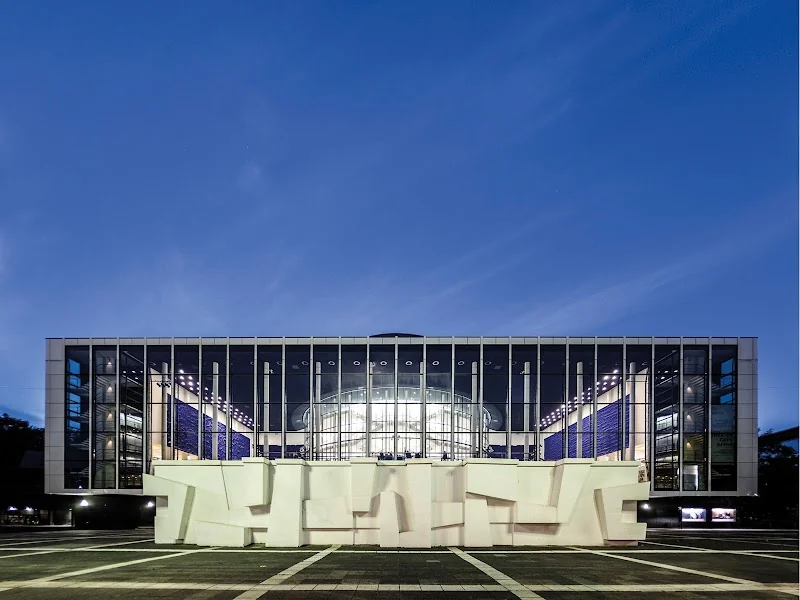
The Music Theater in the Revier is not just a stage but an architectural statement. The official architecture page describes the house as a piece of architecture that was visionary in 1959 and still appears modern today. Werner Ruhnau designed the building as a total work of art, integrating various arts like in a modern building site. This connection of architecture, sculpture, painting, and theater is what makes the house attractive. Among others, the delicate tube sculptures by Norbert Kricke, the kinetic works by Jean Tinguely, the white concrete relief by Robert Adams at the entrance, the relief by Paul Dierkes on the round wall of the auditorium, and the large monochromes in Gelsenkirchen blue by Yves Klein were involved in the exterior and interior effects. These artworks are not just decoration but part of the identity of the house. MiR therefore speaks not only about the program but also about spatial effects, perspectives, and the idea of a cultural total experience. For search queries related to photos, this is particularly relevant because the building itself has a strong visual signature and is perceived as a cultural monument from the outside. ([musiktheater-im-revier.de](https://musiktheater-im-revier.de/de/baukunst?utm_source=openai))
The historical significance of the house extends far beyond local architectural history. MiR is described as one of the important theater buildings of the post-war period, and this classification explains why the building is exciting not only for opera lovers but also for architecture enthusiasts. The glass facade of the Main House, the connection of the buildings via a bridge, and the clear yet expressive language of forms create a place that is both functional and symbolic. In practice, this means: The theater visit does not begin in the auditorium but already upon entering the premises. The interplay of space, art, and stage shapes the first impression and provides that mix of openness and concentration that many visitors appreciate about this house. Especially for a location that offers both festive evenings and experimental formats and meeting places, this architectural quality is a real SEO advantage because it makes the MiR brand unmistakable. The location is not interchangeable but carries a clearly recognizable signature that continues to resonate in the perception of the house today. ([musiktheater-im-revier.de](https://musiktheater-im-revier.de/de/baukunst?utm_source=openai))
Family Workshops, MiR.LAB, and Participatory Formats
The keyword signals for family workshops, festive singing, Advent singing, or theater festivals show that interest in MiR goes far beyond the classic evening visit. This is exactly where MiR.LAB comes in, the research laboratory of the house located in a retail space in downtown Gelsenkirchen at Rundhöfchen 6. There, experimental music theater is linked with digital culture and social participation. The lab sees itself as an open space where projects, workshops, discussion series, and performative experiments are developed. The official description emphasizes that theater is not only performed here but is also reinvented together with people from the city. This is particularly relevant for search queries related to participatory and family formats because the location can not only be consumed but also experienced participatively. Additionally, MiR.LAB is open Monday to Friday from 10 AM to 6 PM, which creates a clear point of contact for many interested parties. ([musiktheater-im-revier.de](https://musiktheater-im-revier.de/de/articles/2025-26/general/mir-lab?utm_source=openai))
In addition, the children.youth division of MiR shows how consistently the house approaches young and mixed target groups. There are age-appropriate productions, workshops, school and family offers, as well as mediation formats that introduce young people to music theater. The current page explicitly emphasizes direct encounters and new as well as familiar projects. This is particularly important for families because it can develop not just a single performance visit but an entire experience around culture, learning, and participation. This also meaningfully answers search queries related to family workshops, children's offerings, or accompanying formats. In the SEO context, this is valuable because it shows that MiR is relevant not only for grand opera evenings or concert dates but also for parents, schools, groups, and culture-interested children. The house thus offers a genuine breadth of access: classical, experimental, participatory, and intergenerational. This versatility makes the Music Theater in the Revier one of the most exciting cultural addresses in the Ruhr area. ([musiktheater-im-revier.de](https://musiktheater-im-revier.de/de/articles/2025-26/general/start?utm_source=openai))
Sources:
- Music Theater in the Revier – Official About Us Page
- Music Theater in the Revier – Architecture
- Music Theater in the Revier – Directions and Parking
- Music Theater in the Revier – Tickets and Seating Plan
- Music Theater in the Revier – Accessibility
- Music Theater in the Revier – MiR.LAB
- Cultural Info Ruhr – Music Theater in the Revier, Main House
- Cultural Info Ruhr – Music Theater in the Revier, Small House
Show moreShow less
Music Theater in the Revier Gelsenkirchen | Program & Reviews
The Music Theater in the Revier at Kennedyplatz has been a defining house for music theater in the Ruhr area since its opening in 1959. It is considered an outstanding theater of the post-war period, combining distinctive architecture with a versatile performance program and representing opera, operetta, musical, concert, dance, and experimental formats. The house employs an international ensemble of singers, the opera choir, and the New Philharmonic Westphalia, ensuring that the performance schedule is not only focused on grand evenings in the Main House but also on smaller, more intimate formats in the Small House and foyer. Those looking for photos, reviews, or the current program will find not just a stage here, but an entire cultural address with recognizability, strong audience orientation, and a profile that combines classical repertoire with contemporary openness. ([musiktheater-im-revier.de](https://musiktheater-im-revier.de/en/articles/2025-26/landing/musiktheater?utm_source=openai))
Program, Premieres, and Special Performance Dates at MiR
The keyword analysis clearly shows what visitors are most oriented towards: not just the house itself, but specific program lines, premieres, and special dates. Search queries such as Christmas concert, Advent singing, premiere fever, theater festival, operetta, La Bohème, Salut Salon, 2 symphony concerts, or family workshops indicate that the interest in this place is strongly event-driven. This is exactly why MiR is so exciting for SEO. The website of the house works with a clear genre classification, currently making areas such as opera, operetta, musical, concert, dance, puppet theater, MiR.LAB, children.youth, foyer & more, and participation visible. For seekers, this means: The location is not limited to a single type of event, but to a repertoire that ranges from classic opera evenings to open mediation formats. The house itself describes that up to 20 productions are created per season, and the current calendar pages show how differently the performance venues are used: Main House, Small House, Foyer Main House, ballet hall, MiR.LAB, and even external locations such as the Holy Cross Church or neighborhood venues in Schalke. This creates unique entry points for each theme that can be easily picked up with search terms like program, premiere, holiday concert, family format, or workshop. ([musiktheater-im-revier.de](https://musiktheater-im-revier.de/en/articles/2025-26/landing/musiktheater?utm_source=openai))
Particularly the search intents around premiere fever, theater festival, and the various seasonal concert and singing formats show that visitors are not only looking for a beautiful building but for a stage with a lively calendar. MiR provides the right structure for this because it organizes content not only by date but also by genre and type of event. From an SEO perspective, this is important: Those searching for an opera or concert want to be quickly directed to the appropriate category; those looking for family workshops need a different entry point than someone wanting to see La Bohème or a symphony concert. MiR caters to exactly this diversity, in a language that is understood by both classical opera enthusiasts and those looking for participatory offerings, holiday formats, or special evening events. The combination of repertoire, current performance times, and an open access to diverse audience groups makes the location a strong brand in the cultural space of the Ruhr area. ([musiktheater-im-revier.de](https://musiktheater-im-revier.de/en/articles/2025-26/landing/musiktheater?utm_source=openai))
Tickets, Reviews, and Photos: How to Plan Your Visit
The search terms with photos and reviews suggest that many interested parties want to visually and socially secure their visit first: What does the place look like, how does it feel in everyday life, and what information helps in decision-making? This is exactly where MiR provides a solid foundation. The official ticket page consolidates the most important visitor information: box office on-site, evening box office, gift vouchers, discounts, group offers, last-minute tickets, and the official seating plans for music theater, concert, and Small House. The evening box office opens 60 minutes before the performance begins, last-minute tickets are available for 9 euros in the Main House and 7.50 euros in the Small House, and groups of 20 or more receive a discount. This is particularly useful for visitors because it allows for spontaneous decisions as well as well-planned arrivals with reserved seating. Additionally, the press page of the house offers photos and materials for reporting. While this is primarily intended for media, it also shows that the location is visually well documented and has a clear, publicly accessible visual language. So, those searching for impressions before their visit will find a strong mix of information, imagery, and functional ticket service in the vicinity of the house. ([musiktheater-im-revier.de](https://musiktheater-im-revier.de/de/articles/2025-26/service/tickets))
Reviews as a search motive are also important for positioning. Those looking for the experiences of others often want to check whether the location convinces in terms of acoustics, visibility, access, and atmosphere. MiR is well positioned for this because the visit is supported not only by artistic quality but also by a clearly structured service architecture. The official website communicates discounts for different target groups, including people with disabilities, students, trainees, job seekers, volunteers, and holders of the GE pass. Additionally, there are further price advantages for culture fans with the RuhrKultur.Card and the ELE-Card. All of this speaks for a house that understands ticket purchasing not as a hurdle but as part of the visitor journey. This is relevant for SEO because the search patterns indicate a clear need for information: People want to know not only what is happening but also how to easily obtain tickets, what price options exist, and how to assess the ambiance in advance. For this, the ticket page, press page, and the official appearance of the house are central components. ([musiktheater-im-revier.de](https://musiktheater-im-revier.de/de/articles/2025-26/service/tickets))
Directions, Parking, and VRR Ticket at Kennedyplatz
The Music Theater in the Revier is located at Kennedyplatz in 45881 Gelsenkirchen, very centrally in the city and easily accessible for many guests. The public transport connection is particularly strong: From Gelsenkirchen main station, it is only two tram stops to the Music Theater station, which is served by lines 107, 301, and 302, among others. A major advantage is that every MiR admission ticket also serves as a ticket for the VRR. This allows for round-trip travel in the 2nd class within price level B and tariff area 26. This information is particularly valuable for search queries related to directions, public transport, and parking because it makes planning a theater visit manageable and practical. Those preferring to come by car should know that the house provides only a limited number of free parking spaces starting one hour before the performance. Therefore, MiR explicitly recommends early arrival or the use of surrounding parking options and public transport. Additionally, there is a taxi service that can be ordered in the box office hall before the performance; however, it is limited on FC Schalke 04 match days and unavailable on New Year's Eve. For events at the Holy Cross Church in Ückendorf, the house also points out limited parking options and recommends arriving by tram 302 or bus 385 to Wissenschaftspark. ([musiktheater-im-revier.de](https://musiktheater-im-revier.de/de/articles/2025-26/service/anreise?utm_source=openai))
For users searching for Kennedyplatz Gelsenkirchen, this location information is often the crucial first point of contact. Especially for evening performances, premieres, or festive events, not only the program matters but also the question of how convenient the way there is. The clear communication from the house helps to plan stress-free. Those traveling from afar can see the VRR ticket as a real added value; those from the region benefit from the very short connection from the main station and the location in the city center. For an SEO landing page, this is an important component because directions and parking are among the most frequently searched practical topics. In the case of MiR, the answer is precise, understandable, and practical: Public transport is the most convenient solution, parking is limited, and special notes apply for specific performance venues. This combination of specificity and service orientation makes the visit transparent and reduces hurdles even before booking. ([musiktheater-im-revier.de](https://musiktheater-im-revier.de/de/articles/2025-26/service/anreise?utm_source=openai))
Seating Plan, Seats, and Accessibility
Those searching for seating plans, seats, or the best seats primarily need orientation. The Music Theater in the Revier provides official seating plans for the music theater, concert, and Small House on the ticket page. This is useful because the two venues have different spatial effects, and the choice of seat varies depending on the event. The Main House has 1,008 seats. Kulturinfo Ruhr describes it as a space with row seating, with about 500 seats in the orchestra and the remaining seats distributed across two tiers. The Small House is listed there with about 325 seats in rows. This information shows that MiR is suitable for both large opera and music theater evenings as well as for more compact, intense formats. This is important for visitors because the choice of seat is directly related to acoustics, visibility, and atmosphere. Those asking for the best seats are not just looking for a number but a functional decision-making aid. The seating plan and ticket page of the house are the right source for this. ([musiktheater-im-revier.de](https://musiktheater-im-revier.de/de/articles/2025-26/service/tickets))
MiR is also well equipped in terms of accessibility. In both the Main and Small Houses, there are wheelchair-accessible elevators that lead directly to the performance venue. Wheelchair users and visitors with mobility impairments should reserve their special seats when purchasing tickets at the box office to ensure smooth access on the evening of the performance. For people with visual impairments, the house offers selected audio-described performances; there, content can be experienced with additional acoustic support, and prior notification is requested for bringing a guide dog. These details are not only a practical service note but also an important signal for cultural participation. They show that MiR is not exclusively aimed at the classic theater regulars but at a broad, inclusive audience concept. This makes the location particularly interesting for search queries related to accessibility, seating plans, and seats: The answers are concrete, reliable, and directly related to the visit. ([musiktheater-im-revier.de](https://musiktheater-im-revier.de/de/articles/2025-26/service/barrierefrei?utm_source=openai))
History, Architecture, and the Signature of Werner Ruhnau
The Music Theater in the Revier is not just a stage but an architectural statement. The official architecture page describes the house as a piece of architecture that was visionary in 1959 and still appears modern today. Werner Ruhnau designed the building as a total work of art, integrating various arts like in a modern building site. This connection of architecture, sculpture, painting, and theater is what makes the house attractive. Among others, the delicate tube sculptures by Norbert Kricke, the kinetic works by Jean Tinguely, the white concrete relief by Robert Adams at the entrance, the relief by Paul Dierkes on the round wall of the auditorium, and the large monochromes in Gelsenkirchen blue by Yves Klein were involved in the exterior and interior effects. These artworks are not just decoration but part of the identity of the house. MiR therefore speaks not only about the program but also about spatial effects, perspectives, and the idea of a cultural total experience. For search queries related to photos, this is particularly relevant because the building itself has a strong visual signature and is perceived as a cultural monument from the outside. ([musiktheater-im-revier.de](https://musiktheater-im-revier.de/de/baukunst?utm_source=openai))
The historical significance of the house extends far beyond local architectural history. MiR is described as one of the important theater buildings of the post-war period, and this classification explains why the building is exciting not only for opera lovers but also for architecture enthusiasts. The glass facade of the Main House, the connection of the buildings via a bridge, and the clear yet expressive language of forms create a place that is both functional and symbolic. In practice, this means: The theater visit does not begin in the auditorium but already upon entering the premises. The interplay of space, art, and stage shapes the first impression and provides that mix of openness and concentration that many visitors appreciate about this house. Especially for a location that offers both festive evenings and experimental formats and meeting places, this architectural quality is a real SEO advantage because it makes the MiR brand unmistakable. The location is not interchangeable but carries a clearly recognizable signature that continues to resonate in the perception of the house today. ([musiktheater-im-revier.de](https://musiktheater-im-revier.de/de/baukunst?utm_source=openai))
Family Workshops, MiR.LAB, and Participatory Formats
The keyword signals for family workshops, festive singing, Advent singing, or theater festivals show that interest in MiR goes far beyond the classic evening visit. This is exactly where MiR.LAB comes in, the research laboratory of the house located in a retail space in downtown Gelsenkirchen at Rundhöfchen 6. There, experimental music theater is linked with digital culture and social participation. The lab sees itself as an open space where projects, workshops, discussion series, and performative experiments are developed. The official description emphasizes that theater is not only performed here but is also reinvented together with people from the city. This is particularly relevant for search queries related to participatory and family formats because the location can not only be consumed but also experienced participatively. Additionally, MiR.LAB is open Monday to Friday from 10 AM to 6 PM, which creates a clear point of contact for many interested parties. ([musiktheater-im-revier.de](https://musiktheater-im-revier.de/de/articles/2025-26/general/mir-lab?utm_source=openai))
In addition, the children.youth division of MiR shows how consistently the house approaches young and mixed target groups. There are age-appropriate productions, workshops, school and family offers, as well as mediation formats that introduce young people to music theater. The current page explicitly emphasizes direct encounters and new as well as familiar projects. This is particularly important for families because it can develop not just a single performance visit but an entire experience around culture, learning, and participation. This also meaningfully answers search queries related to family workshops, children's offerings, or accompanying formats. In the SEO context, this is valuable because it shows that MiR is relevant not only for grand opera evenings or concert dates but also for parents, schools, groups, and culture-interested children. The house thus offers a genuine breadth of access: classical, experimental, participatory, and intergenerational. This versatility makes the Music Theater in the Revier one of the most exciting cultural addresses in the Ruhr area. ([musiktheater-im-revier.de](https://musiktheater-im-revier.de/de/articles/2025-26/general/start?utm_source=openai))
Sources:
- Music Theater in the Revier – Official About Us Page
- Music Theater in the Revier – Architecture
- Music Theater in the Revier – Directions and Parking
- Music Theater in the Revier – Tickets and Seating Plan
- Music Theater in the Revier – Accessibility
- Music Theater in the Revier – MiR.LAB
- Cultural Info Ruhr – Music Theater in the Revier, Main House
- Cultural Info Ruhr – Music Theater in the Revier, Small House
Music Theater in the Revier Gelsenkirchen | Program & Reviews
The Music Theater in the Revier at Kennedyplatz has been a defining house for music theater in the Ruhr area since its opening in 1959. It is considered an outstanding theater of the post-war period, combining distinctive architecture with a versatile performance program and representing opera, operetta, musical, concert, dance, and experimental formats. The house employs an international ensemble of singers, the opera choir, and the New Philharmonic Westphalia, ensuring that the performance schedule is not only focused on grand evenings in the Main House but also on smaller, more intimate formats in the Small House and foyer. Those looking for photos, reviews, or the current program will find not just a stage here, but an entire cultural address with recognizability, strong audience orientation, and a profile that combines classical repertoire with contemporary openness. ([musiktheater-im-revier.de](https://musiktheater-im-revier.de/en/articles/2025-26/landing/musiktheater?utm_source=openai))
Program, Premieres, and Special Performance Dates at MiR
The keyword analysis clearly shows what visitors are most oriented towards: not just the house itself, but specific program lines, premieres, and special dates. Search queries such as Christmas concert, Advent singing, premiere fever, theater festival, operetta, La Bohème, Salut Salon, 2 symphony concerts, or family workshops indicate that the interest in this place is strongly event-driven. This is exactly why MiR is so exciting for SEO. The website of the house works with a clear genre classification, currently making areas such as opera, operetta, musical, concert, dance, puppet theater, MiR.LAB, children.youth, foyer & more, and participation visible. For seekers, this means: The location is not limited to a single type of event, but to a repertoire that ranges from classic opera evenings to open mediation formats. The house itself describes that up to 20 productions are created per season, and the current calendar pages show how differently the performance venues are used: Main House, Small House, Foyer Main House, ballet hall, MiR.LAB, and even external locations such as the Holy Cross Church or neighborhood venues in Schalke. This creates unique entry points for each theme that can be easily picked up with search terms like program, premiere, holiday concert, family format, or workshop. ([musiktheater-im-revier.de](https://musiktheater-im-revier.de/en/articles/2025-26/landing/musiktheater?utm_source=openai))
Particularly the search intents around premiere fever, theater festival, and the various seasonal concert and singing formats show that visitors are not only looking for a beautiful building but for a stage with a lively calendar. MiR provides the right structure for this because it organizes content not only by date but also by genre and type of event. From an SEO perspective, this is important: Those searching for an opera or concert want to be quickly directed to the appropriate category; those looking for family workshops need a different entry point than someone wanting to see La Bohème or a symphony concert. MiR caters to exactly this diversity, in a language that is understood by both classical opera enthusiasts and those looking for participatory offerings, holiday formats, or special evening events. The combination of repertoire, current performance times, and an open access to diverse audience groups makes the location a strong brand in the cultural space of the Ruhr area. ([musiktheater-im-revier.de](https://musiktheater-im-revier.de/en/articles/2025-26/landing/musiktheater?utm_source=openai))
Tickets, Reviews, and Photos: How to Plan Your Visit
The search terms with photos and reviews suggest that many interested parties want to visually and socially secure their visit first: What does the place look like, how does it feel in everyday life, and what information helps in decision-making? This is exactly where MiR provides a solid foundation. The official ticket page consolidates the most important visitor information: box office on-site, evening box office, gift vouchers, discounts, group offers, last-minute tickets, and the official seating plans for music theater, concert, and Small House. The evening box office opens 60 minutes before the performance begins, last-minute tickets are available for 9 euros in the Main House and 7.50 euros in the Small House, and groups of 20 or more receive a discount. This is particularly useful for visitors because it allows for spontaneous decisions as well as well-planned arrivals with reserved seating. Additionally, the press page of the house offers photos and materials for reporting. While this is primarily intended for media, it also shows that the location is visually well documented and has a clear, publicly accessible visual language. So, those searching for impressions before their visit will find a strong mix of information, imagery, and functional ticket service in the vicinity of the house. ([musiktheater-im-revier.de](https://musiktheater-im-revier.de/de/articles/2025-26/service/tickets))
Reviews as a search motive are also important for positioning. Those looking for the experiences of others often want to check whether the location convinces in terms of acoustics, visibility, access, and atmosphere. MiR is well positioned for this because the visit is supported not only by artistic quality but also by a clearly structured service architecture. The official website communicates discounts for different target groups, including people with disabilities, students, trainees, job seekers, volunteers, and holders of the GE pass. Additionally, there are further price advantages for culture fans with the RuhrKultur.Card and the ELE-Card. All of this speaks for a house that understands ticket purchasing not as a hurdle but as part of the visitor journey. This is relevant for SEO because the search patterns indicate a clear need for information: People want to know not only what is happening but also how to easily obtain tickets, what price options exist, and how to assess the ambiance in advance. For this, the ticket page, press page, and the official appearance of the house are central components. ([musiktheater-im-revier.de](https://musiktheater-im-revier.de/de/articles/2025-26/service/tickets))
Directions, Parking, and VRR Ticket at Kennedyplatz
The Music Theater in the Revier is located at Kennedyplatz in 45881 Gelsenkirchen, very centrally in the city and easily accessible for many guests. The public transport connection is particularly strong: From Gelsenkirchen main station, it is only two tram stops to the Music Theater station, which is served by lines 107, 301, and 302, among others. A major advantage is that every MiR admission ticket also serves as a ticket for the VRR. This allows for round-trip travel in the 2nd class within price level B and tariff area 26. This information is particularly valuable for search queries related to directions, public transport, and parking because it makes planning a theater visit manageable and practical. Those preferring to come by car should know that the house provides only a limited number of free parking spaces starting one hour before the performance. Therefore, MiR explicitly recommends early arrival or the use of surrounding parking options and public transport. Additionally, there is a taxi service that can be ordered in the box office hall before the performance; however, it is limited on FC Schalke 04 match days and unavailable on New Year's Eve. For events at the Holy Cross Church in Ückendorf, the house also points out limited parking options and recommends arriving by tram 302 or bus 385 to Wissenschaftspark. ([musiktheater-im-revier.de](https://musiktheater-im-revier.de/de/articles/2025-26/service/anreise?utm_source=openai))
For users searching for Kennedyplatz Gelsenkirchen, this location information is often the crucial first point of contact. Especially for evening performances, premieres, or festive events, not only the program matters but also the question of how convenient the way there is. The clear communication from the house helps to plan stress-free. Those traveling from afar can see the VRR ticket as a real added value; those from the region benefit from the very short connection from the main station and the location in the city center. For an SEO landing page, this is an important component because directions and parking are among the most frequently searched practical topics. In the case of MiR, the answer is precise, understandable, and practical: Public transport is the most convenient solution, parking is limited, and special notes apply for specific performance venues. This combination of specificity and service orientation makes the visit transparent and reduces hurdles even before booking. ([musiktheater-im-revier.de](https://musiktheater-im-revier.de/de/articles/2025-26/service/anreise?utm_source=openai))
Seating Plan, Seats, and Accessibility
Those searching for seating plans, seats, or the best seats primarily need orientation. The Music Theater in the Revier provides official seating plans for the music theater, concert, and Small House on the ticket page. This is useful because the two venues have different spatial effects, and the choice of seat varies depending on the event. The Main House has 1,008 seats. Kulturinfo Ruhr describes it as a space with row seating, with about 500 seats in the orchestra and the remaining seats distributed across two tiers. The Small House is listed there with about 325 seats in rows. This information shows that MiR is suitable for both large opera and music theater evenings as well as for more compact, intense formats. This is important for visitors because the choice of seat is directly related to acoustics, visibility, and atmosphere. Those asking for the best seats are not just looking for a number but a functional decision-making aid. The seating plan and ticket page of the house are the right source for this. ([musiktheater-im-revier.de](https://musiktheater-im-revier.de/de/articles/2025-26/service/tickets))
MiR is also well equipped in terms of accessibility. In both the Main and Small Houses, there are wheelchair-accessible elevators that lead directly to the performance venue. Wheelchair users and visitors with mobility impairments should reserve their special seats when purchasing tickets at the box office to ensure smooth access on the evening of the performance. For people with visual impairments, the house offers selected audio-described performances; there, content can be experienced with additional acoustic support, and prior notification is requested for bringing a guide dog. These details are not only a practical service note but also an important signal for cultural participation. They show that MiR is not exclusively aimed at the classic theater regulars but at a broad, inclusive audience concept. This makes the location particularly interesting for search queries related to accessibility, seating plans, and seats: The answers are concrete, reliable, and directly related to the visit. ([musiktheater-im-revier.de](https://musiktheater-im-revier.de/de/articles/2025-26/service/barrierefrei?utm_source=openai))
History, Architecture, and the Signature of Werner Ruhnau
The Music Theater in the Revier is not just a stage but an architectural statement. The official architecture page describes the house as a piece of architecture that was visionary in 1959 and still appears modern today. Werner Ruhnau designed the building as a total work of art, integrating various arts like in a modern building site. This connection of architecture, sculpture, painting, and theater is what makes the house attractive. Among others, the delicate tube sculptures by Norbert Kricke, the kinetic works by Jean Tinguely, the white concrete relief by Robert Adams at the entrance, the relief by Paul Dierkes on the round wall of the auditorium, and the large monochromes in Gelsenkirchen blue by Yves Klein were involved in the exterior and interior effects. These artworks are not just decoration but part of the identity of the house. MiR therefore speaks not only about the program but also about spatial effects, perspectives, and the idea of a cultural total experience. For search queries related to photos, this is particularly relevant because the building itself has a strong visual signature and is perceived as a cultural monument from the outside. ([musiktheater-im-revier.de](https://musiktheater-im-revier.de/de/baukunst?utm_source=openai))
The historical significance of the house extends far beyond local architectural history. MiR is described as one of the important theater buildings of the post-war period, and this classification explains why the building is exciting not only for opera lovers but also for architecture enthusiasts. The glass facade of the Main House, the connection of the buildings via a bridge, and the clear yet expressive language of forms create a place that is both functional and symbolic. In practice, this means: The theater visit does not begin in the auditorium but already upon entering the premises. The interplay of space, art, and stage shapes the first impression and provides that mix of openness and concentration that many visitors appreciate about this house. Especially for a location that offers both festive evenings and experimental formats and meeting places, this architectural quality is a real SEO advantage because it makes the MiR brand unmistakable. The location is not interchangeable but carries a clearly recognizable signature that continues to resonate in the perception of the house today. ([musiktheater-im-revier.de](https://musiktheater-im-revier.de/de/baukunst?utm_source=openai))
Family Workshops, MiR.LAB, and Participatory Formats
The keyword signals for family workshops, festive singing, Advent singing, or theater festivals show that interest in MiR goes far beyond the classic evening visit. This is exactly where MiR.LAB comes in, the research laboratory of the house located in a retail space in downtown Gelsenkirchen at Rundhöfchen 6. There, experimental music theater is linked with digital culture and social participation. The lab sees itself as an open space where projects, workshops, discussion series, and performative experiments are developed. The official description emphasizes that theater is not only performed here but is also reinvented together with people from the city. This is particularly relevant for search queries related to participatory and family formats because the location can not only be consumed but also experienced participatively. Additionally, MiR.LAB is open Monday to Friday from 10 AM to 6 PM, which creates a clear point of contact for many interested parties. ([musiktheater-im-revier.de](https://musiktheater-im-revier.de/de/articles/2025-26/general/mir-lab?utm_source=openai))
In addition, the children.youth division of MiR shows how consistently the house approaches young and mixed target groups. There are age-appropriate productions, workshops, school and family offers, as well as mediation formats that introduce young people to music theater. The current page explicitly emphasizes direct encounters and new as well as familiar projects. This is particularly important for families because it can develop not just a single performance visit but an entire experience around culture, learning, and participation. This also meaningfully answers search queries related to family workshops, children's offerings, or accompanying formats. In the SEO context, this is valuable because it shows that MiR is relevant not only for grand opera evenings or concert dates but also for parents, schools, groups, and culture-interested children. The house thus offers a genuine breadth of access: classical, experimental, participatory, and intergenerational. This versatility makes the Music Theater in the Revier one of the most exciting cultural addresses in the Ruhr area. ([musiktheater-im-revier.de](https://musiktheater-im-revier.de/de/articles/2025-26/general/start?utm_source=openai))
Sources:
- Music Theater in the Revier – Official About Us Page
- Music Theater in the Revier – Architecture
- Music Theater in the Revier – Directions and Parking
- Music Theater in the Revier – Tickets and Seating Plan
- Music Theater in the Revier – Accessibility
- Music Theater in the Revier – MiR.LAB
- Cultural Info Ruhr – Music Theater in the Revier, Main House
- Cultural Info Ruhr – Music Theater in the Revier, Small House
Upcoming Events
The Little Shop of Horrors
Seymour, Audrey, and a hungry plant create cult musical fever in Gelsenkirchen. The Little Shop of Horrors showcases darkly humorous stage art on 27.06.2026, from 16 euros. #Theater
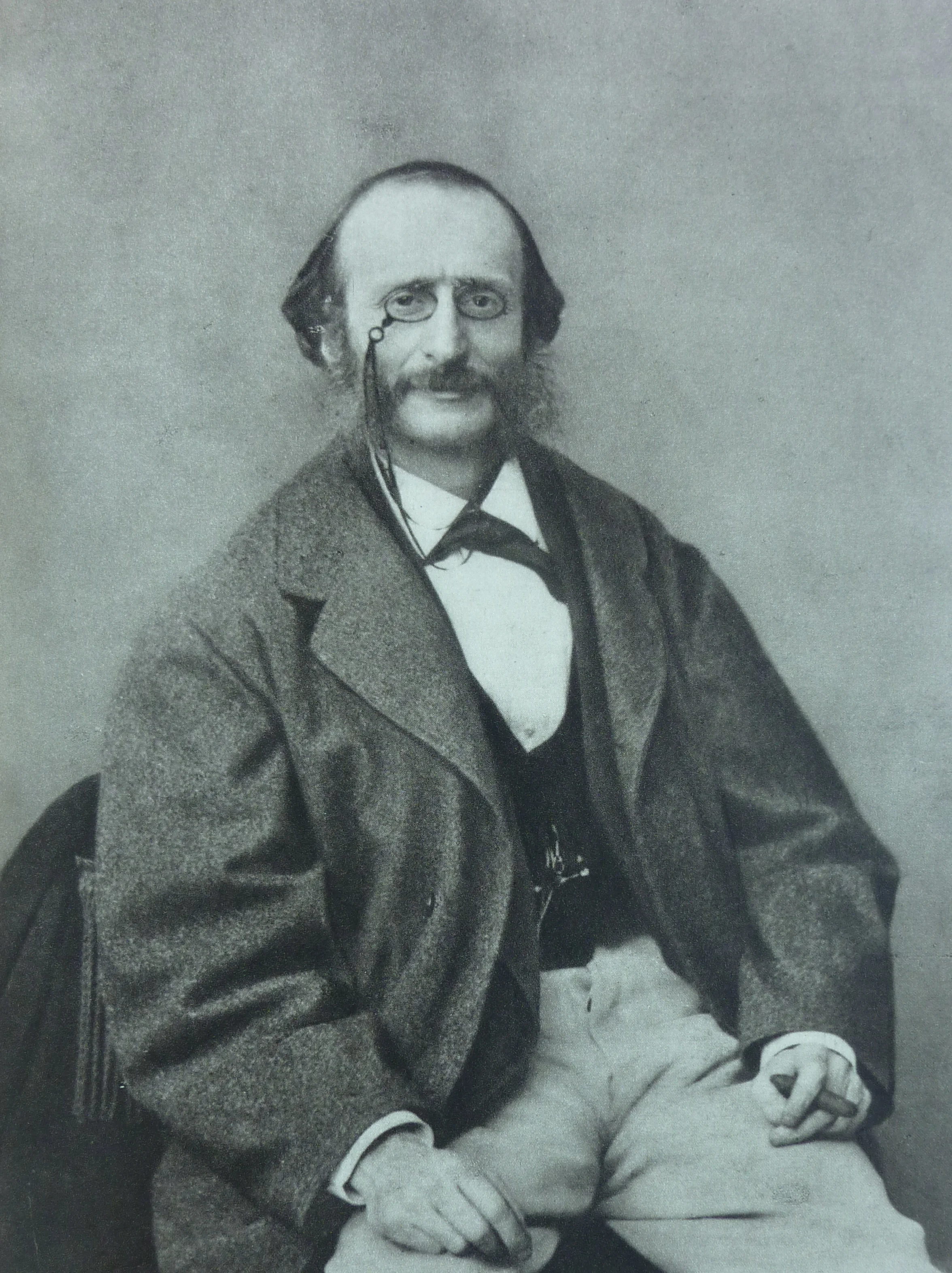
The Grand Duchess of Gérolstein (Premiere)
Offenbach's satire shines at MiR: The Grand Duchess of Gérolstein combines pomp, wit, and musical finesse. Premiere on 27.06.2026. #Theater
The Grand Finale
Attend the impressive finale of The Grand Finale on June 28 at Musiktheater im Revier and experience an unparalleled blend of ballet and theater.
Literatour in the Region with Saša Stanišić
An evening for literature lovers: Saša Stanišić reads at the Music Theatre in the Region from his new encouragement. 01.07.2026, tickets from 9 euros. #Literature
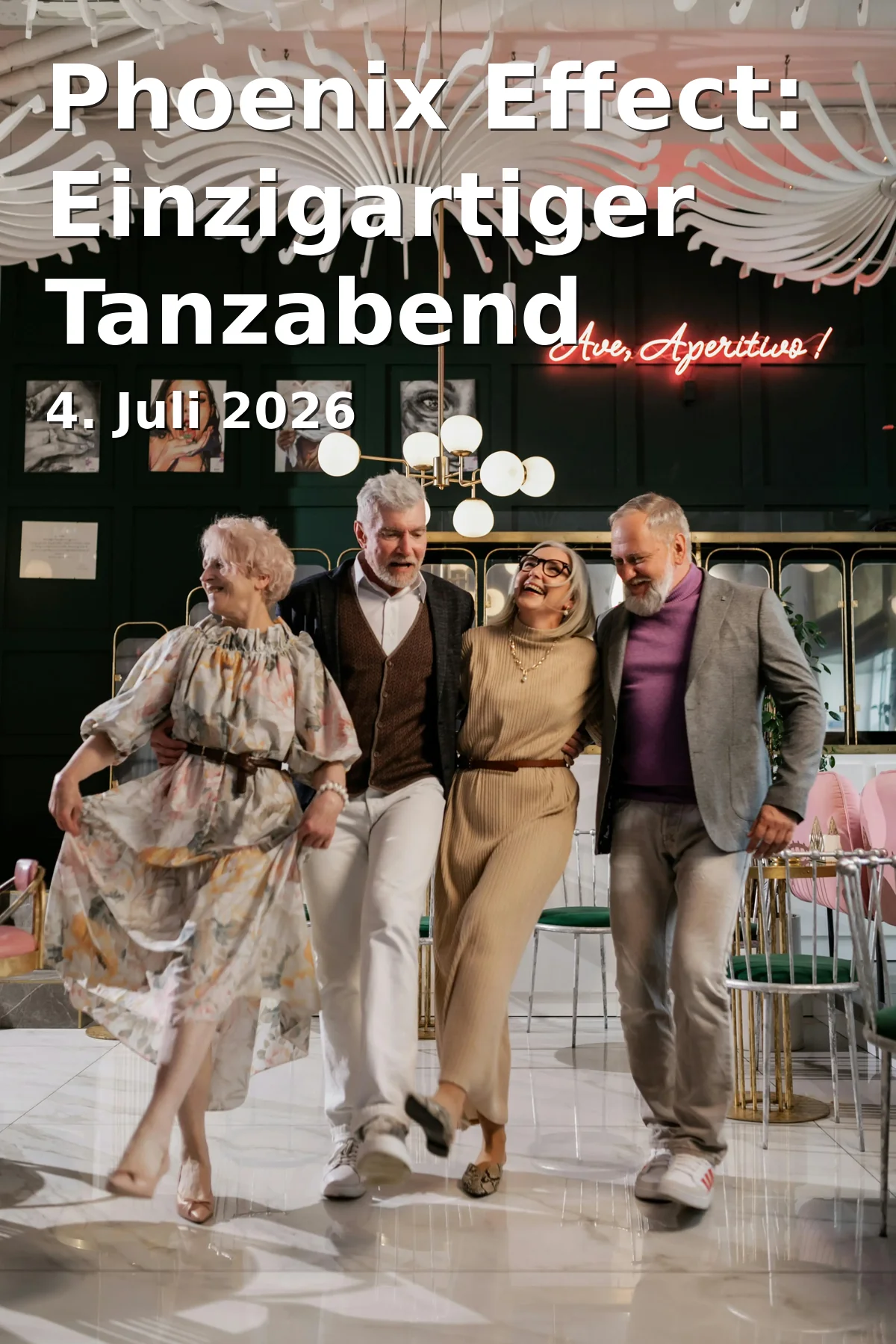
Phoenix Effect: Unique Dance Evening
Enjoy choreographic masterpieces at 'Phoenix Effect' on July 4, 2026, at the Music Theater in Revier.
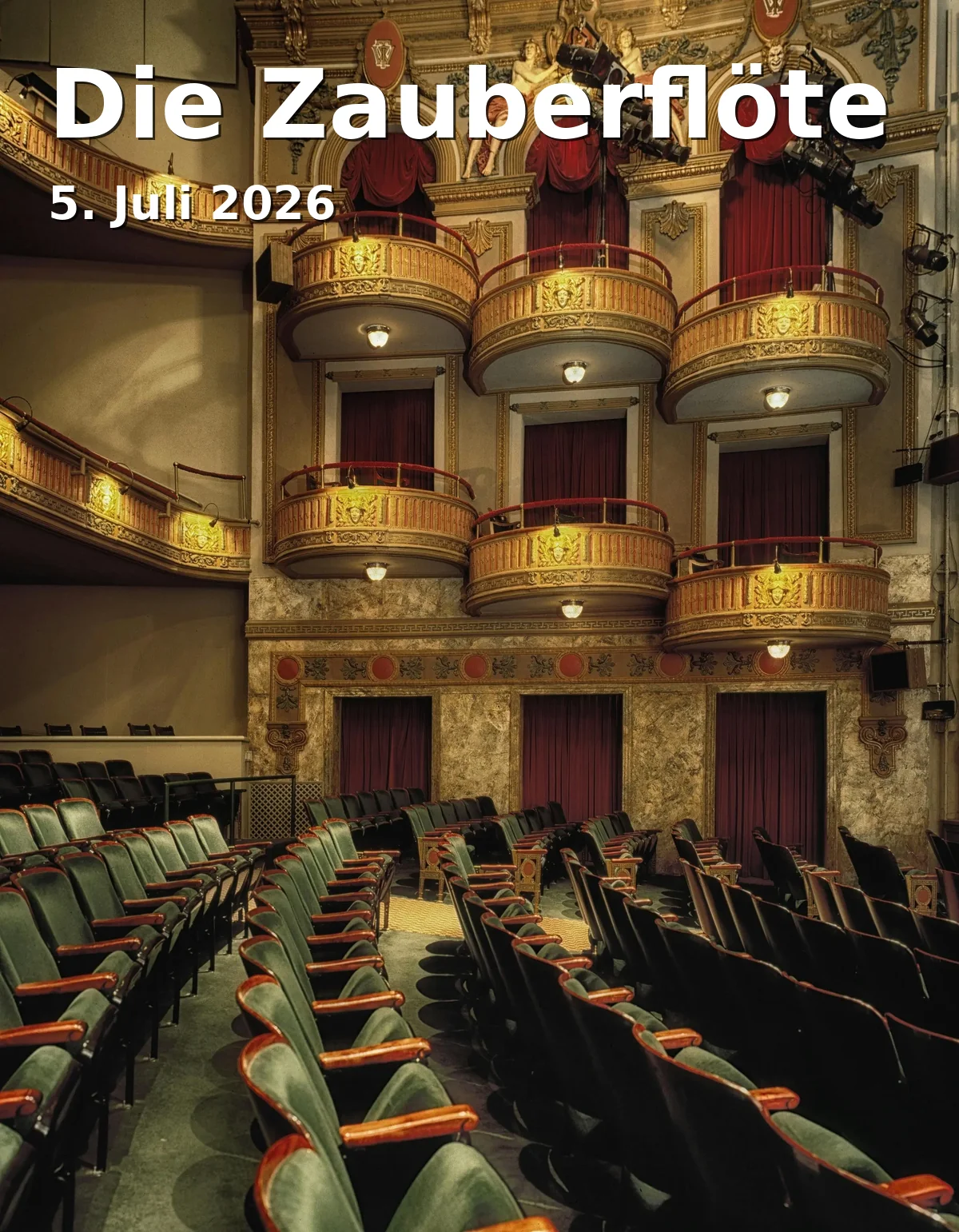
The Magic Flute
Dive into the modern world of The Magic Flute with exciting power struggles and fantastic elements at the Musiktheater im Revier.
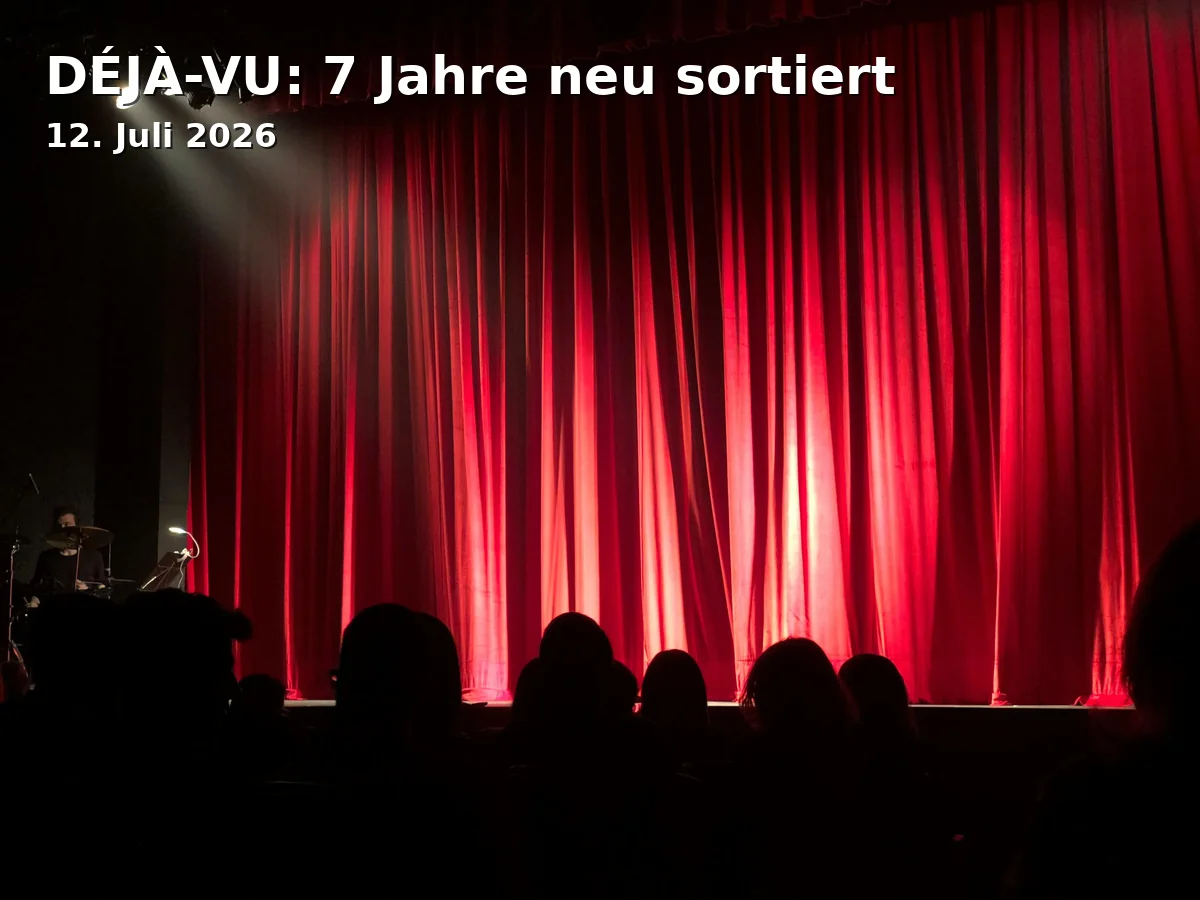
DÉJÀ-VU: 7 Years Reordered
Experience a unique theater evening in Gelsenkirchen that highlights 7 years of creative work.
Frequently Asked Questions
Reviews
No reviews found