
Gelsenkirchen
Rolandstraße 3, 45881 Gelsenkirchen, Deutschland
Music School Gelsenkirchen Rolandstraße | Photos & Reviews
The Music School Gelsenkirchen at the teaching building Rolandstraße is not a classical event venue with a large stage, but a municipal learning place for musical education, development, and collaborative work. Officially, the city has described the music school since 1978 as a point of contact for musical training and education, and this character also shapes the location at Rolandstraße 3. It is about lessons, practice, ensembles, personal support, and a daily life that not only presents music but conveys it step by step. Therefore, for the search for photos, reviews, or the exact address, it is important to know that this place is primarily a functional music school building and less a show location. At the same time, the structure of the municipal pages shows that Rolandstraße is part of a larger music school network, which also includes Neustraße 7. Those looking for a trustworthy, established, and clearly organized music school in Gelsenkirchen will find here a location with a historical foundation, educational breadth, and a clear service orientation. ([gelsenkirchen.de](https://www.gelsenkirchen.de/de/Kultur/Kulturelle_Bildung/Musikschule_Gelsenkirchen/))
Photos, Reviews, and First Impressions of the Teaching Building Rolandstraße
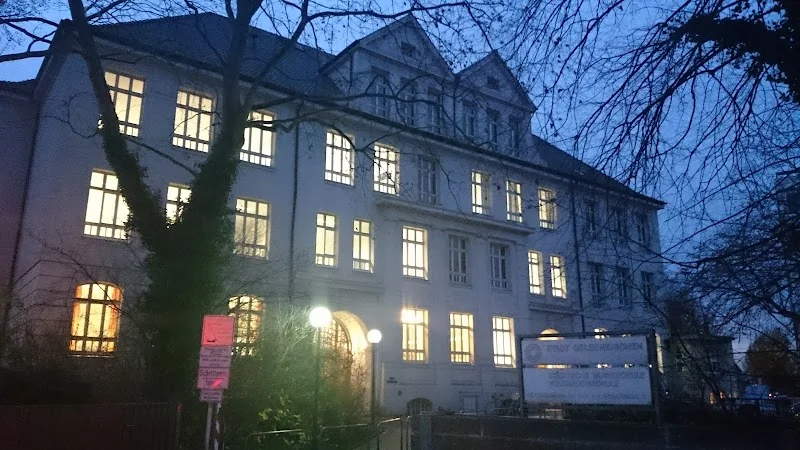
The search terms photos and reviews are particularly relevant for this location because many people want to gain a visual and social impression before registering. However, on the official city page, the music school does not prominently feature as a photo-rich event location, but rather as an educational place with contact, service, and offer information. This is important for classification: Those who browse the municipal website primarily experience the factual perspective of a music school that organizes lessons and accompanies musical development. Additionally, the music school is represented on Facebook, Instagram, and YouTube, which can provide additional visual material for interested parties. An industry portal also lists the teaching building Rolandstraße with image views and refers to 20 reviews. This results in a realistic online impression: The location is perceived primarily as a learning place from the outside and inside, not as a glamorous stage. This is even an advantage for many seekers because photos here not only show atmosphere but also provide orientation. Those searching for Rolandstraße often want to know how the place feels, whether it appears trustworthy, and whether the music school conveys an orderly, friendly, and professional impression. The available information indicates a solid, school-like character with clear structure and recognizable daily operations. ([gelsenkirchen.de](https://www.gelsenkirchen.de/de/Kultur/Kulturelle_Bildung/Musikschule_Gelsenkirchen/))
For evaluating reviews, it is also helpful to distinguish between official and external perceptions. The city itself does not publish a classic star rating on the music school pages but relies on content such as lesson offerings, opening hours, and contact methods. However, an industry portal lists the location with 20 reviews, which speaks to the local reach of the institution. Such reviews cannot be equated with an official quality rating but show that the location is perceived and utilized in the public network. Therefore, those searching for reviews are usually looking less for a perfect event critique than for reliable indications of friendliness, lesson atmosphere, organization, and accessibility. Exactly at this point, Rolandstraße meets the expectations of a music school: It is about educational quality, clear processes, and a place where learning and rehearsing are at the center. The fact that the municipal presence is additionally represented through social networks reinforces the impression of a lively school operation that does not hide behind closed doors. For SEO, this is relevant because such search queries are strongly transactional and trust-driven. People searching for photos or reviews are often close to a visit or registration and want to secure themselves. ([grup-muzikal.de](https://grup-muzikal.de/musikschule-gelsenkirchen-unterrichtsgebaude-rolandstrasse-in-gelsenkirchen-rolandstrasse-3/?utm_source=openai))
Address Rolandstraße 3, Neustraße 7, and the Locations of the Music School
The most important hard information for this location is the address Rolandstraße 3, 45881 Gelsenkirchen. The city explicitly names this building as the teaching building Rolandstraße and additionally lists Neustraße 7 as another teaching location of the music school. This makes it clear that the Music School Gelsenkirchen does not operate at just one single building but distributes its offerings across multiple locations. This is practical for parents, teenagers, and adults because different subjects, ensembles, or administrative processes can take place at various addresses. Rolandstraße is thus a fixed part of the system and not just a secondary address. Those searching for the location should therefore understand it as a regular learning and teaching place, not merely as a branch without its own profile. Rolandstraße also repeatedly appears as a teaching location in the specialized pages of the music school, for example, in the areas of special education, talent promotion, and general lesson organization. This repeated mention shows that the location plays a reliable role in the municipal music school logic. For the search intent of users, this is crucial: The address alone answers the desire for orientation, while the classification as a teaching building additionally builds trust. Rolandstraße is thus a place where one actually expects musical lessons, and not just an administrative office or an empty name shell. ([gelsenkirchen.de](https://www.gelsenkirchen.de/de/kultur/kulturelle_bildung/musikschule_gelsenkirchen/instrumental-_und_gesangsunterricht/))
From the perspective of content planning, the combination of Rolandstraße and Neustraße is particularly important because it serves multiple keyword patterns simultaneously. Many searchers not only enter the location address but also compare the subpages or search for the other music school building in Gelsenkirchen. The official website therefore confirms a decentralized offering with several teaching buildings that are organizationally related. For the description of the place, this means: Rolandstraße is part of a municipal music school that uses its learning locations according to professional and organizational needs. This also explains why not only the address but also the offer page and service information appear in the search results. People searching for directions, location, or Neustraße usually want to quickly understand where their lessons take place and how the routes between the locations work. The music school indirectly answers this through its structure, even if not every page presents the same address data in the same form. Those viewing the current page find Rolandstraße as a fixed component of the overall offering. In practice, this means a clear location in the urban area, a municipally organized infrastructure, and the certainty that the location is not coincidental but deliberately operated as a teaching place. ([gelsenkirchen.de](https://www.gelsenkirchen.de/de/Kultur/Kulturelle_Bildung/Musikschule_Gelsenkirchen/))
Lessons, Instruments, and Ensembles at the Municipal Music School Gelsenkirchen
The content strength of the music school lies in its wide range of lessons. The official page describes that one can learn various instruments and train their own voice under professional guidance at the Municipal Music School Gelsenkirchen. Mentioned are wind instruments, singing, string instruments, keyboard instruments, pop music, special education, study preparation, as well as theory and ear training. At the same time, the school emphasizes that group and individual lessons are possible, with group lessons generally being preferred. This combination of diversity and pedagogical flexibility is a central reason why search queries like instruments, lessons, or singing lessons are relevant for Rolandstraße. Those looking for a music school usually want not just an address but a real educational offering. Exactly that is provided by the Music School Gelsenkirchen: a structured approach to music that varies depending on age, prior experience, and learning goals. For parents of young children, the range is as interesting as for teenagers with ambitions or adults who want to start a new instrument. Additionally, the music school, according to the main page, ranges from early musical education to offerings for seniors. Thus, a single building becomes a place where musical learning is possible across many life phases. ([gelsenkirchen.de](https://www.gelsenkirchen.de/de/kultur/kulturelle_bildung/musikschule_gelsenkirchen/instrumental-_und_gesangsunterricht/))
Particularly important for the perception of Rolandstraße is the connection between lessons and ensemble work. The city names orchestras, big bands, chamber music ensembles, choirs, and music theater productions on the main page as opportunities to apply what has been learned in a group. In the specialized areas, bands and other formats are also added. This structure is very valuable for a music school because it enables the step from individual practice to communal music-making. Those learning an instrument should not only develop technical skills but also be able to respond, listen, and integrate musically within an ensemble. Exactly here lies a significant difference between mere lessons and a vibrant music school culture. Rolandstraße is therefore not just a place for rehearsals but also a place for musical socialization. For SEO and informational content, this is ideal because terms like ensembles, choir, orchestra, and band can be strongly associated with the location. Additionally, the school also introduces younger children to music through basic level offerings and trial courses. This makes the building an address for beginners, advanced learners, and support programs alike. Therefore, those asking about the functional substance of the location find here not just a simple room rental but a real musical infrastructure with a pedagogical concept. ([gelsenkirchen.de](https://www.gelsenkirchen.de/de/kultur/kulturelle_bildung/musikschule_gelsenkirchen/instrumental-_und_gesangsunterricht/))
History Since 1978, Talent Academy Music, and Special Support Offers
The history of the music school is an essential part of its credibility. The city describes the Music School Gelsenkirchen as an institution that has existed since 1978. Thus, it has been anchored in the city for decades and has undergone continuous development. This became particularly visible in 2018 when the music school celebrated its 40th anniversary. As part of this anniversary, project weeks with 130 different courses were organized, where students could try out new stylistic epochs, new ensembles, and new musical experiences. For Rolandstraße, this is more than a historical footnote because it shows that the location not only processes lessons but is also involved in a lively development. A place that has existed for decades and regularly works with project formats conveys stability and openness at the same time. This is attractive for parents and learners because it indicates continuity, experience, and pedagogical adaptability. Furthermore, this history explains why the school is perceived in search results not only as an address but as a cultural institution. Rolandstraße thus stands for a place where tradition and new learning forms are connected. ([gelsenkirchen.de](https://www.gelsenkirchen.de/de/Kultur/Kulturelle_Bildung/Musikschule_Gelsenkirchen/))
Among the special support offers is the Talent Academy Music, short TAM. The city describes it as a program to promote particularly musically gifted children and adolescents. It includes extended individual lessons, music theory and ear training, regular performance opportunities, ensembles, master classes, and concert trips. This makes the Music School Gelsenkirchen particularly interesting for performance-oriented families and talented young musicians. Rolandstraße is thus not only a place of beginnings but also a place of advanced training. Additionally, the school emphasizes its inclusive approach: People with physical or mental disabilities should be able to experience music and develop their musicality. This special educational orientation is an important signal because it shows that musical education here is not exclusive but open-minded. Together with youth formats like 'Youth Makes Music' and festival and performance opportunities, a broad support system is created that ranges from entry-level to gifted promotion. For the SEO analysis, these topics are particularly relevant because they sharpen the profile of the location: history, talent promotion, inclusion, and musical encounters. Rolandstraße is therefore not just a building but part of a municipal music school concept that brings together youth, diversity, and development. ([gelsenkirchen.de](https://www.gelsenkirchen.de/de/kultur/kulturelle_bildung/musikschule_gelsenkirchen/projektwochen_musikschule.aspx))
Opening Hours, Contact, and Online Registration for Rolandstraße
For the practical use of the music school, the service hours are particularly important. The official page states that the office is open Monday to Thursday from 08:30 to 13:30. The office is closed on Friday, Saturday, and Sunday, and appointments are possible by arrangement. On another municipal subpage, slightly differing office hours appear, which shows that the music school uses different service areas with slightly varying updates. Therefore, for users, the currently open official page is always the best reference point. It is positive that the music school is not only reachable by phone and email but also offers online registration for lessons. This mix of digital access and classic reachability makes the location uncomplicated for families and adults. Therefore, those wanting to inform themselves about Rolandstraße do not need to take long paths: The most important contact details and processes are available online. This is not only organizationally sensible but also SEO-strong because terms like opening hours, contact, and registration show a clear intention to act. ([gelsenkirchen.de](https://www.gelsenkirchen.de/de/Kultur/Kulturelle_Bildung/Musikschule_Gelsenkirchen/))
The question of access and parking is answered rather indirectly on the official pages. There, the address, contact, and opening hours are primarily in the foreground; a separate parking notice for Rolandstraße 3 is not specified on the municipal music school pages. For interested parties, this means: The exact parking situation should be checked directly with the office or before the visit if in doubt. This point is important for seekers because the keyword parking often does not only refer to the parking space itself but also to the easy accessibility of a location. Especially for a teaching building, clear access data and reliable contact routes are crucial. With Rolandstraße 3, 45881 Gelsenkirchen, the address is clearly named, and by mentioning Neustraße 7 as another teaching location, it is also clear that the music school operates spatially organized. Thus, those searching for orientation receive the most important practical points directly from the city. The music school thus appears as a well-structured, publicly run educational institution with easy contact and a transparent service offering. This is valuable for parents, students, and adult interested parties alike because it reduces uncertainty and lowers the threshold for registration. ([gelsenkirchen.de](https://www.gelsenkirchen.de/de/kultur/kulturelle_bildung/musikschule_gelsenkirchen/instrumental-_und_gesangsunterricht/))
Sources:
- Municipal Music School Gelsenkirchen – Official Website ([gelsenkirchen.de](https://www.gelsenkirchen.de/de/Kultur/Kulturelle_Bildung/Musikschule_Gelsenkirchen/))
- Instrumental and Vocal Lessons – Municipal Music School Gelsenkirchen ([gelsenkirchen.de](https://www.gelsenkirchen.de/de/kultur/kulturelle_bildung/musikschule_gelsenkirchen/instrumental-_und_gesangsunterricht/))
- Project Weeks Music School and Anniversary – City of Gelsenkirchen ([gelsenkirchen.de](https://www.gelsenkirchen.de/de/kultur/kulturelle_bildung/musikschule_gelsenkirchen/projektwochen_musikschule.aspx))
- Report Cultural Work 2016 – City of Gelsenkirchen ([gelsenkirchen.de](https://www.gelsenkirchen.de/de/kultur/_doc/bericht_kulturarbeit_2016.pdf))
- Municipal Music School Rolandstraße – Culture Info Ruhr ([kulturinfo.ruhr](https://kulturinfo.ruhr/kulturstaetten/kulturstaette/staedtische-musikschule-rolandstrasse?utm_source=openai))
- Music School Gelsenkirchen Teaching Building Rolandstraße – Industry Portal with Photos and Reviews ([grup-muzikal.de](https://grup-muzikal.de/musikschule-gelsenkirchen-unterrichtsgebaude-rolandstrasse-in-gelsenkirchen-rolandstrasse-3/?utm_source=openai))
Show moreShow less
Music School Gelsenkirchen Rolandstraße | Photos & Reviews
The Music School Gelsenkirchen at the teaching building Rolandstraße is not a classical event venue with a large stage, but a municipal learning place for musical education, development, and collaborative work. Officially, the city has described the music school since 1978 as a point of contact for musical training and education, and this character also shapes the location at Rolandstraße 3. It is about lessons, practice, ensembles, personal support, and a daily life that not only presents music but conveys it step by step. Therefore, for the search for photos, reviews, or the exact address, it is important to know that this place is primarily a functional music school building and less a show location. At the same time, the structure of the municipal pages shows that Rolandstraße is part of a larger music school network, which also includes Neustraße 7. Those looking for a trustworthy, established, and clearly organized music school in Gelsenkirchen will find here a location with a historical foundation, educational breadth, and a clear service orientation. ([gelsenkirchen.de](https://www.gelsenkirchen.de/de/Kultur/Kulturelle_Bildung/Musikschule_Gelsenkirchen/))
Photos, Reviews, and First Impressions of the Teaching Building Rolandstraße
The search terms photos and reviews are particularly relevant for this location because many people want to gain a visual and social impression before registering. However, on the official city page, the music school does not prominently feature as a photo-rich event location, but rather as an educational place with contact, service, and offer information. This is important for classification: Those who browse the municipal website primarily experience the factual perspective of a music school that organizes lessons and accompanies musical development. Additionally, the music school is represented on Facebook, Instagram, and YouTube, which can provide additional visual material for interested parties. An industry portal also lists the teaching building Rolandstraße with image views and refers to 20 reviews. This results in a realistic online impression: The location is perceived primarily as a learning place from the outside and inside, not as a glamorous stage. This is even an advantage for many seekers because photos here not only show atmosphere but also provide orientation. Those searching for Rolandstraße often want to know how the place feels, whether it appears trustworthy, and whether the music school conveys an orderly, friendly, and professional impression. The available information indicates a solid, school-like character with clear structure and recognizable daily operations. ([gelsenkirchen.de](https://www.gelsenkirchen.de/de/Kultur/Kulturelle_Bildung/Musikschule_Gelsenkirchen/))
For evaluating reviews, it is also helpful to distinguish between official and external perceptions. The city itself does not publish a classic star rating on the music school pages but relies on content such as lesson offerings, opening hours, and contact methods. However, an industry portal lists the location with 20 reviews, which speaks to the local reach of the institution. Such reviews cannot be equated with an official quality rating but show that the location is perceived and utilized in the public network. Therefore, those searching for reviews are usually looking less for a perfect event critique than for reliable indications of friendliness, lesson atmosphere, organization, and accessibility. Exactly at this point, Rolandstraße meets the expectations of a music school: It is about educational quality, clear processes, and a place where learning and rehearsing are at the center. The fact that the municipal presence is additionally represented through social networks reinforces the impression of a lively school operation that does not hide behind closed doors. For SEO, this is relevant because such search queries are strongly transactional and trust-driven. People searching for photos or reviews are often close to a visit or registration and want to secure themselves. ([grup-muzikal.de](https://grup-muzikal.de/musikschule-gelsenkirchen-unterrichtsgebaude-rolandstrasse-in-gelsenkirchen-rolandstrasse-3/?utm_source=openai))
Address Rolandstraße 3, Neustraße 7, and the Locations of the Music School
The most important hard information for this location is the address Rolandstraße 3, 45881 Gelsenkirchen. The city explicitly names this building as the teaching building Rolandstraße and additionally lists Neustraße 7 as another teaching location of the music school. This makes it clear that the Music School Gelsenkirchen does not operate at just one single building but distributes its offerings across multiple locations. This is practical for parents, teenagers, and adults because different subjects, ensembles, or administrative processes can take place at various addresses. Rolandstraße is thus a fixed part of the system and not just a secondary address. Those searching for the location should therefore understand it as a regular learning and teaching place, not merely as a branch without its own profile. Rolandstraße also repeatedly appears as a teaching location in the specialized pages of the music school, for example, in the areas of special education, talent promotion, and general lesson organization. This repeated mention shows that the location plays a reliable role in the municipal music school logic. For the search intent of users, this is crucial: The address alone answers the desire for orientation, while the classification as a teaching building additionally builds trust. Rolandstraße is thus a place where one actually expects musical lessons, and not just an administrative office or an empty name shell. ([gelsenkirchen.de](https://www.gelsenkirchen.de/de/kultur/kulturelle_bildung/musikschule_gelsenkirchen/instrumental-_und_gesangsunterricht/))
From the perspective of content planning, the combination of Rolandstraße and Neustraße is particularly important because it serves multiple keyword patterns simultaneously. Many searchers not only enter the location address but also compare the subpages or search for the other music school building in Gelsenkirchen. The official website therefore confirms a decentralized offering with several teaching buildings that are organizationally related. For the description of the place, this means: Rolandstraße is part of a municipal music school that uses its learning locations according to professional and organizational needs. This also explains why not only the address but also the offer page and service information appear in the search results. People searching for directions, location, or Neustraße usually want to quickly understand where their lessons take place and how the routes between the locations work. The music school indirectly answers this through its structure, even if not every page presents the same address data in the same form. Those viewing the current page find Rolandstraße as a fixed component of the overall offering. In practice, this means a clear location in the urban area, a municipally organized infrastructure, and the certainty that the location is not coincidental but deliberately operated as a teaching place. ([gelsenkirchen.de](https://www.gelsenkirchen.de/de/Kultur/Kulturelle_Bildung/Musikschule_Gelsenkirchen/))
Lessons, Instruments, and Ensembles at the Municipal Music School Gelsenkirchen
The content strength of the music school lies in its wide range of lessons. The official page describes that one can learn various instruments and train their own voice under professional guidance at the Municipal Music School Gelsenkirchen. Mentioned are wind instruments, singing, string instruments, keyboard instruments, pop music, special education, study preparation, as well as theory and ear training. At the same time, the school emphasizes that group and individual lessons are possible, with group lessons generally being preferred. This combination of diversity and pedagogical flexibility is a central reason why search queries like instruments, lessons, or singing lessons are relevant for Rolandstraße. Those looking for a music school usually want not just an address but a real educational offering. Exactly that is provided by the Music School Gelsenkirchen: a structured approach to music that varies depending on age, prior experience, and learning goals. For parents of young children, the range is as interesting as for teenagers with ambitions or adults who want to start a new instrument. Additionally, the music school, according to the main page, ranges from early musical education to offerings for seniors. Thus, a single building becomes a place where musical learning is possible across many life phases. ([gelsenkirchen.de](https://www.gelsenkirchen.de/de/kultur/kulturelle_bildung/musikschule_gelsenkirchen/instrumental-_und_gesangsunterricht/))
Particularly important for the perception of Rolandstraße is the connection between lessons and ensemble work. The city names orchestras, big bands, chamber music ensembles, choirs, and music theater productions on the main page as opportunities to apply what has been learned in a group. In the specialized areas, bands and other formats are also added. This structure is very valuable for a music school because it enables the step from individual practice to communal music-making. Those learning an instrument should not only develop technical skills but also be able to respond, listen, and integrate musically within an ensemble. Exactly here lies a significant difference between mere lessons and a vibrant music school culture. Rolandstraße is therefore not just a place for rehearsals but also a place for musical socialization. For SEO and informational content, this is ideal because terms like ensembles, choir, orchestra, and band can be strongly associated with the location. Additionally, the school also introduces younger children to music through basic level offerings and trial courses. This makes the building an address for beginners, advanced learners, and support programs alike. Therefore, those asking about the functional substance of the location find here not just a simple room rental but a real musical infrastructure with a pedagogical concept. ([gelsenkirchen.de](https://www.gelsenkirchen.de/de/kultur/kulturelle_bildung/musikschule_gelsenkirchen/instrumental-_und_gesangsunterricht/))
History Since 1978, Talent Academy Music, and Special Support Offers
The history of the music school is an essential part of its credibility. The city describes the Music School Gelsenkirchen as an institution that has existed since 1978. Thus, it has been anchored in the city for decades and has undergone continuous development. This became particularly visible in 2018 when the music school celebrated its 40th anniversary. As part of this anniversary, project weeks with 130 different courses were organized, where students could try out new stylistic epochs, new ensembles, and new musical experiences. For Rolandstraße, this is more than a historical footnote because it shows that the location not only processes lessons but is also involved in a lively development. A place that has existed for decades and regularly works with project formats conveys stability and openness at the same time. This is attractive for parents and learners because it indicates continuity, experience, and pedagogical adaptability. Furthermore, this history explains why the school is perceived in search results not only as an address but as a cultural institution. Rolandstraße thus stands for a place where tradition and new learning forms are connected. ([gelsenkirchen.de](https://www.gelsenkirchen.de/de/Kultur/Kulturelle_Bildung/Musikschule_Gelsenkirchen/))
Among the special support offers is the Talent Academy Music, short TAM. The city describes it as a program to promote particularly musically gifted children and adolescents. It includes extended individual lessons, music theory and ear training, regular performance opportunities, ensembles, master classes, and concert trips. This makes the Music School Gelsenkirchen particularly interesting for performance-oriented families and talented young musicians. Rolandstraße is thus not only a place of beginnings but also a place of advanced training. Additionally, the school emphasizes its inclusive approach: People with physical or mental disabilities should be able to experience music and develop their musicality. This special educational orientation is an important signal because it shows that musical education here is not exclusive but open-minded. Together with youth formats like 'Youth Makes Music' and festival and performance opportunities, a broad support system is created that ranges from entry-level to gifted promotion. For the SEO analysis, these topics are particularly relevant because they sharpen the profile of the location: history, talent promotion, inclusion, and musical encounters. Rolandstraße is therefore not just a building but part of a municipal music school concept that brings together youth, diversity, and development. ([gelsenkirchen.de](https://www.gelsenkirchen.de/de/kultur/kulturelle_bildung/musikschule_gelsenkirchen/projektwochen_musikschule.aspx))
Opening Hours, Contact, and Online Registration for Rolandstraße
For the practical use of the music school, the service hours are particularly important. The official page states that the office is open Monday to Thursday from 08:30 to 13:30. The office is closed on Friday, Saturday, and Sunday, and appointments are possible by arrangement. On another municipal subpage, slightly differing office hours appear, which shows that the music school uses different service areas with slightly varying updates. Therefore, for users, the currently open official page is always the best reference point. It is positive that the music school is not only reachable by phone and email but also offers online registration for lessons. This mix of digital access and classic reachability makes the location uncomplicated for families and adults. Therefore, those wanting to inform themselves about Rolandstraße do not need to take long paths: The most important contact details and processes are available online. This is not only organizationally sensible but also SEO-strong because terms like opening hours, contact, and registration show a clear intention to act. ([gelsenkirchen.de](https://www.gelsenkirchen.de/de/Kultur/Kulturelle_Bildung/Musikschule_Gelsenkirchen/))
The question of access and parking is answered rather indirectly on the official pages. There, the address, contact, and opening hours are primarily in the foreground; a separate parking notice for Rolandstraße 3 is not specified on the municipal music school pages. For interested parties, this means: The exact parking situation should be checked directly with the office or before the visit if in doubt. This point is important for seekers because the keyword parking often does not only refer to the parking space itself but also to the easy accessibility of a location. Especially for a teaching building, clear access data and reliable contact routes are crucial. With Rolandstraße 3, 45881 Gelsenkirchen, the address is clearly named, and by mentioning Neustraße 7 as another teaching location, it is also clear that the music school operates spatially organized. Thus, those searching for orientation receive the most important practical points directly from the city. The music school thus appears as a well-structured, publicly run educational institution with easy contact and a transparent service offering. This is valuable for parents, students, and adult interested parties alike because it reduces uncertainty and lowers the threshold for registration. ([gelsenkirchen.de](https://www.gelsenkirchen.de/de/kultur/kulturelle_bildung/musikschule_gelsenkirchen/instrumental-_und_gesangsunterricht/))
Sources:
- Municipal Music School Gelsenkirchen – Official Website ([gelsenkirchen.de](https://www.gelsenkirchen.de/de/Kultur/Kulturelle_Bildung/Musikschule_Gelsenkirchen/))
- Instrumental and Vocal Lessons – Municipal Music School Gelsenkirchen ([gelsenkirchen.de](https://www.gelsenkirchen.de/de/kultur/kulturelle_bildung/musikschule_gelsenkirchen/instrumental-_und_gesangsunterricht/))
- Project Weeks Music School and Anniversary – City of Gelsenkirchen ([gelsenkirchen.de](https://www.gelsenkirchen.de/de/kultur/kulturelle_bildung/musikschule_gelsenkirchen/projektwochen_musikschule.aspx))
- Report Cultural Work 2016 – City of Gelsenkirchen ([gelsenkirchen.de](https://www.gelsenkirchen.de/de/kultur/_doc/bericht_kulturarbeit_2016.pdf))
- Municipal Music School Rolandstraße – Culture Info Ruhr ([kulturinfo.ruhr](https://kulturinfo.ruhr/kulturstaetten/kulturstaette/staedtische-musikschule-rolandstrasse?utm_source=openai))
- Music School Gelsenkirchen Teaching Building Rolandstraße – Industry Portal with Photos and Reviews ([grup-muzikal.de](https://grup-muzikal.de/musikschule-gelsenkirchen-unterrichtsgebaude-rolandstrasse-in-gelsenkirchen-rolandstrasse-3/?utm_source=openai))
Music School Gelsenkirchen Rolandstraße | Photos & Reviews
The Music School Gelsenkirchen at the teaching building Rolandstraße is not a classical event venue with a large stage, but a municipal learning place for musical education, development, and collaborative work. Officially, the city has described the music school since 1978 as a point of contact for musical training and education, and this character also shapes the location at Rolandstraße 3. It is about lessons, practice, ensembles, personal support, and a daily life that not only presents music but conveys it step by step. Therefore, for the search for photos, reviews, or the exact address, it is important to know that this place is primarily a functional music school building and less a show location. At the same time, the structure of the municipal pages shows that Rolandstraße is part of a larger music school network, which also includes Neustraße 7. Those looking for a trustworthy, established, and clearly organized music school in Gelsenkirchen will find here a location with a historical foundation, educational breadth, and a clear service orientation. ([gelsenkirchen.de](https://www.gelsenkirchen.de/de/Kultur/Kulturelle_Bildung/Musikschule_Gelsenkirchen/))
Photos, Reviews, and First Impressions of the Teaching Building Rolandstraße
The search terms photos and reviews are particularly relevant for this location because many people want to gain a visual and social impression before registering. However, on the official city page, the music school does not prominently feature as a photo-rich event location, but rather as an educational place with contact, service, and offer information. This is important for classification: Those who browse the municipal website primarily experience the factual perspective of a music school that organizes lessons and accompanies musical development. Additionally, the music school is represented on Facebook, Instagram, and YouTube, which can provide additional visual material for interested parties. An industry portal also lists the teaching building Rolandstraße with image views and refers to 20 reviews. This results in a realistic online impression: The location is perceived primarily as a learning place from the outside and inside, not as a glamorous stage. This is even an advantage for many seekers because photos here not only show atmosphere but also provide orientation. Those searching for Rolandstraße often want to know how the place feels, whether it appears trustworthy, and whether the music school conveys an orderly, friendly, and professional impression. The available information indicates a solid, school-like character with clear structure and recognizable daily operations. ([gelsenkirchen.de](https://www.gelsenkirchen.de/de/Kultur/Kulturelle_Bildung/Musikschule_Gelsenkirchen/))
For evaluating reviews, it is also helpful to distinguish between official and external perceptions. The city itself does not publish a classic star rating on the music school pages but relies on content such as lesson offerings, opening hours, and contact methods. However, an industry portal lists the location with 20 reviews, which speaks to the local reach of the institution. Such reviews cannot be equated with an official quality rating but show that the location is perceived and utilized in the public network. Therefore, those searching for reviews are usually looking less for a perfect event critique than for reliable indications of friendliness, lesson atmosphere, organization, and accessibility. Exactly at this point, Rolandstraße meets the expectations of a music school: It is about educational quality, clear processes, and a place where learning and rehearsing are at the center. The fact that the municipal presence is additionally represented through social networks reinforces the impression of a lively school operation that does not hide behind closed doors. For SEO, this is relevant because such search queries are strongly transactional and trust-driven. People searching for photos or reviews are often close to a visit or registration and want to secure themselves. ([grup-muzikal.de](https://grup-muzikal.de/musikschule-gelsenkirchen-unterrichtsgebaude-rolandstrasse-in-gelsenkirchen-rolandstrasse-3/?utm_source=openai))
Address Rolandstraße 3, Neustraße 7, and the Locations of the Music School
The most important hard information for this location is the address Rolandstraße 3, 45881 Gelsenkirchen. The city explicitly names this building as the teaching building Rolandstraße and additionally lists Neustraße 7 as another teaching location of the music school. This makes it clear that the Music School Gelsenkirchen does not operate at just one single building but distributes its offerings across multiple locations. This is practical for parents, teenagers, and adults because different subjects, ensembles, or administrative processes can take place at various addresses. Rolandstraße is thus a fixed part of the system and not just a secondary address. Those searching for the location should therefore understand it as a regular learning and teaching place, not merely as a branch without its own profile. Rolandstraße also repeatedly appears as a teaching location in the specialized pages of the music school, for example, in the areas of special education, talent promotion, and general lesson organization. This repeated mention shows that the location plays a reliable role in the municipal music school logic. For the search intent of users, this is crucial: The address alone answers the desire for orientation, while the classification as a teaching building additionally builds trust. Rolandstraße is thus a place where one actually expects musical lessons, and not just an administrative office or an empty name shell. ([gelsenkirchen.de](https://www.gelsenkirchen.de/de/kultur/kulturelle_bildung/musikschule_gelsenkirchen/instrumental-_und_gesangsunterricht/))
From the perspective of content planning, the combination of Rolandstraße and Neustraße is particularly important because it serves multiple keyword patterns simultaneously. Many searchers not only enter the location address but also compare the subpages or search for the other music school building in Gelsenkirchen. The official website therefore confirms a decentralized offering with several teaching buildings that are organizationally related. For the description of the place, this means: Rolandstraße is part of a municipal music school that uses its learning locations according to professional and organizational needs. This also explains why not only the address but also the offer page and service information appear in the search results. People searching for directions, location, or Neustraße usually want to quickly understand where their lessons take place and how the routes between the locations work. The music school indirectly answers this through its structure, even if not every page presents the same address data in the same form. Those viewing the current page find Rolandstraße as a fixed component of the overall offering. In practice, this means a clear location in the urban area, a municipally organized infrastructure, and the certainty that the location is not coincidental but deliberately operated as a teaching place. ([gelsenkirchen.de](https://www.gelsenkirchen.de/de/Kultur/Kulturelle_Bildung/Musikschule_Gelsenkirchen/))
Lessons, Instruments, and Ensembles at the Municipal Music School Gelsenkirchen
The content strength of the music school lies in its wide range of lessons. The official page describes that one can learn various instruments and train their own voice under professional guidance at the Municipal Music School Gelsenkirchen. Mentioned are wind instruments, singing, string instruments, keyboard instruments, pop music, special education, study preparation, as well as theory and ear training. At the same time, the school emphasizes that group and individual lessons are possible, with group lessons generally being preferred. This combination of diversity and pedagogical flexibility is a central reason why search queries like instruments, lessons, or singing lessons are relevant for Rolandstraße. Those looking for a music school usually want not just an address but a real educational offering. Exactly that is provided by the Music School Gelsenkirchen: a structured approach to music that varies depending on age, prior experience, and learning goals. For parents of young children, the range is as interesting as for teenagers with ambitions or adults who want to start a new instrument. Additionally, the music school, according to the main page, ranges from early musical education to offerings for seniors. Thus, a single building becomes a place where musical learning is possible across many life phases. ([gelsenkirchen.de](https://www.gelsenkirchen.de/de/kultur/kulturelle_bildung/musikschule_gelsenkirchen/instrumental-_und_gesangsunterricht/))
Particularly important for the perception of Rolandstraße is the connection between lessons and ensemble work. The city names orchestras, big bands, chamber music ensembles, choirs, and music theater productions on the main page as opportunities to apply what has been learned in a group. In the specialized areas, bands and other formats are also added. This structure is very valuable for a music school because it enables the step from individual practice to communal music-making. Those learning an instrument should not only develop technical skills but also be able to respond, listen, and integrate musically within an ensemble. Exactly here lies a significant difference between mere lessons and a vibrant music school culture. Rolandstraße is therefore not just a place for rehearsals but also a place for musical socialization. For SEO and informational content, this is ideal because terms like ensembles, choir, orchestra, and band can be strongly associated with the location. Additionally, the school also introduces younger children to music through basic level offerings and trial courses. This makes the building an address for beginners, advanced learners, and support programs alike. Therefore, those asking about the functional substance of the location find here not just a simple room rental but a real musical infrastructure with a pedagogical concept. ([gelsenkirchen.de](https://www.gelsenkirchen.de/de/kultur/kulturelle_bildung/musikschule_gelsenkirchen/instrumental-_und_gesangsunterricht/))
History Since 1978, Talent Academy Music, and Special Support Offers
The history of the music school is an essential part of its credibility. The city describes the Music School Gelsenkirchen as an institution that has existed since 1978. Thus, it has been anchored in the city for decades and has undergone continuous development. This became particularly visible in 2018 when the music school celebrated its 40th anniversary. As part of this anniversary, project weeks with 130 different courses were organized, where students could try out new stylistic epochs, new ensembles, and new musical experiences. For Rolandstraße, this is more than a historical footnote because it shows that the location not only processes lessons but is also involved in a lively development. A place that has existed for decades and regularly works with project formats conveys stability and openness at the same time. This is attractive for parents and learners because it indicates continuity, experience, and pedagogical adaptability. Furthermore, this history explains why the school is perceived in search results not only as an address but as a cultural institution. Rolandstraße thus stands for a place where tradition and new learning forms are connected. ([gelsenkirchen.de](https://www.gelsenkirchen.de/de/Kultur/Kulturelle_Bildung/Musikschule_Gelsenkirchen/))
Among the special support offers is the Talent Academy Music, short TAM. The city describes it as a program to promote particularly musically gifted children and adolescents. It includes extended individual lessons, music theory and ear training, regular performance opportunities, ensembles, master classes, and concert trips. This makes the Music School Gelsenkirchen particularly interesting for performance-oriented families and talented young musicians. Rolandstraße is thus not only a place of beginnings but also a place of advanced training. Additionally, the school emphasizes its inclusive approach: People with physical or mental disabilities should be able to experience music and develop their musicality. This special educational orientation is an important signal because it shows that musical education here is not exclusive but open-minded. Together with youth formats like 'Youth Makes Music' and festival and performance opportunities, a broad support system is created that ranges from entry-level to gifted promotion. For the SEO analysis, these topics are particularly relevant because they sharpen the profile of the location: history, talent promotion, inclusion, and musical encounters. Rolandstraße is therefore not just a building but part of a municipal music school concept that brings together youth, diversity, and development. ([gelsenkirchen.de](https://www.gelsenkirchen.de/de/kultur/kulturelle_bildung/musikschule_gelsenkirchen/projektwochen_musikschule.aspx))
Opening Hours, Contact, and Online Registration for Rolandstraße
For the practical use of the music school, the service hours are particularly important. The official page states that the office is open Monday to Thursday from 08:30 to 13:30. The office is closed on Friday, Saturday, and Sunday, and appointments are possible by arrangement. On another municipal subpage, slightly differing office hours appear, which shows that the music school uses different service areas with slightly varying updates. Therefore, for users, the currently open official page is always the best reference point. It is positive that the music school is not only reachable by phone and email but also offers online registration for lessons. This mix of digital access and classic reachability makes the location uncomplicated for families and adults. Therefore, those wanting to inform themselves about Rolandstraße do not need to take long paths: The most important contact details and processes are available online. This is not only organizationally sensible but also SEO-strong because terms like opening hours, contact, and registration show a clear intention to act. ([gelsenkirchen.de](https://www.gelsenkirchen.de/de/Kultur/Kulturelle_Bildung/Musikschule_Gelsenkirchen/))
The question of access and parking is answered rather indirectly on the official pages. There, the address, contact, and opening hours are primarily in the foreground; a separate parking notice for Rolandstraße 3 is not specified on the municipal music school pages. For interested parties, this means: The exact parking situation should be checked directly with the office or before the visit if in doubt. This point is important for seekers because the keyword parking often does not only refer to the parking space itself but also to the easy accessibility of a location. Especially for a teaching building, clear access data and reliable contact routes are crucial. With Rolandstraße 3, 45881 Gelsenkirchen, the address is clearly named, and by mentioning Neustraße 7 as another teaching location, it is also clear that the music school operates spatially organized. Thus, those searching for orientation receive the most important practical points directly from the city. The music school thus appears as a well-structured, publicly run educational institution with easy contact and a transparent service offering. This is valuable for parents, students, and adult interested parties alike because it reduces uncertainty and lowers the threshold for registration. ([gelsenkirchen.de](https://www.gelsenkirchen.de/de/kultur/kulturelle_bildung/musikschule_gelsenkirchen/instrumental-_und_gesangsunterricht/))
Sources:
- Municipal Music School Gelsenkirchen – Official Website ([gelsenkirchen.de](https://www.gelsenkirchen.de/de/Kultur/Kulturelle_Bildung/Musikschule_Gelsenkirchen/))
- Instrumental and Vocal Lessons – Municipal Music School Gelsenkirchen ([gelsenkirchen.de](https://www.gelsenkirchen.de/de/kultur/kulturelle_bildung/musikschule_gelsenkirchen/instrumental-_und_gesangsunterricht/))
- Project Weeks Music School and Anniversary – City of Gelsenkirchen ([gelsenkirchen.de](https://www.gelsenkirchen.de/de/kultur/kulturelle_bildung/musikschule_gelsenkirchen/projektwochen_musikschule.aspx))
- Report Cultural Work 2016 – City of Gelsenkirchen ([gelsenkirchen.de](https://www.gelsenkirchen.de/de/kultur/_doc/bericht_kulturarbeit_2016.pdf))
- Municipal Music School Rolandstraße – Culture Info Ruhr ([kulturinfo.ruhr](https://kulturinfo.ruhr/kulturstaetten/kulturstaette/staedtische-musikschule-rolandstrasse?utm_source=openai))
- Music School Gelsenkirchen Teaching Building Rolandstraße – Industry Portal with Photos and Reviews ([grup-muzikal.de](https://grup-muzikal.de/musikschule-gelsenkirchen-unterrichtsgebaude-rolandstrasse-in-gelsenkirchen-rolandstrasse-3/?utm_source=openai))
Upcoming Events
No events found
Frequently Asked Questions
Reviews
Jörg L
14. December 2021
Old, venerable building. Facilities are good, social distancing rules are followed 100%.
Oleksandr Husiev
10. September 2024
A beautiful old building with historical background.
Patrick Hoche
5. May 2022
We are convinced by the music school, the music teachers we work with create the necessary motivation without pressure.
Klaus Szepan
7. September 2022
An old school building that thankfully has a meaningful use.
Berkay
12. January 2022
Mr. Sanleandro is the best drum teacher of all time.