Gelsenkirchen
Am Stadtgarten, 45879 Gelsenkirchen, Deutschland
Music Pavilion City Park Gelsenkirchen | Summer Sound & Program
The Music Pavilion in City Park Gelsenkirchen is much more than a classic stage in the green. It represents a place where city history, summer feeling, and live music have come together for decades. The City Park itself was opened in 1897 as Kaiser Wilhelm Park, laid out on the site of the former farm of the Schalke family, and expanded in several stages before being rebuilt after destruction in World War II. Today, it is considered a green oasis close to the city with around 22 hectares of land, a Japanese garden, and the well-known stage where Summer Sound has taken place since 1990. Those looking for a place to experience open-air concerts without hustle but with atmosphere will find one of the city's most traditional cultural addresses here. The Music Pavilion combines the relaxed expanse of the park with a program that primarily celebrates folk, world music, and related sound colors. This very mix makes the location relevant for visitors, concert fans, and inquiries about the program, directions, parking, photos, and history. ([gelsenkirchen.de](https://www.gelsenkirchen.de/de/freizeit/ausfluege_und_sehenswuerdigkeiten/parks_und_halden/stadtgarten_zeppelinallee.aspx))
Summer Sound 2026 at the Music Pavilion: Program, Dates, and Free Admission
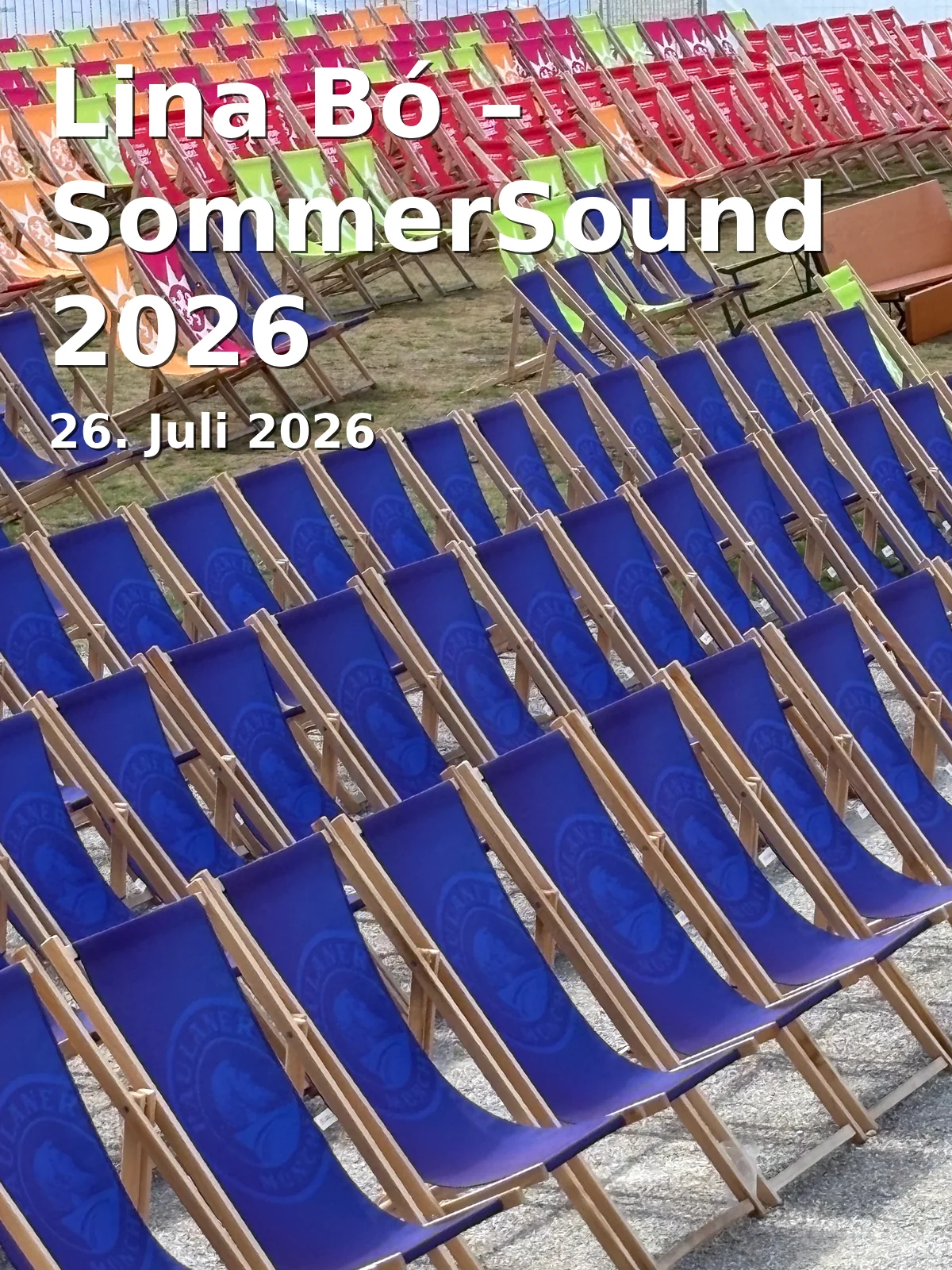
Summer Sound is the defining event series of the Music Pavilion and forms the most important reason why this place in Gelsenkirchen is so sought after. The official Summer Sound page describes the series as a music format in the Music Pavilion of Gelsenkirchen City Park, taking place on Sundays during the summer holidays, free and outdoors. Since 2006, the focus has been on contemporary folk, consciously setting the program apart from any summer stage and establishing a clear artistic line. For 2026, the city announces the 35th edition of Summer Sound on five Sundays from July 26 to August 23. On each of these evenings, two formations will be on stage, at 6 PM and 7:30 PM respectively. This makes the format compact, plannable, and still varied, as multiple musical perspectives come together each evening. The official program information for 2026 includes Lina Bó, AN ERMINIG, Laura Cortese & Bert Ruymbeek, The Paul McKenna Band, Palm Bay Frost, Tribubu, Sarah McQuaid, Schnaftl Ufftschik, Skupa, and Malikì World Orchestra. This is a clear signal: Summer Sound does not see itself as a purely mainstream event but as a curated series for folk, world music, singer-songwriter, and hybrid stylistic transitions. Particularly attractive is the low barrier of the format. The event page states the date as free of charge, and current press information emphasizes free admission to the double concerts. So, anyone searching for Summer Sound Gelsenkirchen, program 2026, or free open-air concerts will find a date that combines musical quality with open accessibility. The beer garden opens before the concert begins, which further enhances the evening character and transforms the park visit into a relaxed summer experience. ([gelsenkirchen.de](https://www.gelsenkirchen.de/de/kultur/festivals_und_programmreihen/sommersound/index.aspx))
Directions and Parking at City Park Gelsenkirchen
For many users, the journey is a central topic because the Music Pavilion is not located in a secluded event hall but in the middle of an urban park area. The official Summer Sound page names the stage at the Music Pavilion in City Park Gelsenkirchen as the venue and Zeppelinallee 51 or Zeppelinallee in Gelsenkirchen as the address. The City Park is thus in an area that is easily accessible for visitors from the city and the Ruhr area. The general visitor information from the city of Gelsenkirchen describes the city as a location with four highways, a dense network of parking garages and parking spaces, a well-developed public transport system, and metropolradruhr stations throughout the city area. Especially for a free open-air format, this combination of train, bus, car, and bike is relevant because it allows for flexible travel arrangements. Those attending Summer Sound should ideally plan with a buffer, as the beer garden opens before the concert begins and the audience typically arrives a bit earlier. For orientation, it is also important that Gelsenkirchen itself is described in the official city profile as well-connected: The main train station has numerous daily train stops, and access to the City Park is not dependent on an exclusive parking garage but on the urban infrastructure. For inquiries such as directions to the Music Pavilion Gelsenkirchen or parking at City Park Gelsenkirchen, the most important answer is: The city does not recommend a specific special parking area directly at the pavilion but refers to the general parking and public transport offerings in the city area. This makes the location uncomplicated for people coming from the city center, but also for guests who want to combine their visit with a walk through the City Park. ([gelsenkirchen.de](https://www.gelsenkirchen.de/de/kultur/festivals_und_programmreihen/sommersound/index.aspx))
History of the City Park and the Music Pavilion
The historical depth is a significant reason why the Music Pavilion in City Park Gelsenkirchen is more than a contemporary event venue. The City Park was established as a public park in 1896 and opened in 1897; at that time, it was named Kaiser Wilhelm Park. It was created on the site of the former Schalke farm and was further developed in several expansion phases. In the years 1901 and 1902, 1912, 1914, and 1918, additional areas and facilities were added to provide better local recreation opportunities for the people of Gelsenkirchen. This development also resulted in a music pavilion, which, along with the palm house, greenhouses, and other park elements, shaped the character of the area. A redesign in 1933 brought the City Park into a form that is already close to the current structure. However, World War II left severe destruction; in 1944, the facility was heavily damaged by bombs and was restored in 1949. In the 1950s, further memorial cultural elements were added, including a memorial for the victims of National Socialism and a stele for German prisoners of war. The current new Music Pavilion was built in 1963, during a phase when the City Park was once again upgraded as a place of recreation and encounter. That Summer Sound has been taking place here since 1990 is no coincidence but the continuation of a long tradition of public culture in the green. The music series has thus inscribed itself into an existing historical backdrop and benefits from the special tension between park history, proximity to the city, and cultural continuity. Those who want to understand the location better should therefore not only think of a concert format but of a grown piece of city identity. ([gelsenkirchen.de](https://www.gelsenkirchen.de/de/stadtprofil/stadtgeschichten/erinnerungsorte/_der_stadtgarten_gelsenkirchen.aspx))
Folk, World Music, and Summer Atmosphere in the Green
The Music Pavilion in City Park Gelsenkirchen works particularly well because the programming and the place are closely connected. The city describes Summer Sound as top-class folk music, free and outdoors, and explicitly emphasizes that the park's ambiance gives the concerts a special charm. This statement is important for the SEO topics Music Pavilion Gelsenkirchen, Folk Music Gelsenkirchen, and World Music Gelsenkirchen, as it describes the place not only technically but atmospherically. Since 2006, the content focus has been on contemporary folk. This means that not only traditional folk music is played here but also modern, cross-border forms that incorporate Americana, singer-songwriter, Celtic music, brass, Balkan influences, or world music elements. The current program for 2026 clearly shows this diversity: from street music and Celtic dances to Americana and Scottish folk to Balkan flamenco fusion and world orchestra, the range is broad. This is attractive for visitors because the series does not rely on a single sound image in its dramaturgy but creates a musical encounter each evening. The open character enhances this effect. The beer garden opens before the concert begins, admission is free, and the concerts start in the relaxed early evening hours. This creates a summer format that deliberately distinguishes itself from indoor halls: less distance between the audience and the stage, more space, more park, more daylight, and a stronger connection to the surroundings. For people looking for special open-air moments, this is an important argument. The location is suitable not only for regular guests but also for anyone wanting an uncomplicated cultural evening with high quality of stay. For this reason, the Music Pavilion remains a strong search topic when asked about atmosphere, program, summer evenings, and cultural character. ([gelsenkirchen.de](https://www.gelsenkirchen.de/de/kultur/festivals_und_programmreihen/sommersound/index.aspx))
Photos, Impressions, and the Special Open-Air Feeling
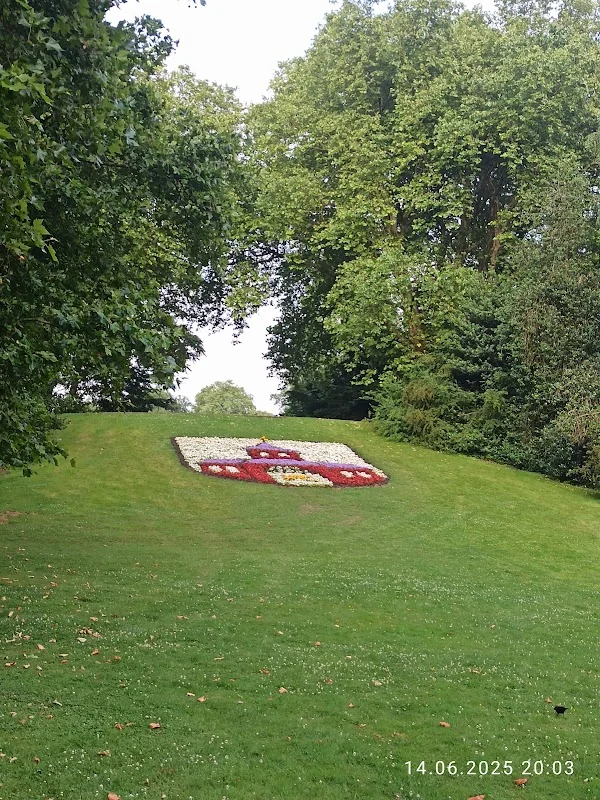
Inquiries about photos Music Pavilion Gelsenkirchen or Summer Sound photos show that the location is relevant not only because of the program but also due to its visual impact. The City Park, with its size of around 22 hectares, the water areas, the Japanese garden in Kare-san-sui style, and the grown park structures provide a backdrop that is immediately recognizable in images. This is as important for social media as it is for the editorial presentation of an event venue. The official Summer Sound page also works with impressions and photographic insights to showcase the atmosphere of the series. This underscores that the place works not only acoustically but also visually. Those who photograph the Music Pavilion do not get neutral concrete architecture but a cultural place in the green, whose charm arises from the contrast between nature and event. This tension is typical for open-air culture in the Ruhr area: urban but relaxed; traditional but vibrant; public but with a clear atmosphere. The term City Park should be taken literally here, as the park is not just a frame but part of the staging. For visitors, this means: Even the walk through the park is part of the experience. In the evening, light, trees, paths, and stage area enhance the feeling of a small summer festival, even if the event remains free and deliberately low-threshold. In SEO terms, this can be described as an experiential place with high imagery, without leaving the facts. The Music Pavilion is thus a place where photos, memories, and live music interact. This makes the location interesting for users looking for impressions, ambiance, and visual orientation before attending a concert or recommending the series. ([gelsenkirchen.de](https://www.gelsenkirchen.de/de/kultur/festivals_und_programmreihen/sommersound/index.aspx))
Beer Garden, Visitor Information, and What You Should Know Practically
Anyone wishing to visit Summer Sound at the Music Pavilion needs three practical pieces of information: date, admission, and character of the stay. The series is clearly structured in terms of dates, as the concerts in 2026 will take place on five Sundays between July 26 and August 23, each with two performances in the evening. The beer garden opens one hour before the concert begins, which in practice is early enough to orient oneself calmly before the first set. Admission is free, which makes the visit particularly uncomplicated and also appeals to spontaneous last-minute attendees. The official page also names contacts for the series, indicating that Summer Sound is professionally organized and locally anchored. Therefore, the short answer to the question of tickets is: There is no classic ticket obligation, as the series is explicitly free of charge. Regarding capacity, the official pages do not publish a fixed number, and the format is presented as an open-air offering in the park. This is helpful for users because it sets the expectation for the place correctly: no numbered seat sales as in an opera or arena structure, but a summery concert series with park-like openness. Those searching for program details, photos, parking, directions, or history will find the most reliable information on the official pages of the Department of Culture and the city of Gelsenkirchen. It is particularly interesting that Summer Sound has been a fixed feature in the cultural calendar since 1990, thus going far beyond a one-time event. For visitors, this means: arrive on time, consider the park, enjoy the free double concert, and experience the special mix of live music, green space, and Ruhr area city. This combination makes the Music Pavilion City Park Gelsenkirchen a strong destination for seekers who expect not just an address but a coherent summer experience. ([gelsenkirchen.de](https://www.gelsenkirchen.de/de/kultur/festivals_und_programmreihen/sommersound/index.aspx))
Sources:
Mehr anzeigenWeniger anzeigen
Music Pavilion City Park Gelsenkirchen | Summer Sound & Program
The Music Pavilion in City Park Gelsenkirchen is much more than a classic stage in the green. It represents a place where city history, summer feeling, and live music have come together for decades. The City Park itself was opened in 1897 as Kaiser Wilhelm Park, laid out on the site of the former farm of the Schalke family, and expanded in several stages before being rebuilt after destruction in World War II. Today, it is considered a green oasis close to the city with around 22 hectares of land, a Japanese garden, and the well-known stage where Summer Sound has taken place since 1990. Those looking for a place to experience open-air concerts without hustle but with atmosphere will find one of the city's most traditional cultural addresses here. The Music Pavilion combines the relaxed expanse of the park with a program that primarily celebrates folk, world music, and related sound colors. This very mix makes the location relevant for visitors, concert fans, and inquiries about the program, directions, parking, photos, and history. ([gelsenkirchen.de](https://www.gelsenkirchen.de/de/freizeit/ausfluege_und_sehenswuerdigkeiten/parks_und_halden/stadtgarten_zeppelinallee.aspx))
Summer Sound 2026 at the Music Pavilion: Program, Dates, and Free Admission
Summer Sound is the defining event series of the Music Pavilion and forms the most important reason why this place in Gelsenkirchen is so sought after. The official Summer Sound page describes the series as a music format in the Music Pavilion of Gelsenkirchen City Park, taking place on Sundays during the summer holidays, free and outdoors. Since 2006, the focus has been on contemporary folk, consciously setting the program apart from any summer stage and establishing a clear artistic line. For 2026, the city announces the 35th edition of Summer Sound on five Sundays from July 26 to August 23. On each of these evenings, two formations will be on stage, at 6 PM and 7:30 PM respectively. This makes the format compact, plannable, and still varied, as multiple musical perspectives come together each evening. The official program information for 2026 includes Lina Bó, AN ERMINIG, Laura Cortese & Bert Ruymbeek, The Paul McKenna Band, Palm Bay Frost, Tribubu, Sarah McQuaid, Schnaftl Ufftschik, Skupa, and Malikì World Orchestra. This is a clear signal: Summer Sound does not see itself as a purely mainstream event but as a curated series for folk, world music, singer-songwriter, and hybrid stylistic transitions. Particularly attractive is the low barrier of the format. The event page states the date as free of charge, and current press information emphasizes free admission to the double concerts. So, anyone searching for Summer Sound Gelsenkirchen, program 2026, or free open-air concerts will find a date that combines musical quality with open accessibility. The beer garden opens before the concert begins, which further enhances the evening character and transforms the park visit into a relaxed summer experience. ([gelsenkirchen.de](https://www.gelsenkirchen.de/de/kultur/festivals_und_programmreihen/sommersound/index.aspx))
Directions and Parking at City Park Gelsenkirchen
For many users, the journey is a central topic because the Music Pavilion is not located in a secluded event hall but in the middle of an urban park area. The official Summer Sound page names the stage at the Music Pavilion in City Park Gelsenkirchen as the venue and Zeppelinallee 51 or Zeppelinallee in Gelsenkirchen as the address. The City Park is thus in an area that is easily accessible for visitors from the city and the Ruhr area. The general visitor information from the city of Gelsenkirchen describes the city as a location with four highways, a dense network of parking garages and parking spaces, a well-developed public transport system, and metropolradruhr stations throughout the city area. Especially for a free open-air format, this combination of train, bus, car, and bike is relevant because it allows for flexible travel arrangements. Those attending Summer Sound should ideally plan with a buffer, as the beer garden opens before the concert begins and the audience typically arrives a bit earlier. For orientation, it is also important that Gelsenkirchen itself is described in the official city profile as well-connected: The main train station has numerous daily train stops, and access to the City Park is not dependent on an exclusive parking garage but on the urban infrastructure. For inquiries such as directions to the Music Pavilion Gelsenkirchen or parking at City Park Gelsenkirchen, the most important answer is: The city does not recommend a specific special parking area directly at the pavilion but refers to the general parking and public transport offerings in the city area. This makes the location uncomplicated for people coming from the city center, but also for guests who want to combine their visit with a walk through the City Park. ([gelsenkirchen.de](https://www.gelsenkirchen.de/de/kultur/festivals_und_programmreihen/sommersound/index.aspx))
History of the City Park and the Music Pavilion
The historical depth is a significant reason why the Music Pavilion in City Park Gelsenkirchen is more than a contemporary event venue. The City Park was established as a public park in 1896 and opened in 1897; at that time, it was named Kaiser Wilhelm Park. It was created on the site of the former Schalke farm and was further developed in several expansion phases. In the years 1901 and 1902, 1912, 1914, and 1918, additional areas and facilities were added to provide better local recreation opportunities for the people of Gelsenkirchen. This development also resulted in a music pavilion, which, along with the palm house, greenhouses, and other park elements, shaped the character of the area. A redesign in 1933 brought the City Park into a form that is already close to the current structure. However, World War II left severe destruction; in 1944, the facility was heavily damaged by bombs and was restored in 1949. In the 1950s, further memorial cultural elements were added, including a memorial for the victims of National Socialism and a stele for German prisoners of war. The current new Music Pavilion was built in 1963, during a phase when the City Park was once again upgraded as a place of recreation and encounter. That Summer Sound has been taking place here since 1990 is no coincidence but the continuation of a long tradition of public culture in the green. The music series has thus inscribed itself into an existing historical backdrop and benefits from the special tension between park history, proximity to the city, and cultural continuity. Those who want to understand the location better should therefore not only think of a concert format but of a grown piece of city identity. ([gelsenkirchen.de](https://www.gelsenkirchen.de/de/stadtprofil/stadtgeschichten/erinnerungsorte/_der_stadtgarten_gelsenkirchen.aspx))
Folk, World Music, and Summer Atmosphere in the Green
The Music Pavilion in City Park Gelsenkirchen works particularly well because the programming and the place are closely connected. The city describes Summer Sound as top-class folk music, free and outdoors, and explicitly emphasizes that the park's ambiance gives the concerts a special charm. This statement is important for the SEO topics Music Pavilion Gelsenkirchen, Folk Music Gelsenkirchen, and World Music Gelsenkirchen, as it describes the place not only technically but atmospherically. Since 2006, the content focus has been on contemporary folk. This means that not only traditional folk music is played here but also modern, cross-border forms that incorporate Americana, singer-songwriter, Celtic music, brass, Balkan influences, or world music elements. The current program for 2026 clearly shows this diversity: from street music and Celtic dances to Americana and Scottish folk to Balkan flamenco fusion and world orchestra, the range is broad. This is attractive for visitors because the series does not rely on a single sound image in its dramaturgy but creates a musical encounter each evening. The open character enhances this effect. The beer garden opens before the concert begins, admission is free, and the concerts start in the relaxed early evening hours. This creates a summer format that deliberately distinguishes itself from indoor halls: less distance between the audience and the stage, more space, more park, more daylight, and a stronger connection to the surroundings. For people looking for special open-air moments, this is an important argument. The location is suitable not only for regular guests but also for anyone wanting an uncomplicated cultural evening with high quality of stay. For this reason, the Music Pavilion remains a strong search topic when asked about atmosphere, program, summer evenings, and cultural character. ([gelsenkirchen.de](https://www.gelsenkirchen.de/de/kultur/festivals_und_programmreihen/sommersound/index.aspx))
Photos, Impressions, and the Special Open-Air Feeling
Inquiries about photos Music Pavilion Gelsenkirchen or Summer Sound photos show that the location is relevant not only because of the program but also due to its visual impact. The City Park, with its size of around 22 hectares, the water areas, the Japanese garden in Kare-san-sui style, and the grown park structures provide a backdrop that is immediately recognizable in images. This is as important for social media as it is for the editorial presentation of an event venue. The official Summer Sound page also works with impressions and photographic insights to showcase the atmosphere of the series. This underscores that the place works not only acoustically but also visually. Those who photograph the Music Pavilion do not get neutral concrete architecture but a cultural place in the green, whose charm arises from the contrast between nature and event. This tension is typical for open-air culture in the Ruhr area: urban but relaxed; traditional but vibrant; public but with a clear atmosphere. The term City Park should be taken literally here, as the park is not just a frame but part of the staging. For visitors, this means: Even the walk through the park is part of the experience. In the evening, light, trees, paths, and stage area enhance the feeling of a small summer festival, even if the event remains free and deliberately low-threshold. In SEO terms, this can be described as an experiential place with high imagery, without leaving the facts. The Music Pavilion is thus a place where photos, memories, and live music interact. This makes the location interesting for users looking for impressions, ambiance, and visual orientation before attending a concert or recommending the series. ([gelsenkirchen.de](https://www.gelsenkirchen.de/de/kultur/festivals_und_programmreihen/sommersound/index.aspx))
Beer Garden, Visitor Information, and What You Should Know Practically
Anyone wishing to visit Summer Sound at the Music Pavilion needs three practical pieces of information: date, admission, and character of the stay. The series is clearly structured in terms of dates, as the concerts in 2026 will take place on five Sundays between July 26 and August 23, each with two performances in the evening. The beer garden opens one hour before the concert begins, which in practice is early enough to orient oneself calmly before the first set. Admission is free, which makes the visit particularly uncomplicated and also appeals to spontaneous last-minute attendees. The official page also names contacts for the series, indicating that Summer Sound is professionally organized and locally anchored. Therefore, the short answer to the question of tickets is: There is no classic ticket obligation, as the series is explicitly free of charge. Regarding capacity, the official pages do not publish a fixed number, and the format is presented as an open-air offering in the park. This is helpful for users because it sets the expectation for the place correctly: no numbered seat sales as in an opera or arena structure, but a summery concert series with park-like openness. Those searching for program details, photos, parking, directions, or history will find the most reliable information on the official pages of the Department of Culture and the city of Gelsenkirchen. It is particularly interesting that Summer Sound has been a fixed feature in the cultural calendar since 1990, thus going far beyond a one-time event. For visitors, this means: arrive on time, consider the park, enjoy the free double concert, and experience the special mix of live music, green space, and Ruhr area city. This combination makes the Music Pavilion City Park Gelsenkirchen a strong destination for seekers who expect not just an address but a coherent summer experience. ([gelsenkirchen.de](https://www.gelsenkirchen.de/de/kultur/festivals_und_programmreihen/sommersound/index.aspx))
Sources:
Music Pavilion City Park Gelsenkirchen | Summer Sound & Program
The Music Pavilion in City Park Gelsenkirchen is much more than a classic stage in the green. It represents a place where city history, summer feeling, and live music have come together for decades. The City Park itself was opened in 1897 as Kaiser Wilhelm Park, laid out on the site of the former farm of the Schalke family, and expanded in several stages before being rebuilt after destruction in World War II. Today, it is considered a green oasis close to the city with around 22 hectares of land, a Japanese garden, and the well-known stage where Summer Sound has taken place since 1990. Those looking for a place to experience open-air concerts without hustle but with atmosphere will find one of the city's most traditional cultural addresses here. The Music Pavilion combines the relaxed expanse of the park with a program that primarily celebrates folk, world music, and related sound colors. This very mix makes the location relevant for visitors, concert fans, and inquiries about the program, directions, parking, photos, and history. ([gelsenkirchen.de](https://www.gelsenkirchen.de/de/freizeit/ausfluege_und_sehenswuerdigkeiten/parks_und_halden/stadtgarten_zeppelinallee.aspx))
Summer Sound 2026 at the Music Pavilion: Program, Dates, and Free Admission
Summer Sound is the defining event series of the Music Pavilion and forms the most important reason why this place in Gelsenkirchen is so sought after. The official Summer Sound page describes the series as a music format in the Music Pavilion of Gelsenkirchen City Park, taking place on Sundays during the summer holidays, free and outdoors. Since 2006, the focus has been on contemporary folk, consciously setting the program apart from any summer stage and establishing a clear artistic line. For 2026, the city announces the 35th edition of Summer Sound on five Sundays from July 26 to August 23. On each of these evenings, two formations will be on stage, at 6 PM and 7:30 PM respectively. This makes the format compact, plannable, and still varied, as multiple musical perspectives come together each evening. The official program information for 2026 includes Lina Bó, AN ERMINIG, Laura Cortese & Bert Ruymbeek, The Paul McKenna Band, Palm Bay Frost, Tribubu, Sarah McQuaid, Schnaftl Ufftschik, Skupa, and Malikì World Orchestra. This is a clear signal: Summer Sound does not see itself as a purely mainstream event but as a curated series for folk, world music, singer-songwriter, and hybrid stylistic transitions. Particularly attractive is the low barrier of the format. The event page states the date as free of charge, and current press information emphasizes free admission to the double concerts. So, anyone searching for Summer Sound Gelsenkirchen, program 2026, or free open-air concerts will find a date that combines musical quality with open accessibility. The beer garden opens before the concert begins, which further enhances the evening character and transforms the park visit into a relaxed summer experience. ([gelsenkirchen.de](https://www.gelsenkirchen.de/de/kultur/festivals_und_programmreihen/sommersound/index.aspx))
Directions and Parking at City Park Gelsenkirchen
For many users, the journey is a central topic because the Music Pavilion is not located in a secluded event hall but in the middle of an urban park area. The official Summer Sound page names the stage at the Music Pavilion in City Park Gelsenkirchen as the venue and Zeppelinallee 51 or Zeppelinallee in Gelsenkirchen as the address. The City Park is thus in an area that is easily accessible for visitors from the city and the Ruhr area. The general visitor information from the city of Gelsenkirchen describes the city as a location with four highways, a dense network of parking garages and parking spaces, a well-developed public transport system, and metropolradruhr stations throughout the city area. Especially for a free open-air format, this combination of train, bus, car, and bike is relevant because it allows for flexible travel arrangements. Those attending Summer Sound should ideally plan with a buffer, as the beer garden opens before the concert begins and the audience typically arrives a bit earlier. For orientation, it is also important that Gelsenkirchen itself is described in the official city profile as well-connected: The main train station has numerous daily train stops, and access to the City Park is not dependent on an exclusive parking garage but on the urban infrastructure. For inquiries such as directions to the Music Pavilion Gelsenkirchen or parking at City Park Gelsenkirchen, the most important answer is: The city does not recommend a specific special parking area directly at the pavilion but refers to the general parking and public transport offerings in the city area. This makes the location uncomplicated for people coming from the city center, but also for guests who want to combine their visit with a walk through the City Park. ([gelsenkirchen.de](https://www.gelsenkirchen.de/de/kultur/festivals_und_programmreihen/sommersound/index.aspx))
History of the City Park and the Music Pavilion
The historical depth is a significant reason why the Music Pavilion in City Park Gelsenkirchen is more than a contemporary event venue. The City Park was established as a public park in 1896 and opened in 1897; at that time, it was named Kaiser Wilhelm Park. It was created on the site of the former Schalke farm and was further developed in several expansion phases. In the years 1901 and 1902, 1912, 1914, and 1918, additional areas and facilities were added to provide better local recreation opportunities for the people of Gelsenkirchen. This development also resulted in a music pavilion, which, along with the palm house, greenhouses, and other park elements, shaped the character of the area. A redesign in 1933 brought the City Park into a form that is already close to the current structure. However, World War II left severe destruction; in 1944, the facility was heavily damaged by bombs and was restored in 1949. In the 1950s, further memorial cultural elements were added, including a memorial for the victims of National Socialism and a stele for German prisoners of war. The current new Music Pavilion was built in 1963, during a phase when the City Park was once again upgraded as a place of recreation and encounter. That Summer Sound has been taking place here since 1990 is no coincidence but the continuation of a long tradition of public culture in the green. The music series has thus inscribed itself into an existing historical backdrop and benefits from the special tension between park history, proximity to the city, and cultural continuity. Those who want to understand the location better should therefore not only think of a concert format but of a grown piece of city identity. ([gelsenkirchen.de](https://www.gelsenkirchen.de/de/stadtprofil/stadtgeschichten/erinnerungsorte/_der_stadtgarten_gelsenkirchen.aspx))
Folk, World Music, and Summer Atmosphere in the Green
The Music Pavilion in City Park Gelsenkirchen works particularly well because the programming and the place are closely connected. The city describes Summer Sound as top-class folk music, free and outdoors, and explicitly emphasizes that the park's ambiance gives the concerts a special charm. This statement is important for the SEO topics Music Pavilion Gelsenkirchen, Folk Music Gelsenkirchen, and World Music Gelsenkirchen, as it describes the place not only technically but atmospherically. Since 2006, the content focus has been on contemporary folk. This means that not only traditional folk music is played here but also modern, cross-border forms that incorporate Americana, singer-songwriter, Celtic music, brass, Balkan influences, or world music elements. The current program for 2026 clearly shows this diversity: from street music and Celtic dances to Americana and Scottish folk to Balkan flamenco fusion and world orchestra, the range is broad. This is attractive for visitors because the series does not rely on a single sound image in its dramaturgy but creates a musical encounter each evening. The open character enhances this effect. The beer garden opens before the concert begins, admission is free, and the concerts start in the relaxed early evening hours. This creates a summer format that deliberately distinguishes itself from indoor halls: less distance between the audience and the stage, more space, more park, more daylight, and a stronger connection to the surroundings. For people looking for special open-air moments, this is an important argument. The location is suitable not only for regular guests but also for anyone wanting an uncomplicated cultural evening with high quality of stay. For this reason, the Music Pavilion remains a strong search topic when asked about atmosphere, program, summer evenings, and cultural character. ([gelsenkirchen.de](https://www.gelsenkirchen.de/de/kultur/festivals_und_programmreihen/sommersound/index.aspx))
Photos, Impressions, and the Special Open-Air Feeling
Inquiries about photos Music Pavilion Gelsenkirchen or Summer Sound photos show that the location is relevant not only because of the program but also due to its visual impact. The City Park, with its size of around 22 hectares, the water areas, the Japanese garden in Kare-san-sui style, and the grown park structures provide a backdrop that is immediately recognizable in images. This is as important for social media as it is for the editorial presentation of an event venue. The official Summer Sound page also works with impressions and photographic insights to showcase the atmosphere of the series. This underscores that the place works not only acoustically but also visually. Those who photograph the Music Pavilion do not get neutral concrete architecture but a cultural place in the green, whose charm arises from the contrast between nature and event. This tension is typical for open-air culture in the Ruhr area: urban but relaxed; traditional but vibrant; public but with a clear atmosphere. The term City Park should be taken literally here, as the park is not just a frame but part of the staging. For visitors, this means: Even the walk through the park is part of the experience. In the evening, light, trees, paths, and stage area enhance the feeling of a small summer festival, even if the event remains free and deliberately low-threshold. In SEO terms, this can be described as an experiential place with high imagery, without leaving the facts. The Music Pavilion is thus a place where photos, memories, and live music interact. This makes the location interesting for users looking for impressions, ambiance, and visual orientation before attending a concert or recommending the series. ([gelsenkirchen.de](https://www.gelsenkirchen.de/de/kultur/festivals_und_programmreihen/sommersound/index.aspx))
Beer Garden, Visitor Information, and What You Should Know Practically
Anyone wishing to visit Summer Sound at the Music Pavilion needs three practical pieces of information: date, admission, and character of the stay. The series is clearly structured in terms of dates, as the concerts in 2026 will take place on five Sundays between July 26 and August 23, each with two performances in the evening. The beer garden opens one hour before the concert begins, which in practice is early enough to orient oneself calmly before the first set. Admission is free, which makes the visit particularly uncomplicated and also appeals to spontaneous last-minute attendees. The official page also names contacts for the series, indicating that Summer Sound is professionally organized and locally anchored. Therefore, the short answer to the question of tickets is: There is no classic ticket obligation, as the series is explicitly free of charge. Regarding capacity, the official pages do not publish a fixed number, and the format is presented as an open-air offering in the park. This is helpful for users because it sets the expectation for the place correctly: no numbered seat sales as in an opera or arena structure, but a summery concert series with park-like openness. Those searching for program details, photos, parking, directions, or history will find the most reliable information on the official pages of the Department of Culture and the city of Gelsenkirchen. It is particularly interesting that Summer Sound has been a fixed feature in the cultural calendar since 1990, thus going far beyond a one-time event. For visitors, this means: arrive on time, consider the park, enjoy the free double concert, and experience the special mix of live music, green space, and Ruhr area city. This combination makes the Music Pavilion City Park Gelsenkirchen a strong destination for seekers who expect not just an address but a coherent summer experience. ([gelsenkirchen.de](https://www.gelsenkirchen.de/de/kultur/festivals_und_programmreihen/sommersound/index.aspx))
Sources:
Frequently Asked Questions
Reviews
No reviews found