Gelsenkirchen
Am Rundhöfchen 6, 45879 Gelsenkirchen, Deutschland
MiR.LAB | Workshops & Participation
MiR.LAB is not a traditional venue, but an open research laboratory in the heart of Gelsenkirchen. Here, experimental music theater, digital culture, and social participation come together; from this, formats emerge that consciously combine stage, technology, and participation. The house sees itself as a place where theater is not only presented but rethought together with people from the city. For visitors, this means: MiR.LAB is exciting for anyone curious about new narrative forms, interactive projects, and digital experiments, without needing prior knowledge in opera or media art. The current work of the laboratory is reflected in workshops, discourse series, and projects supported by the music theater in the region and by sponsors from the state, city, and savings bank. ([mirlab.digital](https://www.mirlab.digital/))
What is MiR.LAB and what does the name stand for?
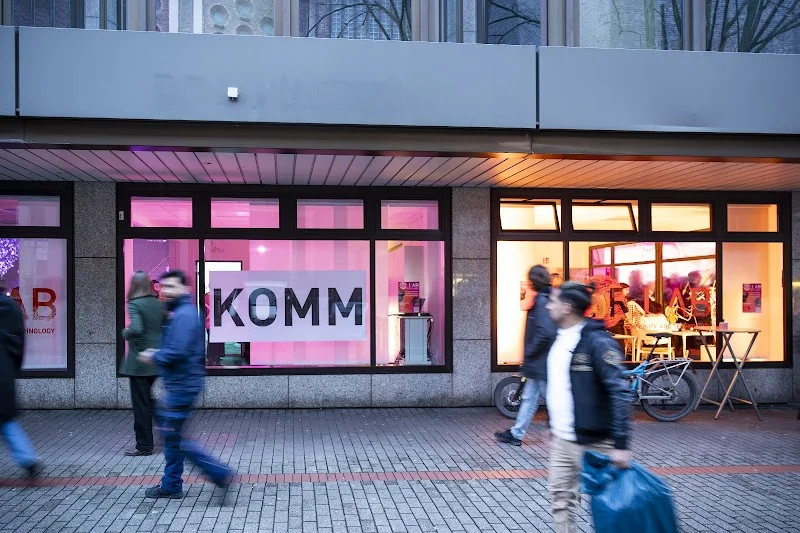
MiR.LAB is the research laboratory of the music theater in the region. On the official page, it is described as an open place dedicated to the exploration, communication, and production of experimental music theater. It is located in a retail space in the city center, thus deliberately not isolated, but close to passersby, neighborhoods, and urban life. This is exactly what defines its character: Instead of a rigid theater hall, there is a place that changes with the projects, responds to different target groups, and makes artistic research visible. In the description of the house, terms like digital culture, participation, and new formats repeatedly appear. This is no coincidence, as MiR.LAB develops connections between stage art, digital technologies, and participatory formats. For search queries like Mir laboratory meaning or with labor, the short answer is: MiR.LAB stands for a laboratory of theater, not for a classical laboratory in the scientific sense. ([mirlab.digital](https://www.mirlab.digital/))
Also exciting is the temporal context. The music theater-in-the-region booklet mentions that MiR.LAB has been developing unconventional formats and testing digital technologies since February 2024. The laboratory networks experts and laboratory staff, collaborates with local and digital communities, and develops hybrid play worlds, interactive audio walks, or digital operas from small theatrical experiments. The sources thus show a profile that is artistic, technical, and social at the same time: MiR.LAB is research, production, and communication in one. Therefore, those who visit the location encounter a lively working form that not only addresses an audience but works with the audience. This is precisely where the special SEO relevance around terms like workshops, participation, digital, laboratory, city center, and music theater in the region arises. ([static.mirtuell.net](https://static.mirtuell.net/files/e537fa09-a149-39d8-ac6e-8b0a33606b12.pdf))
Workshops, Participation, and Program at MiR.LAB
The program landscape at MiR.LAB is deliberately diverse. The homepage focuses on workshops, discourse series, and performative experiments; examples include Cyberflute, stattWerkSTADT, Goddesses, or Ghost Me, If You Can. These names illustrate how the laboratory works: opera meets game mechanics, participatory urban development, digital narrative forms, and social questions. The project pages also make it clear that MiR.LAB does not only host individual evenings but builds research processes in which content, aesthetics, and participation influence each other. The audience advisory board, for example, brings citizens together with theater staff to discuss programming and communication. Discourse and Daddeln is aimed at older and aging individuals who want to playfully try out smartphones, tablets, or new technologies. The System Cannot Fail invites participants to AI workshops, where masks, faces, and digital figures are examined. ([mirlab.digital](https://www.mirlab.digital/))
It is precisely this mix of openness and concrete formats that makes MiR.LAB attractive to different target groups. Some offerings are free, while others require registration; for The System Cannot Fail, the number of participants is limited, while Discourse and Daddeln explicitly works without theater experience and is recommended for ages 55+. The audience advisory board invites people from 15 to 99+ and sees itself as a dialogue space between theater and urban society. Such details are important because they dissolve the image of a purely presentation venue: MiR.LAB is a place for experimentation, discussion, and collaborative design. For SEO searches around program, tickets, participation, workshops, and events, this means that the best content not only refers to dates but also explains the character of the offerings: low-threshold, experimental, interactive, and close to the city's themes. ([mirlab.digital](https://www.mirlab.digital/projects/publikumsbeirat))
Directions, Parking, and Accessibility at MiR.LAB
The address of MiR.LAB is Am Rundhöfchen 6, 45879 Gelsenkirchen. The official contact page lists this address and identifies the laboratory as a place in Gelsenkirchen. For travel, public transport is particularly relevant: The access pages mention the Heinrich-König-Platz stop with an elevator, improving accessibility for people with mobility restrictions. Additionally, the entrance is described as ground-level, and accessible parking spaces are directly noted. A wheelchair-accessible restroom in the café next door is also mentioned, as well as guide dogs and helpful staff. These details are particularly important for search queries like directions, accessible, parking, or city center because they do not remain abstract but provide concrete orientation. The visit can thus be well planned, even if coming with a stroller, wheelchair, or as part of a group trip. ([mirlab.digital](https://www.mirlab.digital/kontakt))
When it comes to parking, it is worth looking at two levels. Directly at MiR.LAB, accessible parking spaces are mentioned; for the wider city center, the city of Gelsenkirchen refers to its parking guidance system, which incorporates a total of 18 private and municipal parking garages and areas. This is practical for visitors who want to combine their stay with a city stroll, a theater visit, or an appointment in the city center. At the same time, one should note that the central location can also lead to heavy traffic. Therefore, the combination of public transport and short distances often remains the most relaxed solution. So, if you are looking for a location with a good city center location, clear public transport connections, and realistic parking options, MiR.LAB offers a sensible mix of accessibility and urban proximity. The appropriate search terms here are not only parking but also directions, city center, and accessible access. ([mirlab.digital](https://www.mirlab.digital/projects/publikumsbeirat))
Digital Music Theater Formats and Special Projects
The special strength of MiR.LAB lies in the hybrid formats that weave together analog theater and digital technology. The websites mention, for example, a digital-analog opera game, participatory urban projects, social media narratives, and AI-supported workshops. In The Magic Flute, Mozart's opera is conceived together with MiR.LAB as a fairy-tale and dystopian open-world simulation; the piece combines historical paintings, baroque theater sets, interactive screens, and imaginative costumes. The System Cannot Fail focuses on AI, faces, and masks, asking how artificial intelligence creates, distorts, and seemingly brings figures to life. Such projects make it clear that MiR.LAB is not just a space but a mindset: New technologies are not presented as an end in themselves but as artistic tools to bring questions of identity, perception, and participation to the stage. ([mirlab.digital](https://www.mirlab.digital/projects/zauberflote))
Even the older project texts from the MiR booklet support this profile. They mention VR glasses, interactive games, artificial intelligence, digital operas, and interactive audio walks. At the same time, the laboratory emphasizes that curiosity is sufficient and no prior knowledge of digitality or opera is required. This mix is particularly valuable for external communication because it sends a clear message: MiR.LAB is open to experiments but not elitist. Those who view the location as an event venue thus receive not only a program but also an attitude. The laboratory invites crossing boundaries between stage, research, city, and community. Especially in a city like Gelsenkirchen, where cultural offerings thrive on local roots, this form of experimental music theater is a strong unique selling point. ([static.mirtuell.net](https://static.mirtuell.net/files/e537fa09-a149-39d8-ac6e-8b0a33606b12.pdf))
Why MiR.LAB is Important for Gelsenkirchen
MiR.LAB is closely connected to the music theater in the region, an institution that has been regarded as one of the outstanding theaters of the post-war period since 1959. The laboratory complements this large house with an open, smaller, and more flexible level of research and communication. This gives the music theater a second address in the city, closer to everyday paths, neighborhoods, and spontaneous participation. The official description emphasizes that here theater is reinvented together with people from the city. This is precisely where the relevance for Gelsenkirchen lies: MiR.LAB creates a place where artistic processes are not hidden but made visible. The funding from the state of North Rhine-Westphalia, the city of Gelsenkirchen, and the savings bank Gelsenkirchen also shows that the project is understood as cultural infrastructure and not as a short-term event. For a location page, therefore, terms like culture, social participation, funding, and community are particularly meaningful. ([mirlab.digital](https://www.mirlab.digital/))
For visitors, this has a very practical effect. Those who visit MiR.LAB experience not only individual events but a place that is continuously working on new formats and bringing different groups together. The audience advisory board involves the urban society, Discourse and Daddeln opens the door for older people, AI workshops appeal to tech-savvy participants, and other projects connect opera with gaming or social media culture. This creates an unusually broad target group. MiR.LAB functions for culture enthusiasts, for the digitally curious, for people who want to participate, and for anyone looking for a location with an experimental character. This complexity is strong for SEO because it serves multiple search intentions simultaneously: what is it, what is happening there, how to get there, can you park there, is it accessible, do you need tickets, and how does participation work. It is precisely from this combination that MiR.LAB becomes a location with its own profile in the heart of the city. ([mirlab.digital](https://www.mirlab.digital/projects/publikumsbeirat))
For those who want to orient themselves before the visit, the most important contact routes can be found directly on the official page: Email to mirlab.info@musiktheater-im-revier.de and Instagram @mirlab.digital. This is useful for inquiries about programs, registration, or travel. Also, in external communication, the house is clearly designed for clarity and openness: The contact page provides the address, social media channel, and map, while project pages each carry the appropriate access information. This is exactly the kind of structure that is helpful for both search engines and users because it quickly becomes visible where the place is, how to reach it, and how to inquire about an appointment or workshop. ([mirlab.digital](https://www.mirlab.digital/kontakt))
Sources:
- MiR.LAB - Official Website ([mirlab.digital](https://www.mirlab.digital/))
- MiR.LAB - Contact ([mirlab.digital](https://www.mirlab.digital/kontakt))
- Music Theater in the Region - MiR.LAB ([musiktheater-im-revier.de](https://musiktheater-im-revier.de/de/articles/2025-26/general/mir-lab?utm_source=openai))
- MiR.LAB - Audience Advisory Board and Accessibility ([mirlab.digital](https://www.mirlab.digital/projects/publikumsbeirat))
- City of Gelsenkirchen - Parking Options ([gelsenkirchen-city.de](https://www.gelsenkirchen-city.de/besucher/parkmoeglichkeiten?utm_source=openai))
- MiR.LAB - The Magic Flute ([mirlab.digital](https://www.mirlab.digital/projects/zauberflote))
Show moreShow less
MiR.LAB | Workshops & Participation
MiR.LAB is not a traditional venue, but an open research laboratory in the heart of Gelsenkirchen. Here, experimental music theater, digital culture, and social participation come together; from this, formats emerge that consciously combine stage, technology, and participation. The house sees itself as a place where theater is not only presented but rethought together with people from the city. For visitors, this means: MiR.LAB is exciting for anyone curious about new narrative forms, interactive projects, and digital experiments, without needing prior knowledge in opera or media art. The current work of the laboratory is reflected in workshops, discourse series, and projects supported by the music theater in the region and by sponsors from the state, city, and savings bank. ([mirlab.digital](https://www.mirlab.digital/))
What is MiR.LAB and what does the name stand for?
MiR.LAB is the research laboratory of the music theater in the region. On the official page, it is described as an open place dedicated to the exploration, communication, and production of experimental music theater. It is located in a retail space in the city center, thus deliberately not isolated, but close to passersby, neighborhoods, and urban life. This is exactly what defines its character: Instead of a rigid theater hall, there is a place that changes with the projects, responds to different target groups, and makes artistic research visible. In the description of the house, terms like digital culture, participation, and new formats repeatedly appear. This is no coincidence, as MiR.LAB develops connections between stage art, digital technologies, and participatory formats. For search queries like Mir laboratory meaning or with labor, the short answer is: MiR.LAB stands for a laboratory of theater, not for a classical laboratory in the scientific sense. ([mirlab.digital](https://www.mirlab.digital/))
Also exciting is the temporal context. The music theater-in-the-region booklet mentions that MiR.LAB has been developing unconventional formats and testing digital technologies since February 2024. The laboratory networks experts and laboratory staff, collaborates with local and digital communities, and develops hybrid play worlds, interactive audio walks, or digital operas from small theatrical experiments. The sources thus show a profile that is artistic, technical, and social at the same time: MiR.LAB is research, production, and communication in one. Therefore, those who visit the location encounter a lively working form that not only addresses an audience but works with the audience. This is precisely where the special SEO relevance around terms like workshops, participation, digital, laboratory, city center, and music theater in the region arises. ([static.mirtuell.net](https://static.mirtuell.net/files/e537fa09-a149-39d8-ac6e-8b0a33606b12.pdf))
Workshops, Participation, and Program at MiR.LAB
The program landscape at MiR.LAB is deliberately diverse. The homepage focuses on workshops, discourse series, and performative experiments; examples include Cyberflute, stattWerkSTADT, Goddesses, or Ghost Me, If You Can. These names illustrate how the laboratory works: opera meets game mechanics, participatory urban development, digital narrative forms, and social questions. The project pages also make it clear that MiR.LAB does not only host individual evenings but builds research processes in which content, aesthetics, and participation influence each other. The audience advisory board, for example, brings citizens together with theater staff to discuss programming and communication. Discourse and Daddeln is aimed at older and aging individuals who want to playfully try out smartphones, tablets, or new technologies. The System Cannot Fail invites participants to AI workshops, where masks, faces, and digital figures are examined. ([mirlab.digital](https://www.mirlab.digital/))
It is precisely this mix of openness and concrete formats that makes MiR.LAB attractive to different target groups. Some offerings are free, while others require registration; for The System Cannot Fail, the number of participants is limited, while Discourse and Daddeln explicitly works without theater experience and is recommended for ages 55+. The audience advisory board invites people from 15 to 99+ and sees itself as a dialogue space between theater and urban society. Such details are important because they dissolve the image of a purely presentation venue: MiR.LAB is a place for experimentation, discussion, and collaborative design. For SEO searches around program, tickets, participation, workshops, and events, this means that the best content not only refers to dates but also explains the character of the offerings: low-threshold, experimental, interactive, and close to the city's themes. ([mirlab.digital](https://www.mirlab.digital/projects/publikumsbeirat))
Directions, Parking, and Accessibility at MiR.LAB
The address of MiR.LAB is Am Rundhöfchen 6, 45879 Gelsenkirchen. The official contact page lists this address and identifies the laboratory as a place in Gelsenkirchen. For travel, public transport is particularly relevant: The access pages mention the Heinrich-König-Platz stop with an elevator, improving accessibility for people with mobility restrictions. Additionally, the entrance is described as ground-level, and accessible parking spaces are directly noted. A wheelchair-accessible restroom in the café next door is also mentioned, as well as guide dogs and helpful staff. These details are particularly important for search queries like directions, accessible, parking, or city center because they do not remain abstract but provide concrete orientation. The visit can thus be well planned, even if coming with a stroller, wheelchair, or as part of a group trip. ([mirlab.digital](https://www.mirlab.digital/kontakt))
When it comes to parking, it is worth looking at two levels. Directly at MiR.LAB, accessible parking spaces are mentioned; for the wider city center, the city of Gelsenkirchen refers to its parking guidance system, which incorporates a total of 18 private and municipal parking garages and areas. This is practical for visitors who want to combine their stay with a city stroll, a theater visit, or an appointment in the city center. At the same time, one should note that the central location can also lead to heavy traffic. Therefore, the combination of public transport and short distances often remains the most relaxed solution. So, if you are looking for a location with a good city center location, clear public transport connections, and realistic parking options, MiR.LAB offers a sensible mix of accessibility and urban proximity. The appropriate search terms here are not only parking but also directions, city center, and accessible access. ([mirlab.digital](https://www.mirlab.digital/projects/publikumsbeirat))
Digital Music Theater Formats and Special Projects
The special strength of MiR.LAB lies in the hybrid formats that weave together analog theater and digital technology. The websites mention, for example, a digital-analog opera game, participatory urban projects, social media narratives, and AI-supported workshops. In The Magic Flute, Mozart's opera is conceived together with MiR.LAB as a fairy-tale and dystopian open-world simulation; the piece combines historical paintings, baroque theater sets, interactive screens, and imaginative costumes. The System Cannot Fail focuses on AI, faces, and masks, asking how artificial intelligence creates, distorts, and seemingly brings figures to life. Such projects make it clear that MiR.LAB is not just a space but a mindset: New technologies are not presented as an end in themselves but as artistic tools to bring questions of identity, perception, and participation to the stage. ([mirlab.digital](https://www.mirlab.digital/projects/zauberflote))
Even the older project texts from the MiR booklet support this profile. They mention VR glasses, interactive games, artificial intelligence, digital operas, and interactive audio walks. At the same time, the laboratory emphasizes that curiosity is sufficient and no prior knowledge of digitality or opera is required. This mix is particularly valuable for external communication because it sends a clear message: MiR.LAB is open to experiments but not elitist. Those who view the location as an event venue thus receive not only a program but also an attitude. The laboratory invites crossing boundaries between stage, research, city, and community. Especially in a city like Gelsenkirchen, where cultural offerings thrive on local roots, this form of experimental music theater is a strong unique selling point. ([static.mirtuell.net](https://static.mirtuell.net/files/e537fa09-a149-39d8-ac6e-8b0a33606b12.pdf))
Why MiR.LAB is Important for Gelsenkirchen
MiR.LAB is closely connected to the music theater in the region, an institution that has been regarded as one of the outstanding theaters of the post-war period since 1959. The laboratory complements this large house with an open, smaller, and more flexible level of research and communication. This gives the music theater a second address in the city, closer to everyday paths, neighborhoods, and spontaneous participation. The official description emphasizes that here theater is reinvented together with people from the city. This is precisely where the relevance for Gelsenkirchen lies: MiR.LAB creates a place where artistic processes are not hidden but made visible. The funding from the state of North Rhine-Westphalia, the city of Gelsenkirchen, and the savings bank Gelsenkirchen also shows that the project is understood as cultural infrastructure and not as a short-term event. For a location page, therefore, terms like culture, social participation, funding, and community are particularly meaningful. ([mirlab.digital](https://www.mirlab.digital/))
For visitors, this has a very practical effect. Those who visit MiR.LAB experience not only individual events but a place that is continuously working on new formats and bringing different groups together. The audience advisory board involves the urban society, Discourse and Daddeln opens the door for older people, AI workshops appeal to tech-savvy participants, and other projects connect opera with gaming or social media culture. This creates an unusually broad target group. MiR.LAB functions for culture enthusiasts, for the digitally curious, for people who want to participate, and for anyone looking for a location with an experimental character. This complexity is strong for SEO because it serves multiple search intentions simultaneously: what is it, what is happening there, how to get there, can you park there, is it accessible, do you need tickets, and how does participation work. It is precisely from this combination that MiR.LAB becomes a location with its own profile in the heart of the city. ([mirlab.digital](https://www.mirlab.digital/projects/publikumsbeirat))
For those who want to orient themselves before the visit, the most important contact routes can be found directly on the official page: Email to mirlab.info@musiktheater-im-revier.de and Instagram @mirlab.digital. This is useful for inquiries about programs, registration, or travel. Also, in external communication, the house is clearly designed for clarity and openness: The contact page provides the address, social media channel, and map, while project pages each carry the appropriate access information. This is exactly the kind of structure that is helpful for both search engines and users because it quickly becomes visible where the place is, how to reach it, and how to inquire about an appointment or workshop. ([mirlab.digital](https://www.mirlab.digital/kontakt))
Sources:
- MiR.LAB - Official Website ([mirlab.digital](https://www.mirlab.digital/))
- MiR.LAB - Contact ([mirlab.digital](https://www.mirlab.digital/kontakt))
- Music Theater in the Region - MiR.LAB ([musiktheater-im-revier.de](https://musiktheater-im-revier.de/de/articles/2025-26/general/mir-lab?utm_source=openai))
- MiR.LAB - Audience Advisory Board and Accessibility ([mirlab.digital](https://www.mirlab.digital/projects/publikumsbeirat))
- City of Gelsenkirchen - Parking Options ([gelsenkirchen-city.de](https://www.gelsenkirchen-city.de/besucher/parkmoeglichkeiten?utm_source=openai))
- MiR.LAB - The Magic Flute ([mirlab.digital](https://www.mirlab.digital/projects/zauberflote))
MiR.LAB | Workshops & Participation
MiR.LAB is not a traditional venue, but an open research laboratory in the heart of Gelsenkirchen. Here, experimental music theater, digital culture, and social participation come together; from this, formats emerge that consciously combine stage, technology, and participation. The house sees itself as a place where theater is not only presented but rethought together with people from the city. For visitors, this means: MiR.LAB is exciting for anyone curious about new narrative forms, interactive projects, and digital experiments, without needing prior knowledge in opera or media art. The current work of the laboratory is reflected in workshops, discourse series, and projects supported by the music theater in the region and by sponsors from the state, city, and savings bank. ([mirlab.digital](https://www.mirlab.digital/))
What is MiR.LAB and what does the name stand for?
MiR.LAB is the research laboratory of the music theater in the region. On the official page, it is described as an open place dedicated to the exploration, communication, and production of experimental music theater. It is located in a retail space in the city center, thus deliberately not isolated, but close to passersby, neighborhoods, and urban life. This is exactly what defines its character: Instead of a rigid theater hall, there is a place that changes with the projects, responds to different target groups, and makes artistic research visible. In the description of the house, terms like digital culture, participation, and new formats repeatedly appear. This is no coincidence, as MiR.LAB develops connections between stage art, digital technologies, and participatory formats. For search queries like Mir laboratory meaning or with labor, the short answer is: MiR.LAB stands for a laboratory of theater, not for a classical laboratory in the scientific sense. ([mirlab.digital](https://www.mirlab.digital/))
Also exciting is the temporal context. The music theater-in-the-region booklet mentions that MiR.LAB has been developing unconventional formats and testing digital technologies since February 2024. The laboratory networks experts and laboratory staff, collaborates with local and digital communities, and develops hybrid play worlds, interactive audio walks, or digital operas from small theatrical experiments. The sources thus show a profile that is artistic, technical, and social at the same time: MiR.LAB is research, production, and communication in one. Therefore, those who visit the location encounter a lively working form that not only addresses an audience but works with the audience. This is precisely where the special SEO relevance around terms like workshops, participation, digital, laboratory, city center, and music theater in the region arises. ([static.mirtuell.net](https://static.mirtuell.net/files/e537fa09-a149-39d8-ac6e-8b0a33606b12.pdf))
Workshops, Participation, and Program at MiR.LAB
The program landscape at MiR.LAB is deliberately diverse. The homepage focuses on workshops, discourse series, and performative experiments; examples include Cyberflute, stattWerkSTADT, Goddesses, or Ghost Me, If You Can. These names illustrate how the laboratory works: opera meets game mechanics, participatory urban development, digital narrative forms, and social questions. The project pages also make it clear that MiR.LAB does not only host individual evenings but builds research processes in which content, aesthetics, and participation influence each other. The audience advisory board, for example, brings citizens together with theater staff to discuss programming and communication. Discourse and Daddeln is aimed at older and aging individuals who want to playfully try out smartphones, tablets, or new technologies. The System Cannot Fail invites participants to AI workshops, where masks, faces, and digital figures are examined. ([mirlab.digital](https://www.mirlab.digital/))
It is precisely this mix of openness and concrete formats that makes MiR.LAB attractive to different target groups. Some offerings are free, while others require registration; for The System Cannot Fail, the number of participants is limited, while Discourse and Daddeln explicitly works without theater experience and is recommended for ages 55+. The audience advisory board invites people from 15 to 99+ and sees itself as a dialogue space between theater and urban society. Such details are important because they dissolve the image of a purely presentation venue: MiR.LAB is a place for experimentation, discussion, and collaborative design. For SEO searches around program, tickets, participation, workshops, and events, this means that the best content not only refers to dates but also explains the character of the offerings: low-threshold, experimental, interactive, and close to the city's themes. ([mirlab.digital](https://www.mirlab.digital/projects/publikumsbeirat))
Directions, Parking, and Accessibility at MiR.LAB
The address of MiR.LAB is Am Rundhöfchen 6, 45879 Gelsenkirchen. The official contact page lists this address and identifies the laboratory as a place in Gelsenkirchen. For travel, public transport is particularly relevant: The access pages mention the Heinrich-König-Platz stop with an elevator, improving accessibility for people with mobility restrictions. Additionally, the entrance is described as ground-level, and accessible parking spaces are directly noted. A wheelchair-accessible restroom in the café next door is also mentioned, as well as guide dogs and helpful staff. These details are particularly important for search queries like directions, accessible, parking, or city center because they do not remain abstract but provide concrete orientation. The visit can thus be well planned, even if coming with a stroller, wheelchair, or as part of a group trip. ([mirlab.digital](https://www.mirlab.digital/kontakt))
When it comes to parking, it is worth looking at two levels. Directly at MiR.LAB, accessible parking spaces are mentioned; for the wider city center, the city of Gelsenkirchen refers to its parking guidance system, which incorporates a total of 18 private and municipal parking garages and areas. This is practical for visitors who want to combine their stay with a city stroll, a theater visit, or an appointment in the city center. At the same time, one should note that the central location can also lead to heavy traffic. Therefore, the combination of public transport and short distances often remains the most relaxed solution. So, if you are looking for a location with a good city center location, clear public transport connections, and realistic parking options, MiR.LAB offers a sensible mix of accessibility and urban proximity. The appropriate search terms here are not only parking but also directions, city center, and accessible access. ([mirlab.digital](https://www.mirlab.digital/projects/publikumsbeirat))
Digital Music Theater Formats and Special Projects
The special strength of MiR.LAB lies in the hybrid formats that weave together analog theater and digital technology. The websites mention, for example, a digital-analog opera game, participatory urban projects, social media narratives, and AI-supported workshops. In The Magic Flute, Mozart's opera is conceived together with MiR.LAB as a fairy-tale and dystopian open-world simulation; the piece combines historical paintings, baroque theater sets, interactive screens, and imaginative costumes. The System Cannot Fail focuses on AI, faces, and masks, asking how artificial intelligence creates, distorts, and seemingly brings figures to life. Such projects make it clear that MiR.LAB is not just a space but a mindset: New technologies are not presented as an end in themselves but as artistic tools to bring questions of identity, perception, and participation to the stage. ([mirlab.digital](https://www.mirlab.digital/projects/zauberflote))
Even the older project texts from the MiR booklet support this profile. They mention VR glasses, interactive games, artificial intelligence, digital operas, and interactive audio walks. At the same time, the laboratory emphasizes that curiosity is sufficient and no prior knowledge of digitality or opera is required. This mix is particularly valuable for external communication because it sends a clear message: MiR.LAB is open to experiments but not elitist. Those who view the location as an event venue thus receive not only a program but also an attitude. The laboratory invites crossing boundaries between stage, research, city, and community. Especially in a city like Gelsenkirchen, where cultural offerings thrive on local roots, this form of experimental music theater is a strong unique selling point. ([static.mirtuell.net](https://static.mirtuell.net/files/e537fa09-a149-39d8-ac6e-8b0a33606b12.pdf))
Why MiR.LAB is Important for Gelsenkirchen
MiR.LAB is closely connected to the music theater in the region, an institution that has been regarded as one of the outstanding theaters of the post-war period since 1959. The laboratory complements this large house with an open, smaller, and more flexible level of research and communication. This gives the music theater a second address in the city, closer to everyday paths, neighborhoods, and spontaneous participation. The official description emphasizes that here theater is reinvented together with people from the city. This is precisely where the relevance for Gelsenkirchen lies: MiR.LAB creates a place where artistic processes are not hidden but made visible. The funding from the state of North Rhine-Westphalia, the city of Gelsenkirchen, and the savings bank Gelsenkirchen also shows that the project is understood as cultural infrastructure and not as a short-term event. For a location page, therefore, terms like culture, social participation, funding, and community are particularly meaningful. ([mirlab.digital](https://www.mirlab.digital/))
For visitors, this has a very practical effect. Those who visit MiR.LAB experience not only individual events but a place that is continuously working on new formats and bringing different groups together. The audience advisory board involves the urban society, Discourse and Daddeln opens the door for older people, AI workshops appeal to tech-savvy participants, and other projects connect opera with gaming or social media culture. This creates an unusually broad target group. MiR.LAB functions for culture enthusiasts, for the digitally curious, for people who want to participate, and for anyone looking for a location with an experimental character. This complexity is strong for SEO because it serves multiple search intentions simultaneously: what is it, what is happening there, how to get there, can you park there, is it accessible, do you need tickets, and how does participation work. It is precisely from this combination that MiR.LAB becomes a location with its own profile in the heart of the city. ([mirlab.digital](https://www.mirlab.digital/projects/publikumsbeirat))
For those who want to orient themselves before the visit, the most important contact routes can be found directly on the official page: Email to mirlab.info@musiktheater-im-revier.de and Instagram @mirlab.digital. This is useful for inquiries about programs, registration, or travel. Also, in external communication, the house is clearly designed for clarity and openness: The contact page provides the address, social media channel, and map, while project pages each carry the appropriate access information. This is exactly the kind of structure that is helpful for both search engines and users because it quickly becomes visible where the place is, how to reach it, and how to inquire about an appointment or workshop. ([mirlab.digital](https://www.mirlab.digital/kontakt))
Sources:
- MiR.LAB - Official Website ([mirlab.digital](https://www.mirlab.digital/))
- MiR.LAB - Contact ([mirlab.digital](https://www.mirlab.digital/kontakt))
- Music Theater in the Region - MiR.LAB ([musiktheater-im-revier.de](https://musiktheater-im-revier.de/de/articles/2025-26/general/mir-lab?utm_source=openai))
- MiR.LAB - Audience Advisory Board and Accessibility ([mirlab.digital](https://www.mirlab.digital/projects/publikumsbeirat))
- City of Gelsenkirchen - Parking Options ([gelsenkirchen-city.de](https://www.gelsenkirchen-city.de/besucher/parkmoeglichkeiten?utm_source=openai))
- MiR.LAB - The Magic Flute ([mirlab.digital](https://www.mirlab.digital/projects/zauberflote))
Frequently Asked Questions
Reviews
No reviews found