
Gelsenkirchen
Am Dahlbusch 1, 45884 Gelsenkirchen-Süd, Deutschland
Metropolengarten | Program & Directions
The Metropolengarten on Dahlbusch is one of those places that you not only visit but slowly come to understand. Officially, it presents itself as an urban cultural and gardening project in Gelsenkirchen-Rotthausen, but in its effect, it is more than that: It connects neighborhood, local history, cultural events, and gardening into an ensemble that is consciously open and community-oriented. The homepage describes the place as an initiative by citizens who are shaping a wild area around the historic coach house. This mix of renewal and remembrance is what makes it appealing. Those searching for Metropolengarten Gelsenkirchen, Metropolengarten on Dahlbusch, or Metropolengarten Rotthausen usually refer not just to an address but to a special space in the district that unfolds between garden plots, an old villa, and an event area. ([metropolengarten.de](https://metropolengarten.de/metropolengarten_gelsenkirchen_start.html?utm_source=openai))
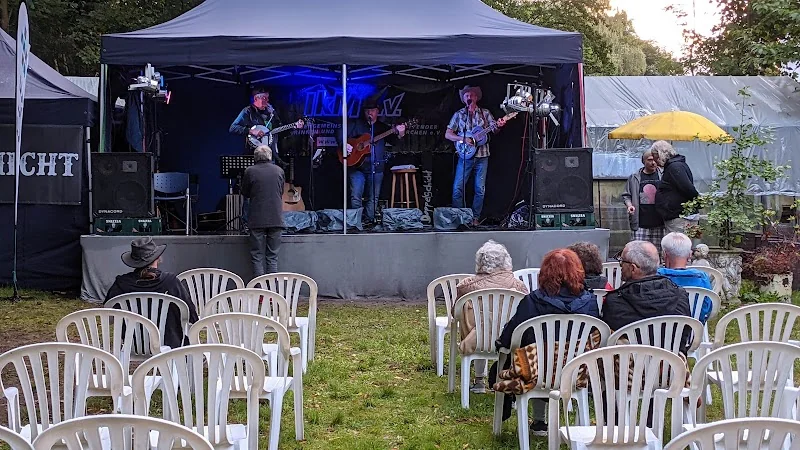
For seekers, the Metropolengarten is particularly interesting due to its program. The official pages show that the place is regularly used for cultural formats that bring together music, literature, art, and encounters. The character is intentionally low-threshold: free admission, local anchoring, and a strong reference system to the district play a central role. At the same time, the Metropolengarten is clearly locatable due to its historical location at the Villa Dahlbusch, the 4,800 square meter site, and its connection to the former Dahlbusch mine. Therefore, those searching for Metropolengarten photos or images of Metropolengarten expect a place with a distinctive atmosphere, not a classic event hall. This is important for SEO logic because here, the search intentions for program, directions, history, and imagery converge directly. ([metropolengarten.de](https://metropolengarten.de/metropolengarten_gelsenkirchen_das-gelaende.html?utm_source=openai))
Metropolengarten on Dahlbusch: Cultural and Gardening Project in Rotthausen
The Metropolengarten is described on the official website as a neighborhood initiative that has emerged from personal commitment, networks, and social media. Citizens from Gelsenkirchen-Rotthausen have taken on the task of developing the area around the historic coach house, bringing not only gardening but also cultural ideas into play. This approach is typical for urban gardening projects in the Ruhr area, but the Metropolengarten distinguishes itself by being conceived from the outset as a multifunctional space. Not only plants but also encounters, education, art, and cultural participation are at the center. The project thus appeals to people searching for Metropolengarten on Dahlbusch Gelsenkirchen, Metropol Garden, or a combination of gardening, culture, and neighborhood engagement. ([metropolengarten.de](https://metropolengarten.de/metropolengarten_gelsenkirchen_start.html?utm_source=openai))
The official language of the project emphasizes community and participation. It is about making the area usable together, developing ideas, and bringing in skills from various fields. The homepage explicitly states that professional know-how, ranging from academic, craft, artistic to household skills, is welcome. This openness explains why the place is interesting for various target groups: for neighborhood activists, for cultural audiences, for gardening enthusiasts, and for visitors who simply want to get to know a special place in the region. The combination of urban garden, cultural space, and historical surroundings creates a profile that clearly distinguishes itself from ordinary event venues. From an SEO perspective, the Metropolengarten is therefore not just a location but a story about urban development, local identity, and communal use. ([metropolengarten.de](https://metropolengarten.de/metropolengarten_gelsenkirchen_start.html?utm_source=openai))
History of the Site, Villa Dahlbusch, and the Coach House
The historical foundation of today's Metropolengarten is closely linked to the Dahlbusch mine. According to the official site, the first shaft was sunk in 1848; subsequently, eight more shafts were added. With the structural change, the mine was closed in 1966. These sober facts explain why the place in the Rotthausen district remains so strongly connected to its industrial past. The Villa Dahlbusch was built around 1880 or 1890, according to the website, and served as the residence of the mine's general director. The coach house is located on a 4,800 square meter property adjacent to the renovated villa, which is now divided into rental apartments. Thus, the site tells not only the story of gardens but also of industry and urban history. ([metropolengarten.de](https://metropolengarten.de/metropolengarten_gelsenkirchen_das-gelaende.html?utm_source=openai))
Also interesting is the condition of the property and the way it is discussed. The official site does not hide the fact that the building, the greenhouses, and the property were once in a dilapidated state. This openness appears credible because it shows that the current Metropolengarten does not start on a perfectly staged area but on a site with a past, fractures, and a need for renovation. According to the website, the property belongs to the portfolio of NRW.URBAN; furthermore, the coach house is not under monument protection according to discussions with the lower monument authority. This is important for the place as it meets preservable history and practical repurposing. The result is not a museum garden but a vibrant urban space with layers of memory. ([metropolengarten.de](https://metropolengarten.de/metropolengarten_gelsenkirchen_das-gelaende.html?utm_source=openai))
Querbeet Cultural Festival and NAH & FERN: The Event Profile
Those searching for programs, events, or tickets will primarily find two of their own formats at the Metropolengarten: the Querbeet Cultural Festival and the NAH & FERN Literature Festival. For 2026, the official homepage announces the Querbeet Cultural Festival from July 3 to 12 at the Metropolengarten in Gelsenkirchen-Rotthausen; music, art, workshops, literature, and more are explicitly announced to be free and outdoors. Immediately following is the NAH & FERN Literature Festival from July 16 to 25, 2026, also with free admission. The message is clear: The Metropolengarten is not a place for a single genre but for a consciously mixed program. This leads to strong search queries like metropolengarten program, querbeet cultural festival, or nah und fern literature festival. ([metropolengarten.de](https://metropolengarten.de/metropolengarten_gelsenkirchen_start.html?utm_source=openai))
The program architecture is also characteristic. At Querbeet, cultural diversity is emphasized, while NAH & FERN focuses on literature in connection with readings and lively presentations. The festival pages show that the garden opens 60 minutes before the program starts, which is important for visitor planning. Additionally, the patronage by the mayor of the city of Gelsenkirchen on the literature festival page gives the format additional local visibility. For search intentions, this means: Those looking for not just a place but an event with a concrete schedule, outdoor character, and neighborhood connection will find a credible answer in the Metropolengarten. This combination of local culture, public accessibility, and thematic breadth is a central reason why the place is perceived as a relevant event venue by both cultural enthusiasts and search engines. ([metropolengarten.de](https://metropolengarten.de/veranstaltung/nah_und_fern-festival_2026/nah_und_fern_literatur-festival_2026_gelsenkirchen_metropolengarten_ruhrgebiet.html?utm_source=openai))
Raised Beds, Soil Quality, and Community Gardening
The Metropolengarten is not only a backdrop for events but also a practical garden space. The guidelines for gardeners make it clear that the site requires special attention due to historically caused contamination of urban soils in the Ruhr area. Therefore, the official site explains that health-safe cultivation of edible plants should only take place in the form of raised beds with biologically certified soil. This information is relevant for anyone searching for gardening, crops, or sustainable use. It also shows that the project is not merely romantically conceived but works with the real conditions of a former industrial area. This makes the Metropolengarten professionally interesting and trustworthy because it openly addresses risks and usage. ([metropolengarten.de](https://www.metropolengarten.de/metropolengarten_gelsenkirchen_hinweise_fuer_gaertner-bodenproben.html?utm_source=openai))
The same openness also characterizes the self-understanding of the association. The crowdfunding page lists the purposes of the association: nature conservation, landscape maintenance, information about ecological relationships, art and culture, tolerance, education for sustainable development, and global learning. This makes it clear that the Metropolengarten is more than a decorative place. It is a testing ground for neighborhood development and educational work. Especially because the area is historically burdened and simultaneously fulfills a cultural mission, the term urban gardening fits particularly well here. Visitors experience not only beds but a model of how urban society can deal with the past, soil issues, and future visions. This makes the place exciting for people interested in sustainable use, local projects, and community gardening. ([metropolengarten.de](https://www.metropolengarten.de/metropolengarten_gelsenkirchen_crowdfunding.html?utm_source=openai))
Address, Directions, Photos, and Visitor Information
The practical orientation at the Metropolengarten is relatively clear: The imprint states the address Steeler Straße 61, 45884 Gelsenkirchen, and the city of Gelsenkirchen lists the event location with Steeler Straße 61 and entrance Am Dahlbusch in Gelsenkirchen-Rotthausen. This combination explains many search queries related to directions, Rotthausen, and Gelsenkirchen-South. Those visiting the place for the first time should also consider that the official event page has a section with program | directions. For planning, it is also important that the website indicates in connection with the festivals that the garden opens 60 minutes before the program starts. This makes the visit well-planned but always tied to the respective event. ([metropolengarten.de](https://www.metropolengarten.de/metropolengarten_gelsenkirchen_impressum.html?utm_source=openai))
The search queries for photos, images, and Metropolengarten pictures are understandable because the place is visually very distinct. Garden plots, greenhouse, old villa, historic coach house, and the open area provide motifs that strongly differ from typical event venues. The official website itself uses images on the pages, making it clear that visual impressions are part of the experience. Therefore, those searching for images of the Metropolengarten are usually looking not just for a location but for a specific atmosphere: something wild, something grown, and at the same time something culturally active. This mix is rare and makes the place photographically interesting. For visitors, this is a good sign because even the first impressions show that here, history, neighborhood, and present visibly intertwine. ([metropolengarten.de](https://metropolengarten.de/metropolengarten_gelsenkirchen_start.html?utm_source=openai))
Additionally, it is worth taking a look at the imprint because it organizationally classifies the project. According to the website, the Metropolengarten on Dahlbusch e.V. has been recognized as a non-profit since November 6, 2015, and is registered at the Gelsenkirchen District Court under register sheet 2113. Therefore, those looking for contact, sponsorship, or formal classification will find reliable information here instead of vague social media hints. For visitor planning, this means: It is best to check the current event page, especially regarding program, time slots, and directions. The Metropolengarten is not a static place but a project that continuously evolves through events, gardening, and local participation. For this reason, it remains an exciting anchor point for Rotthausen and for Gelsenkirchen as a whole. ([metropolengarten.de](https://www.metropolengarten.de/metropolengarten_gelsenkirchen_impressum.html?utm_source=openai))
Sources:
- Metropolengarten on Dahlbusch – Urban Cultural and Gardening Project in Gelsenkirchen Rotthausen
- Metropolengarten on Dahlbusch – The Historical Site
- Metropolengarten on Dahlbusch – Imprint
- Querbeet Sommerlicht Cultural Festival 2026 – Metropolengarten Gelsenkirchen
- NAH & FERN Literature Festival 2026 – Metropolengarten Gelsenkirchen
- City of Gelsenkirchen – Querbeet Cultural Festival: The Art in the Metropolengarten
- Metropolengarten on Dahlbusch – Guidelines for Gardeners / Soil Samples
Mehr anzeigenWeniger anzeigen
Metropolengarten | Program & Directions
The Metropolengarten on Dahlbusch is one of those places that you not only visit but slowly come to understand. Officially, it presents itself as an urban cultural and gardening project in Gelsenkirchen-Rotthausen, but in its effect, it is more than that: It connects neighborhood, local history, cultural events, and gardening into an ensemble that is consciously open and community-oriented. The homepage describes the place as an initiative by citizens who are shaping a wild area around the historic coach house. This mix of renewal and remembrance is what makes it appealing. Those searching for Metropolengarten Gelsenkirchen, Metropolengarten on Dahlbusch, or Metropolengarten Rotthausen usually refer not just to an address but to a special space in the district that unfolds between garden plots, an old villa, and an event area. ([metropolengarten.de](https://metropolengarten.de/metropolengarten_gelsenkirchen_start.html?utm_source=openai))
For seekers, the Metropolengarten is particularly interesting due to its program. The official pages show that the place is regularly used for cultural formats that bring together music, literature, art, and encounters. The character is intentionally low-threshold: free admission, local anchoring, and a strong reference system to the district play a central role. At the same time, the Metropolengarten is clearly locatable due to its historical location at the Villa Dahlbusch, the 4,800 square meter site, and its connection to the former Dahlbusch mine. Therefore, those searching for Metropolengarten photos or images of Metropolengarten expect a place with a distinctive atmosphere, not a classic event hall. This is important for SEO logic because here, the search intentions for program, directions, history, and imagery converge directly. ([metropolengarten.de](https://metropolengarten.de/metropolengarten_gelsenkirchen_das-gelaende.html?utm_source=openai))
Metropolengarten on Dahlbusch: Cultural and Gardening Project in Rotthausen
The Metropolengarten is described on the official website as a neighborhood initiative that has emerged from personal commitment, networks, and social media. Citizens from Gelsenkirchen-Rotthausen have taken on the task of developing the area around the historic coach house, bringing not only gardening but also cultural ideas into play. This approach is typical for urban gardening projects in the Ruhr area, but the Metropolengarten distinguishes itself by being conceived from the outset as a multifunctional space. Not only plants but also encounters, education, art, and cultural participation are at the center. The project thus appeals to people searching for Metropolengarten on Dahlbusch Gelsenkirchen, Metropol Garden, or a combination of gardening, culture, and neighborhood engagement. ([metropolengarten.de](https://metropolengarten.de/metropolengarten_gelsenkirchen_start.html?utm_source=openai))
The official language of the project emphasizes community and participation. It is about making the area usable together, developing ideas, and bringing in skills from various fields. The homepage explicitly states that professional know-how, ranging from academic, craft, artistic to household skills, is welcome. This openness explains why the place is interesting for various target groups: for neighborhood activists, for cultural audiences, for gardening enthusiasts, and for visitors who simply want to get to know a special place in the region. The combination of urban garden, cultural space, and historical surroundings creates a profile that clearly distinguishes itself from ordinary event venues. From an SEO perspective, the Metropolengarten is therefore not just a location but a story about urban development, local identity, and communal use. ([metropolengarten.de](https://metropolengarten.de/metropolengarten_gelsenkirchen_start.html?utm_source=openai))
History of the Site, Villa Dahlbusch, and the Coach House
The historical foundation of today's Metropolengarten is closely linked to the Dahlbusch mine. According to the official site, the first shaft was sunk in 1848; subsequently, eight more shafts were added. With the structural change, the mine was closed in 1966. These sober facts explain why the place in the Rotthausen district remains so strongly connected to its industrial past. The Villa Dahlbusch was built around 1880 or 1890, according to the website, and served as the residence of the mine's general director. The coach house is located on a 4,800 square meter property adjacent to the renovated villa, which is now divided into rental apartments. Thus, the site tells not only the story of gardens but also of industry and urban history. ([metropolengarten.de](https://metropolengarten.de/metropolengarten_gelsenkirchen_das-gelaende.html?utm_source=openai))
Also interesting is the condition of the property and the way it is discussed. The official site does not hide the fact that the building, the greenhouses, and the property were once in a dilapidated state. This openness appears credible because it shows that the current Metropolengarten does not start on a perfectly staged area but on a site with a past, fractures, and a need for renovation. According to the website, the property belongs to the portfolio of NRW.URBAN; furthermore, the coach house is not under monument protection according to discussions with the lower monument authority. This is important for the place as it meets preservable history and practical repurposing. The result is not a museum garden but a vibrant urban space with layers of memory. ([metropolengarten.de](https://metropolengarten.de/metropolengarten_gelsenkirchen_das-gelaende.html?utm_source=openai))
Querbeet Cultural Festival and NAH & FERN: The Event Profile
Those searching for programs, events, or tickets will primarily find two of their own formats at the Metropolengarten: the Querbeet Cultural Festival and the NAH & FERN Literature Festival. For 2026, the official homepage announces the Querbeet Cultural Festival from July 3 to 12 at the Metropolengarten in Gelsenkirchen-Rotthausen; music, art, workshops, literature, and more are explicitly announced to be free and outdoors. Immediately following is the NAH & FERN Literature Festival from July 16 to 25, 2026, also with free admission. The message is clear: The Metropolengarten is not a place for a single genre but for a consciously mixed program. This leads to strong search queries like metropolengarten program, querbeet cultural festival, or nah und fern literature festival. ([metropolengarten.de](https://metropolengarten.de/metropolengarten_gelsenkirchen_start.html?utm_source=openai))
The program architecture is also characteristic. At Querbeet, cultural diversity is emphasized, while NAH & FERN focuses on literature in connection with readings and lively presentations. The festival pages show that the garden opens 60 minutes before the program starts, which is important for visitor planning. Additionally, the patronage by the mayor of the city of Gelsenkirchen on the literature festival page gives the format additional local visibility. For search intentions, this means: Those looking for not just a place but an event with a concrete schedule, outdoor character, and neighborhood connection will find a credible answer in the Metropolengarten. This combination of local culture, public accessibility, and thematic breadth is a central reason why the place is perceived as a relevant event venue by both cultural enthusiasts and search engines. ([metropolengarten.de](https://metropolengarten.de/veranstaltung/nah_und_fern-festival_2026/nah_und_fern_literatur-festival_2026_gelsenkirchen_metropolengarten_ruhrgebiet.html?utm_source=openai))
Raised Beds, Soil Quality, and Community Gardening
The Metropolengarten is not only a backdrop for events but also a practical garden space. The guidelines for gardeners make it clear that the site requires special attention due to historically caused contamination of urban soils in the Ruhr area. Therefore, the official site explains that health-safe cultivation of edible plants should only take place in the form of raised beds with biologically certified soil. This information is relevant for anyone searching for gardening, crops, or sustainable use. It also shows that the project is not merely romantically conceived but works with the real conditions of a former industrial area. This makes the Metropolengarten professionally interesting and trustworthy because it openly addresses risks and usage. ([metropolengarten.de](https://www.metropolengarten.de/metropolengarten_gelsenkirchen_hinweise_fuer_gaertner-bodenproben.html?utm_source=openai))
The same openness also characterizes the self-understanding of the association. The crowdfunding page lists the purposes of the association: nature conservation, landscape maintenance, information about ecological relationships, art and culture, tolerance, education for sustainable development, and global learning. This makes it clear that the Metropolengarten is more than a decorative place. It is a testing ground for neighborhood development and educational work. Especially because the area is historically burdened and simultaneously fulfills a cultural mission, the term urban gardening fits particularly well here. Visitors experience not only beds but a model of how urban society can deal with the past, soil issues, and future visions. This makes the place exciting for people interested in sustainable use, local projects, and community gardening. ([metropolengarten.de](https://www.metropolengarten.de/metropolengarten_gelsenkirchen_crowdfunding.html?utm_source=openai))
Address, Directions, Photos, and Visitor Information
The practical orientation at the Metropolengarten is relatively clear: The imprint states the address Steeler Straße 61, 45884 Gelsenkirchen, and the city of Gelsenkirchen lists the event location with Steeler Straße 61 and entrance Am Dahlbusch in Gelsenkirchen-Rotthausen. This combination explains many search queries related to directions, Rotthausen, and Gelsenkirchen-South. Those visiting the place for the first time should also consider that the official event page has a section with program | directions. For planning, it is also important that the website indicates in connection with the festivals that the garden opens 60 minutes before the program starts. This makes the visit well-planned but always tied to the respective event. ([metropolengarten.de](https://www.metropolengarten.de/metropolengarten_gelsenkirchen_impressum.html?utm_source=openai))
The search queries for photos, images, and Metropolengarten pictures are understandable because the place is visually very distinct. Garden plots, greenhouse, old villa, historic coach house, and the open area provide motifs that strongly differ from typical event venues. The official website itself uses images on the pages, making it clear that visual impressions are part of the experience. Therefore, those searching for images of the Metropolengarten are usually looking not just for a location but for a specific atmosphere: something wild, something grown, and at the same time something culturally active. This mix is rare and makes the place photographically interesting. For visitors, this is a good sign because even the first impressions show that here, history, neighborhood, and present visibly intertwine. ([metropolengarten.de](https://metropolengarten.de/metropolengarten_gelsenkirchen_start.html?utm_source=openai))
Additionally, it is worth taking a look at the imprint because it organizationally classifies the project. According to the website, the Metropolengarten on Dahlbusch e.V. has been recognized as a non-profit since November 6, 2015, and is registered at the Gelsenkirchen District Court under register sheet 2113. Therefore, those looking for contact, sponsorship, or formal classification will find reliable information here instead of vague social media hints. For visitor planning, this means: It is best to check the current event page, especially regarding program, time slots, and directions. The Metropolengarten is not a static place but a project that continuously evolves through events, gardening, and local participation. For this reason, it remains an exciting anchor point for Rotthausen and for Gelsenkirchen as a whole. ([metropolengarten.de](https://www.metropolengarten.de/metropolengarten_gelsenkirchen_impressum.html?utm_source=openai))
Sources:
- Metropolengarten on Dahlbusch – Urban Cultural and Gardening Project in Gelsenkirchen Rotthausen
- Metropolengarten on Dahlbusch – The Historical Site
- Metropolengarten on Dahlbusch – Imprint
- Querbeet Sommerlicht Cultural Festival 2026 – Metropolengarten Gelsenkirchen
- NAH & FERN Literature Festival 2026 – Metropolengarten Gelsenkirchen
- City of Gelsenkirchen – Querbeet Cultural Festival: The Art in the Metropolengarten
- Metropolengarten on Dahlbusch – Guidelines for Gardeners / Soil Samples
Metropolengarten | Program & Directions
The Metropolengarten on Dahlbusch is one of those places that you not only visit but slowly come to understand. Officially, it presents itself as an urban cultural and gardening project in Gelsenkirchen-Rotthausen, but in its effect, it is more than that: It connects neighborhood, local history, cultural events, and gardening into an ensemble that is consciously open and community-oriented. The homepage describes the place as an initiative by citizens who are shaping a wild area around the historic coach house. This mix of renewal and remembrance is what makes it appealing. Those searching for Metropolengarten Gelsenkirchen, Metropolengarten on Dahlbusch, or Metropolengarten Rotthausen usually refer not just to an address but to a special space in the district that unfolds between garden plots, an old villa, and an event area. ([metropolengarten.de](https://metropolengarten.de/metropolengarten_gelsenkirchen_start.html?utm_source=openai))
For seekers, the Metropolengarten is particularly interesting due to its program. The official pages show that the place is regularly used for cultural formats that bring together music, literature, art, and encounters. The character is intentionally low-threshold: free admission, local anchoring, and a strong reference system to the district play a central role. At the same time, the Metropolengarten is clearly locatable due to its historical location at the Villa Dahlbusch, the 4,800 square meter site, and its connection to the former Dahlbusch mine. Therefore, those searching for Metropolengarten photos or images of Metropolengarten expect a place with a distinctive atmosphere, not a classic event hall. This is important for SEO logic because here, the search intentions for program, directions, history, and imagery converge directly. ([metropolengarten.de](https://metropolengarten.de/metropolengarten_gelsenkirchen_das-gelaende.html?utm_source=openai))
Metropolengarten on Dahlbusch: Cultural and Gardening Project in Rotthausen
The Metropolengarten is described on the official website as a neighborhood initiative that has emerged from personal commitment, networks, and social media. Citizens from Gelsenkirchen-Rotthausen have taken on the task of developing the area around the historic coach house, bringing not only gardening but also cultural ideas into play. This approach is typical for urban gardening projects in the Ruhr area, but the Metropolengarten distinguishes itself by being conceived from the outset as a multifunctional space. Not only plants but also encounters, education, art, and cultural participation are at the center. The project thus appeals to people searching for Metropolengarten on Dahlbusch Gelsenkirchen, Metropol Garden, or a combination of gardening, culture, and neighborhood engagement. ([metropolengarten.de](https://metropolengarten.de/metropolengarten_gelsenkirchen_start.html?utm_source=openai))
The official language of the project emphasizes community and participation. It is about making the area usable together, developing ideas, and bringing in skills from various fields. The homepage explicitly states that professional know-how, ranging from academic, craft, artistic to household skills, is welcome. This openness explains why the place is interesting for various target groups: for neighborhood activists, for cultural audiences, for gardening enthusiasts, and for visitors who simply want to get to know a special place in the region. The combination of urban garden, cultural space, and historical surroundings creates a profile that clearly distinguishes itself from ordinary event venues. From an SEO perspective, the Metropolengarten is therefore not just a location but a story about urban development, local identity, and communal use. ([metropolengarten.de](https://metropolengarten.de/metropolengarten_gelsenkirchen_start.html?utm_source=openai))
History of the Site, Villa Dahlbusch, and the Coach House
The historical foundation of today's Metropolengarten is closely linked to the Dahlbusch mine. According to the official site, the first shaft was sunk in 1848; subsequently, eight more shafts were added. With the structural change, the mine was closed in 1966. These sober facts explain why the place in the Rotthausen district remains so strongly connected to its industrial past. The Villa Dahlbusch was built around 1880 or 1890, according to the website, and served as the residence of the mine's general director. The coach house is located on a 4,800 square meter property adjacent to the renovated villa, which is now divided into rental apartments. Thus, the site tells not only the story of gardens but also of industry and urban history. ([metropolengarten.de](https://metropolengarten.de/metropolengarten_gelsenkirchen_das-gelaende.html?utm_source=openai))
Also interesting is the condition of the property and the way it is discussed. The official site does not hide the fact that the building, the greenhouses, and the property were once in a dilapidated state. This openness appears credible because it shows that the current Metropolengarten does not start on a perfectly staged area but on a site with a past, fractures, and a need for renovation. According to the website, the property belongs to the portfolio of NRW.URBAN; furthermore, the coach house is not under monument protection according to discussions with the lower monument authority. This is important for the place as it meets preservable history and practical repurposing. The result is not a museum garden but a vibrant urban space with layers of memory. ([metropolengarten.de](https://metropolengarten.de/metropolengarten_gelsenkirchen_das-gelaende.html?utm_source=openai))
Querbeet Cultural Festival and NAH & FERN: The Event Profile
Those searching for programs, events, or tickets will primarily find two of their own formats at the Metropolengarten: the Querbeet Cultural Festival and the NAH & FERN Literature Festival. For 2026, the official homepage announces the Querbeet Cultural Festival from July 3 to 12 at the Metropolengarten in Gelsenkirchen-Rotthausen; music, art, workshops, literature, and more are explicitly announced to be free and outdoors. Immediately following is the NAH & FERN Literature Festival from July 16 to 25, 2026, also with free admission. The message is clear: The Metropolengarten is not a place for a single genre but for a consciously mixed program. This leads to strong search queries like metropolengarten program, querbeet cultural festival, or nah und fern literature festival. ([metropolengarten.de](https://metropolengarten.de/metropolengarten_gelsenkirchen_start.html?utm_source=openai))
The program architecture is also characteristic. At Querbeet, cultural diversity is emphasized, while NAH & FERN focuses on literature in connection with readings and lively presentations. The festival pages show that the garden opens 60 minutes before the program starts, which is important for visitor planning. Additionally, the patronage by the mayor of the city of Gelsenkirchen on the literature festival page gives the format additional local visibility. For search intentions, this means: Those looking for not just a place but an event with a concrete schedule, outdoor character, and neighborhood connection will find a credible answer in the Metropolengarten. This combination of local culture, public accessibility, and thematic breadth is a central reason why the place is perceived as a relevant event venue by both cultural enthusiasts and search engines. ([metropolengarten.de](https://metropolengarten.de/veranstaltung/nah_und_fern-festival_2026/nah_und_fern_literatur-festival_2026_gelsenkirchen_metropolengarten_ruhrgebiet.html?utm_source=openai))
Raised Beds, Soil Quality, and Community Gardening
The Metropolengarten is not only a backdrop for events but also a practical garden space. The guidelines for gardeners make it clear that the site requires special attention due to historically caused contamination of urban soils in the Ruhr area. Therefore, the official site explains that health-safe cultivation of edible plants should only take place in the form of raised beds with biologically certified soil. This information is relevant for anyone searching for gardening, crops, or sustainable use. It also shows that the project is not merely romantically conceived but works with the real conditions of a former industrial area. This makes the Metropolengarten professionally interesting and trustworthy because it openly addresses risks and usage. ([metropolengarten.de](https://www.metropolengarten.de/metropolengarten_gelsenkirchen_hinweise_fuer_gaertner-bodenproben.html?utm_source=openai))
The same openness also characterizes the self-understanding of the association. The crowdfunding page lists the purposes of the association: nature conservation, landscape maintenance, information about ecological relationships, art and culture, tolerance, education for sustainable development, and global learning. This makes it clear that the Metropolengarten is more than a decorative place. It is a testing ground for neighborhood development and educational work. Especially because the area is historically burdened and simultaneously fulfills a cultural mission, the term urban gardening fits particularly well here. Visitors experience not only beds but a model of how urban society can deal with the past, soil issues, and future visions. This makes the place exciting for people interested in sustainable use, local projects, and community gardening. ([metropolengarten.de](https://www.metropolengarten.de/metropolengarten_gelsenkirchen_crowdfunding.html?utm_source=openai))
Address, Directions, Photos, and Visitor Information
The practical orientation at the Metropolengarten is relatively clear: The imprint states the address Steeler Straße 61, 45884 Gelsenkirchen, and the city of Gelsenkirchen lists the event location with Steeler Straße 61 and entrance Am Dahlbusch in Gelsenkirchen-Rotthausen. This combination explains many search queries related to directions, Rotthausen, and Gelsenkirchen-South. Those visiting the place for the first time should also consider that the official event page has a section with program | directions. For planning, it is also important that the website indicates in connection with the festivals that the garden opens 60 minutes before the program starts. This makes the visit well-planned but always tied to the respective event. ([metropolengarten.de](https://www.metropolengarten.de/metropolengarten_gelsenkirchen_impressum.html?utm_source=openai))
The search queries for photos, images, and Metropolengarten pictures are understandable because the place is visually very distinct. Garden plots, greenhouse, old villa, historic coach house, and the open area provide motifs that strongly differ from typical event venues. The official website itself uses images on the pages, making it clear that visual impressions are part of the experience. Therefore, those searching for images of the Metropolengarten are usually looking not just for a location but for a specific atmosphere: something wild, something grown, and at the same time something culturally active. This mix is rare and makes the place photographically interesting. For visitors, this is a good sign because even the first impressions show that here, history, neighborhood, and present visibly intertwine. ([metropolengarten.de](https://metropolengarten.de/metropolengarten_gelsenkirchen_start.html?utm_source=openai))
Additionally, it is worth taking a look at the imprint because it organizationally classifies the project. According to the website, the Metropolengarten on Dahlbusch e.V. has been recognized as a non-profit since November 6, 2015, and is registered at the Gelsenkirchen District Court under register sheet 2113. Therefore, those looking for contact, sponsorship, or formal classification will find reliable information here instead of vague social media hints. For visitor planning, this means: It is best to check the current event page, especially regarding program, time slots, and directions. The Metropolengarten is not a static place but a project that continuously evolves through events, gardening, and local participation. For this reason, it remains an exciting anchor point for Rotthausen and for Gelsenkirchen as a whole. ([metropolengarten.de](https://www.metropolengarten.de/metropolengarten_gelsenkirchen_impressum.html?utm_source=openai))
Sources:
- Metropolengarten on Dahlbusch – Urban Cultural and Gardening Project in Gelsenkirchen Rotthausen
- Metropolengarten on Dahlbusch – The Historical Site
- Metropolengarten on Dahlbusch – Imprint
- Querbeet Sommerlicht Cultural Festival 2026 – Metropolengarten Gelsenkirchen
- NAH & FERN Literature Festival 2026 – Metropolengarten Gelsenkirchen
- City of Gelsenkirchen – Querbeet Cultural Festival: The Art in the Metropolengarten
- Metropolengarten on Dahlbusch – Guidelines for Gardeners / Soil Samples
Upcoming Events
No events found
Frequently Asked Questions
Reviews
Ellen Trimborn
24. June 2022
Great evening, had delicious lentil soup... nice people, great music, and 2 fun book readings
Pedro Montero
25. June 2023
Very nice place to listen to music, meet friends, eat grilled food, and have a drink.
Gerhard Kruse
14. July 2022
The Metropolengarten is a community garden in Gelsenkirchen Rotthausen. The Metropolengarten Festival - Quer Beete - takes place here annually. There’s a week-long program, with performances from music groups (rock, pop, jazz, blues, classical) and readings as well as art exhibitions on the opening weekend and the closing weekend. Many of the groups, artists, and performers have a direct connection to Gelsenkirchen and the Rotthausen district. During the week, there are participatory offers, like yoga. A grill stand and beverage stand take care of the culinary well-being. Since summer 2022, permanently installed cabins with eco-friendly compost toilets have been provided as sanitary facilities. Overall, it’s wonderfully organized and worth a visit.
Barbara
27. July 2025
Great atmosphere at the evening concert
Veronika Libelle
18. July 2024
The events there were/are really great!!!