Horster Str. 5/5-7, Gelsenkirchen-Nord
Horster Str. 5/5-7, 45897 Gelsenkirchen, Germany
Kunstmuseum Gelsenkirchen | Opening Hours & Free Admission
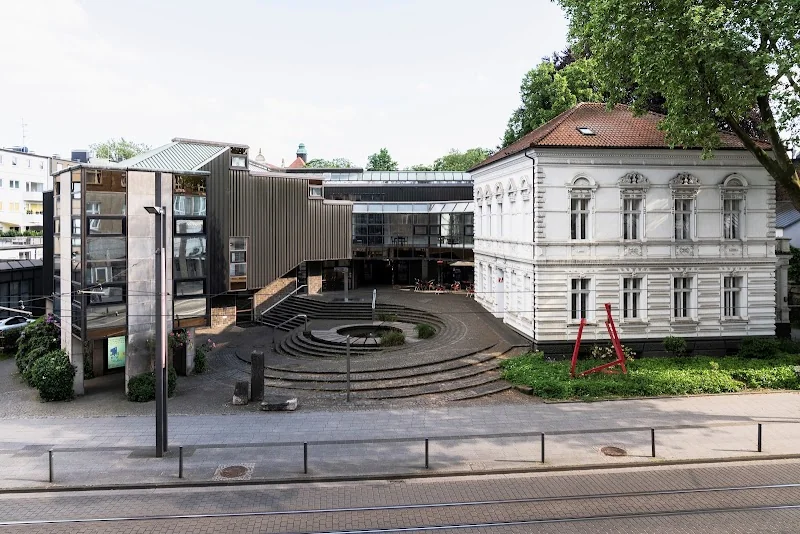
The Kunstmuseum Gelsenkirchen is a destination for everyone who wants to discover art not just by seeing it, but in a relaxed manner. In Buer, the museum combines a historical museum landscape with a modern extension and a glass bridge that visibly connects the old and new parts. Upon arrival, visitors quickly realize that this is not about a quick obligatory visit, but about a place with character: open to all, freely accessible, and closely connected to the city for decades. The museum presents art from the late 19th century to the present, is part of the RuhrKunstMuseen, and has made a name for itself nationwide with its collection of kinetic art. This combination of architecture, depth of collection, and educational work makes the location in Gelsenkirchen-Buer particularly interesting for culture-oriented visitors, families, school classes, and anyone looking for unusual museums with a clear identity. ([kunstmuseum-gelsenkirchen.de](https://www.kunstmuseum-gelsenkirchen.de/museum/?utm_source=openai))
Admission, Opening Hours, and Free Visits
For planning a visit, the basic data is simple and attractive: The Kunstmuseum Gelsenkirchen is open from Tuesday to Sunday from 11 AM to 6 PM, and is closed on Mondays. Additionally, the museum is closed on May 1st and from Christmas Eve to New Year's Day. Admission is free, and the official presentation emphasizes barrier-free accessibility. This combination is a real advantage for many people, as it makes visiting the museum spontaneous and low-threshold. There is no need to plan for a ticket purchase, allowing visitors to easily integrate their visit into a city walk, family outing, or a cultural day in northern Gelsenkirchen. The museum's website also emphasizes that the visit has long been understood as an open offer for the general public. This creates a pleasant threshold for anyone wanting to experience an art museum without a lot of formalities. ([kunstmuseum-gelsenkirchen.de](https://www.kunstmuseum-gelsenkirchen.de/museum/))
Those who prefer to experience the museum in a quieter atmosphere can remember the times during the week or later in the morning; those who want to drop by spontaneously benefit from the free accessibility. Especially with changing exhibitions, it is advisable to take a look at the current program in advance, as the Kunstmuseum regularly combines its collection with new presentations and educational offerings. The digital side of the museum is also well developed: part of the collection is visible online, allowing visitors to prepare for their visit or delve deeper afterward. For those searching for the keywords admission, opening hours, and free visit, the museum is therefore not only practically positioned but also sympathetically. There is no complicated ticket architecture, but a clear, audience-friendly access to art. ([kunstmuseum-gelsenkirchen.de](https://www.kunstmuseum-gelsenkirchen.de/museum/))
Directions, Buer, and Parking
The address Horster Str. 5-7 in 45897 Gelsenkirchen is located in the district of Buer, making it easily accessible for many visitors. Those arriving by train or tram can use lines 301 and 302 to the stops Buer Rath. / Kunstmuseum or Buer Rathaus. Those arriving by car will find a paid parking lot behind the museum on Breddestraße. This information is particularly important for many, as the museum is centrally located but not right in the middle of a densely populated city center. The journey can be planned very directly: first the museum, then the visit inside, and afterward, if desired, a walk through Buer or a detour to other places in the district. This uncomplicated access makes the museum interesting for day visitors, older visitors, and families. Parking is clearly regulated, and public transport connections are easily found on the official site. ([kunstmuseum-gelsenkirchen.de](https://www.kunstmuseum-gelsenkirchen.de/museum/))
Gelsenkirchen is also a city where art takes place not only in the museum. The English and German information pages of the museum refer to public art as well as art walks with two routes on foot and one route by bicycle. Each tour lasts about an hour, and QR codes are placed at the stations providing additional background information. For visitors, this is a nice added benefit, as the museum visit is thus embedded in a larger city context. Those who want to park after visiting the Kunstmuseum Gelsenkirchen or experience Buer as a cultural site can combine their day very well: a museum tour, a look at public art in the city area, and then the return to the parking lot or bus stop. This makes the location attractive in everyday life as well as for cultural short trips. ([kunstmuseum-gelsenkirchen.de](https://www.kunstmuseum-gelsenkirchen.de/en-GB/museum))
Collection, Kinetics, and Rolf Glasmeier
Content-wise, the Kunstmuseum Gelsenkirchen thrives on a collection that has developed over decades. Its roots date back to the 1920s when the city began to collect art. In the 1950s, the development became more systematic, and after World War II, a collection gradually emerged that consciously focused on works of modern art and later on contemporary positions. It was particularly important that the museum not only collected established names but also included lesser-known positions. This has resulted in a profile that is now both art-historically and regionally precisely readable. The focus on kinetic art is not a minor detail but the central unique selling point: the collection is considered the largest municipal collection of its kind in Germany and includes more than 80 international works. ([kunstmuseum-gelsenkirchen.de](https://www.kunstmuseum-gelsenkirchen.de/sammlung/))
The breadth of the collection also includes graphic art with over 3,000 sheets. Here, the museum spans a bridge from early master engravings to 20th-century art and beyond. The website features works by Albrecht Dürer, Rembrandt, Ernst Barlach, Marc Chagall, Oskar Kokoschka, Käthe Kollwitz, and Pablo Picasso; in addition, the collection refers to constructivist-concrete art and the role of Anton Stankowski as an important reference point in Gelsenkirchen. For visitors looking for a connecting thread, this is a strong profile: the museum not only shows individual highlights but also a collection that has grown over a long time, making the development of modern art comprehensible. The digital collection with over 3,300 works visible online further enhances this impression. ([kunstmuseum-gelsenkirchen.de](https://www.kunstmuseum-gelsenkirchen.de/sammlung/))
The name Rolf Glasmeier also plays an important role in the Kunstmuseum Gelsenkirchen. The Gelsenkirchen artist is represented in the kinetic collection, as is Günter Tollmann. This fits well with the profile of the museum, which not only showcases international figures but also takes regional references seriously. Especially in kinetic and constructivist-concrete art, it becomes clear how strongly the museum emphasizes the connection between local artistic creation and supra-regional art history. For SEO search queries related to Rolf Glasmeier, it is important to note: this is not just about a single exhibition, but about the placement of an artist within a collection that makes his working methods understandable in the context of movement, perception, and form. The museum thus has a special strength: it explains local art history not in isolation but as part of a larger art-historical network. ([kunstmuseum-gelsenkirchen.de](https://www.kunstmuseum-gelsenkirchen.de/?utm_source=openai))
Exhibitions, Open House, and Current Formats
The Kunstmuseum Gelsenkirchen explicitly does not see itself as a static house. The official website emphasizes a contemporary exhibition program with international positions and regularly changing presentations. This is particularly relevant for users searching for exhibitions, open house, or current formats. The homepage continuously displays current dates such as public tours, workshops, and artist talks. The municipal event overview also features the open house format in connection with the Gelsenkirchen art scene, showing that the museum consistently works with open, low-threshold event formats. Therefore, visitors not only receive a permanent collection but also a lively exhibition operation with accompanying programs. This is particularly attractive for people who understand culture not as quiet observation but as active experience. ([kunstmuseum-gelsenkirchen.de](https://www.kunstmuseum-gelsenkirchen.de/?utm_source=openai))
Especially exciting is the connection between the museum and the city. The museum refers to exhibition projects that extend beyond the location on Horster Straße, such as the digital art experience virtual kinetic landscape in the creative quarter Ückendorf. There, an installation was developed that connects to the museum's kinetic collection and works with immersive technologies. For the search intent in the area of exhibitions, this is important because it shows that the Kunstmuseum Gelsenkirchen is not only present in Buer but also makes art visible in other parts of the city. This creates a modern, expandable understanding of a museum: not just a space for pictures on the wall, but a platform for new forms of perception, collaborations, and urban spaces. This combination of collection, innovation, and city reference makes the museum particularly interesting for culture-interested guests. ([kunstmuseum-gelsenkirchen.de](https://www.kunstmuseum-gelsenkirchen.de/ausstellungen/virtual-kinetic-landscape/?utm_source=openai))
In a larger context, the museum is also well-networked. It is part of the 21 RuhrKunstMuseen, a network that makes the dense museum landscape of the Ruhr area visible and develops joint projects. This is not only a nice addition for the website but a real added value for visitors who want to combine museum visits in several cities. At the same time, the network strengthens the position of the Kunstmuseum Gelsenkirchen within the region: the museum is not on the edge but in a strong museum landscape with a clear identity. This networking is particularly important for search terms like open house, exhibition, or program because it shows that the museum offers both local formats and supra-regional perspectives. This creates an image of a house that maintains its collection while remaining open to current, experimental, and cooperative paths. ([kunstmuseum-gelsenkirchen.de](https://www.kunstmuseum-gelsenkirchen.de/en-GB/museum))
Children, Holiday Programs, and Art Education
A second major focus of the museum is art education. For adults, the museum regularly offers public tours, sign language tours, programs for people with dementia, and artist talks. Public tours take place twice a month at 3 PM, last about an hour, and are free of charge; no registration is required. For groups, there are also booked tours for up to 20 people. This is important for search queries related to Kunstmuseum Gelsenkirchen children, holiday program, or team, as the museum clearly shows that it is not only a place for collections but also an educational institution. This educational orientation is not a peripheral aspect but a core of the institution. Families and school groups particularly benefit from the fact that the museum not only shows art but also offers access tailored to different age groups and needs. ([kunstmuseum-gelsenkirchen.de](https://www.kunstmuseum-gelsenkirchen.de/kunstvermittlung/fuer-erwachsene/))
Especially family-friendly are the holiday offerings. The summer holiday workshops are free, aimed at children aged six and up, and run from Tuesday to Friday from 9 AM to 2 PM. In these formats, activities involve painting, folding, shaping, cutting, gluing, and splattering; material variety, tactile experiences, and creative design are at the center. The page also notes that registration is required and that drinks and snacks should be brought. For parents, this is a very concrete benefit, as the most important organizational questions are answered directly. The topic of children also appears in other programs, such as offerings for schools, daycare centers, and intergenerational formats. The museum positions itself as a place where art is not taught in a didactic way but actively and playfully conveyed. ([kunstmuseum-gelsenkirchen.de](https://www.kunstmuseum-gelsenkirchen.de/kunstvermittlung/sommerferien-im-kunstmuseum-gelsenkirchen/?utm_source=openai))
Digital Collection, Team, and Practical Visiting Tips
Another plus is the digital collection. The website showcases over 3,300 works online, and users can filter the collections by categories such as graphic art, kinetics, photography, paintings, sculptures, and public art. The site even mentions that visitors can create their own selection while digitally exploring the collection and share it via social media. For search queries related to photos, team, or digital collection, this is a real added value: the museum not only makes its collections visible but also interactive. This creates a low-threshold access that works well for both preparing for the visit and for follow-up. One can first orient themselves online, then visit the museum, and subsequently find or delve deeper into specific works. This aligns very well with a museum that explicitly emphasizes openness and participation. ([kunstmuseum-gelsenkirchen.de](https://www.kunstmuseum-gelsenkirchen.de/willkommen/?utm_source=openai))
The museum also appears transparent and well-staffed in terms of personnel. The official team page mentions, among others, director Julia Höner, collection manager Denise Wegener, and head of art education, Katharina König. This is helpful for visitors searching for contacts, tours, or group offerings. The structure also shows that the museum is not just about exhibitions but consists of a network of collection, education, administration, supervision, and building management. This makes the visit organizationally reliable and explains why the museum can be so strong in the areas of art education and content mediation. When searching for the team, one finds not an abstract institution but concrete individuals who shape the profile of the museum and ensure its daily operation with various tasks. ([kunstmuseum-gelsenkirchen.de](https://www.kunstmuseum-gelsenkirchen.de/en-GB/museum))
A practical tip to conclude: Currently, no dedicated museum café or restaurant is highlighted as a fixed service on the official pages. This is not a disadvantage but rather an indication that the focus is clearly on collection, exhibition, and mediation. Therefore, when planning a visit, the Kunstmuseum Gelsenkirchen can be easily combined with a walk through Buer or another program point in the district. The website makes it easy to find information on opening hours, directions, collection, and program points, and this clarity is an advantage for first-time visitors. For a relaxed museum afternoon, the museum remains a well-calculated place where one can connect art, local history, and contemporary culture. ([kunstmuseum-gelsenkirchen.de](https://www.kunstmuseum-gelsenkirchen.de/willkommen/?utm_source=openai))
Sources:
- Kunstmuseum Gelsenkirchen - Official Website
- Kunstmuseum Gelsenkirchen - Museum, Opening Hours, Directions
- Kunstmuseum Gelsenkirchen - Collection and Online Inventory
- Kunstmuseum Gelsenkirchen - Art Education for Adults
- City of Gelsenkirchen - Kunstmuseum Gelsenkirchen
- Kunstmuseum Gelsenkirchen - History and Team
Show moreShow less
Kunstmuseum Gelsenkirchen | Opening Hours & Free Admission
The Kunstmuseum Gelsenkirchen is a destination for everyone who wants to discover art not just by seeing it, but in a relaxed manner. In Buer, the museum combines a historical museum landscape with a modern extension and a glass bridge that visibly connects the old and new parts. Upon arrival, visitors quickly realize that this is not about a quick obligatory visit, but about a place with character: open to all, freely accessible, and closely connected to the city for decades. The museum presents art from the late 19th century to the present, is part of the RuhrKunstMuseen, and has made a name for itself nationwide with its collection of kinetic art. This combination of architecture, depth of collection, and educational work makes the location in Gelsenkirchen-Buer particularly interesting for culture-oriented visitors, families, school classes, and anyone looking for unusual museums with a clear identity. ([kunstmuseum-gelsenkirchen.de](https://www.kunstmuseum-gelsenkirchen.de/museum/?utm_source=openai))
Admission, Opening Hours, and Free Visits
For planning a visit, the basic data is simple and attractive: The Kunstmuseum Gelsenkirchen is open from Tuesday to Sunday from 11 AM to 6 PM, and is closed on Mondays. Additionally, the museum is closed on May 1st and from Christmas Eve to New Year's Day. Admission is free, and the official presentation emphasizes barrier-free accessibility. This combination is a real advantage for many people, as it makes visiting the museum spontaneous and low-threshold. There is no need to plan for a ticket purchase, allowing visitors to easily integrate their visit into a city walk, family outing, or a cultural day in northern Gelsenkirchen. The museum's website also emphasizes that the visit has long been understood as an open offer for the general public. This creates a pleasant threshold for anyone wanting to experience an art museum without a lot of formalities. ([kunstmuseum-gelsenkirchen.de](https://www.kunstmuseum-gelsenkirchen.de/museum/))
Those who prefer to experience the museum in a quieter atmosphere can remember the times during the week or later in the morning; those who want to drop by spontaneously benefit from the free accessibility. Especially with changing exhibitions, it is advisable to take a look at the current program in advance, as the Kunstmuseum regularly combines its collection with new presentations and educational offerings. The digital side of the museum is also well developed: part of the collection is visible online, allowing visitors to prepare for their visit or delve deeper afterward. For those searching for the keywords admission, opening hours, and free visit, the museum is therefore not only practically positioned but also sympathetically. There is no complicated ticket architecture, but a clear, audience-friendly access to art. ([kunstmuseum-gelsenkirchen.de](https://www.kunstmuseum-gelsenkirchen.de/museum/))
Directions, Buer, and Parking
The address Horster Str. 5-7 in 45897 Gelsenkirchen is located in the district of Buer, making it easily accessible for many visitors. Those arriving by train or tram can use lines 301 and 302 to the stops Buer Rath. / Kunstmuseum or Buer Rathaus. Those arriving by car will find a paid parking lot behind the museum on Breddestraße. This information is particularly important for many, as the museum is centrally located but not right in the middle of a densely populated city center. The journey can be planned very directly: first the museum, then the visit inside, and afterward, if desired, a walk through Buer or a detour to other places in the district. This uncomplicated access makes the museum interesting for day visitors, older visitors, and families. Parking is clearly regulated, and public transport connections are easily found on the official site. ([kunstmuseum-gelsenkirchen.de](https://www.kunstmuseum-gelsenkirchen.de/museum/))
Gelsenkirchen is also a city where art takes place not only in the museum. The English and German information pages of the museum refer to public art as well as art walks with two routes on foot and one route by bicycle. Each tour lasts about an hour, and QR codes are placed at the stations providing additional background information. For visitors, this is a nice added benefit, as the museum visit is thus embedded in a larger city context. Those who want to park after visiting the Kunstmuseum Gelsenkirchen or experience Buer as a cultural site can combine their day very well: a museum tour, a look at public art in the city area, and then the return to the parking lot or bus stop. This makes the location attractive in everyday life as well as for cultural short trips. ([kunstmuseum-gelsenkirchen.de](https://www.kunstmuseum-gelsenkirchen.de/en-GB/museum))
Collection, Kinetics, and Rolf Glasmeier
Content-wise, the Kunstmuseum Gelsenkirchen thrives on a collection that has developed over decades. Its roots date back to the 1920s when the city began to collect art. In the 1950s, the development became more systematic, and after World War II, a collection gradually emerged that consciously focused on works of modern art and later on contemporary positions. It was particularly important that the museum not only collected established names but also included lesser-known positions. This has resulted in a profile that is now both art-historically and regionally precisely readable. The focus on kinetic art is not a minor detail but the central unique selling point: the collection is considered the largest municipal collection of its kind in Germany and includes more than 80 international works. ([kunstmuseum-gelsenkirchen.de](https://www.kunstmuseum-gelsenkirchen.de/sammlung/))
The breadth of the collection also includes graphic art with over 3,000 sheets. Here, the museum spans a bridge from early master engravings to 20th-century art and beyond. The website features works by Albrecht Dürer, Rembrandt, Ernst Barlach, Marc Chagall, Oskar Kokoschka, Käthe Kollwitz, and Pablo Picasso; in addition, the collection refers to constructivist-concrete art and the role of Anton Stankowski as an important reference point in Gelsenkirchen. For visitors looking for a connecting thread, this is a strong profile: the museum not only shows individual highlights but also a collection that has grown over a long time, making the development of modern art comprehensible. The digital collection with over 3,300 works visible online further enhances this impression. ([kunstmuseum-gelsenkirchen.de](https://www.kunstmuseum-gelsenkirchen.de/sammlung/))
The name Rolf Glasmeier also plays an important role in the Kunstmuseum Gelsenkirchen. The Gelsenkirchen artist is represented in the kinetic collection, as is Günter Tollmann. This fits well with the profile of the museum, which not only showcases international figures but also takes regional references seriously. Especially in kinetic and constructivist-concrete art, it becomes clear how strongly the museum emphasizes the connection between local artistic creation and supra-regional art history. For SEO search queries related to Rolf Glasmeier, it is important to note: this is not just about a single exhibition, but about the placement of an artist within a collection that makes his working methods understandable in the context of movement, perception, and form. The museum thus has a special strength: it explains local art history not in isolation but as part of a larger art-historical network. ([kunstmuseum-gelsenkirchen.de](https://www.kunstmuseum-gelsenkirchen.de/?utm_source=openai))
Exhibitions, Open House, and Current Formats
The Kunstmuseum Gelsenkirchen explicitly does not see itself as a static house. The official website emphasizes a contemporary exhibition program with international positions and regularly changing presentations. This is particularly relevant for users searching for exhibitions, open house, or current formats. The homepage continuously displays current dates such as public tours, workshops, and artist talks. The municipal event overview also features the open house format in connection with the Gelsenkirchen art scene, showing that the museum consistently works with open, low-threshold event formats. Therefore, visitors not only receive a permanent collection but also a lively exhibition operation with accompanying programs. This is particularly attractive for people who understand culture not as quiet observation but as active experience. ([kunstmuseum-gelsenkirchen.de](https://www.kunstmuseum-gelsenkirchen.de/?utm_source=openai))
Especially exciting is the connection between the museum and the city. The museum refers to exhibition projects that extend beyond the location on Horster Straße, such as the digital art experience virtual kinetic landscape in the creative quarter Ückendorf. There, an installation was developed that connects to the museum's kinetic collection and works with immersive technologies. For the search intent in the area of exhibitions, this is important because it shows that the Kunstmuseum Gelsenkirchen is not only present in Buer but also makes art visible in other parts of the city. This creates a modern, expandable understanding of a museum: not just a space for pictures on the wall, but a platform for new forms of perception, collaborations, and urban spaces. This combination of collection, innovation, and city reference makes the museum particularly interesting for culture-interested guests. ([kunstmuseum-gelsenkirchen.de](https://www.kunstmuseum-gelsenkirchen.de/ausstellungen/virtual-kinetic-landscape/?utm_source=openai))
In a larger context, the museum is also well-networked. It is part of the 21 RuhrKunstMuseen, a network that makes the dense museum landscape of the Ruhr area visible and develops joint projects. This is not only a nice addition for the website but a real added value for visitors who want to combine museum visits in several cities. At the same time, the network strengthens the position of the Kunstmuseum Gelsenkirchen within the region: the museum is not on the edge but in a strong museum landscape with a clear identity. This networking is particularly important for search terms like open house, exhibition, or program because it shows that the museum offers both local formats and supra-regional perspectives. This creates an image of a house that maintains its collection while remaining open to current, experimental, and cooperative paths. ([kunstmuseum-gelsenkirchen.de](https://www.kunstmuseum-gelsenkirchen.de/en-GB/museum))
Children, Holiday Programs, and Art Education
A second major focus of the museum is art education. For adults, the museum regularly offers public tours, sign language tours, programs for people with dementia, and artist talks. Public tours take place twice a month at 3 PM, last about an hour, and are free of charge; no registration is required. For groups, there are also booked tours for up to 20 people. This is important for search queries related to Kunstmuseum Gelsenkirchen children, holiday program, or team, as the museum clearly shows that it is not only a place for collections but also an educational institution. This educational orientation is not a peripheral aspect but a core of the institution. Families and school groups particularly benefit from the fact that the museum not only shows art but also offers access tailored to different age groups and needs. ([kunstmuseum-gelsenkirchen.de](https://www.kunstmuseum-gelsenkirchen.de/kunstvermittlung/fuer-erwachsene/))
Especially family-friendly are the holiday offerings. The summer holiday workshops are free, aimed at children aged six and up, and run from Tuesday to Friday from 9 AM to 2 PM. In these formats, activities involve painting, folding, shaping, cutting, gluing, and splattering; material variety, tactile experiences, and creative design are at the center. The page also notes that registration is required and that drinks and snacks should be brought. For parents, this is a very concrete benefit, as the most important organizational questions are answered directly. The topic of children also appears in other programs, such as offerings for schools, daycare centers, and intergenerational formats. The museum positions itself as a place where art is not taught in a didactic way but actively and playfully conveyed. ([kunstmuseum-gelsenkirchen.de](https://www.kunstmuseum-gelsenkirchen.de/kunstvermittlung/sommerferien-im-kunstmuseum-gelsenkirchen/?utm_source=openai))
Digital Collection, Team, and Practical Visiting Tips
Another plus is the digital collection. The website showcases over 3,300 works online, and users can filter the collections by categories such as graphic art, kinetics, photography, paintings, sculptures, and public art. The site even mentions that visitors can create their own selection while digitally exploring the collection and share it via social media. For search queries related to photos, team, or digital collection, this is a real added value: the museum not only makes its collections visible but also interactive. This creates a low-threshold access that works well for both preparing for the visit and for follow-up. One can first orient themselves online, then visit the museum, and subsequently find or delve deeper into specific works. This aligns very well with a museum that explicitly emphasizes openness and participation. ([kunstmuseum-gelsenkirchen.de](https://www.kunstmuseum-gelsenkirchen.de/willkommen/?utm_source=openai))
The museum also appears transparent and well-staffed in terms of personnel. The official team page mentions, among others, director Julia Höner, collection manager Denise Wegener, and head of art education, Katharina König. This is helpful for visitors searching for contacts, tours, or group offerings. The structure also shows that the museum is not just about exhibitions but consists of a network of collection, education, administration, supervision, and building management. This makes the visit organizationally reliable and explains why the museum can be so strong in the areas of art education and content mediation. When searching for the team, one finds not an abstract institution but concrete individuals who shape the profile of the museum and ensure its daily operation with various tasks. ([kunstmuseum-gelsenkirchen.de](https://www.kunstmuseum-gelsenkirchen.de/en-GB/museum))
A practical tip to conclude: Currently, no dedicated museum café or restaurant is highlighted as a fixed service on the official pages. This is not a disadvantage but rather an indication that the focus is clearly on collection, exhibition, and mediation. Therefore, when planning a visit, the Kunstmuseum Gelsenkirchen can be easily combined with a walk through Buer or another program point in the district. The website makes it easy to find information on opening hours, directions, collection, and program points, and this clarity is an advantage for first-time visitors. For a relaxed museum afternoon, the museum remains a well-calculated place where one can connect art, local history, and contemporary culture. ([kunstmuseum-gelsenkirchen.de](https://www.kunstmuseum-gelsenkirchen.de/willkommen/?utm_source=openai))
Sources:
- Kunstmuseum Gelsenkirchen - Official Website
- Kunstmuseum Gelsenkirchen - Museum, Opening Hours, Directions
- Kunstmuseum Gelsenkirchen - Collection and Online Inventory
- Kunstmuseum Gelsenkirchen - Art Education for Adults
- City of Gelsenkirchen - Kunstmuseum Gelsenkirchen
- Kunstmuseum Gelsenkirchen - History and Team
Kunstmuseum Gelsenkirchen | Opening Hours & Free Admission
The Kunstmuseum Gelsenkirchen is a destination for everyone who wants to discover art not just by seeing it, but in a relaxed manner. In Buer, the museum combines a historical museum landscape with a modern extension and a glass bridge that visibly connects the old and new parts. Upon arrival, visitors quickly realize that this is not about a quick obligatory visit, but about a place with character: open to all, freely accessible, and closely connected to the city for decades. The museum presents art from the late 19th century to the present, is part of the RuhrKunstMuseen, and has made a name for itself nationwide with its collection of kinetic art. This combination of architecture, depth of collection, and educational work makes the location in Gelsenkirchen-Buer particularly interesting for culture-oriented visitors, families, school classes, and anyone looking for unusual museums with a clear identity. ([kunstmuseum-gelsenkirchen.de](https://www.kunstmuseum-gelsenkirchen.de/museum/?utm_source=openai))
Admission, Opening Hours, and Free Visits
For planning a visit, the basic data is simple and attractive: The Kunstmuseum Gelsenkirchen is open from Tuesday to Sunday from 11 AM to 6 PM, and is closed on Mondays. Additionally, the museum is closed on May 1st and from Christmas Eve to New Year's Day. Admission is free, and the official presentation emphasizes barrier-free accessibility. This combination is a real advantage for many people, as it makes visiting the museum spontaneous and low-threshold. There is no need to plan for a ticket purchase, allowing visitors to easily integrate their visit into a city walk, family outing, or a cultural day in northern Gelsenkirchen. The museum's website also emphasizes that the visit has long been understood as an open offer for the general public. This creates a pleasant threshold for anyone wanting to experience an art museum without a lot of formalities. ([kunstmuseum-gelsenkirchen.de](https://www.kunstmuseum-gelsenkirchen.de/museum/))
Those who prefer to experience the museum in a quieter atmosphere can remember the times during the week or later in the morning; those who want to drop by spontaneously benefit from the free accessibility. Especially with changing exhibitions, it is advisable to take a look at the current program in advance, as the Kunstmuseum regularly combines its collection with new presentations and educational offerings. The digital side of the museum is also well developed: part of the collection is visible online, allowing visitors to prepare for their visit or delve deeper afterward. For those searching for the keywords admission, opening hours, and free visit, the museum is therefore not only practically positioned but also sympathetically. There is no complicated ticket architecture, but a clear, audience-friendly access to art. ([kunstmuseum-gelsenkirchen.de](https://www.kunstmuseum-gelsenkirchen.de/museum/))
Directions, Buer, and Parking
The address Horster Str. 5-7 in 45897 Gelsenkirchen is located in the district of Buer, making it easily accessible for many visitors. Those arriving by train or tram can use lines 301 and 302 to the stops Buer Rath. / Kunstmuseum or Buer Rathaus. Those arriving by car will find a paid parking lot behind the museum on Breddestraße. This information is particularly important for many, as the museum is centrally located but not right in the middle of a densely populated city center. The journey can be planned very directly: first the museum, then the visit inside, and afterward, if desired, a walk through Buer or a detour to other places in the district. This uncomplicated access makes the museum interesting for day visitors, older visitors, and families. Parking is clearly regulated, and public transport connections are easily found on the official site. ([kunstmuseum-gelsenkirchen.de](https://www.kunstmuseum-gelsenkirchen.de/museum/))
Gelsenkirchen is also a city where art takes place not only in the museum. The English and German information pages of the museum refer to public art as well as art walks with two routes on foot and one route by bicycle. Each tour lasts about an hour, and QR codes are placed at the stations providing additional background information. For visitors, this is a nice added benefit, as the museum visit is thus embedded in a larger city context. Those who want to park after visiting the Kunstmuseum Gelsenkirchen or experience Buer as a cultural site can combine their day very well: a museum tour, a look at public art in the city area, and then the return to the parking lot or bus stop. This makes the location attractive in everyday life as well as for cultural short trips. ([kunstmuseum-gelsenkirchen.de](https://www.kunstmuseum-gelsenkirchen.de/en-GB/museum))
Collection, Kinetics, and Rolf Glasmeier
Content-wise, the Kunstmuseum Gelsenkirchen thrives on a collection that has developed over decades. Its roots date back to the 1920s when the city began to collect art. In the 1950s, the development became more systematic, and after World War II, a collection gradually emerged that consciously focused on works of modern art and later on contemporary positions. It was particularly important that the museum not only collected established names but also included lesser-known positions. This has resulted in a profile that is now both art-historically and regionally precisely readable. The focus on kinetic art is not a minor detail but the central unique selling point: the collection is considered the largest municipal collection of its kind in Germany and includes more than 80 international works. ([kunstmuseum-gelsenkirchen.de](https://www.kunstmuseum-gelsenkirchen.de/sammlung/))
The breadth of the collection also includes graphic art with over 3,000 sheets. Here, the museum spans a bridge from early master engravings to 20th-century art and beyond. The website features works by Albrecht Dürer, Rembrandt, Ernst Barlach, Marc Chagall, Oskar Kokoschka, Käthe Kollwitz, and Pablo Picasso; in addition, the collection refers to constructivist-concrete art and the role of Anton Stankowski as an important reference point in Gelsenkirchen. For visitors looking for a connecting thread, this is a strong profile: the museum not only shows individual highlights but also a collection that has grown over a long time, making the development of modern art comprehensible. The digital collection with over 3,300 works visible online further enhances this impression. ([kunstmuseum-gelsenkirchen.de](https://www.kunstmuseum-gelsenkirchen.de/sammlung/))
The name Rolf Glasmeier also plays an important role in the Kunstmuseum Gelsenkirchen. The Gelsenkirchen artist is represented in the kinetic collection, as is Günter Tollmann. This fits well with the profile of the museum, which not only showcases international figures but also takes regional references seriously. Especially in kinetic and constructivist-concrete art, it becomes clear how strongly the museum emphasizes the connection between local artistic creation and supra-regional art history. For SEO search queries related to Rolf Glasmeier, it is important to note: this is not just about a single exhibition, but about the placement of an artist within a collection that makes his working methods understandable in the context of movement, perception, and form. The museum thus has a special strength: it explains local art history not in isolation but as part of a larger art-historical network. ([kunstmuseum-gelsenkirchen.de](https://www.kunstmuseum-gelsenkirchen.de/?utm_source=openai))
Exhibitions, Open House, and Current Formats
The Kunstmuseum Gelsenkirchen explicitly does not see itself as a static house. The official website emphasizes a contemporary exhibition program with international positions and regularly changing presentations. This is particularly relevant for users searching for exhibitions, open house, or current formats. The homepage continuously displays current dates such as public tours, workshops, and artist talks. The municipal event overview also features the open house format in connection with the Gelsenkirchen art scene, showing that the museum consistently works with open, low-threshold event formats. Therefore, visitors not only receive a permanent collection but also a lively exhibition operation with accompanying programs. This is particularly attractive for people who understand culture not as quiet observation but as active experience. ([kunstmuseum-gelsenkirchen.de](https://www.kunstmuseum-gelsenkirchen.de/?utm_source=openai))
Especially exciting is the connection between the museum and the city. The museum refers to exhibition projects that extend beyond the location on Horster Straße, such as the digital art experience virtual kinetic landscape in the creative quarter Ückendorf. There, an installation was developed that connects to the museum's kinetic collection and works with immersive technologies. For the search intent in the area of exhibitions, this is important because it shows that the Kunstmuseum Gelsenkirchen is not only present in Buer but also makes art visible in other parts of the city. This creates a modern, expandable understanding of a museum: not just a space for pictures on the wall, but a platform for new forms of perception, collaborations, and urban spaces. This combination of collection, innovation, and city reference makes the museum particularly interesting for culture-interested guests. ([kunstmuseum-gelsenkirchen.de](https://www.kunstmuseum-gelsenkirchen.de/ausstellungen/virtual-kinetic-landscape/?utm_source=openai))
In a larger context, the museum is also well-networked. It is part of the 21 RuhrKunstMuseen, a network that makes the dense museum landscape of the Ruhr area visible and develops joint projects. This is not only a nice addition for the website but a real added value for visitors who want to combine museum visits in several cities. At the same time, the network strengthens the position of the Kunstmuseum Gelsenkirchen within the region: the museum is not on the edge but in a strong museum landscape with a clear identity. This networking is particularly important for search terms like open house, exhibition, or program because it shows that the museum offers both local formats and supra-regional perspectives. This creates an image of a house that maintains its collection while remaining open to current, experimental, and cooperative paths. ([kunstmuseum-gelsenkirchen.de](https://www.kunstmuseum-gelsenkirchen.de/en-GB/museum))
Children, Holiday Programs, and Art Education
A second major focus of the museum is art education. For adults, the museum regularly offers public tours, sign language tours, programs for people with dementia, and artist talks. Public tours take place twice a month at 3 PM, last about an hour, and are free of charge; no registration is required. For groups, there are also booked tours for up to 20 people. This is important for search queries related to Kunstmuseum Gelsenkirchen children, holiday program, or team, as the museum clearly shows that it is not only a place for collections but also an educational institution. This educational orientation is not a peripheral aspect but a core of the institution. Families and school groups particularly benefit from the fact that the museum not only shows art but also offers access tailored to different age groups and needs. ([kunstmuseum-gelsenkirchen.de](https://www.kunstmuseum-gelsenkirchen.de/kunstvermittlung/fuer-erwachsene/))
Especially family-friendly are the holiday offerings. The summer holiday workshops are free, aimed at children aged six and up, and run from Tuesday to Friday from 9 AM to 2 PM. In these formats, activities involve painting, folding, shaping, cutting, gluing, and splattering; material variety, tactile experiences, and creative design are at the center. The page also notes that registration is required and that drinks and snacks should be brought. For parents, this is a very concrete benefit, as the most important organizational questions are answered directly. The topic of children also appears in other programs, such as offerings for schools, daycare centers, and intergenerational formats. The museum positions itself as a place where art is not taught in a didactic way but actively and playfully conveyed. ([kunstmuseum-gelsenkirchen.de](https://www.kunstmuseum-gelsenkirchen.de/kunstvermittlung/sommerferien-im-kunstmuseum-gelsenkirchen/?utm_source=openai))
Digital Collection, Team, and Practical Visiting Tips
Another plus is the digital collection. The website showcases over 3,300 works online, and users can filter the collections by categories such as graphic art, kinetics, photography, paintings, sculptures, and public art. The site even mentions that visitors can create their own selection while digitally exploring the collection and share it via social media. For search queries related to photos, team, or digital collection, this is a real added value: the museum not only makes its collections visible but also interactive. This creates a low-threshold access that works well for both preparing for the visit and for follow-up. One can first orient themselves online, then visit the museum, and subsequently find or delve deeper into specific works. This aligns very well with a museum that explicitly emphasizes openness and participation. ([kunstmuseum-gelsenkirchen.de](https://www.kunstmuseum-gelsenkirchen.de/willkommen/?utm_source=openai))
The museum also appears transparent and well-staffed in terms of personnel. The official team page mentions, among others, director Julia Höner, collection manager Denise Wegener, and head of art education, Katharina König. This is helpful for visitors searching for contacts, tours, or group offerings. The structure also shows that the museum is not just about exhibitions but consists of a network of collection, education, administration, supervision, and building management. This makes the visit organizationally reliable and explains why the museum can be so strong in the areas of art education and content mediation. When searching for the team, one finds not an abstract institution but concrete individuals who shape the profile of the museum and ensure its daily operation with various tasks. ([kunstmuseum-gelsenkirchen.de](https://www.kunstmuseum-gelsenkirchen.de/en-GB/museum))
A practical tip to conclude: Currently, no dedicated museum café or restaurant is highlighted as a fixed service on the official pages. This is not a disadvantage but rather an indication that the focus is clearly on collection, exhibition, and mediation. Therefore, when planning a visit, the Kunstmuseum Gelsenkirchen can be easily combined with a walk through Buer or another program point in the district. The website makes it easy to find information on opening hours, directions, collection, and program points, and this clarity is an advantage for first-time visitors. For a relaxed museum afternoon, the museum remains a well-calculated place where one can connect art, local history, and contemporary culture. ([kunstmuseum-gelsenkirchen.de](https://www.kunstmuseum-gelsenkirchen.de/willkommen/?utm_source=openai))
Sources:
- Kunstmuseum Gelsenkirchen - Official Website
- Kunstmuseum Gelsenkirchen - Museum, Opening Hours, Directions
- Kunstmuseum Gelsenkirchen - Collection and Online Inventory
- Kunstmuseum Gelsenkirchen - Art Education for Adults
- City of Gelsenkirchen - Kunstmuseum Gelsenkirchen
- Kunstmuseum Gelsenkirchen - History and Team
Upcoming Events
Radical Hope: Art and Labor Struggle
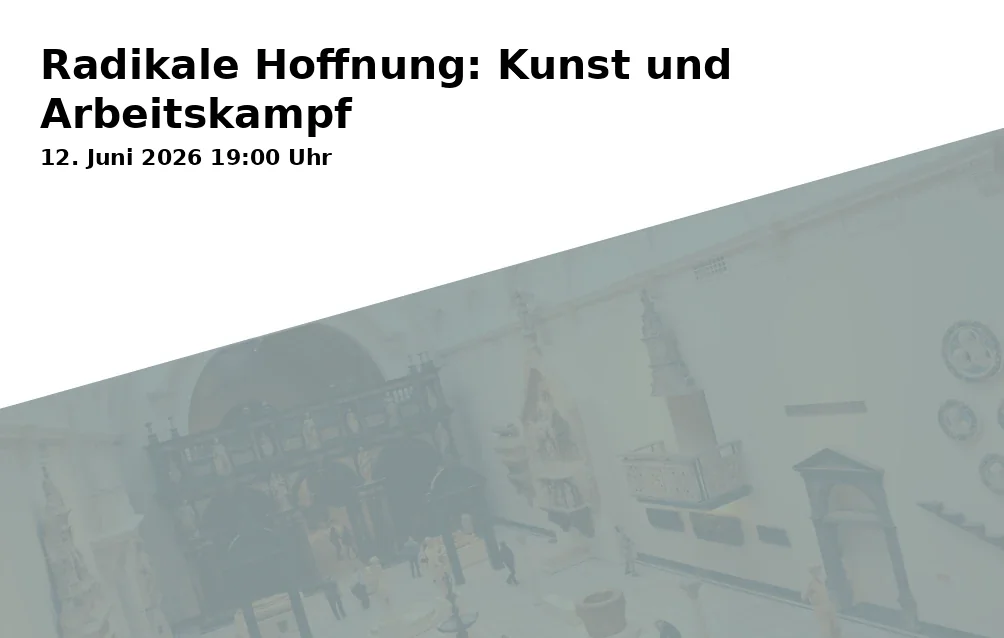
Art, protest, and solidarity in a powerful exhibition at the Kunstmuseum Gelsenkirchen. Radical Hope opens on June 12, 2026, at 7 PM, free admission. #Art
Public Tour: Radical Hope
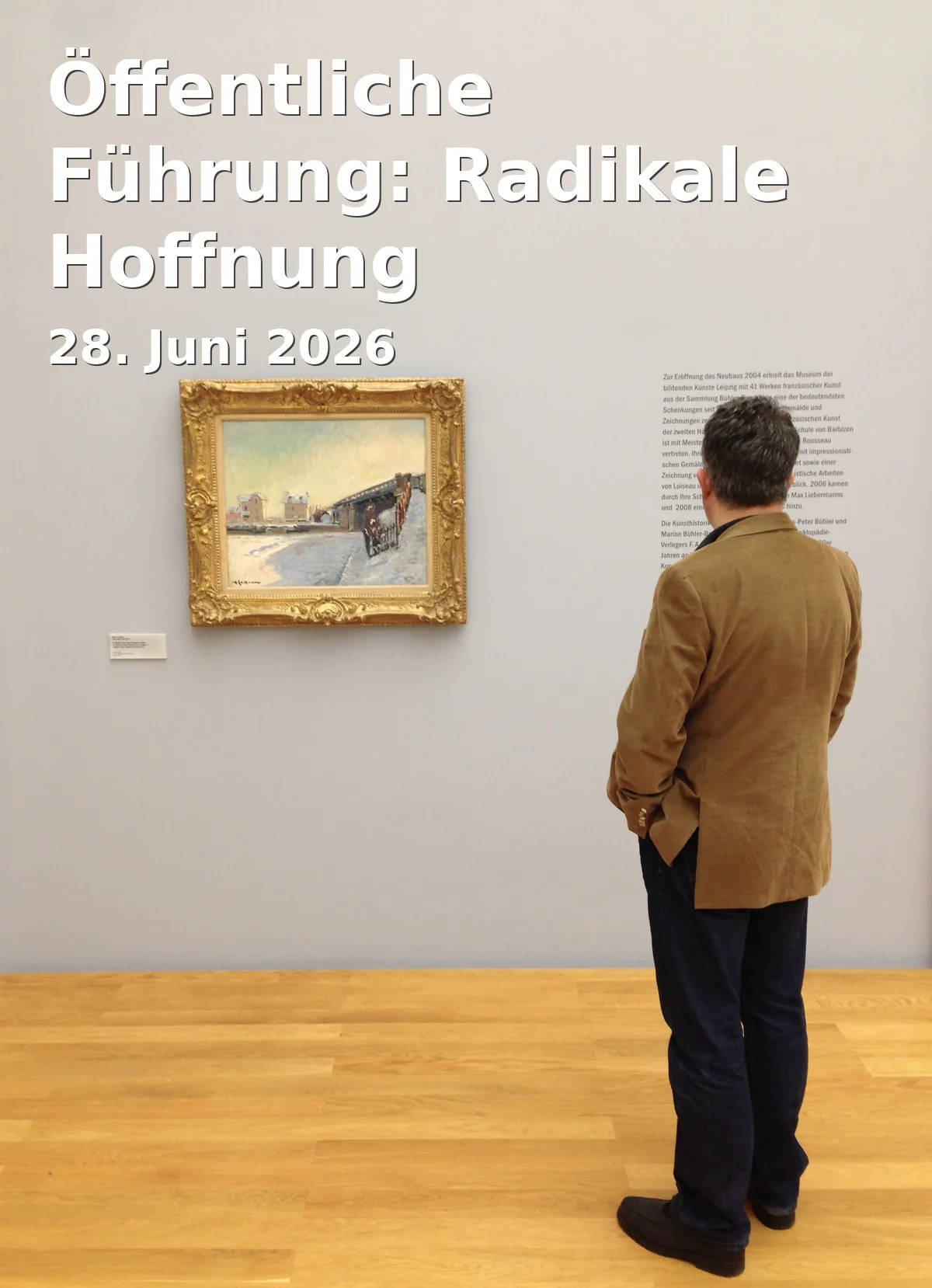
Explore the connection between art and labor struggle in an exciting tour at the Gelsenkirchen Art Museum.
Public Tour - Radical Hope: Art and Labor Struggle
Free art tour at Kunstmuseum Gelsenkirchen: Radical Hope connects exhibition, strike, and solidarity into an impressive art experience. #KunstmuseumGelsenkirchen
Art Prize of the Art Foundation NRW – Nam June Paik Award 2026
Experience Beutler's innovative art installation until mid-August at the Gelsenkirchen Art Museum.
Hand on the Mill! – Workshop with Michael Beutler
Making paper, understanding art, rethinking space: Hand on the Mill! with Michael Beutler at the Kunstmuseum Gelsenkirchen. Free on 02.07.2026. #ExperienceArt
Exhibition Tour Tapetenwechsel with Michael Beutler
Paper becomes space, workshop becomes art: Experience Michael Beutler's Tapetenwechsel at the Kunstmuseum Gelsenkirchen. Free on 02.07.2026 at 7 PM. #Gelsenkirchen #Art
Funding Prize Art Foundation NRW - Nam June Paik Award 2026
Discover the innovative exhibition "A Village" by Lisa Klosterkötter at the Kunstmuseum Gelsenkirchen.
Frequently Asked Questions
Reviews
Maral Od
6. June 2023
The entrance is free and downstairs there are science arts. The staff can explain things to you if you speak good German, but if you're like me and not good at German, your only option will be to look around by yourself. There’s no app, and all the art has little explanations in German. One of the staff told me about a tablet, but I don’t know. Upstairs there are some galleries you might like. The tour lasts between 1 to 2 hours or half an hour, and if you’re planning to travel here alone, just be with someone or this place might be a little boring for some people.
Stefan Max
7. June 2023
Great collection of classic modern and kinetic art wrapped in a surprisingly beautiful blend of 19th century and 1980s architecture. Frequent contemporary exhibitions and performances. Great staff in both the museum and café.
Pauline Depière
16. December 2022
Surprisingly rich collection in a quaint 70's building annex villa. The works are packed here and you gotta keep your eyes open not to miss anything. Modern collection with fresh contemporary additions and a proud sample of local artists.
Peter Temminghoff
6. January 2024
Nice
fish net
24. March 2023
Great!