
Klarastraße 6, Gelsenkirchen
Klarastraße 6, 45889 Gelsenkirchen, Germany
Art Installation Collection Werner Thiel | Images & Directions
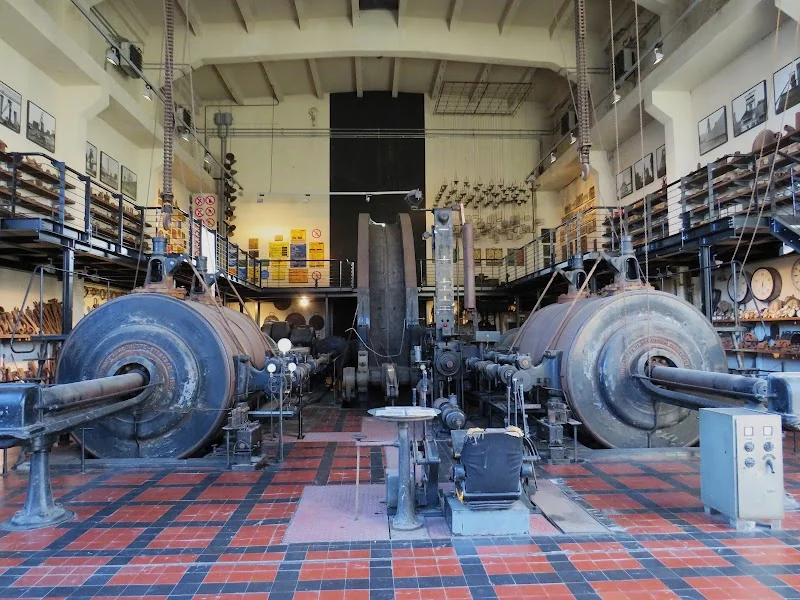
The art installation Collection Werner Thiel is one of the most unusual places of industrial culture in northern Gelsenkirchen. It is located in the northern machine house of the former Zeche Consolidation, at Consol-Schacht 9 on Klarastraße 6, and combines mining history, spatial art, and memory culture into a walkable total work of art. The city describes the place as a cathedral of mining work and at the same time as the largest walkable artwork in the city. Today, those looking for images, information, or a visit appointment will not find a classic museum space here, but an impressive interplay of hoisting machinery, historical everyday objects, and the special atmosphere of a preserved industrial building. The collection is part of the cultural area Consol, which consists of theater, music rehearsal center, parking areas, and other uses, exemplifying how a former coal mine has become a vibrant cultural site. ([gelsenkirchen.de](https://www.gelsenkirchen.de/de/kultur/Museen_und_Dauerausstellungen/Kunstinstallation_Sammlung_Werner_Thiel/index.aspx))
Who was Werner Thiel and how did the collection come about?
Werner Thiel was born in 1927 in Breslau and worked as a miner underground in several mines in the Ruhr area from 1949 to 1951. This experience shaped his view of work, material, and the world of mining. After stations in the then Eastern Zone, studying at the Leipzig Academy of Graphic and Book Art, and moving to Gelsenkirchen in 1965, he developed a multifaceted artistic work that included drawing, graphics, and later photography. According to his official biography, he began with photography in 1967 and collected objects from abandoned industrial facilities since 1980. It was precisely from this connection of his own biography, photographic observation, and awareness of the loss of old industry that the foundation for the later collection emerged. Thiel passed away on April 28, 2003, before the permanent installation could be completed at its current location. The city of Gelsenkirchen notes that he explicitly wished for the last, largest, and permanent installation in Hall North at Consol-Schacht 9 in his hometown. After his death, Helmut Bettenhausen and, with support from Lutz Kahnwald, established the expansive installation in the machine hall of the former Zeche Consolidation in the spirit of Werner Thiel in early 2004. The materials came from the estate provided by Else Thiel and the heirs. Thus, a private collector's perspective became a publicly accessible monument that not only makes the artist's work visible but also his life story. ([gelsenkirchen.de](https://www.gelsenkirchen.de/de/Kultur/Museen_und_Dauerausstellungen/Kunstinstallation_Sammlung_Werner_Thiel/Biographie_Werner_Thiel.aspx))
Opening hours, admission, and special appointments for groups
For the visit, the current official information from the city of Gelsenkirchen is crucial: The art installation Collection Werner Thiel is open on Saturdays and Sundays from 12:00 to 18:00, closed from Monday to Friday, and accessible on public holidays, provided the regular opening days fall within that time. The city also specifies concrete closing times for 2026, including May 16 to June 14, 2026, so it is always worthwhile to check the current page before traveling. Additionally, the city points out that special appointments for groups can be arranged and are usually subject to a fee. This is particularly helpful for travel groups, clubs, or school classes when a visit is planned outside the weekend. At the same time, the collection is a place that consciously remains low-threshold: According to the official press release, registration is not required, and admission is free. This mix of free access and clearly structured times makes the place attractive for spontaneous cultural walks as well as for targeted excursions. However, visitors should note that it is a special historical site and the experience cannot be reduced to a standardized exhibition scheme. Therefore, those looking for images from the Collection Werner Thiel or wanting to experience the space in peace are well accommodated on weekends. For current closing days, which can occasionally vary around holidays or company vacations in Gelsenkirchen, it is always advisable to check the official detail page of the city in advance. ([gelsenkirchen.de](https://www.gelsenkirchen.de/de/kultur/Museen_und_Dauerausstellungen/Kunstinstallation_Sammlung_Werner_Thiel/index.aspx))
Directions, parking, and public transport
The approach to the cultural area Consol is uncomplicated in everyday life when using the official instructions. For the venue, access via Bismarck-, Klara-, and Consolstraße is mentioned; this is particularly important because the site consists of several components, and not every parking space is directly in front of the collection. Conveniently, the parking lot Consol Theater P2 is at the end of Klarastraße. According to the official visitor information, it is located next to the art installation Collection Werner Thiel and the trend sports facility, directly in the vicinity of the northern machine house. The signage explicitly leads there; at the same time, the city points out that the parking lot is behind the red hoisting frame of Schacht 9 and not in front of the theater. Those arriving by car should pay attention to this distinction, as the site can appear convoluted, and the industrial topography is part of the visitor experience. For visitors with limited mobility, marked disabled parking spaces are available in the broader urban context, and the official tour of the cultural area emphasizes the good accessibility of the site. The location is also reachable by public transport: Official visitor information mentions the stops Bergwerk Consolidation and Marschallstraße; additional flyers from the cultural area Consol point to tram line 301 as well as bus lines 304 and 392. For walking on the site, it is advisable to plan a bit of extra time, as the paths, open spaces, and parts of the cultural area form a self-contained ensemble. Those wishing to combine their visit with a walk will also find parking spaces, connections to the cycling network, and good integration into the Bismarck district around the collection. ([gelsenkirchen.de](https://www.gelsenkirchen.de/de/_meta/veranstaltungskalender/87621-ausstellungsbesuch-kunstinstallation-sammlung-werner-thiel-eine-kathedrale-der-bergarbeit))
The spatial effect in the northern machine house
The Collection Werner Thiel is not simply a collection of objects, but a deliberately arranged spatial installation. The city of Gelsenkirchen describes it as an installation of everyday mining objects grouped around the largest object, the hoisting machine of the old machine hall. This order is crucial: The objects do not stand isolated next to each other but together with the architecture of the northern machine house create a dense, almost theatrical spatial effect. Tools, relics, and industrial components become artifacts, that is, things that carry meaning beyond their original use. From the former workspace of a coal mine, a place of remembrance emerges where technology, everyday life, and art overlap. The official formulation that the machine hall becomes a cathedral of mining work is more than a poetic image. It describes that here not only is exhibited but staged: The building itself, the height of the room, the historical machine, and the ornamental arrangement of the objects create an atmosphere that immediately captures visitors. The installation pays artistic tribute to mining work while keeping the memory of the physical dimension of mining alive. Especially since many of the objects come from mines that no longer exist, a special tension arises between loss and preservation. The visitor does not stand before an abstract narrative but is right in the middle of a condensed material experience. This makes the place interesting for all who are interested in industrial culture, the history of the Ruhr area, art in space, and the transformation of working worlds. ([gelsenkirchen.de](https://www.gelsenkirchen.de/de/kultur/Museen_und_Dauerausstellungen/Kunstinstallation_Sammlung_Werner_Thiel/index.aspx))
Cultural area Consol: Environment, park, and industrial culture
The Collection Werner Thiel is part of a larger urban and cultural context, the cultural area Consol. The city explains that the former mining site around shafts 3, 4, and 9 has become a new park landscape with diverse cultural and recreational offerings over an area of 2.7 hectares after the end of mining. This is precisely where the special quality of the location lies: The site exemplifies the structural change in the Ruhr area. Today, it includes the Consol Theater, the music rehearsal center C4, the art installation Collection Werner Thiel, a museum space for former miners, sports and play opportunities, ample park space, and connections to the region-wide cycling network. The city describes the ensemble as a new center in the district that connects the past and the future. The architectural history of the site also remains visible. The northern machine house is one of four components of the cultural area, and the buildings at Schacht 9 have been secured and further developed as part of urban and state-wide urban renewal. Above the area, the light installation Consol Gelb shines at the headframe; at the same time, the hanging bench was dismantled between 2022 and 2023 due to structural instability. This development shows that the site does not function as a frozen monument but as a vibrant part of a continuously changing neighborhood. Therefore, those visiting the Collection Werner Thiel experience not only a work of art but an entire industrial environment that has been recharged through culture. This makes the visit attractive for families, walkers, architecture enthusiasts, and Ruhr area explorers. ([gelsenkirchen.de](https://www.gelsenkirchen.de/de/kultur/Kultur-_und_Veranstaltungsorte/kultur.gebiet_CONSOL/index.aspx))
Images, photography, and why so many search for the collection
The search terms surrounding the Collection Werner Thiel show that many people first look for images, photos, and an initial visual impression. This is understandable, as the place thrives on its visual power. Werner Thiel himself began with photography in 1967, and his early shots date back to 1961, including those from the Zeche Helene. The official biography makes it clear that his artistic gaze was closely connected to the places of mining: He photographed numerous mines, industrial facilities, and demolition situations, collected slides, negatives, text documents, Super-8 films, and artifacts. The place where his collection is now displayed is therefore also a result of his photographic sensitivity. Those searching for werner thiel photography thus encounter not only an artist but an observer of industrial change, whose images and objects share the same fundamental attitude: careful observation, preservation, and reinterpretation. For visitors, this is immediately palpable, as the installation is not a smooth museum solution but a dense, multifaceted spatial composition. Particularly in search queries like images of art installation collection werner thiel gelsenkirchen, the need to understand the atmosphere in advance becomes evident. The collection offers strong motifs for this: the historic machine house, the hoisting machine, the multitude of mining objects, and the environment of the cultural area Consol. At the same time, the real visit is worthwhile because what appears impressive in photos seems even more intense in the space. The interplay of art, industrial architecture, and memory does not function here as a staged distance but as a walkable experience. Therefore, the collection is not only a good place for images but also a place that leaves images in the mind. ([gelsenkirchen.de](https://www.gelsenkirchen.de/de/Kultur/Museen_und_Dauerausstellungen/Kunstinstallation_Sammlung_Werner_Thiel/Biographie_Werner_Thiel.aspx))
Sources:
Show moreShow less
Art Installation Collection Werner Thiel | Images & Directions
The art installation Collection Werner Thiel is one of the most unusual places of industrial culture in northern Gelsenkirchen. It is located in the northern machine house of the former Zeche Consolidation, at Consol-Schacht 9 on Klarastraße 6, and combines mining history, spatial art, and memory culture into a walkable total work of art. The city describes the place as a cathedral of mining work and at the same time as the largest walkable artwork in the city. Today, those looking for images, information, or a visit appointment will not find a classic museum space here, but an impressive interplay of hoisting machinery, historical everyday objects, and the special atmosphere of a preserved industrial building. The collection is part of the cultural area Consol, which consists of theater, music rehearsal center, parking areas, and other uses, exemplifying how a former coal mine has become a vibrant cultural site. ([gelsenkirchen.de](https://www.gelsenkirchen.de/de/kultur/Museen_und_Dauerausstellungen/Kunstinstallation_Sammlung_Werner_Thiel/index.aspx))
Who was Werner Thiel and how did the collection come about?
Werner Thiel was born in 1927 in Breslau and worked as a miner underground in several mines in the Ruhr area from 1949 to 1951. This experience shaped his view of work, material, and the world of mining. After stations in the then Eastern Zone, studying at the Leipzig Academy of Graphic and Book Art, and moving to Gelsenkirchen in 1965, he developed a multifaceted artistic work that included drawing, graphics, and later photography. According to his official biography, he began with photography in 1967 and collected objects from abandoned industrial facilities since 1980. It was precisely from this connection of his own biography, photographic observation, and awareness of the loss of old industry that the foundation for the later collection emerged. Thiel passed away on April 28, 2003, before the permanent installation could be completed at its current location. The city of Gelsenkirchen notes that he explicitly wished for the last, largest, and permanent installation in Hall North at Consol-Schacht 9 in his hometown. After his death, Helmut Bettenhausen and, with support from Lutz Kahnwald, established the expansive installation in the machine hall of the former Zeche Consolidation in the spirit of Werner Thiel in early 2004. The materials came from the estate provided by Else Thiel and the heirs. Thus, a private collector's perspective became a publicly accessible monument that not only makes the artist's work visible but also his life story. ([gelsenkirchen.de](https://www.gelsenkirchen.de/de/Kultur/Museen_und_Dauerausstellungen/Kunstinstallation_Sammlung_Werner_Thiel/Biographie_Werner_Thiel.aspx))
Opening hours, admission, and special appointments for groups
For the visit, the current official information from the city of Gelsenkirchen is crucial: The art installation Collection Werner Thiel is open on Saturdays and Sundays from 12:00 to 18:00, closed from Monday to Friday, and accessible on public holidays, provided the regular opening days fall within that time. The city also specifies concrete closing times for 2026, including May 16 to June 14, 2026, so it is always worthwhile to check the current page before traveling. Additionally, the city points out that special appointments for groups can be arranged and are usually subject to a fee. This is particularly helpful for travel groups, clubs, or school classes when a visit is planned outside the weekend. At the same time, the collection is a place that consciously remains low-threshold: According to the official press release, registration is not required, and admission is free. This mix of free access and clearly structured times makes the place attractive for spontaneous cultural walks as well as for targeted excursions. However, visitors should note that it is a special historical site and the experience cannot be reduced to a standardized exhibition scheme. Therefore, those looking for images from the Collection Werner Thiel or wanting to experience the space in peace are well accommodated on weekends. For current closing days, which can occasionally vary around holidays or company vacations in Gelsenkirchen, it is always advisable to check the official detail page of the city in advance. ([gelsenkirchen.de](https://www.gelsenkirchen.de/de/kultur/Museen_und_Dauerausstellungen/Kunstinstallation_Sammlung_Werner_Thiel/index.aspx))
Directions, parking, and public transport
The approach to the cultural area Consol is uncomplicated in everyday life when using the official instructions. For the venue, access via Bismarck-, Klara-, and Consolstraße is mentioned; this is particularly important because the site consists of several components, and not every parking space is directly in front of the collection. Conveniently, the parking lot Consol Theater P2 is at the end of Klarastraße. According to the official visitor information, it is located next to the art installation Collection Werner Thiel and the trend sports facility, directly in the vicinity of the northern machine house. The signage explicitly leads there; at the same time, the city points out that the parking lot is behind the red hoisting frame of Schacht 9 and not in front of the theater. Those arriving by car should pay attention to this distinction, as the site can appear convoluted, and the industrial topography is part of the visitor experience. For visitors with limited mobility, marked disabled parking spaces are available in the broader urban context, and the official tour of the cultural area emphasizes the good accessibility of the site. The location is also reachable by public transport: Official visitor information mentions the stops Bergwerk Consolidation and Marschallstraße; additional flyers from the cultural area Consol point to tram line 301 as well as bus lines 304 and 392. For walking on the site, it is advisable to plan a bit of extra time, as the paths, open spaces, and parts of the cultural area form a self-contained ensemble. Those wishing to combine their visit with a walk will also find parking spaces, connections to the cycling network, and good integration into the Bismarck district around the collection. ([gelsenkirchen.de](https://www.gelsenkirchen.de/de/_meta/veranstaltungskalender/87621-ausstellungsbesuch-kunstinstallation-sammlung-werner-thiel-eine-kathedrale-der-bergarbeit))
The spatial effect in the northern machine house
The Collection Werner Thiel is not simply a collection of objects, but a deliberately arranged spatial installation. The city of Gelsenkirchen describes it as an installation of everyday mining objects grouped around the largest object, the hoisting machine of the old machine hall. This order is crucial: The objects do not stand isolated next to each other but together with the architecture of the northern machine house create a dense, almost theatrical spatial effect. Tools, relics, and industrial components become artifacts, that is, things that carry meaning beyond their original use. From the former workspace of a coal mine, a place of remembrance emerges where technology, everyday life, and art overlap. The official formulation that the machine hall becomes a cathedral of mining work is more than a poetic image. It describes that here not only is exhibited but staged: The building itself, the height of the room, the historical machine, and the ornamental arrangement of the objects create an atmosphere that immediately captures visitors. The installation pays artistic tribute to mining work while keeping the memory of the physical dimension of mining alive. Especially since many of the objects come from mines that no longer exist, a special tension arises between loss and preservation. The visitor does not stand before an abstract narrative but is right in the middle of a condensed material experience. This makes the place interesting for all who are interested in industrial culture, the history of the Ruhr area, art in space, and the transformation of working worlds. ([gelsenkirchen.de](https://www.gelsenkirchen.de/de/kultur/Museen_und_Dauerausstellungen/Kunstinstallation_Sammlung_Werner_Thiel/index.aspx))
Cultural area Consol: Environment, park, and industrial culture
The Collection Werner Thiel is part of a larger urban and cultural context, the cultural area Consol. The city explains that the former mining site around shafts 3, 4, and 9 has become a new park landscape with diverse cultural and recreational offerings over an area of 2.7 hectares after the end of mining. This is precisely where the special quality of the location lies: The site exemplifies the structural change in the Ruhr area. Today, it includes the Consol Theater, the music rehearsal center C4, the art installation Collection Werner Thiel, a museum space for former miners, sports and play opportunities, ample park space, and connections to the region-wide cycling network. The city describes the ensemble as a new center in the district that connects the past and the future. The architectural history of the site also remains visible. The northern machine house is one of four components of the cultural area, and the buildings at Schacht 9 have been secured and further developed as part of urban and state-wide urban renewal. Above the area, the light installation Consol Gelb shines at the headframe; at the same time, the hanging bench was dismantled between 2022 and 2023 due to structural instability. This development shows that the site does not function as a frozen monument but as a vibrant part of a continuously changing neighborhood. Therefore, those visiting the Collection Werner Thiel experience not only a work of art but an entire industrial environment that has been recharged through culture. This makes the visit attractive for families, walkers, architecture enthusiasts, and Ruhr area explorers. ([gelsenkirchen.de](https://www.gelsenkirchen.de/de/kultur/Kultur-_und_Veranstaltungsorte/kultur.gebiet_CONSOL/index.aspx))
Images, photography, and why so many search for the collection
The search terms surrounding the Collection Werner Thiel show that many people first look for images, photos, and an initial visual impression. This is understandable, as the place thrives on its visual power. Werner Thiel himself began with photography in 1967, and his early shots date back to 1961, including those from the Zeche Helene. The official biography makes it clear that his artistic gaze was closely connected to the places of mining: He photographed numerous mines, industrial facilities, and demolition situations, collected slides, negatives, text documents, Super-8 films, and artifacts. The place where his collection is now displayed is therefore also a result of his photographic sensitivity. Those searching for werner thiel photography thus encounter not only an artist but an observer of industrial change, whose images and objects share the same fundamental attitude: careful observation, preservation, and reinterpretation. For visitors, this is immediately palpable, as the installation is not a smooth museum solution but a dense, multifaceted spatial composition. Particularly in search queries like images of art installation collection werner thiel gelsenkirchen, the need to understand the atmosphere in advance becomes evident. The collection offers strong motifs for this: the historic machine house, the hoisting machine, the multitude of mining objects, and the environment of the cultural area Consol. At the same time, the real visit is worthwhile because what appears impressive in photos seems even more intense in the space. The interplay of art, industrial architecture, and memory does not function here as a staged distance but as a walkable experience. Therefore, the collection is not only a good place for images but also a place that leaves images in the mind. ([gelsenkirchen.de](https://www.gelsenkirchen.de/de/Kultur/Museen_und_Dauerausstellungen/Kunstinstallation_Sammlung_Werner_Thiel/Biographie_Werner_Thiel.aspx))
Sources:
Art Installation Collection Werner Thiel | Images & Directions
The art installation Collection Werner Thiel is one of the most unusual places of industrial culture in northern Gelsenkirchen. It is located in the northern machine house of the former Zeche Consolidation, at Consol-Schacht 9 on Klarastraße 6, and combines mining history, spatial art, and memory culture into a walkable total work of art. The city describes the place as a cathedral of mining work and at the same time as the largest walkable artwork in the city. Today, those looking for images, information, or a visit appointment will not find a classic museum space here, but an impressive interplay of hoisting machinery, historical everyday objects, and the special atmosphere of a preserved industrial building. The collection is part of the cultural area Consol, which consists of theater, music rehearsal center, parking areas, and other uses, exemplifying how a former coal mine has become a vibrant cultural site. ([gelsenkirchen.de](https://www.gelsenkirchen.de/de/kultur/Museen_und_Dauerausstellungen/Kunstinstallation_Sammlung_Werner_Thiel/index.aspx))
Who was Werner Thiel and how did the collection come about?
Werner Thiel was born in 1927 in Breslau and worked as a miner underground in several mines in the Ruhr area from 1949 to 1951. This experience shaped his view of work, material, and the world of mining. After stations in the then Eastern Zone, studying at the Leipzig Academy of Graphic and Book Art, and moving to Gelsenkirchen in 1965, he developed a multifaceted artistic work that included drawing, graphics, and later photography. According to his official biography, he began with photography in 1967 and collected objects from abandoned industrial facilities since 1980. It was precisely from this connection of his own biography, photographic observation, and awareness of the loss of old industry that the foundation for the later collection emerged. Thiel passed away on April 28, 2003, before the permanent installation could be completed at its current location. The city of Gelsenkirchen notes that he explicitly wished for the last, largest, and permanent installation in Hall North at Consol-Schacht 9 in his hometown. After his death, Helmut Bettenhausen and, with support from Lutz Kahnwald, established the expansive installation in the machine hall of the former Zeche Consolidation in the spirit of Werner Thiel in early 2004. The materials came from the estate provided by Else Thiel and the heirs. Thus, a private collector's perspective became a publicly accessible monument that not only makes the artist's work visible but also his life story. ([gelsenkirchen.de](https://www.gelsenkirchen.de/de/Kultur/Museen_und_Dauerausstellungen/Kunstinstallation_Sammlung_Werner_Thiel/Biographie_Werner_Thiel.aspx))
Opening hours, admission, and special appointments for groups
For the visit, the current official information from the city of Gelsenkirchen is crucial: The art installation Collection Werner Thiel is open on Saturdays and Sundays from 12:00 to 18:00, closed from Monday to Friday, and accessible on public holidays, provided the regular opening days fall within that time. The city also specifies concrete closing times for 2026, including May 16 to June 14, 2026, so it is always worthwhile to check the current page before traveling. Additionally, the city points out that special appointments for groups can be arranged and are usually subject to a fee. This is particularly helpful for travel groups, clubs, or school classes when a visit is planned outside the weekend. At the same time, the collection is a place that consciously remains low-threshold: According to the official press release, registration is not required, and admission is free. This mix of free access and clearly structured times makes the place attractive for spontaneous cultural walks as well as for targeted excursions. However, visitors should note that it is a special historical site and the experience cannot be reduced to a standardized exhibition scheme. Therefore, those looking for images from the Collection Werner Thiel or wanting to experience the space in peace are well accommodated on weekends. For current closing days, which can occasionally vary around holidays or company vacations in Gelsenkirchen, it is always advisable to check the official detail page of the city in advance. ([gelsenkirchen.de](https://www.gelsenkirchen.de/de/kultur/Museen_und_Dauerausstellungen/Kunstinstallation_Sammlung_Werner_Thiel/index.aspx))
Directions, parking, and public transport
The approach to the cultural area Consol is uncomplicated in everyday life when using the official instructions. For the venue, access via Bismarck-, Klara-, and Consolstraße is mentioned; this is particularly important because the site consists of several components, and not every parking space is directly in front of the collection. Conveniently, the parking lot Consol Theater P2 is at the end of Klarastraße. According to the official visitor information, it is located next to the art installation Collection Werner Thiel and the trend sports facility, directly in the vicinity of the northern machine house. The signage explicitly leads there; at the same time, the city points out that the parking lot is behind the red hoisting frame of Schacht 9 and not in front of the theater. Those arriving by car should pay attention to this distinction, as the site can appear convoluted, and the industrial topography is part of the visitor experience. For visitors with limited mobility, marked disabled parking spaces are available in the broader urban context, and the official tour of the cultural area emphasizes the good accessibility of the site. The location is also reachable by public transport: Official visitor information mentions the stops Bergwerk Consolidation and Marschallstraße; additional flyers from the cultural area Consol point to tram line 301 as well as bus lines 304 and 392. For walking on the site, it is advisable to plan a bit of extra time, as the paths, open spaces, and parts of the cultural area form a self-contained ensemble. Those wishing to combine their visit with a walk will also find parking spaces, connections to the cycling network, and good integration into the Bismarck district around the collection. ([gelsenkirchen.de](https://www.gelsenkirchen.de/de/_meta/veranstaltungskalender/87621-ausstellungsbesuch-kunstinstallation-sammlung-werner-thiel-eine-kathedrale-der-bergarbeit))
The spatial effect in the northern machine house
The Collection Werner Thiel is not simply a collection of objects, but a deliberately arranged spatial installation. The city of Gelsenkirchen describes it as an installation of everyday mining objects grouped around the largest object, the hoisting machine of the old machine hall. This order is crucial: The objects do not stand isolated next to each other but together with the architecture of the northern machine house create a dense, almost theatrical spatial effect. Tools, relics, and industrial components become artifacts, that is, things that carry meaning beyond their original use. From the former workspace of a coal mine, a place of remembrance emerges where technology, everyday life, and art overlap. The official formulation that the machine hall becomes a cathedral of mining work is more than a poetic image. It describes that here not only is exhibited but staged: The building itself, the height of the room, the historical machine, and the ornamental arrangement of the objects create an atmosphere that immediately captures visitors. The installation pays artistic tribute to mining work while keeping the memory of the physical dimension of mining alive. Especially since many of the objects come from mines that no longer exist, a special tension arises between loss and preservation. The visitor does not stand before an abstract narrative but is right in the middle of a condensed material experience. This makes the place interesting for all who are interested in industrial culture, the history of the Ruhr area, art in space, and the transformation of working worlds. ([gelsenkirchen.de](https://www.gelsenkirchen.de/de/kultur/Museen_und_Dauerausstellungen/Kunstinstallation_Sammlung_Werner_Thiel/index.aspx))
Cultural area Consol: Environment, park, and industrial culture
The Collection Werner Thiel is part of a larger urban and cultural context, the cultural area Consol. The city explains that the former mining site around shafts 3, 4, and 9 has become a new park landscape with diverse cultural and recreational offerings over an area of 2.7 hectares after the end of mining. This is precisely where the special quality of the location lies: The site exemplifies the structural change in the Ruhr area. Today, it includes the Consol Theater, the music rehearsal center C4, the art installation Collection Werner Thiel, a museum space for former miners, sports and play opportunities, ample park space, and connections to the region-wide cycling network. The city describes the ensemble as a new center in the district that connects the past and the future. The architectural history of the site also remains visible. The northern machine house is one of four components of the cultural area, and the buildings at Schacht 9 have been secured and further developed as part of urban and state-wide urban renewal. Above the area, the light installation Consol Gelb shines at the headframe; at the same time, the hanging bench was dismantled between 2022 and 2023 due to structural instability. This development shows that the site does not function as a frozen monument but as a vibrant part of a continuously changing neighborhood. Therefore, those visiting the Collection Werner Thiel experience not only a work of art but an entire industrial environment that has been recharged through culture. This makes the visit attractive for families, walkers, architecture enthusiasts, and Ruhr area explorers. ([gelsenkirchen.de](https://www.gelsenkirchen.de/de/kultur/Kultur-_und_Veranstaltungsorte/kultur.gebiet_CONSOL/index.aspx))
Images, photography, and why so many search for the collection
The search terms surrounding the Collection Werner Thiel show that many people first look for images, photos, and an initial visual impression. This is understandable, as the place thrives on its visual power. Werner Thiel himself began with photography in 1967, and his early shots date back to 1961, including those from the Zeche Helene. The official biography makes it clear that his artistic gaze was closely connected to the places of mining: He photographed numerous mines, industrial facilities, and demolition situations, collected slides, negatives, text documents, Super-8 films, and artifacts. The place where his collection is now displayed is therefore also a result of his photographic sensitivity. Those searching for werner thiel photography thus encounter not only an artist but an observer of industrial change, whose images and objects share the same fundamental attitude: careful observation, preservation, and reinterpretation. For visitors, this is immediately palpable, as the installation is not a smooth museum solution but a dense, multifaceted spatial composition. Particularly in search queries like images of art installation collection werner thiel gelsenkirchen, the need to understand the atmosphere in advance becomes evident. The collection offers strong motifs for this: the historic machine house, the hoisting machine, the multitude of mining objects, and the environment of the cultural area Consol. At the same time, the real visit is worthwhile because what appears impressive in photos seems even more intense in the space. The interplay of art, industrial architecture, and memory does not function here as a staged distance but as a walkable experience. Therefore, the collection is not only a good place for images but also a place that leaves images in the mind. ([gelsenkirchen.de](https://www.gelsenkirchen.de/de/Kultur/Museen_und_Dauerausstellungen/Kunstinstallation_Sammlung_Werner_Thiel/Biographie_Werner_Thiel.aspx))
Sources:
Upcoming Events
No events found
Frequently Asked Questions
Reviews
Katrin
19. November 2025
Walk-through art with plenty of room for inspiration. The collection manages entirely without descriptions or explanations, giving visitors the opportunity to discover for themselves, immerse themselves in the world of mining, and let what they see sink in.
Michaele Ledebur
27. January 2024
Artist Werner Thiel collected remnants of mining and industrial work from numerous Ruhr region coal mines slated for demolition and artfully installed them in the historic winding engine house of the Consol colliery in Gelsenkirchen. Very, very impressive and well worth seeing!! 🙂
L. A.
14. December 2023
The W. Thiel Collection is a truly remarkable collection of objects from the everyday work of miners. Sadly, Werner Thiel passed away in 2003, before he could exhibit his collection in the winding engine house of the northern steam winding engine, Consol 9. His friends Helmut Bettenhausen and Lutz Kahnwald have lovingly and skillfully arranged each object with great artistic flair. Despite the sheer number of items, the individual objects are just as impressive as the entire ensemble. The lighting adds further visual interest. Not only mining enthusiasts will find this collection captivating. A heartfelt "Glück auf!" to Mr. Tyrichter for his dedication to the project.
Kai Art
28. July 2024
Kay Jahnke
20. October 2018
A very vivid collection of odds and ends.