
Gelsenkirchen
Klarastraße 6, 45889 Gelsenkirchen, Deutschland
cultural.area CONSOL | Events & Parking
The cultural.area CONSOL is much more than just a former industrial site in Gelsenkirchen. Today, anyone walking through the area in Bismarck experiences a piece of Ruhr area history that is not confined to a museum, but continues to live and thrive outside. On the 2.7-hectare site of the former Consolidation 3/4/9 shaft facility, a new park landscape has emerged where culture, leisure, memorial culture, and community coexist. Theater, rehearsal rooms, art installations, mining collections, open spaces, and sports offerings interconnect here, making the cultural.area CONSOL a place where structural change can not only be told but experienced directly. The light installation “Consol Yellow” over Shaft 9 serves as a widely visible sign of this transformation, linking the past and present in a very clear, almost poetic way. ([gelsenkirchen.de](https://www.gelsenkirchen.de/de/kultur/Kultur-_und_Veranstaltungsorte/kultur.gebiet_CONSOL/index.aspx))
History and Structural Change at the Cultural Area Consol
The history of this place begins long before the current cultural quarter. The Consolidation colliery was a significant center of coal mining from 1865 to 1993 and shaped the district and large parts of Gelsenkirchen for generations. The name Consol is the shortened, commonly used form of Consolidation and recalls the industrial origin of the site. It is particularly exciting that not everything was simply demolished and rebuilt, but essential parts of the historical substance were preserved. The southern machine house was built in 1923 in connection with the commissioning of Shaft 9, and the northern machine house was later transformed into a place of cultural use and memory. After the mine ceased operations in 1996/97, the newly founded initiative group Bergwerk Consolidation took over the supervision of the building and took care of the preservation of the technical facilities. In 2003/04, the building was renovated and made accessible to the public again. This development shows how an industrial wasteland could gradually become a new urban center. ([ruhrgebiet-industriekultur.de](https://www.ruhrgebiet-industriekultur.de/zeche-consol/))
The structural change at the cultural.area CONSOL did not arise as a single prestige project, but as a community effort. The city of Gelsenkirchen, funding from state and EU programs, volunteer engagement from former miners, the creativity of theater people and musicians, as well as the Foundation for Industrial Heritage and Cultural History have all contributed to making the former colliery site a multifaceted cultural location. This is crucial for the character of the place: The site does not appear artificially staged, but rather grown and credible. The preserved machine houses, the winding tower, the park axes, the relics of the mining era, and the new uses create a rare mix of authenticity and presence. Therefore, those visiting the cultural area Consol not only find an attractive destination but also a very vivid example of how Ruhr area cities can transform their industrial spaces into public, open, and life-oriented places. It is precisely this combination of historical depth and current usability that makes the site appealing and explains why it continues to hold significant importance for culture enthusiasts, families, the music scene, and local residents. ([gelsenkirchen.de](https://www.gelsenkirchen.de/de/kultur/Kultur-_und_Veranstaltungsorte/kultur.gebiet_CONSOL/index.aspx))
Consol Park, Open Spaces, and Sports Offerings
A significant part of the attractiveness of the cultural.area CONSOL is the spacious outdoor area. Surrounding the historic buildings is Consol Park, which spans about 17 hectares between several streets and is characterized by a hilly, artificially designed relief with grassy areas, wide paths, and striking sight lines. This very mix makes the site so pleasant: One can stroll there, linger, combine visits to music or theater with a walk, or simply let the industrial scenery take effect. The park is not just a backdrop but an active part of the place. There are play areas, action spaces, and sports offerings such as skate and soccer areas that keep the site open for different age groups. The city’s descriptions explicitly emphasize that Consol Park and the outdoor area of the industrial monument can be freely visited or used at any time. Thus, the site is not only an event location but also a public open space that functions in everyday life. This open character distinguishes Consol from many classical cultural addresses and makes it possible to gain an intense impression of the facility even without a ticket. ([ruhrgebiet-industriekultur.de](https://www.ruhrgebiet-industriekultur.de/zeche-consol/))
Additionally, the special location within the urban fabric is noteworthy. The cultural.area CONSOL is not an isolated solitaire but part of a new center in the district, where living, small commercial spaces, culture, and leisure have been brought together. The site is connected to bike paths, including the Consol route, which provides a quiet and gentle access for cyclists. This makes the location interesting for day trips and spontaneous visits. Especially for families, the combination of culture and open space is attractive because a visit to an exhibition or theater can be combined with movement and time spent in nature. The light installation “Consol Yellow” also contributes to the recognition value as it marks the site not only during the day but also from a distance. The result is a park landscape that does not appear smooth or arbitrary but openly shows its origins. Between grass, machine house, and winding tower, an urban image emerges that is typical of the transformation in the Ruhr area yet has a very distinct, almost monumental signature at the Consol site. ([gelsenkirchen.de](https://www.gelsenkirchen.de/de/kultur/Kultur-_und_Veranstaltungsorte/kultur.gebiet_CONSOL/index.aspx))
Directions and Parking at the Cultural Area Consol
For those arriving by car, there is a clear but not over-staged parking situation for the cultural.area CONSOL. The recommended route leads via the A42 to exit 18 Gelsenkirchen-Bismarck. From Dortmund, turn right; from Oberhausen, turn left onto Reckfeldstraße, then follow the route to Erdbrüggenstraße and drive into Consolstraße at the next roundabout. Parking is available along the roadside; additionally, a small parking lot is mentioned before the traffic light, as well as parking options in the adjacent residential streets. This is important for planning visits as it shows that one is not reliant on a large parking garage, but rather that the site is more accessible to the neighborhood. The address and access routes are designed for short distances, which is particularly pleasant for events with families or older audiences. Those wishing to combine their visit with a walk in the park can park their car in such a way that the path to the buildings remains short and the transition from the neighborhood to the cultural space becomes directly experienceable. ([ruhrgebiet-industriekultur.de](https://www.ruhrgebiet-industriekultur.de/zeche-consol/))
Traveling by bus and train is also well described and makes sense for the location. From Dortmund, Herne, or Dorsten, you can reach the area with the RB 43 to Gelsenkirchen-Zoo; from there, the path leads via Bismarckstraße and Bickernstraße to the site. From Gelsenkirchen Hbf., line 301 heads towards Buer Rathaus to the stop Bergwerk Consolidation or near Bismarckstraße, from where the walk continues. Those who enjoy cycling benefit from the connection to the Erzbahn route and the Consol route. This accessibility is particularly valuable for a cultural site in the Ruhr area as it brings together various forms of mobility and keeps the site open not only for car drivers. In practice, this means: A visit is possible both as a targeted evening event for theater and music and as a relaxed day trip. Especially for guests who are visiting the site for the first time, the clear information about exits, road courses, and stops is helpful. The cultural.area CONSOL is thus not only interesting in content but also very well readable logistically, which is a real advantage for a site with multiple buildings, open spaces, and different uses. ([ruhrgebiet-industriekultur.de](https://www.ruhrgebiet-industriekultur.de/zeche-consol/))
Consol Theater and Cultural Program
The Consol Theater is one of the most important components of the cultural.area CONSOL and forms, together with the neighboring facilities, the cultural core of the area. It is located on the former colliery site Consolidation in Gelsenkirchen-Bismarck and is closely linked to the overall structure of the place. This embedding is precisely what makes it appealing: The theater does not stand as an isolated event space in the urban area but is part of a larger cultural and historical ensemble. In addition to the theater, the site includes the music rehearsal center Consol4, the art installation Collection Werner Thiel in the northern machine house, and the mining collection in the southern machine house. Directly adjacent is Consol Park with a beach volleyball court, skate park, and inline hockey field, bringing culture and movement together in one place. This creates a very versatile framework for visitors that goes far beyond the classic theater visit. The environment is not only decorative but actively contributes to the atmosphere and makes the location of the house so special. ([gelsenkirchen.de](https://www.gelsenkirchen.de/de/kultur/theater_und_musik/consol_theater/index.aspx))
The program of the Consol Theater and the neighborhood is characterized by diversity, openness, and a tangible connection to the district. A good example of this is the ConsolFest, where the theater, together with its neighbors, celebrates the season opening and the day of open monuments with a varied program for families, theater enthusiasts, people interested in industrial history, and casual passersby. There, children’s offerings, workshops, music, and historical tours come together. This very mix shows that the cultural.area CONSOL cannot be confined to a single genre. Rather, it is a place where theater, music, education, and memorial culture complement each other. The current use makes the site a lively meeting point where culture is not only consumed but also experienced in the neighborhood. Those interested in the event culture in Gelsenkirchen will find here a place with high recognition and a clear stance: open, diverse, and firmly rooted in local history. ([gelsenkirchen.de](https://www.gelsenkirchen.de/de/kultur/festivals_und_programmreihen/consolfest/index.aspx))
Music Rehearsal Center Consol4 as a Rehearsal Space with a Special Atmosphere
The music rehearsal center Consol4 is a central place for the local music scene and is also one of the most prominent uses on the site. It is housed in a former hoisting machine house in the cultural.area CONSOL; since August 2005, more than 50 bands have been rehearsing there. The dimensions are impressive: The rehearsal center has 39 rooms, each with 25 square meters, which are acoustically decoupled. Additionally, there is a large lobby as a community room and event space, modern sanitary facilities, step-free loading via an elevator in the former shaft structure, video-monitored corridors and entrances, and an open-air stage right outside the door. This combination of technical functionality and historical shell is exceptional in this form and explains why the place enjoys such a reputation in the region. The architecture preserves the industrial presence of the old machine house without sacrificing the needs of modern rehearsal work. This creates the special atmosphere that attracts musicians and bands. ([gelsenkirchen.de](https://www.gelsenkirchen.de/de/kultur/theater_und_musik/musikprobenzentrum_consol_4/index.aspx))
Also noteworthy is the organizational form. The house is leased to the interest group of cultural creators in Gelsenkirchen e.V. and is operated in self-management, accompanied by an advisory board consisting of representatives from groups, the association, the city, and external experts. This makes Consol4 not just a space offering but a community-supported cultural project. The occupancy rate speaks for itself: The waiting list is long, underscoring the significance of the house in the city's music life. Additionally, the connection to the revitalization of the entire colliery site Consolidation 3/4/9 is important, as Consol4 is not an afterthought but a conscious part of the transformation. Thus, those visiting the cultural.area CONSOL experience not only the rehearsal routine but also an example of sustainable, community-driven cultural infrastructure. Especially for the keywords surrounding music rehearsal center, program, rehearsal room, and use, this place is one of the strongest anchor points of the area. ([gelsenkirchen.de](https://www.gelsenkirchen.de/de/kultur/theater_und_musik/musikprobenzentrum_consol_4/index.aspx))
Mining Collection IBC and Collection Werner Thiel in the Machine House
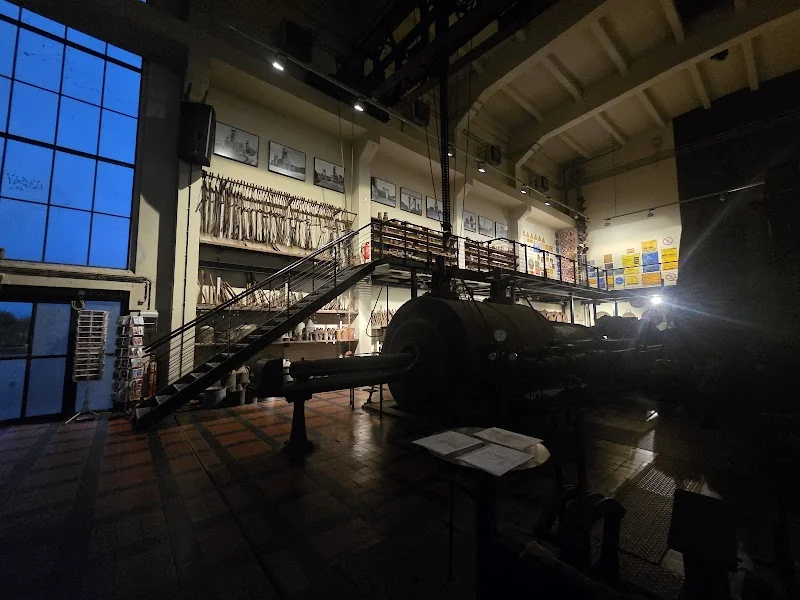
The two machine houses are the historical heart of the area and at the same time places where the mining history remains particularly vividly tangible. The southern machine house houses the mining collection of the initiative group Bergwerk Consolidation. It features one of the last steam engines installed in Germany and simultaneously one of the largest in Europe: the twin steam engine of the former Consolidation colliery. With 4,100 hp and a weight of 285 tons, it was a technical powerhouse. The city of Gelsenkirchen describes it as a steam hoisting machine built in 1963 by Gutehoffnungshütte Sterkrade, which lifted payloads from over 1,000 meters deep. Visitors can experience the technical monument on the first Sunday of every month from 1 PM to 6 PM; former miners provide knowledgeable explanations, and the machine is demonstrated in action. Additionally, there is a small exhibition on the history of the colliery, mining work, and mining customs. Thus, the southern machine house is not only an exhibition space but a lively learning place for industrial history. ([gelsenkirchen.de](https://www.gelsenkirchen.de/de/kultur/museen_und_dauerausstellungen/suedliches_maschinenhaus_zeche_consol/index.aspx))
In the northern machine house, the art installation Collection Werner Thiel sets a different but equally strong accent. Here, artifacts and relics from mining have not simply been stored but arranged into a spatially expansive art installation that transforms the machine house into a kind of cathedral of mining work. The city explains that this installation is one of four components of the cultural area Consol and has been made accessible to the public since the building's renovation. The collection is open on Saturdays and Sundays from 12 PM to 6 PM, and group visits are possible by appointment. Here, too, the special signature of the place is evident: Not a smooth museum presentation, but the connection of technology, memory, and artistic arrangement creates impact. Together with the mining collection in the southern machine house and the historical context of the shaft site, a dense, credible industrial culture ensemble emerges. Those interested in mining, technical monuments, or unusual exhibition spaces will find one of the most exciting places in the Ruhr area here. ([gelsenkirchen.de](https://www.gelsenkirchen.de/de/kultur/museen_und_dauerausstellungen/kunstinstallation_sammlung_werner_thiel/index.aspx))
Events, ConsolFest, and Special Visitor Moments
The cultural.area CONSOL thrives not only on its history but also on an event rhythm that continually revitalizes the place. A central format is the ConsolFest, which is perceived in Gelsenkirchen as a joint festival of the theater and its neighbors. Here, there are season openings, family programs, workshops, music, flea markets, information from the district, and historical tours of the former colliery site. Particularly impressive is that art installations, machine houses, stages, and parks are not used separately but as a cohesive experiential space. The demonstrations of the steam engine, the sports and play offerings in the park, and the musical contributions in front of Consol4 show that the site can appeal to very different visitor groups. For those specifically looking for events, this is important: Consol stands not only for memory but for active programming. The city connects monument, festival, and neighborhood in a way that is typical for the Ruhr area but particularly concentrated at this location. ([gelsenkirchen.de](https://www.gelsenkirchen.de/de/kultur/festivals_und_programmreihen/consolfest/index.aspx))
Among the special visitor moments is also the annual kite festival on the Pentecost weekend, which takes place at Consol and underscores the open character of the area. In conjunction with the freely accessible park, the sports facilities, and the historic buildings, this creates a place that can be discovered both spontaneously and with a planned visit. Those visiting the site for the first time will quickly notice that many classic search queries overlap in reality: Directions, parking, program, tickets for events, opening hours of exhibitions, and questions about history. This is precisely why the cultural.area CONSOL is so attractive for seekers and visitors alike. It offers a clear address, good accessibility, a distinctive appearance, and enough content depth to justify more than just a short stop. Whether one comes for theater, music, technology, industrial culture, or a family outing: The site provides a convincing framework for each of these occasions while remaining authentic to the character of the old mining site. ([gelsenkirchen.de](https://www.gelsenkirchen.de/de/kultur/museen_und_dauerausstellungen/suedliches_maschinenhaus_zeche_consol/index.aspx))
Sources:
- City of Gelsenkirchen - Cultural Area Consol ([gelsenkirchen.de](https://www.gelsenkirchen.de/de/kultur/Kultur-_und_Veranstaltungsorte/kultur.gebiet_CONSOL/index.aspx))
- City of Gelsenkirchen - Consol Theater ([gelsenkirchen.de](https://www.gelsenkirchen.de/de/kultur/theater_und_musik/consol_theater/index.aspx))
- City of Gelsenkirchen - Music Rehearsal Center Consol4 ([gelsenkirchen.de](https://www.gelsenkirchen.de/de/kultur/theater_und_musik/musikprobenzentrum_consol_4/index.aspx))
- City of Gelsenkirchen - Mining Collection of the IBC ([gelsenkirchen.de](https://www.gelsenkirchen.de/de/kultur/museen_und_dauerausstellungen/suedliches_maschinenhaus_zeche_consol/index.aspx))
- City of Gelsenkirchen - Art Installation Collection Werner Thiel ([gelsenkirchen.de](https://www.gelsenkirchen.de/de/kultur/museen_und_dauerausstellungen/kunstinstallation_sammlung_werner_thiel/index.aspx))
- City of Gelsenkirchen - Memorial Site Southern Machine House Shaft 9 ([gelsenkirchen.de](https://www.gelsenkirchen.de/de/stadtprofil/stadtgeschichten/erinnerungsorte/_bergwerk_consolidation_das_suedliche_maschinenhaus_von_schac.aspx))
- Ruhr Area Industrial Culture - Zeche Consolidation Consol in Gelsenkirchen ([ruhrgebiet-industriekultur.de](https://www.ruhrgebiet-industriekultur.de/zeche-consol/))
Show moreShow less
cultural.area CONSOL | Events & Parking
The cultural.area CONSOL is much more than just a former industrial site in Gelsenkirchen. Today, anyone walking through the area in Bismarck experiences a piece of Ruhr area history that is not confined to a museum, but continues to live and thrive outside. On the 2.7-hectare site of the former Consolidation 3/4/9 shaft facility, a new park landscape has emerged where culture, leisure, memorial culture, and community coexist. Theater, rehearsal rooms, art installations, mining collections, open spaces, and sports offerings interconnect here, making the cultural.area CONSOL a place where structural change can not only be told but experienced directly. The light installation “Consol Yellow” over Shaft 9 serves as a widely visible sign of this transformation, linking the past and present in a very clear, almost poetic way. ([gelsenkirchen.de](https://www.gelsenkirchen.de/de/kultur/Kultur-_und_Veranstaltungsorte/kultur.gebiet_CONSOL/index.aspx))
History and Structural Change at the Cultural Area Consol
The history of this place begins long before the current cultural quarter. The Consolidation colliery was a significant center of coal mining from 1865 to 1993 and shaped the district and large parts of Gelsenkirchen for generations. The name Consol is the shortened, commonly used form of Consolidation and recalls the industrial origin of the site. It is particularly exciting that not everything was simply demolished and rebuilt, but essential parts of the historical substance were preserved. The southern machine house was built in 1923 in connection with the commissioning of Shaft 9, and the northern machine house was later transformed into a place of cultural use and memory. After the mine ceased operations in 1996/97, the newly founded initiative group Bergwerk Consolidation took over the supervision of the building and took care of the preservation of the technical facilities. In 2003/04, the building was renovated and made accessible to the public again. This development shows how an industrial wasteland could gradually become a new urban center. ([ruhrgebiet-industriekultur.de](https://www.ruhrgebiet-industriekultur.de/zeche-consol/))
The structural change at the cultural.area CONSOL did not arise as a single prestige project, but as a community effort. The city of Gelsenkirchen, funding from state and EU programs, volunteer engagement from former miners, the creativity of theater people and musicians, as well as the Foundation for Industrial Heritage and Cultural History have all contributed to making the former colliery site a multifaceted cultural location. This is crucial for the character of the place: The site does not appear artificially staged, but rather grown and credible. The preserved machine houses, the winding tower, the park axes, the relics of the mining era, and the new uses create a rare mix of authenticity and presence. Therefore, those visiting the cultural area Consol not only find an attractive destination but also a very vivid example of how Ruhr area cities can transform their industrial spaces into public, open, and life-oriented places. It is precisely this combination of historical depth and current usability that makes the site appealing and explains why it continues to hold significant importance for culture enthusiasts, families, the music scene, and local residents. ([gelsenkirchen.de](https://www.gelsenkirchen.de/de/kultur/Kultur-_und_Veranstaltungsorte/kultur.gebiet_CONSOL/index.aspx))
Consol Park, Open Spaces, and Sports Offerings
A significant part of the attractiveness of the cultural.area CONSOL is the spacious outdoor area. Surrounding the historic buildings is Consol Park, which spans about 17 hectares between several streets and is characterized by a hilly, artificially designed relief with grassy areas, wide paths, and striking sight lines. This very mix makes the site so pleasant: One can stroll there, linger, combine visits to music or theater with a walk, or simply let the industrial scenery take effect. The park is not just a backdrop but an active part of the place. There are play areas, action spaces, and sports offerings such as skate and soccer areas that keep the site open for different age groups. The city’s descriptions explicitly emphasize that Consol Park and the outdoor area of the industrial monument can be freely visited or used at any time. Thus, the site is not only an event location but also a public open space that functions in everyday life. This open character distinguishes Consol from many classical cultural addresses and makes it possible to gain an intense impression of the facility even without a ticket. ([ruhrgebiet-industriekultur.de](https://www.ruhrgebiet-industriekultur.de/zeche-consol/))
Additionally, the special location within the urban fabric is noteworthy. The cultural.area CONSOL is not an isolated solitaire but part of a new center in the district, where living, small commercial spaces, culture, and leisure have been brought together. The site is connected to bike paths, including the Consol route, which provides a quiet and gentle access for cyclists. This makes the location interesting for day trips and spontaneous visits. Especially for families, the combination of culture and open space is attractive because a visit to an exhibition or theater can be combined with movement and time spent in nature. The light installation “Consol Yellow” also contributes to the recognition value as it marks the site not only during the day but also from a distance. The result is a park landscape that does not appear smooth or arbitrary but openly shows its origins. Between grass, machine house, and winding tower, an urban image emerges that is typical of the transformation in the Ruhr area yet has a very distinct, almost monumental signature at the Consol site. ([gelsenkirchen.de](https://www.gelsenkirchen.de/de/kultur/Kultur-_und_Veranstaltungsorte/kultur.gebiet_CONSOL/index.aspx))
Directions and Parking at the Cultural Area Consol
For those arriving by car, there is a clear but not over-staged parking situation for the cultural.area CONSOL. The recommended route leads via the A42 to exit 18 Gelsenkirchen-Bismarck. From Dortmund, turn right; from Oberhausen, turn left onto Reckfeldstraße, then follow the route to Erdbrüggenstraße and drive into Consolstraße at the next roundabout. Parking is available along the roadside; additionally, a small parking lot is mentioned before the traffic light, as well as parking options in the adjacent residential streets. This is important for planning visits as it shows that one is not reliant on a large parking garage, but rather that the site is more accessible to the neighborhood. The address and access routes are designed for short distances, which is particularly pleasant for events with families or older audiences. Those wishing to combine their visit with a walk in the park can park their car in such a way that the path to the buildings remains short and the transition from the neighborhood to the cultural space becomes directly experienceable. ([ruhrgebiet-industriekultur.de](https://www.ruhrgebiet-industriekultur.de/zeche-consol/))
Traveling by bus and train is also well described and makes sense for the location. From Dortmund, Herne, or Dorsten, you can reach the area with the RB 43 to Gelsenkirchen-Zoo; from there, the path leads via Bismarckstraße and Bickernstraße to the site. From Gelsenkirchen Hbf., line 301 heads towards Buer Rathaus to the stop Bergwerk Consolidation or near Bismarckstraße, from where the walk continues. Those who enjoy cycling benefit from the connection to the Erzbahn route and the Consol route. This accessibility is particularly valuable for a cultural site in the Ruhr area as it brings together various forms of mobility and keeps the site open not only for car drivers. In practice, this means: A visit is possible both as a targeted evening event for theater and music and as a relaxed day trip. Especially for guests who are visiting the site for the first time, the clear information about exits, road courses, and stops is helpful. The cultural.area CONSOL is thus not only interesting in content but also very well readable logistically, which is a real advantage for a site with multiple buildings, open spaces, and different uses. ([ruhrgebiet-industriekultur.de](https://www.ruhrgebiet-industriekultur.de/zeche-consol/))
Consol Theater and Cultural Program
The Consol Theater is one of the most important components of the cultural.area CONSOL and forms, together with the neighboring facilities, the cultural core of the area. It is located on the former colliery site Consolidation in Gelsenkirchen-Bismarck and is closely linked to the overall structure of the place. This embedding is precisely what makes it appealing: The theater does not stand as an isolated event space in the urban area but is part of a larger cultural and historical ensemble. In addition to the theater, the site includes the music rehearsal center Consol4, the art installation Collection Werner Thiel in the northern machine house, and the mining collection in the southern machine house. Directly adjacent is Consol Park with a beach volleyball court, skate park, and inline hockey field, bringing culture and movement together in one place. This creates a very versatile framework for visitors that goes far beyond the classic theater visit. The environment is not only decorative but actively contributes to the atmosphere and makes the location of the house so special. ([gelsenkirchen.de](https://www.gelsenkirchen.de/de/kultur/theater_und_musik/consol_theater/index.aspx))
The program of the Consol Theater and the neighborhood is characterized by diversity, openness, and a tangible connection to the district. A good example of this is the ConsolFest, where the theater, together with its neighbors, celebrates the season opening and the day of open monuments with a varied program for families, theater enthusiasts, people interested in industrial history, and casual passersby. There, children’s offerings, workshops, music, and historical tours come together. This very mix shows that the cultural.area CONSOL cannot be confined to a single genre. Rather, it is a place where theater, music, education, and memorial culture complement each other. The current use makes the site a lively meeting point where culture is not only consumed but also experienced in the neighborhood. Those interested in the event culture in Gelsenkirchen will find here a place with high recognition and a clear stance: open, diverse, and firmly rooted in local history. ([gelsenkirchen.de](https://www.gelsenkirchen.de/de/kultur/festivals_und_programmreihen/consolfest/index.aspx))
Music Rehearsal Center Consol4 as a Rehearsal Space with a Special Atmosphere
The music rehearsal center Consol4 is a central place for the local music scene and is also one of the most prominent uses on the site. It is housed in a former hoisting machine house in the cultural.area CONSOL; since August 2005, more than 50 bands have been rehearsing there. The dimensions are impressive: The rehearsal center has 39 rooms, each with 25 square meters, which are acoustically decoupled. Additionally, there is a large lobby as a community room and event space, modern sanitary facilities, step-free loading via an elevator in the former shaft structure, video-monitored corridors and entrances, and an open-air stage right outside the door. This combination of technical functionality and historical shell is exceptional in this form and explains why the place enjoys such a reputation in the region. The architecture preserves the industrial presence of the old machine house without sacrificing the needs of modern rehearsal work. This creates the special atmosphere that attracts musicians and bands. ([gelsenkirchen.de](https://www.gelsenkirchen.de/de/kultur/theater_und_musik/musikprobenzentrum_consol_4/index.aspx))
Also noteworthy is the organizational form. The house is leased to the interest group of cultural creators in Gelsenkirchen e.V. and is operated in self-management, accompanied by an advisory board consisting of representatives from groups, the association, the city, and external experts. This makes Consol4 not just a space offering but a community-supported cultural project. The occupancy rate speaks for itself: The waiting list is long, underscoring the significance of the house in the city's music life. Additionally, the connection to the revitalization of the entire colliery site Consolidation 3/4/9 is important, as Consol4 is not an afterthought but a conscious part of the transformation. Thus, those visiting the cultural.area CONSOL experience not only the rehearsal routine but also an example of sustainable, community-driven cultural infrastructure. Especially for the keywords surrounding music rehearsal center, program, rehearsal room, and use, this place is one of the strongest anchor points of the area. ([gelsenkirchen.de](https://www.gelsenkirchen.de/de/kultur/theater_und_musik/musikprobenzentrum_consol_4/index.aspx))
Mining Collection IBC and Collection Werner Thiel in the Machine House
The two machine houses are the historical heart of the area and at the same time places where the mining history remains particularly vividly tangible. The southern machine house houses the mining collection of the initiative group Bergwerk Consolidation. It features one of the last steam engines installed in Germany and simultaneously one of the largest in Europe: the twin steam engine of the former Consolidation colliery. With 4,100 hp and a weight of 285 tons, it was a technical powerhouse. The city of Gelsenkirchen describes it as a steam hoisting machine built in 1963 by Gutehoffnungshütte Sterkrade, which lifted payloads from over 1,000 meters deep. Visitors can experience the technical monument on the first Sunday of every month from 1 PM to 6 PM; former miners provide knowledgeable explanations, and the machine is demonstrated in action. Additionally, there is a small exhibition on the history of the colliery, mining work, and mining customs. Thus, the southern machine house is not only an exhibition space but a lively learning place for industrial history. ([gelsenkirchen.de](https://www.gelsenkirchen.de/de/kultur/museen_und_dauerausstellungen/suedliches_maschinenhaus_zeche_consol/index.aspx))
In the northern machine house, the art installation Collection Werner Thiel sets a different but equally strong accent. Here, artifacts and relics from mining have not simply been stored but arranged into a spatially expansive art installation that transforms the machine house into a kind of cathedral of mining work. The city explains that this installation is one of four components of the cultural area Consol and has been made accessible to the public since the building's renovation. The collection is open on Saturdays and Sundays from 12 PM to 6 PM, and group visits are possible by appointment. Here, too, the special signature of the place is evident: Not a smooth museum presentation, but the connection of technology, memory, and artistic arrangement creates impact. Together with the mining collection in the southern machine house and the historical context of the shaft site, a dense, credible industrial culture ensemble emerges. Those interested in mining, technical monuments, or unusual exhibition spaces will find one of the most exciting places in the Ruhr area here. ([gelsenkirchen.de](https://www.gelsenkirchen.de/de/kultur/museen_und_dauerausstellungen/kunstinstallation_sammlung_werner_thiel/index.aspx))
Events, ConsolFest, and Special Visitor Moments
The cultural.area CONSOL thrives not only on its history but also on an event rhythm that continually revitalizes the place. A central format is the ConsolFest, which is perceived in Gelsenkirchen as a joint festival of the theater and its neighbors. Here, there are season openings, family programs, workshops, music, flea markets, information from the district, and historical tours of the former colliery site. Particularly impressive is that art installations, machine houses, stages, and parks are not used separately but as a cohesive experiential space. The demonstrations of the steam engine, the sports and play offerings in the park, and the musical contributions in front of Consol4 show that the site can appeal to very different visitor groups. For those specifically looking for events, this is important: Consol stands not only for memory but for active programming. The city connects monument, festival, and neighborhood in a way that is typical for the Ruhr area but particularly concentrated at this location. ([gelsenkirchen.de](https://www.gelsenkirchen.de/de/kultur/festivals_und_programmreihen/consolfest/index.aspx))
Among the special visitor moments is also the annual kite festival on the Pentecost weekend, which takes place at Consol and underscores the open character of the area. In conjunction with the freely accessible park, the sports facilities, and the historic buildings, this creates a place that can be discovered both spontaneously and with a planned visit. Those visiting the site for the first time will quickly notice that many classic search queries overlap in reality: Directions, parking, program, tickets for events, opening hours of exhibitions, and questions about history. This is precisely why the cultural.area CONSOL is so attractive for seekers and visitors alike. It offers a clear address, good accessibility, a distinctive appearance, and enough content depth to justify more than just a short stop. Whether one comes for theater, music, technology, industrial culture, or a family outing: The site provides a convincing framework for each of these occasions while remaining authentic to the character of the old mining site. ([gelsenkirchen.de](https://www.gelsenkirchen.de/de/kultur/museen_und_dauerausstellungen/suedliches_maschinenhaus_zeche_consol/index.aspx))
Sources:
- City of Gelsenkirchen - Cultural Area Consol ([gelsenkirchen.de](https://www.gelsenkirchen.de/de/kultur/Kultur-_und_Veranstaltungsorte/kultur.gebiet_CONSOL/index.aspx))
- City of Gelsenkirchen - Consol Theater ([gelsenkirchen.de](https://www.gelsenkirchen.de/de/kultur/theater_und_musik/consol_theater/index.aspx))
- City of Gelsenkirchen - Music Rehearsal Center Consol4 ([gelsenkirchen.de](https://www.gelsenkirchen.de/de/kultur/theater_und_musik/musikprobenzentrum_consol_4/index.aspx))
- City of Gelsenkirchen - Mining Collection of the IBC ([gelsenkirchen.de](https://www.gelsenkirchen.de/de/kultur/museen_und_dauerausstellungen/suedliches_maschinenhaus_zeche_consol/index.aspx))
- City of Gelsenkirchen - Art Installation Collection Werner Thiel ([gelsenkirchen.de](https://www.gelsenkirchen.de/de/kultur/museen_und_dauerausstellungen/kunstinstallation_sammlung_werner_thiel/index.aspx))
- City of Gelsenkirchen - Memorial Site Southern Machine House Shaft 9 ([gelsenkirchen.de](https://www.gelsenkirchen.de/de/stadtprofil/stadtgeschichten/erinnerungsorte/_bergwerk_consolidation_das_suedliche_maschinenhaus_von_schac.aspx))
- Ruhr Area Industrial Culture - Zeche Consolidation Consol in Gelsenkirchen ([ruhrgebiet-industriekultur.de](https://www.ruhrgebiet-industriekultur.de/zeche-consol/))
cultural.area CONSOL | Events & Parking
The cultural.area CONSOL is much more than just a former industrial site in Gelsenkirchen. Today, anyone walking through the area in Bismarck experiences a piece of Ruhr area history that is not confined to a museum, but continues to live and thrive outside. On the 2.7-hectare site of the former Consolidation 3/4/9 shaft facility, a new park landscape has emerged where culture, leisure, memorial culture, and community coexist. Theater, rehearsal rooms, art installations, mining collections, open spaces, and sports offerings interconnect here, making the cultural.area CONSOL a place where structural change can not only be told but experienced directly. The light installation “Consol Yellow” over Shaft 9 serves as a widely visible sign of this transformation, linking the past and present in a very clear, almost poetic way. ([gelsenkirchen.de](https://www.gelsenkirchen.de/de/kultur/Kultur-_und_Veranstaltungsorte/kultur.gebiet_CONSOL/index.aspx))
History and Structural Change at the Cultural Area Consol
The history of this place begins long before the current cultural quarter. The Consolidation colliery was a significant center of coal mining from 1865 to 1993 and shaped the district and large parts of Gelsenkirchen for generations. The name Consol is the shortened, commonly used form of Consolidation and recalls the industrial origin of the site. It is particularly exciting that not everything was simply demolished and rebuilt, but essential parts of the historical substance were preserved. The southern machine house was built in 1923 in connection with the commissioning of Shaft 9, and the northern machine house was later transformed into a place of cultural use and memory. After the mine ceased operations in 1996/97, the newly founded initiative group Bergwerk Consolidation took over the supervision of the building and took care of the preservation of the technical facilities. In 2003/04, the building was renovated and made accessible to the public again. This development shows how an industrial wasteland could gradually become a new urban center. ([ruhrgebiet-industriekultur.de](https://www.ruhrgebiet-industriekultur.de/zeche-consol/))
The structural change at the cultural.area CONSOL did not arise as a single prestige project, but as a community effort. The city of Gelsenkirchen, funding from state and EU programs, volunteer engagement from former miners, the creativity of theater people and musicians, as well as the Foundation for Industrial Heritage and Cultural History have all contributed to making the former colliery site a multifaceted cultural location. This is crucial for the character of the place: The site does not appear artificially staged, but rather grown and credible. The preserved machine houses, the winding tower, the park axes, the relics of the mining era, and the new uses create a rare mix of authenticity and presence. Therefore, those visiting the cultural area Consol not only find an attractive destination but also a very vivid example of how Ruhr area cities can transform their industrial spaces into public, open, and life-oriented places. It is precisely this combination of historical depth and current usability that makes the site appealing and explains why it continues to hold significant importance for culture enthusiasts, families, the music scene, and local residents. ([gelsenkirchen.de](https://www.gelsenkirchen.de/de/kultur/Kultur-_und_Veranstaltungsorte/kultur.gebiet_CONSOL/index.aspx))
Consol Park, Open Spaces, and Sports Offerings
A significant part of the attractiveness of the cultural.area CONSOL is the spacious outdoor area. Surrounding the historic buildings is Consol Park, which spans about 17 hectares between several streets and is characterized by a hilly, artificially designed relief with grassy areas, wide paths, and striking sight lines. This very mix makes the site so pleasant: One can stroll there, linger, combine visits to music or theater with a walk, or simply let the industrial scenery take effect. The park is not just a backdrop but an active part of the place. There are play areas, action spaces, and sports offerings such as skate and soccer areas that keep the site open for different age groups. The city’s descriptions explicitly emphasize that Consol Park and the outdoor area of the industrial monument can be freely visited or used at any time. Thus, the site is not only an event location but also a public open space that functions in everyday life. This open character distinguishes Consol from many classical cultural addresses and makes it possible to gain an intense impression of the facility even without a ticket. ([ruhrgebiet-industriekultur.de](https://www.ruhrgebiet-industriekultur.de/zeche-consol/))
Additionally, the special location within the urban fabric is noteworthy. The cultural.area CONSOL is not an isolated solitaire but part of a new center in the district, where living, small commercial spaces, culture, and leisure have been brought together. The site is connected to bike paths, including the Consol route, which provides a quiet and gentle access for cyclists. This makes the location interesting for day trips and spontaneous visits. Especially for families, the combination of culture and open space is attractive because a visit to an exhibition or theater can be combined with movement and time spent in nature. The light installation “Consol Yellow” also contributes to the recognition value as it marks the site not only during the day but also from a distance. The result is a park landscape that does not appear smooth or arbitrary but openly shows its origins. Between grass, machine house, and winding tower, an urban image emerges that is typical of the transformation in the Ruhr area yet has a very distinct, almost monumental signature at the Consol site. ([gelsenkirchen.de](https://www.gelsenkirchen.de/de/kultur/Kultur-_und_Veranstaltungsorte/kultur.gebiet_CONSOL/index.aspx))
Directions and Parking at the Cultural Area Consol
For those arriving by car, there is a clear but not over-staged parking situation for the cultural.area CONSOL. The recommended route leads via the A42 to exit 18 Gelsenkirchen-Bismarck. From Dortmund, turn right; from Oberhausen, turn left onto Reckfeldstraße, then follow the route to Erdbrüggenstraße and drive into Consolstraße at the next roundabout. Parking is available along the roadside; additionally, a small parking lot is mentioned before the traffic light, as well as parking options in the adjacent residential streets. This is important for planning visits as it shows that one is not reliant on a large parking garage, but rather that the site is more accessible to the neighborhood. The address and access routes are designed for short distances, which is particularly pleasant for events with families or older audiences. Those wishing to combine their visit with a walk in the park can park their car in such a way that the path to the buildings remains short and the transition from the neighborhood to the cultural space becomes directly experienceable. ([ruhrgebiet-industriekultur.de](https://www.ruhrgebiet-industriekultur.de/zeche-consol/))
Traveling by bus and train is also well described and makes sense for the location. From Dortmund, Herne, or Dorsten, you can reach the area with the RB 43 to Gelsenkirchen-Zoo; from there, the path leads via Bismarckstraße and Bickernstraße to the site. From Gelsenkirchen Hbf., line 301 heads towards Buer Rathaus to the stop Bergwerk Consolidation or near Bismarckstraße, from where the walk continues. Those who enjoy cycling benefit from the connection to the Erzbahn route and the Consol route. This accessibility is particularly valuable for a cultural site in the Ruhr area as it brings together various forms of mobility and keeps the site open not only for car drivers. In practice, this means: A visit is possible both as a targeted evening event for theater and music and as a relaxed day trip. Especially for guests who are visiting the site for the first time, the clear information about exits, road courses, and stops is helpful. The cultural.area CONSOL is thus not only interesting in content but also very well readable logistically, which is a real advantage for a site with multiple buildings, open spaces, and different uses. ([ruhrgebiet-industriekultur.de](https://www.ruhrgebiet-industriekultur.de/zeche-consol/))
Consol Theater and Cultural Program
The Consol Theater is one of the most important components of the cultural.area CONSOL and forms, together with the neighboring facilities, the cultural core of the area. It is located on the former colliery site Consolidation in Gelsenkirchen-Bismarck and is closely linked to the overall structure of the place. This embedding is precisely what makes it appealing: The theater does not stand as an isolated event space in the urban area but is part of a larger cultural and historical ensemble. In addition to the theater, the site includes the music rehearsal center Consol4, the art installation Collection Werner Thiel in the northern machine house, and the mining collection in the southern machine house. Directly adjacent is Consol Park with a beach volleyball court, skate park, and inline hockey field, bringing culture and movement together in one place. This creates a very versatile framework for visitors that goes far beyond the classic theater visit. The environment is not only decorative but actively contributes to the atmosphere and makes the location of the house so special. ([gelsenkirchen.de](https://www.gelsenkirchen.de/de/kultur/theater_und_musik/consol_theater/index.aspx))
The program of the Consol Theater and the neighborhood is characterized by diversity, openness, and a tangible connection to the district. A good example of this is the ConsolFest, where the theater, together with its neighbors, celebrates the season opening and the day of open monuments with a varied program for families, theater enthusiasts, people interested in industrial history, and casual passersby. There, children’s offerings, workshops, music, and historical tours come together. This very mix shows that the cultural.area CONSOL cannot be confined to a single genre. Rather, it is a place where theater, music, education, and memorial culture complement each other. The current use makes the site a lively meeting point where culture is not only consumed but also experienced in the neighborhood. Those interested in the event culture in Gelsenkirchen will find here a place with high recognition and a clear stance: open, diverse, and firmly rooted in local history. ([gelsenkirchen.de](https://www.gelsenkirchen.de/de/kultur/festivals_und_programmreihen/consolfest/index.aspx))
Music Rehearsal Center Consol4 as a Rehearsal Space with a Special Atmosphere
The music rehearsal center Consol4 is a central place for the local music scene and is also one of the most prominent uses on the site. It is housed in a former hoisting machine house in the cultural.area CONSOL; since August 2005, more than 50 bands have been rehearsing there. The dimensions are impressive: The rehearsal center has 39 rooms, each with 25 square meters, which are acoustically decoupled. Additionally, there is a large lobby as a community room and event space, modern sanitary facilities, step-free loading via an elevator in the former shaft structure, video-monitored corridors and entrances, and an open-air stage right outside the door. This combination of technical functionality and historical shell is exceptional in this form and explains why the place enjoys such a reputation in the region. The architecture preserves the industrial presence of the old machine house without sacrificing the needs of modern rehearsal work. This creates the special atmosphere that attracts musicians and bands. ([gelsenkirchen.de](https://www.gelsenkirchen.de/de/kultur/theater_und_musik/musikprobenzentrum_consol_4/index.aspx))
Also noteworthy is the organizational form. The house is leased to the interest group of cultural creators in Gelsenkirchen e.V. and is operated in self-management, accompanied by an advisory board consisting of representatives from groups, the association, the city, and external experts. This makes Consol4 not just a space offering but a community-supported cultural project. The occupancy rate speaks for itself: The waiting list is long, underscoring the significance of the house in the city's music life. Additionally, the connection to the revitalization of the entire colliery site Consolidation 3/4/9 is important, as Consol4 is not an afterthought but a conscious part of the transformation. Thus, those visiting the cultural.area CONSOL experience not only the rehearsal routine but also an example of sustainable, community-driven cultural infrastructure. Especially for the keywords surrounding music rehearsal center, program, rehearsal room, and use, this place is one of the strongest anchor points of the area. ([gelsenkirchen.de](https://www.gelsenkirchen.de/de/kultur/theater_und_musik/musikprobenzentrum_consol_4/index.aspx))
Mining Collection IBC and Collection Werner Thiel in the Machine House
The two machine houses are the historical heart of the area and at the same time places where the mining history remains particularly vividly tangible. The southern machine house houses the mining collection of the initiative group Bergwerk Consolidation. It features one of the last steam engines installed in Germany and simultaneously one of the largest in Europe: the twin steam engine of the former Consolidation colliery. With 4,100 hp and a weight of 285 tons, it was a technical powerhouse. The city of Gelsenkirchen describes it as a steam hoisting machine built in 1963 by Gutehoffnungshütte Sterkrade, which lifted payloads from over 1,000 meters deep. Visitors can experience the technical monument on the first Sunday of every month from 1 PM to 6 PM; former miners provide knowledgeable explanations, and the machine is demonstrated in action. Additionally, there is a small exhibition on the history of the colliery, mining work, and mining customs. Thus, the southern machine house is not only an exhibition space but a lively learning place for industrial history. ([gelsenkirchen.de](https://www.gelsenkirchen.de/de/kultur/museen_und_dauerausstellungen/suedliches_maschinenhaus_zeche_consol/index.aspx))
In the northern machine house, the art installation Collection Werner Thiel sets a different but equally strong accent. Here, artifacts and relics from mining have not simply been stored but arranged into a spatially expansive art installation that transforms the machine house into a kind of cathedral of mining work. The city explains that this installation is one of four components of the cultural area Consol and has been made accessible to the public since the building's renovation. The collection is open on Saturdays and Sundays from 12 PM to 6 PM, and group visits are possible by appointment. Here, too, the special signature of the place is evident: Not a smooth museum presentation, but the connection of technology, memory, and artistic arrangement creates impact. Together with the mining collection in the southern machine house and the historical context of the shaft site, a dense, credible industrial culture ensemble emerges. Those interested in mining, technical monuments, or unusual exhibition spaces will find one of the most exciting places in the Ruhr area here. ([gelsenkirchen.de](https://www.gelsenkirchen.de/de/kultur/museen_und_dauerausstellungen/kunstinstallation_sammlung_werner_thiel/index.aspx))
Events, ConsolFest, and Special Visitor Moments
The cultural.area CONSOL thrives not only on its history but also on an event rhythm that continually revitalizes the place. A central format is the ConsolFest, which is perceived in Gelsenkirchen as a joint festival of the theater and its neighbors. Here, there are season openings, family programs, workshops, music, flea markets, information from the district, and historical tours of the former colliery site. Particularly impressive is that art installations, machine houses, stages, and parks are not used separately but as a cohesive experiential space. The demonstrations of the steam engine, the sports and play offerings in the park, and the musical contributions in front of Consol4 show that the site can appeal to very different visitor groups. For those specifically looking for events, this is important: Consol stands not only for memory but for active programming. The city connects monument, festival, and neighborhood in a way that is typical for the Ruhr area but particularly concentrated at this location. ([gelsenkirchen.de](https://www.gelsenkirchen.de/de/kultur/festivals_und_programmreihen/consolfest/index.aspx))
Among the special visitor moments is also the annual kite festival on the Pentecost weekend, which takes place at Consol and underscores the open character of the area. In conjunction with the freely accessible park, the sports facilities, and the historic buildings, this creates a place that can be discovered both spontaneously and with a planned visit. Those visiting the site for the first time will quickly notice that many classic search queries overlap in reality: Directions, parking, program, tickets for events, opening hours of exhibitions, and questions about history. This is precisely why the cultural.area CONSOL is so attractive for seekers and visitors alike. It offers a clear address, good accessibility, a distinctive appearance, and enough content depth to justify more than just a short stop. Whether one comes for theater, music, technology, industrial culture, or a family outing: The site provides a convincing framework for each of these occasions while remaining authentic to the character of the old mining site. ([gelsenkirchen.de](https://www.gelsenkirchen.de/de/kultur/museen_und_dauerausstellungen/suedliches_maschinenhaus_zeche_consol/index.aspx))
Sources:
- City of Gelsenkirchen - Cultural Area Consol ([gelsenkirchen.de](https://www.gelsenkirchen.de/de/kultur/Kultur-_und_Veranstaltungsorte/kultur.gebiet_CONSOL/index.aspx))
- City of Gelsenkirchen - Consol Theater ([gelsenkirchen.de](https://www.gelsenkirchen.de/de/kultur/theater_und_musik/consol_theater/index.aspx))
- City of Gelsenkirchen - Music Rehearsal Center Consol4 ([gelsenkirchen.de](https://www.gelsenkirchen.de/de/kultur/theater_und_musik/musikprobenzentrum_consol_4/index.aspx))
- City of Gelsenkirchen - Mining Collection of the IBC ([gelsenkirchen.de](https://www.gelsenkirchen.de/de/kultur/museen_und_dauerausstellungen/suedliches_maschinenhaus_zeche_consol/index.aspx))
- City of Gelsenkirchen - Art Installation Collection Werner Thiel ([gelsenkirchen.de](https://www.gelsenkirchen.de/de/kultur/museen_und_dauerausstellungen/kunstinstallation_sammlung_werner_thiel/index.aspx))
- City of Gelsenkirchen - Memorial Site Southern Machine House Shaft 9 ([gelsenkirchen.de](https://www.gelsenkirchen.de/de/stadtprofil/stadtgeschichten/erinnerungsorte/_bergwerk_consolidation_das_suedliche_maschinenhaus_von_schac.aspx))
- Ruhr Area Industrial Culture - Zeche Consolidation Consol in Gelsenkirchen ([ruhrgebiet-industriekultur.de](https://www.ruhrgebiet-industriekultur.de/zeche-consol/))
Upcoming Events
No events found
Frequently Asked Questions
Reviews
No reviews found