
Gelsenkirchen
Bulmke-Hüllen, 45888 Gelsenkirchen, Deutschland
Jewish Cemetery Gelsenkirchen | History & Visit
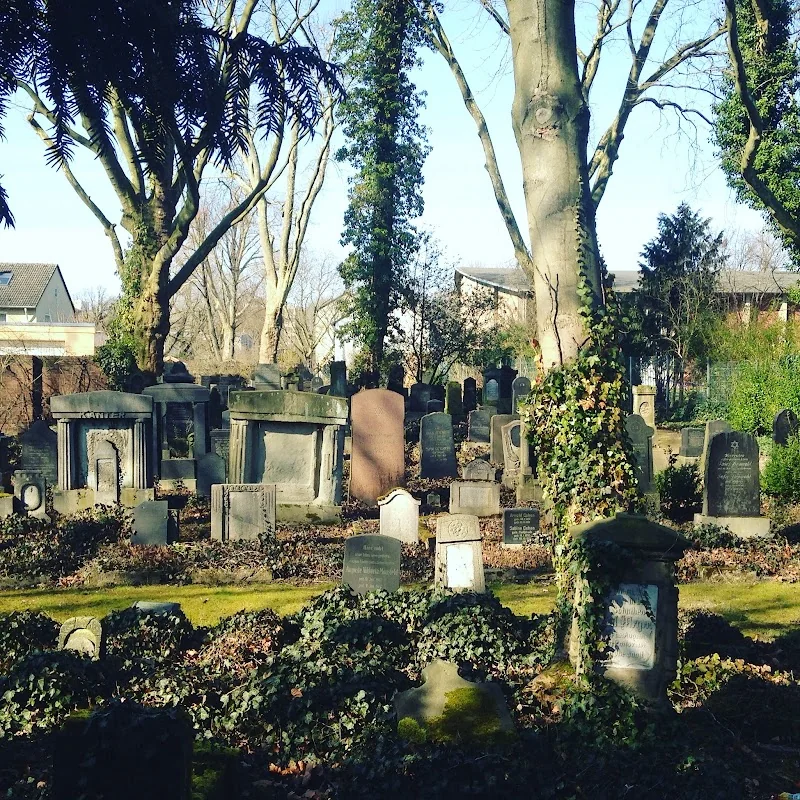
The Jewish Cemetery Gelsenkirchen at Wanner Straße / corner Oskarstraße in Bulmke-Hüllen is a special memorial site of the city's history. It is considered the oldest Jewish cemetery in Gelsenkirchen, acquired by the Jewish community in 1874, and still shows how closely Jewish life, burial culture, and local urban development are interconnected. Those searching for Jewish cemetery Gelsenkirchen, old Jewish cemetery Gelsenkirchen, or Jewish cemetery Wanner Straße will find here not an ordinary place, but a historical testimony that tells of independence, growth, loss, and memory. The city describes the cemetery as a well-preserved, quiet place; at the same time, the Jewish community makes it clear that the site is under monument protection and thus is much more than just a burial site. The cemetery is also relevant for visitors because a visit is possible, and the history of the place remains visible in the city's memory offerings. ([gelsenkirchen.de](https://www.gelsenkirchen.de/de/stadtprofil/stadtgeschichten/erinnerungsorte/_juedischer_friedhof_in_gelsenkirchen-bulmke.aspx?utm_source=openai))
History of the Oldest Jewish Cemetery in Gelsenkirchen
The history of the cemetery begins in 1874 when the Jewish community of Gelsenkirchen acquired the property at Wanner Straße / corner Oskarstraße. In the same year, the community separated from the Wattenscheid synagogue community and became independent, making the site an early reflection of Jewish independence in the growing industrial city. With the inauguration of the synagogue built in 1885, the community later called itself the Synagogue Community Gelsenkirchen. Thus, the cemetery is not isolated but closely linked to the establishment of an independent religious and communal life. In local memory, it is therefore not just an old burial site but a key place for the history of Jewish families in Gelsenkirchen. The term “House of Eternity” captures this significance very accurately: A Jewish cemetery is traditionally not an arbitrary place but a permanently protected place of memory and dignity. ([gelsenkirchen.de](https://www.gelsenkirchen.de/de/stadtprofil/stadtgeschichten/erinnerungsorte/_juedischer_friedhof_in_gelsenkirchen-bulmke.aspx?utm_source=openai))
Another important milestone is the year 1927. At that time, the historical plot of about 2,300 square meters was fully occupied with around 400 graves. Therefore, the community acquired a new cemetery plot at the current South Cemetery in Gelsenkirchen-Ückendorf, which later served as an extension and continuation of Jewish burial culture. Nevertheless, burials in already existing family graves continued at the old cemetery in Bulmke until 1936. These details show that cemeteries in Jewish tradition are not simply “closed” when space becomes tight, but that family graves and existing resting places continue to play an important role. The cemetery at Wanner Straße is therefore significant not only because of its age but also because of its function as a testimony of a community that developed, grew, and ultimately had to find new ways for its burial culture. ([gelsenkirchen.de](https://www.gelsenkirchen.de/de/stadtprofil/stadtgeschichten/erinnerungsorte/_juedischer_friedhof_in_gelsenkirchen-bulmke.aspx?utm_source=openai))
Location, Access, and Visit at Wanner Straße
The Jewish Cemetery is now located in the district of Bulmke-Hüllen in Gelsenkirchen and is officially located in city documents at Wanner Straße or the corner of Oskarstraße. This precise location is particularly important for searches, as many visitors look for different variants such as Jewish cemetery Gelsenkirchen Ückendorf, Jewish cemetery Gelsenkirchen Wattenscheid, or Jewish cemetery Gelsenkirchen Bulmke. However, the place described here is clearly the historical cemetery at Wanner Straße in Bulmke-Hüllen. The city refers to it as a memorial site and does not present it as an ordinary public park, but as a historically significant, enclosed cemetery area. This already makes it clear at first glance that this is a place of quiet remembrance where the history of the Jewish community remains visible. The surroundings are also part of the historical interpretation: The location on an inner-city street, the proximity to Oskarstraße, and the integration into the district make it clear that the cemetery is situated in the heart of the developed city and not on the edge of an anonymous area. ([gelsenkirchen.de](https://www.gelsenkirchen.de/de/stadtprofil/stadtgeschichten/erinnerungsorte/_juedischer_friedhof_in_gelsenkirchen-bulmke.aspx?utm_source=openai))
It is particularly important for visitors that a visit is possible. The city of Gelsenkirchen specifies a concrete access: The key to the cemetery can be picked up at the reception of the Altendomizil Convenio at Bulmker Straße 117. Thus, the place is not freely accessible at all times but is controlled, which corresponds to its character as a protected memorial site. At the same time, this regulation emphasizes that the cemetery is not forgotten but consciously preserved. Since 1995, it has been under monument protection and today belongs to the State Association of Jewish Communities in Westphalia. Additionally, the memorial site plaque was created in 2013 and renewed in 2025, which shows its permanent integration into the city's memory culture. Therefore, those searching for parking, access, or visits should especially consider the respectful, historical character of the place: It is not an event location but a monument-protected cemetery with regulated access and clear historical significance. ([gelsenkirchen.de](https://www.gelsenkirchen.de/de/stadtprofil/stadtgeschichten/erinnerungsorte/_juedischer_friedhof_in_gelsenkirchen-bulmke.aspx?utm_source=openai))
Tombstones, Inscriptions, and Jewish Symbolism
Particularly impressive are the tombstones and inscriptions in the cemetery. The city of Gelsenkirchen points out that the oldest tombstone is dated to 1874. Many of the inscriptions still present today are bilingual and adorned with Jewish symbolism. This makes the cemetery interesting for people searching for tombstones Jewish symbolism, Jewish burial culture, or house of eternity. The symbolism ranges from the Star of David and blessing priestly hands to the Levite jug and other official or familial signs. An open book is also mentioned, which refers to scholarship and education. Such details are not merely decorative but expressions of religious tradition, familial memory, and social belonging. Especially the bilingual inscriptions show how Jewish families in Gelsenkirchen lived between religious heritage, local roots, and the respective language of their environment. The cemetery thus becomes a readable history book made of stone, in which many generations can be found. ([gelsenkirchen.de](https://www.gelsenkirchen.de/de/stadtprofil/stadtgeschichten/erinnerungsorte/_doc/eot_ju__776_discher_friedhof_k1.pdf?utm_source=openai))
The Jewish tradition considers burial sites as places with special protection and high value. In the city materials, it is explained that the grave is considered the property of the deceased and the cemetery itself is described as a “House for Eternity.” This also means that changes to the graves cannot simply be made. This perspective helps to understand why the cemetery in Gelsenkirchen is preserved and documented so carefully. It is not only about historical information but about a religious and cultural understanding of permanence, respect, and memory. For visitors, this is important because it changes the perspective on the place: One does not view an arbitrary historical area but a space whose form, stones, and signs follow a clear custom. That is why the tombstones are still so impressive today: They connect local history with Jewish burial culture, linguistic diversity with symbolism, and personal memory with a tradition valid across generations. ([gelsenkirchen.de](https://www.gelsenkirchen.de/de/stadtprofil/stadtgeschichten/erinnerungsorte/_doc/eot_ju__776_discher_friedhof_k1.pdf?utm_source=openai))
Monument Protection, Memory, and Current Significance
Since 1995, the Jewish cemetery in Bulmke has been under monument protection. This is more than a formal status, as it protects a place where the history of Jewish families, their mourning culture, and their presence in Gelsenkirchen remains visible. The city also describes the cemetery as a memorial site, and on the grounds are grave monuments that commemorate community members who were victims of National Socialist violence. This makes the cemetery also a place of remembrance for the destruction of Jewish life in the 20th century. The interplay of the old burial site, historical symbolism, and later remembrance of persecution and violence makes the site particularly significant. Therefore, those searching for Jewish cemetery Gelsenkirchen monument protection or Jewish cemetery Gelsenkirchen history will find here not just a cemetery but a material testimony to continuity and rupture at the same time. ([gelsenkirchen.de](https://www.gelsenkirchen.de/de/stadtprofil/stadtgeschichten/erinnerungsorte/_juedischer_friedhof_in_gelsenkirchen-bulmke.aspx?utm_source=openai))
The city’s memorial site plaque, created in 2013 and renewed in 2025, adds to this character with a consciously public mediation. The place should not remain hidden but become understandable in its historical significance. This integrates the cemetery into the broader work of the city on memory culture, which also documents other Jewish sites in Gelsenkirchen. For contemporary perception, this is important because the cemetery cannot be reduced to a purely burial purpose. It is at the same time a place of learning, a historical site, and a place of quiet encounter with the past. Especially in a city like Gelsenkirchen, whose Jewish history is shaped by growth, independence, persecution, and new beginnings, such a place has a deep symbolic function. It reminds us that local history always consists of the life paths of families, communities, and their cemeteries. The cemetery at Wanner Straße condenses this history in a special way and remains a central anchor of memory for the present and future. ([gelsenkirchen.de](https://www.gelsenkirchen.de/de/stadtprofil/stadtgeschichten/erinnerungsorte/_juedischer_friedhof_in_gelsenkirchen-bulmke.aspx?utm_source=openai))
Jewish Life in Gelsenkirchen: From Wattenscheid to Ückendorf
To understand the old Jewish cemetery, one must also consider the development of Jewish life in Gelsenkirchen. The community became independent in 1874, the same year it acquired the cemetery at Wanner Straße. This is no coincidence but an expression of a community that reorganized itself religiously and organizationally. With the synagogue of 1885 and the later growth, an independent Jewish community life developed in Gelsenkirchen, which continued to change in the 20th century. Particularly revealing is the development around 1908 when Jews from Ückendorf were integrated into the Gelsenkirchen community. This further expanded the community and showed that the cemetery at Wanner Straße represented not just a small district but a broad urban community life. The city overview “Jewish Life in Gelsenkirchen from 1870 to today” makes this development clear and connects the cemetery with the larger history of the city. ([gelsenkirchen.de](https://www.gelsenkirchen.de/de/_meta/aktuelles/artikel/51200-juedisches-leben-in-gelsenkirchen-von-1870-bis-heute?utm_source=openai))
At the same time, this historical context explains why search queries are often combined with Wanne, Wattenscheid, Ückendorf, or other districts. The cemetery at Wanner Straße is the old Jewish cemetery in Bulmke-Hüllen, while the later Jewish cemetery in Ückendorf was established as an extension at the current South Cemetery and is still used for burials today. Thus, a single address becomes a whole historical context of change, expansion, and continuity. For SEO searches, it is therefore sensible to think of the terms Jewish cemetery Gelsenkirchen, Jewish cemetery Gelsenkirchen Ückendorf, and Jewish cemetery Gelsenkirchen Wattenscheid together, as long as it is clear which place is meant. The cemetery at Wanner Straße stands for the beginning of this story, for the independence of the community, and for a culture of remembrance that is still maintained today. It is a quiet but extremely important place where local identity, religious tradition, and city history meet in a small space. ([gelsenkirchen.de](https://www.gelsenkirchen.de/de/_meta/aktuelles/artikel/51200-juedisches-leben-in-gelsenkirchen-von-1870-bis-heute?utm_source=openai))
Sources:
Mehr anzeigenWeniger anzeigen
Jewish Cemetery Gelsenkirchen | History & Visit
The Jewish Cemetery Gelsenkirchen at Wanner Straße / corner Oskarstraße in Bulmke-Hüllen is a special memorial site of the city's history. It is considered the oldest Jewish cemetery in Gelsenkirchen, acquired by the Jewish community in 1874, and still shows how closely Jewish life, burial culture, and local urban development are interconnected. Those searching for Jewish cemetery Gelsenkirchen, old Jewish cemetery Gelsenkirchen, or Jewish cemetery Wanner Straße will find here not an ordinary place, but a historical testimony that tells of independence, growth, loss, and memory. The city describes the cemetery as a well-preserved, quiet place; at the same time, the Jewish community makes it clear that the site is under monument protection and thus is much more than just a burial site. The cemetery is also relevant for visitors because a visit is possible, and the history of the place remains visible in the city's memory offerings. ([gelsenkirchen.de](https://www.gelsenkirchen.de/de/stadtprofil/stadtgeschichten/erinnerungsorte/_juedischer_friedhof_in_gelsenkirchen-bulmke.aspx?utm_source=openai))
History of the Oldest Jewish Cemetery in Gelsenkirchen
The history of the cemetery begins in 1874 when the Jewish community of Gelsenkirchen acquired the property at Wanner Straße / corner Oskarstraße. In the same year, the community separated from the Wattenscheid synagogue community and became independent, making the site an early reflection of Jewish independence in the growing industrial city. With the inauguration of the synagogue built in 1885, the community later called itself the Synagogue Community Gelsenkirchen. Thus, the cemetery is not isolated but closely linked to the establishment of an independent religious and communal life. In local memory, it is therefore not just an old burial site but a key place for the history of Jewish families in Gelsenkirchen. The term “House of Eternity” captures this significance very accurately: A Jewish cemetery is traditionally not an arbitrary place but a permanently protected place of memory and dignity. ([gelsenkirchen.de](https://www.gelsenkirchen.de/de/stadtprofil/stadtgeschichten/erinnerungsorte/_juedischer_friedhof_in_gelsenkirchen-bulmke.aspx?utm_source=openai))
Another important milestone is the year 1927. At that time, the historical plot of about 2,300 square meters was fully occupied with around 400 graves. Therefore, the community acquired a new cemetery plot at the current South Cemetery in Gelsenkirchen-Ückendorf, which later served as an extension and continuation of Jewish burial culture. Nevertheless, burials in already existing family graves continued at the old cemetery in Bulmke until 1936. These details show that cemeteries in Jewish tradition are not simply “closed” when space becomes tight, but that family graves and existing resting places continue to play an important role. The cemetery at Wanner Straße is therefore significant not only because of its age but also because of its function as a testimony of a community that developed, grew, and ultimately had to find new ways for its burial culture. ([gelsenkirchen.de](https://www.gelsenkirchen.de/de/stadtprofil/stadtgeschichten/erinnerungsorte/_juedischer_friedhof_in_gelsenkirchen-bulmke.aspx?utm_source=openai))
Location, Access, and Visit at Wanner Straße
The Jewish Cemetery is now located in the district of Bulmke-Hüllen in Gelsenkirchen and is officially located in city documents at Wanner Straße or the corner of Oskarstraße. This precise location is particularly important for searches, as many visitors look for different variants such as Jewish cemetery Gelsenkirchen Ückendorf, Jewish cemetery Gelsenkirchen Wattenscheid, or Jewish cemetery Gelsenkirchen Bulmke. However, the place described here is clearly the historical cemetery at Wanner Straße in Bulmke-Hüllen. The city refers to it as a memorial site and does not present it as an ordinary public park, but as a historically significant, enclosed cemetery area. This already makes it clear at first glance that this is a place of quiet remembrance where the history of the Jewish community remains visible. The surroundings are also part of the historical interpretation: The location on an inner-city street, the proximity to Oskarstraße, and the integration into the district make it clear that the cemetery is situated in the heart of the developed city and not on the edge of an anonymous area. ([gelsenkirchen.de](https://www.gelsenkirchen.de/de/stadtprofil/stadtgeschichten/erinnerungsorte/_juedischer_friedhof_in_gelsenkirchen-bulmke.aspx?utm_source=openai))
It is particularly important for visitors that a visit is possible. The city of Gelsenkirchen specifies a concrete access: The key to the cemetery can be picked up at the reception of the Altendomizil Convenio at Bulmker Straße 117. Thus, the place is not freely accessible at all times but is controlled, which corresponds to its character as a protected memorial site. At the same time, this regulation emphasizes that the cemetery is not forgotten but consciously preserved. Since 1995, it has been under monument protection and today belongs to the State Association of Jewish Communities in Westphalia. Additionally, the memorial site plaque was created in 2013 and renewed in 2025, which shows its permanent integration into the city's memory culture. Therefore, those searching for parking, access, or visits should especially consider the respectful, historical character of the place: It is not an event location but a monument-protected cemetery with regulated access and clear historical significance. ([gelsenkirchen.de](https://www.gelsenkirchen.de/de/stadtprofil/stadtgeschichten/erinnerungsorte/_juedischer_friedhof_in_gelsenkirchen-bulmke.aspx?utm_source=openai))
Tombstones, Inscriptions, and Jewish Symbolism
Particularly impressive are the tombstones and inscriptions in the cemetery. The city of Gelsenkirchen points out that the oldest tombstone is dated to 1874. Many of the inscriptions still present today are bilingual and adorned with Jewish symbolism. This makes the cemetery interesting for people searching for tombstones Jewish symbolism, Jewish burial culture, or house of eternity. The symbolism ranges from the Star of David and blessing priestly hands to the Levite jug and other official or familial signs. An open book is also mentioned, which refers to scholarship and education. Such details are not merely decorative but expressions of religious tradition, familial memory, and social belonging. Especially the bilingual inscriptions show how Jewish families in Gelsenkirchen lived between religious heritage, local roots, and the respective language of their environment. The cemetery thus becomes a readable history book made of stone, in which many generations can be found. ([gelsenkirchen.de](https://www.gelsenkirchen.de/de/stadtprofil/stadtgeschichten/erinnerungsorte/_doc/eot_ju__776_discher_friedhof_k1.pdf?utm_source=openai))
The Jewish tradition considers burial sites as places with special protection and high value. In the city materials, it is explained that the grave is considered the property of the deceased and the cemetery itself is described as a “House for Eternity.” This also means that changes to the graves cannot simply be made. This perspective helps to understand why the cemetery in Gelsenkirchen is preserved and documented so carefully. It is not only about historical information but about a religious and cultural understanding of permanence, respect, and memory. For visitors, this is important because it changes the perspective on the place: One does not view an arbitrary historical area but a space whose form, stones, and signs follow a clear custom. That is why the tombstones are still so impressive today: They connect local history with Jewish burial culture, linguistic diversity with symbolism, and personal memory with a tradition valid across generations. ([gelsenkirchen.de](https://www.gelsenkirchen.de/de/stadtprofil/stadtgeschichten/erinnerungsorte/_doc/eot_ju__776_discher_friedhof_k1.pdf?utm_source=openai))
Monument Protection, Memory, and Current Significance
Since 1995, the Jewish cemetery in Bulmke has been under monument protection. This is more than a formal status, as it protects a place where the history of Jewish families, their mourning culture, and their presence in Gelsenkirchen remains visible. The city also describes the cemetery as a memorial site, and on the grounds are grave monuments that commemorate community members who were victims of National Socialist violence. This makes the cemetery also a place of remembrance for the destruction of Jewish life in the 20th century. The interplay of the old burial site, historical symbolism, and later remembrance of persecution and violence makes the site particularly significant. Therefore, those searching for Jewish cemetery Gelsenkirchen monument protection or Jewish cemetery Gelsenkirchen history will find here not just a cemetery but a material testimony to continuity and rupture at the same time. ([gelsenkirchen.de](https://www.gelsenkirchen.de/de/stadtprofil/stadtgeschichten/erinnerungsorte/_juedischer_friedhof_in_gelsenkirchen-bulmke.aspx?utm_source=openai))
The city’s memorial site plaque, created in 2013 and renewed in 2025, adds to this character with a consciously public mediation. The place should not remain hidden but become understandable in its historical significance. This integrates the cemetery into the broader work of the city on memory culture, which also documents other Jewish sites in Gelsenkirchen. For contemporary perception, this is important because the cemetery cannot be reduced to a purely burial purpose. It is at the same time a place of learning, a historical site, and a place of quiet encounter with the past. Especially in a city like Gelsenkirchen, whose Jewish history is shaped by growth, independence, persecution, and new beginnings, such a place has a deep symbolic function. It reminds us that local history always consists of the life paths of families, communities, and their cemeteries. The cemetery at Wanner Straße condenses this history in a special way and remains a central anchor of memory for the present and future. ([gelsenkirchen.de](https://www.gelsenkirchen.de/de/stadtprofil/stadtgeschichten/erinnerungsorte/_juedischer_friedhof_in_gelsenkirchen-bulmke.aspx?utm_source=openai))
Jewish Life in Gelsenkirchen: From Wattenscheid to Ückendorf
To understand the old Jewish cemetery, one must also consider the development of Jewish life in Gelsenkirchen. The community became independent in 1874, the same year it acquired the cemetery at Wanner Straße. This is no coincidence but an expression of a community that reorganized itself religiously and organizationally. With the synagogue of 1885 and the later growth, an independent Jewish community life developed in Gelsenkirchen, which continued to change in the 20th century. Particularly revealing is the development around 1908 when Jews from Ückendorf were integrated into the Gelsenkirchen community. This further expanded the community and showed that the cemetery at Wanner Straße represented not just a small district but a broad urban community life. The city overview “Jewish Life in Gelsenkirchen from 1870 to today” makes this development clear and connects the cemetery with the larger history of the city. ([gelsenkirchen.de](https://www.gelsenkirchen.de/de/_meta/aktuelles/artikel/51200-juedisches-leben-in-gelsenkirchen-von-1870-bis-heute?utm_source=openai))
At the same time, this historical context explains why search queries are often combined with Wanne, Wattenscheid, Ückendorf, or other districts. The cemetery at Wanner Straße is the old Jewish cemetery in Bulmke-Hüllen, while the later Jewish cemetery in Ückendorf was established as an extension at the current South Cemetery and is still used for burials today. Thus, a single address becomes a whole historical context of change, expansion, and continuity. For SEO searches, it is therefore sensible to think of the terms Jewish cemetery Gelsenkirchen, Jewish cemetery Gelsenkirchen Ückendorf, and Jewish cemetery Gelsenkirchen Wattenscheid together, as long as it is clear which place is meant. The cemetery at Wanner Straße stands for the beginning of this story, for the independence of the community, and for a culture of remembrance that is still maintained today. It is a quiet but extremely important place where local identity, religious tradition, and city history meet in a small space. ([gelsenkirchen.de](https://www.gelsenkirchen.de/de/_meta/aktuelles/artikel/51200-juedisches-leben-in-gelsenkirchen-von-1870-bis-heute?utm_source=openai))
Sources:
Jewish Cemetery Gelsenkirchen | History & Visit
The Jewish Cemetery Gelsenkirchen at Wanner Straße / corner Oskarstraße in Bulmke-Hüllen is a special memorial site of the city's history. It is considered the oldest Jewish cemetery in Gelsenkirchen, acquired by the Jewish community in 1874, and still shows how closely Jewish life, burial culture, and local urban development are interconnected. Those searching for Jewish cemetery Gelsenkirchen, old Jewish cemetery Gelsenkirchen, or Jewish cemetery Wanner Straße will find here not an ordinary place, but a historical testimony that tells of independence, growth, loss, and memory. The city describes the cemetery as a well-preserved, quiet place; at the same time, the Jewish community makes it clear that the site is under monument protection and thus is much more than just a burial site. The cemetery is also relevant for visitors because a visit is possible, and the history of the place remains visible in the city's memory offerings. ([gelsenkirchen.de](https://www.gelsenkirchen.de/de/stadtprofil/stadtgeschichten/erinnerungsorte/_juedischer_friedhof_in_gelsenkirchen-bulmke.aspx?utm_source=openai))
History of the Oldest Jewish Cemetery in Gelsenkirchen
The history of the cemetery begins in 1874 when the Jewish community of Gelsenkirchen acquired the property at Wanner Straße / corner Oskarstraße. In the same year, the community separated from the Wattenscheid synagogue community and became independent, making the site an early reflection of Jewish independence in the growing industrial city. With the inauguration of the synagogue built in 1885, the community later called itself the Synagogue Community Gelsenkirchen. Thus, the cemetery is not isolated but closely linked to the establishment of an independent religious and communal life. In local memory, it is therefore not just an old burial site but a key place for the history of Jewish families in Gelsenkirchen. The term “House of Eternity” captures this significance very accurately: A Jewish cemetery is traditionally not an arbitrary place but a permanently protected place of memory and dignity. ([gelsenkirchen.de](https://www.gelsenkirchen.de/de/stadtprofil/stadtgeschichten/erinnerungsorte/_juedischer_friedhof_in_gelsenkirchen-bulmke.aspx?utm_source=openai))
Another important milestone is the year 1927. At that time, the historical plot of about 2,300 square meters was fully occupied with around 400 graves. Therefore, the community acquired a new cemetery plot at the current South Cemetery in Gelsenkirchen-Ückendorf, which later served as an extension and continuation of Jewish burial culture. Nevertheless, burials in already existing family graves continued at the old cemetery in Bulmke until 1936. These details show that cemeteries in Jewish tradition are not simply “closed” when space becomes tight, but that family graves and existing resting places continue to play an important role. The cemetery at Wanner Straße is therefore significant not only because of its age but also because of its function as a testimony of a community that developed, grew, and ultimately had to find new ways for its burial culture. ([gelsenkirchen.de](https://www.gelsenkirchen.de/de/stadtprofil/stadtgeschichten/erinnerungsorte/_juedischer_friedhof_in_gelsenkirchen-bulmke.aspx?utm_source=openai))
Location, Access, and Visit at Wanner Straße
The Jewish Cemetery is now located in the district of Bulmke-Hüllen in Gelsenkirchen and is officially located in city documents at Wanner Straße or the corner of Oskarstraße. This precise location is particularly important for searches, as many visitors look for different variants such as Jewish cemetery Gelsenkirchen Ückendorf, Jewish cemetery Gelsenkirchen Wattenscheid, or Jewish cemetery Gelsenkirchen Bulmke. However, the place described here is clearly the historical cemetery at Wanner Straße in Bulmke-Hüllen. The city refers to it as a memorial site and does not present it as an ordinary public park, but as a historically significant, enclosed cemetery area. This already makes it clear at first glance that this is a place of quiet remembrance where the history of the Jewish community remains visible. The surroundings are also part of the historical interpretation: The location on an inner-city street, the proximity to Oskarstraße, and the integration into the district make it clear that the cemetery is situated in the heart of the developed city and not on the edge of an anonymous area. ([gelsenkirchen.de](https://www.gelsenkirchen.de/de/stadtprofil/stadtgeschichten/erinnerungsorte/_juedischer_friedhof_in_gelsenkirchen-bulmke.aspx?utm_source=openai))
It is particularly important for visitors that a visit is possible. The city of Gelsenkirchen specifies a concrete access: The key to the cemetery can be picked up at the reception of the Altendomizil Convenio at Bulmker Straße 117. Thus, the place is not freely accessible at all times but is controlled, which corresponds to its character as a protected memorial site. At the same time, this regulation emphasizes that the cemetery is not forgotten but consciously preserved. Since 1995, it has been under monument protection and today belongs to the State Association of Jewish Communities in Westphalia. Additionally, the memorial site plaque was created in 2013 and renewed in 2025, which shows its permanent integration into the city's memory culture. Therefore, those searching for parking, access, or visits should especially consider the respectful, historical character of the place: It is not an event location but a monument-protected cemetery with regulated access and clear historical significance. ([gelsenkirchen.de](https://www.gelsenkirchen.de/de/stadtprofil/stadtgeschichten/erinnerungsorte/_juedischer_friedhof_in_gelsenkirchen-bulmke.aspx?utm_source=openai))
Tombstones, Inscriptions, and Jewish Symbolism
Particularly impressive are the tombstones and inscriptions in the cemetery. The city of Gelsenkirchen points out that the oldest tombstone is dated to 1874. Many of the inscriptions still present today are bilingual and adorned with Jewish symbolism. This makes the cemetery interesting for people searching for tombstones Jewish symbolism, Jewish burial culture, or house of eternity. The symbolism ranges from the Star of David and blessing priestly hands to the Levite jug and other official or familial signs. An open book is also mentioned, which refers to scholarship and education. Such details are not merely decorative but expressions of religious tradition, familial memory, and social belonging. Especially the bilingual inscriptions show how Jewish families in Gelsenkirchen lived between religious heritage, local roots, and the respective language of their environment. The cemetery thus becomes a readable history book made of stone, in which many generations can be found. ([gelsenkirchen.de](https://www.gelsenkirchen.de/de/stadtprofil/stadtgeschichten/erinnerungsorte/_doc/eot_ju__776_discher_friedhof_k1.pdf?utm_source=openai))
The Jewish tradition considers burial sites as places with special protection and high value. In the city materials, it is explained that the grave is considered the property of the deceased and the cemetery itself is described as a “House for Eternity.” This also means that changes to the graves cannot simply be made. This perspective helps to understand why the cemetery in Gelsenkirchen is preserved and documented so carefully. It is not only about historical information but about a religious and cultural understanding of permanence, respect, and memory. For visitors, this is important because it changes the perspective on the place: One does not view an arbitrary historical area but a space whose form, stones, and signs follow a clear custom. That is why the tombstones are still so impressive today: They connect local history with Jewish burial culture, linguistic diversity with symbolism, and personal memory with a tradition valid across generations. ([gelsenkirchen.de](https://www.gelsenkirchen.de/de/stadtprofil/stadtgeschichten/erinnerungsorte/_doc/eot_ju__776_discher_friedhof_k1.pdf?utm_source=openai))
Monument Protection, Memory, and Current Significance
Since 1995, the Jewish cemetery in Bulmke has been under monument protection. This is more than a formal status, as it protects a place where the history of Jewish families, their mourning culture, and their presence in Gelsenkirchen remains visible. The city also describes the cemetery as a memorial site, and on the grounds are grave monuments that commemorate community members who were victims of National Socialist violence. This makes the cemetery also a place of remembrance for the destruction of Jewish life in the 20th century. The interplay of the old burial site, historical symbolism, and later remembrance of persecution and violence makes the site particularly significant. Therefore, those searching for Jewish cemetery Gelsenkirchen monument protection or Jewish cemetery Gelsenkirchen history will find here not just a cemetery but a material testimony to continuity and rupture at the same time. ([gelsenkirchen.de](https://www.gelsenkirchen.de/de/stadtprofil/stadtgeschichten/erinnerungsorte/_juedischer_friedhof_in_gelsenkirchen-bulmke.aspx?utm_source=openai))
The city’s memorial site plaque, created in 2013 and renewed in 2025, adds to this character with a consciously public mediation. The place should not remain hidden but become understandable in its historical significance. This integrates the cemetery into the broader work of the city on memory culture, which also documents other Jewish sites in Gelsenkirchen. For contemporary perception, this is important because the cemetery cannot be reduced to a purely burial purpose. It is at the same time a place of learning, a historical site, and a place of quiet encounter with the past. Especially in a city like Gelsenkirchen, whose Jewish history is shaped by growth, independence, persecution, and new beginnings, such a place has a deep symbolic function. It reminds us that local history always consists of the life paths of families, communities, and their cemeteries. The cemetery at Wanner Straße condenses this history in a special way and remains a central anchor of memory for the present and future. ([gelsenkirchen.de](https://www.gelsenkirchen.de/de/stadtprofil/stadtgeschichten/erinnerungsorte/_juedischer_friedhof_in_gelsenkirchen-bulmke.aspx?utm_source=openai))
Jewish Life in Gelsenkirchen: From Wattenscheid to Ückendorf
To understand the old Jewish cemetery, one must also consider the development of Jewish life in Gelsenkirchen. The community became independent in 1874, the same year it acquired the cemetery at Wanner Straße. This is no coincidence but an expression of a community that reorganized itself religiously and organizationally. With the synagogue of 1885 and the later growth, an independent Jewish community life developed in Gelsenkirchen, which continued to change in the 20th century. Particularly revealing is the development around 1908 when Jews from Ückendorf were integrated into the Gelsenkirchen community. This further expanded the community and showed that the cemetery at Wanner Straße represented not just a small district but a broad urban community life. The city overview “Jewish Life in Gelsenkirchen from 1870 to today” makes this development clear and connects the cemetery with the larger history of the city. ([gelsenkirchen.de](https://www.gelsenkirchen.de/de/_meta/aktuelles/artikel/51200-juedisches-leben-in-gelsenkirchen-von-1870-bis-heute?utm_source=openai))
At the same time, this historical context explains why search queries are often combined with Wanne, Wattenscheid, Ückendorf, or other districts. The cemetery at Wanner Straße is the old Jewish cemetery in Bulmke-Hüllen, while the later Jewish cemetery in Ückendorf was established as an extension at the current South Cemetery and is still used for burials today. Thus, a single address becomes a whole historical context of change, expansion, and continuity. For SEO searches, it is therefore sensible to think of the terms Jewish cemetery Gelsenkirchen, Jewish cemetery Gelsenkirchen Ückendorf, and Jewish cemetery Gelsenkirchen Wattenscheid together, as long as it is clear which place is meant. The cemetery at Wanner Straße stands for the beginning of this story, for the independence of the community, and for a culture of remembrance that is still maintained today. It is a quiet but extremely important place where local identity, religious tradition, and city history meet in a small space. ([gelsenkirchen.de](https://www.gelsenkirchen.de/de/_meta/aktuelles/artikel/51200-juedisches-leben-in-gelsenkirchen-von-1870-bis-heute?utm_source=openai))
Sources:
Upcoming Events
No events found
Frequently Asked Questions
Reviews
No reviews found