
Gelsenkirchen
Hochstraße, 45894 Gelsenkirchen-Nord, Deutschland
Hochstraße | Pedestrian Zone & Parking in Buer
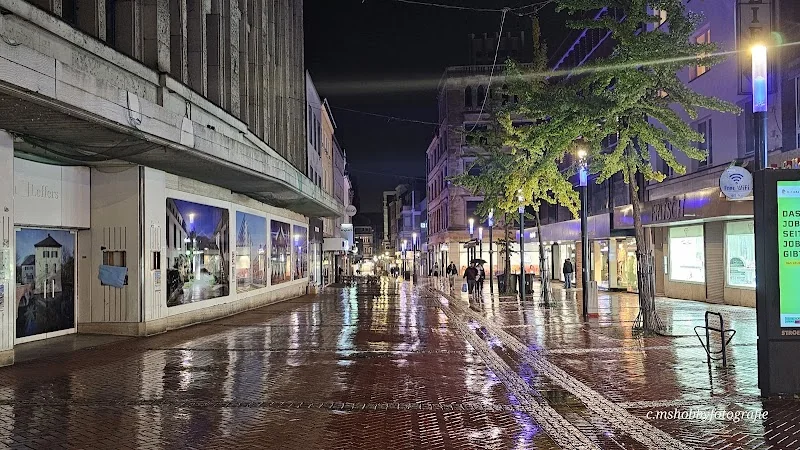
The Hochstraße is one of the defining centers of Gelsenkirchen-Buer and represents a city center that focuses on short distances, shopping experience, and quality of stay. Officially, the city lists the Hochstraße as a pedestrian shopping street in the Buer city center. At the same time, Buer is one of the two lively main business centers of the city of Gelsenkirchen, which have been purposefully upgraded for years. Those who visit the Hochstraße experience not just a shopping street, but an urban space with its own rhythm, profile, and a clear function for everyday life in the northern part of the city. The mix of shops, gastronomy, and easily accessible side areas makes the place interesting for strollers, regular customers, and visitors alike. ([gelsenkirchen.de](https://www.gelsenkirchen.de/de/wirtschaft/fokusbranchen/Einzelhandel/))
Pedestrian Zone Hochstraße in Gelsenkirchen-Buer
The Hochstraße in Gelsenkirchen-Buer is not a classic thoroughfare, but a pedestrian shopping street where staying is the priority. The city describes the section between Goldbergplatz and Nienhofstraße as an area where the entire street width serves pedestrian traffic and the ground floors are almost entirely characterized by retail shops. This architectural and functional setup distinguishes the Hochstraße from many other streets that are more dominated by car traffic. Here, an urban space is created that is designed for strolling, looking, lingering, and spontaneous visits. Therefore, those looking for a Hochstraße in Gelsenkirchen are actually searching for the central pedestrian area of Buer, not an ordinary traffic axis. The official classification as part of the Buer city center underscores the importance of the place for commerce and urban life. ([gelsenkirchen.de](https://www.gelsenkirchen.de/de/Infrastruktur/Stadtplanung/Aktuelle_Projekte/Beleuchtungsmassnahme_Hochstrasse.aspx))
For search intentions related to hochstraße gelsenkirchen, hochstraße south, or hochstraße gelsenkirchen buer, this classification is particularly important: It refers not only to a street name but to a clearly defined city center area with a usage profile. The Hochstraße is a place where orientation is easy because the logic of the space is simple: shop at the front, stroll in the middle, eat next door, and access everything on foot. The fact that the city is simultaneously investing in the enhancement of public space aligns with this structure. Buer has been further developed in recent years with funding from the state, federal government, and EU, and the Hochstraße benefits from an environment that is consciously designed as an attractive city center. For visitors, this is pleasant because the street does not feel like an anonymous passage but like a grown center with a recognizable core. ([gelsenkirchen.de](https://www.gelsenkirchen.de/de/infrastruktur/stadtplanung/stadterneuerung_gelsenkirchen/zentrum_buer/index.aspx))
From an urban planning perspective, the Hochstraße is also relevant because it is treated in official documents as a pedestrian shopping street with special traffic significance. This shows that it is not just about individual shop entrances but about an entire street that functions as a shopping location and place to stay. The city explicitly points out in connection with the lighting measure that the Hochstraße is part of the Buer city center. This also explains why at this location not only commerce but also lighting, safety, furnishings, and accessibility play a role. Therefore, those visiting the Hochstraße are moving in an area that is central to the quality of life in Buer and thus has significantly more weight in the urban landscape than a normal side street. ([gelsenkirchen.de](https://www.gelsenkirchen.de/de/Infrastruktur/Stadtplanung/Aktuelle_Projekte/Beleuchtungsmassnahme_Hochstrasse.aspx))
Shopping, Specialty Stores, and Gastronomy
The Hochstraße is the heart of shopping in Gelsenkirchen-Buer. The city describes the street as a mix of shopping experience, gastronomy, old town flair, and culture. High-quality textile and accessory offerings, as well as numerous other specialty stores, are particularly highlighted. This mix is the reason why the Hochstraße works so well as a shopping address: You find not only individual stores but a concentrated city center atmosphere with short distances and an offering that is easily accessible on foot. This is complemented by gastronomic establishments ranging from traditional to alternative pubs and restaurants. Thus, the Hochstraße is not only an address for errands but also for a break in between or a relaxed meeting in the afternoon or evening. ([gelsenkirchen.de](https://www.gelsenkirchen.de/de/wirtschaft/fokusbranchen/Einzelhandel/))
Buer holds a firm place in the urban tourism and shopping landscape. The city states that Buer is one of the two lively main business centers of Gelsenkirchen and that the Buer city center has a catchment area of 200,000 people. For the Hochstraße, this means: It is not only locally interesting but part of a larger supply and shopping area. Therefore, those searching for hochstraße gelsenkirchen, shopping in buer, or gelsenkirchen buer city center will find a center that consciously relies on a strong mix of industries. The Buer market hall at Springemarkt is also mentioned in the city brochure as a place with gastronomic offerings. This fits into an environment that combines shopping, market character, and city strolling, thus offering more than just a pure shopping street. ([gelsenkirchen.de](https://www.gelsenkirchen.de/de/wirtschaft/fokusbranchen/Einzelhandel/))
A special plus is the direct connection to other central places in Buer. The city information explicitly mentions the evening market at Domplatte as an attractive and well-visited offering that takes place every Thursday from 4:00 PM to 8:00 PM. This connection between the shopping street and the market makes the location diverse and lively. Visitors can combine their shopping with a market visit and then perhaps stop by one of the surrounding establishments. For the search terms evening market domplatte, town hall buer, and cultural mile horster street, this connection is important: The Hochstraße is not isolated but part of an urban structure with market, gastronomy, culture, and local supply. This makes the street attractive in everyday life as well as during a conscious city stroll. ([gelsenkirchen.de](https://www.gelsenkirchen.de/de/wirtschaft/fokusbranchen/Einzelhandel/))
The feeling of leisure also plays a role. According to the city, the Hochstraße invites shopping and lingering, and the adjacent places enhance this impression. In the official brochure for Gelsenkirchen, Buer is described as a shopping location where specialty stores, exclusive boutiques, and gastronomy come together. Additionally, the Kunstmuseum Gelsenkirchen and the Schauburg Filmpalast are mentioned as centrally located leisure spots that are quickly accessible on foot. This creates a city center where one not only shops but can also naturally combine the visit with culture and a drink. This connection between commerce and atmosphere makes the Hochstraße a place that is not just checked off but consciously experienced. ([gelsenkirchen.de](https://www.gelsenkirchen.de/de/stadtprofil/stadtthemen/freizeit_und_kultur/_doc/gelsenkirchen_entdecken.pdf))
Parking in Buer: Smart, Central, and Stress-Free
Those visiting the Hochstraße benefit from a parking system that the city of Gelsenkirchen has specifically set up for the Buer city center. Through the city app, users can see in real-time where free parking spaces are available and navigate directly there. This is particularly practical for anyone searching for parking in buer or parking hochstraße and wanting to get to the city center without detours. The city hopes this will lead to less search traffic, less unnecessary driving around, and thus a noticeable relief for residential areas. For visitors, this means primarily one thing: Arriving by car remains comfortable, even though one is in a pedestrian zone, as the last meters are consciously covered on foot. ([gelsenkirchen.de](https://www.gelsenkirchen.de/de/infrastruktur/verkehr/parken_in_buer.aspx))
The intelligent parking system in Buer is not just an app feature but a connected pilot project from the city's Green City Plan. According to the city, more than 300 overhead sensors have been installed in the center of Buer in the first project phase, monitoring around 2,000 parking spaces. This makes the system, in terms of the number of parking spaces, currently the largest of its kind in public road space in Germany. In practice, this means: The availability of parking spaces is digitally recorded in almost an entire district. The central parking facilities Turmstraße, Breddestraße, Urnenfeldstraße, and Gustav-Bär-Platz/Beckeradstraße are also integrated into the system. Therefore, those arriving by car can plan their visit to Buer much more purposefully. ([gelsenkirchen.de](https://www.gelsenkirchen.de/de/_funktionsnavigation/presse/pressemeldungen/63310-intelligentes-parksystem-fuer-buer-ab-sofort-bestandteil-der-city-app-gelsenkirchen))
The parking function is also more than just a display. Through the routing function, one can click on a free parking space and be directed there directly. If the space is taken in the meantime, the navigation automatically switches to the nearest available space. Additionally, the app marks designated disabled parking spaces and charging stations for electric vehicles. This makes the approach not only more convenient but also more contemporary. This is particularly helpful for visitors who are on their way to multiple destinations in Buer: first park, then experience the Hochstraße on foot, and perhaps afterwards visit Domplatte, the town hall, or the cultural mile. Thus, the pedestrian zone is perceived not as an obstacle but as an advantage. ([gelsenkirchen.de](https://www.gelsenkirchen.de/de/_funktionsnavigation/presse/pressemeldungen/63310-intelligentes-parksystem-fuer-buer-ab-sofort-bestandteil-der-city-app-gelsenkirchen))
From the city's perspective, this solution is also sensible because it enhances the quality of stay. The app is intended to help avoid unnecessary trips and reduce air pollutants. This fits well with the structure of the Hochstraße, as a pedestrian shopping street thrives on visitors easily reaching their destination and then walking the remaining distance comfortably. Those searching for hochstraße north gelsenkirchen or hochstraße south gelsenkirchen often first think of orientation in the urban area. However, for the visit on-site, the actual question is usually: Where is the best place to park? The answer is today in Buer significantly simpler than before, as the city connects digital tools with central parking spaces. This makes the location attractive for both spontaneous visits and planned shopping. ([gelsenkirchen.de](https://www.gelsenkirchen.de/de/infrastruktur/verkehr/parken_in_buer.aspx))
Lighting and Enhancement of the Hochstraße
The Hochstraße is not only a commercial and recreational space but also a subject of urban enhancement. The city of Gelsenkirchen describes on its project page that the street lighting system on the Hochstraße was first put into operation in 1965 and was refurbished in 1993 in the area between Horster Straße, Goldbergplatz, and Ophofstraße. Today, the old system is considered maintenance-intensive and prone to faults, which is why it is to be replaced by an energy-efficient system with better LED lighting technology. For visitors, this is often only indirectly visible, but such measures significantly shape the feeling of safety and the perceived quality of a city center area. Good lighting makes paths clearer, facades more present, and stays more pleasant even in darker hours. ([gelsenkirchen.de](https://www.gelsenkirchen.de/de/Infrastruktur/Stadtplanung/Aktuelle_Projekte/Beleuchtungsmassnahme_Hochstrasse.aspx))
The city relies on light columns from the F4 product family by Vexo with a light point height of 4.00 meters. According to the project page, the new mast system complies with the DIN EN 13201 standard and is expected to be less prone to damage than the previous system. Particularly important: The new lighting technology is expected to achieve an energy saving of nearly 20 percent. This is a technical detail but one with immediate effects on the Hochstraße as an urban space. Better lighting is not only a cost or climate issue but also a contribution to the quality of public space. For a pedestrian shopping street, this is particularly relevant because the impression of the street scene strongly depends on light. ([gelsenkirchen.de](https://www.gelsenkirchen.de/de/Infrastruktur/Stadtplanung/Aktuelle_Projekte/Beleuchtungsmassnahme_Hochstrasse.aspx))
The enhancement of the Hochstraße is part of a larger urban development concept. In Buer, various measures have been implemented in recent years with funding from the state, federal government, and EU, including the redesign of the market square and St. Urbanus Church square, as well as the conversion of Horster Straße and Goldbergplatz into a cultural mile. The guiding plan for the Buer center, established in 2001 with the involvement of local stakeholders and transformed into an integrated development concept in 2019, serves as the basis for this development. The Hochstraße thus represents not stagnation but an ongoing process of improvement. Therefore, those visiting the street today experience an area that is consciously maintained, modernized, and adapted to the demands of a contemporary city center. ([gelsenkirchen.de](https://www.gelsenkirchen.de/de/infrastruktur/stadtplanung/stadterneuerung_gelsenkirchen/zentrum_buer/index.aspx))
For the search terms hochstraße south, hochstraße south gelsenkirchen, and hochstraße gelsenkirchen, this point is important because many users want to understand not only the location but also its condition and development. The Hochstraße is a place where tradition and adaptation meet: a grown city center structure, classic shop usage, modern lighting, digital parking search, and an urban environment that is being renewed step by step. The result is a street that has not lost its function but has, on the contrary, been further sharpened. It remains a city center, but one that today convinces with more comfort, better orientation, and a clearer quality of stay. ([gelsenkirchen.de](https://www.gelsenkirchen.de/de/infrastruktur/stadtplanung/stadterneuerung_gelsenkirchen/zentrum_buer/index.aspx))
Orientation in the Buer Center: Town Hall, Domplatte, and Cultural Mile
The Hochstraße works so well also because it is embedded in a clearly structured center. The city points out that Buer, alongside the city center, is one of the two major business centers of Gelsenkirchen. The Buer city center has a catchment area of 200,000 people and has been purposefully strengthened in recent years. This includes measures around public space, but also the connection to surrounding places such as the market square, St. Urbanus Church square, and the pedestrian-accessible areas of the city center. Therefore, those visiting the Hochstraße are moving in a center that is more than just a single street. It is a functional urban quarter that organizes shopping, administration, gastronomy, and culture side by side. ([gelsenkirchen.de](https://www.gelsenkirchen.de/de/wirtschaft/fokusbranchen/Einzelhandel/))
For orientation on-site, several names are particularly helpful. The Buer Town Hall is located on Goldbergstraße and serves as an important administrative anchor in the northern part of the city. The city describes, among other things, the departments of urban planning, surveying and cadastre, building regulations, and building administration as well as traffic. This makes it clear that the city center is not only commercially but also administratively strongly shaped. Nearby, other places complement the picture: the Domplatte with its evening market, the cultural mile on Horster Straße, and cultural destinations such as the Kunstmuseum Gelsenkirchen and the Schauburg Filmpalast, which are described in city publications as central and easily accessible on foot. This is attractive for visitors who want to combine a city stroll with further experiences. ([gelsenkirchen.de](https://www.gelsenkirchen.de/de/Rathaus/Politik_und_Verwaltung/Rathaus_Buer/index.aspx?utm_source=openai))
The Buer city center thrives on this compact structure. Those shopping during the day can afterwards enjoy coffee, stroll through the market, or head to cultural sites without moving the car again. This mix is the core of what the city aims to achieve with the enhancement of the center: a lively local hub with high quality of stay and short distances. The Hochstraße is the most prominent building block in this, as it bundles everyday use most strongly as a pedestrian shopping street. Especially for people searching for hochstraße wuppertal, hochstraße 7 gelsenkirchen buer, or hochstraße north gelsenkirchen, the exact location may initially be confusing. However, on-site it quickly becomes clear: It refers to a very clear section of the city center with its own character that works particularly well in conjunction with the rest of the Buer center. ([gelsenkirchen.de](https://www.gelsenkirchen.de/de/Infrastruktur/Stadtplanung/Aktuelle_Projekte/Beleuchtungsmassnahme_Hochstrasse.aspx))
The city brochure also confirms this picture by describing Gelsenkirchen as a city with many contrasts and highlighting Buer as a shopping location with specialty stores, exclusive boutiques, and gastronomy. Looking beyond pure consumption is worthwhile because the city center here not only sells but also offers quality of stay. That is exactly why the Hochstraße is a good address for a short errand as well as for a longer city afternoon. Those who consciously take their time can combine the visit with the market, architecture, culture, and a restaurant visit. This creates an urban experience that works in everyday life and simultaneously makes one curious to stay a little longer. ([gelsenkirchen.de](https://www.gelsenkirchen.de/de/stadtprofil/stadtthemen/freizeit_und_kultur/_doc/gelsenkirchen_entdecken.pdf))
Why the Hochstraße is so Important for Buer
The Hochstraße is more than just a shopping street. It is a symbol of how Buer functions as a city center: concentrated, walkable, mixed-use, and focused on quality of stay. The city has been working for years to further develop the two main business centers Gelsenkirchen City and Gelsenkirchen-Buer. The Hochstraße is one of the central places in this concept because it visibly brings together commerce, gastronomy, and urban life. This also explains why the street does not appear on the edge of urban documents but is treated as a focal point. Those who are here experience a place that is economically relevant and simultaneously shapes the image of the district. ([gelsenkirchen.de](https://www.gelsenkirchen.de/de/wirtschaft/fokusbranchen/Einzelhandel/))
For visitors, this is especially noticeable in everyday life. One arrives, parks with the help of the app, walks into the pedestrian zone, runs errands, and perhaps stays for a coffee or a market visit. This simple logic is a great advantage of the Hochstraße. It makes the city center readable and pleasant. At the same time, the place is continuously being developed technically and aesthetically, for example through the new lighting or the enhancement of public space in Buer. The street does not remain at its current state but is gradually adapted to the requirements of modern city centers. For an address with such a clear identity, this is the right strategy. ([gelsenkirchen.de](https://www.gelsenkirchen.de/de/Infrastruktur/Stadtplanung/Aktuelle_Projekte/Beleuchtungsmassnahme_Hochstrasse.aspx))
So, for those wondering what makes the Hochstraße in Gelsenkirchen-Buer special, the answer lies in the combination of location, use, and urban development. It is the central pedestrian zone of the district, with specialty stores, gastronomy, and market activities, with digitally supported parking, with renewed lighting, and with an environment that includes culture and administration. This mix gives the Hochstraße its character. It is not spectacular in a loud sense but convincing through reliability, density, and proximity. For residents, it is a daily focal point, for guests a well-accessible meeting point, and for the city an important building block of its northern city center. ([gelsenkirchen.de](https://www.gelsenkirchen.de/de/wirtschaft/fokusbranchen/Einzelhandel/))
Sources:
Show moreShow less
Hochstraße | Pedestrian Zone & Parking in Buer
The Hochstraße is one of the defining centers of Gelsenkirchen-Buer and represents a city center that focuses on short distances, shopping experience, and quality of stay. Officially, the city lists the Hochstraße as a pedestrian shopping street in the Buer city center. At the same time, Buer is one of the two lively main business centers of the city of Gelsenkirchen, which have been purposefully upgraded for years. Those who visit the Hochstraße experience not just a shopping street, but an urban space with its own rhythm, profile, and a clear function for everyday life in the northern part of the city. The mix of shops, gastronomy, and easily accessible side areas makes the place interesting for strollers, regular customers, and visitors alike. ([gelsenkirchen.de](https://www.gelsenkirchen.de/de/wirtschaft/fokusbranchen/Einzelhandel/))
Pedestrian Zone Hochstraße in Gelsenkirchen-Buer
The Hochstraße in Gelsenkirchen-Buer is not a classic thoroughfare, but a pedestrian shopping street where staying is the priority. The city describes the section between Goldbergplatz and Nienhofstraße as an area where the entire street width serves pedestrian traffic and the ground floors are almost entirely characterized by retail shops. This architectural and functional setup distinguishes the Hochstraße from many other streets that are more dominated by car traffic. Here, an urban space is created that is designed for strolling, looking, lingering, and spontaneous visits. Therefore, those looking for a Hochstraße in Gelsenkirchen are actually searching for the central pedestrian area of Buer, not an ordinary traffic axis. The official classification as part of the Buer city center underscores the importance of the place for commerce and urban life. ([gelsenkirchen.de](https://www.gelsenkirchen.de/de/Infrastruktur/Stadtplanung/Aktuelle_Projekte/Beleuchtungsmassnahme_Hochstrasse.aspx))
For search intentions related to hochstraße gelsenkirchen, hochstraße south, or hochstraße gelsenkirchen buer, this classification is particularly important: It refers not only to a street name but to a clearly defined city center area with a usage profile. The Hochstraße is a place where orientation is easy because the logic of the space is simple: shop at the front, stroll in the middle, eat next door, and access everything on foot. The fact that the city is simultaneously investing in the enhancement of public space aligns with this structure. Buer has been further developed in recent years with funding from the state, federal government, and EU, and the Hochstraße benefits from an environment that is consciously designed as an attractive city center. For visitors, this is pleasant because the street does not feel like an anonymous passage but like a grown center with a recognizable core. ([gelsenkirchen.de](https://www.gelsenkirchen.de/de/infrastruktur/stadtplanung/stadterneuerung_gelsenkirchen/zentrum_buer/index.aspx))
From an urban planning perspective, the Hochstraße is also relevant because it is treated in official documents as a pedestrian shopping street with special traffic significance. This shows that it is not just about individual shop entrances but about an entire street that functions as a shopping location and place to stay. The city explicitly points out in connection with the lighting measure that the Hochstraße is part of the Buer city center. This also explains why at this location not only commerce but also lighting, safety, furnishings, and accessibility play a role. Therefore, those visiting the Hochstraße are moving in an area that is central to the quality of life in Buer and thus has significantly more weight in the urban landscape than a normal side street. ([gelsenkirchen.de](https://www.gelsenkirchen.de/de/Infrastruktur/Stadtplanung/Aktuelle_Projekte/Beleuchtungsmassnahme_Hochstrasse.aspx))
Shopping, Specialty Stores, and Gastronomy
The Hochstraße is the heart of shopping in Gelsenkirchen-Buer. The city describes the street as a mix of shopping experience, gastronomy, old town flair, and culture. High-quality textile and accessory offerings, as well as numerous other specialty stores, are particularly highlighted. This mix is the reason why the Hochstraße works so well as a shopping address: You find not only individual stores but a concentrated city center atmosphere with short distances and an offering that is easily accessible on foot. This is complemented by gastronomic establishments ranging from traditional to alternative pubs and restaurants. Thus, the Hochstraße is not only an address for errands but also for a break in between or a relaxed meeting in the afternoon or evening. ([gelsenkirchen.de](https://www.gelsenkirchen.de/de/wirtschaft/fokusbranchen/Einzelhandel/))
Buer holds a firm place in the urban tourism and shopping landscape. The city states that Buer is one of the two lively main business centers of Gelsenkirchen and that the Buer city center has a catchment area of 200,000 people. For the Hochstraße, this means: It is not only locally interesting but part of a larger supply and shopping area. Therefore, those searching for hochstraße gelsenkirchen, shopping in buer, or gelsenkirchen buer city center will find a center that consciously relies on a strong mix of industries. The Buer market hall at Springemarkt is also mentioned in the city brochure as a place with gastronomic offerings. This fits into an environment that combines shopping, market character, and city strolling, thus offering more than just a pure shopping street. ([gelsenkirchen.de](https://www.gelsenkirchen.de/de/wirtschaft/fokusbranchen/Einzelhandel/))
A special plus is the direct connection to other central places in Buer. The city information explicitly mentions the evening market at Domplatte as an attractive and well-visited offering that takes place every Thursday from 4:00 PM to 8:00 PM. This connection between the shopping street and the market makes the location diverse and lively. Visitors can combine their shopping with a market visit and then perhaps stop by one of the surrounding establishments. For the search terms evening market domplatte, town hall buer, and cultural mile horster street, this connection is important: The Hochstraße is not isolated but part of an urban structure with market, gastronomy, culture, and local supply. This makes the street attractive in everyday life as well as during a conscious city stroll. ([gelsenkirchen.de](https://www.gelsenkirchen.de/de/wirtschaft/fokusbranchen/Einzelhandel/))
The feeling of leisure also plays a role. According to the city, the Hochstraße invites shopping and lingering, and the adjacent places enhance this impression. In the official brochure for Gelsenkirchen, Buer is described as a shopping location where specialty stores, exclusive boutiques, and gastronomy come together. Additionally, the Kunstmuseum Gelsenkirchen and the Schauburg Filmpalast are mentioned as centrally located leisure spots that are quickly accessible on foot. This creates a city center where one not only shops but can also naturally combine the visit with culture and a drink. This connection between commerce and atmosphere makes the Hochstraße a place that is not just checked off but consciously experienced. ([gelsenkirchen.de](https://www.gelsenkirchen.de/de/stadtprofil/stadtthemen/freizeit_und_kultur/_doc/gelsenkirchen_entdecken.pdf))
Parking in Buer: Smart, Central, and Stress-Free
Those visiting the Hochstraße benefit from a parking system that the city of Gelsenkirchen has specifically set up for the Buer city center. Through the city app, users can see in real-time where free parking spaces are available and navigate directly there. This is particularly practical for anyone searching for parking in buer or parking hochstraße and wanting to get to the city center without detours. The city hopes this will lead to less search traffic, less unnecessary driving around, and thus a noticeable relief for residential areas. For visitors, this means primarily one thing: Arriving by car remains comfortable, even though one is in a pedestrian zone, as the last meters are consciously covered on foot. ([gelsenkirchen.de](https://www.gelsenkirchen.de/de/infrastruktur/verkehr/parken_in_buer.aspx))
The intelligent parking system in Buer is not just an app feature but a connected pilot project from the city's Green City Plan. According to the city, more than 300 overhead sensors have been installed in the center of Buer in the first project phase, monitoring around 2,000 parking spaces. This makes the system, in terms of the number of parking spaces, currently the largest of its kind in public road space in Germany. In practice, this means: The availability of parking spaces is digitally recorded in almost an entire district. The central parking facilities Turmstraße, Breddestraße, Urnenfeldstraße, and Gustav-Bär-Platz/Beckeradstraße are also integrated into the system. Therefore, those arriving by car can plan their visit to Buer much more purposefully. ([gelsenkirchen.de](https://www.gelsenkirchen.de/de/_funktionsnavigation/presse/pressemeldungen/63310-intelligentes-parksystem-fuer-buer-ab-sofort-bestandteil-der-city-app-gelsenkirchen))
The parking function is also more than just a display. Through the routing function, one can click on a free parking space and be directed there directly. If the space is taken in the meantime, the navigation automatically switches to the nearest available space. Additionally, the app marks designated disabled parking spaces and charging stations for electric vehicles. This makes the approach not only more convenient but also more contemporary. This is particularly helpful for visitors who are on their way to multiple destinations in Buer: first park, then experience the Hochstraße on foot, and perhaps afterwards visit Domplatte, the town hall, or the cultural mile. Thus, the pedestrian zone is perceived not as an obstacle but as an advantage. ([gelsenkirchen.de](https://www.gelsenkirchen.de/de/_funktionsnavigation/presse/pressemeldungen/63310-intelligentes-parksystem-fuer-buer-ab-sofort-bestandteil-der-city-app-gelsenkirchen))
From the city's perspective, this solution is also sensible because it enhances the quality of stay. The app is intended to help avoid unnecessary trips and reduce air pollutants. This fits well with the structure of the Hochstraße, as a pedestrian shopping street thrives on visitors easily reaching their destination and then walking the remaining distance comfortably. Those searching for hochstraße north gelsenkirchen or hochstraße south gelsenkirchen often first think of orientation in the urban area. However, for the visit on-site, the actual question is usually: Where is the best place to park? The answer is today in Buer significantly simpler than before, as the city connects digital tools with central parking spaces. This makes the location attractive for both spontaneous visits and planned shopping. ([gelsenkirchen.de](https://www.gelsenkirchen.de/de/infrastruktur/verkehr/parken_in_buer.aspx))
Lighting and Enhancement of the Hochstraße
The Hochstraße is not only a commercial and recreational space but also a subject of urban enhancement. The city of Gelsenkirchen describes on its project page that the street lighting system on the Hochstraße was first put into operation in 1965 and was refurbished in 1993 in the area between Horster Straße, Goldbergplatz, and Ophofstraße. Today, the old system is considered maintenance-intensive and prone to faults, which is why it is to be replaced by an energy-efficient system with better LED lighting technology. For visitors, this is often only indirectly visible, but such measures significantly shape the feeling of safety and the perceived quality of a city center area. Good lighting makes paths clearer, facades more present, and stays more pleasant even in darker hours. ([gelsenkirchen.de](https://www.gelsenkirchen.de/de/Infrastruktur/Stadtplanung/Aktuelle_Projekte/Beleuchtungsmassnahme_Hochstrasse.aspx))
The city relies on light columns from the F4 product family by Vexo with a light point height of 4.00 meters. According to the project page, the new mast system complies with the DIN EN 13201 standard and is expected to be less prone to damage than the previous system. Particularly important: The new lighting technology is expected to achieve an energy saving of nearly 20 percent. This is a technical detail but one with immediate effects on the Hochstraße as an urban space. Better lighting is not only a cost or climate issue but also a contribution to the quality of public space. For a pedestrian shopping street, this is particularly relevant because the impression of the street scene strongly depends on light. ([gelsenkirchen.de](https://www.gelsenkirchen.de/de/Infrastruktur/Stadtplanung/Aktuelle_Projekte/Beleuchtungsmassnahme_Hochstrasse.aspx))
The enhancement of the Hochstraße is part of a larger urban development concept. In Buer, various measures have been implemented in recent years with funding from the state, federal government, and EU, including the redesign of the market square and St. Urbanus Church square, as well as the conversion of Horster Straße and Goldbergplatz into a cultural mile. The guiding plan for the Buer center, established in 2001 with the involvement of local stakeholders and transformed into an integrated development concept in 2019, serves as the basis for this development. The Hochstraße thus represents not stagnation but an ongoing process of improvement. Therefore, those visiting the street today experience an area that is consciously maintained, modernized, and adapted to the demands of a contemporary city center. ([gelsenkirchen.de](https://www.gelsenkirchen.de/de/infrastruktur/stadtplanung/stadterneuerung_gelsenkirchen/zentrum_buer/index.aspx))
For the search terms hochstraße south, hochstraße south gelsenkirchen, and hochstraße gelsenkirchen, this point is important because many users want to understand not only the location but also its condition and development. The Hochstraße is a place where tradition and adaptation meet: a grown city center structure, classic shop usage, modern lighting, digital parking search, and an urban environment that is being renewed step by step. The result is a street that has not lost its function but has, on the contrary, been further sharpened. It remains a city center, but one that today convinces with more comfort, better orientation, and a clearer quality of stay. ([gelsenkirchen.de](https://www.gelsenkirchen.de/de/infrastruktur/stadtplanung/stadterneuerung_gelsenkirchen/zentrum_buer/index.aspx))
Orientation in the Buer Center: Town Hall, Domplatte, and Cultural Mile
The Hochstraße works so well also because it is embedded in a clearly structured center. The city points out that Buer, alongside the city center, is one of the two major business centers of Gelsenkirchen. The Buer city center has a catchment area of 200,000 people and has been purposefully strengthened in recent years. This includes measures around public space, but also the connection to surrounding places such as the market square, St. Urbanus Church square, and the pedestrian-accessible areas of the city center. Therefore, those visiting the Hochstraße are moving in a center that is more than just a single street. It is a functional urban quarter that organizes shopping, administration, gastronomy, and culture side by side. ([gelsenkirchen.de](https://www.gelsenkirchen.de/de/wirtschaft/fokusbranchen/Einzelhandel/))
For orientation on-site, several names are particularly helpful. The Buer Town Hall is located on Goldbergstraße and serves as an important administrative anchor in the northern part of the city. The city describes, among other things, the departments of urban planning, surveying and cadastre, building regulations, and building administration as well as traffic. This makes it clear that the city center is not only commercially but also administratively strongly shaped. Nearby, other places complement the picture: the Domplatte with its evening market, the cultural mile on Horster Straße, and cultural destinations such as the Kunstmuseum Gelsenkirchen and the Schauburg Filmpalast, which are described in city publications as central and easily accessible on foot. This is attractive for visitors who want to combine a city stroll with further experiences. ([gelsenkirchen.de](https://www.gelsenkirchen.de/de/Rathaus/Politik_und_Verwaltung/Rathaus_Buer/index.aspx?utm_source=openai))
The Buer city center thrives on this compact structure. Those shopping during the day can afterwards enjoy coffee, stroll through the market, or head to cultural sites without moving the car again. This mix is the core of what the city aims to achieve with the enhancement of the center: a lively local hub with high quality of stay and short distances. The Hochstraße is the most prominent building block in this, as it bundles everyday use most strongly as a pedestrian shopping street. Especially for people searching for hochstraße wuppertal, hochstraße 7 gelsenkirchen buer, or hochstraße north gelsenkirchen, the exact location may initially be confusing. However, on-site it quickly becomes clear: It refers to a very clear section of the city center with its own character that works particularly well in conjunction with the rest of the Buer center. ([gelsenkirchen.de](https://www.gelsenkirchen.de/de/Infrastruktur/Stadtplanung/Aktuelle_Projekte/Beleuchtungsmassnahme_Hochstrasse.aspx))
The city brochure also confirms this picture by describing Gelsenkirchen as a city with many contrasts and highlighting Buer as a shopping location with specialty stores, exclusive boutiques, and gastronomy. Looking beyond pure consumption is worthwhile because the city center here not only sells but also offers quality of stay. That is exactly why the Hochstraße is a good address for a short errand as well as for a longer city afternoon. Those who consciously take their time can combine the visit with the market, architecture, culture, and a restaurant visit. This creates an urban experience that works in everyday life and simultaneously makes one curious to stay a little longer. ([gelsenkirchen.de](https://www.gelsenkirchen.de/de/stadtprofil/stadtthemen/freizeit_und_kultur/_doc/gelsenkirchen_entdecken.pdf))
Why the Hochstraße is so Important for Buer
The Hochstraße is more than just a shopping street. It is a symbol of how Buer functions as a city center: concentrated, walkable, mixed-use, and focused on quality of stay. The city has been working for years to further develop the two main business centers Gelsenkirchen City and Gelsenkirchen-Buer. The Hochstraße is one of the central places in this concept because it visibly brings together commerce, gastronomy, and urban life. This also explains why the street does not appear on the edge of urban documents but is treated as a focal point. Those who are here experience a place that is economically relevant and simultaneously shapes the image of the district. ([gelsenkirchen.de](https://www.gelsenkirchen.de/de/wirtschaft/fokusbranchen/Einzelhandel/))
For visitors, this is especially noticeable in everyday life. One arrives, parks with the help of the app, walks into the pedestrian zone, runs errands, and perhaps stays for a coffee or a market visit. This simple logic is a great advantage of the Hochstraße. It makes the city center readable and pleasant. At the same time, the place is continuously being developed technically and aesthetically, for example through the new lighting or the enhancement of public space in Buer. The street does not remain at its current state but is gradually adapted to the requirements of modern city centers. For an address with such a clear identity, this is the right strategy. ([gelsenkirchen.de](https://www.gelsenkirchen.de/de/Infrastruktur/Stadtplanung/Aktuelle_Projekte/Beleuchtungsmassnahme_Hochstrasse.aspx))
So, for those wondering what makes the Hochstraße in Gelsenkirchen-Buer special, the answer lies in the combination of location, use, and urban development. It is the central pedestrian zone of the district, with specialty stores, gastronomy, and market activities, with digitally supported parking, with renewed lighting, and with an environment that includes culture and administration. This mix gives the Hochstraße its character. It is not spectacular in a loud sense but convincing through reliability, density, and proximity. For residents, it is a daily focal point, for guests a well-accessible meeting point, and for the city an important building block of its northern city center. ([gelsenkirchen.de](https://www.gelsenkirchen.de/de/wirtschaft/fokusbranchen/Einzelhandel/))
Sources:
Hochstraße | Pedestrian Zone & Parking in Buer
The Hochstraße is one of the defining centers of Gelsenkirchen-Buer and represents a city center that focuses on short distances, shopping experience, and quality of stay. Officially, the city lists the Hochstraße as a pedestrian shopping street in the Buer city center. At the same time, Buer is one of the two lively main business centers of the city of Gelsenkirchen, which have been purposefully upgraded for years. Those who visit the Hochstraße experience not just a shopping street, but an urban space with its own rhythm, profile, and a clear function for everyday life in the northern part of the city. The mix of shops, gastronomy, and easily accessible side areas makes the place interesting for strollers, regular customers, and visitors alike. ([gelsenkirchen.de](https://www.gelsenkirchen.de/de/wirtschaft/fokusbranchen/Einzelhandel/))
Pedestrian Zone Hochstraße in Gelsenkirchen-Buer
The Hochstraße in Gelsenkirchen-Buer is not a classic thoroughfare, but a pedestrian shopping street where staying is the priority. The city describes the section between Goldbergplatz and Nienhofstraße as an area where the entire street width serves pedestrian traffic and the ground floors are almost entirely characterized by retail shops. This architectural and functional setup distinguishes the Hochstraße from many other streets that are more dominated by car traffic. Here, an urban space is created that is designed for strolling, looking, lingering, and spontaneous visits. Therefore, those looking for a Hochstraße in Gelsenkirchen are actually searching for the central pedestrian area of Buer, not an ordinary traffic axis. The official classification as part of the Buer city center underscores the importance of the place for commerce and urban life. ([gelsenkirchen.de](https://www.gelsenkirchen.de/de/Infrastruktur/Stadtplanung/Aktuelle_Projekte/Beleuchtungsmassnahme_Hochstrasse.aspx))
For search intentions related to hochstraße gelsenkirchen, hochstraße south, or hochstraße gelsenkirchen buer, this classification is particularly important: It refers not only to a street name but to a clearly defined city center area with a usage profile. The Hochstraße is a place where orientation is easy because the logic of the space is simple: shop at the front, stroll in the middle, eat next door, and access everything on foot. The fact that the city is simultaneously investing in the enhancement of public space aligns with this structure. Buer has been further developed in recent years with funding from the state, federal government, and EU, and the Hochstraße benefits from an environment that is consciously designed as an attractive city center. For visitors, this is pleasant because the street does not feel like an anonymous passage but like a grown center with a recognizable core. ([gelsenkirchen.de](https://www.gelsenkirchen.de/de/infrastruktur/stadtplanung/stadterneuerung_gelsenkirchen/zentrum_buer/index.aspx))
From an urban planning perspective, the Hochstraße is also relevant because it is treated in official documents as a pedestrian shopping street with special traffic significance. This shows that it is not just about individual shop entrances but about an entire street that functions as a shopping location and place to stay. The city explicitly points out in connection with the lighting measure that the Hochstraße is part of the Buer city center. This also explains why at this location not only commerce but also lighting, safety, furnishings, and accessibility play a role. Therefore, those visiting the Hochstraße are moving in an area that is central to the quality of life in Buer and thus has significantly more weight in the urban landscape than a normal side street. ([gelsenkirchen.de](https://www.gelsenkirchen.de/de/Infrastruktur/Stadtplanung/Aktuelle_Projekte/Beleuchtungsmassnahme_Hochstrasse.aspx))
Shopping, Specialty Stores, and Gastronomy
The Hochstraße is the heart of shopping in Gelsenkirchen-Buer. The city describes the street as a mix of shopping experience, gastronomy, old town flair, and culture. High-quality textile and accessory offerings, as well as numerous other specialty stores, are particularly highlighted. This mix is the reason why the Hochstraße works so well as a shopping address: You find not only individual stores but a concentrated city center atmosphere with short distances and an offering that is easily accessible on foot. This is complemented by gastronomic establishments ranging from traditional to alternative pubs and restaurants. Thus, the Hochstraße is not only an address for errands but also for a break in between or a relaxed meeting in the afternoon or evening. ([gelsenkirchen.de](https://www.gelsenkirchen.de/de/wirtschaft/fokusbranchen/Einzelhandel/))
Buer holds a firm place in the urban tourism and shopping landscape. The city states that Buer is one of the two lively main business centers of Gelsenkirchen and that the Buer city center has a catchment area of 200,000 people. For the Hochstraße, this means: It is not only locally interesting but part of a larger supply and shopping area. Therefore, those searching for hochstraße gelsenkirchen, shopping in buer, or gelsenkirchen buer city center will find a center that consciously relies on a strong mix of industries. The Buer market hall at Springemarkt is also mentioned in the city brochure as a place with gastronomic offerings. This fits into an environment that combines shopping, market character, and city strolling, thus offering more than just a pure shopping street. ([gelsenkirchen.de](https://www.gelsenkirchen.de/de/wirtschaft/fokusbranchen/Einzelhandel/))
A special plus is the direct connection to other central places in Buer. The city information explicitly mentions the evening market at Domplatte as an attractive and well-visited offering that takes place every Thursday from 4:00 PM to 8:00 PM. This connection between the shopping street and the market makes the location diverse and lively. Visitors can combine their shopping with a market visit and then perhaps stop by one of the surrounding establishments. For the search terms evening market domplatte, town hall buer, and cultural mile horster street, this connection is important: The Hochstraße is not isolated but part of an urban structure with market, gastronomy, culture, and local supply. This makes the street attractive in everyday life as well as during a conscious city stroll. ([gelsenkirchen.de](https://www.gelsenkirchen.de/de/wirtschaft/fokusbranchen/Einzelhandel/))
The feeling of leisure also plays a role. According to the city, the Hochstraße invites shopping and lingering, and the adjacent places enhance this impression. In the official brochure for Gelsenkirchen, Buer is described as a shopping location where specialty stores, exclusive boutiques, and gastronomy come together. Additionally, the Kunstmuseum Gelsenkirchen and the Schauburg Filmpalast are mentioned as centrally located leisure spots that are quickly accessible on foot. This creates a city center where one not only shops but can also naturally combine the visit with culture and a drink. This connection between commerce and atmosphere makes the Hochstraße a place that is not just checked off but consciously experienced. ([gelsenkirchen.de](https://www.gelsenkirchen.de/de/stadtprofil/stadtthemen/freizeit_und_kultur/_doc/gelsenkirchen_entdecken.pdf))
Parking in Buer: Smart, Central, and Stress-Free
Those visiting the Hochstraße benefit from a parking system that the city of Gelsenkirchen has specifically set up for the Buer city center. Through the city app, users can see in real-time where free parking spaces are available and navigate directly there. This is particularly practical for anyone searching for parking in buer or parking hochstraße and wanting to get to the city center without detours. The city hopes this will lead to less search traffic, less unnecessary driving around, and thus a noticeable relief for residential areas. For visitors, this means primarily one thing: Arriving by car remains comfortable, even though one is in a pedestrian zone, as the last meters are consciously covered on foot. ([gelsenkirchen.de](https://www.gelsenkirchen.de/de/infrastruktur/verkehr/parken_in_buer.aspx))
The intelligent parking system in Buer is not just an app feature but a connected pilot project from the city's Green City Plan. According to the city, more than 300 overhead sensors have been installed in the center of Buer in the first project phase, monitoring around 2,000 parking spaces. This makes the system, in terms of the number of parking spaces, currently the largest of its kind in public road space in Germany. In practice, this means: The availability of parking spaces is digitally recorded in almost an entire district. The central parking facilities Turmstraße, Breddestraße, Urnenfeldstraße, and Gustav-Bär-Platz/Beckeradstraße are also integrated into the system. Therefore, those arriving by car can plan their visit to Buer much more purposefully. ([gelsenkirchen.de](https://www.gelsenkirchen.de/de/_funktionsnavigation/presse/pressemeldungen/63310-intelligentes-parksystem-fuer-buer-ab-sofort-bestandteil-der-city-app-gelsenkirchen))
The parking function is also more than just a display. Through the routing function, one can click on a free parking space and be directed there directly. If the space is taken in the meantime, the navigation automatically switches to the nearest available space. Additionally, the app marks designated disabled parking spaces and charging stations for electric vehicles. This makes the approach not only more convenient but also more contemporary. This is particularly helpful for visitors who are on their way to multiple destinations in Buer: first park, then experience the Hochstraße on foot, and perhaps afterwards visit Domplatte, the town hall, or the cultural mile. Thus, the pedestrian zone is perceived not as an obstacle but as an advantage. ([gelsenkirchen.de](https://www.gelsenkirchen.de/de/_funktionsnavigation/presse/pressemeldungen/63310-intelligentes-parksystem-fuer-buer-ab-sofort-bestandteil-der-city-app-gelsenkirchen))
From the city's perspective, this solution is also sensible because it enhances the quality of stay. The app is intended to help avoid unnecessary trips and reduce air pollutants. This fits well with the structure of the Hochstraße, as a pedestrian shopping street thrives on visitors easily reaching their destination and then walking the remaining distance comfortably. Those searching for hochstraße north gelsenkirchen or hochstraße south gelsenkirchen often first think of orientation in the urban area. However, for the visit on-site, the actual question is usually: Where is the best place to park? The answer is today in Buer significantly simpler than before, as the city connects digital tools with central parking spaces. This makes the location attractive for both spontaneous visits and planned shopping. ([gelsenkirchen.de](https://www.gelsenkirchen.de/de/infrastruktur/verkehr/parken_in_buer.aspx))
Lighting and Enhancement of the Hochstraße
The Hochstraße is not only a commercial and recreational space but also a subject of urban enhancement. The city of Gelsenkirchen describes on its project page that the street lighting system on the Hochstraße was first put into operation in 1965 and was refurbished in 1993 in the area between Horster Straße, Goldbergplatz, and Ophofstraße. Today, the old system is considered maintenance-intensive and prone to faults, which is why it is to be replaced by an energy-efficient system with better LED lighting technology. For visitors, this is often only indirectly visible, but such measures significantly shape the feeling of safety and the perceived quality of a city center area. Good lighting makes paths clearer, facades more present, and stays more pleasant even in darker hours. ([gelsenkirchen.de](https://www.gelsenkirchen.de/de/Infrastruktur/Stadtplanung/Aktuelle_Projekte/Beleuchtungsmassnahme_Hochstrasse.aspx))
The city relies on light columns from the F4 product family by Vexo with a light point height of 4.00 meters. According to the project page, the new mast system complies with the DIN EN 13201 standard and is expected to be less prone to damage than the previous system. Particularly important: The new lighting technology is expected to achieve an energy saving of nearly 20 percent. This is a technical detail but one with immediate effects on the Hochstraße as an urban space. Better lighting is not only a cost or climate issue but also a contribution to the quality of public space. For a pedestrian shopping street, this is particularly relevant because the impression of the street scene strongly depends on light. ([gelsenkirchen.de](https://www.gelsenkirchen.de/de/Infrastruktur/Stadtplanung/Aktuelle_Projekte/Beleuchtungsmassnahme_Hochstrasse.aspx))
The enhancement of the Hochstraße is part of a larger urban development concept. In Buer, various measures have been implemented in recent years with funding from the state, federal government, and EU, including the redesign of the market square and St. Urbanus Church square, as well as the conversion of Horster Straße and Goldbergplatz into a cultural mile. The guiding plan for the Buer center, established in 2001 with the involvement of local stakeholders and transformed into an integrated development concept in 2019, serves as the basis for this development. The Hochstraße thus represents not stagnation but an ongoing process of improvement. Therefore, those visiting the street today experience an area that is consciously maintained, modernized, and adapted to the demands of a contemporary city center. ([gelsenkirchen.de](https://www.gelsenkirchen.de/de/infrastruktur/stadtplanung/stadterneuerung_gelsenkirchen/zentrum_buer/index.aspx))
For the search terms hochstraße south, hochstraße south gelsenkirchen, and hochstraße gelsenkirchen, this point is important because many users want to understand not only the location but also its condition and development. The Hochstraße is a place where tradition and adaptation meet: a grown city center structure, classic shop usage, modern lighting, digital parking search, and an urban environment that is being renewed step by step. The result is a street that has not lost its function but has, on the contrary, been further sharpened. It remains a city center, but one that today convinces with more comfort, better orientation, and a clearer quality of stay. ([gelsenkirchen.de](https://www.gelsenkirchen.de/de/infrastruktur/stadtplanung/stadterneuerung_gelsenkirchen/zentrum_buer/index.aspx))
Orientation in the Buer Center: Town Hall, Domplatte, and Cultural Mile
The Hochstraße works so well also because it is embedded in a clearly structured center. The city points out that Buer, alongside the city center, is one of the two major business centers of Gelsenkirchen. The Buer city center has a catchment area of 200,000 people and has been purposefully strengthened in recent years. This includes measures around public space, but also the connection to surrounding places such as the market square, St. Urbanus Church square, and the pedestrian-accessible areas of the city center. Therefore, those visiting the Hochstraße are moving in a center that is more than just a single street. It is a functional urban quarter that organizes shopping, administration, gastronomy, and culture side by side. ([gelsenkirchen.de](https://www.gelsenkirchen.de/de/wirtschaft/fokusbranchen/Einzelhandel/))
For orientation on-site, several names are particularly helpful. The Buer Town Hall is located on Goldbergstraße and serves as an important administrative anchor in the northern part of the city. The city describes, among other things, the departments of urban planning, surveying and cadastre, building regulations, and building administration as well as traffic. This makes it clear that the city center is not only commercially but also administratively strongly shaped. Nearby, other places complement the picture: the Domplatte with its evening market, the cultural mile on Horster Straße, and cultural destinations such as the Kunstmuseum Gelsenkirchen and the Schauburg Filmpalast, which are described in city publications as central and easily accessible on foot. This is attractive for visitors who want to combine a city stroll with further experiences. ([gelsenkirchen.de](https://www.gelsenkirchen.de/de/Rathaus/Politik_und_Verwaltung/Rathaus_Buer/index.aspx?utm_source=openai))
The Buer city center thrives on this compact structure. Those shopping during the day can afterwards enjoy coffee, stroll through the market, or head to cultural sites without moving the car again. This mix is the core of what the city aims to achieve with the enhancement of the center: a lively local hub with high quality of stay and short distances. The Hochstraße is the most prominent building block in this, as it bundles everyday use most strongly as a pedestrian shopping street. Especially for people searching for hochstraße wuppertal, hochstraße 7 gelsenkirchen buer, or hochstraße north gelsenkirchen, the exact location may initially be confusing. However, on-site it quickly becomes clear: It refers to a very clear section of the city center with its own character that works particularly well in conjunction with the rest of the Buer center. ([gelsenkirchen.de](https://www.gelsenkirchen.de/de/Infrastruktur/Stadtplanung/Aktuelle_Projekte/Beleuchtungsmassnahme_Hochstrasse.aspx))
The city brochure also confirms this picture by describing Gelsenkirchen as a city with many contrasts and highlighting Buer as a shopping location with specialty stores, exclusive boutiques, and gastronomy. Looking beyond pure consumption is worthwhile because the city center here not only sells but also offers quality of stay. That is exactly why the Hochstraße is a good address for a short errand as well as for a longer city afternoon. Those who consciously take their time can combine the visit with the market, architecture, culture, and a restaurant visit. This creates an urban experience that works in everyday life and simultaneously makes one curious to stay a little longer. ([gelsenkirchen.de](https://www.gelsenkirchen.de/de/stadtprofil/stadtthemen/freizeit_und_kultur/_doc/gelsenkirchen_entdecken.pdf))
Why the Hochstraße is so Important for Buer
The Hochstraße is more than just a shopping street. It is a symbol of how Buer functions as a city center: concentrated, walkable, mixed-use, and focused on quality of stay. The city has been working for years to further develop the two main business centers Gelsenkirchen City and Gelsenkirchen-Buer. The Hochstraße is one of the central places in this concept because it visibly brings together commerce, gastronomy, and urban life. This also explains why the street does not appear on the edge of urban documents but is treated as a focal point. Those who are here experience a place that is economically relevant and simultaneously shapes the image of the district. ([gelsenkirchen.de](https://www.gelsenkirchen.de/de/wirtschaft/fokusbranchen/Einzelhandel/))
For visitors, this is especially noticeable in everyday life. One arrives, parks with the help of the app, walks into the pedestrian zone, runs errands, and perhaps stays for a coffee or a market visit. This simple logic is a great advantage of the Hochstraße. It makes the city center readable and pleasant. At the same time, the place is continuously being developed technically and aesthetically, for example through the new lighting or the enhancement of public space in Buer. The street does not remain at its current state but is gradually adapted to the requirements of modern city centers. For an address with such a clear identity, this is the right strategy. ([gelsenkirchen.de](https://www.gelsenkirchen.de/de/Infrastruktur/Stadtplanung/Aktuelle_Projekte/Beleuchtungsmassnahme_Hochstrasse.aspx))
So, for those wondering what makes the Hochstraße in Gelsenkirchen-Buer special, the answer lies in the combination of location, use, and urban development. It is the central pedestrian zone of the district, with specialty stores, gastronomy, and market activities, with digitally supported parking, with renewed lighting, and with an environment that includes culture and administration. This mix gives the Hochstraße its character. It is not spectacular in a loud sense but convincing through reliability, density, and proximity. For residents, it is a daily focal point, for guests a well-accessible meeting point, and for the city an important building block of its northern city center. ([gelsenkirchen.de](https://www.gelsenkirchen.de/de/wirtschaft/fokusbranchen/Einzelhandel/))
Sources:
Frequently Asked Questions
Reviews
No reviews found