
Gelsenkirchen
Bochumer Straße 150, 45886 Gelsenkirchen, Deutschland
GeOrgel | Gelsenkirchen & Events
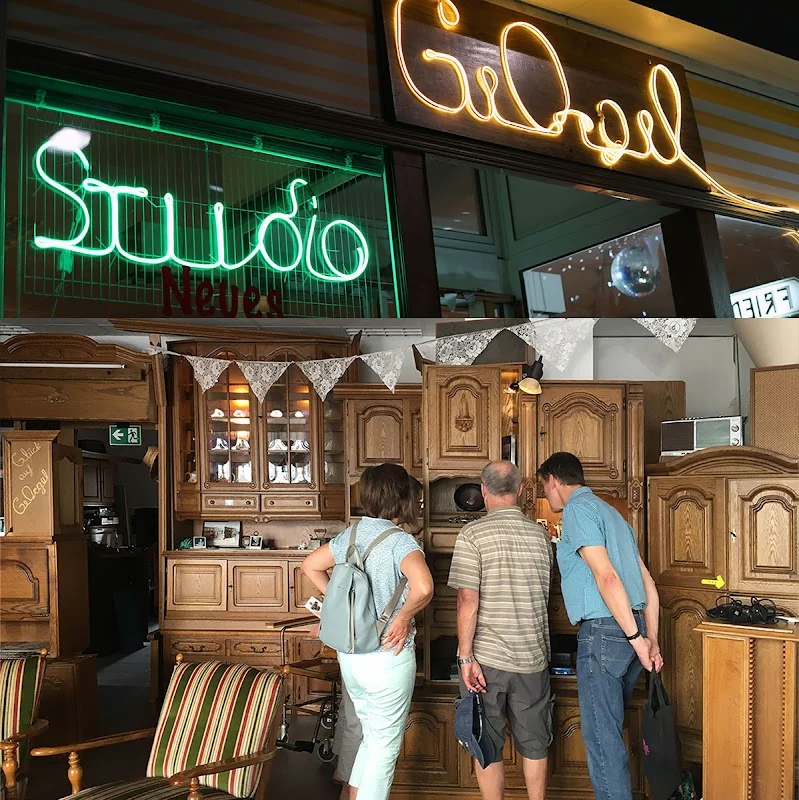
GeOrgel in Gelsenkirchen-Ückendorf is a place that consciously evades any categorization and derives its radiance from exactly that. What appears from the outside to be an unusually utilized retail space is, in reality, a cooperative production platform, an interactive sound and space installation, and an open studio for people from the neighborhood and beyond. The project is located at Bochumer Straße 150, right in the midst of the creative transformation of a district that has been reinventing itself for years. Visitors encounter here cabinet walls in the style of rustic oak, stories from the neighborhood, concerts, workshops, and spontaneous encounters. GeOrgel is thus neither a museum nor a traditional event venue, but a vibrant mixed space of art, community, and experimentation. ([georgel.me](https://georgel.me/das-team/))
What is GeOrgel in Gelsenkirchen?
GeOrgel is described on the official team page as a project by Stefan Demming that functions as a cooperative production platform supported by several contributors on-site. Julian Mikus and Anabell Starosta take care of lighting, reception, and photos, while other participants have enriched the project with ideas, technology, and stories. This very mix makes the place so special: It thrives not on distance but on proximity. Those who enter here encounter not just an exhibition but a space where people can collaborate, experiment, and engage with the place. GeOrgel is thus less a finished stage and more an organically growing cultural space that is shaped by its uses. ([georgel.me](https://georgel.me/das-team/))
Content-wise, much revolves around sound, memory, and making everyday stories visible. The interactive cabinet wall installation consists of various cabinet elements that hide sounds, photos, figures, and other found objects. Visitors open doors, drawers, and compartments, triggering impressions that are sometimes documentary, sometimes playful, and sometimes surprising. This form of participation makes GeOrgel a space that is not only to be looked at but to be experienced. The official texts speak of stories from the neighborhood, of Polaroids, of additional items brought by guests, and of an atmosphere in which the installation is constantly changing. Thus, a place emerges that does not rigidly explain but is vibrantly rewritten. ([seg-gelsenkirchen.de](https://seg-gelsenkirchen.de/georgel-gelsenkirchen-barock-zum-begehen/))
The program also shows that GeOrgel is not just a pure exhibition installation. On official pages and in municipal schedules, concerts, DJ nights, karaoke, open workshop formats, and events related to the neighborhood appear. Particularly interesting is that GeOrgel remains both a cultural meeting point and a space for spontaneous participation. This makes the location relevant for inquiries about events, programs, and special places in Gelsenkirchen. Those looking for a place that is not only utilized but is also part of the program will find here an unusually dense connection of art, urban development, and social interaction. GeOrgel thus serves as an address for explorers, neighbors, music enthusiasts, and anyone interested in open formats. ([seg-gelsenkirchen.de](https://seg-gelsenkirchen.de/georgel-gelsenkirchen-barock-zum-begehen/))
How did GeOrgel come about?
The emergence of GeOrgel is closely linked to the repurposing of a former commercial space. The image and text materials on the official website refer to a former tanning center that has become a completely different place: from a functional interior to a culture-shaped experience space. This transformation is typical for GeOrgel, as the furnishings themselves follow the principle of upcycling. Old cabinet walls, found objects, and memory items have been assembled into a new form that shapes the character of the place. What was once closed privacy is now public experience. This transformation makes the space not only visually exciting but also gives it a narrative core that runs through its entire use. ([georgel.me](https://georgel.me/bilder/))
According to official and municipal sources, GeOrgel was opened in September 2022. It is thus still a relatively young project but already firmly anchored in the cultural fabric of Ückendorf. The implementation was supported by the program Kreativ.Quartiere Ruhr, with participation from the city of Gelsenkirchen and other regional actors. This is important because GeOrgel did not emerge as an isolated single idea but as part of a broader development in the neighborhood. Urban renewal, culture, and community have visibly changed the environment along Bochumer Straße for years. GeOrgel exemplifies a place that brings together artistic practice, neighborhood development, and communal use. It is thus both a project, a process, and a result. ([seg-gelsenkirchen.de](https://seg-gelsenkirchen.de/georgel-gelsenkirchen-barock-zum-begehen/))
It is also exciting that the project was thought out early on far beyond the mere installation. Interviews and accompanying texts make it clear that GeOrgel collects and makes audible stories from the neighborhood. This concerns not only professional art but also contributions from neighbors who become part of the space with songs, memories, photos, or objects. The official chronicle of the city describes GeOrgel as an open place where the curious are welcome and which offers not only exhibitions but also an entertainment and event program. This openness is a core part of its identity: GeOrgel is not closed off for a small scene but actively invites the surrounding community to participate and co-create. ([seg-gelsenkirchen.de](https://seg-gelsenkirchen.de/georgel-gelsenkirchen-barock-zum-begehen/))
Address, Directions, and Stephanstraße Stop
The address is clear and officially confirmed multiple times: Bochumer Straße 150, 45886 Gelsenkirchen. Additionally, the official pages mention the Stephanstraße stop as a point of orientation that is directly connected to the location. This is practical for visitors because it allows GeOrgel to be easily located in the neighborhood. Those who know Ückendorf are aware that Bochumer Straße is an important axis in the district. First-time visitors will find a simple travel description with the exact address and the stop. This combination is particularly relevant for inquiries about address, directions, or public transport connections, as it directly refers to the place and not to an abstract cultural concept. ([georgel.me](https://georgel.me/das-team/))
Several municipal appointments also locate GeOrgel in the immediate vicinity of the Stephanstraße stop or directly across from the bunker there. Other entries refer to the address as part of event spaces between Bochumer Straße 132 and 150. This makes it clear that GeOrgel is not just a single retail space but also a hub within a larger creative street. For visitors, this means that the journey there is part of the neighborhood experience. Upon arrival, one is already in the vibrant transformation space of Bochumer Straße, where culture, art, and urban renewal are closely intertwined. This location makes the place particularly interesting for neighborhood walks, cultural appointments, and combined visits. ([gelsenkirchen.de](https://www.gelsenkirchen.de/de/_meta/veranstaltungskalender/90889-deltadub-soundsystem-sound-digger-sounds-dj-and-friends?utm_source=openai))
When arriving by car, it is advisable to check the current parking situation individually, as the found official pages emphasize the location at the stop and the accessibility in the neighborhood. Therefore, the combination of public transport and a short walk is particularly sensible. Those who are already in the vicinity of Bochumer Straße can easily incorporate GeOrgel into a round trip and visit other cultural sites in Ückendorf. The official classification of the house as part of a changing street suggests that the visit should not be planned in isolation but as part of a neighborhood visit. This also aligns with the idea of the project: it should not only be visited but experienced in the context of the neighborhood. ([gelsenkirchen.de](https://www.gelsenkirchen.de/de/_meta/aktuelles/artikel/68090-neues-vom-umbau-bochumer-strasse?utm_source=openai))
Opening Hours, Open Studio, and Visit
On the official team page, GeOrgel is described as a place that opens for events and can be visited by appointment. Additionally, the page mentions an open studio for the BAU!halle on Tuesdays and Wednesdays from 3 PM to 8 PM. This is important for people who want to experience the space in a quieter, more open situation rather than just attending a fixed event. Especially in a place that focuses on interaction and participation, such time windows are particularly valuable. They provide space for conversations, exploring the installation, and spontaneous insights into ongoing processes. The opening hours are thus not only practical information but part of the concept: GeOrgel thrives on openness and situational use. ([georgel.me](https://georgel.me/das-team/?utm_source=openai))
Other official pages complement the picture with additional recurring formats. Current or archived appointments include Qwatsch as a neighborhood and language café, BjN as a regular evening format, and various open studio and workshop offerings. This diversity shows that GeOrgel is not limited to a single type of visit. Some people come for music, others for conversations, and still others because of the installation or simply to get to know a new place in the neighborhood. The changing times also mean that those who want to come specifically should check the schedule in advance or inquire by email. This flexibility allows the project to respond to what is currently needed in the neighborhood. ([gelsenkirchen.de](https://www.gelsenkirchen.de/de/_meta/veranstaltungskalender/90387-qwatsch-nachbarschafts-sprachcaf?utm_source=openai))
Particularly helpful for planning is that GeOrgel regularly appears in the municipal event calendars. There, very different formats are listed, such as open studio times, workshops, concerts, or actions as part of larger neighborhood programs. One entry explicitly states that it is a free open studio, while another refers to a music and meeting format. This makes the place attractive for visitors who are not looking for a rigid permanent exhibition but for a location with a lively calendar. From an SEO perspective, this is particularly relevant: those searching for programs, opening hours, or open offers will find in GeOrgel a location that functions culturally and not just symbolically. ([gelsenkirchen.de](https://www.gelsenkirchen.de/de/_meta/veranstaltungskalender/77589-studio-georgel-gemeinsam-basteln-was-kommt?utm_source=openai))
Sound Cabinet, Drawer Art, and Events
The special feature of GeOrgel is the cabinet wall installation itself. The description of the project makes it clear that this is not about classic exhibition objects but about a walkable sound and memory landscape. Behind doors and drawers are sound tracks, photos, and small scenes that respond to being opened. The installation is thus interactive in the true sense: those who use it change the experience. Some materials were brought by visitors, while others come from the surroundings or from the creative process of the team. This creates a place that consists of many individual contributions yet functions as a cohesive, atmospheric whole. GeOrgel is thus an example of art that is not presented distantly but discovered together. ([seg-gelsenkirchen.de](https://seg-gelsenkirchen.de/georgel-gelsenkirchen-barock-zum-begehen/))
The accompanying texts also describe that the second room works with a more rhythmic, instrument-like logic. There, the sound is based on a software environment where the sounds of individual drawers can be adjusted, allowing one to compose their own sound from Ückendorf. Additionally, Polaroids, slides from several decades, and other analog or semi-analog elements float the place between present and memory. Particularly appealing is that everyday musical objects also play a role: a home organ from the 1980s, brought instruments, or concert traces from guests constantly expand the setup. Thus, the cabinet wall becomes not just a piece of furniture but an instrument, archive, and play space at the same time. ([seg-gelsenkirchen.de](https://seg-gelsenkirchen.de/georgel-gelsenkirchen-barock-zum-begehen/))
The event profile also shows how versatile the space is used. Official and municipal pages list live concerts, DJ nights, karaoke, workshops, open meetings, and special formats such as street actions or sub-projects as part of neighborhood festivals. Some formats are explicitly free, while others are tied to specific dates and serve more for joint experimentation. For inquiries about tickets, programs, or special events, GeOrgel is therefore particularly interesting as a cultural address that does not rely on commercial large events but on atmosphere, participation, and neighborhood connection. Those looking for a location where the program is closely intertwined with the space will find a very unique mix of stage, workshop, and social meeting point here. ([gelsenkirchen.de](https://www.gelsenkirchen.de/de/_meta/veranstaltungskalender/77589-studio-georgel-gemeinsam-basteln-was-kommt?utm_source=openai))
The strength of the place also lies in its ability to not only exhibit stories but to make them audible and visible. An interview describes how voices from the neighborhood, songs from neighborhood children, memories of older residents, and biographical miniatures continue to live in the space. This narrative style distinguishes GeOrgel from a conventional event space. Visitors come not only for an event but for a format that thinks together art, everyday history, and community. The project is thus not just an additional program point in the local culture but a stance: open, curious, dialogical, and ready to translate the material of the neighborhood into new forms. ([seg-gelsenkirchen.de](https://seg-gelsenkirchen.de/georgel-gelsenkirchen-barock-zum-begehen/))
Barrier-Free, Community, and Practical Tips
An important practical note from the official event calendar concerns accessibility. For the Qwatsch format, it is explained that the high ground floor is only accessible via eight steps with a railing; assistance is offered. It is also stated that the sound cabinet can be well explored by visually impaired people. This information is particularly valuable for many visitors because it realistically describes the situation and does not hide the fact that the space has certain structural hurdles. At the same time, it shows that the project is committed to actively enabling access. For a cultural project in the neighborhood, this is a strong signal: not only the content but also the way there should be considered. ([gelsenkirchen.de](https://www.gelsenkirchen.de/de/_meta/veranstaltungskalender/90387-qwatsch-nachbarschafts-sprachcaf?utm_source=openai))
GeOrgel is also strongly anchored in the community. The texts on the official website and in municipal accompanying materials repeatedly emphasize that stories, images, and objects from the neighborhood become part of the project. This ranges from brought photos and Polaroids to small keepsakes and personal stories that appear in drawers or compartments. This form of participation creates a special relationship between the place and the audience and explains why GeOrgel is also perceived as an open studio. ([seg-gelsenkirchen.de](https://seg-gelsenkirchen.de/georgel-gelsenkirchen-barock-zum-begehen/))
Those who want to plan the visit meaningfully should consider the character of the neighborhood. Bochumer Straße is an area in transition, where cultural sites, small shops, artistic projects, and urban development changes lie closely together. The SEG describes GeOrgel as a real treasure in the neighborhood because behind the unassuming facade lies a unique cultural project that offers regular events, concerts, workshops, and open meeting points. So, if you are looking for a place that is somewhat off the mainstream yet can easily be integrated into a neighborhood walk, you are very well placed here. GeOrgel is particularly suitable for those looking for more than just an address: namely, an experience that consists of sound, space, and community. ([seg-gelsenkirchen.de](https://seg-gelsenkirchen.de/geheimtipps-in-ueckendorf/))
In the end, GeOrgel is exciting precisely because it fulfills several search intentions simultaneously. Those searching for GeOrgel Gelsenkirchen get a concrete address. Those looking for programs or events find open formats and changing dates. Those asking about the meaning of the name or a special cultural address encounter a place that works consciously openly and experimentally. This mix of clarity and surprise makes GeOrgel a strong SEO location for Gelsenkirchen-Ückendorf. It is an address for discovery, not for routine, and that is an advantage in both the digital and real urban landscape. ([georgel.me](https://georgel.me/das-team/))
Sources:
- GeOrgel - The Team - Official Website
- GeOrgel - Images and Project Impressions - Official Website
- SEG Gelsenkirchen - GeOrgel, Baroque to Walk Through
- City of Gelsenkirchen - Chronicle 2025 PDF
- City of Gelsenkirchen - Studio GeOrgel: Together Crafting What Comes
- City of Gelsenkirchen - Qwatsch - Neighborhood and Language Café
Mehr anzeigenWeniger anzeigen
GeOrgel | Gelsenkirchen & Events
GeOrgel in Gelsenkirchen-Ückendorf is a place that consciously evades any categorization and derives its radiance from exactly that. What appears from the outside to be an unusually utilized retail space is, in reality, a cooperative production platform, an interactive sound and space installation, and an open studio for people from the neighborhood and beyond. The project is located at Bochumer Straße 150, right in the midst of the creative transformation of a district that has been reinventing itself for years. Visitors encounter here cabinet walls in the style of rustic oak, stories from the neighborhood, concerts, workshops, and spontaneous encounters. GeOrgel is thus neither a museum nor a traditional event venue, but a vibrant mixed space of art, community, and experimentation. ([georgel.me](https://georgel.me/das-team/))
What is GeOrgel in Gelsenkirchen?
GeOrgel is described on the official team page as a project by Stefan Demming that functions as a cooperative production platform supported by several contributors on-site. Julian Mikus and Anabell Starosta take care of lighting, reception, and photos, while other participants have enriched the project with ideas, technology, and stories. This very mix makes the place so special: It thrives not on distance but on proximity. Those who enter here encounter not just an exhibition but a space where people can collaborate, experiment, and engage with the place. GeOrgel is thus less a finished stage and more an organically growing cultural space that is shaped by its uses. ([georgel.me](https://georgel.me/das-team/))
Content-wise, much revolves around sound, memory, and making everyday stories visible. The interactive cabinet wall installation consists of various cabinet elements that hide sounds, photos, figures, and other found objects. Visitors open doors, drawers, and compartments, triggering impressions that are sometimes documentary, sometimes playful, and sometimes surprising. This form of participation makes GeOrgel a space that is not only to be looked at but to be experienced. The official texts speak of stories from the neighborhood, of Polaroids, of additional items brought by guests, and of an atmosphere in which the installation is constantly changing. Thus, a place emerges that does not rigidly explain but is vibrantly rewritten. ([seg-gelsenkirchen.de](https://seg-gelsenkirchen.de/georgel-gelsenkirchen-barock-zum-begehen/))
The program also shows that GeOrgel is not just a pure exhibition installation. On official pages and in municipal schedules, concerts, DJ nights, karaoke, open workshop formats, and events related to the neighborhood appear. Particularly interesting is that GeOrgel remains both a cultural meeting point and a space for spontaneous participation. This makes the location relevant for inquiries about events, programs, and special places in Gelsenkirchen. Those looking for a place that is not only utilized but is also part of the program will find here an unusually dense connection of art, urban development, and social interaction. GeOrgel thus serves as an address for explorers, neighbors, music enthusiasts, and anyone interested in open formats. ([seg-gelsenkirchen.de](https://seg-gelsenkirchen.de/georgel-gelsenkirchen-barock-zum-begehen/))
How did GeOrgel come about?
The emergence of GeOrgel is closely linked to the repurposing of a former commercial space. The image and text materials on the official website refer to a former tanning center that has become a completely different place: from a functional interior to a culture-shaped experience space. This transformation is typical for GeOrgel, as the furnishings themselves follow the principle of upcycling. Old cabinet walls, found objects, and memory items have been assembled into a new form that shapes the character of the place. What was once closed privacy is now public experience. This transformation makes the space not only visually exciting but also gives it a narrative core that runs through its entire use. ([georgel.me](https://georgel.me/bilder/))
According to official and municipal sources, GeOrgel was opened in September 2022. It is thus still a relatively young project but already firmly anchored in the cultural fabric of Ückendorf. The implementation was supported by the program Kreativ.Quartiere Ruhr, with participation from the city of Gelsenkirchen and other regional actors. This is important because GeOrgel did not emerge as an isolated single idea but as part of a broader development in the neighborhood. Urban renewal, culture, and community have visibly changed the environment along Bochumer Straße for years. GeOrgel exemplifies a place that brings together artistic practice, neighborhood development, and communal use. It is thus both a project, a process, and a result. ([seg-gelsenkirchen.de](https://seg-gelsenkirchen.de/georgel-gelsenkirchen-barock-zum-begehen/))
It is also exciting that the project was thought out early on far beyond the mere installation. Interviews and accompanying texts make it clear that GeOrgel collects and makes audible stories from the neighborhood. This concerns not only professional art but also contributions from neighbors who become part of the space with songs, memories, photos, or objects. The official chronicle of the city describes GeOrgel as an open place where the curious are welcome and which offers not only exhibitions but also an entertainment and event program. This openness is a core part of its identity: GeOrgel is not closed off for a small scene but actively invites the surrounding community to participate and co-create. ([seg-gelsenkirchen.de](https://seg-gelsenkirchen.de/georgel-gelsenkirchen-barock-zum-begehen/))
Address, Directions, and Stephanstraße Stop
The address is clear and officially confirmed multiple times: Bochumer Straße 150, 45886 Gelsenkirchen. Additionally, the official pages mention the Stephanstraße stop as a point of orientation that is directly connected to the location. This is practical for visitors because it allows GeOrgel to be easily located in the neighborhood. Those who know Ückendorf are aware that Bochumer Straße is an important axis in the district. First-time visitors will find a simple travel description with the exact address and the stop. This combination is particularly relevant for inquiries about address, directions, or public transport connections, as it directly refers to the place and not to an abstract cultural concept. ([georgel.me](https://georgel.me/das-team/))
Several municipal appointments also locate GeOrgel in the immediate vicinity of the Stephanstraße stop or directly across from the bunker there. Other entries refer to the address as part of event spaces between Bochumer Straße 132 and 150. This makes it clear that GeOrgel is not just a single retail space but also a hub within a larger creative street. For visitors, this means that the journey there is part of the neighborhood experience. Upon arrival, one is already in the vibrant transformation space of Bochumer Straße, where culture, art, and urban renewal are closely intertwined. This location makes the place particularly interesting for neighborhood walks, cultural appointments, and combined visits. ([gelsenkirchen.de](https://www.gelsenkirchen.de/de/_meta/veranstaltungskalender/90889-deltadub-soundsystem-sound-digger-sounds-dj-and-friends?utm_source=openai))
When arriving by car, it is advisable to check the current parking situation individually, as the found official pages emphasize the location at the stop and the accessibility in the neighborhood. Therefore, the combination of public transport and a short walk is particularly sensible. Those who are already in the vicinity of Bochumer Straße can easily incorporate GeOrgel into a round trip and visit other cultural sites in Ückendorf. The official classification of the house as part of a changing street suggests that the visit should not be planned in isolation but as part of a neighborhood visit. This also aligns with the idea of the project: it should not only be visited but experienced in the context of the neighborhood. ([gelsenkirchen.de](https://www.gelsenkirchen.de/de/_meta/aktuelles/artikel/68090-neues-vom-umbau-bochumer-strasse?utm_source=openai))
Opening Hours, Open Studio, and Visit
On the official team page, GeOrgel is described as a place that opens for events and can be visited by appointment. Additionally, the page mentions an open studio for the BAU!halle on Tuesdays and Wednesdays from 3 PM to 8 PM. This is important for people who want to experience the space in a quieter, more open situation rather than just attending a fixed event. Especially in a place that focuses on interaction and participation, such time windows are particularly valuable. They provide space for conversations, exploring the installation, and spontaneous insights into ongoing processes. The opening hours are thus not only practical information but part of the concept: GeOrgel thrives on openness and situational use. ([georgel.me](https://georgel.me/das-team/?utm_source=openai))
Other official pages complement the picture with additional recurring formats. Current or archived appointments include Qwatsch as a neighborhood and language café, BjN as a regular evening format, and various open studio and workshop offerings. This diversity shows that GeOrgel is not limited to a single type of visit. Some people come for music, others for conversations, and still others because of the installation or simply to get to know a new place in the neighborhood. The changing times also mean that those who want to come specifically should check the schedule in advance or inquire by email. This flexibility allows the project to respond to what is currently needed in the neighborhood. ([gelsenkirchen.de](https://www.gelsenkirchen.de/de/_meta/veranstaltungskalender/90387-qwatsch-nachbarschafts-sprachcaf?utm_source=openai))
Particularly helpful for planning is that GeOrgel regularly appears in the municipal event calendars. There, very different formats are listed, such as open studio times, workshops, concerts, or actions as part of larger neighborhood programs. One entry explicitly states that it is a free open studio, while another refers to a music and meeting format. This makes the place attractive for visitors who are not looking for a rigid permanent exhibition but for a location with a lively calendar. From an SEO perspective, this is particularly relevant: those searching for programs, opening hours, or open offers will find in GeOrgel a location that functions culturally and not just symbolically. ([gelsenkirchen.de](https://www.gelsenkirchen.de/de/_meta/veranstaltungskalender/77589-studio-georgel-gemeinsam-basteln-was-kommt?utm_source=openai))
Sound Cabinet, Drawer Art, and Events
The special feature of GeOrgel is the cabinet wall installation itself. The description of the project makes it clear that this is not about classic exhibition objects but about a walkable sound and memory landscape. Behind doors and drawers are sound tracks, photos, and small scenes that respond to being opened. The installation is thus interactive in the true sense: those who use it change the experience. Some materials were brought by visitors, while others come from the surroundings or from the creative process of the team. This creates a place that consists of many individual contributions yet functions as a cohesive, atmospheric whole. GeOrgel is thus an example of art that is not presented distantly but discovered together. ([seg-gelsenkirchen.de](https://seg-gelsenkirchen.de/georgel-gelsenkirchen-barock-zum-begehen/))
The accompanying texts also describe that the second room works with a more rhythmic, instrument-like logic. There, the sound is based on a software environment where the sounds of individual drawers can be adjusted, allowing one to compose their own sound from Ückendorf. Additionally, Polaroids, slides from several decades, and other analog or semi-analog elements float the place between present and memory. Particularly appealing is that everyday musical objects also play a role: a home organ from the 1980s, brought instruments, or concert traces from guests constantly expand the setup. Thus, the cabinet wall becomes not just a piece of furniture but an instrument, archive, and play space at the same time. ([seg-gelsenkirchen.de](https://seg-gelsenkirchen.de/georgel-gelsenkirchen-barock-zum-begehen/))
The event profile also shows how versatile the space is used. Official and municipal pages list live concerts, DJ nights, karaoke, workshops, open meetings, and special formats such as street actions or sub-projects as part of neighborhood festivals. Some formats are explicitly free, while others are tied to specific dates and serve more for joint experimentation. For inquiries about tickets, programs, or special events, GeOrgel is therefore particularly interesting as a cultural address that does not rely on commercial large events but on atmosphere, participation, and neighborhood connection. Those looking for a location where the program is closely intertwined with the space will find a very unique mix of stage, workshop, and social meeting point here. ([gelsenkirchen.de](https://www.gelsenkirchen.de/de/_meta/veranstaltungskalender/77589-studio-georgel-gemeinsam-basteln-was-kommt?utm_source=openai))
The strength of the place also lies in its ability to not only exhibit stories but to make them audible and visible. An interview describes how voices from the neighborhood, songs from neighborhood children, memories of older residents, and biographical miniatures continue to live in the space. This narrative style distinguishes GeOrgel from a conventional event space. Visitors come not only for an event but for a format that thinks together art, everyday history, and community. The project is thus not just an additional program point in the local culture but a stance: open, curious, dialogical, and ready to translate the material of the neighborhood into new forms. ([seg-gelsenkirchen.de](https://seg-gelsenkirchen.de/georgel-gelsenkirchen-barock-zum-begehen/))
Barrier-Free, Community, and Practical Tips
An important practical note from the official event calendar concerns accessibility. For the Qwatsch format, it is explained that the high ground floor is only accessible via eight steps with a railing; assistance is offered. It is also stated that the sound cabinet can be well explored by visually impaired people. This information is particularly valuable for many visitors because it realistically describes the situation and does not hide the fact that the space has certain structural hurdles. At the same time, it shows that the project is committed to actively enabling access. For a cultural project in the neighborhood, this is a strong signal: not only the content but also the way there should be considered. ([gelsenkirchen.de](https://www.gelsenkirchen.de/de/_meta/veranstaltungskalender/90387-qwatsch-nachbarschafts-sprachcaf?utm_source=openai))
GeOrgel is also strongly anchored in the community. The texts on the official website and in municipal accompanying materials repeatedly emphasize that stories, images, and objects from the neighborhood become part of the project. This ranges from brought photos and Polaroids to small keepsakes and personal stories that appear in drawers or compartments. This form of participation creates a special relationship between the place and the audience and explains why GeOrgel is also perceived as an open studio. ([seg-gelsenkirchen.de](https://seg-gelsenkirchen.de/georgel-gelsenkirchen-barock-zum-begehen/))
Those who want to plan the visit meaningfully should consider the character of the neighborhood. Bochumer Straße is an area in transition, where cultural sites, small shops, artistic projects, and urban development changes lie closely together. The SEG describes GeOrgel as a real treasure in the neighborhood because behind the unassuming facade lies a unique cultural project that offers regular events, concerts, workshops, and open meeting points. So, if you are looking for a place that is somewhat off the mainstream yet can easily be integrated into a neighborhood walk, you are very well placed here. GeOrgel is particularly suitable for those looking for more than just an address: namely, an experience that consists of sound, space, and community. ([seg-gelsenkirchen.de](https://seg-gelsenkirchen.de/geheimtipps-in-ueckendorf/))
In the end, GeOrgel is exciting precisely because it fulfills several search intentions simultaneously. Those searching for GeOrgel Gelsenkirchen get a concrete address. Those looking for programs or events find open formats and changing dates. Those asking about the meaning of the name or a special cultural address encounter a place that works consciously openly and experimentally. This mix of clarity and surprise makes GeOrgel a strong SEO location for Gelsenkirchen-Ückendorf. It is an address for discovery, not for routine, and that is an advantage in both the digital and real urban landscape. ([georgel.me](https://georgel.me/das-team/))
Sources:
- GeOrgel - The Team - Official Website
- GeOrgel - Images and Project Impressions - Official Website
- SEG Gelsenkirchen - GeOrgel, Baroque to Walk Through
- City of Gelsenkirchen - Chronicle 2025 PDF
- City of Gelsenkirchen - Studio GeOrgel: Together Crafting What Comes
- City of Gelsenkirchen - Qwatsch - Neighborhood and Language Café
GeOrgel | Gelsenkirchen & Events
GeOrgel in Gelsenkirchen-Ückendorf is a place that consciously evades any categorization and derives its radiance from exactly that. What appears from the outside to be an unusually utilized retail space is, in reality, a cooperative production platform, an interactive sound and space installation, and an open studio for people from the neighborhood and beyond. The project is located at Bochumer Straße 150, right in the midst of the creative transformation of a district that has been reinventing itself for years. Visitors encounter here cabinet walls in the style of rustic oak, stories from the neighborhood, concerts, workshops, and spontaneous encounters. GeOrgel is thus neither a museum nor a traditional event venue, but a vibrant mixed space of art, community, and experimentation. ([georgel.me](https://georgel.me/das-team/))
What is GeOrgel in Gelsenkirchen?
GeOrgel is described on the official team page as a project by Stefan Demming that functions as a cooperative production platform supported by several contributors on-site. Julian Mikus and Anabell Starosta take care of lighting, reception, and photos, while other participants have enriched the project with ideas, technology, and stories. This very mix makes the place so special: It thrives not on distance but on proximity. Those who enter here encounter not just an exhibition but a space where people can collaborate, experiment, and engage with the place. GeOrgel is thus less a finished stage and more an organically growing cultural space that is shaped by its uses. ([georgel.me](https://georgel.me/das-team/))
Content-wise, much revolves around sound, memory, and making everyday stories visible. The interactive cabinet wall installation consists of various cabinet elements that hide sounds, photos, figures, and other found objects. Visitors open doors, drawers, and compartments, triggering impressions that are sometimes documentary, sometimes playful, and sometimes surprising. This form of participation makes GeOrgel a space that is not only to be looked at but to be experienced. The official texts speak of stories from the neighborhood, of Polaroids, of additional items brought by guests, and of an atmosphere in which the installation is constantly changing. Thus, a place emerges that does not rigidly explain but is vibrantly rewritten. ([seg-gelsenkirchen.de](https://seg-gelsenkirchen.de/georgel-gelsenkirchen-barock-zum-begehen/))
The program also shows that GeOrgel is not just a pure exhibition installation. On official pages and in municipal schedules, concerts, DJ nights, karaoke, open workshop formats, and events related to the neighborhood appear. Particularly interesting is that GeOrgel remains both a cultural meeting point and a space for spontaneous participation. This makes the location relevant for inquiries about events, programs, and special places in Gelsenkirchen. Those looking for a place that is not only utilized but is also part of the program will find here an unusually dense connection of art, urban development, and social interaction. GeOrgel thus serves as an address for explorers, neighbors, music enthusiasts, and anyone interested in open formats. ([seg-gelsenkirchen.de](https://seg-gelsenkirchen.de/georgel-gelsenkirchen-barock-zum-begehen/))
How did GeOrgel come about?
The emergence of GeOrgel is closely linked to the repurposing of a former commercial space. The image and text materials on the official website refer to a former tanning center that has become a completely different place: from a functional interior to a culture-shaped experience space. This transformation is typical for GeOrgel, as the furnishings themselves follow the principle of upcycling. Old cabinet walls, found objects, and memory items have been assembled into a new form that shapes the character of the place. What was once closed privacy is now public experience. This transformation makes the space not only visually exciting but also gives it a narrative core that runs through its entire use. ([georgel.me](https://georgel.me/bilder/))
According to official and municipal sources, GeOrgel was opened in September 2022. It is thus still a relatively young project but already firmly anchored in the cultural fabric of Ückendorf. The implementation was supported by the program Kreativ.Quartiere Ruhr, with participation from the city of Gelsenkirchen and other regional actors. This is important because GeOrgel did not emerge as an isolated single idea but as part of a broader development in the neighborhood. Urban renewal, culture, and community have visibly changed the environment along Bochumer Straße for years. GeOrgel exemplifies a place that brings together artistic practice, neighborhood development, and communal use. It is thus both a project, a process, and a result. ([seg-gelsenkirchen.de](https://seg-gelsenkirchen.de/georgel-gelsenkirchen-barock-zum-begehen/))
It is also exciting that the project was thought out early on far beyond the mere installation. Interviews and accompanying texts make it clear that GeOrgel collects and makes audible stories from the neighborhood. This concerns not only professional art but also contributions from neighbors who become part of the space with songs, memories, photos, or objects. The official chronicle of the city describes GeOrgel as an open place where the curious are welcome and which offers not only exhibitions but also an entertainment and event program. This openness is a core part of its identity: GeOrgel is not closed off for a small scene but actively invites the surrounding community to participate and co-create. ([seg-gelsenkirchen.de](https://seg-gelsenkirchen.de/georgel-gelsenkirchen-barock-zum-begehen/))
Address, Directions, and Stephanstraße Stop
The address is clear and officially confirmed multiple times: Bochumer Straße 150, 45886 Gelsenkirchen. Additionally, the official pages mention the Stephanstraße stop as a point of orientation that is directly connected to the location. This is practical for visitors because it allows GeOrgel to be easily located in the neighborhood. Those who know Ückendorf are aware that Bochumer Straße is an important axis in the district. First-time visitors will find a simple travel description with the exact address and the stop. This combination is particularly relevant for inquiries about address, directions, or public transport connections, as it directly refers to the place and not to an abstract cultural concept. ([georgel.me](https://georgel.me/das-team/))
Several municipal appointments also locate GeOrgel in the immediate vicinity of the Stephanstraße stop or directly across from the bunker there. Other entries refer to the address as part of event spaces between Bochumer Straße 132 and 150. This makes it clear that GeOrgel is not just a single retail space but also a hub within a larger creative street. For visitors, this means that the journey there is part of the neighborhood experience. Upon arrival, one is already in the vibrant transformation space of Bochumer Straße, where culture, art, and urban renewal are closely intertwined. This location makes the place particularly interesting for neighborhood walks, cultural appointments, and combined visits. ([gelsenkirchen.de](https://www.gelsenkirchen.de/de/_meta/veranstaltungskalender/90889-deltadub-soundsystem-sound-digger-sounds-dj-and-friends?utm_source=openai))
When arriving by car, it is advisable to check the current parking situation individually, as the found official pages emphasize the location at the stop and the accessibility in the neighborhood. Therefore, the combination of public transport and a short walk is particularly sensible. Those who are already in the vicinity of Bochumer Straße can easily incorporate GeOrgel into a round trip and visit other cultural sites in Ückendorf. The official classification of the house as part of a changing street suggests that the visit should not be planned in isolation but as part of a neighborhood visit. This also aligns with the idea of the project: it should not only be visited but experienced in the context of the neighborhood. ([gelsenkirchen.de](https://www.gelsenkirchen.de/de/_meta/aktuelles/artikel/68090-neues-vom-umbau-bochumer-strasse?utm_source=openai))
Opening Hours, Open Studio, and Visit
On the official team page, GeOrgel is described as a place that opens for events and can be visited by appointment. Additionally, the page mentions an open studio for the BAU!halle on Tuesdays and Wednesdays from 3 PM to 8 PM. This is important for people who want to experience the space in a quieter, more open situation rather than just attending a fixed event. Especially in a place that focuses on interaction and participation, such time windows are particularly valuable. They provide space for conversations, exploring the installation, and spontaneous insights into ongoing processes. The opening hours are thus not only practical information but part of the concept: GeOrgel thrives on openness and situational use. ([georgel.me](https://georgel.me/das-team/?utm_source=openai))
Other official pages complement the picture with additional recurring formats. Current or archived appointments include Qwatsch as a neighborhood and language café, BjN as a regular evening format, and various open studio and workshop offerings. This diversity shows that GeOrgel is not limited to a single type of visit. Some people come for music, others for conversations, and still others because of the installation or simply to get to know a new place in the neighborhood. The changing times also mean that those who want to come specifically should check the schedule in advance or inquire by email. This flexibility allows the project to respond to what is currently needed in the neighborhood. ([gelsenkirchen.de](https://www.gelsenkirchen.de/de/_meta/veranstaltungskalender/90387-qwatsch-nachbarschafts-sprachcaf?utm_source=openai))
Particularly helpful for planning is that GeOrgel regularly appears in the municipal event calendars. There, very different formats are listed, such as open studio times, workshops, concerts, or actions as part of larger neighborhood programs. One entry explicitly states that it is a free open studio, while another refers to a music and meeting format. This makes the place attractive for visitors who are not looking for a rigid permanent exhibition but for a location with a lively calendar. From an SEO perspective, this is particularly relevant: those searching for programs, opening hours, or open offers will find in GeOrgel a location that functions culturally and not just symbolically. ([gelsenkirchen.de](https://www.gelsenkirchen.de/de/_meta/veranstaltungskalender/77589-studio-georgel-gemeinsam-basteln-was-kommt?utm_source=openai))
Sound Cabinet, Drawer Art, and Events
The special feature of GeOrgel is the cabinet wall installation itself. The description of the project makes it clear that this is not about classic exhibition objects but about a walkable sound and memory landscape. Behind doors and drawers are sound tracks, photos, and small scenes that respond to being opened. The installation is thus interactive in the true sense: those who use it change the experience. Some materials were brought by visitors, while others come from the surroundings or from the creative process of the team. This creates a place that consists of many individual contributions yet functions as a cohesive, atmospheric whole. GeOrgel is thus an example of art that is not presented distantly but discovered together. ([seg-gelsenkirchen.de](https://seg-gelsenkirchen.de/georgel-gelsenkirchen-barock-zum-begehen/))
The accompanying texts also describe that the second room works with a more rhythmic, instrument-like logic. There, the sound is based on a software environment where the sounds of individual drawers can be adjusted, allowing one to compose their own sound from Ückendorf. Additionally, Polaroids, slides from several decades, and other analog or semi-analog elements float the place between present and memory. Particularly appealing is that everyday musical objects also play a role: a home organ from the 1980s, brought instruments, or concert traces from guests constantly expand the setup. Thus, the cabinet wall becomes not just a piece of furniture but an instrument, archive, and play space at the same time. ([seg-gelsenkirchen.de](https://seg-gelsenkirchen.de/georgel-gelsenkirchen-barock-zum-begehen/))
The event profile also shows how versatile the space is used. Official and municipal pages list live concerts, DJ nights, karaoke, workshops, open meetings, and special formats such as street actions or sub-projects as part of neighborhood festivals. Some formats are explicitly free, while others are tied to specific dates and serve more for joint experimentation. For inquiries about tickets, programs, or special events, GeOrgel is therefore particularly interesting as a cultural address that does not rely on commercial large events but on atmosphere, participation, and neighborhood connection. Those looking for a location where the program is closely intertwined with the space will find a very unique mix of stage, workshop, and social meeting point here. ([gelsenkirchen.de](https://www.gelsenkirchen.de/de/_meta/veranstaltungskalender/77589-studio-georgel-gemeinsam-basteln-was-kommt?utm_source=openai))
The strength of the place also lies in its ability to not only exhibit stories but to make them audible and visible. An interview describes how voices from the neighborhood, songs from neighborhood children, memories of older residents, and biographical miniatures continue to live in the space. This narrative style distinguishes GeOrgel from a conventional event space. Visitors come not only for an event but for a format that thinks together art, everyday history, and community. The project is thus not just an additional program point in the local culture but a stance: open, curious, dialogical, and ready to translate the material of the neighborhood into new forms. ([seg-gelsenkirchen.de](https://seg-gelsenkirchen.de/georgel-gelsenkirchen-barock-zum-begehen/))
Barrier-Free, Community, and Practical Tips
An important practical note from the official event calendar concerns accessibility. For the Qwatsch format, it is explained that the high ground floor is only accessible via eight steps with a railing; assistance is offered. It is also stated that the sound cabinet can be well explored by visually impaired people. This information is particularly valuable for many visitors because it realistically describes the situation and does not hide the fact that the space has certain structural hurdles. At the same time, it shows that the project is committed to actively enabling access. For a cultural project in the neighborhood, this is a strong signal: not only the content but also the way there should be considered. ([gelsenkirchen.de](https://www.gelsenkirchen.de/de/_meta/veranstaltungskalender/90387-qwatsch-nachbarschafts-sprachcaf?utm_source=openai))
GeOrgel is also strongly anchored in the community. The texts on the official website and in municipal accompanying materials repeatedly emphasize that stories, images, and objects from the neighborhood become part of the project. This ranges from brought photos and Polaroids to small keepsakes and personal stories that appear in drawers or compartments. This form of participation creates a special relationship between the place and the audience and explains why GeOrgel is also perceived as an open studio. ([seg-gelsenkirchen.de](https://seg-gelsenkirchen.de/georgel-gelsenkirchen-barock-zum-begehen/))
Those who want to plan the visit meaningfully should consider the character of the neighborhood. Bochumer Straße is an area in transition, where cultural sites, small shops, artistic projects, and urban development changes lie closely together. The SEG describes GeOrgel as a real treasure in the neighborhood because behind the unassuming facade lies a unique cultural project that offers regular events, concerts, workshops, and open meeting points. So, if you are looking for a place that is somewhat off the mainstream yet can easily be integrated into a neighborhood walk, you are very well placed here. GeOrgel is particularly suitable for those looking for more than just an address: namely, an experience that consists of sound, space, and community. ([seg-gelsenkirchen.de](https://seg-gelsenkirchen.de/geheimtipps-in-ueckendorf/))
In the end, GeOrgel is exciting precisely because it fulfills several search intentions simultaneously. Those searching for GeOrgel Gelsenkirchen get a concrete address. Those looking for programs or events find open formats and changing dates. Those asking about the meaning of the name or a special cultural address encounter a place that works consciously openly and experimentally. This mix of clarity and surprise makes GeOrgel a strong SEO location for Gelsenkirchen-Ückendorf. It is an address for discovery, not for routine, and that is an advantage in both the digital and real urban landscape. ([georgel.me](https://georgel.me/das-team/))
Sources:
- GeOrgel - The Team - Official Website
- GeOrgel - Images and Project Impressions - Official Website
- SEG Gelsenkirchen - GeOrgel, Baroque to Walk Through
- City of Gelsenkirchen - Chronicle 2025 PDF
- City of Gelsenkirchen - Studio GeOrgel: Together Crafting What Comes
- City of Gelsenkirchen - Qwatsch - Neighborhood and Language Café
Upcoming Events
No events found
Frequently Asked Questions
Reviews
No reviews found