
Gelsenkirchen
Turfstraße 21, 45899 Gelsenkirchen-West, Deutschland
Experience Museum Castle Horst | Admission & Opening Hours
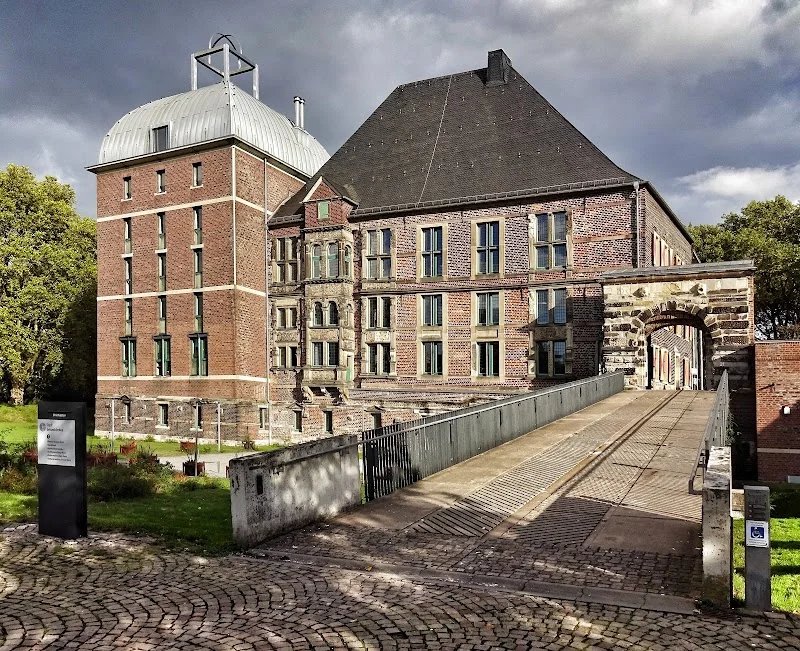
Castle Horst is more than a museum: The place combines Renaissance, cultural center, registry office, district library, and park into a lively ensemble in the middle of Gelsenkirchen-Horst. The experience museum focuses on touching, trying out, and a clear narrative about the construction period, the everyday life of people in the 16th century, and the rescue of an important monument. Therefore, visitors to Castle Horst do not get a dry display of showcases, but a mix of history to experience, architecture to marvel at, and a house that is still used today for culture, families, and special occasions. ([gelsenkirchen.de](https://www.gelsenkirchen.de/de/kultur/museen_und_dauerausstellungen/museum_schloss_horst/index.aspx))
Admission Prices, Opening Hours, and Free Museum Visit
For many visitors, the most important question is quite practical: What is the admission fee, and when can one actually come? The answer at the experience museum Castle Horst is pleasantly uncomplicated, as admission is free. This makes the visit particularly accessible and attractive for spontaneous outings, families with children, school classes, senior groups, or anyone looking for a cultural-historical destination in Gelsenkirchen without needing a ticket in advance. The regular opening hours are Monday to Friday from 3:00 PM to 6:00 PM and Sunday from 11:00 AM to 6:00 PM; the museum is closed on Saturdays. On certain holidays, different times apply, and it is closed from December 24 to January 1 inclusive. ([gelsenkirchen.de](https://www.gelsenkirchen.de/de/kultur/museen_und_dauerausstellungen/museum_schloss_horst/index.aspx))
For those who would like to plan their visit more precisely, there is also a well-explained system for guided tours and group offers. Guided tours of the experience museum are possible at any time by arrangement, even outside of opening hours. There is a guided tour lasting about 60 minutes for 50 euros per group of up to 20 people, as well as a guided tour lasting about 90 minutes for 75 euros per group of up to 20 people. Kindergartens and school classes participate free of charge. This is particularly interesting for individual groups, as the museum visit can be easily integrated into an outing, a project week, or an afternoon for generations. The public time travel through Castle Horst starts every first Thursday of the month at 6 PM, lasts about an hour, and is also free of charge. ([gelsenkirchen.de](https://www.gelsenkirchen.de/de/kultur/museen_und_dauerausstellungen/museum_schloss_horst/Fuehrungen.aspx))
Thus, Castle Horst offers a rare combination of free admission, planable tours, and seasonal or current time slots. This is particularly relevant for inquiries such as admission prices, opening hours, or programs, as visitors are not only looking for a sight but also a concrete and well-organizable leisure idea. So, anyone looking for a museum with historical depth and at the same time relaxed access will find a place here that can be visited without great obstacles and still provides a lot of content. It is particularly nice that admission remains free and the museum landscape is still of high quality, pedagogically well thought out, and architecturally unusual. ([gelsenkirchen.de](https://www.gelsenkirchen.de/de/kultur/museen_und_dauerausstellungen/museum_schloss_horst/index.aspx))
Directions, Parking, and Public Transport to Castle Horst
The address of the house is clear and central: Castle Horst, Turfstraße 21, 45899 Gelsenkirchen. For driving, it is important that the parking access is from the side via the street An der Rennbahn. There are also two charging stations for electric vehicles from Emscher-Lippe-Energie available in the parking lot. This is not only practical for people from the city area but also for guests from the Ruhr area and beyond, who want to combine a cultural appointment with a convenient and relatively well-organized parking situation. Due to its location in the district of Horst, the place is also well suited as a destination for district visits, family outings, and combined cultural walks. ([schloss-horst.de](https://www.schloss-horst.de/anfahrt/))
Castle Horst is also easily accessible by public transport. The stop bears the same name, namely Castle Horst. On-site, the city train 301 and the U11 from Essen, as well as several bus lines, including SB 36, 111, 257, 259, 260, 383, and 396, stop. For many visitors, this is a real plus, as one can reach the museum, events, or a guided tour without complicated transfers. Especially if one wants to combine the visit with an evening appointment, a public tour, or a cultural program in the glass hall, traveling by bus and train is a very good option. ([schloss-horst.de](https://www.schloss-horst.de/anfahrt/))
Additionally, Castle Horst does not function in isolation as a single building but as part of a lively environment with a park, playground, district library, and gastronomy. Those coming with children or planning a relaxed afternoon outing can easily combine the visit with a walk in the green. For people with electric mobility, for public transport users, and for guests who prefer to arrive without significant parking stress, this ensemble is particularly pleasant. This mix of culture, accessibility, and environment makes Castle Horst particularly interesting for inquiries about directions and parking. ([gelsenkirchen.de](https://www.gelsenkirchen.de/de/kultur/kultur-_und_veranstaltungsorte/schloss_horst.aspx))
History and Architectural Significance of Castle Horst
The historical depth of Castle Horst is one of the main reasons why the place still receives so much attention today. The Renaissance castle was built on the site of a medieval castle that was severely damaged by fire in 1554. Lord of the Castle Rutger von der Horst began to realize his construction dream here from 1554, and the master builder Arndt Johannsen led the work from about 1556 to 1567. When the construction was completed in 1578, a complex had developed that was considered extraordinary early on due to its size, its regular square shape, and its representative architectural adornment. This construction history makes Castle Horst a key location for all those interested in Renaissance architecture and the development of the Ruhr area. ([gelsenkirchen.de](https://www.gelsenkirchen.de/de/kultur/museen_und_dauerausstellungen/museum_schloss_horst/index.aspx))
Particularly important is the architectural classification. Castle Horst is now considered the most important Renaissance building in the Ruhr area and one of the oldest and most significant Renaissance buildings in Westphalia. The decorative variant of Dutch Mannerism, influenced by the Netherlands, gives the building a special art-historical status. Not only the form but also the overall concept with powerful corner towers, generous layout, and high-quality ornamentation make it clear that this is not just any noble residence, but an ambitious magnificent building that was meant to make the aspirations of its time visible. This architectural peculiarity is one of the reasons why the castle is still perceived today as a place of identity. ([gelsenkirchen.de](https://www.gelsenkirchen.de/de/rathaus/politik_und_verwaltung/vorstandsbereiche_und_dienststellen/32343-schloss-horst-41-sh))
However, the history of the house is not only a success story but also a story of decay and rescue. In the 19th century, Castle Horst lost many parts of its structure, and in the second half of the 20th century, the building faced final decline. In 1985, citizens of Horst founded the Förderverein Schloß Horst e.V. to save the castle. In 1988, the building came into the possession of the city of Gelsenkirchen, and from 1992 to 1999, it was restored and converted in accordance with monument protection. In August 1999, Castle Horst was reopened as a municipal cultural and citizens' center. This development is not only politically exciting in terms of monument protection but also an example of how civic engagement and public responsibility can work together. ([gelsenkirchen.de](https://www.gelsenkirchen.de/de/kultur/Museen_und_Dauerausstellungen/Museum_Schloss_Horst/Geschichte_des_Schlosses_Horst/))
The Exhibition Life and Work in the Renaissance
The centerpiece of the experience museum is the permanent exhibition Life and Work in the Renaissance. It is completely accessible and answers the question of how people lived and worked in and around Castle Horst in the 16th century. Unlike in classical museums, showcases and distance are not in the foreground here, but a sensory and learning-oriented concept. The model of the castle construction site from the 16th century forms the starting point for a time travel to the year 1565. Visitors encounter the workplaces of craftsmen, the workflows on a castle construction site, and the typical professions of the time, such as blacksmith, stonemason, carpenter, slater, bricklayer, and plasterer. ([gelsenkirchen.de](https://www.gelsenkirchen.de/de/kultur/museen_und_dauerausstellungen/museum_schloss_horst/index.aspx))
The educational approach is deliberately illustrative. Topics such as brick production, wage payment, measuring instruments, and calculation aids show that a Renaissance construction site was not romantic but dirty, cramped, and not without danger. At the same time, there is a section in the museum tour dedicated to the master builder Arndt Johannsen, who led the construction work and thus connects the construction history with a person. Another focus is on noble life in the 16th century around Rutger von der Horst. It deals with discovery and expansion of the world, art, culture, and science, as well as humanism and the Reformation. This makes the exhibition not only locally historical but also relevant across Europe. ([gelsenkirchen.de](https://www.gelsenkirchen.de/de/kultur/museen_und_dauerausstellungen/museum_schloss_horst/index.aspx))
A particularly exciting section is the room about the Emscherbruch and horse breeding, as it reveals a landscape and living environment that no longer exists in this form today. Horse catching and horse breeding, noble interests, and regional use merge in the exhibition. This is complemented by the festive hall, which since 2022, with its fireplace, armor, court dog, and interactive festive table, offers another view of courtly culture. There, food, drinks, and dances of the festive societies of that time can be playfully retraced. Thus, the exhibition combines family-friendliness, historical accuracy, and interaction in a way that is often sought in inquiries about experience museums, photos, or reviews because it promises a very concrete visitor experience. ([gelsenkirchen.de](https://www.gelsenkirchen.de/de/kultur/museen_und_dauerausstellungen/museum_schloss_horst/index.aspx))
Rooms, Events, and Celebrations at Castle Horst
Castle Horst is not only a museum but also an event venue with several distinctive rooms. The glass hall, the knights' hall, and the fireplace room are particularly well-known. Regular concerts and other cultural events take place in these rooms, including exhibitions, readings, lectures, dance, and theater performances. The house thus becomes a place where history is not only explained but actively used. The combination of historical architecture and contemporary cultural programs is a central feature of the castle and one of the reasons why it is perceived as a lively cultural and citizens' center. ([gelsenkirchen.de](https://www.gelsenkirchen.de/de/familie/auf_dem_standesamt/heiraten/trauorte/schloss_horst.aspx))
For weddings and festive occasions, Castle Horst also plays a significant role. The central registry office of Gelsenkirchen is located in the castle, and weddings take place in historical halls, some of which still have original fireplaces or have been authentically reconstructed. The fireplace room is officially suitable for up to 40 people, while the knights' hall can accommodate up to 60 people. Particularly romantic is the offer of a wedding by candlelight in the darker months. This interplay of civil function and stylish historical backdrop makes Castle Horst interesting for couples as well as for guests seeking a special room effect. ([gelsenkirchen.de](https://www.gelsenkirchen.de/de/familie/auf_dem_standesamt/heiraten/trauorte/schloss_horst.aspx))
The ensemble also includes a historical printing workshop in the outer bailey, a gastronomy in the castle, and the park with an adjacent playground. This mix extends the visit beyond the actual museum tour. Whether attending a concert, accompanying a wedding, or viewing an exhibition, one experiences not just an interior space but a whole place with multiple uses and atmospheres. The outer bailey, the printing workshop, the restaurant, and the outdoor area ensure that Castle Horst remains interesting for different target groups. Families, cultural audiences, wedding couples, and school classes come together here without losing the historical character. ([gelsenkirchen.de](https://www.gelsenkirchen.de/de/kultur/kultur-_und_veranstaltungsorte/schloss_horst.aspx))
Accessibility, Tours, and Practical Tips for Visiting
A significant advantage of Castle Horst is its continuous accessibility for people with limited mobility. The museum is completely barrier-free, the entrance area is fully accessible for wheelchair users, there is an elevator, and the restrooms are wheelchair accessible. Additionally, there are marked disabled parking spaces. For a historical building, this is a remarkably good facility, as monument protection and usability have been very consistently combined here. This is also an important signal for people traveling with strollers, wheelchairs, or in a group that the visit is planable and pleasant. ([gelsenkirchen.de](https://www.gelsenkirchen.de/de/kultur/museen_und_dauerausstellungen/museum_schloss_horst/index.aspx))
Equally helpful are the tour offerings. Guided tours of the experience museum and through the historical rooms are possible at any time by arrangement, even outside of regular opening hours. In addition, there is a public time travel in Castle Horst that takes place every first Thursday of the month, lasts about an hour, is free of charge, and does not require registration. The tour starts at 6 PM but is not offered in January and October or on Thursdays that fall on a holiday. Additionally, there is a themed tour about women on the castle construction site, which is based on historical construction records and opens an important view of often-overlooked roles. ([gelsenkirchen.de](https://www.gelsenkirchen.de/de/kultur/museen_und_dauerausstellungen/museum_schloss_horst/Fuehrungen.aspx))
If you plan your visit wisely, you can connect several levels: the museum tour, a walk in the park, possibly a guided tour, and if interested, a concert or another event in the castle. For school classes and kindergartens, tours are free, which makes Castle Horst an attractive extracurricular learning location. Those who prefer to be contactless can also use a digital tour. Overall, the house is not only a place for unique photo motifs but a versatile excursion point that can be very well structured from the initial research to the actual visit. That is why terms like opening hours, parking, tours, barrier-free, and program fit so well with this location. ([gelsenkirchen.de](https://www.gelsenkirchen.de/de/kultur/museen_und_dauerausstellungen/museum_schloss_horst/index.aspx))
Sources:
- City of Gelsenkirchen - Experience Museum Castle Horst ([gelsenkirchen.de](https://www.gelsenkirchen.de/de/kultur/museen_und_dauerausstellungen/museum_schloss_horst/index.aspx))
- City of Gelsenkirchen - History of Castle Horst ([gelsenkirchen.de](https://www.gelsenkirchen.de/de/kultur/Museen_und_Dauerausstellungen/Museum_Schloss_Horst/Geschichte_des_Schlosses_Horst/))
- City of Gelsenkirchen - Castle Horst ([gelsenkirchen.de](https://www.gelsenkirchen.de/de/kultur/kultur-_und_veranstaltungsorte/schloss_horst.aspx))
- City of Gelsenkirchen - Tours in the Experience Museum Castle Horst ([gelsenkirchen.de](https://www.gelsenkirchen.de/de/kultur/museen_und_dauerausstellungen/museum_schloss_horst/Fuehrungen.aspx))
- Friends of Castle Horst e.V. - Contact / Directions ([schloss-horst.de](https://www.schloss-horst.de/anfahrt/))
Show moreShow less
Experience Museum Castle Horst | Admission & Opening Hours
Castle Horst is more than a museum: The place combines Renaissance, cultural center, registry office, district library, and park into a lively ensemble in the middle of Gelsenkirchen-Horst. The experience museum focuses on touching, trying out, and a clear narrative about the construction period, the everyday life of people in the 16th century, and the rescue of an important monument. Therefore, visitors to Castle Horst do not get a dry display of showcases, but a mix of history to experience, architecture to marvel at, and a house that is still used today for culture, families, and special occasions. ([gelsenkirchen.de](https://www.gelsenkirchen.de/de/kultur/museen_und_dauerausstellungen/museum_schloss_horst/index.aspx))
Admission Prices, Opening Hours, and Free Museum Visit
For many visitors, the most important question is quite practical: What is the admission fee, and when can one actually come? The answer at the experience museum Castle Horst is pleasantly uncomplicated, as admission is free. This makes the visit particularly accessible and attractive for spontaneous outings, families with children, school classes, senior groups, or anyone looking for a cultural-historical destination in Gelsenkirchen without needing a ticket in advance. The regular opening hours are Monday to Friday from 3:00 PM to 6:00 PM and Sunday from 11:00 AM to 6:00 PM; the museum is closed on Saturdays. On certain holidays, different times apply, and it is closed from December 24 to January 1 inclusive. ([gelsenkirchen.de](https://www.gelsenkirchen.de/de/kultur/museen_und_dauerausstellungen/museum_schloss_horst/index.aspx))
For those who would like to plan their visit more precisely, there is also a well-explained system for guided tours and group offers. Guided tours of the experience museum are possible at any time by arrangement, even outside of opening hours. There is a guided tour lasting about 60 minutes for 50 euros per group of up to 20 people, as well as a guided tour lasting about 90 minutes for 75 euros per group of up to 20 people. Kindergartens and school classes participate free of charge. This is particularly interesting for individual groups, as the museum visit can be easily integrated into an outing, a project week, or an afternoon for generations. The public time travel through Castle Horst starts every first Thursday of the month at 6 PM, lasts about an hour, and is also free of charge. ([gelsenkirchen.de](https://www.gelsenkirchen.de/de/kultur/museen_und_dauerausstellungen/museum_schloss_horst/Fuehrungen.aspx))
Thus, Castle Horst offers a rare combination of free admission, planable tours, and seasonal or current time slots. This is particularly relevant for inquiries such as admission prices, opening hours, or programs, as visitors are not only looking for a sight but also a concrete and well-organizable leisure idea. So, anyone looking for a museum with historical depth and at the same time relaxed access will find a place here that can be visited without great obstacles and still provides a lot of content. It is particularly nice that admission remains free and the museum landscape is still of high quality, pedagogically well thought out, and architecturally unusual. ([gelsenkirchen.de](https://www.gelsenkirchen.de/de/kultur/museen_und_dauerausstellungen/museum_schloss_horst/index.aspx))
Directions, Parking, and Public Transport to Castle Horst
The address of the house is clear and central: Castle Horst, Turfstraße 21, 45899 Gelsenkirchen. For driving, it is important that the parking access is from the side via the street An der Rennbahn. There are also two charging stations for electric vehicles from Emscher-Lippe-Energie available in the parking lot. This is not only practical for people from the city area but also for guests from the Ruhr area and beyond, who want to combine a cultural appointment with a convenient and relatively well-organized parking situation. Due to its location in the district of Horst, the place is also well suited as a destination for district visits, family outings, and combined cultural walks. ([schloss-horst.de](https://www.schloss-horst.de/anfahrt/))
Castle Horst is also easily accessible by public transport. The stop bears the same name, namely Castle Horst. On-site, the city train 301 and the U11 from Essen, as well as several bus lines, including SB 36, 111, 257, 259, 260, 383, and 396, stop. For many visitors, this is a real plus, as one can reach the museum, events, or a guided tour without complicated transfers. Especially if one wants to combine the visit with an evening appointment, a public tour, or a cultural program in the glass hall, traveling by bus and train is a very good option. ([schloss-horst.de](https://www.schloss-horst.de/anfahrt/))
Additionally, Castle Horst does not function in isolation as a single building but as part of a lively environment with a park, playground, district library, and gastronomy. Those coming with children or planning a relaxed afternoon outing can easily combine the visit with a walk in the green. For people with electric mobility, for public transport users, and for guests who prefer to arrive without significant parking stress, this ensemble is particularly pleasant. This mix of culture, accessibility, and environment makes Castle Horst particularly interesting for inquiries about directions and parking. ([gelsenkirchen.de](https://www.gelsenkirchen.de/de/kultur/kultur-_und_veranstaltungsorte/schloss_horst.aspx))
History and Architectural Significance of Castle Horst
The historical depth of Castle Horst is one of the main reasons why the place still receives so much attention today. The Renaissance castle was built on the site of a medieval castle that was severely damaged by fire in 1554. Lord of the Castle Rutger von der Horst began to realize his construction dream here from 1554, and the master builder Arndt Johannsen led the work from about 1556 to 1567. When the construction was completed in 1578, a complex had developed that was considered extraordinary early on due to its size, its regular square shape, and its representative architectural adornment. This construction history makes Castle Horst a key location for all those interested in Renaissance architecture and the development of the Ruhr area. ([gelsenkirchen.de](https://www.gelsenkirchen.de/de/kultur/museen_und_dauerausstellungen/museum_schloss_horst/index.aspx))
Particularly important is the architectural classification. Castle Horst is now considered the most important Renaissance building in the Ruhr area and one of the oldest and most significant Renaissance buildings in Westphalia. The decorative variant of Dutch Mannerism, influenced by the Netherlands, gives the building a special art-historical status. Not only the form but also the overall concept with powerful corner towers, generous layout, and high-quality ornamentation make it clear that this is not just any noble residence, but an ambitious magnificent building that was meant to make the aspirations of its time visible. This architectural peculiarity is one of the reasons why the castle is still perceived today as a place of identity. ([gelsenkirchen.de](https://www.gelsenkirchen.de/de/rathaus/politik_und_verwaltung/vorstandsbereiche_und_dienststellen/32343-schloss-horst-41-sh))
However, the history of the house is not only a success story but also a story of decay and rescue. In the 19th century, Castle Horst lost many parts of its structure, and in the second half of the 20th century, the building faced final decline. In 1985, citizens of Horst founded the Förderverein Schloß Horst e.V. to save the castle. In 1988, the building came into the possession of the city of Gelsenkirchen, and from 1992 to 1999, it was restored and converted in accordance with monument protection. In August 1999, Castle Horst was reopened as a municipal cultural and citizens' center. This development is not only politically exciting in terms of monument protection but also an example of how civic engagement and public responsibility can work together. ([gelsenkirchen.de](https://www.gelsenkirchen.de/de/kultur/Museen_und_Dauerausstellungen/Museum_Schloss_Horst/Geschichte_des_Schlosses_Horst/))
The Exhibition Life and Work in the Renaissance
The centerpiece of the experience museum is the permanent exhibition Life and Work in the Renaissance. It is completely accessible and answers the question of how people lived and worked in and around Castle Horst in the 16th century. Unlike in classical museums, showcases and distance are not in the foreground here, but a sensory and learning-oriented concept. The model of the castle construction site from the 16th century forms the starting point for a time travel to the year 1565. Visitors encounter the workplaces of craftsmen, the workflows on a castle construction site, and the typical professions of the time, such as blacksmith, stonemason, carpenter, slater, bricklayer, and plasterer. ([gelsenkirchen.de](https://www.gelsenkirchen.de/de/kultur/museen_und_dauerausstellungen/museum_schloss_horst/index.aspx))
The educational approach is deliberately illustrative. Topics such as brick production, wage payment, measuring instruments, and calculation aids show that a Renaissance construction site was not romantic but dirty, cramped, and not without danger. At the same time, there is a section in the museum tour dedicated to the master builder Arndt Johannsen, who led the construction work and thus connects the construction history with a person. Another focus is on noble life in the 16th century around Rutger von der Horst. It deals with discovery and expansion of the world, art, culture, and science, as well as humanism and the Reformation. This makes the exhibition not only locally historical but also relevant across Europe. ([gelsenkirchen.de](https://www.gelsenkirchen.de/de/kultur/museen_und_dauerausstellungen/museum_schloss_horst/index.aspx))
A particularly exciting section is the room about the Emscherbruch and horse breeding, as it reveals a landscape and living environment that no longer exists in this form today. Horse catching and horse breeding, noble interests, and regional use merge in the exhibition. This is complemented by the festive hall, which since 2022, with its fireplace, armor, court dog, and interactive festive table, offers another view of courtly culture. There, food, drinks, and dances of the festive societies of that time can be playfully retraced. Thus, the exhibition combines family-friendliness, historical accuracy, and interaction in a way that is often sought in inquiries about experience museums, photos, or reviews because it promises a very concrete visitor experience. ([gelsenkirchen.de](https://www.gelsenkirchen.de/de/kultur/museen_und_dauerausstellungen/museum_schloss_horst/index.aspx))
Rooms, Events, and Celebrations at Castle Horst
Castle Horst is not only a museum but also an event venue with several distinctive rooms. The glass hall, the knights' hall, and the fireplace room are particularly well-known. Regular concerts and other cultural events take place in these rooms, including exhibitions, readings, lectures, dance, and theater performances. The house thus becomes a place where history is not only explained but actively used. The combination of historical architecture and contemporary cultural programs is a central feature of the castle and one of the reasons why it is perceived as a lively cultural and citizens' center. ([gelsenkirchen.de](https://www.gelsenkirchen.de/de/familie/auf_dem_standesamt/heiraten/trauorte/schloss_horst.aspx))
For weddings and festive occasions, Castle Horst also plays a significant role. The central registry office of Gelsenkirchen is located in the castle, and weddings take place in historical halls, some of which still have original fireplaces or have been authentically reconstructed. The fireplace room is officially suitable for up to 40 people, while the knights' hall can accommodate up to 60 people. Particularly romantic is the offer of a wedding by candlelight in the darker months. This interplay of civil function and stylish historical backdrop makes Castle Horst interesting for couples as well as for guests seeking a special room effect. ([gelsenkirchen.de](https://www.gelsenkirchen.de/de/familie/auf_dem_standesamt/heiraten/trauorte/schloss_horst.aspx))
The ensemble also includes a historical printing workshop in the outer bailey, a gastronomy in the castle, and the park with an adjacent playground. This mix extends the visit beyond the actual museum tour. Whether attending a concert, accompanying a wedding, or viewing an exhibition, one experiences not just an interior space but a whole place with multiple uses and atmospheres. The outer bailey, the printing workshop, the restaurant, and the outdoor area ensure that Castle Horst remains interesting for different target groups. Families, cultural audiences, wedding couples, and school classes come together here without losing the historical character. ([gelsenkirchen.de](https://www.gelsenkirchen.de/de/kultur/kultur-_und_veranstaltungsorte/schloss_horst.aspx))
Accessibility, Tours, and Practical Tips for Visiting
A significant advantage of Castle Horst is its continuous accessibility for people with limited mobility. The museum is completely barrier-free, the entrance area is fully accessible for wheelchair users, there is an elevator, and the restrooms are wheelchair accessible. Additionally, there are marked disabled parking spaces. For a historical building, this is a remarkably good facility, as monument protection and usability have been very consistently combined here. This is also an important signal for people traveling with strollers, wheelchairs, or in a group that the visit is planable and pleasant. ([gelsenkirchen.de](https://www.gelsenkirchen.de/de/kultur/museen_und_dauerausstellungen/museum_schloss_horst/index.aspx))
Equally helpful are the tour offerings. Guided tours of the experience museum and through the historical rooms are possible at any time by arrangement, even outside of regular opening hours. In addition, there is a public time travel in Castle Horst that takes place every first Thursday of the month, lasts about an hour, is free of charge, and does not require registration. The tour starts at 6 PM but is not offered in January and October or on Thursdays that fall on a holiday. Additionally, there is a themed tour about women on the castle construction site, which is based on historical construction records and opens an important view of often-overlooked roles. ([gelsenkirchen.de](https://www.gelsenkirchen.de/de/kultur/museen_und_dauerausstellungen/museum_schloss_horst/Fuehrungen.aspx))
If you plan your visit wisely, you can connect several levels: the museum tour, a walk in the park, possibly a guided tour, and if interested, a concert or another event in the castle. For school classes and kindergartens, tours are free, which makes Castle Horst an attractive extracurricular learning location. Those who prefer to be contactless can also use a digital tour. Overall, the house is not only a place for unique photo motifs but a versatile excursion point that can be very well structured from the initial research to the actual visit. That is why terms like opening hours, parking, tours, barrier-free, and program fit so well with this location. ([gelsenkirchen.de](https://www.gelsenkirchen.de/de/kultur/museen_und_dauerausstellungen/museum_schloss_horst/index.aspx))
Sources:
- City of Gelsenkirchen - Experience Museum Castle Horst ([gelsenkirchen.de](https://www.gelsenkirchen.de/de/kultur/museen_und_dauerausstellungen/museum_schloss_horst/index.aspx))
- City of Gelsenkirchen - History of Castle Horst ([gelsenkirchen.de](https://www.gelsenkirchen.de/de/kultur/Museen_und_Dauerausstellungen/Museum_Schloss_Horst/Geschichte_des_Schlosses_Horst/))
- City of Gelsenkirchen - Castle Horst ([gelsenkirchen.de](https://www.gelsenkirchen.de/de/kultur/kultur-_und_veranstaltungsorte/schloss_horst.aspx))
- City of Gelsenkirchen - Tours in the Experience Museum Castle Horst ([gelsenkirchen.de](https://www.gelsenkirchen.de/de/kultur/museen_und_dauerausstellungen/museum_schloss_horst/Fuehrungen.aspx))
- Friends of Castle Horst e.V. - Contact / Directions ([schloss-horst.de](https://www.schloss-horst.de/anfahrt/))
Experience Museum Castle Horst | Admission & Opening Hours
Castle Horst is more than a museum: The place combines Renaissance, cultural center, registry office, district library, and park into a lively ensemble in the middle of Gelsenkirchen-Horst. The experience museum focuses on touching, trying out, and a clear narrative about the construction period, the everyday life of people in the 16th century, and the rescue of an important monument. Therefore, visitors to Castle Horst do not get a dry display of showcases, but a mix of history to experience, architecture to marvel at, and a house that is still used today for culture, families, and special occasions. ([gelsenkirchen.de](https://www.gelsenkirchen.de/de/kultur/museen_und_dauerausstellungen/museum_schloss_horst/index.aspx))
Admission Prices, Opening Hours, and Free Museum Visit
For many visitors, the most important question is quite practical: What is the admission fee, and when can one actually come? The answer at the experience museum Castle Horst is pleasantly uncomplicated, as admission is free. This makes the visit particularly accessible and attractive for spontaneous outings, families with children, school classes, senior groups, or anyone looking for a cultural-historical destination in Gelsenkirchen without needing a ticket in advance. The regular opening hours are Monday to Friday from 3:00 PM to 6:00 PM and Sunday from 11:00 AM to 6:00 PM; the museum is closed on Saturdays. On certain holidays, different times apply, and it is closed from December 24 to January 1 inclusive. ([gelsenkirchen.de](https://www.gelsenkirchen.de/de/kultur/museen_und_dauerausstellungen/museum_schloss_horst/index.aspx))
For those who would like to plan their visit more precisely, there is also a well-explained system for guided tours and group offers. Guided tours of the experience museum are possible at any time by arrangement, even outside of opening hours. There is a guided tour lasting about 60 minutes for 50 euros per group of up to 20 people, as well as a guided tour lasting about 90 minutes for 75 euros per group of up to 20 people. Kindergartens and school classes participate free of charge. This is particularly interesting for individual groups, as the museum visit can be easily integrated into an outing, a project week, or an afternoon for generations. The public time travel through Castle Horst starts every first Thursday of the month at 6 PM, lasts about an hour, and is also free of charge. ([gelsenkirchen.de](https://www.gelsenkirchen.de/de/kultur/museen_und_dauerausstellungen/museum_schloss_horst/Fuehrungen.aspx))
Thus, Castle Horst offers a rare combination of free admission, planable tours, and seasonal or current time slots. This is particularly relevant for inquiries such as admission prices, opening hours, or programs, as visitors are not only looking for a sight but also a concrete and well-organizable leisure idea. So, anyone looking for a museum with historical depth and at the same time relaxed access will find a place here that can be visited without great obstacles and still provides a lot of content. It is particularly nice that admission remains free and the museum landscape is still of high quality, pedagogically well thought out, and architecturally unusual. ([gelsenkirchen.de](https://www.gelsenkirchen.de/de/kultur/museen_und_dauerausstellungen/museum_schloss_horst/index.aspx))
Directions, Parking, and Public Transport to Castle Horst
The address of the house is clear and central: Castle Horst, Turfstraße 21, 45899 Gelsenkirchen. For driving, it is important that the parking access is from the side via the street An der Rennbahn. There are also two charging stations for electric vehicles from Emscher-Lippe-Energie available in the parking lot. This is not only practical for people from the city area but also for guests from the Ruhr area and beyond, who want to combine a cultural appointment with a convenient and relatively well-organized parking situation. Due to its location in the district of Horst, the place is also well suited as a destination for district visits, family outings, and combined cultural walks. ([schloss-horst.de](https://www.schloss-horst.de/anfahrt/))
Castle Horst is also easily accessible by public transport. The stop bears the same name, namely Castle Horst. On-site, the city train 301 and the U11 from Essen, as well as several bus lines, including SB 36, 111, 257, 259, 260, 383, and 396, stop. For many visitors, this is a real plus, as one can reach the museum, events, or a guided tour without complicated transfers. Especially if one wants to combine the visit with an evening appointment, a public tour, or a cultural program in the glass hall, traveling by bus and train is a very good option. ([schloss-horst.de](https://www.schloss-horst.de/anfahrt/))
Additionally, Castle Horst does not function in isolation as a single building but as part of a lively environment with a park, playground, district library, and gastronomy. Those coming with children or planning a relaxed afternoon outing can easily combine the visit with a walk in the green. For people with electric mobility, for public transport users, and for guests who prefer to arrive without significant parking stress, this ensemble is particularly pleasant. This mix of culture, accessibility, and environment makes Castle Horst particularly interesting for inquiries about directions and parking. ([gelsenkirchen.de](https://www.gelsenkirchen.de/de/kultur/kultur-_und_veranstaltungsorte/schloss_horst.aspx))
History and Architectural Significance of Castle Horst
The historical depth of Castle Horst is one of the main reasons why the place still receives so much attention today. The Renaissance castle was built on the site of a medieval castle that was severely damaged by fire in 1554. Lord of the Castle Rutger von der Horst began to realize his construction dream here from 1554, and the master builder Arndt Johannsen led the work from about 1556 to 1567. When the construction was completed in 1578, a complex had developed that was considered extraordinary early on due to its size, its regular square shape, and its representative architectural adornment. This construction history makes Castle Horst a key location for all those interested in Renaissance architecture and the development of the Ruhr area. ([gelsenkirchen.de](https://www.gelsenkirchen.de/de/kultur/museen_und_dauerausstellungen/museum_schloss_horst/index.aspx))
Particularly important is the architectural classification. Castle Horst is now considered the most important Renaissance building in the Ruhr area and one of the oldest and most significant Renaissance buildings in Westphalia. The decorative variant of Dutch Mannerism, influenced by the Netherlands, gives the building a special art-historical status. Not only the form but also the overall concept with powerful corner towers, generous layout, and high-quality ornamentation make it clear that this is not just any noble residence, but an ambitious magnificent building that was meant to make the aspirations of its time visible. This architectural peculiarity is one of the reasons why the castle is still perceived today as a place of identity. ([gelsenkirchen.de](https://www.gelsenkirchen.de/de/rathaus/politik_und_verwaltung/vorstandsbereiche_und_dienststellen/32343-schloss-horst-41-sh))
However, the history of the house is not only a success story but also a story of decay and rescue. In the 19th century, Castle Horst lost many parts of its structure, and in the second half of the 20th century, the building faced final decline. In 1985, citizens of Horst founded the Förderverein Schloß Horst e.V. to save the castle. In 1988, the building came into the possession of the city of Gelsenkirchen, and from 1992 to 1999, it was restored and converted in accordance with monument protection. In August 1999, Castle Horst was reopened as a municipal cultural and citizens' center. This development is not only politically exciting in terms of monument protection but also an example of how civic engagement and public responsibility can work together. ([gelsenkirchen.de](https://www.gelsenkirchen.de/de/kultur/Museen_und_Dauerausstellungen/Museum_Schloss_Horst/Geschichte_des_Schlosses_Horst/))
The Exhibition Life and Work in the Renaissance
The centerpiece of the experience museum is the permanent exhibition Life and Work in the Renaissance. It is completely accessible and answers the question of how people lived and worked in and around Castle Horst in the 16th century. Unlike in classical museums, showcases and distance are not in the foreground here, but a sensory and learning-oriented concept. The model of the castle construction site from the 16th century forms the starting point for a time travel to the year 1565. Visitors encounter the workplaces of craftsmen, the workflows on a castle construction site, and the typical professions of the time, such as blacksmith, stonemason, carpenter, slater, bricklayer, and plasterer. ([gelsenkirchen.de](https://www.gelsenkirchen.de/de/kultur/museen_und_dauerausstellungen/museum_schloss_horst/index.aspx))
The educational approach is deliberately illustrative. Topics such as brick production, wage payment, measuring instruments, and calculation aids show that a Renaissance construction site was not romantic but dirty, cramped, and not without danger. At the same time, there is a section in the museum tour dedicated to the master builder Arndt Johannsen, who led the construction work and thus connects the construction history with a person. Another focus is on noble life in the 16th century around Rutger von der Horst. It deals with discovery and expansion of the world, art, culture, and science, as well as humanism and the Reformation. This makes the exhibition not only locally historical but also relevant across Europe. ([gelsenkirchen.de](https://www.gelsenkirchen.de/de/kultur/museen_und_dauerausstellungen/museum_schloss_horst/index.aspx))
A particularly exciting section is the room about the Emscherbruch and horse breeding, as it reveals a landscape and living environment that no longer exists in this form today. Horse catching and horse breeding, noble interests, and regional use merge in the exhibition. This is complemented by the festive hall, which since 2022, with its fireplace, armor, court dog, and interactive festive table, offers another view of courtly culture. There, food, drinks, and dances of the festive societies of that time can be playfully retraced. Thus, the exhibition combines family-friendliness, historical accuracy, and interaction in a way that is often sought in inquiries about experience museums, photos, or reviews because it promises a very concrete visitor experience. ([gelsenkirchen.de](https://www.gelsenkirchen.de/de/kultur/museen_und_dauerausstellungen/museum_schloss_horst/index.aspx))
Rooms, Events, and Celebrations at Castle Horst
Castle Horst is not only a museum but also an event venue with several distinctive rooms. The glass hall, the knights' hall, and the fireplace room are particularly well-known. Regular concerts and other cultural events take place in these rooms, including exhibitions, readings, lectures, dance, and theater performances. The house thus becomes a place where history is not only explained but actively used. The combination of historical architecture and contemporary cultural programs is a central feature of the castle and one of the reasons why it is perceived as a lively cultural and citizens' center. ([gelsenkirchen.de](https://www.gelsenkirchen.de/de/familie/auf_dem_standesamt/heiraten/trauorte/schloss_horst.aspx))
For weddings and festive occasions, Castle Horst also plays a significant role. The central registry office of Gelsenkirchen is located in the castle, and weddings take place in historical halls, some of which still have original fireplaces or have been authentically reconstructed. The fireplace room is officially suitable for up to 40 people, while the knights' hall can accommodate up to 60 people. Particularly romantic is the offer of a wedding by candlelight in the darker months. This interplay of civil function and stylish historical backdrop makes Castle Horst interesting for couples as well as for guests seeking a special room effect. ([gelsenkirchen.de](https://www.gelsenkirchen.de/de/familie/auf_dem_standesamt/heiraten/trauorte/schloss_horst.aspx))
The ensemble also includes a historical printing workshop in the outer bailey, a gastronomy in the castle, and the park with an adjacent playground. This mix extends the visit beyond the actual museum tour. Whether attending a concert, accompanying a wedding, or viewing an exhibition, one experiences not just an interior space but a whole place with multiple uses and atmospheres. The outer bailey, the printing workshop, the restaurant, and the outdoor area ensure that Castle Horst remains interesting for different target groups. Families, cultural audiences, wedding couples, and school classes come together here without losing the historical character. ([gelsenkirchen.de](https://www.gelsenkirchen.de/de/kultur/kultur-_und_veranstaltungsorte/schloss_horst.aspx))
Accessibility, Tours, and Practical Tips for Visiting
A significant advantage of Castle Horst is its continuous accessibility for people with limited mobility. The museum is completely barrier-free, the entrance area is fully accessible for wheelchair users, there is an elevator, and the restrooms are wheelchair accessible. Additionally, there are marked disabled parking spaces. For a historical building, this is a remarkably good facility, as monument protection and usability have been very consistently combined here. This is also an important signal for people traveling with strollers, wheelchairs, or in a group that the visit is planable and pleasant. ([gelsenkirchen.de](https://www.gelsenkirchen.de/de/kultur/museen_und_dauerausstellungen/museum_schloss_horst/index.aspx))
Equally helpful are the tour offerings. Guided tours of the experience museum and through the historical rooms are possible at any time by arrangement, even outside of regular opening hours. In addition, there is a public time travel in Castle Horst that takes place every first Thursday of the month, lasts about an hour, is free of charge, and does not require registration. The tour starts at 6 PM but is not offered in January and October or on Thursdays that fall on a holiday. Additionally, there is a themed tour about women on the castle construction site, which is based on historical construction records and opens an important view of often-overlooked roles. ([gelsenkirchen.de](https://www.gelsenkirchen.de/de/kultur/museen_und_dauerausstellungen/museum_schloss_horst/Fuehrungen.aspx))
If you plan your visit wisely, you can connect several levels: the museum tour, a walk in the park, possibly a guided tour, and if interested, a concert or another event in the castle. For school classes and kindergartens, tours are free, which makes Castle Horst an attractive extracurricular learning location. Those who prefer to be contactless can also use a digital tour. Overall, the house is not only a place for unique photo motifs but a versatile excursion point that can be very well structured from the initial research to the actual visit. That is why terms like opening hours, parking, tours, barrier-free, and program fit so well with this location. ([gelsenkirchen.de](https://www.gelsenkirchen.de/de/kultur/museen_und_dauerausstellungen/museum_schloss_horst/index.aspx))
Sources:
- City of Gelsenkirchen - Experience Museum Castle Horst ([gelsenkirchen.de](https://www.gelsenkirchen.de/de/kultur/museen_und_dauerausstellungen/museum_schloss_horst/index.aspx))
- City of Gelsenkirchen - History of Castle Horst ([gelsenkirchen.de](https://www.gelsenkirchen.de/de/kultur/Museen_und_Dauerausstellungen/Museum_Schloss_Horst/Geschichte_des_Schlosses_Horst/))
- City of Gelsenkirchen - Castle Horst ([gelsenkirchen.de](https://www.gelsenkirchen.de/de/kultur/kultur-_und_veranstaltungsorte/schloss_horst.aspx))
- City of Gelsenkirchen - Tours in the Experience Museum Castle Horst ([gelsenkirchen.de](https://www.gelsenkirchen.de/de/kultur/museen_und_dauerausstellungen/museum_schloss_horst/Fuehrungen.aspx))
- Friends of Castle Horst e.V. - Contact / Directions ([schloss-horst.de](https://www.schloss-horst.de/anfahrt/))
Frequently Asked Questions
Reviews
No reviews found