
Gelsenkirchen
Buer, 45894 Gelsenkirchen, Deutschland
Ehrenmal Gelsenkirchen-Buer | Memorial & Commemorative Site
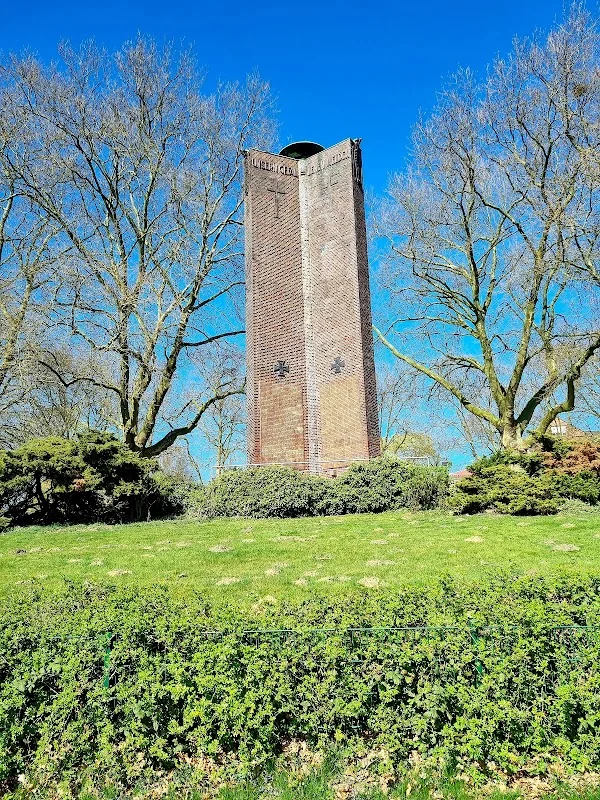
The Ehrenmal Gelsenkirchen-Buer is not a place for loud programs or big show effects, but a historical memorial site with a clear message. Those who come here encounter a monument that encapsulates several epochs of German history: the remembrance of the fallen of the Franco-Prussian War 1870/71, the dead of the First World War, and the victims of the Ruhrkampf of 1923. Later, the monument was deliberately reinterpreted after the Second World War and today bears the character of a memorial that reminds us of war, violence, and peace. It is located in Buer above the Berger See in the Berger Anlagen, making it one of the most distinctive green areas of the district. This location makes the site special: it is historically significant, well-placed, and embedded in a picturesque environment. To understand the Ehrenmal, one should not only see the structure itself but also the political and social upheavals that have changed its significance. ([gelsenkirchen.de](https://www.gelsenkirchen.de/de/stadtprofil/stadtgeschichten/erinnerungsorte/_Ehrenmal_Gelsenkirchen-Buer.aspx))
How did the Ehrenmal Gelsenkirchen-Buer come into being?
The creation of the memorial began as early as the mid-1920s. The initiative came in 1925 from the citizens of Buer, local people who wanted to create a visible place of remembrance. Behind the project stood shooting and warrior associations, the volunteer fire department, churches, the city administration, and also the mining industry. This broad support shows that the endeavor in Buer was not seen as a niche project but as a common concern of the entire city community. The local press also participated by appealing to the public for donations. Originally, the Ehrenmal was planned as a tribute to the soldiers from Buer who fell in the Franco-Prussian War, to the fallen of the First World War, and to the dead of the Ruhrkampf of 1923. Thus, the site connected different layers of remembrance: national wars, local victims, and the conflicts of the early Weimar Republic. The inauguration followed later on May 13, 1934. The nearly decade-long gap between the initiative and the inauguration clearly indicates how much the political framework changed during this time. A memorial that was originally a citizen-driven remembrance project soon became one that would be appropriated by the National Socialists. ([gelsenkirchen.de](https://www.gelsenkirchen.de/de/stadtprofil/stadtgeschichten/erinnerungsorte/_Ehrenmal_Gelsenkirchen-Buer.aspx))
For the SEO relevance of search terms related to the Ehrenmal Gelsenkirchen-Buer, this history of its creation is important. Those searching for ehrenmal buer, ehrenmal gelsenkirchen, or denkmal gelsenkirchen-buer usually expect not only a brief description of the location but also its historical context: Why was the place created? Who supported it? And what events were initially commemorated there? The answers show that the Ehrenmal, in its fundamental idea, was an expression of grief, community, and public remembrance. At the same time, the location is significant. The monument is not situated randomly but in an area that developed early on as a landscape and symbolically charged space. In the 1920s, the Buer green belt was systematically opened up for the public. The Berger See was created during this time, and the park landscape around Schloss Berge was restored based on historical models. Thus, the Ehrenmal is located in an environment that was not only beautiful but also consciously designed in urban planning terms. This connection of memory culture with the history of an entire district is what makes this place special. ([gelsenkirchen.de](https://www.gelsenkirchen.de/de/freizeit/ausfluege_und_sehenswuerdigkeiten/schloss_berge/index.aspx))
What role did the Ehrenmal play during the Nazi era and afterwards?
From 1933, the National Socialists took the lead in shaping the monument. This phase is central to understanding the Ehrenmal because it has profoundly shaped the site. A swastika and inscriptions were added to the monument that stylized Ludwig Knickmann and Joseph Woltmann as so-called martyrs of the NSDAP. Thus, what was originally a citizen-initiated memorial site became an instrument of National Socialist symbolism and propaganda. During the Third Reich, the Ehrenmal in Buer was a central place for hero and death cult. Regular propaganda events glorified the death in war and heroism and aimed to promote the willingness to sacrifice and community thinking in line with NS ideology. These facts are important because they explain why the site is charged not only historically but also politically. Today, those searching for ehrenmal gelsenkirchen or mahnmal buer find not just a monument but a memorial site that makes the fractures of the 20th century visible. The Ehrenmal is therefore not simply a silent structure but a testament to how memory can be reinterpreted in different political systems. ([gelsenkirchen.de](https://www.gelsenkirchen.de/de/stadtprofil/stadtgeschichten/erinnerungsorte/_Ehrenmal_Gelsenkirchen-Buer.aspx))
After the Second World War, the significance of the site changed fundamentally. All inscriptions and symbols that pointed to the National Socialist past were removed. Instead, inscriptions were added that commemorate the victims of the Second World War and call for peace. This gave the Ehrenmal the character of a memorial. This reallocation is more than a formal correction: it marks a conscious step from a heroic, militarized memory to a reflective, peace-oriented culture of remembrance. To this day, memorial services of the Volksbund Deutsche Kriegsgräberfürsorge take place regularly at the Ehrenmal. Furthermore, on November 15, 2015, the memorial plaque for the Ehrenmal was presented to the public, which additionally marks the site as a historical learning and remembrance space. The current significance of the Ehrenmal lies precisely in this tension: it is a visible monument with a troubled past, but at the same time a memorial that reminds us of the consequences of war and violence and translates public memory into the present. ([gelsenkirchen.de](https://www.gelsenkirchen.de/de/stadtprofil/stadtgeschichten/erinnerungsorte/_Ehrenmal_Gelsenkirchen-Buer.aspx))
Where is the Ehrenmal located at Berger See and why is the surrounding area so important?
The Ehrenmal is located in Buer above the Berger See and thus in one of the defining green spaces of northern Gelsenkirchen. This location is crucial for the perception of the site because the monument does not appear isolated but is part of a historical park and lake landscape. The city describes the area around Schloss Berge and the Berger See as part of today's Berger Anlagen, which is about 73 hectares in size. The most important components include the castle garden with a French Rococo garden, the castle park with an English landscape garden, the perennial garden, the fairy tale ground, the dahlia garden, and the facilities at Berger See. The lake itself was dammed in 1930. Around it, there is a large playground, a children's playground, and a boat rental, making the area to this day a popular spot for families, day-trippers, and those seeking relaxation. This also explains why the Ehrenmal is often mentioned in public perception together with Berger See and Schloss Berge. Those searching for berger see, schloss berge, or berger anlagen often also come across the Ehrenmal because the places are spatially and historically closely connected. For a visit, this means: one cannot see the memorial as just a single point but as part of a larger cultural and recreational space. ([gelsenkirchen.de](https://www.gelsenkirchen.de/de/freizeit/ausfluege_und_sehenswuerdigkeiten/schloss_berge/index.aspx))
This environment gives the site a special atmosphere. The Berger See is located in a landscape protection area and is part of an artificially created lake in the midst of an old castle park. The city mentions that the area is accessible via tram line 302 to the Berger See stop and bus line 380 to the Schloß Berge stop. For cyclists, there is access via the bike path on Kurt-Schumacher-Straße, and for motorists, there are parking spaces available at Schloss Berge. At the same time, the site is not only interesting from a landscape perspective but also from a cultural-historical perspective. The green spaces were opened up for the public in the 1920s, and the Buer green belt still forms a green band that connects recreation, urban history, and nature. It is precisely in this interplay that the charm of the Ehrenmal lies: it stands at a point where memory, park landscape, and urban historical development intersect. Therefore, those visiting the site experience not only a monument but also a piece of built urban history on the edge of a popular excursion area. ([gelsenkirchen.de](https://www.gelsenkirchen.de/de/freizeit/ausfluege_und_sehenswuerdigkeiten/schloss_berge/index.aspx))
How do you get to the Ehrenmal Gelsenkirchen-Buer and where can you park?
For practical orientation, it is important to note that the official address of the memorial plaque is given as Am Ehrenmal, 45894 Gelsenkirchen. This also fits with the location of the monument above the Berger See. Those arriving by public transport should best orient themselves to the Berger See stop or Schloss Berge. According to the city’s information about the Berger See area, tram line 302 goes to Berger See, and bus line 380 connects the area with Schloss Berge. For those cycling, the area can be reached via the bike path on Kurt-Schumacher-Straße. By car, the parking situation at Schloss Berge is the easiest, as parking spaces are mentioned there. For searches like ehrenmal gelsenkirchen buer, anfahrt ehrenmal, or parken schloss berge, this information is particularly helpful as it makes the visit well-planned. The Ehrenmal is not located in a pedestrian zone but at the edge of a large recreational and park area, allowing for a good combination of arrival and walk. Those wishing to photograph or quietly contemplate the site should take some time, as the surroundings invite one to understand the journey to the monument as part of the visit. ([gelsenkirchen.de](https://www.gelsenkirchen.de/de/stadtprofil/stadtgeschichten/erinnerungsorte/_Ehrenmal_Gelsenkirchen-Buer.aspx))
It is also practical that the Ehrenmal can be combined with a walk through the Berger Anlagen. The city describes the Berger See as an attractive attraction with a playground, children's playground, and boat rental, while Schloss Berge, as a renovated castle complex, now combines hotel, restaurant, and conference use. For visitors, this means that an appointment at the Ehrenmal does not have to be just a quick stop. Instead, it can turn into a leisurely walk through a historical park, where the memorial culture of the Ehrenmal connects with the recreational function of the area. This dual role makes the site interesting: the Ehrenmal is not a venue in the strict sense but a place of pause that still lies in the midst of a lively excursion area. Therefore, those who wish to stay after the visit will find enough space for a longer stay in the immediate vicinity. This is an important aspect for all those specifically searching for the terms berger see, schloss berge, and ehrenmal buer, who want to understand not only the past but also the current value of the site. ([gelsenkirchen.de](https://www.gelsenkirchen.de/de/freizeit/ausfluege_und_sehenswuerdigkeiten/schloss_berge/index.aspx))
Why is the Ehrenmal still an important place of remembrance today?
The current significance of the Ehrenmal lies primarily in the fact that it is regularly integrated into public memory. The city of Gelsenkirchen reports that memorial services of the Volksbund Deutsche Kriegsgräberfürsorge still take place there. This became particularly visible in connection with the Volkstrauertag, on which the city of Gelsenkirchen has been holding memorial services since 1994. A recent city report from November 17, 2025, describes a memorial event at the Ehrenmal above the Berger See, attended by about 80 people. Among those participating were members of Bundeswehr and reservist associations, a citizens' shooting club, as well as students from the Gesamtschule Berger Feld. Such events show that the site is important not only in historical retrospect but also as a place of learning for democracy, peace, and responsibility. For search queries like volkstrauertag buer, gedenkfeier buer, or geschichte ehrenmal, not only the past is relevant but also the lived present. The Ehrenmal is a memorial site where local history, political education, and public remembrance converge. ([gelsenkirchen.de](https://www.gelsenkirchen.de/de/stadtprofil/stadtgeschichten/erinnerungsorte/_Ehrenmal_Gelsenkirchen-Buer.aspx))
The public communication of the site has also been strengthened in recent years. The memorial plaque was presented in 2015, explicitly incorporating the Ehrenmal into the city’s network of remembrance. The official classification is clear: after the removal of the National Socialist symbols and inscriptions, the monument was reallocated as a memorial. This transformation is the core of its current significance. A memorial not only displays a past achievement or a historical fact but also calls for reflection. Precisely for this reason, the Ehrenmal fits so well into today’s culture of remembrance. It shows how a monument with a tumultuous history can become a place of peace remembrance. At the same time, the historical burden remains visible, making the site not simpler but more honest. For visitors, this means: the Ehrenmal is a place where one does not just consume history but takes it seriously. Those who take their time here better understand why memory in a city like Gelsenkirchen is anchored not only in museums but also in the urban space itself. ([gelsenkirchen.de](https://www.gelsenkirchen.de/de/stadtprofil/stadtgeschichten/erinnerungsorte/_Ehrenmal_Gelsenkirchen-Buer.aspx))
What has been renovated at the Ehrenmal and why is preservation important?
Another important aspect is the structural preservation of the monument. In June 2018, the WAZ reported on a renovation of the Ehrenmal in Buer, during which the monument was scaffolded and the work was to be completed during the summer holidays. According to the report, the estimated costs were around 30,000 euros. Such measures show that the Ehrenmal must be maintained not only symbolically but also materially if it is to retain its function as a memorial site. Especially with historical outdoor sites, weather, aging, and structural substance play a significant role. Therefore, renovation is not a minor issue but part of the responsibility of monument preservation. For a search query like ehrenmal buer or denkmal gelsenkirchen-buer, this is relevant because many interested parties want to know not only the history but also the current condition of a site. That the city and local media documented the renovation underscores the significance of the monument in the urban landscape. A well-maintained memorial can keep memory visible without losing its historical depth. This is precisely where the value of preservation lies: the monument remains readable, accessible, and respectfully embedded in its surroundings. ([waz.de](https://www.waz.de/staedte/gelsenkirchen-buer/article214478367/ehrenmal-in-buer-wird-bis-zur-letzten-fuge-saniert.html?utm_source=openai))
The long-term value of the Ehrenmal lies in its multifunctionality. It is a historical testimony, a memorial, part of a park landscape, and a fixed component of public remembrance. The surroundings at Berger See and in the Berger Anlagen make the structure not less serious but rather more accessible, as many people perceive the site as part of a walk or an outing. At the same time, the history of the monument compels one to look more closely. The original idea, the involvement of the citizenry, the appropriation by the National Socialists, the later reallocation, and today’s memorial services together create a dense picture of German memory and urban culture. Therefore, those engaging with the Ehrenmal Gelsenkirchen-Buer not only receive information about a single site but also an example of how significance changes over time. This makes the monument equally interesting for visitors, those historically interested, and all those searching for ehrenmal gelsenkirchen, berger see, or schloss berge. It is a place of pause that remains dynamic because each generation reads and reinterprets it anew. ([gelsenkirchen.de](https://www.gelsenkirchen.de/de/stadtprofil/stadtgeschichten/erinnerungsorte/_Ehrenmal_Gelsenkirchen-Buer.aspx))
Sources:
- City of Gelsenkirchen – The Ehrenmal Gelsenkirchen-Buer
- City of Gelsenkirchen – Memorial Plaque: The Ehrenmal Gelsenkirchen Buer (PDF)
- City of Gelsenkirchen – Schloss Berge
- City of Gelsenkirchen – Berger See / Schloß Berge (PDF)
- City of Gelsenkirchen – Commemorative Event for Volkstrauertag at the Ehrenmal in Buer
- WAZ – Ehrenmal in Buer to be renovated down to the last joint (06.05.2018)
Show moreShow less
Ehrenmal Gelsenkirchen-Buer | Memorial & Commemorative Site
The Ehrenmal Gelsenkirchen-Buer is not a place for loud programs or big show effects, but a historical memorial site with a clear message. Those who come here encounter a monument that encapsulates several epochs of German history: the remembrance of the fallen of the Franco-Prussian War 1870/71, the dead of the First World War, and the victims of the Ruhrkampf of 1923. Later, the monument was deliberately reinterpreted after the Second World War and today bears the character of a memorial that reminds us of war, violence, and peace. It is located in Buer above the Berger See in the Berger Anlagen, making it one of the most distinctive green areas of the district. This location makes the site special: it is historically significant, well-placed, and embedded in a picturesque environment. To understand the Ehrenmal, one should not only see the structure itself but also the political and social upheavals that have changed its significance. ([gelsenkirchen.de](https://www.gelsenkirchen.de/de/stadtprofil/stadtgeschichten/erinnerungsorte/_Ehrenmal_Gelsenkirchen-Buer.aspx))
How did the Ehrenmal Gelsenkirchen-Buer come into being?
The creation of the memorial began as early as the mid-1920s. The initiative came in 1925 from the citizens of Buer, local people who wanted to create a visible place of remembrance. Behind the project stood shooting and warrior associations, the volunteer fire department, churches, the city administration, and also the mining industry. This broad support shows that the endeavor in Buer was not seen as a niche project but as a common concern of the entire city community. The local press also participated by appealing to the public for donations. Originally, the Ehrenmal was planned as a tribute to the soldiers from Buer who fell in the Franco-Prussian War, to the fallen of the First World War, and to the dead of the Ruhrkampf of 1923. Thus, the site connected different layers of remembrance: national wars, local victims, and the conflicts of the early Weimar Republic. The inauguration followed later on May 13, 1934. The nearly decade-long gap between the initiative and the inauguration clearly indicates how much the political framework changed during this time. A memorial that was originally a citizen-driven remembrance project soon became one that would be appropriated by the National Socialists. ([gelsenkirchen.de](https://www.gelsenkirchen.de/de/stadtprofil/stadtgeschichten/erinnerungsorte/_Ehrenmal_Gelsenkirchen-Buer.aspx))
For the SEO relevance of search terms related to the Ehrenmal Gelsenkirchen-Buer, this history of its creation is important. Those searching for ehrenmal buer, ehrenmal gelsenkirchen, or denkmal gelsenkirchen-buer usually expect not only a brief description of the location but also its historical context: Why was the place created? Who supported it? And what events were initially commemorated there? The answers show that the Ehrenmal, in its fundamental idea, was an expression of grief, community, and public remembrance. At the same time, the location is significant. The monument is not situated randomly but in an area that developed early on as a landscape and symbolically charged space. In the 1920s, the Buer green belt was systematically opened up for the public. The Berger See was created during this time, and the park landscape around Schloss Berge was restored based on historical models. Thus, the Ehrenmal is located in an environment that was not only beautiful but also consciously designed in urban planning terms. This connection of memory culture with the history of an entire district is what makes this place special. ([gelsenkirchen.de](https://www.gelsenkirchen.de/de/freizeit/ausfluege_und_sehenswuerdigkeiten/schloss_berge/index.aspx))
What role did the Ehrenmal play during the Nazi era and afterwards?
From 1933, the National Socialists took the lead in shaping the monument. This phase is central to understanding the Ehrenmal because it has profoundly shaped the site. A swastika and inscriptions were added to the monument that stylized Ludwig Knickmann and Joseph Woltmann as so-called martyrs of the NSDAP. Thus, what was originally a citizen-initiated memorial site became an instrument of National Socialist symbolism and propaganda. During the Third Reich, the Ehrenmal in Buer was a central place for hero and death cult. Regular propaganda events glorified the death in war and heroism and aimed to promote the willingness to sacrifice and community thinking in line with NS ideology. These facts are important because they explain why the site is charged not only historically but also politically. Today, those searching for ehrenmal gelsenkirchen or mahnmal buer find not just a monument but a memorial site that makes the fractures of the 20th century visible. The Ehrenmal is therefore not simply a silent structure but a testament to how memory can be reinterpreted in different political systems. ([gelsenkirchen.de](https://www.gelsenkirchen.de/de/stadtprofil/stadtgeschichten/erinnerungsorte/_Ehrenmal_Gelsenkirchen-Buer.aspx))
After the Second World War, the significance of the site changed fundamentally. All inscriptions and symbols that pointed to the National Socialist past were removed. Instead, inscriptions were added that commemorate the victims of the Second World War and call for peace. This gave the Ehrenmal the character of a memorial. This reallocation is more than a formal correction: it marks a conscious step from a heroic, militarized memory to a reflective, peace-oriented culture of remembrance. To this day, memorial services of the Volksbund Deutsche Kriegsgräberfürsorge take place regularly at the Ehrenmal. Furthermore, on November 15, 2015, the memorial plaque for the Ehrenmal was presented to the public, which additionally marks the site as a historical learning and remembrance space. The current significance of the Ehrenmal lies precisely in this tension: it is a visible monument with a troubled past, but at the same time a memorial that reminds us of the consequences of war and violence and translates public memory into the present. ([gelsenkirchen.de](https://www.gelsenkirchen.de/de/stadtprofil/stadtgeschichten/erinnerungsorte/_Ehrenmal_Gelsenkirchen-Buer.aspx))
Where is the Ehrenmal located at Berger See and why is the surrounding area so important?
The Ehrenmal is located in Buer above the Berger See and thus in one of the defining green spaces of northern Gelsenkirchen. This location is crucial for the perception of the site because the monument does not appear isolated but is part of a historical park and lake landscape. The city describes the area around Schloss Berge and the Berger See as part of today's Berger Anlagen, which is about 73 hectares in size. The most important components include the castle garden with a French Rococo garden, the castle park with an English landscape garden, the perennial garden, the fairy tale ground, the dahlia garden, and the facilities at Berger See. The lake itself was dammed in 1930. Around it, there is a large playground, a children's playground, and a boat rental, making the area to this day a popular spot for families, day-trippers, and those seeking relaxation. This also explains why the Ehrenmal is often mentioned in public perception together with Berger See and Schloss Berge. Those searching for berger see, schloss berge, or berger anlagen often also come across the Ehrenmal because the places are spatially and historically closely connected. For a visit, this means: one cannot see the memorial as just a single point but as part of a larger cultural and recreational space. ([gelsenkirchen.de](https://www.gelsenkirchen.de/de/freizeit/ausfluege_und_sehenswuerdigkeiten/schloss_berge/index.aspx))
This environment gives the site a special atmosphere. The Berger See is located in a landscape protection area and is part of an artificially created lake in the midst of an old castle park. The city mentions that the area is accessible via tram line 302 to the Berger See stop and bus line 380 to the Schloß Berge stop. For cyclists, there is access via the bike path on Kurt-Schumacher-Straße, and for motorists, there are parking spaces available at Schloss Berge. At the same time, the site is not only interesting from a landscape perspective but also from a cultural-historical perspective. The green spaces were opened up for the public in the 1920s, and the Buer green belt still forms a green band that connects recreation, urban history, and nature. It is precisely in this interplay that the charm of the Ehrenmal lies: it stands at a point where memory, park landscape, and urban historical development intersect. Therefore, those visiting the site experience not only a monument but also a piece of built urban history on the edge of a popular excursion area. ([gelsenkirchen.de](https://www.gelsenkirchen.de/de/freizeit/ausfluege_und_sehenswuerdigkeiten/schloss_berge/index.aspx))
How do you get to the Ehrenmal Gelsenkirchen-Buer and where can you park?
For practical orientation, it is important to note that the official address of the memorial plaque is given as Am Ehrenmal, 45894 Gelsenkirchen. This also fits with the location of the monument above the Berger See. Those arriving by public transport should best orient themselves to the Berger See stop or Schloss Berge. According to the city’s information about the Berger See area, tram line 302 goes to Berger See, and bus line 380 connects the area with Schloss Berge. For those cycling, the area can be reached via the bike path on Kurt-Schumacher-Straße. By car, the parking situation at Schloss Berge is the easiest, as parking spaces are mentioned there. For searches like ehrenmal gelsenkirchen buer, anfahrt ehrenmal, or parken schloss berge, this information is particularly helpful as it makes the visit well-planned. The Ehrenmal is not located in a pedestrian zone but at the edge of a large recreational and park area, allowing for a good combination of arrival and walk. Those wishing to photograph or quietly contemplate the site should take some time, as the surroundings invite one to understand the journey to the monument as part of the visit. ([gelsenkirchen.de](https://www.gelsenkirchen.de/de/stadtprofil/stadtgeschichten/erinnerungsorte/_Ehrenmal_Gelsenkirchen-Buer.aspx))
It is also practical that the Ehrenmal can be combined with a walk through the Berger Anlagen. The city describes the Berger See as an attractive attraction with a playground, children's playground, and boat rental, while Schloss Berge, as a renovated castle complex, now combines hotel, restaurant, and conference use. For visitors, this means that an appointment at the Ehrenmal does not have to be just a quick stop. Instead, it can turn into a leisurely walk through a historical park, where the memorial culture of the Ehrenmal connects with the recreational function of the area. This dual role makes the site interesting: the Ehrenmal is not a venue in the strict sense but a place of pause that still lies in the midst of a lively excursion area. Therefore, those who wish to stay after the visit will find enough space for a longer stay in the immediate vicinity. This is an important aspect for all those specifically searching for the terms berger see, schloss berge, and ehrenmal buer, who want to understand not only the past but also the current value of the site. ([gelsenkirchen.de](https://www.gelsenkirchen.de/de/freizeit/ausfluege_und_sehenswuerdigkeiten/schloss_berge/index.aspx))
Why is the Ehrenmal still an important place of remembrance today?
The current significance of the Ehrenmal lies primarily in the fact that it is regularly integrated into public memory. The city of Gelsenkirchen reports that memorial services of the Volksbund Deutsche Kriegsgräberfürsorge still take place there. This became particularly visible in connection with the Volkstrauertag, on which the city of Gelsenkirchen has been holding memorial services since 1994. A recent city report from November 17, 2025, describes a memorial event at the Ehrenmal above the Berger See, attended by about 80 people. Among those participating were members of Bundeswehr and reservist associations, a citizens' shooting club, as well as students from the Gesamtschule Berger Feld. Such events show that the site is important not only in historical retrospect but also as a place of learning for democracy, peace, and responsibility. For search queries like volkstrauertag buer, gedenkfeier buer, or geschichte ehrenmal, not only the past is relevant but also the lived present. The Ehrenmal is a memorial site where local history, political education, and public remembrance converge. ([gelsenkirchen.de](https://www.gelsenkirchen.de/de/stadtprofil/stadtgeschichten/erinnerungsorte/_Ehrenmal_Gelsenkirchen-Buer.aspx))
The public communication of the site has also been strengthened in recent years. The memorial plaque was presented in 2015, explicitly incorporating the Ehrenmal into the city’s network of remembrance. The official classification is clear: after the removal of the National Socialist symbols and inscriptions, the monument was reallocated as a memorial. This transformation is the core of its current significance. A memorial not only displays a past achievement or a historical fact but also calls for reflection. Precisely for this reason, the Ehrenmal fits so well into today’s culture of remembrance. It shows how a monument with a tumultuous history can become a place of peace remembrance. At the same time, the historical burden remains visible, making the site not simpler but more honest. For visitors, this means: the Ehrenmal is a place where one does not just consume history but takes it seriously. Those who take their time here better understand why memory in a city like Gelsenkirchen is anchored not only in museums but also in the urban space itself. ([gelsenkirchen.de](https://www.gelsenkirchen.de/de/stadtprofil/stadtgeschichten/erinnerungsorte/_Ehrenmal_Gelsenkirchen-Buer.aspx))
What has been renovated at the Ehrenmal and why is preservation important?
Another important aspect is the structural preservation of the monument. In June 2018, the WAZ reported on a renovation of the Ehrenmal in Buer, during which the monument was scaffolded and the work was to be completed during the summer holidays. According to the report, the estimated costs were around 30,000 euros. Such measures show that the Ehrenmal must be maintained not only symbolically but also materially if it is to retain its function as a memorial site. Especially with historical outdoor sites, weather, aging, and structural substance play a significant role. Therefore, renovation is not a minor issue but part of the responsibility of monument preservation. For a search query like ehrenmal buer or denkmal gelsenkirchen-buer, this is relevant because many interested parties want to know not only the history but also the current condition of a site. That the city and local media documented the renovation underscores the significance of the monument in the urban landscape. A well-maintained memorial can keep memory visible without losing its historical depth. This is precisely where the value of preservation lies: the monument remains readable, accessible, and respectfully embedded in its surroundings. ([waz.de](https://www.waz.de/staedte/gelsenkirchen-buer/article214478367/ehrenmal-in-buer-wird-bis-zur-letzten-fuge-saniert.html?utm_source=openai))
The long-term value of the Ehrenmal lies in its multifunctionality. It is a historical testimony, a memorial, part of a park landscape, and a fixed component of public remembrance. The surroundings at Berger See and in the Berger Anlagen make the structure not less serious but rather more accessible, as many people perceive the site as part of a walk or an outing. At the same time, the history of the monument compels one to look more closely. The original idea, the involvement of the citizenry, the appropriation by the National Socialists, the later reallocation, and today’s memorial services together create a dense picture of German memory and urban culture. Therefore, those engaging with the Ehrenmal Gelsenkirchen-Buer not only receive information about a single site but also an example of how significance changes over time. This makes the monument equally interesting for visitors, those historically interested, and all those searching for ehrenmal gelsenkirchen, berger see, or schloss berge. It is a place of pause that remains dynamic because each generation reads and reinterprets it anew. ([gelsenkirchen.de](https://www.gelsenkirchen.de/de/stadtprofil/stadtgeschichten/erinnerungsorte/_Ehrenmal_Gelsenkirchen-Buer.aspx))
Sources:
- City of Gelsenkirchen – The Ehrenmal Gelsenkirchen-Buer
- City of Gelsenkirchen – Memorial Plaque: The Ehrenmal Gelsenkirchen Buer (PDF)
- City of Gelsenkirchen – Schloss Berge
- City of Gelsenkirchen – Berger See / Schloß Berge (PDF)
- City of Gelsenkirchen – Commemorative Event for Volkstrauertag at the Ehrenmal in Buer
- WAZ – Ehrenmal in Buer to be renovated down to the last joint (06.05.2018)
Ehrenmal Gelsenkirchen-Buer | Memorial & Commemorative Site
The Ehrenmal Gelsenkirchen-Buer is not a place for loud programs or big show effects, but a historical memorial site with a clear message. Those who come here encounter a monument that encapsulates several epochs of German history: the remembrance of the fallen of the Franco-Prussian War 1870/71, the dead of the First World War, and the victims of the Ruhrkampf of 1923. Later, the monument was deliberately reinterpreted after the Second World War and today bears the character of a memorial that reminds us of war, violence, and peace. It is located in Buer above the Berger See in the Berger Anlagen, making it one of the most distinctive green areas of the district. This location makes the site special: it is historically significant, well-placed, and embedded in a picturesque environment. To understand the Ehrenmal, one should not only see the structure itself but also the political and social upheavals that have changed its significance. ([gelsenkirchen.de](https://www.gelsenkirchen.de/de/stadtprofil/stadtgeschichten/erinnerungsorte/_Ehrenmal_Gelsenkirchen-Buer.aspx))
How did the Ehrenmal Gelsenkirchen-Buer come into being?
The creation of the memorial began as early as the mid-1920s. The initiative came in 1925 from the citizens of Buer, local people who wanted to create a visible place of remembrance. Behind the project stood shooting and warrior associations, the volunteer fire department, churches, the city administration, and also the mining industry. This broad support shows that the endeavor in Buer was not seen as a niche project but as a common concern of the entire city community. The local press also participated by appealing to the public for donations. Originally, the Ehrenmal was planned as a tribute to the soldiers from Buer who fell in the Franco-Prussian War, to the fallen of the First World War, and to the dead of the Ruhrkampf of 1923. Thus, the site connected different layers of remembrance: national wars, local victims, and the conflicts of the early Weimar Republic. The inauguration followed later on May 13, 1934. The nearly decade-long gap between the initiative and the inauguration clearly indicates how much the political framework changed during this time. A memorial that was originally a citizen-driven remembrance project soon became one that would be appropriated by the National Socialists. ([gelsenkirchen.de](https://www.gelsenkirchen.de/de/stadtprofil/stadtgeschichten/erinnerungsorte/_Ehrenmal_Gelsenkirchen-Buer.aspx))
For the SEO relevance of search terms related to the Ehrenmal Gelsenkirchen-Buer, this history of its creation is important. Those searching for ehrenmal buer, ehrenmal gelsenkirchen, or denkmal gelsenkirchen-buer usually expect not only a brief description of the location but also its historical context: Why was the place created? Who supported it? And what events were initially commemorated there? The answers show that the Ehrenmal, in its fundamental idea, was an expression of grief, community, and public remembrance. At the same time, the location is significant. The monument is not situated randomly but in an area that developed early on as a landscape and symbolically charged space. In the 1920s, the Buer green belt was systematically opened up for the public. The Berger See was created during this time, and the park landscape around Schloss Berge was restored based on historical models. Thus, the Ehrenmal is located in an environment that was not only beautiful but also consciously designed in urban planning terms. This connection of memory culture with the history of an entire district is what makes this place special. ([gelsenkirchen.de](https://www.gelsenkirchen.de/de/freizeit/ausfluege_und_sehenswuerdigkeiten/schloss_berge/index.aspx))
What role did the Ehrenmal play during the Nazi era and afterwards?
From 1933, the National Socialists took the lead in shaping the monument. This phase is central to understanding the Ehrenmal because it has profoundly shaped the site. A swastika and inscriptions were added to the monument that stylized Ludwig Knickmann and Joseph Woltmann as so-called martyrs of the NSDAP. Thus, what was originally a citizen-initiated memorial site became an instrument of National Socialist symbolism and propaganda. During the Third Reich, the Ehrenmal in Buer was a central place for hero and death cult. Regular propaganda events glorified the death in war and heroism and aimed to promote the willingness to sacrifice and community thinking in line with NS ideology. These facts are important because they explain why the site is charged not only historically but also politically. Today, those searching for ehrenmal gelsenkirchen or mahnmal buer find not just a monument but a memorial site that makes the fractures of the 20th century visible. The Ehrenmal is therefore not simply a silent structure but a testament to how memory can be reinterpreted in different political systems. ([gelsenkirchen.de](https://www.gelsenkirchen.de/de/stadtprofil/stadtgeschichten/erinnerungsorte/_Ehrenmal_Gelsenkirchen-Buer.aspx))
After the Second World War, the significance of the site changed fundamentally. All inscriptions and symbols that pointed to the National Socialist past were removed. Instead, inscriptions were added that commemorate the victims of the Second World War and call for peace. This gave the Ehrenmal the character of a memorial. This reallocation is more than a formal correction: it marks a conscious step from a heroic, militarized memory to a reflective, peace-oriented culture of remembrance. To this day, memorial services of the Volksbund Deutsche Kriegsgräberfürsorge take place regularly at the Ehrenmal. Furthermore, on November 15, 2015, the memorial plaque for the Ehrenmal was presented to the public, which additionally marks the site as a historical learning and remembrance space. The current significance of the Ehrenmal lies precisely in this tension: it is a visible monument with a troubled past, but at the same time a memorial that reminds us of the consequences of war and violence and translates public memory into the present. ([gelsenkirchen.de](https://www.gelsenkirchen.de/de/stadtprofil/stadtgeschichten/erinnerungsorte/_Ehrenmal_Gelsenkirchen-Buer.aspx))
Where is the Ehrenmal located at Berger See and why is the surrounding area so important?
The Ehrenmal is located in Buer above the Berger See and thus in one of the defining green spaces of northern Gelsenkirchen. This location is crucial for the perception of the site because the monument does not appear isolated but is part of a historical park and lake landscape. The city describes the area around Schloss Berge and the Berger See as part of today's Berger Anlagen, which is about 73 hectares in size. The most important components include the castle garden with a French Rococo garden, the castle park with an English landscape garden, the perennial garden, the fairy tale ground, the dahlia garden, and the facilities at Berger See. The lake itself was dammed in 1930. Around it, there is a large playground, a children's playground, and a boat rental, making the area to this day a popular spot for families, day-trippers, and those seeking relaxation. This also explains why the Ehrenmal is often mentioned in public perception together with Berger See and Schloss Berge. Those searching for berger see, schloss berge, or berger anlagen often also come across the Ehrenmal because the places are spatially and historically closely connected. For a visit, this means: one cannot see the memorial as just a single point but as part of a larger cultural and recreational space. ([gelsenkirchen.de](https://www.gelsenkirchen.de/de/freizeit/ausfluege_und_sehenswuerdigkeiten/schloss_berge/index.aspx))
This environment gives the site a special atmosphere. The Berger See is located in a landscape protection area and is part of an artificially created lake in the midst of an old castle park. The city mentions that the area is accessible via tram line 302 to the Berger See stop and bus line 380 to the Schloß Berge stop. For cyclists, there is access via the bike path on Kurt-Schumacher-Straße, and for motorists, there are parking spaces available at Schloss Berge. At the same time, the site is not only interesting from a landscape perspective but also from a cultural-historical perspective. The green spaces were opened up for the public in the 1920s, and the Buer green belt still forms a green band that connects recreation, urban history, and nature. It is precisely in this interplay that the charm of the Ehrenmal lies: it stands at a point where memory, park landscape, and urban historical development intersect. Therefore, those visiting the site experience not only a monument but also a piece of built urban history on the edge of a popular excursion area. ([gelsenkirchen.de](https://www.gelsenkirchen.de/de/freizeit/ausfluege_und_sehenswuerdigkeiten/schloss_berge/index.aspx))
How do you get to the Ehrenmal Gelsenkirchen-Buer and where can you park?
For practical orientation, it is important to note that the official address of the memorial plaque is given as Am Ehrenmal, 45894 Gelsenkirchen. This also fits with the location of the monument above the Berger See. Those arriving by public transport should best orient themselves to the Berger See stop or Schloss Berge. According to the city’s information about the Berger See area, tram line 302 goes to Berger See, and bus line 380 connects the area with Schloss Berge. For those cycling, the area can be reached via the bike path on Kurt-Schumacher-Straße. By car, the parking situation at Schloss Berge is the easiest, as parking spaces are mentioned there. For searches like ehrenmal gelsenkirchen buer, anfahrt ehrenmal, or parken schloss berge, this information is particularly helpful as it makes the visit well-planned. The Ehrenmal is not located in a pedestrian zone but at the edge of a large recreational and park area, allowing for a good combination of arrival and walk. Those wishing to photograph or quietly contemplate the site should take some time, as the surroundings invite one to understand the journey to the monument as part of the visit. ([gelsenkirchen.de](https://www.gelsenkirchen.de/de/stadtprofil/stadtgeschichten/erinnerungsorte/_Ehrenmal_Gelsenkirchen-Buer.aspx))
It is also practical that the Ehrenmal can be combined with a walk through the Berger Anlagen. The city describes the Berger See as an attractive attraction with a playground, children's playground, and boat rental, while Schloss Berge, as a renovated castle complex, now combines hotel, restaurant, and conference use. For visitors, this means that an appointment at the Ehrenmal does not have to be just a quick stop. Instead, it can turn into a leisurely walk through a historical park, where the memorial culture of the Ehrenmal connects with the recreational function of the area. This dual role makes the site interesting: the Ehrenmal is not a venue in the strict sense but a place of pause that still lies in the midst of a lively excursion area. Therefore, those who wish to stay after the visit will find enough space for a longer stay in the immediate vicinity. This is an important aspect for all those specifically searching for the terms berger see, schloss berge, and ehrenmal buer, who want to understand not only the past but also the current value of the site. ([gelsenkirchen.de](https://www.gelsenkirchen.de/de/freizeit/ausfluege_und_sehenswuerdigkeiten/schloss_berge/index.aspx))
Why is the Ehrenmal still an important place of remembrance today?
The current significance of the Ehrenmal lies primarily in the fact that it is regularly integrated into public memory. The city of Gelsenkirchen reports that memorial services of the Volksbund Deutsche Kriegsgräberfürsorge still take place there. This became particularly visible in connection with the Volkstrauertag, on which the city of Gelsenkirchen has been holding memorial services since 1994. A recent city report from November 17, 2025, describes a memorial event at the Ehrenmal above the Berger See, attended by about 80 people. Among those participating were members of Bundeswehr and reservist associations, a citizens' shooting club, as well as students from the Gesamtschule Berger Feld. Such events show that the site is important not only in historical retrospect but also as a place of learning for democracy, peace, and responsibility. For search queries like volkstrauertag buer, gedenkfeier buer, or geschichte ehrenmal, not only the past is relevant but also the lived present. The Ehrenmal is a memorial site where local history, political education, and public remembrance converge. ([gelsenkirchen.de](https://www.gelsenkirchen.de/de/stadtprofil/stadtgeschichten/erinnerungsorte/_Ehrenmal_Gelsenkirchen-Buer.aspx))
The public communication of the site has also been strengthened in recent years. The memorial plaque was presented in 2015, explicitly incorporating the Ehrenmal into the city’s network of remembrance. The official classification is clear: after the removal of the National Socialist symbols and inscriptions, the monument was reallocated as a memorial. This transformation is the core of its current significance. A memorial not only displays a past achievement or a historical fact but also calls for reflection. Precisely for this reason, the Ehrenmal fits so well into today’s culture of remembrance. It shows how a monument with a tumultuous history can become a place of peace remembrance. At the same time, the historical burden remains visible, making the site not simpler but more honest. For visitors, this means: the Ehrenmal is a place where one does not just consume history but takes it seriously. Those who take their time here better understand why memory in a city like Gelsenkirchen is anchored not only in museums but also in the urban space itself. ([gelsenkirchen.de](https://www.gelsenkirchen.de/de/stadtprofil/stadtgeschichten/erinnerungsorte/_Ehrenmal_Gelsenkirchen-Buer.aspx))
What has been renovated at the Ehrenmal and why is preservation important?
Another important aspect is the structural preservation of the monument. In June 2018, the WAZ reported on a renovation of the Ehrenmal in Buer, during which the monument was scaffolded and the work was to be completed during the summer holidays. According to the report, the estimated costs were around 30,000 euros. Such measures show that the Ehrenmal must be maintained not only symbolically but also materially if it is to retain its function as a memorial site. Especially with historical outdoor sites, weather, aging, and structural substance play a significant role. Therefore, renovation is not a minor issue but part of the responsibility of monument preservation. For a search query like ehrenmal buer or denkmal gelsenkirchen-buer, this is relevant because many interested parties want to know not only the history but also the current condition of a site. That the city and local media documented the renovation underscores the significance of the monument in the urban landscape. A well-maintained memorial can keep memory visible without losing its historical depth. This is precisely where the value of preservation lies: the monument remains readable, accessible, and respectfully embedded in its surroundings. ([waz.de](https://www.waz.de/staedte/gelsenkirchen-buer/article214478367/ehrenmal-in-buer-wird-bis-zur-letzten-fuge-saniert.html?utm_source=openai))
The long-term value of the Ehrenmal lies in its multifunctionality. It is a historical testimony, a memorial, part of a park landscape, and a fixed component of public remembrance. The surroundings at Berger See and in the Berger Anlagen make the structure not less serious but rather more accessible, as many people perceive the site as part of a walk or an outing. At the same time, the history of the monument compels one to look more closely. The original idea, the involvement of the citizenry, the appropriation by the National Socialists, the later reallocation, and today’s memorial services together create a dense picture of German memory and urban culture. Therefore, those engaging with the Ehrenmal Gelsenkirchen-Buer not only receive information about a single site but also an example of how significance changes over time. This makes the monument equally interesting for visitors, those historically interested, and all those searching for ehrenmal gelsenkirchen, berger see, or schloss berge. It is a place of pause that remains dynamic because each generation reads and reinterprets it anew. ([gelsenkirchen.de](https://www.gelsenkirchen.de/de/stadtprofil/stadtgeschichten/erinnerungsorte/_Ehrenmal_Gelsenkirchen-Buer.aspx))
Sources:
- City of Gelsenkirchen – The Ehrenmal Gelsenkirchen-Buer
- City of Gelsenkirchen – Memorial Plaque: The Ehrenmal Gelsenkirchen Buer (PDF)
- City of Gelsenkirchen – Schloss Berge
- City of Gelsenkirchen – Berger See / Schloß Berge (PDF)
- City of Gelsenkirchen – Commemorative Event for Volkstrauertag at the Ehrenmal in Buer
- WAZ – Ehrenmal in Buer to be renovated down to the last joint (06.05.2018)
Upcoming Events
No events found
Frequently Asked Questions
Reviews
Najia Iffat
13. August 2024
Relaxing place
Dr. Mohammed Alshiaani
3. August 2021
Good
Olimpiu-Nicusor Vasinca
8. February 2024
Very beautiful landscape over the Bergersee. I really like it here. You can do a lot of activities here. You can walk, bike, or even boat (in summer) around the Bergersee or the fences. There's also a kiosk, but it's only open in summer; however, you can definitely eat or have a beer.
Monika
26. October 2020
Part of Schloss Berge. A nice recreational area for hiking, boating on the lake in summer. And enjoying coffee and cake on the terrace of the restaurant in nice weather. Then taking a digestive walk in the beautifully landscaped park. And admiring the coat of arms of Gelsenkirchen in plant form.
Bernd Reckmeier
16. June 2021
Beautiful place. Great view of the Berger See and the roof of the arena. Highly recommend taking a walk around the lake or over to Schloss Berge from here.