
Gelsenkirchen
Consolstraße 3, 45889 Gelsenkirchen, Deutschland
Consol4 | Music Rehearsal Center & Events
Consol4 is a special place for music in Gelsenkirchen. The music rehearsal center is located at Consolstraße 3 in the Bismarck district and is part of the Consol cultural area, which has been developed on the site of the former Consolidation coal mine. Where industrial machines once shaped the daily work of mining, today bands, musicians, culture enthusiasts, and neighbors come together. The name Consol4 refers to the historic mining area and at the same time to a vibrant musical infrastructure that goes far beyond an ordinary rehearsal room.
Since August 2005, more than 50 bands have been using the facility. The equipment includes 39 acoustically decoupled rooms of approximately 25 square meters each, a large lobby as a common room, modern sanitary facilities, video-monitored corridors and entrances, and an elevator in the former shaft structure. Additionally, there is an open-air stage directly in front of the building. Thus, Consol4 is primarily a music rehearsal center, but also an important meeting point for concerts, open stages, workshops, and events of the independent music scene.
The special atmosphere arises from the interplay of industrial history and today's cultural work. The former hoisting machine house visibly preserves the memory of the coal mine, while the rooms are filled with current musical projects. Therefore, those looking for Consol4 are not just seeking an address for music rehearsals, but a place where self-organization, promotion of young talent, live music, and structural change come together.
Consol4 Gelsenkirchen as a Music Rehearsal Center
The most important topic surrounding Consol4 is its function as a music rehearsal center. The facility was created to provide musicians from Gelsenkirchen and the surrounding area with suitable spaces for regular rehearsals. In a city with a diverse independent music scene, such infrastructure is of great importance. Bands need spaces where they can work independently of private apartments, basements, or improvised solutions. Consol4 offers a permanently usable environment where musical development, exchange, and collective organization can take place.
The center has 39 rehearsal rooms. Each room is approximately 25 square meters and acoustically decoupled. The decoupling is particularly important because many groups work in the building simultaneously. It allows different bands to set up their instruments, develop arrangements, and work on their sound without overlapping the entire building complex. This creates more reliable conditions for drums, guitars, bass, vocals, and electronic instruments than in many private rehearsal rooms.
According to the city of Gelsenkirchen, more than 50 bands rehearse at Consol4. The musicians do not come exclusively from Gelsenkirchen, but also from the surrounding area. The high demand shows how important spaces for self-organized music work are in the Ruhr area. The city describes a long waiting list and points out that even more acts are looking for suitable rehearsal rooms. Therefore, Consol4 is not just a building with several rooms, but a part of the cultural basic supply for an active local scene.
The operation is managed by the interest group of cultural workers in Gelsenkirchen e.V. The abbreviation IKM stands for an association that organizes the daily operations of the house and bundles the interests of the musicians working there. The structure is supported by an advisory board with representatives from the groups, the IKM, the city, and external experts. This organizational form shapes the character of the house: Consol4 is not solely operated by a commercial event agency, but by people who come from the music scene themselves and collaboratively shape their infrastructure.
For visitors, this means that Consol4 functions differently than a classic concert hall. The house is primarily a rehearsal center. Events take place, but they are part of a broader cultural engagement. The atmosphere is often more immediate, personal, and closer to the involved musicians. Therefore, those attending a concert at Consol4 experience a place where the scene not only performs but also rehearses, plans, organizes, and develops further.
Consol4 Events, Concerts, and Program
The event program of Consol4 arises from the work of the IKM, the activities of the bands rehearsing there, and collaborations with other actors in the Consol cultural area. Depending on the period, concerts, open stages, workshops, festivals, and smaller cultural formats may be on the program. The events target different audiences: people from the immediate neighborhood, music fans from Gelsenkirchen, families, and visitors who want to get to know the independent music scene of the Ruhr area.
A key component is live concerts. The spectrum can range from local bands and emerging projects to thematically oriented evenings. The spatial situation differs from large halls with standardized seating or standing systems. The focus is on the direct contact between stage and audience as well as the special environment of the former mining building. Depending on the event, the interior can be used, or the music can move outside to the open-air stage in front of the house.
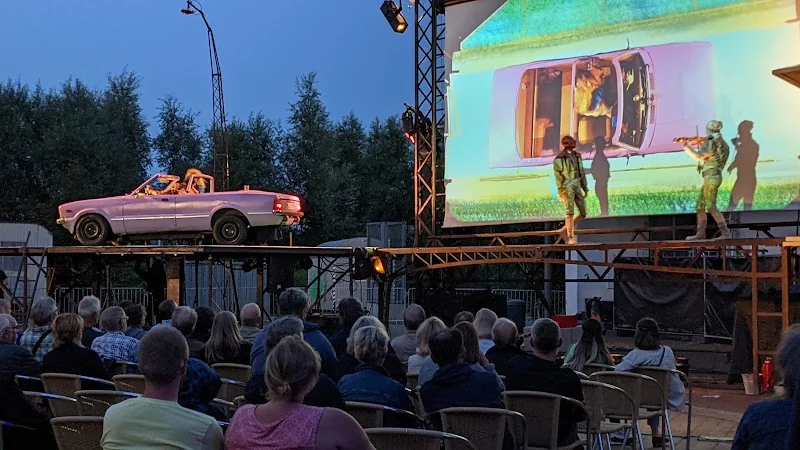
The open-air stage is a standalone highlight of the location. It expands the possibilities of the music rehearsal center and connects the building with the public space of Consol Park. Events held outdoors can incorporate the industrial backdrop, the paths of the former mining site, and the park landscape. For visitors, the perception of the place changes: Consol4 is not only experienced as a house with rehearsal rooms but as part of a larger cultural area where music, history, leisure, and community belong together.
Among the well-known formats in the vicinity of the house are the Bismarck Rock Days. This multi-day festival stands for the connection of the local music scene, voluntary organization, and an open cultural offering. Open stages and workshops are also mentioned. Such formats are particularly valuable for musicians because they create first performance opportunities and enable exchange between different levels of experience. For the audience, they offer the chance to discover new bands without solely focusing on established names.
Those looking for the current Consol4 program should note that dates are not necessarily summarized in a uniform annual calendar. Information can be published through the IKM, the event calendar of the city of Gelsenkirchen, and regional cultural platforms. For individual dates, start times, entry, ticket regulations, and event areas are specified separately. Since Consol4 operates voluntarily and self-organized, it is advisable to check the details immediately before visiting.
For organizers and musicians, the place offers a special framework. A concert at Consol4 can take place where the rehearsal work of the scene is anchored. This creates a connection between preparation and performance that is often lacking at large, purely commercial venues. The program remains thematically diverse and can include rock and pop, metal, acoustic formats, experimental projects, or community cultural events, as long as they are supported by the respective organizers.
Consolstraße 3 and the History of the Mining Site
The address Consolstraße 3 leads into the Consol cultural area on the site of the former Consolidation coal mine. The historical background is a central part of the identity of Consol4. The house is located in a former hoisting machine house. In industrial use, such a building complex served the technical infrastructure of the mine. Today, the historical substance has been transformed into a new cultural function. The result is not a neutrally planned event hall, but a place whose architecture remains shaped by the mining history.
The transformation of the area was part of a larger structural change. After the end of mining, the area around the shafts Consolidation 3, 4, and 9 was gradually redeveloped. From an industrially shaped area, a cultural and recreational area with park spaces, play and sports facilities, cultural offerings, and preserved mining buildings emerged. The city of Gelsenkirchen describes the cultural area as a new center in the district and as an example of how historical places can gain new significance through culture and civic engagement.
For Consol4, the revitalization of the mining site was crucial. The urban development funding from the state and the city of Gelsenkirchen created the conditions for the new use. The Tor5 architects developed an architecturally notable design that incorporated the structural conditions of the listed shaft structure and the old hoisting machine. The construction does not make the industrial origin invisible but integrates it into today's use.
This connection is immediately palpable on-site. Large technical elements, robust materials, and the dimensions of the former machine house contrast with instrument cases, amplifiers, microphone stands, and rehearsal rooms. The environment thus conveys a special mix of rough industrial architecture and creative present. For photographers, culture enthusiasts, and visitors to the Ruhr area, Consol4 is therefore also interesting as an example of industrial culture.
In the Consol cultural area, there are other important points of contact. These include the Consol Theater, historical machine houses, the art installation Collection Werner Thiel, the mining collection of the initiative group Mining Consolidation, and the trend sports facility Consol. The area thus connects music with theater, art, memorial culture, sports, and public park. A visit to Consol4 can therefore be well combined with a tour of the site, provided the respective areas are open or publicly accessible.
Particularly striking is the visible memory of mining. The hoisting frame, the machine houses, and the preserved building structures make it clear that today's cultural landscape has emerged from an industrial past. At the same time, Consol4 stands for an active present. The history is not only exhibited but forms the spatial framework for new music, encounters, and community projects.
Rooms, Equipment, and Special Atmosphere
The equipment of Consol4 is geared towards the practical everyday life of musicians. The center has 39 rooms, each approximately 25 square meters in size and acoustically decoupled. This room structure allows for regular rehearsals for numerous bands under one roof. The focus is thus on functional, reliable use. Musicians can use their instruments, amplifiers, and other equipment in an environment designed for recurring rehearsals.
An important part of the house is the large lobby. It serves as a common room and can be used as a lounge or meeting area during events. In a self-managed music center, such a space is more than just an entrance area. It creates opportunities for conversations, spontaneous agreements, and exchanges between bands. Especially because many different groups work in the building, a social space emerges that connects the individual rehearsal rooms.
Other mentioned features include modern sanitary facilities as well as video-monitored corridors and entrances. The video surveillance is an organizational and security-related feature of the building. For the daily operation of a house with many users, it can help keep track of access and commonly used areas. The sanitary facilities complement the practical infrastructure and are relevant for both regular rehearsals and events.
The elevator in the former shaft structure allows for barrier-free loading. This detail is particularly important for musicians because instruments, amplifiers, cases, and other equipment are often heavy or unwieldy. Access is thus facilitated, although the specific accessibility of individual event areas always depends on the respective use. Visitors with mobility restrictions should inquire in advance about which paths are open and whether additional assistance is needed.
Directly in front of the building is the open-air stage. It expands the house with an outdoor area and allows for events with a different atmosphere than indoors. The character of the site can consciously become part of the experience: historical industrial architecture, park areas, paths, and open spaces form the backdrop for music and encounters. Especially during summer events, a connection between concert, community, and public cultural space emerges.
The atmosphere of Consol4 cannot be separated from the history of the building. The rooms were not created as interchangeable event backdrops but have evolved from a former industrial functional building. This creates a distinct character. Visitors experience a house where the traces of former use coexist with today's musical work. For bands, this environment can be particularly inspiring because it clearly differs from anonymous commercial units or ordinary rehearsal room complexes.
An officially designated, uniformly applicable seating capacity or a classic seating plan has not been published for Consol4. This is understandable because the house primarily serves as a music rehearsal center and event formats are organized differently. Depending on the occasion, interior spaces, lobby, and open-air area may play different roles. Visitors should therefore pay attention to the information provided by the respective organizer regarding entry, seating, standing areas, and accessibility.
Consol4 Directions and Parking in Gelsenkirchen-Bismarck
Consol4 is located at Consolstraße 3 in 45889 Gelsenkirchen. The site belongs to the Bismarck district and is embedded in the Consol cultural area. Those arriving by car should initially orient themselves to the former mining site or the Consol Park. The surroundings are accessible via several access roads and streets. For specific route planning, current navigation data should be used, as traffic flows, construction sites, and event regulations may change.
For arrivals from the highway, regional descriptions mention the A42 and the Gelsenkirchen-Bismarck interchange. From there, the route leads via Reckfeldstraße, Erdbrüggenstraße, and then towards Consolstraße. This route runs through roundabouts and leads into the area of the cultural area. Since traffic conditions in the Ruhr area can fluctuate, especially during event times, an early arrival is advisable. This is especially true for larger open-air events or festivals.
Parking options are available in the vicinity of Consolstraße. Parking options along the roadside, a small parking lot further along Consolstraße, and spaces in adjacent residential streets are described. Availability may vary depending on the day of the week, size of the event, and occupancy. There is no entitlement to a parking space directly at the building. Visitors should only park where it is allowed and keep access routes for emergency vehicles, residents, and operational areas clear.
For events with many guests, it is advisable not to park right before the start. A small walk from the parking lot to the building can be planned. The area around Consol Park is designed as a cultural and recreational space, so the arrival can be combined with a short walk. For people with limited mobility, it should be clarified in advance which designated or suitable stopping options near the entrance can be used.
Traveling by public transport can also be a practical alternative. The Consol cultural area is accessible via the public transport network of Gelsenkirchen, with the exact connection depending on the starting point and the day of the event. Previous tourist information mentioned tram line 301 to the stop Bergwerk Consolidation as a possibility for arriving at the mining site. Timetables and stops may change, so visitors should check the current information from the transport company before traveling.
Those visiting Consol4 for the first time should plan enough time for orientation on-site. The cultural area includes several facilities and historical areas. While the address Consolstraße 3 leads directly to the music rehearsal center, the surroundings are larger than a single building. Signage, event information, and hints from the respective team can help find the right entrance and event area.
For bicycles, the connection of the cultural area to the regional cycling network is advantageous. The city of Gelsenkirchen points out connections to the Ruhr area-wide cycling network. This allows Consol4 to be integrated into an excursion through the industrial culture of the Ruhr area by bike. Those arriving at an event by bicycle should secure their bike at suitable places and not in front of entrances or escape routes.
Experience Consol Park and the Consol Cultural Area
Consol4 is not isolated but is part of a larger cultural area. Consol Park was created as part of the repurposing of the former mining site around the shafts Consolidation 3, 4, and 9. Today, the area connects culture, leisure, memory, and community. For visitors, this means that an event at the music rehearsal center can be associated with further impressions. A tour of the site makes visible how industrial infrastructure and new public use complement each other.
The cultural area includes the Consol Theater, the music rehearsal center Consol4, the Collection Werner Thiel, the mining collection of the initiative group Mining Consolidation, the southern machine house, the light installation Consol Gelb, and the trend sports facility. These offerings appeal to different interests. Theatergoers find stage art and theater education projects there, music fans encounter rehearsal rooms and concerts, while families and young people can use the park as well as sports and play offerings.
The Consol Theater is also located on the former mining site and forms an important cultural connection with Consol4. While Consol4 primarily represents the independent music scene and the autonomous band scene, the focus of the theater is on performing arts, participation, and cultural education. Both places show that repurposing does not consist of a single project. It arises from several facilities that enable different forms of creativity and complement each other.
Another component is the Collection Werner Thiel. The collection and the historical machine houses remind of the industrial past and the working world of mining. The objects, buildings, and technical facilities make the history of the place tangible. During a visit to Consol4, this historical context can be particularly impressive because the music rehearsals take place in a building that was itself part of the former production and energy infrastructure.
The trend sports facility Consol complements the cultural offering with movement and youth culture. It includes, among other things, a skate park, inline hockey field, beach volleyball court, and a multifunctional field. This underscores the open character of the area. Consol is not just a destination for a specific audience but a public space with different uses. Music, theater, sports, art, and park landscape come together without one of these functions completely displacing the others.
The city of Gelsenkirchen describes the cultural area as the result of a joint development by the city, funding providers, former miners, cultural actors, and engaged citizens. This history of development explains why Consol4 is strongly characterized by self-organization and volunteer work. The place stands for a structural change where a former industrial site is not only commercially exploited but also used as a communal cultural space.
For visitors, a longer stay is worthwhile beyond just the duration of a concert. Depending on opening hours and events, a tour of the park, a look at the preserved mining structures, or a visit to another offering on the site can complement the appointment. However, during public events, it should be noted that individual areas are only accessible at certain times and not every building is permanently open.
Consol4 as a Meeting Point of the Independent Music Scene
The significance of Consol4 goes beyond the number of rehearsal rooms. The center creates a permanent home for bands that organize and develop their music themselves. In an independent scene, projects often arise independently of large institutions. Musicians write songs, form groups, organize performances, and build networks. For this, they need places where they can work regularly. Consol4 fulfills this function and connects practical infrastructure with social exchange.
The self-management by the IKM is a key feature. The operation is not solely shaped by external management but by a community whose members are themselves involved in the musical work. According to the city, the cost contributions serve, among other things, to cover energy, cleaning, and organization. This model illustrates that the continued existence of the house relies on participation and responsibility. Each band is part of a larger structure that only functions if spaces, rules, and communal areas are respected.
For emerging musicians, a music rehearsal center like Consol4 can enable important first steps. Young bands receive a place where they can play regularly, make mistakes, try out ideas, and develop their own style. Open stages and workshops complement the rehearsal work because they create encounters with other musicians. Even experienced groups benefit from the exchange, from joint events, and from visibility that arises from an active scene location.
The musical diversity is supported by the different bands in the building. Consol4 is not limited to a single genre. Rock, pop, metal, punk, acoustic music, and other directions can coexist as long as the respective groups organize their rooms and projects. This mix is typical for self-managed music places. It offers the audience the opportunity to get to know local acts that may not be represented in large venues.
The proximity to industrial history enhances the uniqueness of the place. Music is created here not in an anonymous new building but in a former technical building with a visible past. The spatial robustness, the size of the historical construction, and the cultural use create a contrast that shapes the character of Consol4. For many visitors, this connection is precisely why a concert at Consol4 feels different than a performance in a standardized club.
For the local community, the center also has an important function. It shows that culture does not only take place in established institutions. Rehearsal rooms, self-organized concerts, volunteer festivals, and open stages are also part of the cultural landscape. Consol4 makes this work visible and provides it with a concrete address. This creates a place where musical practice, cultural participation, and neighborhood development come together.
Supporting Consol4 means not only supporting individual events but also an infrastructure for many bands and projects. Attending a concert, participating in a workshop, or recommending the location can help draw attention to this independent scene. At the same time, visitors should respect the peculiarities of the house: Not every event is commercially organized, not every program follows a fixed daily schedule, and some information is published at short notice by the respective groups.
Planning a Visit: Tickets, Entry, and Current Information
Since Consol4 hosts different event formats, there is no uniform ticket regulation for all dates. Tickets for concerts or festivals can be offered online, at advance booking offices, through organizers, or at the box office. Some open stages or community formats may have different admission models. Therefore, interested parties should check the information for the respective date and not automatically assume a fixed price or a permanently available box office.
Entry times, start times, and age regulations may also vary. An evening concert follows different procedures than a family event in the afternoon or a workshop with limited participants. The specific event description should therefore serve as the most important source of information for the visit. For questions about tickets, accessibility, parking, or bringing children, direct contact with the respective organizer is advisable.
A classic seating plan is not generally to be expected for Consol4. The house is designed as a music rehearsal center and does not offer a permanently uniform hall layout like a theater or a large concert hall. For individual events, there may be seating, standing areas, or use of the outdoor stage. The room design depends on the program, stage technology, safety regulations, and the expected audience.
For a relaxed visit, it is advisable to arrive with a time buffer. This is especially true for well-known bands, festivals, and events with limited parking options. Those arriving by car should not arrive directly before the start but plan for parking search and walking to the building. Those using public transport should consider the return journey after the event and check the current timetables.
The site, due to its historical structure, cannot be compared to a fully newly constructed event center. Paths, entrances, and outdoor areas may be used differently depending on the event. The team on-site or the organizer can provide information if special requirements exist. The existing elevator in the former shaft structure and the barrier-free loading option are positive prerequisites but do not replace an event-related examination of the entire visitor route.
Current information about Consol4 can be published through the IKM, the city of Gelsenkirchen, and regional event calendars. Search terms such as Consol4 Gelsenkirchen, Consol4 events, Consol4 concert, Consol4 program, or Bismarck Rock Days lead to different sources of information. Since dates, start times, and event conditions are time-dependent, visitors should preferably use the most recent announcement for the specific date.
Those coming for the first time can combine their visit with a walk through the cultural area. Consol Park and the adjacent historical areas provide an additional framework for the appointment. At the same time, it should be noted that not all buildings are open at all times. The music rehearsal center itself is primarily accessible during agreed rehearsals, events, or after contacting them. A spontaneous visit without an event does not automatically lead to a tour of the interior.
Why Consol4 in Gelsenkirchen is Special
Consol4 connects several levels that often appear separately at other venues. The place is a music rehearsal center, meeting space, event address, and part of a monument-shaped cultural area. Its significance arises from the interplay of architecture, history, self-management, and musical practice. Visitors do not just come to an event but enter a place where culture is permanently produced and organized.
What is particularly special is the use of the former hoisting machine house. The industrial architecture gives Consol4 a strong identity. Old technical structures and modern music rooms stand side by side. This connection is a typical example of structural change in the Ruhr area, but Consol4 sets its own focus: Not only exhibitions or tourist tours utilize the building, but active bands work there continuously.
Another advantage lies in the size of the community. More than 50 bands and numerous musicians form a network that extends beyond individual performances. In such an environment, contacts can arise, joint concerts can be planned, and experiences can be shared. The large lobby supports this character as a meeting point. It provides space for conversations and turns many individual rehearsal rooms into a shared house.
Another benefit is the connection between indoor and outdoor space. The open-air stage in front of the building creates opportunities for larger or seasonal events. The park and the historical area extend the experience beyond the building walls. In suitable formats, music, industrial culture, and public space can interact. This makes Consol4 interesting for both musicians and visitors seeking extraordinary event locations.
The voluntary and non-profit orientation also shapes the profile. The place stands not only for a finished product but for continuous work. Rehearsal rooms must be managed, events organized, buildings maintained, and community rules implemented. This work often remains invisible to guests but is the prerequisite for music projects to take place in the long term.
Consol4 is therefore a recommended point of contact for people who want to discover local music, experience the industrial culture of Gelsenkirchen, or become part of a musical community themselves. Those expecting a large, fully standardized event venue should adjust their expectations. Consol4 does not impress with a huge capacity or a fixed daily schedule but with authenticity, closeness, and the visible connection between musical work and historical site.
In the Consol cultural area, it becomes clear how a former mining site can evolve into a vibrant public space. Consol4 is a central building block of this development. The house keeps the memory of the industrial past present while also giving space to new musical voices. This is precisely where its special strength lies: The past remains recognizable, but it does not solely determine what happens on the site today.
Sources:
- Music Rehearsal Center Consol4 - City of Gelsenkirchen
- Cultural Area Consol - City of Gelsenkirchen
- Interest Group of Cultural Workers in Gelsenkirchen e.V.
- Consol4 - Event Calendar and Location Information
- IKM Gelsenkirchen - Events and Program
- Zeche Consolidation - Industrial Culture in the Ruhr Area
- Consol Theater in the Consol Cultural Area
Mehr anzeigenWeniger anzeigen
Consol4 | Music Rehearsal Center & Events
Consol4 is a special place for music in Gelsenkirchen. The music rehearsal center is located at Consolstraße 3 in the Bismarck district and is part of the Consol cultural area, which has been developed on the site of the former Consolidation coal mine. Where industrial machines once shaped the daily work of mining, today bands, musicians, culture enthusiasts, and neighbors come together. The name Consol4 refers to the historic mining area and at the same time to a vibrant musical infrastructure that goes far beyond an ordinary rehearsal room.
Since August 2005, more than 50 bands have been using the facility. The equipment includes 39 acoustically decoupled rooms of approximately 25 square meters each, a large lobby as a common room, modern sanitary facilities, video-monitored corridors and entrances, and an elevator in the former shaft structure. Additionally, there is an open-air stage directly in front of the building. Thus, Consol4 is primarily a music rehearsal center, but also an important meeting point for concerts, open stages, workshops, and events of the independent music scene.
The special atmosphere arises from the interplay of industrial history and today's cultural work. The former hoisting machine house visibly preserves the memory of the coal mine, while the rooms are filled with current musical projects. Therefore, those looking for Consol4 are not just seeking an address for music rehearsals, but a place where self-organization, promotion of young talent, live music, and structural change come together.
Consol4 Gelsenkirchen as a Music Rehearsal Center
The most important topic surrounding Consol4 is its function as a music rehearsal center. The facility was created to provide musicians from Gelsenkirchen and the surrounding area with suitable spaces for regular rehearsals. In a city with a diverse independent music scene, such infrastructure is of great importance. Bands need spaces where they can work independently of private apartments, basements, or improvised solutions. Consol4 offers a permanently usable environment where musical development, exchange, and collective organization can take place.
The center has 39 rehearsal rooms. Each room is approximately 25 square meters and acoustically decoupled. The decoupling is particularly important because many groups work in the building simultaneously. It allows different bands to set up their instruments, develop arrangements, and work on their sound without overlapping the entire building complex. This creates more reliable conditions for drums, guitars, bass, vocals, and electronic instruments than in many private rehearsal rooms.
According to the city of Gelsenkirchen, more than 50 bands rehearse at Consol4. The musicians do not come exclusively from Gelsenkirchen, but also from the surrounding area. The high demand shows how important spaces for self-organized music work are in the Ruhr area. The city describes a long waiting list and points out that even more acts are looking for suitable rehearsal rooms. Therefore, Consol4 is not just a building with several rooms, but a part of the cultural basic supply for an active local scene.
The operation is managed by the interest group of cultural workers in Gelsenkirchen e.V. The abbreviation IKM stands for an association that organizes the daily operations of the house and bundles the interests of the musicians working there. The structure is supported by an advisory board with representatives from the groups, the IKM, the city, and external experts. This organizational form shapes the character of the house: Consol4 is not solely operated by a commercial event agency, but by people who come from the music scene themselves and collaboratively shape their infrastructure.
For visitors, this means that Consol4 functions differently than a classic concert hall. The house is primarily a rehearsal center. Events take place, but they are part of a broader cultural engagement. The atmosphere is often more immediate, personal, and closer to the involved musicians. Therefore, those attending a concert at Consol4 experience a place where the scene not only performs but also rehearses, plans, organizes, and develops further.
Consol4 Events, Concerts, and Program
The event program of Consol4 arises from the work of the IKM, the activities of the bands rehearsing there, and collaborations with other actors in the Consol cultural area. Depending on the period, concerts, open stages, workshops, festivals, and smaller cultural formats may be on the program. The events target different audiences: people from the immediate neighborhood, music fans from Gelsenkirchen, families, and visitors who want to get to know the independent music scene of the Ruhr area.
A key component is live concerts. The spectrum can range from local bands and emerging projects to thematically oriented evenings. The spatial situation differs from large halls with standardized seating or standing systems. The focus is on the direct contact between stage and audience as well as the special environment of the former mining building. Depending on the event, the interior can be used, or the music can move outside to the open-air stage in front of the house.
The open-air stage is a standalone highlight of the location. It expands the possibilities of the music rehearsal center and connects the building with the public space of Consol Park. Events held outdoors can incorporate the industrial backdrop, the paths of the former mining site, and the park landscape. For visitors, the perception of the place changes: Consol4 is not only experienced as a house with rehearsal rooms but as part of a larger cultural area where music, history, leisure, and community belong together.
Among the well-known formats in the vicinity of the house are the Bismarck Rock Days. This multi-day festival stands for the connection of the local music scene, voluntary organization, and an open cultural offering. Open stages and workshops are also mentioned. Such formats are particularly valuable for musicians because they create first performance opportunities and enable exchange between different levels of experience. For the audience, they offer the chance to discover new bands without solely focusing on established names.
Those looking for the current Consol4 program should note that dates are not necessarily summarized in a uniform annual calendar. Information can be published through the IKM, the event calendar of the city of Gelsenkirchen, and regional cultural platforms. For individual dates, start times, entry, ticket regulations, and event areas are specified separately. Since Consol4 operates voluntarily and self-organized, it is advisable to check the details immediately before visiting.
For organizers and musicians, the place offers a special framework. A concert at Consol4 can take place where the rehearsal work of the scene is anchored. This creates a connection between preparation and performance that is often lacking at large, purely commercial venues. The program remains thematically diverse and can include rock and pop, metal, acoustic formats, experimental projects, or community cultural events, as long as they are supported by the respective organizers.
Consolstraße 3 and the History of the Mining Site
The address Consolstraße 3 leads into the Consol cultural area on the site of the former Consolidation coal mine. The historical background is a central part of the identity of Consol4. The house is located in a former hoisting machine house. In industrial use, such a building complex served the technical infrastructure of the mine. Today, the historical substance has been transformed into a new cultural function. The result is not a neutrally planned event hall, but a place whose architecture remains shaped by the mining history.
The transformation of the area was part of a larger structural change. After the end of mining, the area around the shafts Consolidation 3, 4, and 9 was gradually redeveloped. From an industrially shaped area, a cultural and recreational area with park spaces, play and sports facilities, cultural offerings, and preserved mining buildings emerged. The city of Gelsenkirchen describes the cultural area as a new center in the district and as an example of how historical places can gain new significance through culture and civic engagement.
For Consol4, the revitalization of the mining site was crucial. The urban development funding from the state and the city of Gelsenkirchen created the conditions for the new use. The Tor5 architects developed an architecturally notable design that incorporated the structural conditions of the listed shaft structure and the old hoisting machine. The construction does not make the industrial origin invisible but integrates it into today's use.
This connection is immediately palpable on-site. Large technical elements, robust materials, and the dimensions of the former machine house contrast with instrument cases, amplifiers, microphone stands, and rehearsal rooms. The environment thus conveys a special mix of rough industrial architecture and creative present. For photographers, culture enthusiasts, and visitors to the Ruhr area, Consol4 is therefore also interesting as an example of industrial culture.
In the Consol cultural area, there are other important points of contact. These include the Consol Theater, historical machine houses, the art installation Collection Werner Thiel, the mining collection of the initiative group Mining Consolidation, and the trend sports facility Consol. The area thus connects music with theater, art, memorial culture, sports, and public park. A visit to Consol4 can therefore be well combined with a tour of the site, provided the respective areas are open or publicly accessible.
Particularly striking is the visible memory of mining. The hoisting frame, the machine houses, and the preserved building structures make it clear that today's cultural landscape has emerged from an industrial past. At the same time, Consol4 stands for an active present. The history is not only exhibited but forms the spatial framework for new music, encounters, and community projects.
Rooms, Equipment, and Special Atmosphere
The equipment of Consol4 is geared towards the practical everyday life of musicians. The center has 39 rooms, each approximately 25 square meters in size and acoustically decoupled. This room structure allows for regular rehearsals for numerous bands under one roof. The focus is thus on functional, reliable use. Musicians can use their instruments, amplifiers, and other equipment in an environment designed for recurring rehearsals.
An important part of the house is the large lobby. It serves as a common room and can be used as a lounge or meeting area during events. In a self-managed music center, such a space is more than just an entrance area. It creates opportunities for conversations, spontaneous agreements, and exchanges between bands. Especially because many different groups work in the building, a social space emerges that connects the individual rehearsal rooms.
Other mentioned features include modern sanitary facilities as well as video-monitored corridors and entrances. The video surveillance is an organizational and security-related feature of the building. For the daily operation of a house with many users, it can help keep track of access and commonly used areas. The sanitary facilities complement the practical infrastructure and are relevant for both regular rehearsals and events.
The elevator in the former shaft structure allows for barrier-free loading. This detail is particularly important for musicians because instruments, amplifiers, cases, and other equipment are often heavy or unwieldy. Access is thus facilitated, although the specific accessibility of individual event areas always depends on the respective use. Visitors with mobility restrictions should inquire in advance about which paths are open and whether additional assistance is needed.
Directly in front of the building is the open-air stage. It expands the house with an outdoor area and allows for events with a different atmosphere than indoors. The character of the site can consciously become part of the experience: historical industrial architecture, park areas, paths, and open spaces form the backdrop for music and encounters. Especially during summer events, a connection between concert, community, and public cultural space emerges.
The atmosphere of Consol4 cannot be separated from the history of the building. The rooms were not created as interchangeable event backdrops but have evolved from a former industrial functional building. This creates a distinct character. Visitors experience a house where the traces of former use coexist with today's musical work. For bands, this environment can be particularly inspiring because it clearly differs from anonymous commercial units or ordinary rehearsal room complexes.
An officially designated, uniformly applicable seating capacity or a classic seating plan has not been published for Consol4. This is understandable because the house primarily serves as a music rehearsal center and event formats are organized differently. Depending on the occasion, interior spaces, lobby, and open-air area may play different roles. Visitors should therefore pay attention to the information provided by the respective organizer regarding entry, seating, standing areas, and accessibility.
Consol4 Directions and Parking in Gelsenkirchen-Bismarck
Consol4 is located at Consolstraße 3 in 45889 Gelsenkirchen. The site belongs to the Bismarck district and is embedded in the Consol cultural area. Those arriving by car should initially orient themselves to the former mining site or the Consol Park. The surroundings are accessible via several access roads and streets. For specific route planning, current navigation data should be used, as traffic flows, construction sites, and event regulations may change.
For arrivals from the highway, regional descriptions mention the A42 and the Gelsenkirchen-Bismarck interchange. From there, the route leads via Reckfeldstraße, Erdbrüggenstraße, and then towards Consolstraße. This route runs through roundabouts and leads into the area of the cultural area. Since traffic conditions in the Ruhr area can fluctuate, especially during event times, an early arrival is advisable. This is especially true for larger open-air events or festivals.
Parking options are available in the vicinity of Consolstraße. Parking options along the roadside, a small parking lot further along Consolstraße, and spaces in adjacent residential streets are described. Availability may vary depending on the day of the week, size of the event, and occupancy. There is no entitlement to a parking space directly at the building. Visitors should only park where it is allowed and keep access routes for emergency vehicles, residents, and operational areas clear.
For events with many guests, it is advisable not to park right before the start. A small walk from the parking lot to the building can be planned. The area around Consol Park is designed as a cultural and recreational space, so the arrival can be combined with a short walk. For people with limited mobility, it should be clarified in advance which designated or suitable stopping options near the entrance can be used.
Traveling by public transport can also be a practical alternative. The Consol cultural area is accessible via the public transport network of Gelsenkirchen, with the exact connection depending on the starting point and the day of the event. Previous tourist information mentioned tram line 301 to the stop Bergwerk Consolidation as a possibility for arriving at the mining site. Timetables and stops may change, so visitors should check the current information from the transport company before traveling.
Those visiting Consol4 for the first time should plan enough time for orientation on-site. The cultural area includes several facilities and historical areas. While the address Consolstraße 3 leads directly to the music rehearsal center, the surroundings are larger than a single building. Signage, event information, and hints from the respective team can help find the right entrance and event area.
For bicycles, the connection of the cultural area to the regional cycling network is advantageous. The city of Gelsenkirchen points out connections to the Ruhr area-wide cycling network. This allows Consol4 to be integrated into an excursion through the industrial culture of the Ruhr area by bike. Those arriving at an event by bicycle should secure their bike at suitable places and not in front of entrances or escape routes.
Experience Consol Park and the Consol Cultural Area
Consol4 is not isolated but is part of a larger cultural area. Consol Park was created as part of the repurposing of the former mining site around the shafts Consolidation 3, 4, and 9. Today, the area connects culture, leisure, memory, and community. For visitors, this means that an event at the music rehearsal center can be associated with further impressions. A tour of the site makes visible how industrial infrastructure and new public use complement each other.
The cultural area includes the Consol Theater, the music rehearsal center Consol4, the Collection Werner Thiel, the mining collection of the initiative group Mining Consolidation, the southern machine house, the light installation Consol Gelb, and the trend sports facility. These offerings appeal to different interests. Theatergoers find stage art and theater education projects there, music fans encounter rehearsal rooms and concerts, while families and young people can use the park as well as sports and play offerings.
The Consol Theater is also located on the former mining site and forms an important cultural connection with Consol4. While Consol4 primarily represents the independent music scene and the autonomous band scene, the focus of the theater is on performing arts, participation, and cultural education. Both places show that repurposing does not consist of a single project. It arises from several facilities that enable different forms of creativity and complement each other.
Another component is the Collection Werner Thiel. The collection and the historical machine houses remind of the industrial past and the working world of mining. The objects, buildings, and technical facilities make the history of the place tangible. During a visit to Consol4, this historical context can be particularly impressive because the music rehearsals take place in a building that was itself part of the former production and energy infrastructure.
The trend sports facility Consol complements the cultural offering with movement and youth culture. It includes, among other things, a skate park, inline hockey field, beach volleyball court, and a multifunctional field. This underscores the open character of the area. Consol is not just a destination for a specific audience but a public space with different uses. Music, theater, sports, art, and park landscape come together without one of these functions completely displacing the others.
The city of Gelsenkirchen describes the cultural area as the result of a joint development by the city, funding providers, former miners, cultural actors, and engaged citizens. This history of development explains why Consol4 is strongly characterized by self-organization and volunteer work. The place stands for a structural change where a former industrial site is not only commercially exploited but also used as a communal cultural space.
For visitors, a longer stay is worthwhile beyond just the duration of a concert. Depending on opening hours and events, a tour of the park, a look at the preserved mining structures, or a visit to another offering on the site can complement the appointment. However, during public events, it should be noted that individual areas are only accessible at certain times and not every building is permanently open.
Consol4 as a Meeting Point of the Independent Music Scene
The significance of Consol4 goes beyond the number of rehearsal rooms. The center creates a permanent home for bands that organize and develop their music themselves. In an independent scene, projects often arise independently of large institutions. Musicians write songs, form groups, organize performances, and build networks. For this, they need places where they can work regularly. Consol4 fulfills this function and connects practical infrastructure with social exchange.
The self-management by the IKM is a key feature. The operation is not solely shaped by external management but by a community whose members are themselves involved in the musical work. According to the city, the cost contributions serve, among other things, to cover energy, cleaning, and organization. This model illustrates that the continued existence of the house relies on participation and responsibility. Each band is part of a larger structure that only functions if spaces, rules, and communal areas are respected.
For emerging musicians, a music rehearsal center like Consol4 can enable important first steps. Young bands receive a place where they can play regularly, make mistakes, try out ideas, and develop their own style. Open stages and workshops complement the rehearsal work because they create encounters with other musicians. Even experienced groups benefit from the exchange, from joint events, and from visibility that arises from an active scene location.
The musical diversity is supported by the different bands in the building. Consol4 is not limited to a single genre. Rock, pop, metal, punk, acoustic music, and other directions can coexist as long as the respective groups organize their rooms and projects. This mix is typical for self-managed music places. It offers the audience the opportunity to get to know local acts that may not be represented in large venues.
The proximity to industrial history enhances the uniqueness of the place. Music is created here not in an anonymous new building but in a former technical building with a visible past. The spatial robustness, the size of the historical construction, and the cultural use create a contrast that shapes the character of Consol4. For many visitors, this connection is precisely why a concert at Consol4 feels different than a performance in a standardized club.
For the local community, the center also has an important function. It shows that culture does not only take place in established institutions. Rehearsal rooms, self-organized concerts, volunteer festivals, and open stages are also part of the cultural landscape. Consol4 makes this work visible and provides it with a concrete address. This creates a place where musical practice, cultural participation, and neighborhood development come together.
Supporting Consol4 means not only supporting individual events but also an infrastructure for many bands and projects. Attending a concert, participating in a workshop, or recommending the location can help draw attention to this independent scene. At the same time, visitors should respect the peculiarities of the house: Not every event is commercially organized, not every program follows a fixed daily schedule, and some information is published at short notice by the respective groups.
Planning a Visit: Tickets, Entry, and Current Information
Since Consol4 hosts different event formats, there is no uniform ticket regulation for all dates. Tickets for concerts or festivals can be offered online, at advance booking offices, through organizers, or at the box office. Some open stages or community formats may have different admission models. Therefore, interested parties should check the information for the respective date and not automatically assume a fixed price or a permanently available box office.
Entry times, start times, and age regulations may also vary. An evening concert follows different procedures than a family event in the afternoon or a workshop with limited participants. The specific event description should therefore serve as the most important source of information for the visit. For questions about tickets, accessibility, parking, or bringing children, direct contact with the respective organizer is advisable.
A classic seating plan is not generally to be expected for Consol4. The house is designed as a music rehearsal center and does not offer a permanently uniform hall layout like a theater or a large concert hall. For individual events, there may be seating, standing areas, or use of the outdoor stage. The room design depends on the program, stage technology, safety regulations, and the expected audience.
For a relaxed visit, it is advisable to arrive with a time buffer. This is especially true for well-known bands, festivals, and events with limited parking options. Those arriving by car should not arrive directly before the start but plan for parking search and walking to the building. Those using public transport should consider the return journey after the event and check the current timetables.
The site, due to its historical structure, cannot be compared to a fully newly constructed event center. Paths, entrances, and outdoor areas may be used differently depending on the event. The team on-site or the organizer can provide information if special requirements exist. The existing elevator in the former shaft structure and the barrier-free loading option are positive prerequisites but do not replace an event-related examination of the entire visitor route.
Current information about Consol4 can be published through the IKM, the city of Gelsenkirchen, and regional event calendars. Search terms such as Consol4 Gelsenkirchen, Consol4 events, Consol4 concert, Consol4 program, or Bismarck Rock Days lead to different sources of information. Since dates, start times, and event conditions are time-dependent, visitors should preferably use the most recent announcement for the specific date.
Those coming for the first time can combine their visit with a walk through the cultural area. Consol Park and the adjacent historical areas provide an additional framework for the appointment. At the same time, it should be noted that not all buildings are open at all times. The music rehearsal center itself is primarily accessible during agreed rehearsals, events, or after contacting them. A spontaneous visit without an event does not automatically lead to a tour of the interior.
Why Consol4 in Gelsenkirchen is Special
Consol4 connects several levels that often appear separately at other venues. The place is a music rehearsal center, meeting space, event address, and part of a monument-shaped cultural area. Its significance arises from the interplay of architecture, history, self-management, and musical practice. Visitors do not just come to an event but enter a place where culture is permanently produced and organized.
What is particularly special is the use of the former hoisting machine house. The industrial architecture gives Consol4 a strong identity. Old technical structures and modern music rooms stand side by side. This connection is a typical example of structural change in the Ruhr area, but Consol4 sets its own focus: Not only exhibitions or tourist tours utilize the building, but active bands work there continuously.
Another advantage lies in the size of the community. More than 50 bands and numerous musicians form a network that extends beyond individual performances. In such an environment, contacts can arise, joint concerts can be planned, and experiences can be shared. The large lobby supports this character as a meeting point. It provides space for conversations and turns many individual rehearsal rooms into a shared house.
Another benefit is the connection between indoor and outdoor space. The open-air stage in front of the building creates opportunities for larger or seasonal events. The park and the historical area extend the experience beyond the building walls. In suitable formats, music, industrial culture, and public space can interact. This makes Consol4 interesting for both musicians and visitors seeking extraordinary event locations.
The voluntary and non-profit orientation also shapes the profile. The place stands not only for a finished product but for continuous work. Rehearsal rooms must be managed, events organized, buildings maintained, and community rules implemented. This work often remains invisible to guests but is the prerequisite for music projects to take place in the long term.
Consol4 is therefore a recommended point of contact for people who want to discover local music, experience the industrial culture of Gelsenkirchen, or become part of a musical community themselves. Those expecting a large, fully standardized event venue should adjust their expectations. Consol4 does not impress with a huge capacity or a fixed daily schedule but with authenticity, closeness, and the visible connection between musical work and historical site.
In the Consol cultural area, it becomes clear how a former mining site can evolve into a vibrant public space. Consol4 is a central building block of this development. The house keeps the memory of the industrial past present while also giving space to new musical voices. This is precisely where its special strength lies: The past remains recognizable, but it does not solely determine what happens on the site today.
Sources:
- Music Rehearsal Center Consol4 - City of Gelsenkirchen
- Cultural Area Consol - City of Gelsenkirchen
- Interest Group of Cultural Workers in Gelsenkirchen e.V.
- Consol4 - Event Calendar and Location Information
- IKM Gelsenkirchen - Events and Program
- Zeche Consolidation - Industrial Culture in the Ruhr Area
- Consol Theater in the Consol Cultural Area
Upcoming Events
No events found
Frequently Asked Questions
Reviews
Alexandra Ambrozy
2. December 2019
Nicely designed little park. And an exhibition that's open every first Sunday!
Johannes Klein
7. February 2018
Good rehearsal rooms that are well secured. Also clean restrooms. The only annoying thing is the parking situation. When there are shows at the theater next door, the theatergoers seem unable to use the designated parking spots and take the parking spaces of the rehearsal room users (Maybe because they can't read the signs). The consequence for us rehearsal room users: we have to carry our equipment further so the theatergoers don't have to exert themselves too much :-( From our band, we continuously addressed the theatergoers, and 90% left their cars.
Gerhard Kuciewski
29. November 2025
Today, Forum 2000 hosted a Christmas market. Great thing!
Dirk Z.
27. July 2025
Great location, Ruhrpott live. A piece of history up close.
Marcus Lenzen
20. December 2019
Rehearsal room complex in a former colliery building. I can't say anything about the quality and prices of the rooms, though. Events are held in a DIY manner. Metalheads should check out the Rise of The Underground. Public transport connection is within walking distance.