
Gelsenkirchen
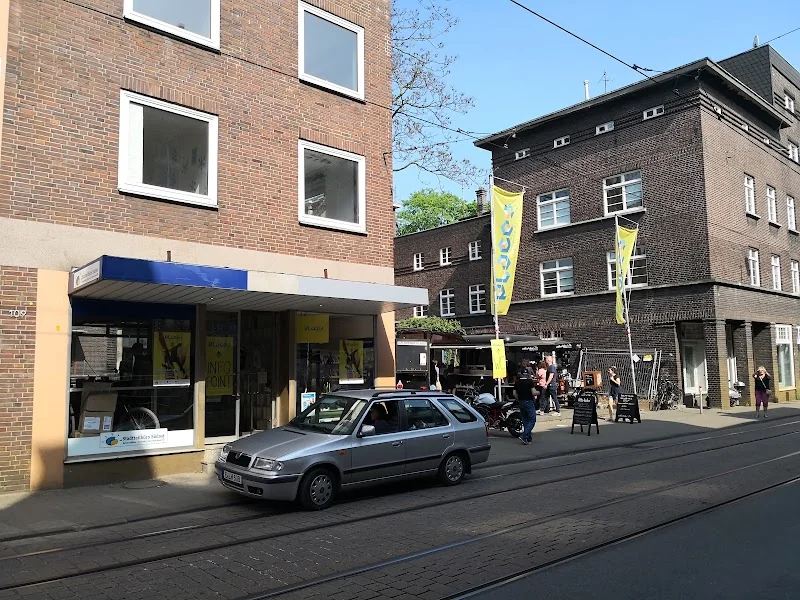
Bochumer Straße, 45 Gelsenkirchen-Süd, Deutschland
Bochumer Straße | Reconstruction & Creative Quarter Gelsenkirchen
The Bochumer Straße is much more than an ordinary traffic axis in Gelsenkirchen. It stands for urban renewal, for new uses, for culture, administration, neighborhood, and for a visible change in the southern part of the city. Official city documents describe the area around the street as a zone that has developed from a former functional and renovation space into a vibrant urban location. Today, social institutions, creative spaces, gastronomic offerings, start-ups, and historical building substance converge here. At the same time, a large-scale reconstruction has been underway since April 2025, which is set to reorganize the street by 2029. Therefore, anyone looking for Bochumer Straße is not just looking for an address, but for a whole urban project that shapes the future of the district. ([gelsenkirchen.de](https://www.gelsenkirchen.de/de/infrastruktur/stadtplanung/stadterneuerung_gelsenkirchen/bochumer_strasse/_doc/leitfaden_bochumer_stra_e.pdf))
Reconstruction of Bochumer Straße: What is changing between Junkerweg and Virchowstraße
The currently most important search term related to Bochumer Straße is undoubtedly the reconstruction. Since April 2025, work has been ongoing over a length of about 900 meters between Junkerweg and Virchowstraße. The city of Gelsenkirchen describes this section as the artery of the district, which is being spatially and urbanistically reorganized and upgraded. A central element is the relocation of the tram tracks of line 302 to the middle of the street. At the same time, the stops are being made accessible, the road surface is being renewed, sidewalks are being adjusted, and traffic areas are being redistributed to give more space to cycling and pedestrian traffic. The project's goal is not only modern design but also increased safety, better quality of stay, and less noise. These goals are clearly stated on the official pages of the city and BOGESTRA. ([gelsenkirchen.de](https://www.gelsenkirchen.de/de/infrastruktur/stadtplanung/stadterneuerung_gelsenkirchen/bochumer_strasse/Umbau_der_Bochumer_Strasse.aspx))
Especially interesting is the fact that the measure is divided into clearly defined construction phases. The work runs from Junkerweg over Claire-Waldoff-Straße and Bergmannstraße to Flöz Sonnenschein and Virchowstraße in several partial areas, thus not all at once over the entire stretch. For motor vehicle traffic, a one-way street regulation applies in the construction area in the direction of Gelsenkirchen; additionally, large-scale detours are being used. According to the city, tram traffic should be maintained as much as possible, even if buses are deployed instead of trams at certain points. In spring 2026, construction switches had already been modified in the areas of Claire-Waldoff-Straße and Bergmannstraße, the trams were running on a provisional track towards the main train station, and a large canal shaft was created at the intersection of Munscheidstraße. Such details show that Bochumer Straße is not only being planned but is actually being rebuilt step by step. ([gelsenkirchen.de](https://www.gelsenkirchen.de/de/infrastruktur/stadtplanung/stadterneuerung_gelsenkirchen/bochumer_strasse/Umbau_der_Bochumer_Strasse.aspx))
The construction site also includes additional information for residents and passengers. The city refers to an info meeting, the district office, and regular construction reports. Project partners include the city of Gelsenkirchen, BOGESTRA, Gelsenkanal, EVNG, and TELEKOM. The traffic image in the surrounding area is also changing with the measure: The stop Wissenschaftspark will be relocated in front of the justice center, new passenger shelters have already been set up, and the reconstruction communication is continuously carried out through official channels. For search intentions related to reconstruction, line 302, stops, and accessibility, this street is currently one of the most dynamic addresses in the city. ([gelsenkirchen.de](https://www.gelsenkirchen.de/de/infrastruktur/stadtplanung/stadterneuerung_gelsenkirchen/bochumer_strasse/Umbau_der_Bochumer_Strasse.aspx))
Creative Quarter Ückendorf, Gallery Mile, and New Urban Ideas on Bochumer Straße
Anyone searching for Bochumer Straße in Gelsenkirchen will quickly come across the Creative Quarter Ückendorf. Official city pages describe the area as a quarter that extends from Halfmannshof in the west to Ückendorfer Straße and from Junkerweg to Gesamtschule Ückendorf. In the middle of this quarter lies Bochumer Straße with its side streets and branches, which today are dotted with art and cultural venues. Particularly defining is the Heilig-Kreuz-Kirche as an event location, but also the Gallery Mile Gelsenkirchen, which has been united along Bochumer Straße and Bergmannstraße since 2010 and boasts the highest gallery density in the Ruhr area. Many previously vacant retail spaces have been revitalized by artists. According to the city, this includes not only visual arts but also music and design. ([gelsenkirchen.de](https://www.gelsenkirchen.de/de/Kultur/Kultur-_und_Veranstaltungsorte/Kreativquartier_Ueckendorf___Halfmannshof/))
Additionally, there is the economic perspective. The project to promote the local economy on Bochumer Straße supports small and medium-sized enterprises, new self-employed individuals, and creative uses. The city points out that IT start-ups such as XignSys and Aware7 have already settled in the quarter, and further spaces for individual and creative usage ideas are being developed. New property uses, networking offers, and location consulting are also part of this. In the official texts, the street is therefore described not only as a cultural site but also as a growing location for newcomers, established companies, and creativity. Examples such as the opening of studios, galleries, workshops, or the renovation of old retail spaces show how closely urban development and everyday culture are connected here. This makes Bochumer Straße particularly relevant for search queries related to Creative Quarter, Gallery Mile, cultural site, or new scene. ([gelsenkirchen.de](https://www.gelsenkirchen.de/de/infrastruktur/stadtplanung/stadterneuerung_gelsenkirchen/bochumer_strasse/lokale_oekonomie.aspx))
The urban district development is also specifically working with creative formats. The YES GE/Ückendorf project utilizes unused window spaces for art and attention in the district while simultaneously drawing attention to vacancies. The city describes these actions as a win-win situation for artists, owners, and the district, as new design spaces are created and the potential of the place becomes visible. In addition, the city refers to other places and projects around Bochumer Straße, ranging from co-working to exhibitions to temporary installations. As a result, the street space has developed over the past few years from a mere transit area to an urban place with its own identity. ([gelsenkirchen.de](https://www.gelsenkirchen.de/de/infrastruktur/stadtplanung/stadterneuerung_gelsenkirchen/bochumer_strasse/yes_geueckendorf.aspx))
Justice Center, Heilig-Kreuz-Kirche, and Other Important Addresses on Bochumer Straße
A particularly strong search trigger is the Justice Center Gelsenkirchen. The city writes that the regional judicial competence is concentrated there, uniting the district court, social court, labor court, and the outpatient social service of the judiciary in NRW under one roof. Architecturally, the new building forms the threshold between the district on Bochumer Straße and the city center, thus serving as a gateway to Gelsenkirchen's city. This is not only a functional but also an urban planning significance, as the Justice Center marks the transition between a central urban location and the changing district in the south. That is why it appears in many local searches along with Bochumer Straße, access, and stops. ([gelsenkirchen.de](https://www.gelsenkirchen.de/de/infrastruktur/stadtplanung/stadterneuerung_gelsenkirchen/bochumer_strasse/Justizzentrum.aspx))
Equally defining is the Heilig-Kreuz-Kirche. The official city page describes it as a work by Josef Franke on Bochumer Straße in Gelsenkirchen-Ückendorf, completed in 1929 and at that time one of the most spectacular church buildings of early modernity with supra-regional significance. In August 2007, the church was decommissioned, and in January 2019, the renovation began, and since 2022, concerts and other cultural events have been held there. The monument has been transformed into an extraordinary event location with a hall of about 400 square meters; up to 800 visitors can be accommodated there. The right wing building is used by social carriers, and there is an AWO bistro on the ground floor. Thus, the church is not only a landmark but also one of the most important cultural anchor points of the entire district. ([gelsenkirchen.de](https://www.gelsenkirchen.de/de/infrastruktur/stadtplanung/stadterneuerung_gelsenkirchen/bochumer_strasse/Umbau_Heilig-Kreuz-Kirche.aspx?utm_source=openai))
In addition, the district office Bochumer Straße is a central point of contact for the entire area. It is located at Bochumer Straße 114 and works with project assistance, planning and construction projects, social integration projects, and district architecture. Officially, it is listed as a service point of the executive area of planning, construction, environment, and real estate. Together with the Heilig-Kreuz-Kirche, the Justice Center, the Gallery Mile, and other district projects, a structure is created that goes far beyond a simple street address. Therefore, anyone searching for Bochumer Straße, opening hours, contact, or district management often ends up right here. ([gelsenkirchen.de](https://www.gelsenkirchen.de/de/rathaus/politik_und_verwaltung/vorstandsbereiche_und_dienststellen/33477-stadtteilbuero-bochumer-strasse))
Access, Public Transport, and Parking: How to Keep Bochumer Straße Accessible
The most important public connection to Bochumer Straße is tram line 302. It runs along the street and is directly involved in the reconstruction. The city of Gelsenkirchen and BOGESTRA have been informing about detours, stop relocations, and replacement services since the beginning of the construction work, as the traffic area is being reorganized section by section. During the construction period, tram traffic can largely be maintained, but at times buses will run instead of trams, and individual stops such as Wissenschaftspark, Stephanstraße, or Gesamtschule Ückendorf may not be accessible depending on the construction phase. For passengers, this means: Before traveling, one should always check the current report, as the routing of line 302 is continuously adjusted to the construction progress. ([bogestra.de](https://www.bogestra.de/fahrplan-mobilitaet/baumassnahmen/bochumer-strasse?utm_source=openai))
The situation is currently particularly challenging for drivers. The Bochumer Straße is being operated as a one-way street in the direction of Gelsenkirchen in the construction area, and large-scale detours via Munscheidstraße and Virchowstraße are planned. In individual construction phases, full closures have been or will be established to complete track and road construction as well as switch work. This may sound cumbersome, but it is necessary for such a profound urban redevelopment project. Therefore, anyone traveling on Bochumer Straße should not rely on the usual urban logic but should use the officially published construction maps and detour plans. Because of this changing traffic management, the search intention for access is particularly high. ([gelsenkirchen.de](https://www.gelsenkirchen.de/de/infrastruktur/stadtplanung/stadterneuerung_gelsenkirchen/bochumer_strasse/Umbau_der_Bochumer_Strasse.aspx))
For parking around the quarter, the Wissenschaftspark is an important reference point. The city indicates in an official access map that the parking lot at Cramerweg is the official parking lot of the Wissenschaftspark. The north and south entrances are open during the day; after 5 PM, the main entrance should be used. Even though Bochumer Straße is currently under reconstruction, this remains a clear anchor for visitors in the surrounding area. Together with Gelsenkirchen's main train station to the north and line 302, this forms one of the most practical combinations for arriving in the quarter. ([gelsenkirchen.de](https://www.gelsenkirchen.de/de/familie/beratung_und_hilfe/kinder-_und_jugendschutz/fachtage_fortbildungen/_doc/anfahrtskizze_wipa_2017.pdf?utm_source=openai))
Renovation Area, District Office, and Local Economy around Bochumer Straße
Bochumer Straße is not only an urban planning project but also a legally defined renovation area. The city of Gelsenkirchen states that it is a formally designated renovation area in which certain construction projects and measures require approval under § 144 BauGB. This includes, among other things, property sales, temporary rental agreements with a duration of more than one year, significant value-enhancing changes to properties or buildings, and changes in use. The statute was adopted on March 30, 2017, and became legally effective on June 2, 2017. This is important for property owners because it is associated with special obligations but also funding and development opportunities. ([gelsenkirchen.de](https://www.gelsenkirchen.de/de/infrastruktur/stadtplanung/stadterneuerung_gelsenkirchen/bochumer_strasse/sanierungsgebiet_bochumer_strasse.aspx))
The spatial delimitation shows how large the area is intended to be. In the north, it is essentially bounded by Junkerweg and Claire-Waldoff-Straße, with further parts extending to Josefstraße and Neustadtplatz. In the east, Carl-Mosterts-Straße and Herner Straße form the boundary, in the south, the area ends after Virchowstraße, and in the west, Munscheidstraße and the Wissenschaftspark serve as boundaries. This description shows that Bochumer Straße is embedded as an axis in a much broader development area. In the city documents, the district is described as a space that aims for contemporary residential quarters and commercial areas, the elimination of urban planning deficiencies, and the development into a lively and attractive residential, working, and cultural location. ([gelsenkirchen.de](https://www.gelsenkirchen.de/de/infrastruktur/stadtplanung/stadterneuerung_gelsenkirchen/bochumer_strasse/_doc/leitfaden_bochumer_stra_e.pdf))
The district office Bochumer Straße plays an important organizational role. It is located at Bochumer Straße 114, serves as a central point of contact, and works closely with urban development. Also central is the urban renewal company Gelsenkirchen, short SEG, founded in 2011. The city describes it as a strong partner in the district that acquires, renovates, and manages properties, thereby creating spatial offerings that improve social, gastronomic, and cultural offerings on site. SEG is thus an essential building block in the revitalization of Bochumer Straße. Therefore, anyone searching for district management, renovation area, or development partners will find two central institutions here. ([gelsenkirchen.de](https://www.gelsenkirchen.de/de/rathaus/politik_und_verwaltung/vorstandsbereiche_und_dienststellen/33477-stadtteilbuero-bochumer-strasse))
History of the Former Grand Street and Why Bochumer Straße is Important Again Today
A large part of the historical narrative surrounding Bochumer Straße is already contained in the wording of the official documents. There, it is referred to as the former grand street Bochumer Straße. This shows that the axis has significance not only since the current urban renewal but has been perceived as a defining urban space even earlier. The renovation documents also describe that the area is no longer understood as a problematic residual stock but as a development area today. The city is working with the goal of transforming an area with deficiencies and functional losses into a future-oriented district with residential, working, and cultural qualities. This historical narrative is important because it explains why the street is currently undergoing such intensive reconstruction and is being communicatively accompanied. ([gelsenkirchen.de](https://www.gelsenkirchen.de/de/infrastruktur/stadtplanung/stadterneuerung_gelsenkirchen/bochumer_strasse/_doc/leitfaden_bochumer_stra_e.pdf))
The location also explains much of the current importance. The Bochumer Straße quarter is located about 500 meters south of Gelsenkirchen's main train station in the western part of the Ückendorf district. The city describes the area as a lively urban quarter today with gastronomy and cultural offerings, social institutions, a young start-up scene, and shops. It is therefore not an isolated remnant but an inner-city quarter with its own dynamics. Precisely because various uses converge there, the street is interesting for urban development, culture, administration, and mobility alike. Bochumer Straße is thus a good example of the transformation of the Ruhr area in concentrated form. ([gelsenkirchen.de](https://www.gelsenkirchen.de/de/infrastruktur/stadtplanung/stadterneuerung_gelsenkirchen/bochumer_strasse/_doc/leitfaden_bochumer_stra_e.pdf))
Additionally, Bochumer Straße is explicitly described as a model project for future urban development in comparable quarters. The revitalization serves not only one district but also as a blueprint for similar spaces. This is precisely what makes the street so relevant for seekers: It is a traffic area, cultural site, renovation area, creative quarter, and administrative address all in one. Therefore, anyone searching for Bochumer Straße Gelsenkirchen, reconstruction, Creative Quarter Ückendorf, Justice Center, Heilig-Kreuz-Kirche, or district office is actually looking for a part of the urban future of the city. ([gelsenkirchen.de](https://www.gelsenkirchen.de/de/Infrastruktur/Stadtplanung/Stadterneuerung_Gelsenkirchen/Bochumer_Strasse/index.aspx?utm_source=openai))
Sources:
- City of Gelsenkirchen - Reconstruction of Bochumer Straße
- City of Gelsenkirchen - Justice Center Gelsenkirchen
- City of Gelsenkirchen - Creative Quarter Ückendorf
- City of Gelsenkirchen - Gallery Mile Gelsenkirchen
- City of Gelsenkirchen - District Office Bochumer Straße
- City of Gelsenkirchen - Renovation Area Bochumer Straße
- BOGESTRA - Bochumer Straße and Current Construction Measures
Mehr anzeigenWeniger anzeigen
Bochumer Straße | Reconstruction & Creative Quarter Gelsenkirchen
The Bochumer Straße is much more than an ordinary traffic axis in Gelsenkirchen. It stands for urban renewal, for new uses, for culture, administration, neighborhood, and for a visible change in the southern part of the city. Official city documents describe the area around the street as a zone that has developed from a former functional and renovation space into a vibrant urban location. Today, social institutions, creative spaces, gastronomic offerings, start-ups, and historical building substance converge here. At the same time, a large-scale reconstruction has been underway since April 2025, which is set to reorganize the street by 2029. Therefore, anyone looking for Bochumer Straße is not just looking for an address, but for a whole urban project that shapes the future of the district. ([gelsenkirchen.de](https://www.gelsenkirchen.de/de/infrastruktur/stadtplanung/stadterneuerung_gelsenkirchen/bochumer_strasse/_doc/leitfaden_bochumer_stra_e.pdf))
Reconstruction of Bochumer Straße: What is changing between Junkerweg and Virchowstraße
The currently most important search term related to Bochumer Straße is undoubtedly the reconstruction. Since April 2025, work has been ongoing over a length of about 900 meters between Junkerweg and Virchowstraße. The city of Gelsenkirchen describes this section as the artery of the district, which is being spatially and urbanistically reorganized and upgraded. A central element is the relocation of the tram tracks of line 302 to the middle of the street. At the same time, the stops are being made accessible, the road surface is being renewed, sidewalks are being adjusted, and traffic areas are being redistributed to give more space to cycling and pedestrian traffic. The project's goal is not only modern design but also increased safety, better quality of stay, and less noise. These goals are clearly stated on the official pages of the city and BOGESTRA. ([gelsenkirchen.de](https://www.gelsenkirchen.de/de/infrastruktur/stadtplanung/stadterneuerung_gelsenkirchen/bochumer_strasse/Umbau_der_Bochumer_Strasse.aspx))
Especially interesting is the fact that the measure is divided into clearly defined construction phases. The work runs from Junkerweg over Claire-Waldoff-Straße and Bergmannstraße to Flöz Sonnenschein and Virchowstraße in several partial areas, thus not all at once over the entire stretch. For motor vehicle traffic, a one-way street regulation applies in the construction area in the direction of Gelsenkirchen; additionally, large-scale detours are being used. According to the city, tram traffic should be maintained as much as possible, even if buses are deployed instead of trams at certain points. In spring 2026, construction switches had already been modified in the areas of Claire-Waldoff-Straße and Bergmannstraße, the trams were running on a provisional track towards the main train station, and a large canal shaft was created at the intersection of Munscheidstraße. Such details show that Bochumer Straße is not only being planned but is actually being rebuilt step by step. ([gelsenkirchen.de](https://www.gelsenkirchen.de/de/infrastruktur/stadtplanung/stadterneuerung_gelsenkirchen/bochumer_strasse/Umbau_der_Bochumer_Strasse.aspx))
The construction site also includes additional information for residents and passengers. The city refers to an info meeting, the district office, and regular construction reports. Project partners include the city of Gelsenkirchen, BOGESTRA, Gelsenkanal, EVNG, and TELEKOM. The traffic image in the surrounding area is also changing with the measure: The stop Wissenschaftspark will be relocated in front of the justice center, new passenger shelters have already been set up, and the reconstruction communication is continuously carried out through official channels. For search intentions related to reconstruction, line 302, stops, and accessibility, this street is currently one of the most dynamic addresses in the city. ([gelsenkirchen.de](https://www.gelsenkirchen.de/de/infrastruktur/stadtplanung/stadterneuerung_gelsenkirchen/bochumer_strasse/Umbau_der_Bochumer_Strasse.aspx))
Creative Quarter Ückendorf, Gallery Mile, and New Urban Ideas on Bochumer Straße
Anyone searching for Bochumer Straße in Gelsenkirchen will quickly come across the Creative Quarter Ückendorf. Official city pages describe the area as a quarter that extends from Halfmannshof in the west to Ückendorfer Straße and from Junkerweg to Gesamtschule Ückendorf. In the middle of this quarter lies Bochumer Straße with its side streets and branches, which today are dotted with art and cultural venues. Particularly defining is the Heilig-Kreuz-Kirche as an event location, but also the Gallery Mile Gelsenkirchen, which has been united along Bochumer Straße and Bergmannstraße since 2010 and boasts the highest gallery density in the Ruhr area. Many previously vacant retail spaces have been revitalized by artists. According to the city, this includes not only visual arts but also music and design. ([gelsenkirchen.de](https://www.gelsenkirchen.de/de/Kultur/Kultur-_und_Veranstaltungsorte/Kreativquartier_Ueckendorf___Halfmannshof/))
Additionally, there is the economic perspective. The project to promote the local economy on Bochumer Straße supports small and medium-sized enterprises, new self-employed individuals, and creative uses. The city points out that IT start-ups such as XignSys and Aware7 have already settled in the quarter, and further spaces for individual and creative usage ideas are being developed. New property uses, networking offers, and location consulting are also part of this. In the official texts, the street is therefore described not only as a cultural site but also as a growing location for newcomers, established companies, and creativity. Examples such as the opening of studios, galleries, workshops, or the renovation of old retail spaces show how closely urban development and everyday culture are connected here. This makes Bochumer Straße particularly relevant for search queries related to Creative Quarter, Gallery Mile, cultural site, or new scene. ([gelsenkirchen.de](https://www.gelsenkirchen.de/de/infrastruktur/stadtplanung/stadterneuerung_gelsenkirchen/bochumer_strasse/lokale_oekonomie.aspx))
The urban district development is also specifically working with creative formats. The YES GE/Ückendorf project utilizes unused window spaces for art and attention in the district while simultaneously drawing attention to vacancies. The city describes these actions as a win-win situation for artists, owners, and the district, as new design spaces are created and the potential of the place becomes visible. In addition, the city refers to other places and projects around Bochumer Straße, ranging from co-working to exhibitions to temporary installations. As a result, the street space has developed over the past few years from a mere transit area to an urban place with its own identity. ([gelsenkirchen.de](https://www.gelsenkirchen.de/de/infrastruktur/stadtplanung/stadterneuerung_gelsenkirchen/bochumer_strasse/yes_geueckendorf.aspx))
Justice Center, Heilig-Kreuz-Kirche, and Other Important Addresses on Bochumer Straße
A particularly strong search trigger is the Justice Center Gelsenkirchen. The city writes that the regional judicial competence is concentrated there, uniting the district court, social court, labor court, and the outpatient social service of the judiciary in NRW under one roof. Architecturally, the new building forms the threshold between the district on Bochumer Straße and the city center, thus serving as a gateway to Gelsenkirchen's city. This is not only a functional but also an urban planning significance, as the Justice Center marks the transition between a central urban location and the changing district in the south. That is why it appears in many local searches along with Bochumer Straße, access, and stops. ([gelsenkirchen.de](https://www.gelsenkirchen.de/de/infrastruktur/stadtplanung/stadterneuerung_gelsenkirchen/bochumer_strasse/Justizzentrum.aspx))
Equally defining is the Heilig-Kreuz-Kirche. The official city page describes it as a work by Josef Franke on Bochumer Straße in Gelsenkirchen-Ückendorf, completed in 1929 and at that time one of the most spectacular church buildings of early modernity with supra-regional significance. In August 2007, the church was decommissioned, and in January 2019, the renovation began, and since 2022, concerts and other cultural events have been held there. The monument has been transformed into an extraordinary event location with a hall of about 400 square meters; up to 800 visitors can be accommodated there. The right wing building is used by social carriers, and there is an AWO bistro on the ground floor. Thus, the church is not only a landmark but also one of the most important cultural anchor points of the entire district. ([gelsenkirchen.de](https://www.gelsenkirchen.de/de/infrastruktur/stadtplanung/stadterneuerung_gelsenkirchen/bochumer_strasse/Umbau_Heilig-Kreuz-Kirche.aspx?utm_source=openai))
In addition, the district office Bochumer Straße is a central point of contact for the entire area. It is located at Bochumer Straße 114 and works with project assistance, planning and construction projects, social integration projects, and district architecture. Officially, it is listed as a service point of the executive area of planning, construction, environment, and real estate. Together with the Heilig-Kreuz-Kirche, the Justice Center, the Gallery Mile, and other district projects, a structure is created that goes far beyond a simple street address. Therefore, anyone searching for Bochumer Straße, opening hours, contact, or district management often ends up right here. ([gelsenkirchen.de](https://www.gelsenkirchen.de/de/rathaus/politik_und_verwaltung/vorstandsbereiche_und_dienststellen/33477-stadtteilbuero-bochumer-strasse))
Access, Public Transport, and Parking: How to Keep Bochumer Straße Accessible
The most important public connection to Bochumer Straße is tram line 302. It runs along the street and is directly involved in the reconstruction. The city of Gelsenkirchen and BOGESTRA have been informing about detours, stop relocations, and replacement services since the beginning of the construction work, as the traffic area is being reorganized section by section. During the construction period, tram traffic can largely be maintained, but at times buses will run instead of trams, and individual stops such as Wissenschaftspark, Stephanstraße, or Gesamtschule Ückendorf may not be accessible depending on the construction phase. For passengers, this means: Before traveling, one should always check the current report, as the routing of line 302 is continuously adjusted to the construction progress. ([bogestra.de](https://www.bogestra.de/fahrplan-mobilitaet/baumassnahmen/bochumer-strasse?utm_source=openai))
The situation is currently particularly challenging for drivers. The Bochumer Straße is being operated as a one-way street in the direction of Gelsenkirchen in the construction area, and large-scale detours via Munscheidstraße and Virchowstraße are planned. In individual construction phases, full closures have been or will be established to complete track and road construction as well as switch work. This may sound cumbersome, but it is necessary for such a profound urban redevelopment project. Therefore, anyone traveling on Bochumer Straße should not rely on the usual urban logic but should use the officially published construction maps and detour plans. Because of this changing traffic management, the search intention for access is particularly high. ([gelsenkirchen.de](https://www.gelsenkirchen.de/de/infrastruktur/stadtplanung/stadterneuerung_gelsenkirchen/bochumer_strasse/Umbau_der_Bochumer_Strasse.aspx))
For parking around the quarter, the Wissenschaftspark is an important reference point. The city indicates in an official access map that the parking lot at Cramerweg is the official parking lot of the Wissenschaftspark. The north and south entrances are open during the day; after 5 PM, the main entrance should be used. Even though Bochumer Straße is currently under reconstruction, this remains a clear anchor for visitors in the surrounding area. Together with Gelsenkirchen's main train station to the north and line 302, this forms one of the most practical combinations for arriving in the quarter. ([gelsenkirchen.de](https://www.gelsenkirchen.de/de/familie/beratung_und_hilfe/kinder-_und_jugendschutz/fachtage_fortbildungen/_doc/anfahrtskizze_wipa_2017.pdf?utm_source=openai))
Renovation Area, District Office, and Local Economy around Bochumer Straße
Bochumer Straße is not only an urban planning project but also a legally defined renovation area. The city of Gelsenkirchen states that it is a formally designated renovation area in which certain construction projects and measures require approval under § 144 BauGB. This includes, among other things, property sales, temporary rental agreements with a duration of more than one year, significant value-enhancing changes to properties or buildings, and changes in use. The statute was adopted on March 30, 2017, and became legally effective on June 2, 2017. This is important for property owners because it is associated with special obligations but also funding and development opportunities. ([gelsenkirchen.de](https://www.gelsenkirchen.de/de/infrastruktur/stadtplanung/stadterneuerung_gelsenkirchen/bochumer_strasse/sanierungsgebiet_bochumer_strasse.aspx))
The spatial delimitation shows how large the area is intended to be. In the north, it is essentially bounded by Junkerweg and Claire-Waldoff-Straße, with further parts extending to Josefstraße and Neustadtplatz. In the east, Carl-Mosterts-Straße and Herner Straße form the boundary, in the south, the area ends after Virchowstraße, and in the west, Munscheidstraße and the Wissenschaftspark serve as boundaries. This description shows that Bochumer Straße is embedded as an axis in a much broader development area. In the city documents, the district is described as a space that aims for contemporary residential quarters and commercial areas, the elimination of urban planning deficiencies, and the development into a lively and attractive residential, working, and cultural location. ([gelsenkirchen.de](https://www.gelsenkirchen.de/de/infrastruktur/stadtplanung/stadterneuerung_gelsenkirchen/bochumer_strasse/_doc/leitfaden_bochumer_stra_e.pdf))
The district office Bochumer Straße plays an important organizational role. It is located at Bochumer Straße 114, serves as a central point of contact, and works closely with urban development. Also central is the urban renewal company Gelsenkirchen, short SEG, founded in 2011. The city describes it as a strong partner in the district that acquires, renovates, and manages properties, thereby creating spatial offerings that improve social, gastronomic, and cultural offerings on site. SEG is thus an essential building block in the revitalization of Bochumer Straße. Therefore, anyone searching for district management, renovation area, or development partners will find two central institutions here. ([gelsenkirchen.de](https://www.gelsenkirchen.de/de/rathaus/politik_und_verwaltung/vorstandsbereiche_und_dienststellen/33477-stadtteilbuero-bochumer-strasse))
History of the Former Grand Street and Why Bochumer Straße is Important Again Today
A large part of the historical narrative surrounding Bochumer Straße is already contained in the wording of the official documents. There, it is referred to as the former grand street Bochumer Straße. This shows that the axis has significance not only since the current urban renewal but has been perceived as a defining urban space even earlier. The renovation documents also describe that the area is no longer understood as a problematic residual stock but as a development area today. The city is working with the goal of transforming an area with deficiencies and functional losses into a future-oriented district with residential, working, and cultural qualities. This historical narrative is important because it explains why the street is currently undergoing such intensive reconstruction and is being communicatively accompanied. ([gelsenkirchen.de](https://www.gelsenkirchen.de/de/infrastruktur/stadtplanung/stadterneuerung_gelsenkirchen/bochumer_strasse/_doc/leitfaden_bochumer_stra_e.pdf))
The location also explains much of the current importance. The Bochumer Straße quarter is located about 500 meters south of Gelsenkirchen's main train station in the western part of the Ückendorf district. The city describes the area as a lively urban quarter today with gastronomy and cultural offerings, social institutions, a young start-up scene, and shops. It is therefore not an isolated remnant but an inner-city quarter with its own dynamics. Precisely because various uses converge there, the street is interesting for urban development, culture, administration, and mobility alike. Bochumer Straße is thus a good example of the transformation of the Ruhr area in concentrated form. ([gelsenkirchen.de](https://www.gelsenkirchen.de/de/infrastruktur/stadtplanung/stadterneuerung_gelsenkirchen/bochumer_strasse/_doc/leitfaden_bochumer_stra_e.pdf))
Additionally, Bochumer Straße is explicitly described as a model project for future urban development in comparable quarters. The revitalization serves not only one district but also as a blueprint for similar spaces. This is precisely what makes the street so relevant for seekers: It is a traffic area, cultural site, renovation area, creative quarter, and administrative address all in one. Therefore, anyone searching for Bochumer Straße Gelsenkirchen, reconstruction, Creative Quarter Ückendorf, Justice Center, Heilig-Kreuz-Kirche, or district office is actually looking for a part of the urban future of the city. ([gelsenkirchen.de](https://www.gelsenkirchen.de/de/Infrastruktur/Stadtplanung/Stadterneuerung_Gelsenkirchen/Bochumer_Strasse/index.aspx?utm_source=openai))
Sources:
- City of Gelsenkirchen - Reconstruction of Bochumer Straße
- City of Gelsenkirchen - Justice Center Gelsenkirchen
- City of Gelsenkirchen - Creative Quarter Ückendorf
- City of Gelsenkirchen - Gallery Mile Gelsenkirchen
- City of Gelsenkirchen - District Office Bochumer Straße
- City of Gelsenkirchen - Renovation Area Bochumer Straße
- BOGESTRA - Bochumer Straße and Current Construction Measures
Bochumer Straße | Reconstruction & Creative Quarter Gelsenkirchen
The Bochumer Straße is much more than an ordinary traffic axis in Gelsenkirchen. It stands for urban renewal, for new uses, for culture, administration, neighborhood, and for a visible change in the southern part of the city. Official city documents describe the area around the street as a zone that has developed from a former functional and renovation space into a vibrant urban location. Today, social institutions, creative spaces, gastronomic offerings, start-ups, and historical building substance converge here. At the same time, a large-scale reconstruction has been underway since April 2025, which is set to reorganize the street by 2029. Therefore, anyone looking for Bochumer Straße is not just looking for an address, but for a whole urban project that shapes the future of the district. ([gelsenkirchen.de](https://www.gelsenkirchen.de/de/infrastruktur/stadtplanung/stadterneuerung_gelsenkirchen/bochumer_strasse/_doc/leitfaden_bochumer_stra_e.pdf))
Reconstruction of Bochumer Straße: What is changing between Junkerweg and Virchowstraße
The currently most important search term related to Bochumer Straße is undoubtedly the reconstruction. Since April 2025, work has been ongoing over a length of about 900 meters between Junkerweg and Virchowstraße. The city of Gelsenkirchen describes this section as the artery of the district, which is being spatially and urbanistically reorganized and upgraded. A central element is the relocation of the tram tracks of line 302 to the middle of the street. At the same time, the stops are being made accessible, the road surface is being renewed, sidewalks are being adjusted, and traffic areas are being redistributed to give more space to cycling and pedestrian traffic. The project's goal is not only modern design but also increased safety, better quality of stay, and less noise. These goals are clearly stated on the official pages of the city and BOGESTRA. ([gelsenkirchen.de](https://www.gelsenkirchen.de/de/infrastruktur/stadtplanung/stadterneuerung_gelsenkirchen/bochumer_strasse/Umbau_der_Bochumer_Strasse.aspx))
Especially interesting is the fact that the measure is divided into clearly defined construction phases. The work runs from Junkerweg over Claire-Waldoff-Straße and Bergmannstraße to Flöz Sonnenschein and Virchowstraße in several partial areas, thus not all at once over the entire stretch. For motor vehicle traffic, a one-way street regulation applies in the construction area in the direction of Gelsenkirchen; additionally, large-scale detours are being used. According to the city, tram traffic should be maintained as much as possible, even if buses are deployed instead of trams at certain points. In spring 2026, construction switches had already been modified in the areas of Claire-Waldoff-Straße and Bergmannstraße, the trams were running on a provisional track towards the main train station, and a large canal shaft was created at the intersection of Munscheidstraße. Such details show that Bochumer Straße is not only being planned but is actually being rebuilt step by step. ([gelsenkirchen.de](https://www.gelsenkirchen.de/de/infrastruktur/stadtplanung/stadterneuerung_gelsenkirchen/bochumer_strasse/Umbau_der_Bochumer_Strasse.aspx))
The construction site also includes additional information for residents and passengers. The city refers to an info meeting, the district office, and regular construction reports. Project partners include the city of Gelsenkirchen, BOGESTRA, Gelsenkanal, EVNG, and TELEKOM. The traffic image in the surrounding area is also changing with the measure: The stop Wissenschaftspark will be relocated in front of the justice center, new passenger shelters have already been set up, and the reconstruction communication is continuously carried out through official channels. For search intentions related to reconstruction, line 302, stops, and accessibility, this street is currently one of the most dynamic addresses in the city. ([gelsenkirchen.de](https://www.gelsenkirchen.de/de/infrastruktur/stadtplanung/stadterneuerung_gelsenkirchen/bochumer_strasse/Umbau_der_Bochumer_Strasse.aspx))
Creative Quarter Ückendorf, Gallery Mile, and New Urban Ideas on Bochumer Straße
Anyone searching for Bochumer Straße in Gelsenkirchen will quickly come across the Creative Quarter Ückendorf. Official city pages describe the area as a quarter that extends from Halfmannshof in the west to Ückendorfer Straße and from Junkerweg to Gesamtschule Ückendorf. In the middle of this quarter lies Bochumer Straße with its side streets and branches, which today are dotted with art and cultural venues. Particularly defining is the Heilig-Kreuz-Kirche as an event location, but also the Gallery Mile Gelsenkirchen, which has been united along Bochumer Straße and Bergmannstraße since 2010 and boasts the highest gallery density in the Ruhr area. Many previously vacant retail spaces have been revitalized by artists. According to the city, this includes not only visual arts but also music and design. ([gelsenkirchen.de](https://www.gelsenkirchen.de/de/Kultur/Kultur-_und_Veranstaltungsorte/Kreativquartier_Ueckendorf___Halfmannshof/))
Additionally, there is the economic perspective. The project to promote the local economy on Bochumer Straße supports small and medium-sized enterprises, new self-employed individuals, and creative uses. The city points out that IT start-ups such as XignSys and Aware7 have already settled in the quarter, and further spaces for individual and creative usage ideas are being developed. New property uses, networking offers, and location consulting are also part of this. In the official texts, the street is therefore described not only as a cultural site but also as a growing location for newcomers, established companies, and creativity. Examples such as the opening of studios, galleries, workshops, or the renovation of old retail spaces show how closely urban development and everyday culture are connected here. This makes Bochumer Straße particularly relevant for search queries related to Creative Quarter, Gallery Mile, cultural site, or new scene. ([gelsenkirchen.de](https://www.gelsenkirchen.de/de/infrastruktur/stadtplanung/stadterneuerung_gelsenkirchen/bochumer_strasse/lokale_oekonomie.aspx))
The urban district development is also specifically working with creative formats. The YES GE/Ückendorf project utilizes unused window spaces for art and attention in the district while simultaneously drawing attention to vacancies. The city describes these actions as a win-win situation for artists, owners, and the district, as new design spaces are created and the potential of the place becomes visible. In addition, the city refers to other places and projects around Bochumer Straße, ranging from co-working to exhibitions to temporary installations. As a result, the street space has developed over the past few years from a mere transit area to an urban place with its own identity. ([gelsenkirchen.de](https://www.gelsenkirchen.de/de/infrastruktur/stadtplanung/stadterneuerung_gelsenkirchen/bochumer_strasse/yes_geueckendorf.aspx))
Justice Center, Heilig-Kreuz-Kirche, and Other Important Addresses on Bochumer Straße
A particularly strong search trigger is the Justice Center Gelsenkirchen. The city writes that the regional judicial competence is concentrated there, uniting the district court, social court, labor court, and the outpatient social service of the judiciary in NRW under one roof. Architecturally, the new building forms the threshold between the district on Bochumer Straße and the city center, thus serving as a gateway to Gelsenkirchen's city. This is not only a functional but also an urban planning significance, as the Justice Center marks the transition between a central urban location and the changing district in the south. That is why it appears in many local searches along with Bochumer Straße, access, and stops. ([gelsenkirchen.de](https://www.gelsenkirchen.de/de/infrastruktur/stadtplanung/stadterneuerung_gelsenkirchen/bochumer_strasse/Justizzentrum.aspx))
Equally defining is the Heilig-Kreuz-Kirche. The official city page describes it as a work by Josef Franke on Bochumer Straße in Gelsenkirchen-Ückendorf, completed in 1929 and at that time one of the most spectacular church buildings of early modernity with supra-regional significance. In August 2007, the church was decommissioned, and in January 2019, the renovation began, and since 2022, concerts and other cultural events have been held there. The monument has been transformed into an extraordinary event location with a hall of about 400 square meters; up to 800 visitors can be accommodated there. The right wing building is used by social carriers, and there is an AWO bistro on the ground floor. Thus, the church is not only a landmark but also one of the most important cultural anchor points of the entire district. ([gelsenkirchen.de](https://www.gelsenkirchen.de/de/infrastruktur/stadtplanung/stadterneuerung_gelsenkirchen/bochumer_strasse/Umbau_Heilig-Kreuz-Kirche.aspx?utm_source=openai))
In addition, the district office Bochumer Straße is a central point of contact for the entire area. It is located at Bochumer Straße 114 and works with project assistance, planning and construction projects, social integration projects, and district architecture. Officially, it is listed as a service point of the executive area of planning, construction, environment, and real estate. Together with the Heilig-Kreuz-Kirche, the Justice Center, the Gallery Mile, and other district projects, a structure is created that goes far beyond a simple street address. Therefore, anyone searching for Bochumer Straße, opening hours, contact, or district management often ends up right here. ([gelsenkirchen.de](https://www.gelsenkirchen.de/de/rathaus/politik_und_verwaltung/vorstandsbereiche_und_dienststellen/33477-stadtteilbuero-bochumer-strasse))
Access, Public Transport, and Parking: How to Keep Bochumer Straße Accessible
The most important public connection to Bochumer Straße is tram line 302. It runs along the street and is directly involved in the reconstruction. The city of Gelsenkirchen and BOGESTRA have been informing about detours, stop relocations, and replacement services since the beginning of the construction work, as the traffic area is being reorganized section by section. During the construction period, tram traffic can largely be maintained, but at times buses will run instead of trams, and individual stops such as Wissenschaftspark, Stephanstraße, or Gesamtschule Ückendorf may not be accessible depending on the construction phase. For passengers, this means: Before traveling, one should always check the current report, as the routing of line 302 is continuously adjusted to the construction progress. ([bogestra.de](https://www.bogestra.de/fahrplan-mobilitaet/baumassnahmen/bochumer-strasse?utm_source=openai))
The situation is currently particularly challenging for drivers. The Bochumer Straße is being operated as a one-way street in the direction of Gelsenkirchen in the construction area, and large-scale detours via Munscheidstraße and Virchowstraße are planned. In individual construction phases, full closures have been or will be established to complete track and road construction as well as switch work. This may sound cumbersome, but it is necessary for such a profound urban redevelopment project. Therefore, anyone traveling on Bochumer Straße should not rely on the usual urban logic but should use the officially published construction maps and detour plans. Because of this changing traffic management, the search intention for access is particularly high. ([gelsenkirchen.de](https://www.gelsenkirchen.de/de/infrastruktur/stadtplanung/stadterneuerung_gelsenkirchen/bochumer_strasse/Umbau_der_Bochumer_Strasse.aspx))
For parking around the quarter, the Wissenschaftspark is an important reference point. The city indicates in an official access map that the parking lot at Cramerweg is the official parking lot of the Wissenschaftspark. The north and south entrances are open during the day; after 5 PM, the main entrance should be used. Even though Bochumer Straße is currently under reconstruction, this remains a clear anchor for visitors in the surrounding area. Together with Gelsenkirchen's main train station to the north and line 302, this forms one of the most practical combinations for arriving in the quarter. ([gelsenkirchen.de](https://www.gelsenkirchen.de/de/familie/beratung_und_hilfe/kinder-_und_jugendschutz/fachtage_fortbildungen/_doc/anfahrtskizze_wipa_2017.pdf?utm_source=openai))
Renovation Area, District Office, and Local Economy around Bochumer Straße
Bochumer Straße is not only an urban planning project but also a legally defined renovation area. The city of Gelsenkirchen states that it is a formally designated renovation area in which certain construction projects and measures require approval under § 144 BauGB. This includes, among other things, property sales, temporary rental agreements with a duration of more than one year, significant value-enhancing changes to properties or buildings, and changes in use. The statute was adopted on March 30, 2017, and became legally effective on June 2, 2017. This is important for property owners because it is associated with special obligations but also funding and development opportunities. ([gelsenkirchen.de](https://www.gelsenkirchen.de/de/infrastruktur/stadtplanung/stadterneuerung_gelsenkirchen/bochumer_strasse/sanierungsgebiet_bochumer_strasse.aspx))
The spatial delimitation shows how large the area is intended to be. In the north, it is essentially bounded by Junkerweg and Claire-Waldoff-Straße, with further parts extending to Josefstraße and Neustadtplatz. In the east, Carl-Mosterts-Straße and Herner Straße form the boundary, in the south, the area ends after Virchowstraße, and in the west, Munscheidstraße and the Wissenschaftspark serve as boundaries. This description shows that Bochumer Straße is embedded as an axis in a much broader development area. In the city documents, the district is described as a space that aims for contemporary residential quarters and commercial areas, the elimination of urban planning deficiencies, and the development into a lively and attractive residential, working, and cultural location. ([gelsenkirchen.de](https://www.gelsenkirchen.de/de/infrastruktur/stadtplanung/stadterneuerung_gelsenkirchen/bochumer_strasse/_doc/leitfaden_bochumer_stra_e.pdf))
The district office Bochumer Straße plays an important organizational role. It is located at Bochumer Straße 114, serves as a central point of contact, and works closely with urban development. Also central is the urban renewal company Gelsenkirchen, short SEG, founded in 2011. The city describes it as a strong partner in the district that acquires, renovates, and manages properties, thereby creating spatial offerings that improve social, gastronomic, and cultural offerings on site. SEG is thus an essential building block in the revitalization of Bochumer Straße. Therefore, anyone searching for district management, renovation area, or development partners will find two central institutions here. ([gelsenkirchen.de](https://www.gelsenkirchen.de/de/rathaus/politik_und_verwaltung/vorstandsbereiche_und_dienststellen/33477-stadtteilbuero-bochumer-strasse))
History of the Former Grand Street and Why Bochumer Straße is Important Again Today
A large part of the historical narrative surrounding Bochumer Straße is already contained in the wording of the official documents. There, it is referred to as the former grand street Bochumer Straße. This shows that the axis has significance not only since the current urban renewal but has been perceived as a defining urban space even earlier. The renovation documents also describe that the area is no longer understood as a problematic residual stock but as a development area today. The city is working with the goal of transforming an area with deficiencies and functional losses into a future-oriented district with residential, working, and cultural qualities. This historical narrative is important because it explains why the street is currently undergoing such intensive reconstruction and is being communicatively accompanied. ([gelsenkirchen.de](https://www.gelsenkirchen.de/de/infrastruktur/stadtplanung/stadterneuerung_gelsenkirchen/bochumer_strasse/_doc/leitfaden_bochumer_stra_e.pdf))
The location also explains much of the current importance. The Bochumer Straße quarter is located about 500 meters south of Gelsenkirchen's main train station in the western part of the Ückendorf district. The city describes the area as a lively urban quarter today with gastronomy and cultural offerings, social institutions, a young start-up scene, and shops. It is therefore not an isolated remnant but an inner-city quarter with its own dynamics. Precisely because various uses converge there, the street is interesting for urban development, culture, administration, and mobility alike. Bochumer Straße is thus a good example of the transformation of the Ruhr area in concentrated form. ([gelsenkirchen.de](https://www.gelsenkirchen.de/de/infrastruktur/stadtplanung/stadterneuerung_gelsenkirchen/bochumer_strasse/_doc/leitfaden_bochumer_stra_e.pdf))
Additionally, Bochumer Straße is explicitly described as a model project for future urban development in comparable quarters. The revitalization serves not only one district but also as a blueprint for similar spaces. This is precisely what makes the street so relevant for seekers: It is a traffic area, cultural site, renovation area, creative quarter, and administrative address all in one. Therefore, anyone searching for Bochumer Straße Gelsenkirchen, reconstruction, Creative Quarter Ückendorf, Justice Center, Heilig-Kreuz-Kirche, or district office is actually looking for a part of the urban future of the city. ([gelsenkirchen.de](https://www.gelsenkirchen.de/de/Infrastruktur/Stadtplanung/Stadterneuerung_Gelsenkirchen/Bochumer_Strasse/index.aspx?utm_source=openai))
Sources:
- City of Gelsenkirchen - Reconstruction of Bochumer Straße
- City of Gelsenkirchen - Justice Center Gelsenkirchen
- City of Gelsenkirchen - Creative Quarter Ückendorf
- City of Gelsenkirchen - Gallery Mile Gelsenkirchen
- City of Gelsenkirchen - District Office Bochumer Straße
- City of Gelsenkirchen - Renovation Area Bochumer Straße
- BOGESTRA - Bochumer Straße and Current Construction Measures
Upcoming Events
Querbeet Summer Light 2026 in Gelsenkirchen
Querbeet Summer Light 2026 brings music, literature, and art to Gelsenkirchen's green oasis. Free entry, open-air, and full of neighborhood flair. #Gelsenkirchen #CulturalFestival
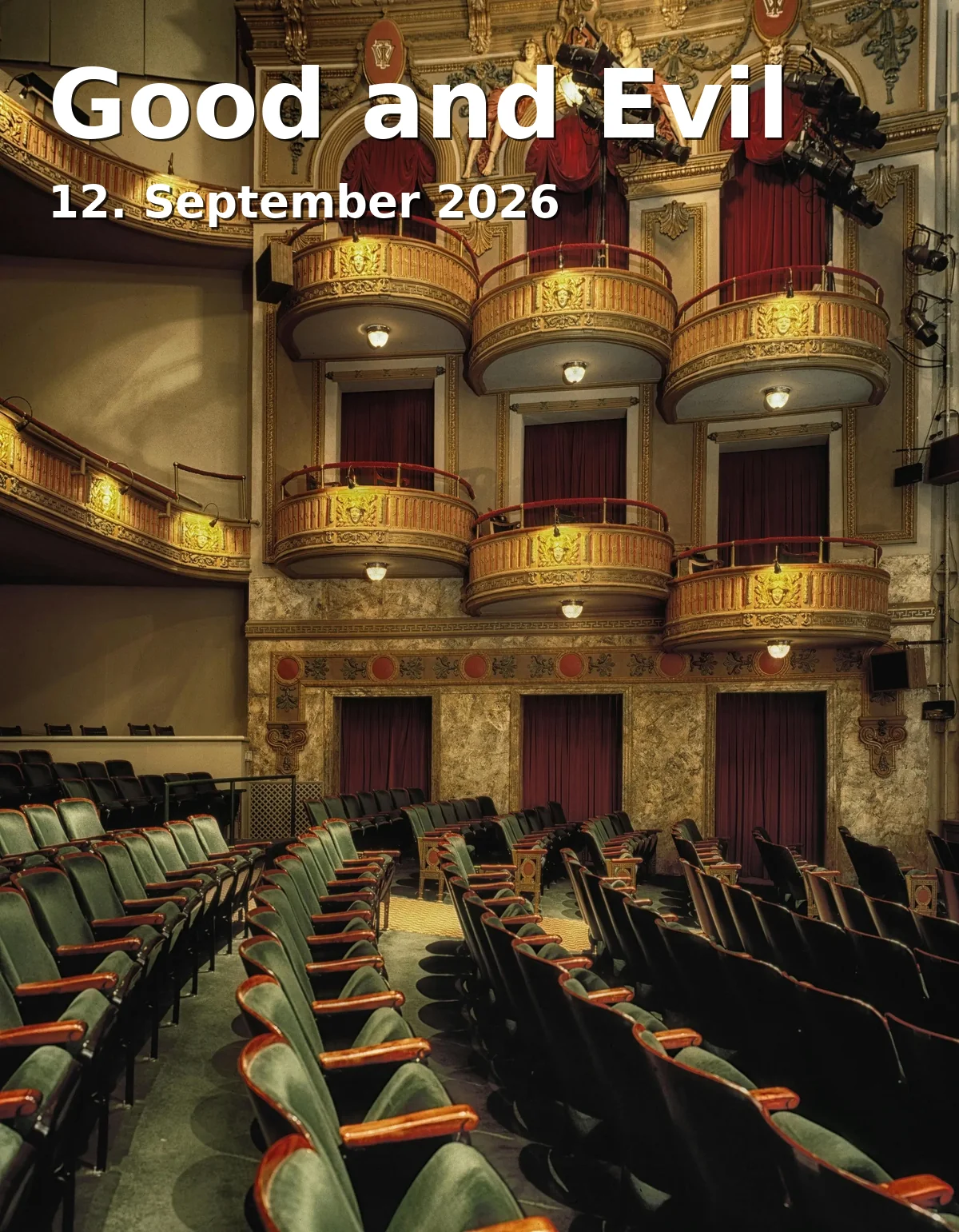
Good and Evil
Join us as 'Good and Evil' is performed on September 12, 2026, in the Heilig-Kreuz Church in Gelsenkirchen.
Frequently Asked Questions
Reviews
No reviews found