
Gelsenkirchen
Bleckstraße 56, 45889 Gelsenkirchen, Deutschland
Bleckkirche - Church of Cultures | Program & Directions
The Bleckkirche in Gelsenkirchen is one of those locations where history, identity, and the present visibly intertwine. It is located on Bleckstraße opposite the main entrance of the ZOOM Erlebniswelt and is described by the city of Gelsenkirchen as a Church of Cultures that consciously opens itself to the connection of contemporary culture, faith, society, and religiosity. The open approach is particularly important: The Bleckkirche is not only aimed at congregation members or traditional church visitors but at all interested parties, regardless of denomination, church membership, or religious affiliation. This inclusive character makes it highly relevant for inquiries regarding programs, directions, parking, and events. Therefore, when searching for Bleckkirche Gelsenkirchen, one is referring not only to a historical building but to a vibrant place with cultural impact, urban radiance, and a very distinct profile. The official website also describes the Bleckkirche as a city and culture church that has appealed to a broad audience since its restoration and has built a remarkable cultural network over many years. ([gelsenkirchen.de](https://www.gelsenkirchen.de/de/kultur/kultur-_und_veranstaltungsorte/bleckkirche_-_kirche_der_kulturen/index.aspx))
Program, Concerts, and Cultural Diversity in the Bleckkirche
The interest in a Bleckkirche program is absolutely understandable, as the official description of the location already shows how broad the offering is intended to be. The city explicitly mentions culture, society and politics, musical and artistic endeavors, literature and the mundane, as well as dance and theater. This is an unusually open spectrum for a church and makes the Bleckkirche a space where culture does not merely function as a supporting program but forms the core of its use. The website also speaks of music, theater, art, and more, referring to the long development of the Bleckkirche as a place for cultural and socio-cultural offerings. In practice, this means: those searching for Bleckkirche concert, Bleckkirche exhibition, or Bleckkirche reading do not expect a standardized event venue but a house with an artistic attitude and a program that is always embedded in the urban context of Gelsenkirchen. ([gelsenkirchen.de](https://www.gelsenkirchen.de/de/kultur/kultur-_und_veranstaltungsorte/bleckkirche_-_kirche_der_kulturen/index.aspx))
What is particularly exciting is that the Bleckkirche has not only recently been used as a cultural venue but looks back on a long phase of cultural openness. The official website states that since its handover after the restoration phase in June 1996, there have been around 1000 events in the fields of music, theater, art, dance, literature, and film, as well as church services and discussion rounds. Additionally, more than 5000 participating artists and cultural creators are mentioned, along with over 70,000 guests who have visited the diverse offerings as interested parties. If you count the open visits, baptisms, and weddings, the website even speaks of around 200,000 people who have experienced the Bleckkirche since its restoration. These numbers are not only impressive; they also explain why the topic of programs is so highly sought after for the Bleckkirche: it is not about a single event but about a continuous cultural contribution to the city. From an SEO perspective, therefore, not only the word program is relevant but also the entire thematic environment of concert, culture, stage, reading, exhibition, and dialogue. ([bleckkirche.info](https://www.bleckkirche.info/))
History of the Bleckkirche and the Grimberger Altar
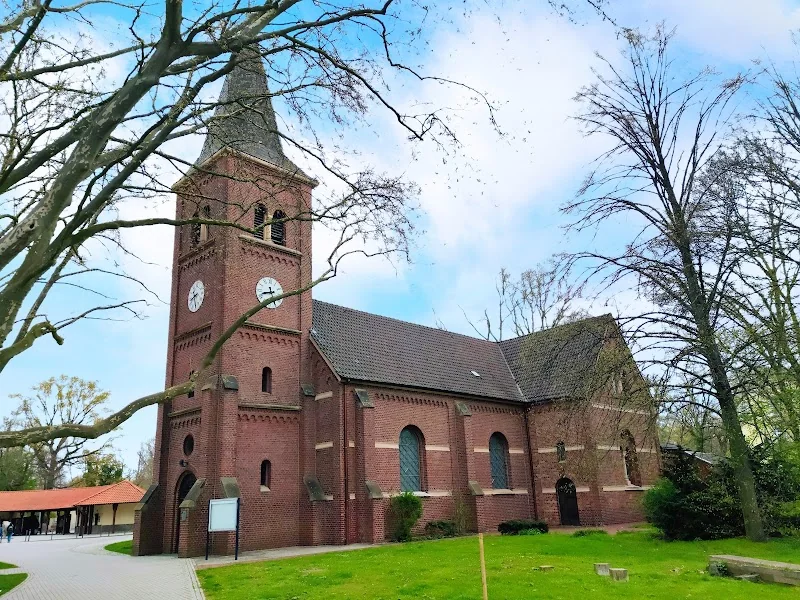
Visitors to the Bleckkirche experience a place with a very deep historical layering. The city of Gelsenkirchen dates the construction of the Protestant Bleckkirche to the year 1735. Originally, it was designed as a small, two-bay hall church. At the end of the 19th century, specifically from 1888 to 1889, it was expanded by the Bochum master builder Hellhammer. This resulted in a neo-Romanesque brick hall with a west tower, transept, and choir. This architectural development explains why the Bleckkirche today appears both simple, historical, and space-defining. For visitors, this is more than just an architectural historical detail: it shapes the atmosphere of the building and makes it understandable why the church is used not only for sacred purposes but also culturally. The monument page for the Day of Open Monuments describes the Bleckkirche as the oldest church in the Gelsenkirchen urban area and emphasizes the need for restoration of the monument substance. ([gelsenkirchen.de](https://www.gelsenkirchen.de/de/infrastruktur/stadtplanung/aktuelle_projekte/zukunft_von_kirchenstandorten.aspx))
However, the actual heart of the historical narrative is the Grimberger Altar from 1574. According to the city of Gelsenkirchen, it was originally created for the chapel of Grimberg Castle and transferred to the Bleckkirche in 1738. The altar is considered the oldest Protestant altar in Westphalia. The monument page additionally highlights that the Grimberger Altar with its communion relief is one of the oldest and most significant Reformation altars in Westphalia. For the Bleckkirche, this altar is not only an art historical object but also a symbol of a continuous religious and cultural heritage. This is precisely why terms like Bleckkirche history, Grimberger Altar, and oldest Protestant church Gelsenkirchen play such an important role in search logic. The church is a place where the Reformation history of the Ruhr area remains visible without appearing museum-like. Instead, the historical core is translated into the present: through guided tours, open visits, cultural use, and events that do not isolate the altar treasure but embed it in a vibrant overall experience. ([gelsenkirchen.de](https://www.gelsenkirchen.de/de/infrastruktur/stadtplanung/aktuelle_projekte/zukunft_von_kirchenstandorten.aspx))
Directions to the Bleckkirche at the ZOOM Erlebniswelt
The directions to the Bleckkirche are relatively simple because the location is clearly anchored in the cityscape and has a very well-known neighboring destination: the ZOOM Erlebniswelt. The official city website describes the Bleckkirche as located directly opposite the main entrance of the ZOOM Erlebniswelt. The Bleckkirche's own website adds that it is situated in the Gelsenkirchen district of Bismarck on Bleckstraße. This is crucial for orientation, as many visitors combine their church visit with an outing in the area. Particularly for search queries like Bleckkirche Gelsenkirchen directions or Bleckkirche address, not only the street information is important but also the spatial reference to the Erlebniswelt. Those arriving by public transport benefit from clear guidance. According to the official travel page, you take the subway line 301 from Gelsenkirchen Hbf towards GE-Buer, or in the opposite direction from GE-Buer Rathaus to Gelsenkirchen Hbf. In both cases, the ZOOM Erlebniswelt stop is the correct exit, and the walk to the church is about 200 meters. ([gelsenkirchen.de](https://www.gelsenkirchen.de/de/kultur/kultur-_und_veranstaltungsorte/bleckkirche_-_kirche_der_kulturen/index.aspx))
Traveling by car is also well described. The official Bleckkirche page recommends taking Bismarckstraße from Gelsenkirchen and Cranger Straße from Buer, each with orientation towards the ZOOM Erlebniswelt signage. For long-distance travel, the page also mentions the A2 with exit Herten and the A42 with exits GE-Bismarck or GE-Erle, each further towards ZOOM Erlebniswelt. This makes the Bleckkirche easily accessible for visitors from the entire northern and central Ruhr area. This information is extremely valuable for SEO because many users do not only search for the church itself but for a combination of destination, route, and arrival logic. A good approach increases the willingness to visit and makes the location more attractive for cultural evening events, tours, and church services. The proximity to the ZOOM Erlebniswelt additionally ensures recognition, as the place can be easily located visually and geographically. ([bleckkirche.info](https://www.bleckkirche.info/anreise.htm))
Parking at the Bleckkirche: Zoo, House Grimberg, and Accessible Options
When it comes to parking at the Bleckkirche, the official parking regulations are particularly important because the location is closely linked to the grounds of the ZOOM Erlebniswelt. The Bleckkirche informs that visitors of events who have parked their vehicles in one of the official and fee-based zoo parking lots could purchase parking chips for a reduced price directly at the Bleckkirche, although a current system change at the zoo restricts the resale of parking tickets. For guests of events that take place around or after 6 PM, the zoo parking lot P1 on Bleckstraße is available free of charge; the barrier opens for free exit at 7 PM. This is a very useful note because it directly addresses the search need for Bleckkirche parking and explains why the time plays a role in planning. For culture-related evening events, this can make a significant difference in the decision to visit. ([bleckkirche.info](https://www.bleckkirche.info/parken.htm))
Additionally, there are further solutions for specific visitor groups and event cases. Persons with mobility impairments with the appropriate ID can park directly on the premises of the Bleckkirche, provided there is free space available. There is also an agreement with House Grimberg at Grimberger Allee 10a to use the parking lot there free of charge, but only during events at the Bleckkirche and not in connection with a zoo visit. The authorization slips must be issued in the respective case or picked up at the Bleckkirche's cash desk and displayed visibly in the car. The walking distance from the House Grimberg parking lot to the church is about 250 meters. This regulation also applies to wedding and baptism services, with a maximum of 12 cars being considered. These details are important for visitors because they show that parking at the Bleckkirche is not organized like at a convention center but is still very concretely regulated and tailored to the event context. Particularly for search queries regarding Bleckkirche parking lot, Bleckkirche free parking, or driving directions, this information provides real added value. ([bleckkirche.info](https://www.bleckkirche.info/parken.htm))
Open Bleckkirche, Church Services, and Tours
The Bleckkirche is not only a place for events but also a space of tranquility, encounter, and reflection. The event calendar of the city of Gelsenkirchen shows the format Open Bleckkirche and explicitly describes it as an offering that invites visitors to breathe, recharge, and experience the special atmosphere. The Open Bleckkirche is characterized as a place of peace, encounter, and hospitality, where volunteers answer questions about history and are available for conversations. This fits very well with the church's self-understanding as an open urban space, as the church space is not only used for classic community forms but is also perceived as a freely accessible cultural and meeting place. From an SEO perspective, therefore, not only the word church service is relevant but also terms like open church, tour, and visit. ([gelsenkirchen.de](https://www.gelsenkirchen.de/de/_meta/veranstaltungskalender/88943-offene-bleckkirche))
The official city website also notes that the Bleckkirche is still occasionally used for church services and religious celebrations. This is an important point as it clearly highlights the dual role of the building: it is, on one hand, a historic house of worship, and on the other, a cultural church. Therefore, those searching for Bleckkirche church service should not expect a daily liturgical offering but rather occasional religious celebrations and special forms of spiritual life within the overall concept. The combination of sacred use and cultural openness is typical for city churches with a special profile, but at the Bleckkirche, it is particularly pronounced. Additionally, the church was represented at the Day of Open Monuments with tours of the church interior and a guided tour of the Grimberger Altar, which shows that historical mediation is also an important part of its use. This creates a visit offering that serves not only religious or cultural interests but consciously brings both levels together. ([gelsenkirchen.de](https://www.gelsenkirchen.de/de/infrastruktur/stadtplanung/aktuelle_projekte/zukunft_von_kirchenstandorten.aspx))
Bleckkirche as a Church of Cultures in Gelsenkirchen
The term Church of Cultures not only describes the Bleckkirche nicely but also precisely. The city of Gelsenkirchen emphasizes that the church seeks the connection between contemporary culture and faith, society, and religiosity. This is precisely its unique selling point. It is a place where exhibitions, concerts, theater, readings, and discussions have as much of a place as church services and religious celebrations. The official website of the Bleckkirche further expands this image by describing the place as the first city and culture church of Gelsenkirchen and referring to a decades-long development since 1996. Therefore, if one considers the Bleckkirche as a brand, it is not just a building but an urban platform for encounter. This is precisely why the search terms Bleckkirche culture church, Bleckkirche concert, and Bleckkirche exhibition resonate so strongly together. They describe different facets of the same place. ([gelsenkirchen.de](https://www.gelsenkirchen.de/de/kultur/kultur-_und_veranstaltungsorte/bleckkirche_-_kirche_der_kulturen/index.aspx))
For the local cultural history of Gelsenkirchen, this role should not be underestimated. The Bleckkirche's own website refers to collaboration with the Department of Culture, the Integration Office, and the Music School of the city of Gelsenkirchen, the Consol Theater, welfare associations, and migrant self-organizations. This shows that the Bleckkirche does not work in isolation but is part of an urban network. Furthermore, it is a place where different social groups can meet without losing the sacred character. This balance makes it attractive for visitors who are looking for an authentic, non-arbitrary event venue. In a city like Gelsenkirchen, which is often told through industrial history, change, and urban development, the Bleckkirche stands for continuity and openness at the same time. It shows that historical building substance does not necessarily have to become museum-like but can function as a culturally productive space. This is a strong argument for all those interested in urban history, cultural events, and special places. ([bleckkirche.info](https://www.bleckkirche.info/))
Visiting Tips, Surroundings, and Practical Information for Your Appointment
A visit to the Bleckkirche can be well combined with the surroundings because the location is directly opposite the ZOOM Erlebniswelt. The proximity to the zoo is interesting not only for families but also for anyone wishing to combine a cultural appointment with a city stroll or an outing. The church is situated in an area that is very clearly recognizable and easy to navigate. Those interested in history will find the Grimberger Altar a remarkable attraction. Those coming for a concert, reading, or exhibition will experience the historical setting as an atmospheric backdrop. And those seeking tranquility will find a moment away from the hustle and bustle in the open church. This multipurpose use makes the Bleckkirche so relevant for the search for bleckkirche gelsenkirchen program, as here not a single event is offered but a whole visiting experience. ([gelsenkirchen.de](https://www.gelsenkirchen.de/de/kultur/kultur-_und_veranstaltungsorte/bleckkirche_-_kirche_der_kulturen/index.aspx))
It is also practical that the monument page of the foundation mentions the barrier-free access: the connection to public transport was marked as wheelchair accessible. Together with the information on parking options for persons with mobility impairments, this results in an overall well-utilizable visit location, even though the specific parking situation may vary depending on the event. Therefore, anyone planning a visit should always check the current information on the official website or in the event calendar, especially for evening events and special appointments. This also applies to visitors who wish to combine multiple destinations in one day, such as church, zoo, and gastronomy in the vicinity. The Bleckkirche is ideal for such days when culture is not understood as an isolated destination but as part of a larger experience in the Bismarck district. Thus, it fulfills several search intentions: information about the program, directions and parking tips, historical backgrounds, and orientation for a meaningful on-site visit. ([bleckkirche.info](https://www.bleckkirche.info/parken.htm))
Sources:
- City of Gelsenkirchen - Bleckkirche - Church of Cultures
- Bleckkirche.info - Official Website of the Bleckkirche
- Bleckkirche.info - Directions
- Bleckkirche.info - Parking
- City of Gelsenkirchen - Future of Church Locations
- City of Gelsenkirchen - Open Bleckkirche invites everyone to visit every Sunday
- Day of Open Monuments - Ev. Bleckkirche
Show moreShow less
Bleckkirche - Church of Cultures | Program & Directions
The Bleckkirche in Gelsenkirchen is one of those locations where history, identity, and the present visibly intertwine. It is located on Bleckstraße opposite the main entrance of the ZOOM Erlebniswelt and is described by the city of Gelsenkirchen as a Church of Cultures that consciously opens itself to the connection of contemporary culture, faith, society, and religiosity. The open approach is particularly important: The Bleckkirche is not only aimed at congregation members or traditional church visitors but at all interested parties, regardless of denomination, church membership, or religious affiliation. This inclusive character makes it highly relevant for inquiries regarding programs, directions, parking, and events. Therefore, when searching for Bleckkirche Gelsenkirchen, one is referring not only to a historical building but to a vibrant place with cultural impact, urban radiance, and a very distinct profile. The official website also describes the Bleckkirche as a city and culture church that has appealed to a broad audience since its restoration and has built a remarkable cultural network over many years. ([gelsenkirchen.de](https://www.gelsenkirchen.de/de/kultur/kultur-_und_veranstaltungsorte/bleckkirche_-_kirche_der_kulturen/index.aspx))
Program, Concerts, and Cultural Diversity in the Bleckkirche
The interest in a Bleckkirche program is absolutely understandable, as the official description of the location already shows how broad the offering is intended to be. The city explicitly mentions culture, society and politics, musical and artistic endeavors, literature and the mundane, as well as dance and theater. This is an unusually open spectrum for a church and makes the Bleckkirche a space where culture does not merely function as a supporting program but forms the core of its use. The website also speaks of music, theater, art, and more, referring to the long development of the Bleckkirche as a place for cultural and socio-cultural offerings. In practice, this means: those searching for Bleckkirche concert, Bleckkirche exhibition, or Bleckkirche reading do not expect a standardized event venue but a house with an artistic attitude and a program that is always embedded in the urban context of Gelsenkirchen. ([gelsenkirchen.de](https://www.gelsenkirchen.de/de/kultur/kultur-_und_veranstaltungsorte/bleckkirche_-_kirche_der_kulturen/index.aspx))
What is particularly exciting is that the Bleckkirche has not only recently been used as a cultural venue but looks back on a long phase of cultural openness. The official website states that since its handover after the restoration phase in June 1996, there have been around 1000 events in the fields of music, theater, art, dance, literature, and film, as well as church services and discussion rounds. Additionally, more than 5000 participating artists and cultural creators are mentioned, along with over 70,000 guests who have visited the diverse offerings as interested parties. If you count the open visits, baptisms, and weddings, the website even speaks of around 200,000 people who have experienced the Bleckkirche since its restoration. These numbers are not only impressive; they also explain why the topic of programs is so highly sought after for the Bleckkirche: it is not about a single event but about a continuous cultural contribution to the city. From an SEO perspective, therefore, not only the word program is relevant but also the entire thematic environment of concert, culture, stage, reading, exhibition, and dialogue. ([bleckkirche.info](https://www.bleckkirche.info/))
History of the Bleckkirche and the Grimberger Altar
Visitors to the Bleckkirche experience a place with a very deep historical layering. The city of Gelsenkirchen dates the construction of the Protestant Bleckkirche to the year 1735. Originally, it was designed as a small, two-bay hall church. At the end of the 19th century, specifically from 1888 to 1889, it was expanded by the Bochum master builder Hellhammer. This resulted in a neo-Romanesque brick hall with a west tower, transept, and choir. This architectural development explains why the Bleckkirche today appears both simple, historical, and space-defining. For visitors, this is more than just an architectural historical detail: it shapes the atmosphere of the building and makes it understandable why the church is used not only for sacred purposes but also culturally. The monument page for the Day of Open Monuments describes the Bleckkirche as the oldest church in the Gelsenkirchen urban area and emphasizes the need for restoration of the monument substance. ([gelsenkirchen.de](https://www.gelsenkirchen.de/de/infrastruktur/stadtplanung/aktuelle_projekte/zukunft_von_kirchenstandorten.aspx))
However, the actual heart of the historical narrative is the Grimberger Altar from 1574. According to the city of Gelsenkirchen, it was originally created for the chapel of Grimberg Castle and transferred to the Bleckkirche in 1738. The altar is considered the oldest Protestant altar in Westphalia. The monument page additionally highlights that the Grimberger Altar with its communion relief is one of the oldest and most significant Reformation altars in Westphalia. For the Bleckkirche, this altar is not only an art historical object but also a symbol of a continuous religious and cultural heritage. This is precisely why terms like Bleckkirche history, Grimberger Altar, and oldest Protestant church Gelsenkirchen play such an important role in search logic. The church is a place where the Reformation history of the Ruhr area remains visible without appearing museum-like. Instead, the historical core is translated into the present: through guided tours, open visits, cultural use, and events that do not isolate the altar treasure but embed it in a vibrant overall experience. ([gelsenkirchen.de](https://www.gelsenkirchen.de/de/infrastruktur/stadtplanung/aktuelle_projekte/zukunft_von_kirchenstandorten.aspx))
Directions to the Bleckkirche at the ZOOM Erlebniswelt
The directions to the Bleckkirche are relatively simple because the location is clearly anchored in the cityscape and has a very well-known neighboring destination: the ZOOM Erlebniswelt. The official city website describes the Bleckkirche as located directly opposite the main entrance of the ZOOM Erlebniswelt. The Bleckkirche's own website adds that it is situated in the Gelsenkirchen district of Bismarck on Bleckstraße. This is crucial for orientation, as many visitors combine their church visit with an outing in the area. Particularly for search queries like Bleckkirche Gelsenkirchen directions or Bleckkirche address, not only the street information is important but also the spatial reference to the Erlebniswelt. Those arriving by public transport benefit from clear guidance. According to the official travel page, you take the subway line 301 from Gelsenkirchen Hbf towards GE-Buer, or in the opposite direction from GE-Buer Rathaus to Gelsenkirchen Hbf. In both cases, the ZOOM Erlebniswelt stop is the correct exit, and the walk to the church is about 200 meters. ([gelsenkirchen.de](https://www.gelsenkirchen.de/de/kultur/kultur-_und_veranstaltungsorte/bleckkirche_-_kirche_der_kulturen/index.aspx))
Traveling by car is also well described. The official Bleckkirche page recommends taking Bismarckstraße from Gelsenkirchen and Cranger Straße from Buer, each with orientation towards the ZOOM Erlebniswelt signage. For long-distance travel, the page also mentions the A2 with exit Herten and the A42 with exits GE-Bismarck or GE-Erle, each further towards ZOOM Erlebniswelt. This makes the Bleckkirche easily accessible for visitors from the entire northern and central Ruhr area. This information is extremely valuable for SEO because many users do not only search for the church itself but for a combination of destination, route, and arrival logic. A good approach increases the willingness to visit and makes the location more attractive for cultural evening events, tours, and church services. The proximity to the ZOOM Erlebniswelt additionally ensures recognition, as the place can be easily located visually and geographically. ([bleckkirche.info](https://www.bleckkirche.info/anreise.htm))
Parking at the Bleckkirche: Zoo, House Grimberg, and Accessible Options
When it comes to parking at the Bleckkirche, the official parking regulations are particularly important because the location is closely linked to the grounds of the ZOOM Erlebniswelt. The Bleckkirche informs that visitors of events who have parked their vehicles in one of the official and fee-based zoo parking lots could purchase parking chips for a reduced price directly at the Bleckkirche, although a current system change at the zoo restricts the resale of parking tickets. For guests of events that take place around or after 6 PM, the zoo parking lot P1 on Bleckstraße is available free of charge; the barrier opens for free exit at 7 PM. This is a very useful note because it directly addresses the search need for Bleckkirche parking and explains why the time plays a role in planning. For culture-related evening events, this can make a significant difference in the decision to visit. ([bleckkirche.info](https://www.bleckkirche.info/parken.htm))
Additionally, there are further solutions for specific visitor groups and event cases. Persons with mobility impairments with the appropriate ID can park directly on the premises of the Bleckkirche, provided there is free space available. There is also an agreement with House Grimberg at Grimberger Allee 10a to use the parking lot there free of charge, but only during events at the Bleckkirche and not in connection with a zoo visit. The authorization slips must be issued in the respective case or picked up at the Bleckkirche's cash desk and displayed visibly in the car. The walking distance from the House Grimberg parking lot to the church is about 250 meters. This regulation also applies to wedding and baptism services, with a maximum of 12 cars being considered. These details are important for visitors because they show that parking at the Bleckkirche is not organized like at a convention center but is still very concretely regulated and tailored to the event context. Particularly for search queries regarding Bleckkirche parking lot, Bleckkirche free parking, or driving directions, this information provides real added value. ([bleckkirche.info](https://www.bleckkirche.info/parken.htm))
Open Bleckkirche, Church Services, and Tours
The Bleckkirche is not only a place for events but also a space of tranquility, encounter, and reflection. The event calendar of the city of Gelsenkirchen shows the format Open Bleckkirche and explicitly describes it as an offering that invites visitors to breathe, recharge, and experience the special atmosphere. The Open Bleckkirche is characterized as a place of peace, encounter, and hospitality, where volunteers answer questions about history and are available for conversations. This fits very well with the church's self-understanding as an open urban space, as the church space is not only used for classic community forms but is also perceived as a freely accessible cultural and meeting place. From an SEO perspective, therefore, not only the word church service is relevant but also terms like open church, tour, and visit. ([gelsenkirchen.de](https://www.gelsenkirchen.de/de/_meta/veranstaltungskalender/88943-offene-bleckkirche))
The official city website also notes that the Bleckkirche is still occasionally used for church services and religious celebrations. This is an important point as it clearly highlights the dual role of the building: it is, on one hand, a historic house of worship, and on the other, a cultural church. Therefore, those searching for Bleckkirche church service should not expect a daily liturgical offering but rather occasional religious celebrations and special forms of spiritual life within the overall concept. The combination of sacred use and cultural openness is typical for city churches with a special profile, but at the Bleckkirche, it is particularly pronounced. Additionally, the church was represented at the Day of Open Monuments with tours of the church interior and a guided tour of the Grimberger Altar, which shows that historical mediation is also an important part of its use. This creates a visit offering that serves not only religious or cultural interests but consciously brings both levels together. ([gelsenkirchen.de](https://www.gelsenkirchen.de/de/infrastruktur/stadtplanung/aktuelle_projekte/zukunft_von_kirchenstandorten.aspx))
Bleckkirche as a Church of Cultures in Gelsenkirchen
The term Church of Cultures not only describes the Bleckkirche nicely but also precisely. The city of Gelsenkirchen emphasizes that the church seeks the connection between contemporary culture and faith, society, and religiosity. This is precisely its unique selling point. It is a place where exhibitions, concerts, theater, readings, and discussions have as much of a place as church services and religious celebrations. The official website of the Bleckkirche further expands this image by describing the place as the first city and culture church of Gelsenkirchen and referring to a decades-long development since 1996. Therefore, if one considers the Bleckkirche as a brand, it is not just a building but an urban platform for encounter. This is precisely why the search terms Bleckkirche culture church, Bleckkirche concert, and Bleckkirche exhibition resonate so strongly together. They describe different facets of the same place. ([gelsenkirchen.de](https://www.gelsenkirchen.de/de/kultur/kultur-_und_veranstaltungsorte/bleckkirche_-_kirche_der_kulturen/index.aspx))
For the local cultural history of Gelsenkirchen, this role should not be underestimated. The Bleckkirche's own website refers to collaboration with the Department of Culture, the Integration Office, and the Music School of the city of Gelsenkirchen, the Consol Theater, welfare associations, and migrant self-organizations. This shows that the Bleckkirche does not work in isolation but is part of an urban network. Furthermore, it is a place where different social groups can meet without losing the sacred character. This balance makes it attractive for visitors who are looking for an authentic, non-arbitrary event venue. In a city like Gelsenkirchen, which is often told through industrial history, change, and urban development, the Bleckkirche stands for continuity and openness at the same time. It shows that historical building substance does not necessarily have to become museum-like but can function as a culturally productive space. This is a strong argument for all those interested in urban history, cultural events, and special places. ([bleckkirche.info](https://www.bleckkirche.info/))
Visiting Tips, Surroundings, and Practical Information for Your Appointment
A visit to the Bleckkirche can be well combined with the surroundings because the location is directly opposite the ZOOM Erlebniswelt. The proximity to the zoo is interesting not only for families but also for anyone wishing to combine a cultural appointment with a city stroll or an outing. The church is situated in an area that is very clearly recognizable and easy to navigate. Those interested in history will find the Grimberger Altar a remarkable attraction. Those coming for a concert, reading, or exhibition will experience the historical setting as an atmospheric backdrop. And those seeking tranquility will find a moment away from the hustle and bustle in the open church. This multipurpose use makes the Bleckkirche so relevant for the search for bleckkirche gelsenkirchen program, as here not a single event is offered but a whole visiting experience. ([gelsenkirchen.de](https://www.gelsenkirchen.de/de/kultur/kultur-_und_veranstaltungsorte/bleckkirche_-_kirche_der_kulturen/index.aspx))
It is also practical that the monument page of the foundation mentions the barrier-free access: the connection to public transport was marked as wheelchair accessible. Together with the information on parking options for persons with mobility impairments, this results in an overall well-utilizable visit location, even though the specific parking situation may vary depending on the event. Therefore, anyone planning a visit should always check the current information on the official website or in the event calendar, especially for evening events and special appointments. This also applies to visitors who wish to combine multiple destinations in one day, such as church, zoo, and gastronomy in the vicinity. The Bleckkirche is ideal for such days when culture is not understood as an isolated destination but as part of a larger experience in the Bismarck district. Thus, it fulfills several search intentions: information about the program, directions and parking tips, historical backgrounds, and orientation for a meaningful on-site visit. ([bleckkirche.info](https://www.bleckkirche.info/parken.htm))
Sources:
- City of Gelsenkirchen - Bleckkirche - Church of Cultures
- Bleckkirche.info - Official Website of the Bleckkirche
- Bleckkirche.info - Directions
- Bleckkirche.info - Parking
- City of Gelsenkirchen - Future of Church Locations
- City of Gelsenkirchen - Open Bleckkirche invites everyone to visit every Sunday
- Day of Open Monuments - Ev. Bleckkirche
Bleckkirche - Church of Cultures | Program & Directions
The Bleckkirche in Gelsenkirchen is one of those locations where history, identity, and the present visibly intertwine. It is located on Bleckstraße opposite the main entrance of the ZOOM Erlebniswelt and is described by the city of Gelsenkirchen as a Church of Cultures that consciously opens itself to the connection of contemporary culture, faith, society, and religiosity. The open approach is particularly important: The Bleckkirche is not only aimed at congregation members or traditional church visitors but at all interested parties, regardless of denomination, church membership, or religious affiliation. This inclusive character makes it highly relevant for inquiries regarding programs, directions, parking, and events. Therefore, when searching for Bleckkirche Gelsenkirchen, one is referring not only to a historical building but to a vibrant place with cultural impact, urban radiance, and a very distinct profile. The official website also describes the Bleckkirche as a city and culture church that has appealed to a broad audience since its restoration and has built a remarkable cultural network over many years. ([gelsenkirchen.de](https://www.gelsenkirchen.de/de/kultur/kultur-_und_veranstaltungsorte/bleckkirche_-_kirche_der_kulturen/index.aspx))
Program, Concerts, and Cultural Diversity in the Bleckkirche
The interest in a Bleckkirche program is absolutely understandable, as the official description of the location already shows how broad the offering is intended to be. The city explicitly mentions culture, society and politics, musical and artistic endeavors, literature and the mundane, as well as dance and theater. This is an unusually open spectrum for a church and makes the Bleckkirche a space where culture does not merely function as a supporting program but forms the core of its use. The website also speaks of music, theater, art, and more, referring to the long development of the Bleckkirche as a place for cultural and socio-cultural offerings. In practice, this means: those searching for Bleckkirche concert, Bleckkirche exhibition, or Bleckkirche reading do not expect a standardized event venue but a house with an artistic attitude and a program that is always embedded in the urban context of Gelsenkirchen. ([gelsenkirchen.de](https://www.gelsenkirchen.de/de/kultur/kultur-_und_veranstaltungsorte/bleckkirche_-_kirche_der_kulturen/index.aspx))
What is particularly exciting is that the Bleckkirche has not only recently been used as a cultural venue but looks back on a long phase of cultural openness. The official website states that since its handover after the restoration phase in June 1996, there have been around 1000 events in the fields of music, theater, art, dance, literature, and film, as well as church services and discussion rounds. Additionally, more than 5000 participating artists and cultural creators are mentioned, along with over 70,000 guests who have visited the diverse offerings as interested parties. If you count the open visits, baptisms, and weddings, the website even speaks of around 200,000 people who have experienced the Bleckkirche since its restoration. These numbers are not only impressive; they also explain why the topic of programs is so highly sought after for the Bleckkirche: it is not about a single event but about a continuous cultural contribution to the city. From an SEO perspective, therefore, not only the word program is relevant but also the entire thematic environment of concert, culture, stage, reading, exhibition, and dialogue. ([bleckkirche.info](https://www.bleckkirche.info/))
History of the Bleckkirche and the Grimberger Altar
Visitors to the Bleckkirche experience a place with a very deep historical layering. The city of Gelsenkirchen dates the construction of the Protestant Bleckkirche to the year 1735. Originally, it was designed as a small, two-bay hall church. At the end of the 19th century, specifically from 1888 to 1889, it was expanded by the Bochum master builder Hellhammer. This resulted in a neo-Romanesque brick hall with a west tower, transept, and choir. This architectural development explains why the Bleckkirche today appears both simple, historical, and space-defining. For visitors, this is more than just an architectural historical detail: it shapes the atmosphere of the building and makes it understandable why the church is used not only for sacred purposes but also culturally. The monument page for the Day of Open Monuments describes the Bleckkirche as the oldest church in the Gelsenkirchen urban area and emphasizes the need for restoration of the monument substance. ([gelsenkirchen.de](https://www.gelsenkirchen.de/de/infrastruktur/stadtplanung/aktuelle_projekte/zukunft_von_kirchenstandorten.aspx))
However, the actual heart of the historical narrative is the Grimberger Altar from 1574. According to the city of Gelsenkirchen, it was originally created for the chapel of Grimberg Castle and transferred to the Bleckkirche in 1738. The altar is considered the oldest Protestant altar in Westphalia. The monument page additionally highlights that the Grimberger Altar with its communion relief is one of the oldest and most significant Reformation altars in Westphalia. For the Bleckkirche, this altar is not only an art historical object but also a symbol of a continuous religious and cultural heritage. This is precisely why terms like Bleckkirche history, Grimberger Altar, and oldest Protestant church Gelsenkirchen play such an important role in search logic. The church is a place where the Reformation history of the Ruhr area remains visible without appearing museum-like. Instead, the historical core is translated into the present: through guided tours, open visits, cultural use, and events that do not isolate the altar treasure but embed it in a vibrant overall experience. ([gelsenkirchen.de](https://www.gelsenkirchen.de/de/infrastruktur/stadtplanung/aktuelle_projekte/zukunft_von_kirchenstandorten.aspx))
Directions to the Bleckkirche at the ZOOM Erlebniswelt
The directions to the Bleckkirche are relatively simple because the location is clearly anchored in the cityscape and has a very well-known neighboring destination: the ZOOM Erlebniswelt. The official city website describes the Bleckkirche as located directly opposite the main entrance of the ZOOM Erlebniswelt. The Bleckkirche's own website adds that it is situated in the Gelsenkirchen district of Bismarck on Bleckstraße. This is crucial for orientation, as many visitors combine their church visit with an outing in the area. Particularly for search queries like Bleckkirche Gelsenkirchen directions or Bleckkirche address, not only the street information is important but also the spatial reference to the Erlebniswelt. Those arriving by public transport benefit from clear guidance. According to the official travel page, you take the subway line 301 from Gelsenkirchen Hbf towards GE-Buer, or in the opposite direction from GE-Buer Rathaus to Gelsenkirchen Hbf. In both cases, the ZOOM Erlebniswelt stop is the correct exit, and the walk to the church is about 200 meters. ([gelsenkirchen.de](https://www.gelsenkirchen.de/de/kultur/kultur-_und_veranstaltungsorte/bleckkirche_-_kirche_der_kulturen/index.aspx))
Traveling by car is also well described. The official Bleckkirche page recommends taking Bismarckstraße from Gelsenkirchen and Cranger Straße from Buer, each with orientation towards the ZOOM Erlebniswelt signage. For long-distance travel, the page also mentions the A2 with exit Herten and the A42 with exits GE-Bismarck or GE-Erle, each further towards ZOOM Erlebniswelt. This makes the Bleckkirche easily accessible for visitors from the entire northern and central Ruhr area. This information is extremely valuable for SEO because many users do not only search for the church itself but for a combination of destination, route, and arrival logic. A good approach increases the willingness to visit and makes the location more attractive for cultural evening events, tours, and church services. The proximity to the ZOOM Erlebniswelt additionally ensures recognition, as the place can be easily located visually and geographically. ([bleckkirche.info](https://www.bleckkirche.info/anreise.htm))
Parking at the Bleckkirche: Zoo, House Grimberg, and Accessible Options
When it comes to parking at the Bleckkirche, the official parking regulations are particularly important because the location is closely linked to the grounds of the ZOOM Erlebniswelt. The Bleckkirche informs that visitors of events who have parked their vehicles in one of the official and fee-based zoo parking lots could purchase parking chips for a reduced price directly at the Bleckkirche, although a current system change at the zoo restricts the resale of parking tickets. For guests of events that take place around or after 6 PM, the zoo parking lot P1 on Bleckstraße is available free of charge; the barrier opens for free exit at 7 PM. This is a very useful note because it directly addresses the search need for Bleckkirche parking and explains why the time plays a role in planning. For culture-related evening events, this can make a significant difference in the decision to visit. ([bleckkirche.info](https://www.bleckkirche.info/parken.htm))
Additionally, there are further solutions for specific visitor groups and event cases. Persons with mobility impairments with the appropriate ID can park directly on the premises of the Bleckkirche, provided there is free space available. There is also an agreement with House Grimberg at Grimberger Allee 10a to use the parking lot there free of charge, but only during events at the Bleckkirche and not in connection with a zoo visit. The authorization slips must be issued in the respective case or picked up at the Bleckkirche's cash desk and displayed visibly in the car. The walking distance from the House Grimberg parking lot to the church is about 250 meters. This regulation also applies to wedding and baptism services, with a maximum of 12 cars being considered. These details are important for visitors because they show that parking at the Bleckkirche is not organized like at a convention center but is still very concretely regulated and tailored to the event context. Particularly for search queries regarding Bleckkirche parking lot, Bleckkirche free parking, or driving directions, this information provides real added value. ([bleckkirche.info](https://www.bleckkirche.info/parken.htm))
Open Bleckkirche, Church Services, and Tours
The Bleckkirche is not only a place for events but also a space of tranquility, encounter, and reflection. The event calendar of the city of Gelsenkirchen shows the format Open Bleckkirche and explicitly describes it as an offering that invites visitors to breathe, recharge, and experience the special atmosphere. The Open Bleckkirche is characterized as a place of peace, encounter, and hospitality, where volunteers answer questions about history and are available for conversations. This fits very well with the church's self-understanding as an open urban space, as the church space is not only used for classic community forms but is also perceived as a freely accessible cultural and meeting place. From an SEO perspective, therefore, not only the word church service is relevant but also terms like open church, tour, and visit. ([gelsenkirchen.de](https://www.gelsenkirchen.de/de/_meta/veranstaltungskalender/88943-offene-bleckkirche))
The official city website also notes that the Bleckkirche is still occasionally used for church services and religious celebrations. This is an important point as it clearly highlights the dual role of the building: it is, on one hand, a historic house of worship, and on the other, a cultural church. Therefore, those searching for Bleckkirche church service should not expect a daily liturgical offering but rather occasional religious celebrations and special forms of spiritual life within the overall concept. The combination of sacred use and cultural openness is typical for city churches with a special profile, but at the Bleckkirche, it is particularly pronounced. Additionally, the church was represented at the Day of Open Monuments with tours of the church interior and a guided tour of the Grimberger Altar, which shows that historical mediation is also an important part of its use. This creates a visit offering that serves not only religious or cultural interests but consciously brings both levels together. ([gelsenkirchen.de](https://www.gelsenkirchen.de/de/infrastruktur/stadtplanung/aktuelle_projekte/zukunft_von_kirchenstandorten.aspx))
Bleckkirche as a Church of Cultures in Gelsenkirchen
The term Church of Cultures not only describes the Bleckkirche nicely but also precisely. The city of Gelsenkirchen emphasizes that the church seeks the connection between contemporary culture and faith, society, and religiosity. This is precisely its unique selling point. It is a place where exhibitions, concerts, theater, readings, and discussions have as much of a place as church services and religious celebrations. The official website of the Bleckkirche further expands this image by describing the place as the first city and culture church of Gelsenkirchen and referring to a decades-long development since 1996. Therefore, if one considers the Bleckkirche as a brand, it is not just a building but an urban platform for encounter. This is precisely why the search terms Bleckkirche culture church, Bleckkirche concert, and Bleckkirche exhibition resonate so strongly together. They describe different facets of the same place. ([gelsenkirchen.de](https://www.gelsenkirchen.de/de/kultur/kultur-_und_veranstaltungsorte/bleckkirche_-_kirche_der_kulturen/index.aspx))
For the local cultural history of Gelsenkirchen, this role should not be underestimated. The Bleckkirche's own website refers to collaboration with the Department of Culture, the Integration Office, and the Music School of the city of Gelsenkirchen, the Consol Theater, welfare associations, and migrant self-organizations. This shows that the Bleckkirche does not work in isolation but is part of an urban network. Furthermore, it is a place where different social groups can meet without losing the sacred character. This balance makes it attractive for visitors who are looking for an authentic, non-arbitrary event venue. In a city like Gelsenkirchen, which is often told through industrial history, change, and urban development, the Bleckkirche stands for continuity and openness at the same time. It shows that historical building substance does not necessarily have to become museum-like but can function as a culturally productive space. This is a strong argument for all those interested in urban history, cultural events, and special places. ([bleckkirche.info](https://www.bleckkirche.info/))
Visiting Tips, Surroundings, and Practical Information for Your Appointment
A visit to the Bleckkirche can be well combined with the surroundings because the location is directly opposite the ZOOM Erlebniswelt. The proximity to the zoo is interesting not only for families but also for anyone wishing to combine a cultural appointment with a city stroll or an outing. The church is situated in an area that is very clearly recognizable and easy to navigate. Those interested in history will find the Grimberger Altar a remarkable attraction. Those coming for a concert, reading, or exhibition will experience the historical setting as an atmospheric backdrop. And those seeking tranquility will find a moment away from the hustle and bustle in the open church. This multipurpose use makes the Bleckkirche so relevant for the search for bleckkirche gelsenkirchen program, as here not a single event is offered but a whole visiting experience. ([gelsenkirchen.de](https://www.gelsenkirchen.de/de/kultur/kultur-_und_veranstaltungsorte/bleckkirche_-_kirche_der_kulturen/index.aspx))
It is also practical that the monument page of the foundation mentions the barrier-free access: the connection to public transport was marked as wheelchair accessible. Together with the information on parking options for persons with mobility impairments, this results in an overall well-utilizable visit location, even though the specific parking situation may vary depending on the event. Therefore, anyone planning a visit should always check the current information on the official website or in the event calendar, especially for evening events and special appointments. This also applies to visitors who wish to combine multiple destinations in one day, such as church, zoo, and gastronomy in the vicinity. The Bleckkirche is ideal for such days when culture is not understood as an isolated destination but as part of a larger experience in the Bismarck district. Thus, it fulfills several search intentions: information about the program, directions and parking tips, historical backgrounds, and orientation for a meaningful on-site visit. ([bleckkirche.info](https://www.bleckkirche.info/parken.htm))
Sources:
- City of Gelsenkirchen - Bleckkirche - Church of Cultures
- Bleckkirche.info - Official Website of the Bleckkirche
- Bleckkirche.info - Directions
- Bleckkirche.info - Parking
- City of Gelsenkirchen - Future of Church Locations
- City of Gelsenkirchen - Open Bleckkirche invites everyone to visit every Sunday
- Day of Open Monuments - Ev. Bleckkirche
Frequently Asked Questions
Reviews
Peter Hionsek
21. April 2023
On the way to the zoo in Gelsenkirchen, we saw a small Protestant church near the entrance, which is said to be the oldest preserved Protestant church in Gelsenkirchen... The sign on the church wall informed us that this church is called Bleck-Kirche. The foundation stone for this Protestant church was laid in the 17th century. In 1889, it was remodeled and has likely kept its current appearance since then. Today, in 2023, the Bleck-Kirche is a Protestant synodal city church under the church administration of Gelsenkirchen-Wattenscheid. In this historic church building, services and church celebrations are still held at certain times. This church is also a church of cultures. No matter what denomination you belong to, this Protestant Bleck church is available for exhibitions, concerts, readings, and probably much more. We would have loved to see this interesting church from the inside. Unfortunately, on April 15, 2023, from around 12:00 PM to 4:00 PM, the church door was closed to us. I could only take a few photos of the exterior view of the Bleck church...
Beate Schulte
28. July 2017
...across from the zoo's main entrance.... The Bleck church, the oldest preserved Protestant church in Gelsenkirchen... "[...]. is on one hand a place for special services and church celebrations, and on the other hand is used as a "church of cultures" for intercultural work such as exhibitions, concerts, theater, readings, etc. As a church for the city, it invites everyone interested in this connection, regardless of denomination, church membership, or religious affiliation. The responsible leadership for the project has been held by Pastor Thomas Schöps since 1996."
Matthias
7. November 2018
A real highlight, both the old church with its stunning Renaissance age from the 16th century, and the excellent cultural events, usually world music concerts. We've spent many wonderful evenings there enjoying original, authentic music at a high or even the highest level. Next door is the extraordinary Zoom experience world and just a little further is the Starchief Diner, a restaurant like in the 50s in the USA; you can spend a whole beautiful day in this corner. But the 5 stars are for the church and its events ;-))
Rainer de Reuter
4. June 2018
A noteworthy chapel with an old Renaissance altar from 1574, which shows a relief of the Last Supper in the altar painting. The church itself was built in 1735 and is the oldest preserved church in the Gelsenkirchen city area. It was last renovated in 1990. The new baptismal font (2003) is by Angelo Monitillo. Unfortunately, the church is only very rarely open and is mainly used for cultural events and weddings. Regular services no longer take place there. The cultural events are usually of very high quality.
Janina Lehmbrink
4. November 2017
Terrible, terrible, and once again terrible service!!!!! I am shocked and appalled that despite this beautiful location and the great pastor we had, such a disgraceful incident occurred. One would think we live in the 21st century and that same-sex marriages are the most normal thing in the world, at least here in Germany. Normally, it shouldn't even have to be mentioned that it was a wedding of two women who wanted to start THEIR PERFECT day in this church, and then the organist just throws everything away and refuses to play because it’s two women entering the holy bond of marriage. Lowest of the low. I am appalled and deeply saddened that this couple had to enter into marriage without music!