
Gelsenkirchen
Margaretenhof 10–12, 45888 Gelsenkirchen, Deutschland
Alfred-Zingler-Haus | Photos & Events
The Alfred-Zingler-Haus in Gelsenkirchen is much more than just an address for individual events. In the neighborhood triangle of Bulmke-Schalke-Altstadt, an open meeting place has developed, supported by a voluntary initiative, where social, cultural, and political interests come together naturally. The official website describes the house as a meeting point for numerous groups that make their offerings publicly accessible, and names three central locations for events: Café Alfred, the hall, and in summer, the courtyard. Additionally, it is easily accessible by public transport, as the location page refers to bus lines 348 and 382 from Gelsenkirchen Hbf. This mix of community, culture, and practical usability makes the Alfred-Zingler-Haus a fixed point in everyday life for many people in Gelsenkirchen. ([alfred-zingler-haus.info](https://www.alfred-zingler-haus.info/Herzlich-willkommen.htm))
Those looking for Alfred-Zingler-Haus Gelsenkirchen, for photos, directions, or the current program will find not just a single event overview on the official website, but a whole neighborhood life. The calendar for April 2026, for example, shows a program with free or low-threshold formats such as a musical evening, a communal singing, the storytelling café, a pub quiz, and the regular FOLKfriends fireABEND. Many events are free of charge, and for individual events, reservations via email are requested. The house consciously emphasizes accessibility over distance: One is not only meant to come to consume something but to become part of a lively place. ([alfred-zingler-haus.info](https://www.alfred-zingler-haus.info/April-.-~-.-2026.htm?utm_source=openai))
Events, Program, and Booking
The events page of the Alfred-Zingler-Haus clearly shows how strongly the place relies on recurring, communal formats. In April 2026, among other things, there is an evening of the Yellow Moon series, communal singing with coffee and cake, the storytelling café, and a pub quiz on the agenda. Additionally, the FOLKfriends fireABEND, which has been taking place at Café Alfred on the last Friday of each month since November 2000, is included. This makes it clear that the program is not limited to one-time major events but focuses on continuity, participation, and local connection. People from the neighborhood can continually engage without fear of barriers and without the character of an anonymous event hall. ([alfred-zingler-haus.info](https://www.alfred-zingler-haus.info/April-.-~-.-2026.htm?utm_source=openai))
Particularly interesting is the nature of the formats. The storytelling café explicitly invites sharing stories, bringing read contributions, or simply listening. The pub quiz combines knowledge, puzzle fun, and group formation, while the musical full moon evening Yellow Moon focuses more on atmosphere and artistic encounters. The communal singing at Café Alfred, in turn, appeals to people who are looking for community and cozy participation. The fact that several dates in April 2026 are advertised with free admission underscores the low-threshold claim of the house. For individual offerings, a reservation via email is required; for some dates, a phone registration is also mentioned. So, anyone searching for Alfred-Zingler-Haus program 2026 or events in Gelsenkirchen-Bulmke will find a place where the program means not just a sequence of dates but a neighborhood practice. ([alfred-zingler-haus.info](https://www.alfred-zingler-haus.info/April-.-~-.-2026.htm?utm_source=openai))
The understanding of formats goes beyond classical cultural evenings. Many events are explicitly open to guests who just want to drop by, while other offerings create trust through their recurring structure. This is an important SEO and content aspect for search queries related to event locations: People want to know whether a house only occasionally offers something or if it is reliably active. At the Alfred-Zingler-Haus, the answer is clear: The program thrives on continuity, voluntary engagement, and a conscious mix of culture, sociability, and local debate. For this reason, the location is not only interesting for visitors looking for a single event but also for people searching for a long-term meeting point for encounters and participation. ([alfred-zingler-haus.info](https://www.alfred-zingler-haus.info/Herzlich-willkommen.htm))
Directions, Public Transport, and Parking at the Alfred-Zingler-Haus
The official location page specifically mentions bus lines 348 and 382 from Gelsenkirchen Hbf for the way to the Alfred-Zingler-Haus. This is the most important practical information for many visitors, as the house is located in the densely built neighborhood of Bulmke-Schalke-Altstadt and should thus be well connected to public transport. The address is Margaretenhof 10-12 in 45888 Gelsenkirchen; additionally, the house number 12 appears on the city page around the memory of Alfred and Margarethe Zingler as a memorial site. Those coming from an event, a café visit, or a group meeting can plan with a clear, central direction. ([alfred-zingler-haus.info](https://www.alfred-zingler-haus.info/Lage-AZH.htm))
Regarding parking, the official website does not provide a detailed overview of parking spaces. However, this is still important for keyword analysis since many people first ask about parking, parking spaces, or directions when searching for a location. A city map service lists several parking options in relatively short distance around Margaretenhof, such as a parking lot at Walpurgishof 4 or at Emmastraße 1, each approximately 180 meters away. This is helpful as external orientation but should always be understood as a surrounding hint and not as an official parking guarantee of the house. Therefore, those arriving by car should plan for the current parking situation on-site and not rely solely on a single parking space. ([gelsenkirchen.staedte-info.net](https://gelsenkirchen.staedte-info.net/margaretenhof_221987.php?utm_source=openai))
For editorial classification, it is also important that the Alfred-Zingler-Haus stands as a neighborhood center in the middle of a lively district. This often means in practice: short distances, urban density, mixed use, and an environment where visitors have both public transport and nearby street parking in view. This mix is relevant for search queries like Alfred-Zingler-Haus directions, Alfred-Zingler-Haus public transport, and Alfred-Zingler-Haus parking. The page itself consciously focuses on the bus connection because it makes visiting uncomplicated and practical. In connection with the location in the neighborhood, this is a sensible indication that the house is primarily intended as a well-accessible neighborhood place and less as an isolated event address with a large parking deck. ([alfred-zingler-haus.info](https://www.alfred-zingler-haus.info/Lage-AZH.htm))
Café Alfred, Hall, and Rooms in Everyday Life
The official website names three central rooms or usage places that are important for the profile of the house: Café Alfred, the hall, and in summer, the courtyard. This tripartition shows that the Alfred-Zingler-Haus is not limited to a single type of event. A coffee or meeting room is suitable for discussion formats and smaller groups, the hall for events with larger audience interest, and the courtyard for summer meetings, music, or open formats. Search queries for rooms, hall, Café Alfred, or photos specifically target these questions: How does the place feel, and what can it be used for? The official description provides a clear answer to this. ([alfred-zingler-haus.info](https://www.alfred-zingler-haus.info/Herzlich-willkommen.htm?utm_source=openai))
At the same time, the house emphasizes that it is an open meeting place. This means not only that events take place but also that various groups regularly use and shape the building. On the offerings page, the house is described as a meeting point for social, cultural, and political interests, and the website explicitly invites people to get involved and participate. For the content, this means: The rooms are not just a backdrop but part of practical neighborhood work. Those searching for Alfred-Zingler-Haus hall or Alfred-Zingler-Haus rooms usually want to know whether classical stage events or more open, communal formats take place there. Here, the focus is clearly on encounters, exchange, and public life. ([alfred-zingler-haus.info](https://www.alfred-zingler-haus.info/Angebote.htm))
Another indication of the use of the rooms is the variety of regular formats. Events take place in Café Alfred, in the hall, and partly in the outdoor area; in addition, group offerings can be spread throughout the week. This speaks for flexible spaces where not just a single format works, but different uses are possible. However, official information about a fixed capacity or a numbered hall plan is not prominently mentioned on the website. Therefore, for specific room questions, it is better to choose direct contact rather than rely on generic hall information. For SEO and content, this combination of flexible use, open atmosphere, and small-scale neighborhood work is particularly valuable because it distinguishes the house from classical event locations. ([alfred-zingler-haus.info](https://www.alfred-zingler-haus.info/Herzlich-willkommen.htm))
History, Namesake, and Significance for Gelsenkirchen
The history of the Alfred-Zingler-Haus does not begin only with its current use but with a building that was constructed in 1958 in the neighborhood triangle of Bulmke-Schalke-Altstadt. According to the official house page, it was used as a house of open doors by the Falkenjugend Gelsenkirchen e.V. from 1967 to 2011. This is an important historical context because it shows that the place has long been oriented towards children, youth, and encounter work. The current use is thus not a completely new invention but a further development of a longer social tradition. ([alfred-zingler-haus.info](https://www.alfred-zingler-haus.info/Unser-Haus.htm))
Particularly formative is the phase around 2011. The website reports that a possible demolition was prevented and a group of committed people was able to convince the responsible parties to reopen the vacant property for children. This developed into the current open meeting place. The city of Gelsenkirchen also reminds that the house was opened by Margarethe Zingler in 1967. She was politically active again after the war, led the Gelsenkirchen Workers' Welfare Association, and remained a formative figure until the 1960s. This connection of house history, political biography, and city history makes the Alfred-Zingler-Haus particularly interesting culturally. ([gelsenkirchen.de](https://www.gelsenkirchen.de/de/stadtprofil/stadtgeschichten/gelsenkirchener_persoenlichkeiten/wissenswertes.aspx))
The namesake Alfred Zingler himself is also at the center of Gelsenkirchen's culture of remembrance. The city explains that Alfred-Zingler-Straße, Margarethe-Zingler-Platz, Alfred-Zingler-Haus, and Margarethe-Zingler-Haus commemorate the couple. Alfred Zingler was a journalist for the social democratic newspaper Volkswille until it was banned in 1933. He was involved in the party and workers' culture, was later persecuted in the Nazi regime, and executed in 1944. Margarethe Zingler supported the democratic reconstruction after returning from exile. Thus, anyone visiting the house today enters not only an event location but also a place of political remembrance and democratic culture. ([gelsenkirchen.de](https://www.gelsenkirchen.de/de/stadtprofil/stadtgeschichten/erinnerungsorte/_alfred_und_margarethe_zingler.aspx))
Groups, Neighborhood, and Participation in the Neighborhood Center
The offerings page of the Alfred-Zingler-Haus is one of the strongest pieces of evidence that it is a genuine neighborhood center. Numerous groups and formats are listed there that are regularly active in the house or seek their public there: bookshelf, Emscher-Lippe exchange ring, bicycle workshop, Falken OV Altstadt, FOLKfriends fireABEND, food sharing, garden team, deaf café, deaf rummy club, communal breakfast, communal cooking, guitar cucumber group, men's round, neighborhood café, NABU Gelsenkirchen, repair café, SPD local association Bulmke, addiction self-help group, VVN-BdA, and Volxxküche. This is very strong content for search queries related to Alfred-Zingler-Haus offerings, neighborhood center Gelsenkirchen, or participation in the neighborhood. ([alfred-zingler-haus.info](https://www.alfred-zingler-haus.info/Angebote.htm))
Particularly interesting is that many of these offerings have a clear social function. The repair café stands for sustainable handling of things and mutual help; the bookshelf promotes exchange instead of throwing away; food sharing supports food rescue and neighborhood assistance; communal cooking and breakfast create practical contacts; and the deaf rummy club or the deaf café show that the house focuses on inclusive meeting points. According to the website, the food sharing offering has been active since 2016, and after a Corona break, it is again a drop-off point with an extra refrigerator and fixed opening hours from Monday to Thursday from 10 AM to 4 PM and Friday from 10 AM to 2 PM. For visitors, this means: At the Alfred-Zingler-Haus, not only events are held, but concrete help and organization take place together. ([alfred-zingler-haus.info](https://www.alfred-zingler-haus.info/Foodsharing.htm))
The repair café is also a good example of its anchoring in everyday life. According to the website, it is open on the first Monday of each month. Such recurring dates are often more important for seekers than individual festival dates because they signal reliability. So, anyone wondering if the house can only be visited occasionally or functions as a permanent meeting point finds a clear answer here: The Alfred-Zingler-Haus thrives on fixed rhythms, open groups, and a participatory idea supported by volunteering, neighborhood, and thematic diversity. ([alfred-zingler-haus.info](https://www.alfred-zingler-haus.info/Reparatur-Caf-e2-.htm?utm_source=openai))
Children, Education, and Projects at the Alfred-Zingler-Haus
In addition to culture and neighborhood, children's and youth work plays an important role. The website describes, for example, the learning and play meeting, where children from the Sternschule and the Regenbogenschule are guests in cooperation with the school social service and Caritas from Monday to Thursday from 1:30 PM to 3 PM. There, homework is supported, games are played, and social skills are fostered. This is a strong signal that the house is not only there for evening events or club meetings but also functions as a learning and safe space in everyday life. For search queries related to Alfred-Zingler-Haus children, youth, or learning offerings, this is a relevant proof. ([alfred-zingler-haus.info](https://www.alfred-zingler-haus.info/Lern_-und-SpielTreff.htm?utm_source=openai))
Additionally, there is the Kulturrucksack NRW. The website describes a holiday project for the age group of 10 to 14 years, which is offered in cooperation with artists and is free of charge. Creative workshop work, materials and techniques, as well as an excursion as part of the program are mentioned. Such offerings strengthen the profile of the house as a place of cultural education. Additionally, the page Q.Vision! refers to a social neighborhood project that focuses on support, further education, and communal work and extends until May 2027. Thus, the Alfred-Zingler-Haus is also a space where education, participation, and voluntary engagement intersect. ([alfred-zingler-haus.info](https://www.alfred-zingler-haus.info/Kulturrucksack.htm?utm_source=openai))
For editorial evaluation, this is important because it results in a clear utility: The house covers various life situations. Families find offerings for children, adults find community and cultural formats, volunteers find tasks and projects, and associations receive a place for meetings and visibility. This breadth makes the SEO relevance of the house so broad. Those searching for events are just as right as someone interested in social projects, neighborhood work, or cultural education. The Alfred-Zingler-Haus is thus not just a location but a platform for participation. ([alfred-zingler-haus.info](https://www.alfred-zingler-haus.info/Herzlich-willkommen.htm))
Photos, Impressions, and Special Insights
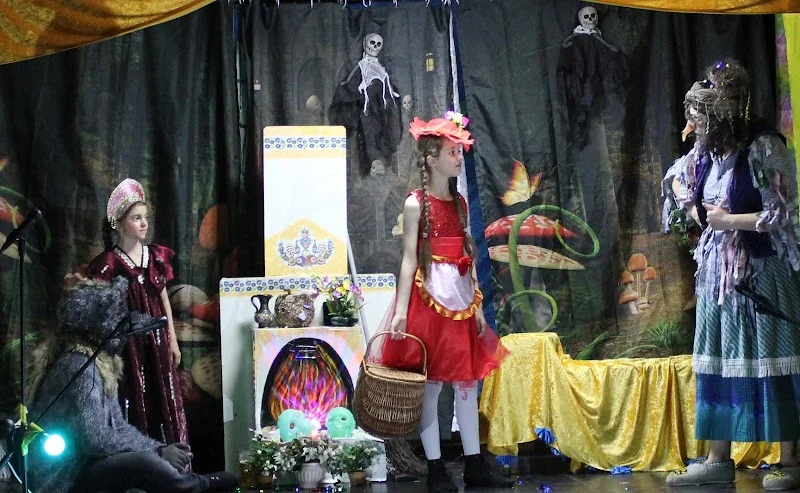
For the keyword combination Alfred-Zingler-Haus photos, the official page impressions is particularly relevant. There, the house shows pictures from ongoing operations and past events. For example, FOLKfriends fireABEND, the neighborhood café, communal cooking, the Yellow Moon series, courtyard stories, a Christmas dinner for the homeless and needy, and the opening of the food sharing drop-off point can be seen. This is helpful for visitors because photos not only convey atmosphere but also show what kind of audience and usage one can expect on-site. The house presents itself not as polished or distant but consciously as a lively, social place. ([alfred-zingler-haus.info](https://www.alfred-zingler-haus.info/Impressionen.htm?utm_source=openai))
Especially significant for the search intent behind photos and impressions: Interested parties often want to see in advance whether a location appears rather sober, festive, creative, or family-oriented. The images from the Alfred-Zingler-Haus primarily convey community, movement, and everyday closeness. They show a house shaped by many small formats, not just by a large signature event. The event archive pages also contribute to this impression, as recurring series and thematic evenings are documented there. Thus, the visual identity of the house remains consistent over months and years: open, engaged, neighborly, and culturally diverse. ([alfred-zingler-haus.info](https://www.alfred-zingler-haus.info/Impressionen.htm?utm_source=openai))
So, anyone searching for Alfred-Zingler-Haus Gelsenkirchen photos, impressions, or insights will find exactly what seekers usually expect on the website: real everyday scenes instead of glossy staging. This is also an advantage from an SEO perspective because such content generates trust and makes the character of a location tangible. Together with the clear history, public transport connection, event calendar, and many group offerings, a coherent overall picture emerges: The Alfred-Zingler-Haus is an open place for encounters, culture, and neighborhood, whose impact goes far beyond individual dates. ([alfred-zingler-haus.info](https://www.alfred-zingler-haus.info/Herzlich-willkommen.htm))
Sources:
- Alfred-Zingler-Haus - Welcome ([alfred-zingler-haus.info](https://www.alfred-zingler-haus.info/Herzlich-willkommen.htm))
- Alfred-Zingler-Haus - Our House and Location AZH ([alfred-zingler-haus.info](https://www.alfred-zingler-haus.info/Unser-Haus.htm))
- Alfred-Zingler-Haus - Offers and Foodsharing ([alfred-zingler-haus.info](https://www.alfred-zingler-haus.info/Angebote.htm))
- Alfred-Zingler-Haus - April 2026 and Impressions ([alfred-zingler-haus.info](https://www.alfred-zingler-haus.info/April-.-~-.-2026.htm?utm_source=openai))
- City of Gelsenkirchen - Alfred and Margarethe Zingler ([gelsenkirchen.de](https://www.gelsenkirchen.de/de/stadtprofil/stadtgeschichten/erinnerungsorte/_alfred_und_margarethe_zingler.aspx))
- Alfred-Zingler-Haus - Learning and Play Meeting, Cultural Rucksack and Q.Vision! ([alfred-zingler-haus.info](https://www.alfred-zingler-haus.info/Lern_-und-SpielTreff.htm?utm_source=openai))
Show moreShow less
Alfred-Zingler-Haus | Photos & Events
The Alfred-Zingler-Haus in Gelsenkirchen is much more than just an address for individual events. In the neighborhood triangle of Bulmke-Schalke-Altstadt, an open meeting place has developed, supported by a voluntary initiative, where social, cultural, and political interests come together naturally. The official website describes the house as a meeting point for numerous groups that make their offerings publicly accessible, and names three central locations for events: Café Alfred, the hall, and in summer, the courtyard. Additionally, it is easily accessible by public transport, as the location page refers to bus lines 348 and 382 from Gelsenkirchen Hbf. This mix of community, culture, and practical usability makes the Alfred-Zingler-Haus a fixed point in everyday life for many people in Gelsenkirchen. ([alfred-zingler-haus.info](https://www.alfred-zingler-haus.info/Herzlich-willkommen.htm))
Those looking for Alfred-Zingler-Haus Gelsenkirchen, for photos, directions, or the current program will find not just a single event overview on the official website, but a whole neighborhood life. The calendar for April 2026, for example, shows a program with free or low-threshold formats such as a musical evening, a communal singing, the storytelling café, a pub quiz, and the regular FOLKfriends fireABEND. Many events are free of charge, and for individual events, reservations via email are requested. The house consciously emphasizes accessibility over distance: One is not only meant to come to consume something but to become part of a lively place. ([alfred-zingler-haus.info](https://www.alfred-zingler-haus.info/April-.-~-.-2026.htm?utm_source=openai))
Events, Program, and Booking
The events page of the Alfred-Zingler-Haus clearly shows how strongly the place relies on recurring, communal formats. In April 2026, among other things, there is an evening of the Yellow Moon series, communal singing with coffee and cake, the storytelling café, and a pub quiz on the agenda. Additionally, the FOLKfriends fireABEND, which has been taking place at Café Alfred on the last Friday of each month since November 2000, is included. This makes it clear that the program is not limited to one-time major events but focuses on continuity, participation, and local connection. People from the neighborhood can continually engage without fear of barriers and without the character of an anonymous event hall. ([alfred-zingler-haus.info](https://www.alfred-zingler-haus.info/April-.-~-.-2026.htm?utm_source=openai))
Particularly interesting is the nature of the formats. The storytelling café explicitly invites sharing stories, bringing read contributions, or simply listening. The pub quiz combines knowledge, puzzle fun, and group formation, while the musical full moon evening Yellow Moon focuses more on atmosphere and artistic encounters. The communal singing at Café Alfred, in turn, appeals to people who are looking for community and cozy participation. The fact that several dates in April 2026 are advertised with free admission underscores the low-threshold claim of the house. For individual offerings, a reservation via email is required; for some dates, a phone registration is also mentioned. So, anyone searching for Alfred-Zingler-Haus program 2026 or events in Gelsenkirchen-Bulmke will find a place where the program means not just a sequence of dates but a neighborhood practice. ([alfred-zingler-haus.info](https://www.alfred-zingler-haus.info/April-.-~-.-2026.htm?utm_source=openai))
The understanding of formats goes beyond classical cultural evenings. Many events are explicitly open to guests who just want to drop by, while other offerings create trust through their recurring structure. This is an important SEO and content aspect for search queries related to event locations: People want to know whether a house only occasionally offers something or if it is reliably active. At the Alfred-Zingler-Haus, the answer is clear: The program thrives on continuity, voluntary engagement, and a conscious mix of culture, sociability, and local debate. For this reason, the location is not only interesting for visitors looking for a single event but also for people searching for a long-term meeting point for encounters and participation. ([alfred-zingler-haus.info](https://www.alfred-zingler-haus.info/Herzlich-willkommen.htm))
Directions, Public Transport, and Parking at the Alfred-Zingler-Haus
The official location page specifically mentions bus lines 348 and 382 from Gelsenkirchen Hbf for the way to the Alfred-Zingler-Haus. This is the most important practical information for many visitors, as the house is located in the densely built neighborhood of Bulmke-Schalke-Altstadt and should thus be well connected to public transport. The address is Margaretenhof 10-12 in 45888 Gelsenkirchen; additionally, the house number 12 appears on the city page around the memory of Alfred and Margarethe Zingler as a memorial site. Those coming from an event, a café visit, or a group meeting can plan with a clear, central direction. ([alfred-zingler-haus.info](https://www.alfred-zingler-haus.info/Lage-AZH.htm))
Regarding parking, the official website does not provide a detailed overview of parking spaces. However, this is still important for keyword analysis since many people first ask about parking, parking spaces, or directions when searching for a location. A city map service lists several parking options in relatively short distance around Margaretenhof, such as a parking lot at Walpurgishof 4 or at Emmastraße 1, each approximately 180 meters away. This is helpful as external orientation but should always be understood as a surrounding hint and not as an official parking guarantee of the house. Therefore, those arriving by car should plan for the current parking situation on-site and not rely solely on a single parking space. ([gelsenkirchen.staedte-info.net](https://gelsenkirchen.staedte-info.net/margaretenhof_221987.php?utm_source=openai))
For editorial classification, it is also important that the Alfred-Zingler-Haus stands as a neighborhood center in the middle of a lively district. This often means in practice: short distances, urban density, mixed use, and an environment where visitors have both public transport and nearby street parking in view. This mix is relevant for search queries like Alfred-Zingler-Haus directions, Alfred-Zingler-Haus public transport, and Alfred-Zingler-Haus parking. The page itself consciously focuses on the bus connection because it makes visiting uncomplicated and practical. In connection with the location in the neighborhood, this is a sensible indication that the house is primarily intended as a well-accessible neighborhood place and less as an isolated event address with a large parking deck. ([alfred-zingler-haus.info](https://www.alfred-zingler-haus.info/Lage-AZH.htm))
Café Alfred, Hall, and Rooms in Everyday Life
The official website names three central rooms or usage places that are important for the profile of the house: Café Alfred, the hall, and in summer, the courtyard. This tripartition shows that the Alfred-Zingler-Haus is not limited to a single type of event. A coffee or meeting room is suitable for discussion formats and smaller groups, the hall for events with larger audience interest, and the courtyard for summer meetings, music, or open formats. Search queries for rooms, hall, Café Alfred, or photos specifically target these questions: How does the place feel, and what can it be used for? The official description provides a clear answer to this. ([alfred-zingler-haus.info](https://www.alfred-zingler-haus.info/Herzlich-willkommen.htm?utm_source=openai))
At the same time, the house emphasizes that it is an open meeting place. This means not only that events take place but also that various groups regularly use and shape the building. On the offerings page, the house is described as a meeting point for social, cultural, and political interests, and the website explicitly invites people to get involved and participate. For the content, this means: The rooms are not just a backdrop but part of practical neighborhood work. Those searching for Alfred-Zingler-Haus hall or Alfred-Zingler-Haus rooms usually want to know whether classical stage events or more open, communal formats take place there. Here, the focus is clearly on encounters, exchange, and public life. ([alfred-zingler-haus.info](https://www.alfred-zingler-haus.info/Angebote.htm))
Another indication of the use of the rooms is the variety of regular formats. Events take place in Café Alfred, in the hall, and partly in the outdoor area; in addition, group offerings can be spread throughout the week. This speaks for flexible spaces where not just a single format works, but different uses are possible. However, official information about a fixed capacity or a numbered hall plan is not prominently mentioned on the website. Therefore, for specific room questions, it is better to choose direct contact rather than rely on generic hall information. For SEO and content, this combination of flexible use, open atmosphere, and small-scale neighborhood work is particularly valuable because it distinguishes the house from classical event locations. ([alfred-zingler-haus.info](https://www.alfred-zingler-haus.info/Herzlich-willkommen.htm))
History, Namesake, and Significance for Gelsenkirchen
The history of the Alfred-Zingler-Haus does not begin only with its current use but with a building that was constructed in 1958 in the neighborhood triangle of Bulmke-Schalke-Altstadt. According to the official house page, it was used as a house of open doors by the Falkenjugend Gelsenkirchen e.V. from 1967 to 2011. This is an important historical context because it shows that the place has long been oriented towards children, youth, and encounter work. The current use is thus not a completely new invention but a further development of a longer social tradition. ([alfred-zingler-haus.info](https://www.alfred-zingler-haus.info/Unser-Haus.htm))
Particularly formative is the phase around 2011. The website reports that a possible demolition was prevented and a group of committed people was able to convince the responsible parties to reopen the vacant property for children. This developed into the current open meeting place. The city of Gelsenkirchen also reminds that the house was opened by Margarethe Zingler in 1967. She was politically active again after the war, led the Gelsenkirchen Workers' Welfare Association, and remained a formative figure until the 1960s. This connection of house history, political biography, and city history makes the Alfred-Zingler-Haus particularly interesting culturally. ([gelsenkirchen.de](https://www.gelsenkirchen.de/de/stadtprofil/stadtgeschichten/gelsenkirchener_persoenlichkeiten/wissenswertes.aspx))
The namesake Alfred Zingler himself is also at the center of Gelsenkirchen's culture of remembrance. The city explains that Alfred-Zingler-Straße, Margarethe-Zingler-Platz, Alfred-Zingler-Haus, and Margarethe-Zingler-Haus commemorate the couple. Alfred Zingler was a journalist for the social democratic newspaper Volkswille until it was banned in 1933. He was involved in the party and workers' culture, was later persecuted in the Nazi regime, and executed in 1944. Margarethe Zingler supported the democratic reconstruction after returning from exile. Thus, anyone visiting the house today enters not only an event location but also a place of political remembrance and democratic culture. ([gelsenkirchen.de](https://www.gelsenkirchen.de/de/stadtprofil/stadtgeschichten/erinnerungsorte/_alfred_und_margarethe_zingler.aspx))
Groups, Neighborhood, and Participation in the Neighborhood Center
The offerings page of the Alfred-Zingler-Haus is one of the strongest pieces of evidence that it is a genuine neighborhood center. Numerous groups and formats are listed there that are regularly active in the house or seek their public there: bookshelf, Emscher-Lippe exchange ring, bicycle workshop, Falken OV Altstadt, FOLKfriends fireABEND, food sharing, garden team, deaf café, deaf rummy club, communal breakfast, communal cooking, guitar cucumber group, men's round, neighborhood café, NABU Gelsenkirchen, repair café, SPD local association Bulmke, addiction self-help group, VVN-BdA, and Volxxküche. This is very strong content for search queries related to Alfred-Zingler-Haus offerings, neighborhood center Gelsenkirchen, or participation in the neighborhood. ([alfred-zingler-haus.info](https://www.alfred-zingler-haus.info/Angebote.htm))
Particularly interesting is that many of these offerings have a clear social function. The repair café stands for sustainable handling of things and mutual help; the bookshelf promotes exchange instead of throwing away; food sharing supports food rescue and neighborhood assistance; communal cooking and breakfast create practical contacts; and the deaf rummy club or the deaf café show that the house focuses on inclusive meeting points. According to the website, the food sharing offering has been active since 2016, and after a Corona break, it is again a drop-off point with an extra refrigerator and fixed opening hours from Monday to Thursday from 10 AM to 4 PM and Friday from 10 AM to 2 PM. For visitors, this means: At the Alfred-Zingler-Haus, not only events are held, but concrete help and organization take place together. ([alfred-zingler-haus.info](https://www.alfred-zingler-haus.info/Foodsharing.htm))
The repair café is also a good example of its anchoring in everyday life. According to the website, it is open on the first Monday of each month. Such recurring dates are often more important for seekers than individual festival dates because they signal reliability. So, anyone wondering if the house can only be visited occasionally or functions as a permanent meeting point finds a clear answer here: The Alfred-Zingler-Haus thrives on fixed rhythms, open groups, and a participatory idea supported by volunteering, neighborhood, and thematic diversity. ([alfred-zingler-haus.info](https://www.alfred-zingler-haus.info/Reparatur-Caf-e2-.htm?utm_source=openai))
Children, Education, and Projects at the Alfred-Zingler-Haus
In addition to culture and neighborhood, children's and youth work plays an important role. The website describes, for example, the learning and play meeting, where children from the Sternschule and the Regenbogenschule are guests in cooperation with the school social service and Caritas from Monday to Thursday from 1:30 PM to 3 PM. There, homework is supported, games are played, and social skills are fostered. This is a strong signal that the house is not only there for evening events or club meetings but also functions as a learning and safe space in everyday life. For search queries related to Alfred-Zingler-Haus children, youth, or learning offerings, this is a relevant proof. ([alfred-zingler-haus.info](https://www.alfred-zingler-haus.info/Lern_-und-SpielTreff.htm?utm_source=openai))
Additionally, there is the Kulturrucksack NRW. The website describes a holiday project for the age group of 10 to 14 years, which is offered in cooperation with artists and is free of charge. Creative workshop work, materials and techniques, as well as an excursion as part of the program are mentioned. Such offerings strengthen the profile of the house as a place of cultural education. Additionally, the page Q.Vision! refers to a social neighborhood project that focuses on support, further education, and communal work and extends until May 2027. Thus, the Alfred-Zingler-Haus is also a space where education, participation, and voluntary engagement intersect. ([alfred-zingler-haus.info](https://www.alfred-zingler-haus.info/Kulturrucksack.htm?utm_source=openai))
For editorial evaluation, this is important because it results in a clear utility: The house covers various life situations. Families find offerings for children, adults find community and cultural formats, volunteers find tasks and projects, and associations receive a place for meetings and visibility. This breadth makes the SEO relevance of the house so broad. Those searching for events are just as right as someone interested in social projects, neighborhood work, or cultural education. The Alfred-Zingler-Haus is thus not just a location but a platform for participation. ([alfred-zingler-haus.info](https://www.alfred-zingler-haus.info/Herzlich-willkommen.htm))
Photos, Impressions, and Special Insights
For the keyword combination Alfred-Zingler-Haus photos, the official page impressions is particularly relevant. There, the house shows pictures from ongoing operations and past events. For example, FOLKfriends fireABEND, the neighborhood café, communal cooking, the Yellow Moon series, courtyard stories, a Christmas dinner for the homeless and needy, and the opening of the food sharing drop-off point can be seen. This is helpful for visitors because photos not only convey atmosphere but also show what kind of audience and usage one can expect on-site. The house presents itself not as polished or distant but consciously as a lively, social place. ([alfred-zingler-haus.info](https://www.alfred-zingler-haus.info/Impressionen.htm?utm_source=openai))
Especially significant for the search intent behind photos and impressions: Interested parties often want to see in advance whether a location appears rather sober, festive, creative, or family-oriented. The images from the Alfred-Zingler-Haus primarily convey community, movement, and everyday closeness. They show a house shaped by many small formats, not just by a large signature event. The event archive pages also contribute to this impression, as recurring series and thematic evenings are documented there. Thus, the visual identity of the house remains consistent over months and years: open, engaged, neighborly, and culturally diverse. ([alfred-zingler-haus.info](https://www.alfred-zingler-haus.info/Impressionen.htm?utm_source=openai))
So, anyone searching for Alfred-Zingler-Haus Gelsenkirchen photos, impressions, or insights will find exactly what seekers usually expect on the website: real everyday scenes instead of glossy staging. This is also an advantage from an SEO perspective because such content generates trust and makes the character of a location tangible. Together with the clear history, public transport connection, event calendar, and many group offerings, a coherent overall picture emerges: The Alfred-Zingler-Haus is an open place for encounters, culture, and neighborhood, whose impact goes far beyond individual dates. ([alfred-zingler-haus.info](https://www.alfred-zingler-haus.info/Herzlich-willkommen.htm))
Sources:
- Alfred-Zingler-Haus - Welcome ([alfred-zingler-haus.info](https://www.alfred-zingler-haus.info/Herzlich-willkommen.htm))
- Alfred-Zingler-Haus - Our House and Location AZH ([alfred-zingler-haus.info](https://www.alfred-zingler-haus.info/Unser-Haus.htm))
- Alfred-Zingler-Haus - Offers and Foodsharing ([alfred-zingler-haus.info](https://www.alfred-zingler-haus.info/Angebote.htm))
- Alfred-Zingler-Haus - April 2026 and Impressions ([alfred-zingler-haus.info](https://www.alfred-zingler-haus.info/April-.-~-.-2026.htm?utm_source=openai))
- City of Gelsenkirchen - Alfred and Margarethe Zingler ([gelsenkirchen.de](https://www.gelsenkirchen.de/de/stadtprofil/stadtgeschichten/erinnerungsorte/_alfred_und_margarethe_zingler.aspx))
- Alfred-Zingler-Haus - Learning and Play Meeting, Cultural Rucksack and Q.Vision! ([alfred-zingler-haus.info](https://www.alfred-zingler-haus.info/Lern_-und-SpielTreff.htm?utm_source=openai))
Alfred-Zingler-Haus | Photos & Events
The Alfred-Zingler-Haus in Gelsenkirchen is much more than just an address for individual events. In the neighborhood triangle of Bulmke-Schalke-Altstadt, an open meeting place has developed, supported by a voluntary initiative, where social, cultural, and political interests come together naturally. The official website describes the house as a meeting point for numerous groups that make their offerings publicly accessible, and names three central locations for events: Café Alfred, the hall, and in summer, the courtyard. Additionally, it is easily accessible by public transport, as the location page refers to bus lines 348 and 382 from Gelsenkirchen Hbf. This mix of community, culture, and practical usability makes the Alfred-Zingler-Haus a fixed point in everyday life for many people in Gelsenkirchen. ([alfred-zingler-haus.info](https://www.alfred-zingler-haus.info/Herzlich-willkommen.htm))
Those looking for Alfred-Zingler-Haus Gelsenkirchen, for photos, directions, or the current program will find not just a single event overview on the official website, but a whole neighborhood life. The calendar for April 2026, for example, shows a program with free or low-threshold formats such as a musical evening, a communal singing, the storytelling café, a pub quiz, and the regular FOLKfriends fireABEND. Many events are free of charge, and for individual events, reservations via email are requested. The house consciously emphasizes accessibility over distance: One is not only meant to come to consume something but to become part of a lively place. ([alfred-zingler-haus.info](https://www.alfred-zingler-haus.info/April-.-~-.-2026.htm?utm_source=openai))
Events, Program, and Booking
The events page of the Alfred-Zingler-Haus clearly shows how strongly the place relies on recurring, communal formats. In April 2026, among other things, there is an evening of the Yellow Moon series, communal singing with coffee and cake, the storytelling café, and a pub quiz on the agenda. Additionally, the FOLKfriends fireABEND, which has been taking place at Café Alfred on the last Friday of each month since November 2000, is included. This makes it clear that the program is not limited to one-time major events but focuses on continuity, participation, and local connection. People from the neighborhood can continually engage without fear of barriers and without the character of an anonymous event hall. ([alfred-zingler-haus.info](https://www.alfred-zingler-haus.info/April-.-~-.-2026.htm?utm_source=openai))
Particularly interesting is the nature of the formats. The storytelling café explicitly invites sharing stories, bringing read contributions, or simply listening. The pub quiz combines knowledge, puzzle fun, and group formation, while the musical full moon evening Yellow Moon focuses more on atmosphere and artistic encounters. The communal singing at Café Alfred, in turn, appeals to people who are looking for community and cozy participation. The fact that several dates in April 2026 are advertised with free admission underscores the low-threshold claim of the house. For individual offerings, a reservation via email is required; for some dates, a phone registration is also mentioned. So, anyone searching for Alfred-Zingler-Haus program 2026 or events in Gelsenkirchen-Bulmke will find a place where the program means not just a sequence of dates but a neighborhood practice. ([alfred-zingler-haus.info](https://www.alfred-zingler-haus.info/April-.-~-.-2026.htm?utm_source=openai))
The understanding of formats goes beyond classical cultural evenings. Many events are explicitly open to guests who just want to drop by, while other offerings create trust through their recurring structure. This is an important SEO and content aspect for search queries related to event locations: People want to know whether a house only occasionally offers something or if it is reliably active. At the Alfred-Zingler-Haus, the answer is clear: The program thrives on continuity, voluntary engagement, and a conscious mix of culture, sociability, and local debate. For this reason, the location is not only interesting for visitors looking for a single event but also for people searching for a long-term meeting point for encounters and participation. ([alfred-zingler-haus.info](https://www.alfred-zingler-haus.info/Herzlich-willkommen.htm))
Directions, Public Transport, and Parking at the Alfred-Zingler-Haus
The official location page specifically mentions bus lines 348 and 382 from Gelsenkirchen Hbf for the way to the Alfred-Zingler-Haus. This is the most important practical information for many visitors, as the house is located in the densely built neighborhood of Bulmke-Schalke-Altstadt and should thus be well connected to public transport. The address is Margaretenhof 10-12 in 45888 Gelsenkirchen; additionally, the house number 12 appears on the city page around the memory of Alfred and Margarethe Zingler as a memorial site. Those coming from an event, a café visit, or a group meeting can plan with a clear, central direction. ([alfred-zingler-haus.info](https://www.alfred-zingler-haus.info/Lage-AZH.htm))
Regarding parking, the official website does not provide a detailed overview of parking spaces. However, this is still important for keyword analysis since many people first ask about parking, parking spaces, or directions when searching for a location. A city map service lists several parking options in relatively short distance around Margaretenhof, such as a parking lot at Walpurgishof 4 or at Emmastraße 1, each approximately 180 meters away. This is helpful as external orientation but should always be understood as a surrounding hint and not as an official parking guarantee of the house. Therefore, those arriving by car should plan for the current parking situation on-site and not rely solely on a single parking space. ([gelsenkirchen.staedte-info.net](https://gelsenkirchen.staedte-info.net/margaretenhof_221987.php?utm_source=openai))
For editorial classification, it is also important that the Alfred-Zingler-Haus stands as a neighborhood center in the middle of a lively district. This often means in practice: short distances, urban density, mixed use, and an environment where visitors have both public transport and nearby street parking in view. This mix is relevant for search queries like Alfred-Zingler-Haus directions, Alfred-Zingler-Haus public transport, and Alfred-Zingler-Haus parking. The page itself consciously focuses on the bus connection because it makes visiting uncomplicated and practical. In connection with the location in the neighborhood, this is a sensible indication that the house is primarily intended as a well-accessible neighborhood place and less as an isolated event address with a large parking deck. ([alfred-zingler-haus.info](https://www.alfred-zingler-haus.info/Lage-AZH.htm))
Café Alfred, Hall, and Rooms in Everyday Life
The official website names three central rooms or usage places that are important for the profile of the house: Café Alfred, the hall, and in summer, the courtyard. This tripartition shows that the Alfred-Zingler-Haus is not limited to a single type of event. A coffee or meeting room is suitable for discussion formats and smaller groups, the hall for events with larger audience interest, and the courtyard for summer meetings, music, or open formats. Search queries for rooms, hall, Café Alfred, or photos specifically target these questions: How does the place feel, and what can it be used for? The official description provides a clear answer to this. ([alfred-zingler-haus.info](https://www.alfred-zingler-haus.info/Herzlich-willkommen.htm?utm_source=openai))
At the same time, the house emphasizes that it is an open meeting place. This means not only that events take place but also that various groups regularly use and shape the building. On the offerings page, the house is described as a meeting point for social, cultural, and political interests, and the website explicitly invites people to get involved and participate. For the content, this means: The rooms are not just a backdrop but part of practical neighborhood work. Those searching for Alfred-Zingler-Haus hall or Alfred-Zingler-Haus rooms usually want to know whether classical stage events or more open, communal formats take place there. Here, the focus is clearly on encounters, exchange, and public life. ([alfred-zingler-haus.info](https://www.alfred-zingler-haus.info/Angebote.htm))
Another indication of the use of the rooms is the variety of regular formats. Events take place in Café Alfred, in the hall, and partly in the outdoor area; in addition, group offerings can be spread throughout the week. This speaks for flexible spaces where not just a single format works, but different uses are possible. However, official information about a fixed capacity or a numbered hall plan is not prominently mentioned on the website. Therefore, for specific room questions, it is better to choose direct contact rather than rely on generic hall information. For SEO and content, this combination of flexible use, open atmosphere, and small-scale neighborhood work is particularly valuable because it distinguishes the house from classical event locations. ([alfred-zingler-haus.info](https://www.alfred-zingler-haus.info/Herzlich-willkommen.htm))
History, Namesake, and Significance for Gelsenkirchen
The history of the Alfred-Zingler-Haus does not begin only with its current use but with a building that was constructed in 1958 in the neighborhood triangle of Bulmke-Schalke-Altstadt. According to the official house page, it was used as a house of open doors by the Falkenjugend Gelsenkirchen e.V. from 1967 to 2011. This is an important historical context because it shows that the place has long been oriented towards children, youth, and encounter work. The current use is thus not a completely new invention but a further development of a longer social tradition. ([alfred-zingler-haus.info](https://www.alfred-zingler-haus.info/Unser-Haus.htm))
Particularly formative is the phase around 2011. The website reports that a possible demolition was prevented and a group of committed people was able to convince the responsible parties to reopen the vacant property for children. This developed into the current open meeting place. The city of Gelsenkirchen also reminds that the house was opened by Margarethe Zingler in 1967. She was politically active again after the war, led the Gelsenkirchen Workers' Welfare Association, and remained a formative figure until the 1960s. This connection of house history, political biography, and city history makes the Alfred-Zingler-Haus particularly interesting culturally. ([gelsenkirchen.de](https://www.gelsenkirchen.de/de/stadtprofil/stadtgeschichten/gelsenkirchener_persoenlichkeiten/wissenswertes.aspx))
The namesake Alfred Zingler himself is also at the center of Gelsenkirchen's culture of remembrance. The city explains that Alfred-Zingler-Straße, Margarethe-Zingler-Platz, Alfred-Zingler-Haus, and Margarethe-Zingler-Haus commemorate the couple. Alfred Zingler was a journalist for the social democratic newspaper Volkswille until it was banned in 1933. He was involved in the party and workers' culture, was later persecuted in the Nazi regime, and executed in 1944. Margarethe Zingler supported the democratic reconstruction after returning from exile. Thus, anyone visiting the house today enters not only an event location but also a place of political remembrance and democratic culture. ([gelsenkirchen.de](https://www.gelsenkirchen.de/de/stadtprofil/stadtgeschichten/erinnerungsorte/_alfred_und_margarethe_zingler.aspx))
Groups, Neighborhood, and Participation in the Neighborhood Center
The offerings page of the Alfred-Zingler-Haus is one of the strongest pieces of evidence that it is a genuine neighborhood center. Numerous groups and formats are listed there that are regularly active in the house or seek their public there: bookshelf, Emscher-Lippe exchange ring, bicycle workshop, Falken OV Altstadt, FOLKfriends fireABEND, food sharing, garden team, deaf café, deaf rummy club, communal breakfast, communal cooking, guitar cucumber group, men's round, neighborhood café, NABU Gelsenkirchen, repair café, SPD local association Bulmke, addiction self-help group, VVN-BdA, and Volxxküche. This is very strong content for search queries related to Alfred-Zingler-Haus offerings, neighborhood center Gelsenkirchen, or participation in the neighborhood. ([alfred-zingler-haus.info](https://www.alfred-zingler-haus.info/Angebote.htm))
Particularly interesting is that many of these offerings have a clear social function. The repair café stands for sustainable handling of things and mutual help; the bookshelf promotes exchange instead of throwing away; food sharing supports food rescue and neighborhood assistance; communal cooking and breakfast create practical contacts; and the deaf rummy club or the deaf café show that the house focuses on inclusive meeting points. According to the website, the food sharing offering has been active since 2016, and after a Corona break, it is again a drop-off point with an extra refrigerator and fixed opening hours from Monday to Thursday from 10 AM to 4 PM and Friday from 10 AM to 2 PM. For visitors, this means: At the Alfred-Zingler-Haus, not only events are held, but concrete help and organization take place together. ([alfred-zingler-haus.info](https://www.alfred-zingler-haus.info/Foodsharing.htm))
The repair café is also a good example of its anchoring in everyday life. According to the website, it is open on the first Monday of each month. Such recurring dates are often more important for seekers than individual festival dates because they signal reliability. So, anyone wondering if the house can only be visited occasionally or functions as a permanent meeting point finds a clear answer here: The Alfred-Zingler-Haus thrives on fixed rhythms, open groups, and a participatory idea supported by volunteering, neighborhood, and thematic diversity. ([alfred-zingler-haus.info](https://www.alfred-zingler-haus.info/Reparatur-Caf-e2-.htm?utm_source=openai))
Children, Education, and Projects at the Alfred-Zingler-Haus
In addition to culture and neighborhood, children's and youth work plays an important role. The website describes, for example, the learning and play meeting, where children from the Sternschule and the Regenbogenschule are guests in cooperation with the school social service and Caritas from Monday to Thursday from 1:30 PM to 3 PM. There, homework is supported, games are played, and social skills are fostered. This is a strong signal that the house is not only there for evening events or club meetings but also functions as a learning and safe space in everyday life. For search queries related to Alfred-Zingler-Haus children, youth, or learning offerings, this is a relevant proof. ([alfred-zingler-haus.info](https://www.alfred-zingler-haus.info/Lern_-und-SpielTreff.htm?utm_source=openai))
Additionally, there is the Kulturrucksack NRW. The website describes a holiday project for the age group of 10 to 14 years, which is offered in cooperation with artists and is free of charge. Creative workshop work, materials and techniques, as well as an excursion as part of the program are mentioned. Such offerings strengthen the profile of the house as a place of cultural education. Additionally, the page Q.Vision! refers to a social neighborhood project that focuses on support, further education, and communal work and extends until May 2027. Thus, the Alfred-Zingler-Haus is also a space where education, participation, and voluntary engagement intersect. ([alfred-zingler-haus.info](https://www.alfred-zingler-haus.info/Kulturrucksack.htm?utm_source=openai))
For editorial evaluation, this is important because it results in a clear utility: The house covers various life situations. Families find offerings for children, adults find community and cultural formats, volunteers find tasks and projects, and associations receive a place for meetings and visibility. This breadth makes the SEO relevance of the house so broad. Those searching for events are just as right as someone interested in social projects, neighborhood work, or cultural education. The Alfred-Zingler-Haus is thus not just a location but a platform for participation. ([alfred-zingler-haus.info](https://www.alfred-zingler-haus.info/Herzlich-willkommen.htm))
Photos, Impressions, and Special Insights
For the keyword combination Alfred-Zingler-Haus photos, the official page impressions is particularly relevant. There, the house shows pictures from ongoing operations and past events. For example, FOLKfriends fireABEND, the neighborhood café, communal cooking, the Yellow Moon series, courtyard stories, a Christmas dinner for the homeless and needy, and the opening of the food sharing drop-off point can be seen. This is helpful for visitors because photos not only convey atmosphere but also show what kind of audience and usage one can expect on-site. The house presents itself not as polished or distant but consciously as a lively, social place. ([alfred-zingler-haus.info](https://www.alfred-zingler-haus.info/Impressionen.htm?utm_source=openai))
Especially significant for the search intent behind photos and impressions: Interested parties often want to see in advance whether a location appears rather sober, festive, creative, or family-oriented. The images from the Alfred-Zingler-Haus primarily convey community, movement, and everyday closeness. They show a house shaped by many small formats, not just by a large signature event. The event archive pages also contribute to this impression, as recurring series and thematic evenings are documented there. Thus, the visual identity of the house remains consistent over months and years: open, engaged, neighborly, and culturally diverse. ([alfred-zingler-haus.info](https://www.alfred-zingler-haus.info/Impressionen.htm?utm_source=openai))
So, anyone searching for Alfred-Zingler-Haus Gelsenkirchen photos, impressions, or insights will find exactly what seekers usually expect on the website: real everyday scenes instead of glossy staging. This is also an advantage from an SEO perspective because such content generates trust and makes the character of a location tangible. Together with the clear history, public transport connection, event calendar, and many group offerings, a coherent overall picture emerges: The Alfred-Zingler-Haus is an open place for encounters, culture, and neighborhood, whose impact goes far beyond individual dates. ([alfred-zingler-haus.info](https://www.alfred-zingler-haus.info/Herzlich-willkommen.htm))
Sources:
- Alfred-Zingler-Haus - Welcome ([alfred-zingler-haus.info](https://www.alfred-zingler-haus.info/Herzlich-willkommen.htm))
- Alfred-Zingler-Haus - Our House and Location AZH ([alfred-zingler-haus.info](https://www.alfred-zingler-haus.info/Unser-Haus.htm))
- Alfred-Zingler-Haus - Offers and Foodsharing ([alfred-zingler-haus.info](https://www.alfred-zingler-haus.info/Angebote.htm))
- Alfred-Zingler-Haus - April 2026 and Impressions ([alfred-zingler-haus.info](https://www.alfred-zingler-haus.info/April-.-~-.-2026.htm?utm_source=openai))
- City of Gelsenkirchen - Alfred and Margarethe Zingler ([gelsenkirchen.de](https://www.gelsenkirchen.de/de/stadtprofil/stadtgeschichten/erinnerungsorte/_alfred_und_margarethe_zingler.aspx))
- Alfred-Zingler-Haus - Learning and Play Meeting, Cultural Rucksack and Q.Vision! ([alfred-zingler-haus.info](https://www.alfred-zingler-haus.info/Lern_-und-SpielTreff.htm?utm_source=openai))
Upcoming Events
The Tom Frost Three – Yellow Moon Series
A free Country evening in Gelsenkirchen: The Tom Frost Three bring Bluegrass and classics to the Alfred-Zingler-Haus. 06/29/2026, 19:30. #LiveMusic
The Blues Brawler - from the Yellow Moon series
An evening full of soul, blues, and intimacy at the Alfred-Zingler-Haus: The Blues Brawler perform for free on June 30, 2026, at 7:30 PM. Reserve and experience live! #Gelsenkirchen #Blues
Frequently Asked Questions
Reviews
Frank “Paddy” P.
12. April 2025
Every first Monday of the month is Repair Café. Food sharing. Book shelf (shelf) Free concerts...
Fadia Alsharua
12. February 2026
Very good
Stephanie081000
6. August 2015
Very nice place, courteous staff, and many volunteer helpers. Many groups (self-help groups, music groups, cooking groups, etc.) can freely develop here. Open to everyone.
Nina T.
22. March 2019
Open community center with a variety of group offerings for everyone ... ZWAR groups, language courses, ABC cooking for children and adults, self-defense, environmental diploma events, and food sharing are just a few examples of the diversity offered. There is also an open café offering and regularly a Repair Café ... The house is managed by the Falken.
Franz-Josef Haglauer
9. January 2023
There is a wide range of groups for free cultural, educational, and civic work here, including our Repair Café. Recently, there are no more Corona restrictions here.