
Tangerine Dream
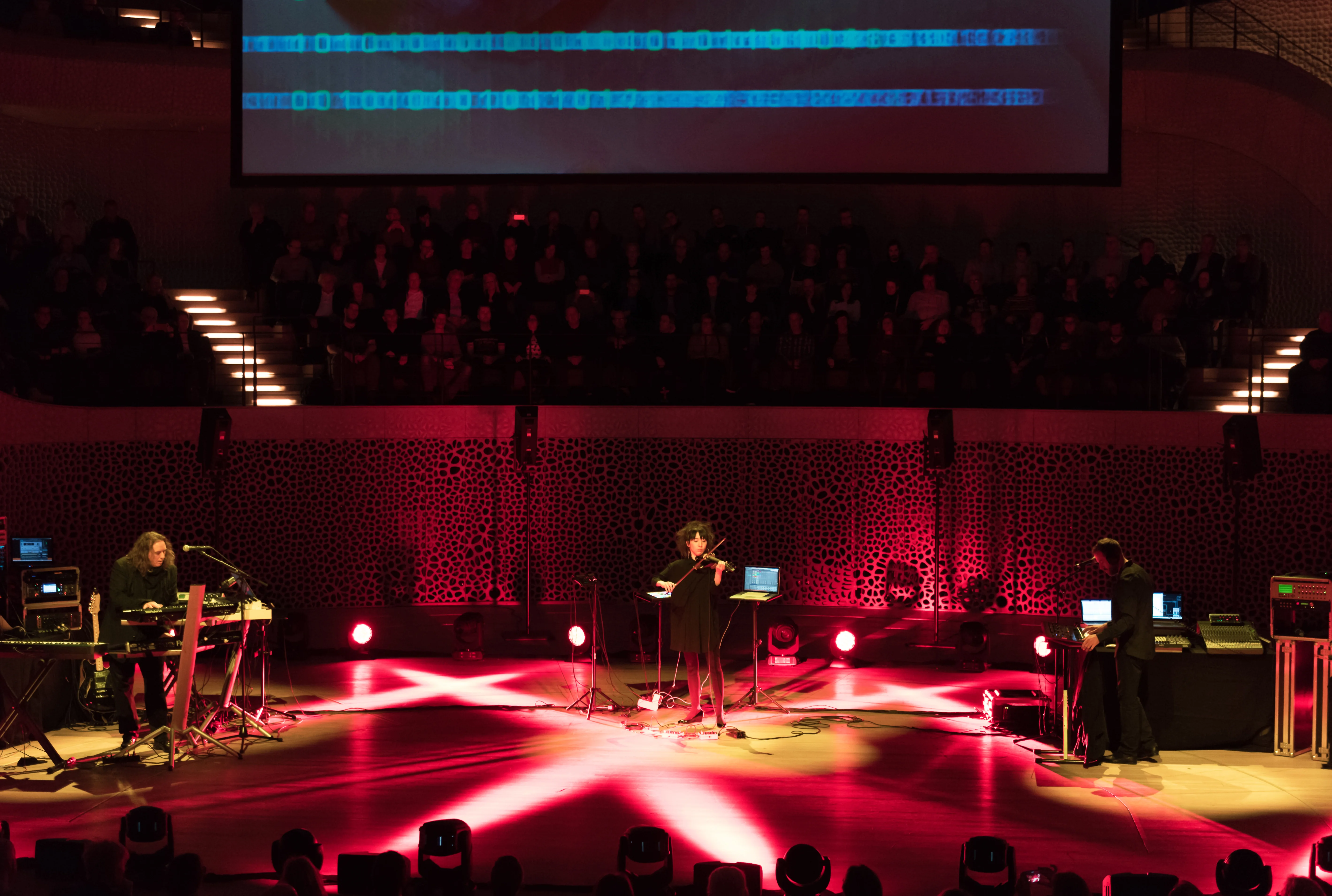
Image from Wikipedia
Image from Wikipedia
Tangerine Dream – The Pioneers of Electronic Sound Architecture
A German band that shaped one of the most influential voices in electronic music from experimentation, precision, and cosmic expanses
Tangerine Dream has stood for music since 1967 that does not respect genre boundaries but rather shifts them. Founded by Edgar Froese in West Berlin, the band developed a distinctive aesthetic from Krautrock, ambient, progressive rock, and symphonic electronics, which is still considered a reference for the Berlin School today. Their work spans from early tape experiments to current live and studio projects and has significantly influenced the international perception of German electronic music. ([tangerinedreammusic.com](https://tangerinedreammusic.com/en/biography/index.asp))
From West Berlin to the World: The Beginnings of a Sound Revolution
The story of Tangerine Dream begins in the Berlin club and experimental scene of the late 1960s. Edgar Froese initially played at the Zodiak Club in Berlin-Kreuzberg, where he met early collaborators like Steve Schroyder, Klaus Schulze, and Conrad Schnitzler. Even the first recordings showed a radically different approach to rock music: instead of song formats, long forms, soundscapes, tape loops, and improvisational structural work dominate. ([tangerinedreammusic.com](https://tangerinedreammusic.com/en/biography/index.asp))
With Electronic Meditation released in 1970, the debut was still strongly influenced by Krautrock and the collage aesthetic of the time. However, soon after, synthesizers, Mellotron, and sequencers came to the forefront. This development shaped the characteristic Tangerine Dream sound: pulsating, floating, mechanical, yet emotionally charged. ([en.wikipedia.org](https://en.wikipedia.org/wiki/Tangerine_Dream))
The International Breakthrough: Phaedra and the Virgin Years
The international breakthrough came in 1973/74. The album Atem was acknowledged by John Peel as one of his albums of the year and led the band to Virgin Records. With Phaedra, Tangerine Dream achieved a milestone that is considered one of the first commercial albums with sequencer technology, reaching number 15 on the UK charts. The album not only redefined the band's sound but also influenced the development of electronic music far beyond its own scene. ([tangerinedreammusic.com](https://tangerinedreammusic.com/en/biography/index.asp))
In the mid-1970s, works emerged that are now considered canonical releases in electronic music: Rubycon, Ricochet, and Stratosfear. This phase is often described as the peak of the so-called Virgin Years because here the balance between sequencer rigor, melodic expansiveness, and studio technical fantasy was particularly impressive. The band became an international export of modern German sound culture. ([en.wikipedia.org](https://en.wikipedia.org/wiki/Tangerine_Dream))
Stylistics, Technique, and the Berlin School
Tangerine Dream early embodied the idea that electronic music doesn't have to sound cool or abstract, but can be vivid, physical, and atmospheric. The Berlin School, whose central representatives, alongside Tangerine Dream, also included Ash Ra Tempel, Agitation Free, and Klaus Schulze, works with repeated sequences, slowly evolving harmonies, and grand sound developments. This is where the band's special authority lies: it combined technical innovation with compositional discipline and created a language that continues to resonate in ambient, trance, film composition, and modern electronics to this day. ([tangerinedreammusic.com](https://tangerinedreammusic.com/en/biography/index.asp))
The early and mid-albums also show how strongly Tangerine Dream regarded the studio as an instrument. Froese experimented with self-built instruments, collected sounds with tape machines, and used sequencers as structuring elements. This approach made the group pioneers of music production that did not rely on live-band logic but on layering, texture, and controlled transformation of sound. ([en.wikipedia.org](https://en.wikipedia.org/wiki/Tangerine_Dream))
From Prog-Rock to Melodic Electronics
In the late 1970s and early 1980s, the sound changed once again. With Cyclone, the band integrated formal vocal parts and lyrics for the first time, while later albums like Tangram, Force Majeure, and Le Parc emphasized the melodic side more strongly. At the same time, the signature remained unmistakable: motoric sequences, radiant synthesizer sounds, and a dramaturgical development that feels almost symphonic. ([udiscovermusic.com](https://www.udiscovermusic.com/stories/tangerine-dream-cyclone-album/))
Tangram, in particular, marks an important turning point, as the record combines the classic sequencer aesthetic with more accessible forms and spent five weeks in the UK Top 40. Force Majeure, in turn, is still considered a fan favorite and shows how Tangerine Dream established its own electronic grammar even within progressive rock. The band managed to remain both experimental and chart-friendly, a rare combination in pop and rock history. ([tangerinedreammusic.com](https://www.tangerinedreammusic.com/en/music/detail.asp?id=18&tit=Tangram&utm_source=openai))
Film Music, Cultural Impact, and Awards
A central part of Tangerine Dream's legacy is its film music. The band created over 60 scores over the decades, extending its repertoire far beyond the album format. These works solidified the group’s reputation as masters of atmospheric tension, where synthesizers not only deliver sound but create spaces, emotions, and images. ([tangerinedreammusic.com](https://www.tangerinedreammusic.com/en/music/index.asp?utm_source=openai))
The reception in music criticism is also remarkable. Phaedra was later described as a milestone in electronic music, and the band received a total of seven Grammy nominations. Turn of the Tides was nominated for the Grammy for Best New Age Album in 1995, highlighting the group's lasting influence and stylistic range. Thus, Tangerine Dream remains a case of lasting cultural relevance rather than mere nostalgia. ([tangerinedreammusic.com](https://www.tangerinedreammusic.com/en/music/index.asp?utm_source=openai))
The Present: Current Projects, New Live Documents, and Creative Continuity
After the death of Edgar Froese in 2015, Tangerine Dream continued in a new formation led by Thorsten Quaeschning, Hoshiko Yamane, and Paul Frick. The band emphasizes on its official website that later works such as Quantum Gate and Raum are based on Froese’s musical sketches and ideas. This keeps the continuity of the project audible without excluding the present. ([tangerinedreammusic.com](https://tangerinedreammusic.com/en/biography/index.asp))
For 2024 and 2025, the official website lists several new live releases and concert projects, including Turin 2024 Session, Katowice 2025 Session, and From Virgin To Quantum Years: Coventry Cathedral 22. In addition, there will be live performances in European cities as well as the planned release of 50 Years of Phaedra: At The Barbican. Tangerine Dream demonstrates that the project continues to operate in a mode of real-time composition, translating its historical DNA into the present. ([tangerinedreammusic.com](https://www.tangerinedreammusic.com/?utm_source=openai))
Discography and Critical Reception
The discography of Tangerine Dream is a monumental expression of artistic productivity. Since 1967, the band has released more than 300 albums, singles, EPs, and compilations, including over 100 studio albums and numerous soundtracks. This abundance is not merely a numerical phenomenon but documents an unusually consistent artistic development across many stylistic phases. ([en.wikipedia.org](https://en.wikipedia.org/wiki/Tangerine_Dream_discography))
Key works include Electronic Meditation, Atem, Phaedra, Rubycon, Ricochet, Stratosfear, Tangram, Force Majeure, Le Parc, Optical Race, Turn of the Tides, Quantum Gate, and Raum. Critics particularly emphasize the evolution from raw experimentalism to complex, melodic, and ultimately filmically reminiscent electronics. That even later live albums and sessions are released today as standalone compositions shows the enduring significance of improvisation and formal openness in the band's work. ([en.wikipedia.org](https://en.wikipedia.org/wiki/Tangerine_Dream))
Official Channels of Tangerine Dream:
- Instagram: https://www.instagram.com/tangerinedreamq/
- Facebook: https://www.facebook.com/TANGERINEDREAM.OFFICIAL/
- YouTube: https://www.youtube.com/channel/UC4_FcTax65mwCulnRcelfhQ
- Spotify: https://open.spotify.com/artist/1BGN1IdyiSR0ZYrkoKNchl
- TikTok: No official profile found
Conclusion
Tangerine Dream continues to fascinate today because the band does not just produce songs but designs sound spaces. Their work combines technical innovation, compositional rigor, and a cinematic imagination that has shaped generations of listeners, producers, and composers. For those who want to experience electronic music as an art form with depth, this is one of the most important references in music history. Experiencing Tangerine Dream live means hearing electronics not as a surface but as a living, breathing dramaturgy. ([tangerinedreammusic.com](https://tangerinedreammusic.com/en/biography/index.asp))
Sources:
- Tangerine Dream official website
- Tangerine Dream – Biography
- Tangerine Dream – Music
- Tangerine Dream – New Concerts in 2024
- Tangerine Dream – Turin 2024 Session
- Tangerine Dream – Katowice 2025 Session
- Tangerine Dream – From Virgin To Quantum Years: Coventry Cathedral 22
- Wikipedia: Tangerine Dream – Image and Text Source