
Schnaftl Ufftschik
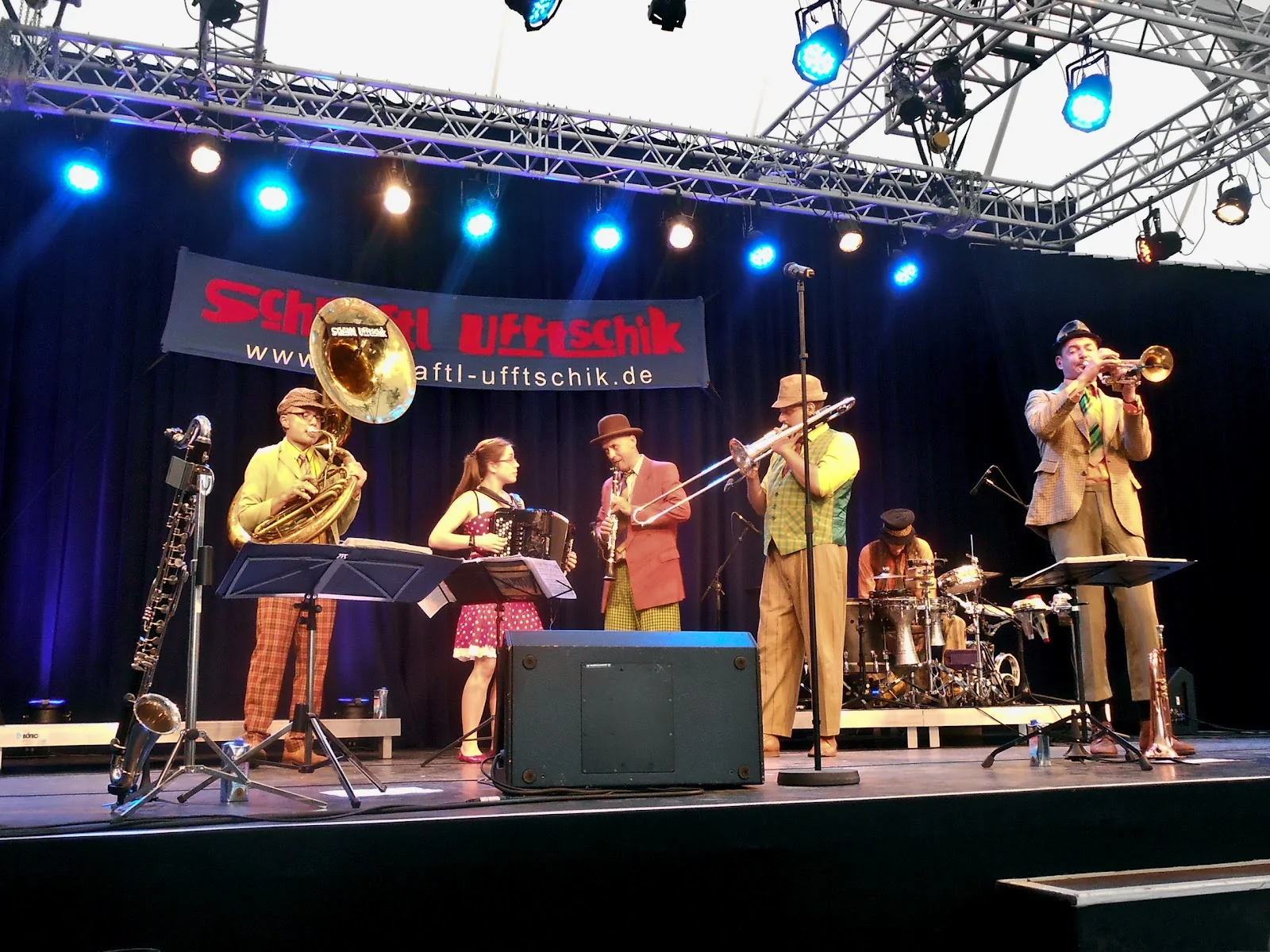
Image from Wikipedia
Image from Wikipedia
Schnaftl Ufftschik: The Berlin Brass Band Between Jazz, Folk, and Stylistic Boundary Crossing
A Band That Has Created Its Own Universe from the Berlin Brass Scene
Schnaftl Ufftschik is a brass band originating from Berlin, known since the mid-1990s for its distinctive sound. The group blends jazz, Klezmer, Balkan, brass music, Brazilian, and folk into a multifaceted, often surprising mixture. This stylistic openness is precisely what makes them appealing: Schnaftl Ufftschik does not see brass as a genre boundary, but rather as a space for musical imagination and stage energy. ([de.wikipedia.org](https://de.wikipedia.org/wiki/Schnaftl_Ufftschik))
Biography and Founding: From a Crazy Circus Project to an Established Live Band
Schnaftl Ufftschik was founded in October 1995 by Reinhard Gundelwein, Rolf “Cello” Fischer, and Lutz Wolf as a sort of crazy circus band. In 1996, the band received early recognition with the Musica Vitale music award in Berlin and Brandenburg. Their first album, Sabagold, was released in 1999, capturing a concert in Dresden, which documented the raw, lively character of the formation. ([de.wikipedia.org](https://de.wikipedia.org/wiki/Schnaftl_Ufftschik))
The early history of the band is marked by personnel changes that have not weakened its core. From the initial lineup, the current formation has evolved, with Reinhard Gundelwein and Lutz Wolf remaining as central figures. The band description on the official website speaks of more than 30 years of shaping and mixing the brass scene. ([de.wikipedia.org](https://de.wikipedia.org/wiki/Schnaftl_Ufftschik))
The Schnaftl-Ufftschik Sound: Stylistically Free, Rhythmically Alive, Narratively Wise
The band's trademark is the mixture of various styles within a single song. On the official website, this sound is described as a fusion of jazz, pop, folk, and world music; Wikipedia adds Klezmer, Balkan, brass music, and Brazilian. This creates a sound that is both richly arranged and immediately physical. Schnaftl Ufftschik plays music that carries on stage, surprises, and invites to dance. ([de.wikipedia.org](https://de.wikipedia.org/wiki/Schnaftl_Ufftschik))
This signature is also reflected in the group's self-understanding: “Concert or dance?” is not just a marketing slogan for Schnaftl Ufftschik but an aesthetic declaration. The band sees itself as a stylistic vagabond, uniting musical eras, tastes, and heritages without hesitation. This is precisely where the cultural strength of the formation lies: it builds bridges between festival tent energy, jazz improvisation, and the vibrancy of world music. ([schnaftl-ufftschik.de](https://www.schnaftl-ufftschik.de/?utm_source=openai))
Live, Theater, and Collaboration: Music as an Open Collective
Since 2006, the band has been collaborating with Brazilian singers Letícia Coura and Adriana Capparelli. With the program BRASSil Voices, Schnaftl Ufftschik performed, among others, at the Donauinselfest in Vienna in 2009. In 2009, the band also became a member of the ensemble at the Rudolstadt Theater, underlining its theatrical, scenic, and musically flexible orientation. ([de.wikipedia.org](https://de.wikipedia.org/wiki/Schnaftl_Ufftschik))
The official website lists a dance program in addition to the concert program and emphasizes the connection between performance and audience experience. This orientation fits a brass band that not only plays pieces but also creates atmospheres. Schnaftl Ufftschik is thus less of a rigid band project and more of a living stage model that moves between concert halls, festivals, and theater spaces. ([schnaftl-ufftschik.de](https://www.schnaftl-ufftschik.de/?utm_source=openai))
Discography: A Compact but Distinctive Body of Work
The discography of Schnaftl Ufftschik is manageable but pointed. Wikipedia lists Sabagold (1999), Oi Tate (2002), Hotcooltür (2004), Strayaway (2007), and Brasso Continuo (2011). The releases document a band that has refined its sound over the years rather than changing it radically. ([de.wikipedia.org](https://de.wikipedia.org/wiki/Schnaftl_Ufftschik))
The ZAV artist agency mentions additional program titles and piece references, including Hotcooltür, Strayaway Child, and Transsiberian Railway Corrido. This shows how much Schnaftl Ufftschik works with narrative, sometimes almost cinematic titles. Music is not understood here as a mere sequence of tracks, but as a narrative space with its own characters, images, and movements. ([zav.arbeitsagentur.de](https://zav.arbeitsagentur.de/DE/Kuenstler/Unterhaltung/S/Schnaftl-Ufftschik-422/Sedcard.pdf?view=renderPdf&utm_source=openai))
Awards and Recognition: Early Respect from the Cultural Scene
Already in 1996, the band won the Musica Vitale music award in Berlin and Brandenburg. In 1997, they received the Folk Promotion Award, which was later continued as the Ruth-Deutscher World Music Award. Additionally, the group received studio awards from the Berlin Senate in 2001, 2003, 2006, and 2009. These awards demonstrate that the band not only impresses live but has also been recognized culturally and artistically. ([de.wikipedia.org](https://de.wikipedia.org/wiki/Schnaftl_Ufftschik))
The presence in the repertoire of Raumer Records also speaks to its classification within the broader field of world music and culturally open Berlin music production. The label continues to represent Schnaftl Ufftschik to this day and describes itself as specialized in world music, Eastern European music, and singer-songwriter styles. This establishes a clear environment: Schnaftl Ufftschik belongs to those Berlin formations that productively connect regional scene and global influences. ([raumer-records.de](https://www.raumer-records.de/?utm_source=openai))
Current Presence and Projects: A Band That Continues to Play
The official website indicates that Schnaftl Ufftschik remains active in performing and announcing upcoming concerts. Formats such as “Schnaftl's Brasserie” and “We Will BRASS You” are presented as concert and dance programs, highlighting the band’s continued live orientation. A 2026 event notice from Berlin also names Schnaftl Ufftschik in the current cultural calendar. ([schnaftl-ufftschik.de](https://www.schnaftl-ufftschik.de/?utm_source=openai))
An independent announcement for a new album in 2024 or 2025 is not clearly substantiated in the available sources. However, the ongoing concert activities, presence in public venue programming, and continued cultivation of their own repertoire is well documented. For a brass band with a strong live profile, this is an important part of their artistic identity. ([schnaftl-ufftschik.de](https://www.schnaftl-ufftschik.de/?utm_source=openai))
Artistic Development: Between Arrangement, Stage Dynamics, and Movement Energy
The instrumentation reveals much about the band’s aesthetic: clarinet, bass clarinet, trumpet, vihuela, sousaphone, bass trombone, drums, and marimba create a sound that is deeply rooted in brass while allowing for great color variety. The website explicitly mentions composition and arrangement as tasks of several members, indicating a collectively organized sound concept. This structure generates a sound that is not only dense but also appears precisely built. ([schnaftl-ufftschik.de](https://www.schnaftl-ufftschik.de/))
The band thrives on rhythmic tension and arrangements that oscillate between danceable drive and chamber-music detail work. Particularly in the combination of jazz, folk, and world music, a musical career emerges that is especially strong on stage. Schnaftl Ufftschik has thus established itself as a formation that defines musical development not through volume but through clever mixing. ([de.wikipedia.org](https://de.wikipedia.org/wiki/Schnaftl_Ufftschik))
Cultural Influence: Berlin's Multivocality with an International Reach
Schnaftl Ufftschik exemplifies a Berlin music scene where cultural openness is not decorative but substantial. The band draws on various musical traditions without oversimplifying them, shaping a distinct and recognizable style. Especially noteworthy is the connection between local grounding and international sound language, which becomes visible in concerts, theater collaborations, and crossover programs. ([de.wikipedia.org](https://de.wikipedia.org/wiki/Schnaftl_Ufftschik))
The cultural value of this band lies precisely in the fact that it does not treat brass music as a niche but as a grand narrative form. Their pieces and programs serve as invitations to experience different musical languages as part of a shared moment. Thus, Schnaftl Ufftschik remains a band for listeners who do not just want to consume but wish to experience musical movement. ([de.wikipedia.org](https://de.wikipedia.org/wiki/Schnaftl_Ufftschik))
Conclusion: Why Schnaftl Ufftschik Remains Exciting
Schnaftl Ufftschik unites Berlin origins, stylistic adventurousness, and a stage presence that turns brass into more than just a genre: it creates an experience. The band is exciting because it has developed its unique sound over decades while maintaining curiosity for jazz, folk, Klezmer, Balkan, and world music. Those who love music with character, energy, and craftsmanship will find here a formation with substance and heart. This band is meant to be experienced live, as its full magic unfolds only in the direct interplay of rhythm, arrangement, and audience. ([de.wikipedia.org](https://de.wikipedia.org/wiki/Schnaftl_Ufftschik))
Official Channels of Schnaftl Ufftschik:
- Instagram: https://www.instagram.com/schnaftlufftschik
- Facebook: https://www.facebook.com/Schnaftl.Ufftschik/?locale=de_DE
- YouTube: https://www.youtube.com/@SchnaftlUfftschik
- Spotify: No official profile found
- TikTok: No official profile found