
Richard Linklater
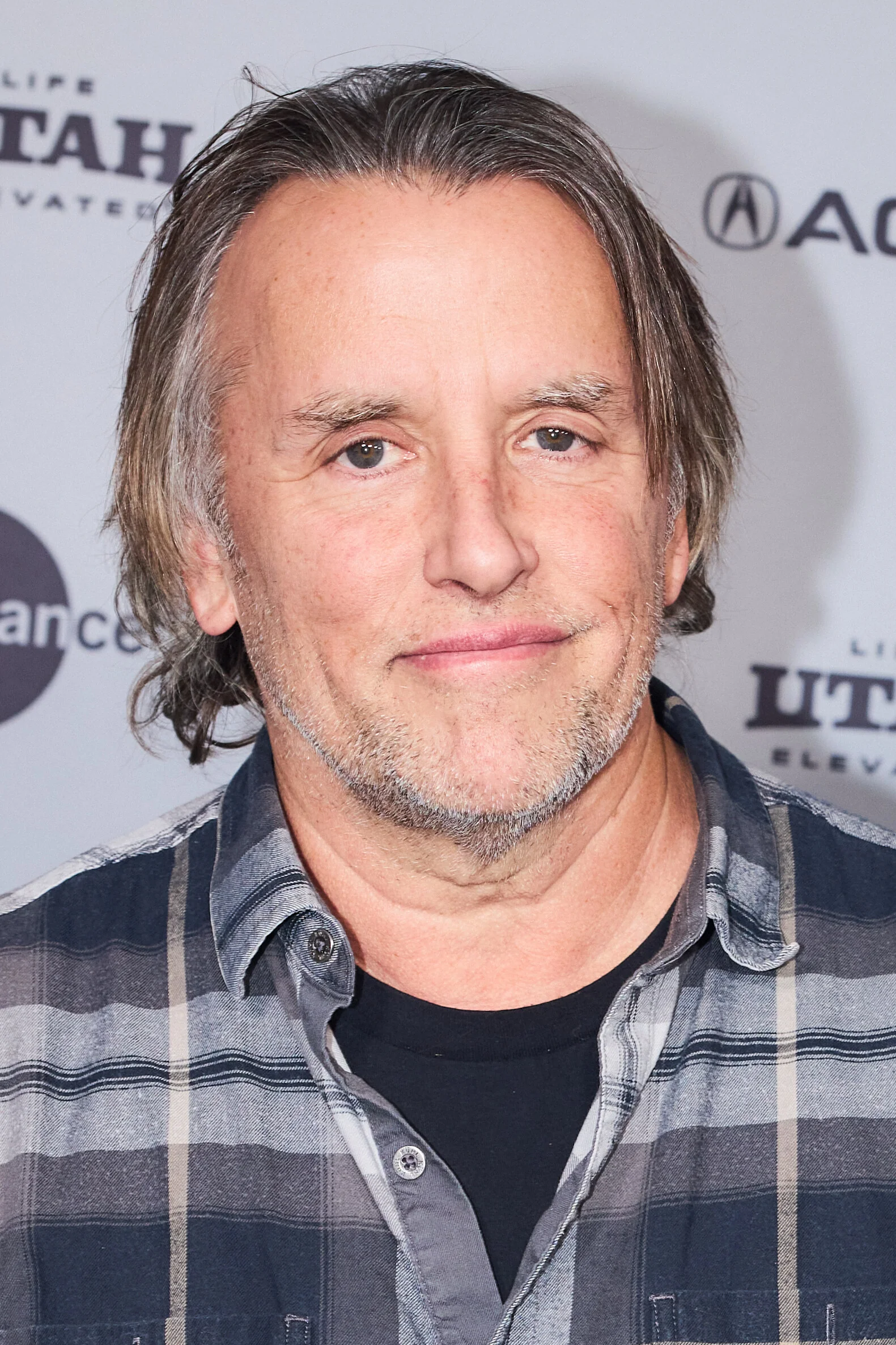
Image from Wikipedia
Image from Wikipedia
Richard Linklater: The Chronicler of American Everyday Life and Master of Relaxed Cinema
A filmmaker who transforms time, conversations, and the feeling of life into cinema
Richard Linklater, born on July 30, 1960, in Houston, Texas, is one of the defining directors of US independent cinema. He is recognized as a self-taught artist who has carved out a distinctive place in film history with persistence, curiosity, and a keen sense for language and environments. His work merges casual narrative forms with precise observation, everyday philosophy, and a rare sensitivity to the flow of time. ([de.wikipedia.org](https://de.wikipedia.org/wiki/Richard_Linklater?utm_source=openai))
From an early stage, Linklater developed a signature style that emphasizes atmosphere, characters, and rhythms of conversation over spectacular drama. With films like Dazed and Confused, the Before trilogy, School of Rock, and Boyhood, he became a director whose name is synonymous with cinematic freedom, cultured ease, and emotional accuracy. His career illustrates how great cinema can emerge from seemingly small moments. ([de.wikipedia.org](https://de.wikipedia.org/wiki/Richard_Linklater?utm_source=openai))
The beginnings: Houston, Austin, and the path to independent film
Linklater's artistic journey did not begin in major studios but in the practice of doing it himself. After numerous odd jobs, he founded a small film production company in Austin to realize his first short film; this early film was released in 1985. That same year, he co-founded the Austin Film Society, which would later become an important cultural anchor for Texas filmmaking. These early years shaped his understanding of cinema as an independent, collective, and locally anchored art form. ([de.wikipedia.org](https://de.wikipedia.org/wiki/Richard_Linklater?utm_source=openai))
Even during this phase, Linklater's work displayed traits that continue to define it today: an interest in young, searching characters, conversational situations, urban and suburban spaces, and a narrative style that feels familiar to the flow of life. Rather than classical hero's journeys, he preferred open structures where observation and rhythm dictate the tone. This is precisely the closeness between the audience and characters that makes his films enduringly popular. ([de.wikipedia.org](https://de.wikipedia.org/wiki/Richard_Linklater?utm_source=openai))
The breakthrough with Slacker and Dazed and Confused
His official breakthrough in independent cinema came with Slacker, which established him as a new voice for a generation. The film, considered a key work of a casual, associative narrative cinema, made Linklater a favorite in the indie scene. Roger Ebert described the director's method as clear as the impression of the film itself: a work with a difficult-to-describe yet immediately tangible allure. ([rogerebert.com](https://www.rogerebert.com/chazs-blog/rogers-favorites-richard-linklater?utm_source=openai))
In 1993, Dazed and Confused followed, Linklater’s first film with a million-dollar budget and later cult status. The work became a precise time portrait of American teenage culture and is regarded as a key film of 90s independent cinema. The film blends nostalgia, slacker humor, social realism, and a soundtrack-laden sense of life that still resonates today. ([de.wikipedia.org](https://de.wikipedia.org/wiki/Richard_Linklater?utm_source=openai))
The Before trilogy: Cinema as a conversation about time
With Before Sunrise, Before Sunset, and Before Midnight, Linklater developed one of the most elegant and consistent trilogies in modern auteur cinema. The story of Jesse and Céline returns at intervals of nine years, making time itself the dramatic engine. Roger Ebert compared the series to a documentary long-term observation of love, loss, and maturation – a notable comment on the emotional and structural sophistication of this project. ([rogerebert.com](https://www.rogerebert.com/reviews/before-midnight-2013?utm_source=openai))
The trilogy is a prime example of Linklater's gift for dialogue. His direction emphasizes intimacy, casual conversations, and the drama of speaking and listening. Herein lies his unique authority in contemporary cinema: he transforms conversational situations into existential spaces of experience, creating between the words that tension that defines great cinematic moments. ([rogerebert.com](https://www.rogerebert.com/reviews/before-midnight-2013?utm_source=openai))
Boyhood and the radical power of duration
Boyhood marks one of the boldest production approaches in film history. The film was shot over a period of twelve years with the same cast, allowing the actors' real aging to be written into the narrative. This form of long-term production made Boyhood a unique experiment about childhood, family, and time, receiving worldwide acclaim. ([rogerebert.com](https://www.rogerebert.com/interviews/interview-richard-linklater-on-the-12-year-journey-to-boyhood?utm_source=openai))
The uniqueness of this work lies not only in the concept but also in the persistence with which Linklater pursued it. Boyhood exemplifies his artistic development: a trust in processes, continuity, and the truth of what has evolved. In a film culture that often prioritizes effect and speed, this patience comes across as almost programmatic. ([rogerebert.com](https://www.rogerebert.com/reviews/richard-linklater-dream-is-destiny-2016?utm_source=openai))
Style, themes, and aesthetic signature
Linklater’s films are characterized by a distinctive blend of looseness and precision. He is interested in pop culture, philosophy, youth culture, friendship, music, work, education, and social rituals. His productions leave room for improvisation in spirit, even as formal control remains palpable. This creates works that are both accessible and intellectual, popular and artistic. ([de.wikipedia.org](https://de.wikipedia.org/wiki/Richard_Linklater?utm_source=openai))
Particularly notable is Linklater's ability to infuse everyday conversations with cultural significance. His characters do not just talk about their lives, they define them through their speech. This dialogue orientation turns his films into social scores, where timing, rhythm, and linguistic nuances achieve an almost musical quality. For this reason, Linklater is often regarded as a chronicler of the contemporary. ([rogerebert.com](https://www.rogerebert.com/chazs-blog/rogers-favorites-richard-linklater?utm_source=openai))
Reception, awards, and cultural influence
Linklater is among the internationally recognized auteur filmmakers of his generation. In Berlin, he received the Silver Bear for Best Director for Boyhood in 2014, and in 2025, two of his feature films, Blue Moon and Nouvelle Vague, were invited to the main competitions of Berlin and Cannes. This presence at major festivals underscores his enduring relevance in world cinema. ([de.wikipedia.org](https://de.wikipedia.org/wiki/Richard_Linklater?utm_source=openai))
His cultural influence extends far beyond individual works. Linklater has shown that independent films do not have to remain a stylistic fringe phenomenon but can form the heart of a vibrant film culture. The Criterion Collection dedicates its own programming highlights to him, and even film critics like Roger Ebert have repeatedly pointed out the uniqueness and significance of his work. Thus, Linklater represents that rare authority that arises from recognizability, originality, and consistency. ([criterion.com](https://www.criterion.com/shop/collection/701-richard-linklater?utm_source=openai))
Current projects: Blue Moon and Nouvelle Vague
Among the current works is Blue Moon, a film about Lorenz Hart, introduced as a Linklater-directed project featuring Ethan Hawke, Margaret Qualley, Bobby Cannavale, and Andrew Scott by Sony Pictures Classics. The film was presented as a competition entry at the Berlinale in 2025, where Andrew Scott won a Silver Bear for his supporting role. This project once again demonstrates Linklater as a director who approaches historical material not in a museum-like fashion but in a lively and contemporary manner. ([sonyclassics.com](https://www.sonyclassics.com/film/bluemoon/?utm_source=openai))
With Nouvelle Vague, he returned to Cannes for the competition in 2025. The film is a cinephile homage to Jean-Luc Godard and the era of À bout de souffle, while also being a stylish reflection on the history of cinema itself. Cannes describes the work as a love letter to a groundbreaking period of film, and therein lies Linklater's strength: he thinks of film history not as an archive but as a living present. ([festival-cannes.com](https://www.festival-cannes.com/f/nouvelle-vague-2/?utm_source=openai))
Conclusion: Why Richard Linklater remains interesting to this day
Richard Linklater fascinates because he takes the seemingly unremarkable seriously. He has created an artistic language in which conversations carry weight, time becomes palpable, and characters do not have to function but may simply exist. While he does not have a conventional music career, his films possess a distinct rhythm, an almost musical dramaturgy, and a lasting cultural resonance. This makes him one of the most important auteur filmmakers of our time. ([de.wikipedia.org](https://de.wikipedia.org/wiki/Richard_Linklater?utm_source=openai))
Those who wish to experience cinema as a way of life, as a space for thought, and as an emotional long-term project will find an extraordinary invitation in Linklater’s work. His films deserve the big screen, repeated viewings, and conversations afterward. Richard Linklater remains intriguing because he does not just tell stories, but transforms time, attitude, and perception itself into cinema. ([rogerebert.com](https://www.rogerebert.com/cast-and-crew/richard-linklater?utm_source=openai))
Official channels of Richard Linklater:
- Instagram: No official profile found
- Facebook: No official profile found
- YouTube: No official profile found
- Spotify: No official profile found
- TikTok: No official profile found
Sources:
- Wikipedia: Richard Linklater
- Festival de Cannes – Nouvelle Vague
- Festival de Cannes – Nouvelle Vague, a cinephile’s declaration of love by Richard Linklater
- Sony Pictures Classics – Blue Moon
- Berlinale – Awards Archive
- Berlinale – Competition 2025
- Berlinale Press Material – Blue Moon
- Criterion Collection – Richard Linklater
- RogerEbert.com – Roger’s Favorites: Richard Linklater
- RogerEbert.com – Before Midnight Review
- RogerEbert.com – Interview on Boyhood
- RogerEbert.com – Richard Linklater: Dream is Destiny