
Michael Triegel
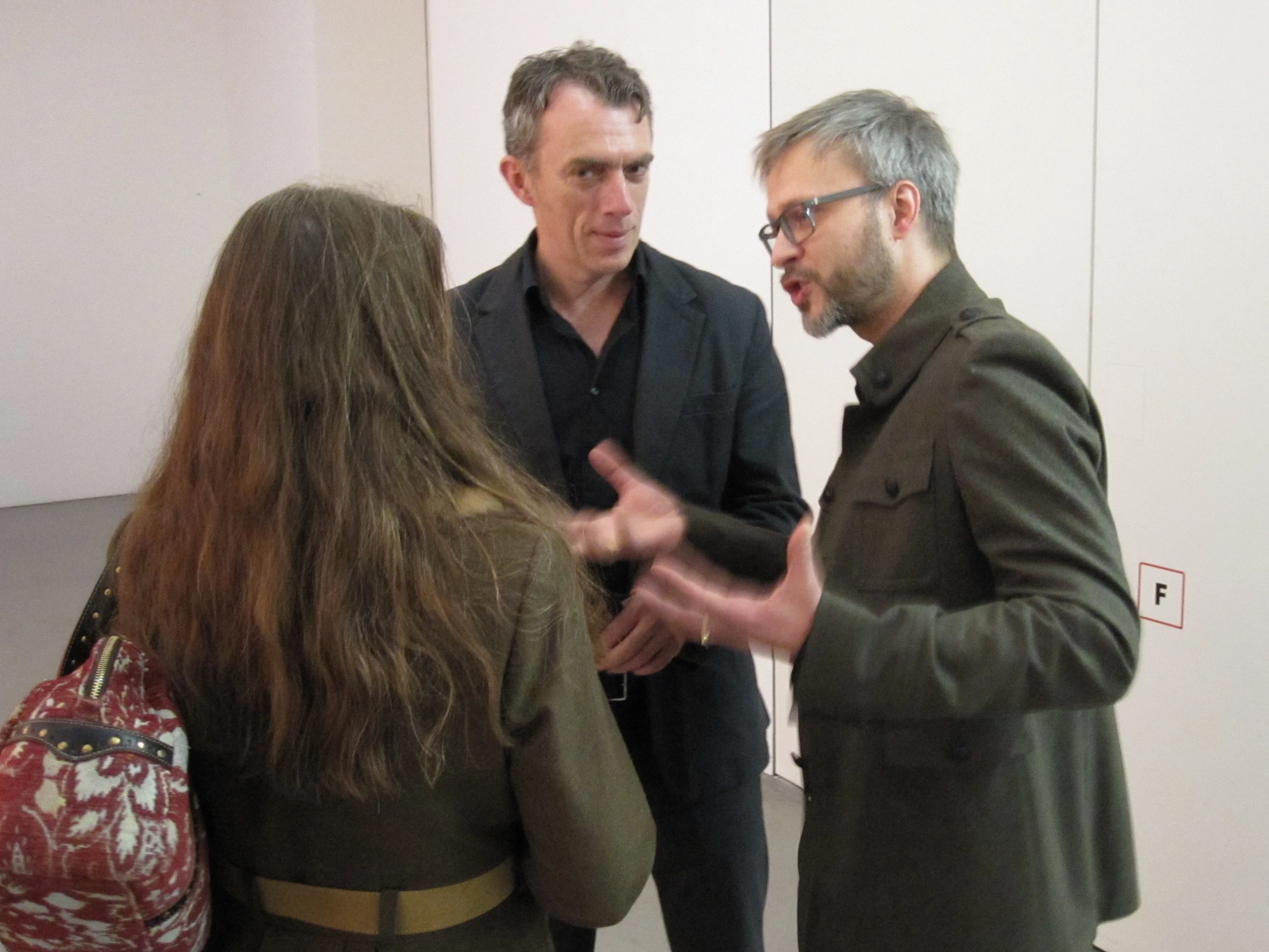
Image from Wikipedia
Image from Wikipedia
Michael Triegel: The Leipzig Painter Between Old Masterliness, Modernity, and Sacred Image Power
An Artist Who Does Not Quote Art History, but Revitalizes It
Michael Triegel, born on December 13, 1968, in Erfurt, is one of the most distinctive contemporary German painters, draftsmen, and graphic artists. He lives and works in Leipzig and has established a visual language that generates a unique tension between Renaissance reminiscence, religious iconography, and intellectual contemporary interpretation. Early in his artistic development, he combined craftsmanship with a deep interest in art history and spiritual imagery. ([de.wikipedia.org](https://de.wikipedia.org/wiki/Michael_Triegel))
Biographical Influences and the Path to the Leipzig School
Early Years, Education, and the Decisive Awakening Moment
After graduating from high school in 1987, Triegel initially worked as a sign and graphic painter before beginning his studies in painting and graphics under Arno Rink at the Hochschule für Grafik und Buchkunst in Leipzig in 1990, graduating with a diploma in 1995. This period also included his often-described artistic awakening moment in a Roman church, which he referred to as his "second birth." Regular trips to Italy, Great Britain, and Switzerland had a lasting impact on his landscape painting and sharpened his perspective on European pictorial traditions. ([de.wikipedia.org](https://de.wikipedia.org/wiki/Michael_Triegel))
Master Student, Awards, and Early Recognition
After a postgraduate study with Ulrich Hachulla from 1995 to 1997, he received his master student diploma in 1998. Even before that, Triegel had received important awards: the German Art Prize from the Volks- und Raiffeisenbanken in 1996, the Helen Abbott Promotion Prize, Berlin-New York, in 1999, and the Art Prize "The Human in Space" from Dragoco AG in 1998. In 2009, he was awarded the Culture Prize "Art and Ethos" from the Schnell und Steiner publishing house. These early honors not only mark the quality of his painting but also the rapid recognition he has received from the art world. ([de.wikipedia.org](https://de.wikipedia.org/wiki/Michael_Triegel))
The Breakthrough: Monumental Paintings, Ecclesiastical Commissions, and Public Debates
Plochingen, Barsinghausen, and the Return of Historical Painting
With the mural in the historic town hall of Plochingen in 2000, Triegel entered the public consciousness on a broader scale. His Allegory of Good Government refers to early Italian Renaissance images and unfolds a panorama of representative, allegorical city leadership. Through Werner Tübke, Triegel subsequently received his first ecclesiastical commission; this was followed by the redesign of a predella in Barsinghausen-Langreder and in 2005 the altarpiece in Grave in the Weser Hills, which he completed in 2006. This early on shaped the profile of an artist who not only decorates sacred spaces but also culturally revitalizes them. ([de.wikipedia.org](https://de.wikipedia.org/wiki/Michael_Triegel))
Würzburg, Dettelbach, and the Sovereignty of Religious Imagery
In 2009/2010, Triegel continued his series of ecclesiastical commissions with the ceiling painting Harmonia Mundi for the Würzburg Cathedral Music. The monumental image connects mythological figures such as Pan, Apollo, and Athena with a rigorously composed, art-historically educated pictorial order. In 2010, he also created the portrait of Bishop Gerhard Ludwig Müller, which paved the way for one of the most well-known commissions of his career: the official portrait of Pope Benedict XVI for the Diocese of Regensburg. ([de.wikipedia.org](https://de.wikipedia.org/wiki/Michael_Triegel))
The Papal Portrait as a Turning Point in His Career
The portrait of Benedict revealed in 2010 made Triegel a name well beyond the art context. Contemporary reviews reacted with skepticism in parts, and in parts with enthusiasm: Der Spiegel compared the work to Raphael, while Die Zeit recognized a new dignity in the genre, stating that Triegel had portrayed not only the Pope but also the Catholic Church. This debate highlights how strongly his work occupies the border area between representation, doubt, and sacred iconography. ([de.wikipedia.org](https://de.wikipedia.org/wiki/Michael_Triegel))
Style, Technique, and Artistic Handwriting
Old Masterly Virtuosity with Modern Friction
Triegel's painting is considered consciously dialogical: it speaks with earlier eras without exhausting itself in mere stylistic imitation. Galerie Schwind describes his works as a combination of old masterly virtuosity, perfect craftsmanship, and a multifaceted, symbolic visual language that draws from Christian symbolism, classical mythology, and the language of Italian art from the early Renaissance to Mannerism. At the same time, these images do not appear nostalgic but contradictory, probing, and contemporary. ([galerie-schwind.de](https://www.galerie-schwind.de/en/shop/metamorphosis-of-the-gods/))
Glaze, Composition, and the Art of Discomfort
The Suermondt-Ludwig-Museum in Aachen describes Triegel's work as characterized by masterful painting technique and an intense engagement with art history. His old masterly glazing technique, his preference for complex figure compositions, and the effect that his paintings seem historical at first glance before unsettling through contemporary content are particularly emphasized. This is precisely where the aesthetic power of his painting lies: it asserts tradition while simultaneously subverting it. ([suermondt-ludwig-museum.de](https://suermondt-ludwig-museum.de/ausstellung/archiv/2025-2/michael-triegel/?utm_source=openai))
Between Still Life, Portrait, and Sacred Narration
Triegel's oeuvre includes not only altarpieces and portraits but also still lifes, landscape watercolors, and graphic works. Publications and exhibition catalogs documenting his work illustrate this breadth: from early paintings to drawings and prints to monumental commissioned pieces. His visual vocabulary remains recognizable because it does not use the historical as a backdrop but as a space for contemplation of the present, memory, and religious questions. ([galerie-schwind.de](https://www.galerie-schwind.de/en/shop/discordia-concors/))
Cultural Influence and Public Resonance
Leipzig School, New Leipzig School, and a Distinctive Case
Triegel is associated with the environment of the Leipzig School and the New Leipzig School, yet he clearly distinguishes himself from many colleagues. His education under Arno Rink anchors him in that Leipzig tradition, which upholds figurative painting, psychological density, and craftsmanship. Nevertheless, Triegel follows a unique path: he merges this heritage with Catholic imagery, Italian Renaissance, and mythological depth, creating a singular artistic profile. ([de.wikipedia.org](https://de.wikipedia.org/wiki/Michael_Triegel))
Religious Motifs, Controversies, and Public Attention
His work exerts cultural influence precisely where it generates friction. This is evident in the reception of the Benedict portrait as well as the debate surrounding the Cranach-Triegel altar in the Naumburg Cathedral. The altar was created between 2020 and 2022 as an addition to the destroyed middle section, later removed, and ultimately became the subject of monument preservation and UNESCO-related discussions. In this tension field, Triegel emerges as an artist whose images are not only viewed but also socially negotiated. ([de.wikipedia.org](https://de.wikipedia.org/wiki/Michael_Triegel))
Current Projects and Recent Presentations
In 2025, Triegel was the focus of the Aachen exhibition Beyond the Visible. The Visual World of Michael Triegel, presented by the Suermondt-Ludwig-Museum as a comprehensive showcase of his expressive range. The spectrum ranged from large-format works of the 1990s to his work Young Man from Procida from 2025. A new catalog accompanied the exhibition, and the Naumburg theme remained media-present with the 2026 documentation Triegel Meets Cranach. ([suermondt-ludwig-museum.de](https://suermondt-ludwig-museum.de/ausstellung/archiv/2025-2/michael-triegel/?utm_source=openai))
Why Michael Triegel Remains So Relevant Today
Michael Triegel fascinates because he neither allows the great tradition of European painting to stagnate in a museum context nor relegates it to mere stylistic quotation. His images open a dialogue between the visible and the invisible, between historical form and contemporary experience. Those who see his works in person experience painting as a means of thought, as spiritual condensation, and as a highly precise composition that asserts the present in art without denying its past. ([galerie-schwind.de](https://www.galerie-schwind.de/en/shop/metamorphosis-of-the-gods/))
In conclusion: Michael Triegel is exciting because he enriches painting with extraordinary discipline, historical depth, and mental tension. His works move confidently between portrait, altarpiece, mythology, and contemporary reflection, holding a rare rank in the German art landscape. Those who want to experience the interplay of technique, symbolism, and atmosphere in full intensity should definitely experience Triegel's works in the museum or directly in the sacred space. ([galerie-schwind.de](https://www.galerie-schwind.de/en/shop/metamorphosis-of-the-gods/))
Official Channels of Michael Triegel:
- Instagram: no official profile found
- Facebook: no official profile found
- YouTube: no official profile found
- Spotify: no official profile found
- TikTok: no official profile found
Sources:
- Wikipedia – Michael Triegel
- Galerie Schwind – Metamorphosis of the gods
- Galerie Schwind – Discordia concors
- Galerie Schwind – From the Visible to the Invisible
- Galerie Schwind – Triegel Meets Cranach
- Galerie Schwind – Ceremonial Unveiling of the Honorary Portrait of Dr. h.c. Friede Springer
- Suermondt-Ludwig-Museum – Michael Triegel
- Suermondt-Ludwig-Museum – The Imaginarium of Michael Triegel
- Naumburger Dom – Triegel Meets Cranach
- Naumburger Dom – Triegel Meets Cranach
- Press Release 305/2025 – Cranach-Triegel Altar
- Wikipedia: Image and Text Source
Upcoming Events
Triegel Meets Cranach - Painting in the Dispute of the Times