
Markus Stockhausen
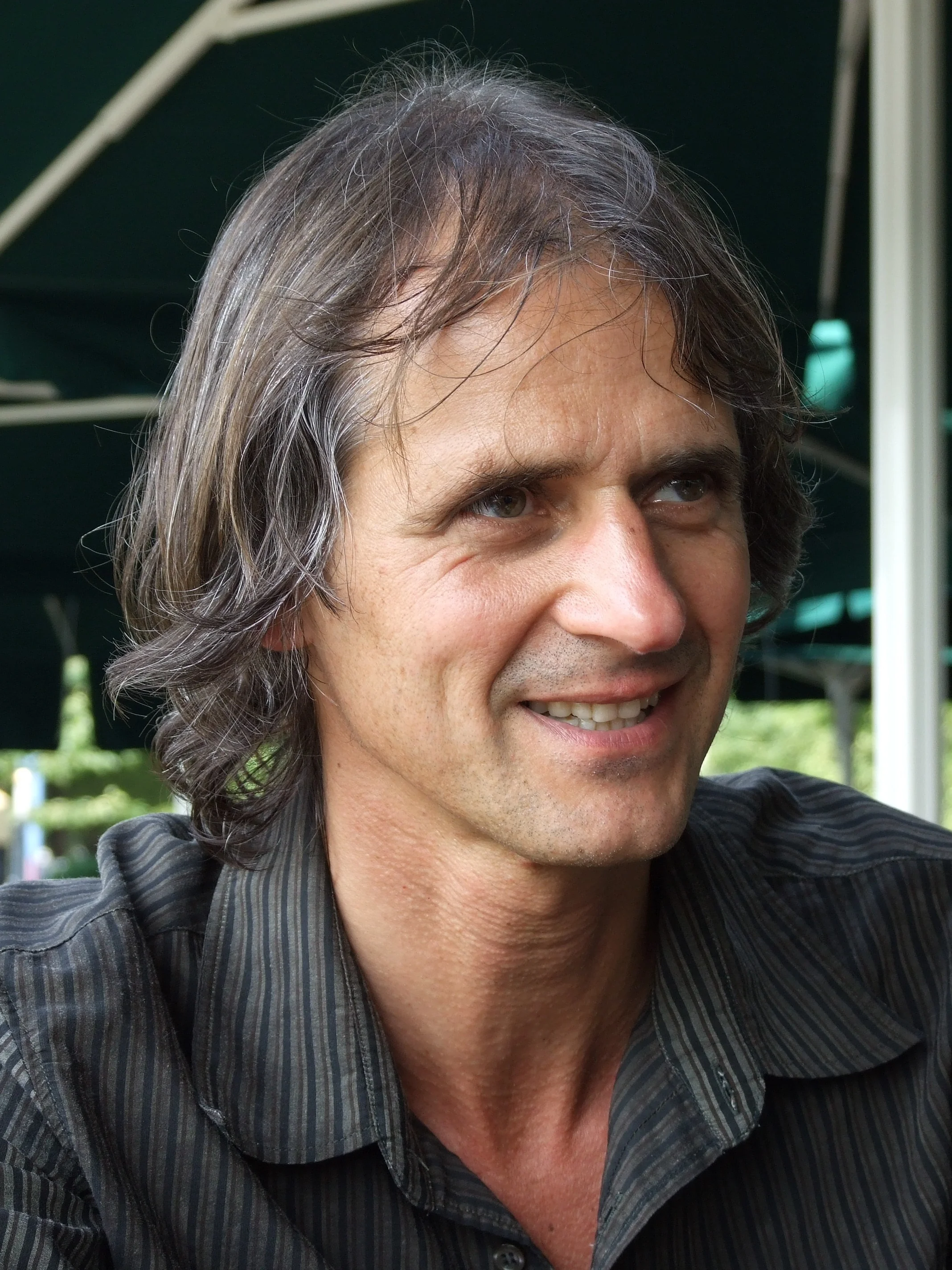
Image from Wikipedia
Image from Wikipedia
Markus Stockhausen – Trumpet, Composition, and the Art of Inner Expansion
A Boundary Walker Between Jazz, New Music, and Intuitive Sound Language
Markus Stockhausen, born on May 2, 1957, in Cologne, is one of the most distinctive German trumpeters and composers of his generation. As the son of Karlheinz Stockhausen, he grew up in an environment where musical avant-garde, artistic research, and spiritual openness were taken for granted. His career combines classical precision, improvisational freedom, and a pronounced compositional style that has made him well-known far beyond the German jazz and art music scene. ([de.wikipedia.org](https://de.wikipedia.org/wiki/Markus_Stockhausen?utm_source=openai))
Family, Education, and Early Influences
The biographical background of Markus Stockhausen is extraordinary: he is the son of composer Karlheinz Stockhausen and his first wife, Doris Andreae, as well as the half-brother of musician Simon Stockhausen. From an early age, he moved in an environment where musical form, sound research, and compositional radicality were not thought of separately. This influence forms the backdrop for a career that could never be reduced to a single genre. ([de.wikipedia.org](https://de.wikipedia.org/wiki/Markus_Stockhausen?utm_source=openai))
His musical training began early and took him from piano lessons and trumpet studies to a diverse artistic profile. As a young student at the Cologne University of Music and in encounters with jazz greats such as Manfred Schoof, he developed an attitude that combined technical mastery with openness to improvisation. The result was a style that functions neither solely in classical nor in jazz language but creatively interweaves both worlds. ([bundesakademie-trossingen.de](https://www.bundesakademie-trossingen.de/fileadmin/user_upload/Bibliothek_Schriftenreihe/SR%20Band%203.pdf?utm_source=openai))
The Path to a Music Career: Between the Legacy of His Father and His Own Voice
From 1975 to 2001, Markus Stockhausen performed in ensembles led by his father, Karlheinz Stockhausen, and was entrusted with solo parts in several key works. These include SIRIUS, THURSDAY from LIGHT with Michael's Journey Around the World, and SATURDAY from LIGHT with Invasion and Pietà. This period shaped not only his stage presence but also his understanding of music as a dramatic, spatial, and spiritual experience. ([de.wikipedia.org](https://de.wikipedia.org/wiki/Markus_Stockhausen?utm_source=openai))
At the same time, he established himself as an independent soloist and ensemble musician. Early on, he collaborated with groups like Key, Riot, and the Rainer Brüninghaus Group, performing at renowned jazz festivals both domestically and abroad. Thus, he positioned himself from the outset between concert halls, jazz clubs, and the experimental scene—a tension field that would decisively shape his later discography and compositional projects. ([bundesakademie-trossingen.de](https://www.bundesakademie-trossingen.de/fileadmin/user_upload/Bibliothek_Schriftenreihe/SR%20Band%203.pdf?utm_source=openai))
Compositional Style and Artistic Development
As a composer, Markus Stockhausen has repeatedly written works for significant ensembles and orchestras. In 2004, three new pieces premiered, including Ascent and Pause for trumpet and string orchestra, Portrait for Tara for basset horn and ensemble, and Sunrise for the jazz trio MAP. Later, commissioned works like Symbiosis, Dancing Light, Yin and Yang, A Glass Bead Game, The Awakened Heart, and Elixir followed, showcasing his affinity for larger settings and finely balanced sound architectures. ([markusstockhausen.de](https://www.markusstockhausen.de/trompeter-musiker-komponist/9/bio?lang=enen%2Fcazkolik_interview))
Especially important to him is the principle of "transformation through sound." This idea runs through workshops, concert series, and compositions, linking musical form with consciousness work, empathy, and spirituality. His project Klangvisionen, realized in Cologne from 2000 to 2010 with 118 concerts, gained regional recognition and demonstrated how consistently he understands intuitive music as an artistic practice. ([markusstockhausen.de](https://www.markusstockhausen.de/trompeter-musiker-komponist/9/bio?lang=enen%2Fcazkolik_interview))
Discography: Diversity Between Chamber Jazz, Improvisation, and Poetic Sound Art
Markus Stockhausen's discography now includes well over 90 releases on labels such as ECM, o-tone music, Enja, EMI Classics, Sony, Aktivraum, Stockhausen-Verlag, ACT, and Okeh. Early albums such as Continuum established his name in the realm of improvised music, while Solo I showcased his ability to open vast spaces with just a few notes. Critics have praised this music as concentrated, meditative, and marked by a unique, ethereal beauty. ([markusstockhausen.de](https://www.markusstockhausen.de/trompeter-musiker-komponist/9/bio?lang=enen%2Fcazkolik_interview))
Key milestones also include Markus Stockhausen Plays Karlheinz Stockhausen, Invention is You, Blue Sound, Symbiosis, Alba, Far into the Stars, Tales, Celebration, and the upcoming Between Earth and Sky, set to release in 2026. Especially the newer productions demonstrate how adept he is at navigating between acoustic intimacy, chamber-music transparency, and modern sound production. The latest double album release, Celebration, came out in April 2024 and documents the energy of his Markus Stockhausen Group in an open, stylistically broad form. ([markusstockhausen.de](https://www.markusstockhausen.de/trompeter-musiker-komponist/178/markus-stockhausen-plays-karlheinz-stockhausen))
Style, Sound Ideal, and Musical Language
Markus Stockhausen operates at the intersection of jazz, classical, avant-garde, and intuitive music. His trumpet never sounds merely virtuosic; it is a narrative instrument that shapes lines, opens spaces, and creates tension from silence. Particularly in solo and duo formats, his control over articulation, breath management, and tone color becomes audible, making him one of the most distinctive European trumpeters. ([markusstockhausen.de](https://www.markusstockhausen.de/trompeter-musiker-komponist/81/markus-stockhausen-solo-i?lang=en&utm_source=openai))
As a composer, he also demonstrates a rare balance of structure and spontaneity. His works combine careful architecture with improvisational elements, often supported by lyrical melodies and broad harmonic thinking. The official description of his music emphasizes precisely this synthesis of composition and improvisation, which is understood not as a parallel world or opposition but as mutually enriching forms of expression. ([markusstockhausen.de](https://www.markusstockhausen.de/trompeter-musiker-komponist/85/symbiosis?utm_source=openai))
Current Projects, Concerts, and Artistic Presence
In recent years, Markus Stockhausen remains highly active. His official website highlights the 2024 release of the double album Celebration, while further concerts, seminars, and project dates are announced for 2025 and 2026. The site also mentions the release of Between Earth and Sky with the Italian label dark companion in March 2026, as well as a new international peace project that underscores his artistic and social stance. ([markusstockhausen.de](https://www.markusstockhausen.de/?lang=en&utm_source=openai))
This continuity shows a musician who does not rely on preserving the archive but understands his career as a living process. The combination of concert activity, teaching, ensemble work, and new productions makes him a formative figure in European contemporary music. The connection between live presence, studio work, and educational engagement enhances his authority as an artist with a clear position. ([markusstockhausen.de](https://www.markusstockhausen.de/trompeter-musiker-komponist/9/bio?lang=enen%2Fcazkolik_interview))
Awards and Critical Reception
The accolades received by Markus Stockhausen paint a picture of great recognition: in 1981, he won the German Music Competition; in 1983, he received the German Record Critics' Award for Continuum; in 1996, he was honored with the European Music Promotion Award in Vienna, and in 2005, he earned the WDR Jazz Award as Best Improviser. Later accolades such as the JTI Jazz Award, the Silver Stimmgabel, the ECHO Jazz, and the German Jazz Prize 2021 confirm his significance over the decades. ([markusstockhausen.de](https://www.markusstockhausen.de/trompeter-musiker-komponist/9/bio?lang=enen%2Fcazkolik_interview))
The reception of his music is correspondingly multifaceted. Critics regularly highlight his tonal discipline, poetic sound, and the depth of his improvisations. At the same time, his work is read as a bridge between European art music and contemporary jazz—an approach that anchors his cultural relevance far beyond a single scene. ([markusstockhausen.de](https://www.markusstockhausen.de/trompeter-musiker-komponist/81/markus-stockhausen-solo-i/?lang=ende%2Feditpage&utm_source=openai))
Cultural Influence and Artistic Legacy
Markus Stockhausen embodies a conception of music where virtuosity is never an end in itself. His influence is evident not only in recordings and concerts but also in the way he connects musical practice with spiritual and social responsibility. This makes him a voice that is perceived as both an instrumentalist and a thinker within the European music landscape. ([markusstockhausen.de](https://www.markusstockhausen.de/trompeter-musiker-komponist/9/bio?lang=enen%2Fcazkolik_interview))
His work exemplifies how tradition and modernity can productively intertwine. Between trumpet artistry, sound research, ensemble work, and intuitive improvisation emerges an artistic profile that appears exceptionally coherent yet remains in constant motion. Those who listen to Markus Stockhausen encounter a musician who understands sound as a form of consciousness. ([markusstockhausen.de](https://www.markusstockhausen.de/trompeter-musiker-komponist/9/bio?lang=enen%2Fcazkolik_interview))
Conclusion: An Artist Who Opens Spaces
Markus Stockhausen captivates because he does not merely play the trumpet; he redefines it as an instrument of thought and expression. His biography connects a great musical heritage with a distinctive, expansive oeuvre full of depth, openness, and artistic integrity. For those who love contemporary music, jazz, and poetic sound art, he presents a lasting artistic brilliance. ([markusstockhausen.de](https://www.markusstockhausen.de/trompeter-musiker-komponist/9/bio?lang=enen%2Fcazkolik_interview))
His concerts and projects continue to demonstrate how vibrant and curious his work remains. Experiencing Markus Stockhausen live means encountering a musician who brings intuition, form, and presence into a rare balance. It is precisely therein that his special fascination lies. ([markusstockhausen.de](https://www.markusstockhausen.de/?lang=en&utm_source=openai))
Official Channels of Markus Stockhausen:
- Instagram: No official profile found
- Facebook: No official profile found
- YouTube: No official profile found
- Spotify: No official profile found
- TikTok: No official profile found
Sources:
- Markus Stockhausen – Official Website
- Markus Stockhausen – Biography on the Official Website
- Markus Stockhausen – Discography on the Official Website
- Markus Stockhausen Group – Official Project Page
- WILD LIFE – Official Video Page
- Wikipedia: Markus Stockhausen
- Spotify – Markus Stockhausen
- AllMusic – Markus Stockhausen
- Deutschlandfunk – The Trumpeter and Composer Markus Stockhausen
- Carlsen Press Kit – Stockhausen