Gunter Demnig
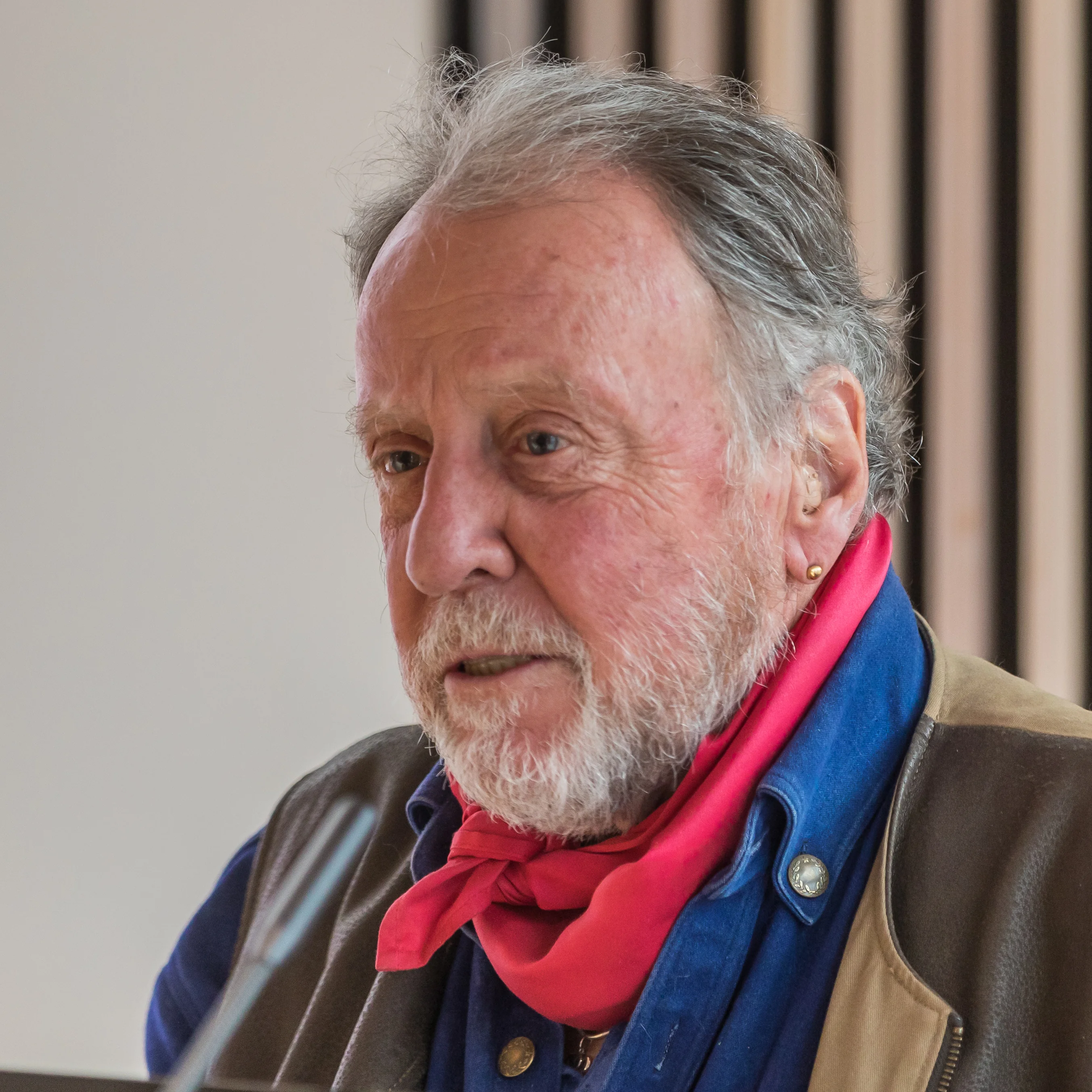
Image from Wikipedia
Image from Wikipedia
Gunter Demnig: The Artist Who Writes Memory into Everyday Life
A Life for Remembering, an Art for the Present
Gunter Demnig, born on October 27, 1947, in Berlin, is one of the most influential German artists of modern times because he perceives art not as distance but as an immediate encounter. He became well-known for the Stolpersteine, which he has been installing since 1996 to commemorate the victims of National Socialism, and which are today considered the largest decentralized memorial in the world. His work brings together artistic form, historical precision, and an extraordinary social impact. ([de.wikipedia.org](https://de.wikipedia.org/wiki/Gunter_Demnig?utm_source=openai))
Biographical Beginnings Between Berlin, Studies, and Artistic Self-Assertion
Demnig's path into art did not start as a straightforward career but as a slow convergence of observation, understanding of materials, and political stance. He grew up in Nauen and Berlin, graduated from high school in 1967, and initially studied art education at the Hochschule für Bildende Künste in West Berlin under Herbert Kaufmann; from 1969 to 1970, he studied Industrial Design at the same university. The biographical basis is thus clear: Demnig developed an early sensitivity to spaces, surfaces, and the effect of form in public settings. ([de.wikipedia.org](https://de.wikipedia.org/wiki/Gunter_Demnig?utm_source=openai))
Even these early stages reveal an artistic attitude that would later shape his entire body of work: art as an intervention in the visible, not merely as an object for museums. The official Stolpersteine website traces his artistic development back to early works from 1968, highlighting the long lead time of his idea. Thus, Demnig worked for many years on a visual language and practice before he created the Stolpersteine, a project that resonated worldwide. ([stolpersteine.eu](https://www.stolpersteine.eu/en/for-educators/lectures-and-workshops?utm_source=openai))
The Breakthrough: The Idea of Stolpersteine and Its Moral Weight
The actual breakthrough in Demnig's work came with an art concept that is as simple as it is radical: brass stones embedded in the ground in front of the last voluntarily chosen homes of Nazi victims. He developed the idea in 1992/93; the first Stolpersteine were laid in 1996 in Berlin-Kreuzberg without official permission. This shifted the act of remembrance from museums into everyday life, directly under the feet of passersby. ([stolpersteine.eu](https://www.stolpersteine.eu/en/the-art-memorial/stolpersteine?utm_source=openai))
The strength of this project lies in its individualization. Rather than leaving behind anonymous numbers, Demnig's art restores a name, a date, and a concrete presence in the urban space to each victim. The foundation explicitly states that Gunter Demnig aims to counteract the National Socialist goal of dehumanization with his work by bringing names back into the cities. This stance lends authority, historical clarity, and a rare emotional depth to his work. ([stolpersteine.eu](https://www.stolpersteine.eu/en/information/frequently-asked-questions?utm_source=openai))
An Art of Space: Material, Measure, and Symbolic Precision
The Stolpersteine are not monumental sculptures but small, precisely placed interventions made of brass and concrete. With their exact dimensions of 96 x 96 x 100 millimeters, they initially appear inconspicuous, yet it is precisely through their reduction that they possess an enormous presence. Demnig's art operates with the tension between everyday insignificance and historical gravity, between groundedness and memory. ([stolpersteine.eu](https://www.stolpersteine.eu/en/the-art-memorial/stolpersteine?utm_source=openai))
Particularly characteristic is the performative aspect of the project. According to the foundation, Demnig still travels to most initial installations and many subsequent ones, covering around 50,000 kilometers each year. This persistent mobility makes him not only an artist but also a guardian of a living ritual of remembrance, which would hardly have the same impact without his physical presence in many places. ([stolpersteine.eu](https://www.stolpersteine.eu/wissenwertes/fakten-und-zahlen?utm_source=openai))
The Life’s Work: From an Idea to a Global Landscape of Remembrance
What began as a single artistic intervention has developed into a European landscape of remembrance. According to the foundation, there are now 116,000 Stolpersteine in over 1,860 municipalities in 31 European countries, and the project is regarded as the largest decentralized memorial in the world. This dimension explains why Gunter Demnig is perceived not only as a sculptor but also as a central figure in European memory culture. ([stolpersteine.eu](https://www.stolpersteine.eu/wissenwertes/fakten-und-zahlen?utm_source=openai))
The success of the project relies not only on its formal clarity but also on its open structure. Initiatives, local history associations, schools, relatives, and municipalities contribute to the installations, making the Stolpersteine a model for participatory cultural work. This is where Demnig's authority as an artist lies: He creates not a closed icon but a continuously growing art monument that lives through social participation. ([stolpersteine.eu](https://www.stolpersteine.eu/en/information/frequently-asked-questions?utm_source=openai))
Artistic Development and Public Recognition
The official foundation cites over 40 years of artistic work, which will be made visible in a permanent exhibition titled “Gunter Demnig: TRACES and PATHS” starting in April 2025. This demonstrates that his work goes far beyond the Stolpersteine and has an earlier, often less-known production history. A retrospective glance is crucial for understanding his art, as it makes clear: The Stolpersteine are not a coincidence but the culmination of a long-matured practice. ([stolpersteine.eu](https://www.stolpersteine.eu/en/news/dauerausstellung?utm_source=openai))
Demnig's role is also institutionally well secured. The Deutsche Biographie lists him as a significant entry with his birth place in Berlin, linking him with biographical and archival evidence; the foundation itself describes him as a founder and board member. This duplication of historical documentation and personal project responsibility solidifies his position as an authority in memory culture. ([deutsche-biographie.de](https://www.deutsche-biographie.de/119333708.html?language=en&utm_source=openai))
Cultural Influence: Why Demnig’s Work Extends Far Beyond the Art World
Demnig's work has fundamentally changed the form of commemoration. Instead of waiting for a distant monument or a ritualized anniversary, people encounter the traces of National Socialism in the urban landscape, on their way to work, in front of schools, residential buildings, or shops. This proximity creates a particular form of perception: memory is not conveyed abstractly but experienced as part of urban memory. ([stolpersteine.eu](https://www.stolpersteine.eu/en/the-art-memorial/stolpersteine?utm_source=openai))
For this reason, the project also has educational significance. The foundation emphasizes work with schools and universities, offering lectures and workshops that impart Demnig's artistic development and the Stolperstein concept. This anchors his art in educational work and makes clear that for him, cultural influence is measured not in prestige but in historical responsibility. ([stolpersteine.eu](https://www.stolpersteine.eu/en/for-educators/lectures-and-workshops?utm_source=openai))
Current Projects and Ongoing Presence
Even in 2025, Demnig’s name remains closely connected to the vibrant expansion of the project. The foundation announced in spring 2025 the regular opening of the permanent exhibition, while also highlighting the ongoing development of the Stolperstein database and further installations. Thus, Demnig's work remains an ongoing cultural and documentary endeavor rather than a closed chapter. ([stolpersteine.eu](https://www.stolpersteine.eu/en/news/dauerausstellung?utm_source=openai))
Additionally, the foundation reports new production peaks: In 2024, nearly 6,000 stones were produced, more than any other year prior. This growth shows that Demnig's idea is not only historically significant but continues to meet strong societal demand today. His artistic practice thus embodies both contemporary art and memory politics. ([stolpersteine.eu](https://www.stolpersteine.eu/wissenwertes/fakten-und-zahlen?utm_source=openai))
Discography, Media Work, and Public Reception
In the classical sense, Gunter Demnig does not have a musical discography; his work history is that of a visual artist and conceptual artist. Nevertheless, his work is widely acknowledged in media, documentaries, and biographical formats, significantly enhancing his public visibility. Reception in the press regularly emphasizes the connection between artistic clarity, political consistency, and personal perseverance. ([de.wikipedia.org](https://de.wikipedia.org/wiki/Gunter_Demnig?utm_source=openai))
Particularly journalistic perception highlights Demnig's perseverance. Reports on his 75th birthday described him as an artist who has been working since the late 1960s and whose life's work is indispensable to contemporary German memory culture. This resonance from the press and public underscores his status as an authority, whose work is not only explained but continually discussed. ([mz.de](https://www.mz.de/kultur/ein-leben-mit-stolpersteinen-gunter-demnig-wird-75-3472690?utm_source=openai))
Conclusion: An Artist Whose Work Invites Cities to Be Read
Gunter Demnig is compelling because he has forged a distinctive form that intertwines art, history, and civil societal responsibility. His Stolpersteine are not mere memorial markers but a worldwide, growing art monument that inscribes memory into the urban space and confronts people with the past daily. Those who wish to understand how contemporary art exerts social impact cannot overlook Demnig. ([stolpersteine.eu](https://www.stolpersteine.eu/en/the-art-memorial/stolpersteine?utm_source=openai))
It is precisely this combination of artistic development, historical precision, and emotional weight that makes his work so powerful. Experiencing Gunter Demnig live does not mean attending a concert, but encountering an artist who transforms public space into a site of remembrance. His life's work demands attention, respect, and the willingness to look closely. ([stolpersteine.eu](https://www.stolpersteine.eu/en/for-educators/lectures-and-workshops?utm_source=openai))
Official Channels of Gunter Demnig:
- Instagram: No official profile found
- Facebook: No official profile found
- YouTube: No official profile found
- Spotify: No official profile found
- TikTok: No official profile found
Sources:
- Wikipedia – Gunter Demnig
- Stolpersteine.eu – The artist Gunter Demnig
- Stolpersteine.eu – Stolpersteine
- Stolpersteine.eu – Facts and Figures
- Stolpersteine.eu – Permanent Exhibition
- Stolpersteine.eu – Lectures and Workshops
- Deutsche Biographie – Demnig, Gunter
- Mitteldeutsche Zeitung – A Life with "Stolpersteine": Gunter Demnig Turns 75
Upcoming Events
Stolperstein Laying 2026 in Gelsenkirchen
Stolperstein-Laying
Stumbling Block Laying in Augsburg
STUMBLING STONES IN THE QUARTER