
Elisabeth (Russland)
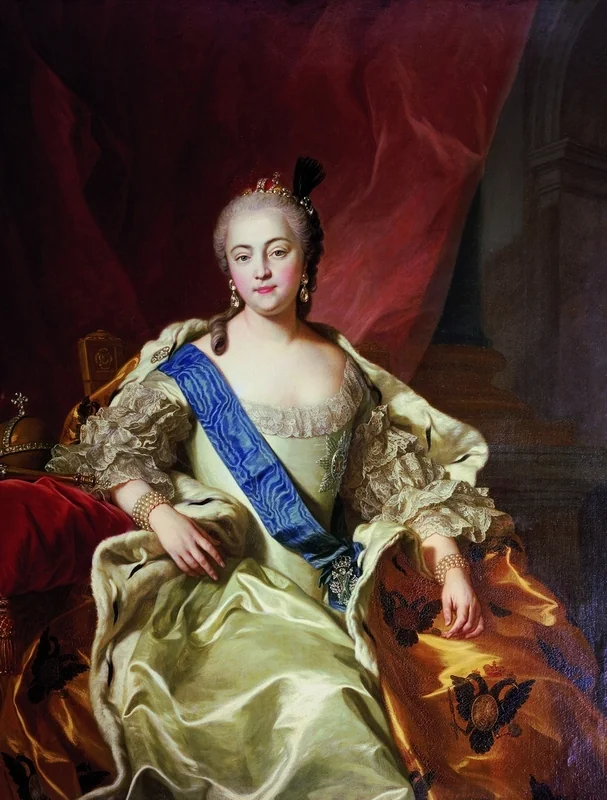
Image from Wikipedia
Image from Wikipedia
Elisabeth of Russia – The Powerful Romanov Ruler Between Glamour, Reform, and War
An Empress Who Shaped Russia Like Few Others
Elisabeth Petrovna Romanova, better known as Elisabeth of Russia, ruled the Tsardom from 1741 to 1762 and embodied a reign that combined political power, court opulence, and cultural patronage. As the daughter of Peter the Great and Catherine I, she ascended to the throne following a coup and established herself as a central figure in 18th-century Russian history. Her reign was marked by the consolidation of autocracy, a surprisingly consistent abandonment of capital punishment, and a clear turn towards Baroque art and science. ([en.wikipedia.org](https://en.wikipedia.org/wiki/Elizabeth_of_Russia?utm_source=openai))
Origins, Childhood, and the Path to the Court
Elisabeth was born on December 29, 1709, in Kolomenskoje near Moscow and grew up in the immediate shadow of power. As the daughter of Peter the Great, she belonged to the inner sphere of the Russian ruling house, but her position initially remained politically insecure. The early court world shaped her understanding of representation, loyalty, and dynastic legitimacy. This very background later made her the ideal figurehead for those forces that wanted to push back the "German" dominance at court. ([en.wikisource.org](https://en.wikisource.org/wiki/1911_Encyclop%C3%A6dia_Britannica/Elizabeth_Petrovna?utm_source=openai))
The Coup of 1741: Seizing Power Without Bloodshed
Elisabeth's rise to empress occurred through a bloodless coup, supported by parts of the military and the court nobility. In the political logic of that time, this was more than a palace coup: it was a demonstrative restructuring of Russian power relations. Elisabeth positioned herself at the head of a system that derived its legitimacy from direct descent from Peter the Great and propagandistically transformed that lineage into a claim to rule. ([encyclopedia.com](https://www.encyclopedia.com/women/encyclopedias-almanacs-transcripts-and-maps/elizabeth-petrovna-1709-1762?utm_source=openai))
Style of Rule: Autocracy, Favoritism, and Political Stabilization
Elisabeth's governing style linked personal loyalties with strict centralization. Sources describe her reign as a phase where favoritism played a significant role, while simultaneously state stability and imperial authority were expanded. She relied on trustworthy power circles at court, based her policies on confidants, and kept the machinery of the empire closely tied to the crown. This combination of absolutist control and personal patronage has shaped her historical reputation to this day. ([encyclopedia.com](https://www.encyclopedia.com/people/history/russian-soviet-and-cis-history-biographies/elizabeth-russia?utm_source=openai))
An Extraordinary Decision: The Effective Suspension of the Death Penalty
Notably outstanding is Elisabeth's stance on the death penalty. Several sources report that she committed herself before ascending the throne to not execute anyone during her reign, and she largely kept this promise. Historical accounts speak of an effective suspension of the death penalty during her rule, which was a remarkable exception in 18th-century Europe. This decision adds an almost Enlightenment-like dimension to her biography, even though her system of rule was by no means liberal in other respects. ([researchgate.net](https://www.researchgate.net/publication/303947724_Punishment_by_Penance_in_18th-Century_Russia_Church_Practices_in_the_Service_of_the_Secular_State?utm_source=openai))
Baroque, Splendor, and Cultural Patronage
Elisabeth energetically promoted Baroque arts and made the court in St. Petersburg a showcase of representative culture. Under her reign, the so-called Elizabethan Baroque developed as a defining architectural and aesthetic language of the Russian Empire. Art and architecture served not only for embellishment but also for political staging: they were meant to showcase the grandeur of the dynasty and define Russia as a European great power. ([en.wikipedia.org](https://en.wikipedia.org/wiki/Elizabethan_Baroque?utm_source=openai))
Science and Enlightenment: Promoting Knowledge as a State Project
Alongside art, science was also the focus of her patronage. Elisabeth's era is considered a phase in which the Tsardom increasingly participated in European knowledge and education traditions. This impulse was connected to a court culture of representation, where scholarship was not only promoted but staged as an expression of state modernity. Her policies thus aligned with Enlightenment currents without abandoning the foundations of autocracy. ([sparknotes.com](https://www.sparknotes.com/short-stories/the-bet/critical-context/?utm_source=openai))
War and Foreign Policy: Russia in the Seven Years' War
In foreign policy, Elisabeth led Russia into a phase of intense confrontations, particularly during the Seven Years' War. The empire fought successfully against Prussia, and Russian warfare became a decisive factor in the European balance of power. When Elisabeth died in 1762 and Peter III took a foreign policy turn, this significantly relieved Prussia and fundamentally changed the dynamics of the war. Elisabeth's role in this conflict shows how closely her rule was linked to the fates of Europe. ([en.wikisource.org](https://en.wikisource.org/wiki/1911_Encyclop%C3%A6dia_Britannica/Elizabeth_Petrovna?utm_source=openai))
Dynastic End and Historical Impact
With Elisabeth's death on January 5, 1762, the direct line of the original Romanovs ended. Her passing marked not only a change of power but a dynastic fracture with far-reaching consequences for Russian history. In historical memory, she remains a ruler caught between splendor and contradiction, between humanitarian exception and harsh state necessity. It is precisely this tension that makes her biography so fascinating to this day. ([en.wikisource.org](https://en.wikisource.org/wiki/1911_Encyclop%C3%A6dia_Britannica/Elizabeth_Petrovna?utm_source=openai))
Historical Context and Cultural Influence
Elisabeth of Russia represents an era where power was legitimized not only through armies and diplomacy but also through art, ritual, and architecture. Her court created an image of the empire that combined Baroque opulence with political severity. Those who consider her reign recognize a ruler who led Russia into European politics while simultaneously strengthening a unique cultural language of the empire. This makes Elisabeth a key figure in the Russian monarchy and one of the most influential women of early modern Europe. ([en.wikipedia.org](https://en.wikipedia.org/wiki/Elizabethan_Baroque?utm_source=openai))
Conclusion: Why Elisabeth of Russia Remains Intriguing to This Day
Elisabeth of Russia fascinates because her reign encapsulates contrasts: representative glamour and political harshness, cultural openness and dynastic power calculation, military success and humanitarian exceptionalism. Her biography tells of a woman who shaped an empire while leaving an indelible mark on Russian history. Those seeking to understand the great lines of power, art, and European conflicts will find in her an extraordinary figure. While a live experience is not available with a historical figure, her era merits every deepened encounter with sources, exhibitions, and classical historical literature. ([en.wikipedia.org](https://en.wikipedia.org/wiki/Elizabeth_of_Russia?utm_source=openai))
Official Channels of Elisabeth (Russia):
- Instagram: No official profile found
- Facebook: No official profile found
- YouTube: No official profile found
- Spotify: No official profile found
- TikTok: No official profile found
Sources:
- Wikipedia: Elisabeth (Russia) – Image and Text Source
- Wikipedia: Elizabeth of Russia – Historical Classification
- Encyclopedia.com – Elizabeth (Russia)
- Encyclopedia.com – Elizabeth Petrovna (1709–1762)
- Klassik Heute – Elisabeth Schwarzkopf (Reference for Source Structure, no Artist Source for Elisabeth of Russia)
- Historical Institute – Moratorium on the Death Penalty in 18th-Century Russia