Sustainable Leisure Ideas in Gelsenkirchen: Nature & Outings
Sustainable Leisure Ideas in Gelsenkirchen: Plans for Your Next Outings (from Fall 2026)
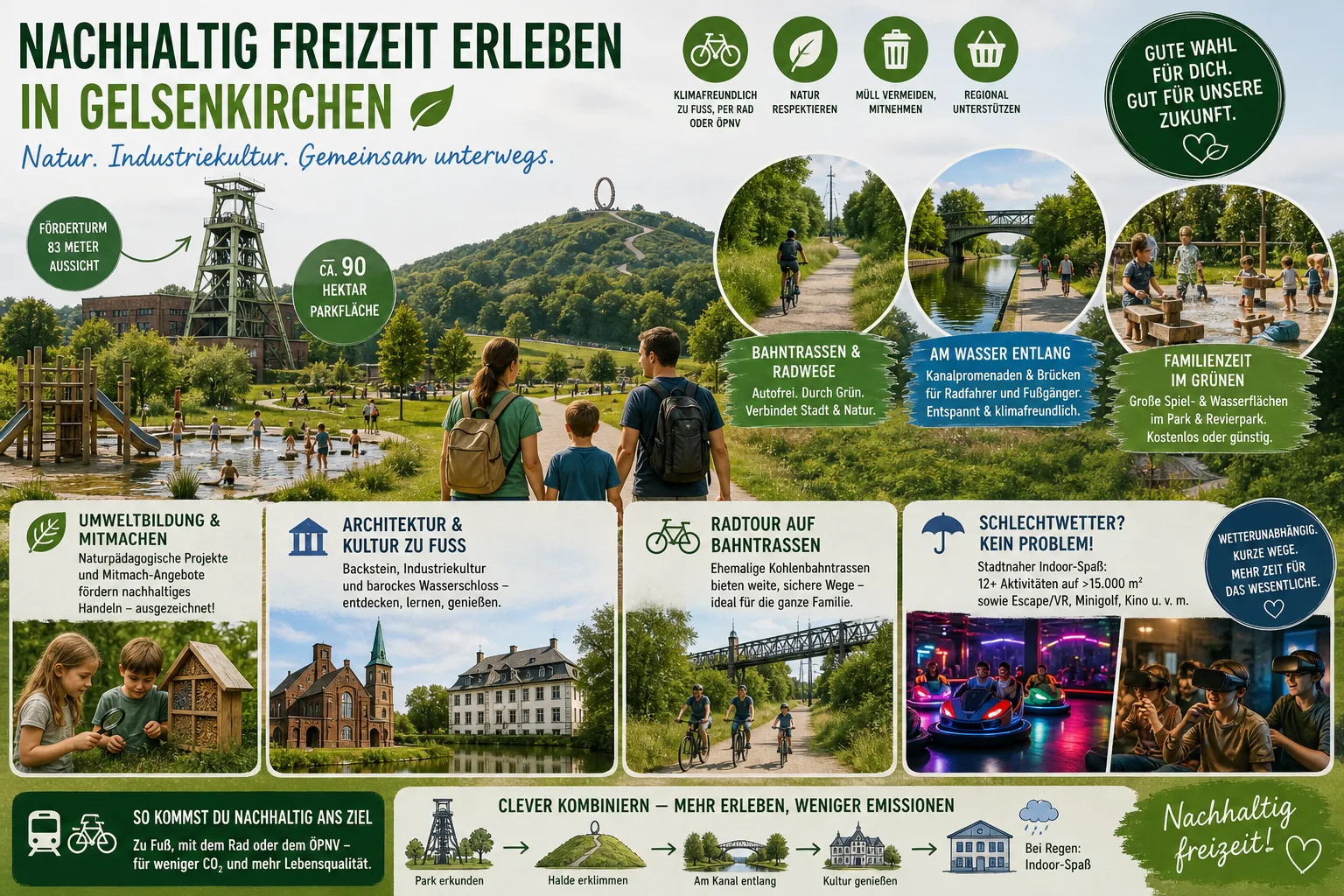
If you want to be out and about in Gelsenkirchen in the coming weeks and months, you can put together very climate-friendly leisure programs with just a few simple decisions: short distances, arrival on foot/bike/public transport, breaks in green spaces, and activities that do not require a lot of resources. This guide deliberately looks ahead and helps you plan concrete outings for the period from September 2026 onwards.
3 Weekend Plans (from September 2026)
Plan 1: The Calm Green Space Start (approx. 2–4 hours)
Time frame: Ideal from September 2026, when the days are still long enough for a relaxed afternoon outing.
- Arrival without a car: Choose a starting point that you can reach on foot, by bike, or by bus/train.
- A green space as an anchor: Find a park or a quiet green area and consciously plan time there to sit, read, or observe.
- Short circular walk: Complement your stay with a short walk instead of stringing together several destinations.
Why this is sustainable: You reduce travel, catering, and organizational effort and use existing urban spaces instead of additional activities with high resource consumption.
Plan 2: "Canal & Trail" Afternoon (approx. 3–5 hours)
Time frame: From September 2026, especially pleasant on mild days in early autumn.
- Outbound via a route with few crossings (for example, a former railway line or a quiet bike axis), so children or inexperienced cyclists feel safer.
- Stop by the water: Plan 20–30 minutes to sit, observe, and consciously slow down.
- Return as a "different loop": If you plan a circular tour, you don't have to ride the same route twice – this increases motivation and the sense of discovery.
Sustainable effect: You combine everyday mobility (bike/on foot) with relaxation, without additional emissions from arrival and departure.
Plan 3: "Slow City" Walk with Culture Break (approx. 2–6 hours)
Time frame: From autumn 2026, especially suitable for short days or when you want to consciously slow down.
- Start in a neighborhood you want to explore on foot: Intentionally walk slowly and notice details (facades, courtyards, green islands).
- Planned culture break: Set a time window for an exhibition, reading, a small museum, or a public institution that you can easily reach by public transport.
- Finish in the green: End the day with a park section so that you consciously experience the transition between city and nature.
Sustainable effect: The day works without a car, without "program hopping" and with clear rest periods – good for the climate and your mind.
Car-light on the Go: Routes You Can Combine in the Future
If you want to travel sustainably on a regular basis from 2026, a simple planning principle is worthwhile: Get on – connect – get off again. You use public transport for the start (or the end), and in between you move along routes that favor cycling and walking.
- Routes with few crossings: Prefer sections that guide you calmly and continuously (this increases safety, especially with children).
- Stops as "fixed points": Set two to three places where you definitely want to take a break (bench, meadow, play area, viewpoint, water).
- Return option: Plan an alternative return trip by bus or train from the start, in case the weather or your energy changes.
- Share instead of reinventing: If you have tested a good route in your area, share it for future outings (e.g., as a GPX track or simple sketch) – this creates a small, local route collection.
This way, from autumn 2026, outings will emerge that can be easily repeated and varied without having to reorganize every time.
For Families: Sustainable Activities for the Next Days Off
For families, three things will count above all in the future: short distances, plannable breaks, and offers that work without constant consumption. These building blocks can be easily combined from September 2026:
1) "Picnic & Movement" as a Standard Format
- Take along: Water bottles, lunch box, small towel, change of shirt for children.
- Movement: Balance bike/scooter for short distances, ball or skipping rope for the meadow.
- Rule: One place where you stay longer (instead of "ticking off" many places).
2) Water Play or Mud Day (in warm weather in late summer/early autumn 2026)
If you head for a water play area in the coming warm weeks, sustainability works mainly through preparation: reusable towels, suitable clothing, and arrival without a car. Also, consciously plan time so you don't have to move on to the next place "under time pressure".
3) Nature Observation as a Game (from Autumn 2026)
You can incorporate simple nature games in the coming months without disturbing animals:
- "Silent Minute": Be quiet for 60 seconds and count sounds (birds, wind, water).
- "Color Hunt": Find five natural colors (without picking anything).
- "Track Reading": Look for leaves, seeds, or imprints on paths – everything stays on site.
This way, environmental education is created in the future without it feeling like a lesson.
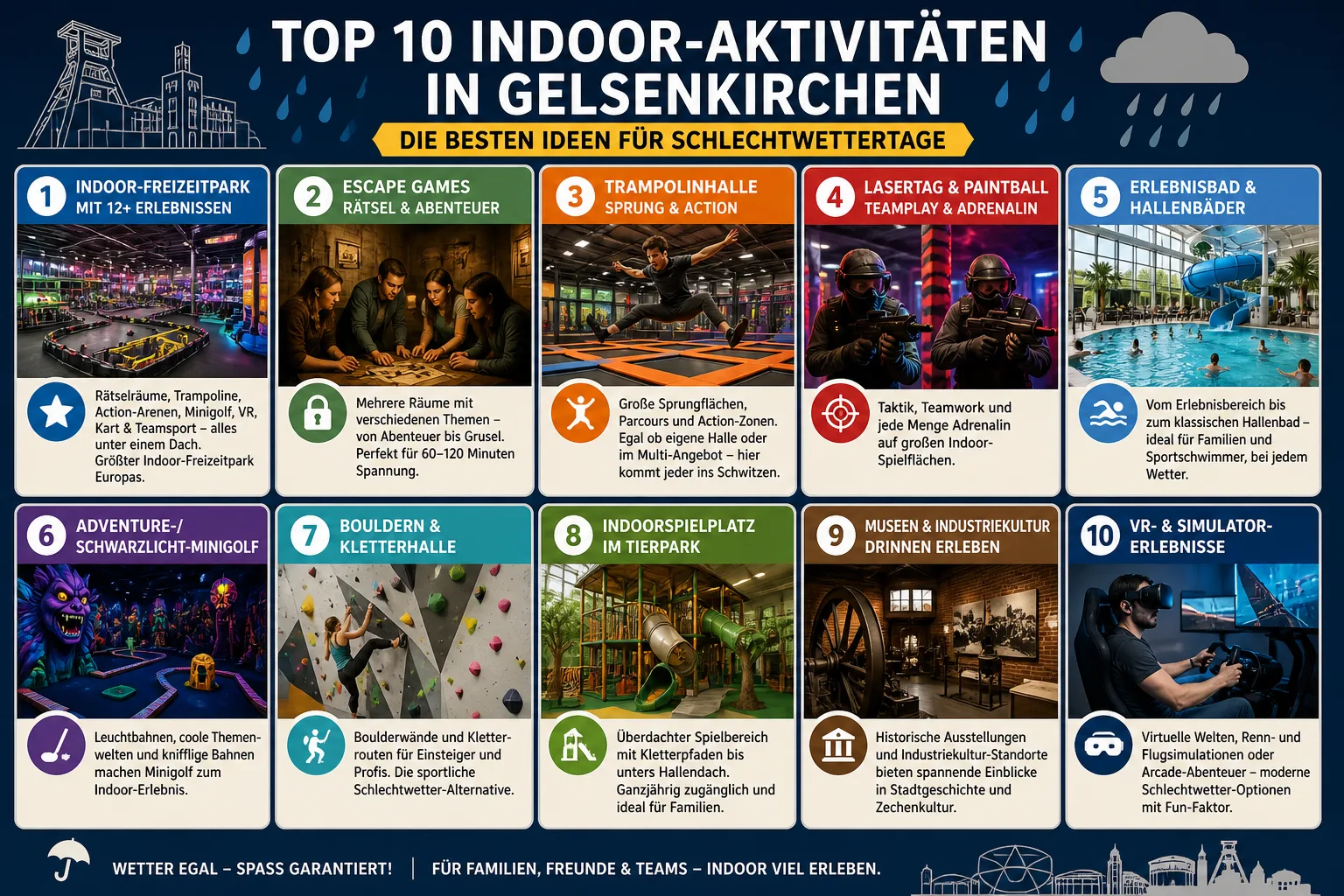
Bad Weather Options for Upcoming Rainy Days
Even on rainy days from autumn and winter 2026, you can plan sustainably by staying close, traveling once, and combining several activities:
- Indoor activity + short walk before/after: Plan a short walking route to still get some movement.
- Public transport instead of searching for parking: This saves time, stress, and avoids additional trips in city traffic.
- Reusable snacks: Bring water and snacks to reduce single-use packaging.
The sustainable core remains the same: You organize leisure time so that it works without long journeys.
Checklist: How Your Outing Will Really Stay Sustainable in the Future
- Arrival: For outings from September 2026, you routinely plan to go on foot, by bike, or by bus/train. The car remains the exception.
- Route: Prefer a circular tour with few stops rather than many destinations with switching stress.
- Consideration: You stay on paths, respect protected areas, and take your waste back with you.
- Equipment: Water bottle, lunch box, small first-aid kit, rain jacket – so you don't have to buy spontaneously.
- Pace: Plan breaks firmly. Slowing down is part of sustainable leisure.
Note: This guide is a general orientation for future leisure planning and does not replace local rules. Please check the current notices on site (signage) and the applicable traffic and nature conservation rules before each outing.