Sustainable enjoyment in Gelsenkirchen: regional & ecological
Sustainable enjoyment in Gelsenkirchen: Organic, regional, fair – what will matter in the coming months
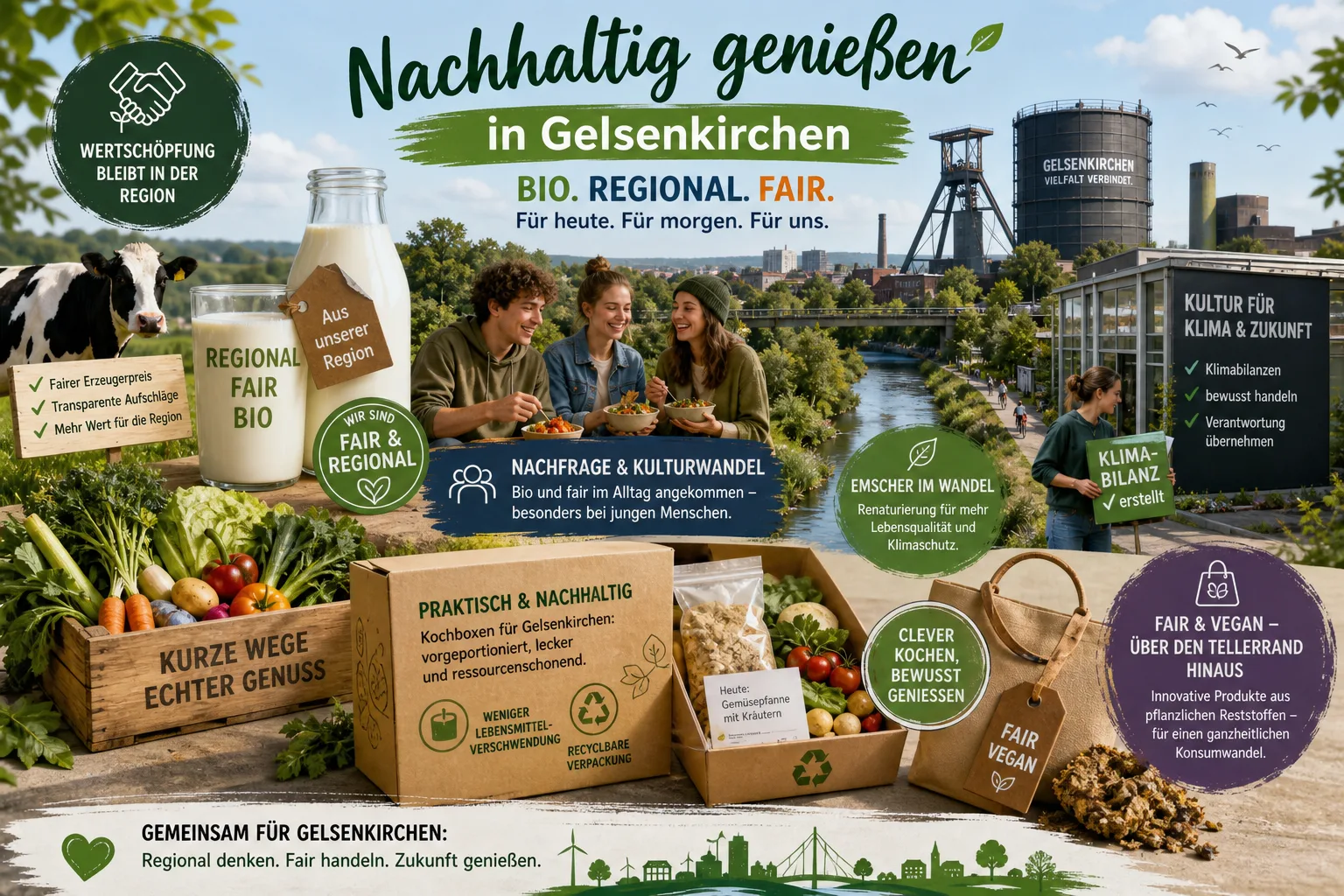
In Gelsenkirchen, sustainable enjoyment in the coming period will primarily arise where short distances, clear standards, and practical routines come together: shopping regionally, prioritizing organic sensibly, acting fairly, expanding plant-based options, and further reducing food waste.
Why sustainable enjoyment in Gelsenkirchen will become even more relevant in the future
In the coming years, many decisions around nutrition will be increasingly guided by climate impact, resource protection, and transparency. For Gelsenkirchen, this means: Those who shop regionally, organically, and fairly will not only structure their personal everyday life, but will likely also contribute to local offerings growing and becoming more reliable.
At the same time, sustainable consumption will work best when it remains practical: suitable shopping points, understandable labels, plannable meals, and good alternatives on the go. New concepts in the city and surroundings will be measured by exactly this in the coming period.
Regional, fair, ecological: What will matter with short supply chains in the future
Short supply chains will be convincing in the future especially when they are traceable: origin, production method, and price markups should be communicated clearly. Especially for fresh products (vegetables, fruit, baked goods, dairy and plant-based drinks), transparency will likely be the decisive factor for whether people are willing to pay a little more.
This is how you recognize a good regional offer (especially important in the future)
- Origin is specified concretely (region/farm instead of just “from the area”).
- Standards are explained (organic according to EU organic regulation, additional association standards, animal welfare/environmental measures, fair pay).
- Price logic is plausible (e.g. seasonal fluctuations, manual labor, ecological extra costs, fair contracts).
- Control is possible (labels, regular inspections, or credible operational insights).
If these points are met, regional shopping will not only be “sympathetic” in the future, but verifiable – and thus much more trustworthy.
Organic, vegan, fair: How demand and offerings in Gelsenkirchen will continue to develop
In the coming months and years, more households and gastronomy businesses will likely expand plant-based options: vegan and vegetarian dishes, plant-based milk alternatives, and menus that make greater use of seasonal produce. It will be crucial that “vegan” is not seen as the endpoint, but as part of an overall balance: What is in it, where does it come from, how was it produced, how fair is the supply chain?
Recognized standards will continue to provide orientation, especially the EU organic label and established fair trade approaches. In the future, there will also be more frequent questions about whether there are regional alternatives that meet similar ecological and social criteria.
Practical priorities for everyday life (easy to implement immediately)
- Use organic selectively: If your budget is limited, you will achieve the most with a priority list (e.g. products you buy frequently or those with a large environmental footprint).
- Establish plant-based standards: If you plan fixed “plant-based days” in the future, it will be easier to build routines (shopping, recipes, spices, supplies).
- Fair where it counts: For typical imported goods (e.g. coffee, cocoa), fair trade will remain a particularly important lever.
From the Emscher to the dining table: Which future topics will become more visible on your doorstep
In and around Gelsenkirchen, ecological topics will continue to become tangible in places where urban development, green spaces, and water quality interact. The Emscher conversion will continue to serve as a practical example of how infrastructure, nature and water protection, and quality of stay can be considered together.
If more people notice these changes in the future during walks, bike tours, or educational offerings, this will often have a direct effect: sustainability will not remain abstract, but will become tangible – and will subsequently influence shopping and eating decisions in everyday life.
For sustainable enjoyment, this means: Those who in the future combine regional products with a conscious view of biodiversity, water, and soil protection will create a coherent overall picture – from the path through green corridors to eating at home or on the go.
Sustainably practical for everyday life: What will have the fastest effect in the next few weeks
The greatest progress will usually not come from perfection, but from repeatable routines. In the coming weeks, three areas in particular will pay off: shopping planning, using up leftovers, and a smart mix of convenience and control.
1) Plan without becoming rigid
- Plan 2–3 basic dishes per week (e.g. stew, oven vegetables, pasta/salad bowl) and leave the rest flexible.
- Set a seasonal focus: What is currently available will usually fit better in terms of price and quality.
- Include a “leftover day” per week so that less ends up in the trash.
2) Noticeably reduce food waste
If you consistently follow the principle “check first, then buy” in the future (fridge, supplies, freezer), you will automatically throw away less in many households. Additionally, it helps to store properly, choose realistic portion sizes, and plan leftovers for the next day.
3) Use meal kits & delivery services correctly (if you use them)
Meal kits and delivery services will be sustainable in the future especially if they reduce packaging, organize transport efficiently, and offer ecological ingredients transparently. For you as a customer, it will be crucial whether you specifically select variants that meet organic standards and whether you use the box as support without completely replacing conscious shopping.
More than food: Why “fair, vegan, regional” will increasingly grow together as a lifestyle
In the coming years, sustainable consumption will likely be thought of in a more interconnected way: nutrition, clothing, everyday products, and mobility will be seen as related decisions. Plant-based materials (for example, leather alternatives made from plant residues) will appear more frequently in stores in the future and will strengthen the idea that resource conservation and innovation go hand in hand.
For Gelsenkirchen, this will mean in perspective: If more people consistently ask for transparency, fair conditions, and lower environmental impact, offerings will have to adapt – and new regional cooperations will become more likely.
How you will be able to enjoy sustainably in Gelsenkirchen in the future (concrete steps)
You won’t need a “perfect” plan. If you start with a few clear steps in the next few weeks, sustainable enjoyment will quickly become routine.
- Shop regionally: Prefer providers who specify origin and production method concretely and make seasonal goods visible.
- Strategically prioritize organic: Use organic where you see the greatest leverage (frequently purchased products, sensitive product groups).
- Decide fairly: Use fair-trade-oriented options especially for typical imported goods (e.g. coffee, cocoa), where working conditions are a central aspect.
- Set plant-based standards: Plan fixed vegetarian/vegan days and build a reliable stock of legumes, grains, nuts, and spices.
- Waste less: Establish a weekly “leftover day” and store food appropriately to avoid spoilage.
If you maintain these steps, sustainable enjoyment in Gelsenkirchen will in the future be less of an individual decision – and more a stable part of your everyday life.